Mad honey, explained in plain English
If regular honey is “nectar turned into sweetness,” mad honey is the same process but with one important twist.
It starts with the flowers
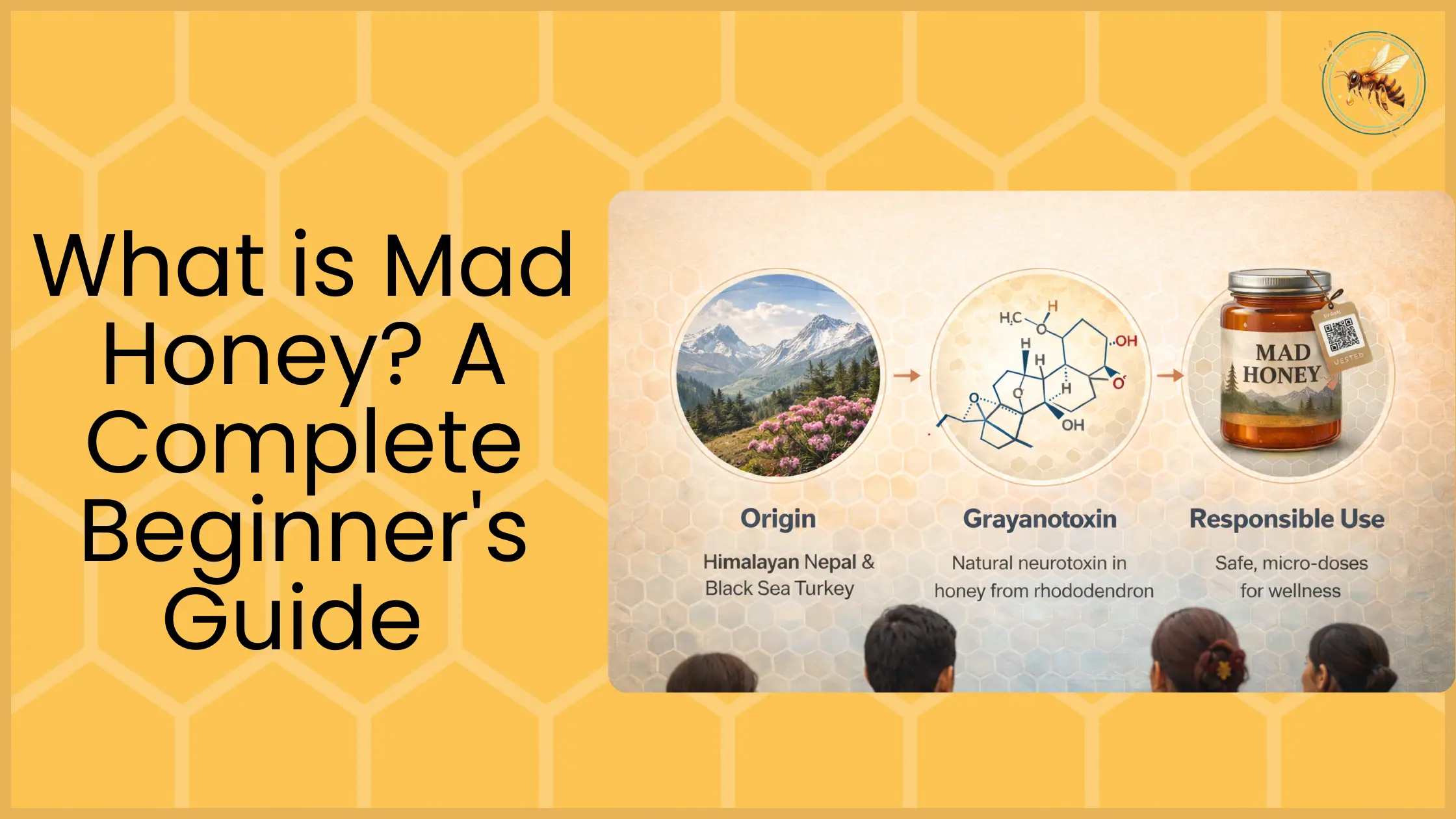
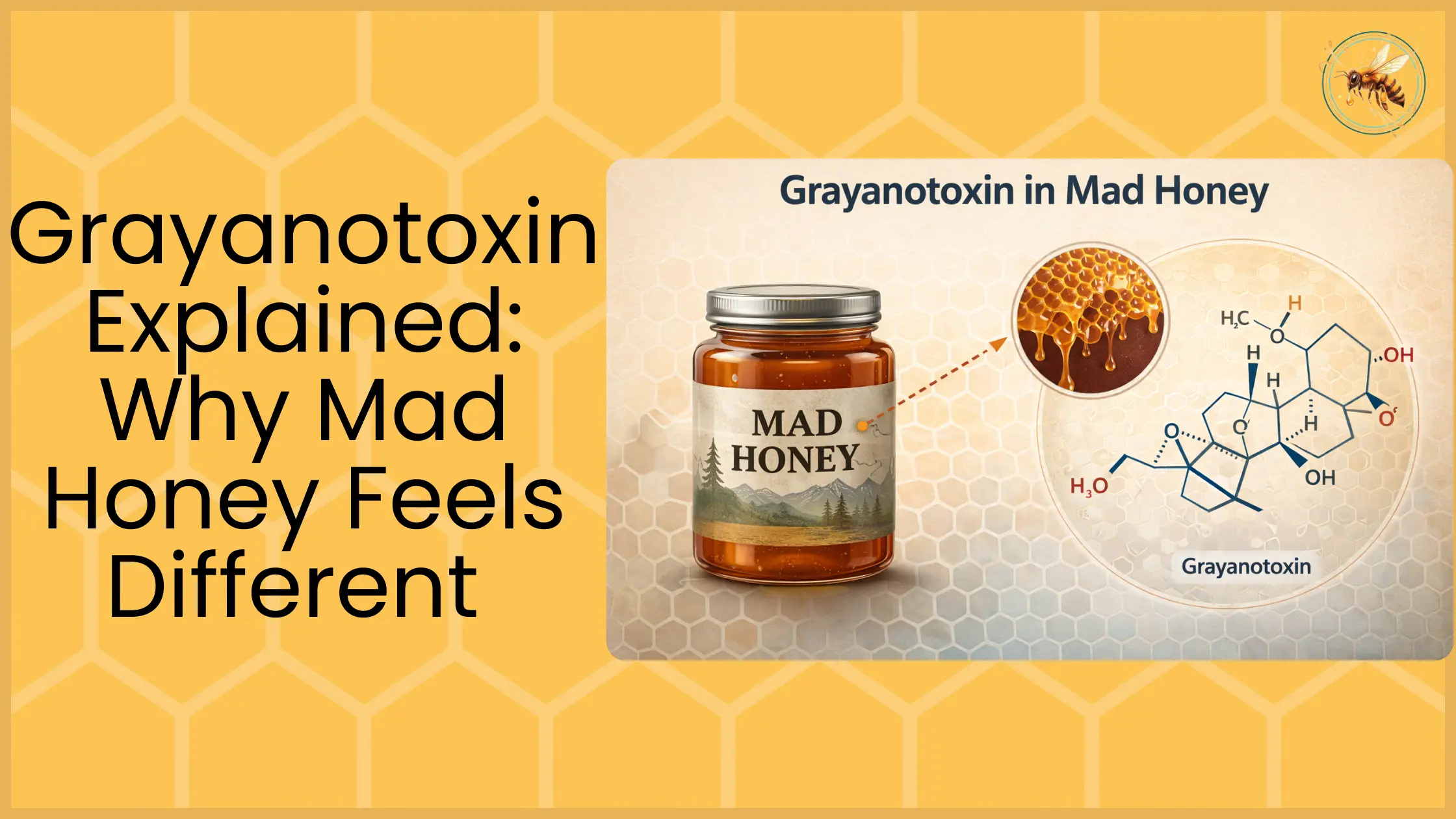
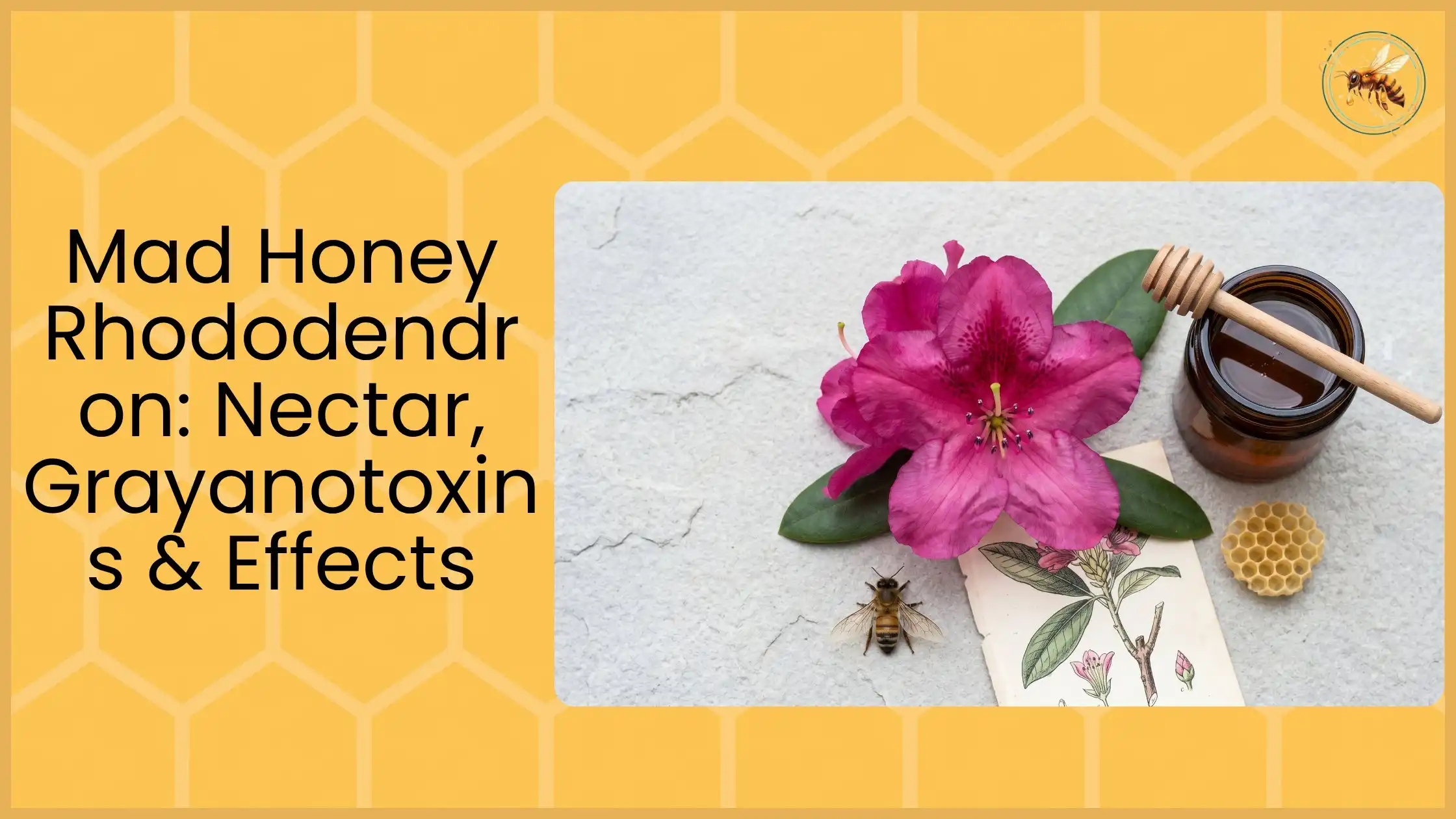
Certain rhododendron plants naturally contain compounds called grayanotoxins. When bees forage heavily on these blooms, those compounds can carry through into the honey. The bees themselves are unaffected; grayanotoxins don’t harm them. But the nectar they collect can retain the compound at varying concentrations depending on species, season, and geography.
The honey is still honey
Mad honey isn’t a synthetic product or a drug. It’s honey just chemically influenced by its botanical source. The base composition is the same: sugars, water, enzymes, and pollen. What makes it different is the possible presence of grayanotoxins and whether those are present at meaningful levels.
Why it’s often darker and sometimes bitter
Many people describe mad honey as darker, more reddish-brown, and more herbal or bitter than typical supermarket honey. That’s not a universal rule; colour varies significantly by region, season, and blending, but it’s a common characteristic when the honey is dominated by rhododendron-rich foraging zones.
Bitterness is also reported frequently. It comes from the same botanical compounds that produce the grayanotoxin content , not from processing or additives.
Why is it called “mad” honey
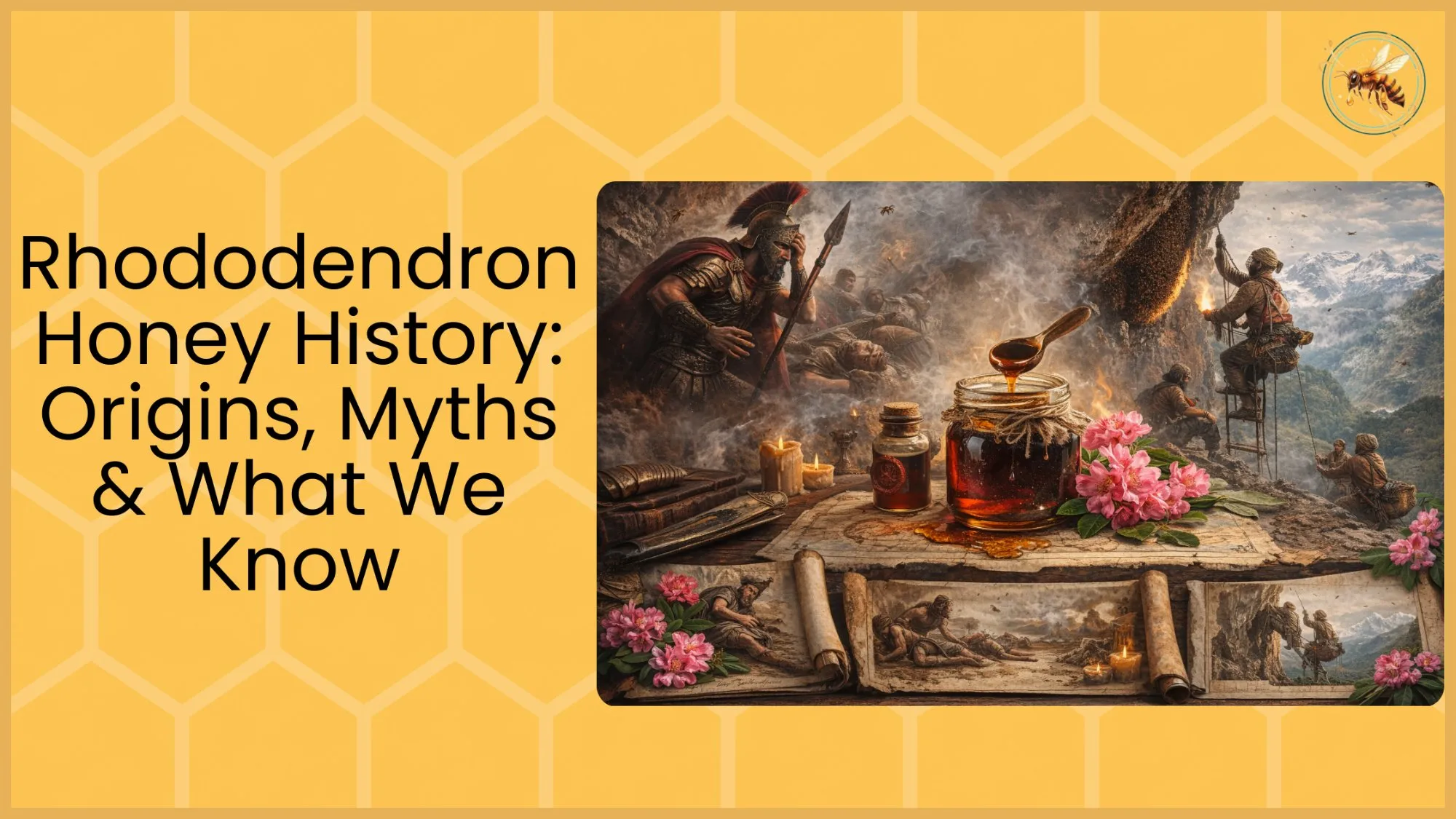
The name comes from the intoxicating or disorienting effects people can experience, especially at higher doses. Historical accounts describe armies becoming incapacitated after consuming honey from rhododendron-rich regions, most famously Xenophon’s account of Greek soldiers near the Black Sea in 401 BCE, and King Mithridates using it as a deliberate weapon against Roman troops in 67 BCE.
The modern translation is more grounded:
- Low exposure: most people describe a heavy calm, a mellow shift, mild warmth.
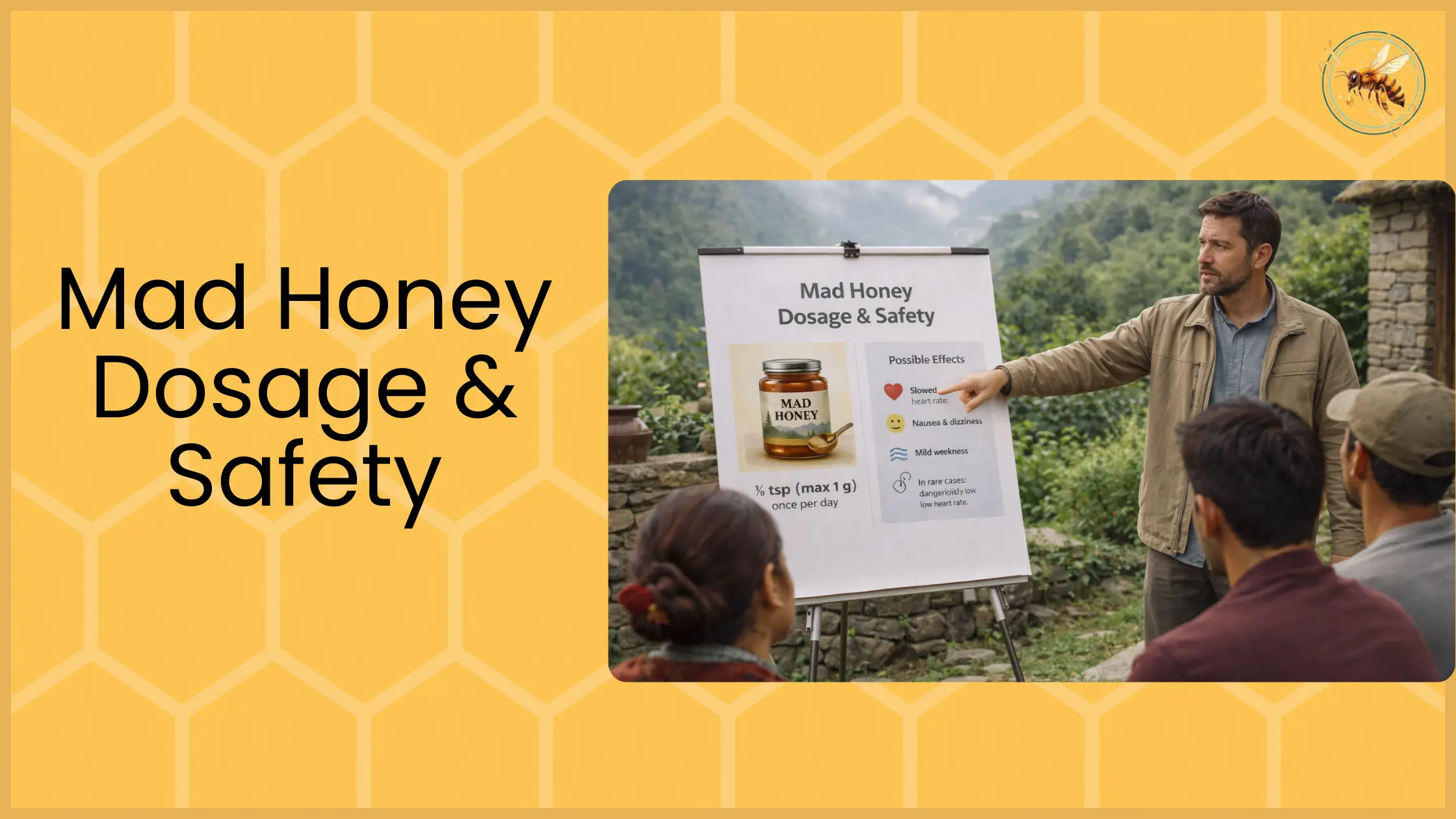
- High exposure: it stops being interesting and becomes a toxicity problem, nausea, dizziness, fainting, slow heart rate.
The “mad” isn’t a vibe. It’s a warning label embedded in a nickname.
Where does mad honey come from?
Mad honey is most commonly associated with two regions. Both are real. Both are frequently misrepresented.
Nepal – Himalayan cliff harvesting
In Nepal, mad honey is linked to wild cliff harvesting by Gurung honey hunters and other indigenous communities, and the giant Himalayan honeybee (Apis dorsata laboriosa). The harvest is culturally significant and physically dangerous; hunters scale rope ladders on sheer cliff faces, using smoke to manage the bees twice a year during the spring and autumn blooms.
The honey forms when bees forage on rhododendron species at altitudes above 2,500 metres, particularly during the spring bloom when grayanotoxin concentrations in the nectar tend to peak. Not all honey from Nepal is mad honey; the intoxicating effect is seasonal and location-specific. The full harvesting story and what makes Nepal honey rare go into significantly more depth.
Turkey – deli bal from the Black Sea
In Turkey, mad honey is called deli bal, literally “crazy honey”, and has a documented history as a folk product and traditional remedy in the Trabzon, Rize, and Kaçkar mountain regions. The Black Sea coastal range provides dense Rhododendron ponticum coverage that bees forage heavily during the bloom period.
Turkish mad honey produces the majority of documented clinical cases of grayanotoxin poisoning in the medical literature, not because it’s more dangerous, but because consumption is more widespread in the region.
| Feature | Nepali mad honey | Turkish mad honey |
|---|
| Source flowers | Rhododendron luteum, R. campanulatum | Rhododendron ponticum |
| Harvest method | Wild cliff hunting by hand | Often from managed hives in forested terrain |
| Typical potency | Higher grayanotoxin levels from wild, single-source foraging | Variable; often milder, wider blending |
| Cultural use | Traditional medicine and ritual among Gurung communities | Folk remedy for hypertension, digestion, and vitality |
Can mad honey come from anywhere else?
Yes, in smaller quantities. Rhododendron species grow across parts of Europe, Japan, the eastern United States, and the Caucasus. Sporadic reports of grayanotoxin-containing honey exist from several of these regions. But Nepal and Turkey remain the dominant production contexts, both in terms of cultural tradition and global supply.
One important nuance: origin alone doesn’t tell you much about potency. “Himalayan” is not a dosage label. Batch variability, not geography, is the real variable.
What does mad honey feel like? Low dose vs high dose
This is where most articles go wrong. They either hype it like a party substance or lead with worst-case horror stories. The practical picture sits between both.
What people report at lower doses
At lower exposure, the kind of careful first-time user would experience, people most commonly describe:
- a heavy calm or general settling of tension
- mild softness or warmth in the body
- slightly slowed pace, reduced mental chatter
- a sense of being “more present” without being impaired
A useful mental model: think “ritual calm,” not “recreational thrill.” If you go in chasing an intense experience, that’s the fastest route to overshooting.
When it becomes too much
At higher exposure, or when someone redoses before the first dose has fully arrived, the picture changes:
- dizziness and lightheadedness
- nausea, sometimes vomiting
- sweating and physical weakness
- feeling faint, or actually fainting
- a noticeably slowed heartbeat and lowered blood pressure
This is why dose management matters. Mad honey can cross the line faster than people expect, not because it’s inherently unpredictable, but because the onset delay creates a false sense that nothing is happening.
Why do experiences vary so much
Mad honey is variable in two ways simultaneously:
- Your body: weight, age, metabolism, cardiovascular baseline, medications, prior experience with similar compounds.
- The batch: rhododendron species mix, bloom intensity, harvest season, geographic microclimate, and whether honey is single-source or blended across hives.
Two people taking the same measured amount from the same jar can have meaningfully different experiences. This is not an anecdote; it’s the documented reality of a wild botanical product with no standardised concentration.
What causes the effects?
You don’t need a chemistry degree. Just the correct idea.
Grayanotoxins interact with voltage-gated sodium channels in excitable tissues, nerves, muscles, and especially cardiac tissue. When those channels are affected, they stay in an activated state longer than normal. This produces a shift toward parasympathetic dominance (rest-and-digest mode), which is why the classic low-dose experience includes relaxation, slowed heart rate, and warmth. At higher doses, this same mechanism becomes the risk: pronounced bradycardia (heart rate slowing) and hypotension (blood pressure drop).
The key thing to understand is that the “good” and the “bad” aren’t separate mechanisms; they’re two ends of the same dose-response curve.
Why batch variability is the central issue
A jar of mad honey isn’t a standardised supplement. Variability in grayanotoxin content comes from:
- which rhododendron species did the bees forage on
- bloom intensity and timing in that harvest season
- altitude and local microclimate of the foraging zone
- whether the honey is single-source wild harvest or blended across multiple hives
This is why responsible sellers provide batch-specific information, and why the absence of that information is a red flag.
Mad honey safety basics: Read this before trying
Start low, go slow
If you’re new:
- Start with a small amount, ½ teaspoon or less, for a genuine first session
- Wait at least 3 hours before deciding nothing is happening. Onset can be slow.
- Don’t stack doses because you don’t feel it yet
- Keep the environment calm and have no time pressure or obligations
The full beginner dosage guide covers the complete dose ladder , from microdose through experienced use , with expected effects at each tier, timing, and the thresholds where adverse events begin appearing in clinical literature. If you’re going to use mad honey, read it first.
Who should avoid it
Avoid mad honey, or speak to a doctor first, if you:
- have heart rhythm problems, low blood pressure, or any cardiovascular condition
- take medications that affect blood pressure or heart rate, particularly beta-blockers, calcium channel blockers, or digoxin
- are pregnant or breastfeeding
- are under 18
- have known sensitivity to bee products
This isn’t precautionary language added to avoid liability. These are genuine pharmacological interactions. For a complete profile, see is mad honey safe. and the benefits and risks overview.
What not to mix it with
Most serious adverse experiences involve compounding variables. Don’t combine mad honey with:
- alcohol
- sedatives or benzodiazepines
- anything else that affects heart rate, blood pressure, or nervous system tone
If something goes wrong
If you or someone else feels unwell after taking mad honey:
- Stop immediately and don’t take more
- Sit or lie down; falls are a risk if you’re dizzy
- Hydrate; salty snacks or a saline drink can help with a blood pressure drop
- If symptoms are severe, such as fainting, chest pain, heart rate below 50 bpm, or inability to stand, seek emergency medical attention
Hospital treatment for grayanotoxin poisoning is effective. IV atropine resolves bradycardia quickly, and recovery in documented cases is almost always complete within 24 hours. The risk is not seeking treatment. See the full poisoning and emergency guide for the complete picture.
First-time expectations: the right mindset
The goal is calibration, not intensity
Your first session isn’t about achieving a strong effect. It’s about learning how your body responds to this specific batch, at this specific dose. Most people who have bad experiences were chasing an outcome rather than paying attention to what was actually happening.
Give it more time than you think you need
The onset lag is the most underestimated aspect of mad honey. Depending on stomach contents, batch potency, and individual metabolism, effects can arrive anywhere between 30 minutes and 3 hours. Plan a minimum 6-hour window for the first session. Don’t make plans afterwards.
Setting matters more than dose at this stage
The subjective quality of the experience is shaped substantially by context. A calm environment, no obligations, someone present who knows what you’ve taken, these factors have a measurable effect on how the parasympathetic shift registers. A first session in a stressful or unfamiliar setting is a poor test of what mad honey actually does.
How long does it take to kick in, and how long does it last?
Onset is variable: most people notice the first effects between 30 and 90 minutes, but in some cases, particularly with a full stomach and a milder batch, onset can be delayed up to 3 hours. Peak effects typically arrive between 60 and 120 minutes at beginner doses.
Duration at lower doses is usually 4–8 hours for the main effects, with a gradual taper. Higher doses extend both the peak and the duration, and unpleasant effects at those levels can persist much longer. A detailed breakdown by dose tier is in the how long mad honey lasts guide.
How to choose authentic mad honey
Mad honey is trendy, which means it’s commonly misrepresented. A significant portion of what’s sold online is diluted, mislabelled, or entirely fake. This matters for two reasons: you’re paying for something that doesn’t work, and, more importantly, dosing guidance based on fake honey gives you a false baseline for the real thing.
When buying mad honey, look for:
- Specific origin details, not just “Himalayan” as a buzzword, but a named region and harvest context
- A certificate of analysis (COA) with batch-specific grayanotoxin testing
- Clear, honest safety guidance, not just a dramatic story and a buy button
- Consistent educational content that doesn’t change when it’s inconvenient
Red flags: “strongest mad honey” claims, miracle cure language, no dosage or safety information, vague sourcing with no verifiable details.
For a structured breakdown of what to look for and what to avoid, see how to choose the best mad honey in 2026.
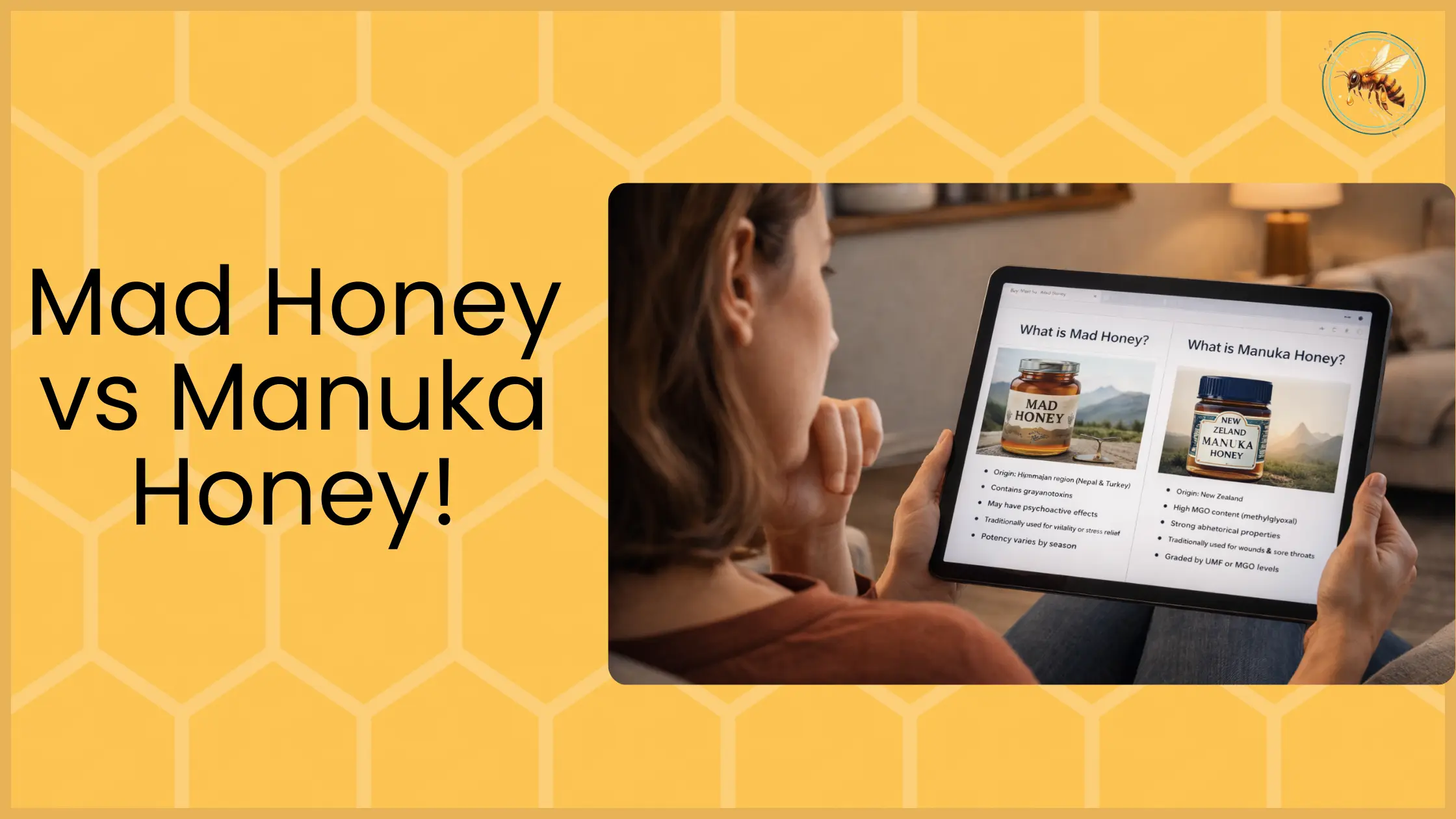
Mad honey vs regular honey
Regular honey is a broadly consistent food product. The sugar profile, water content, and minor bioactives vary by floral source, but it doesn’t produce pharmacologically relevant effects.
Mad honey is different in one specific way: it may contain grayanotoxins from rhododendron nectar, and those compounds can produce dose-dependent effects that range from mild relaxation to a medical event requiring emergency care. The base product is still honey. The risk profile is not.
This is why mad honey shouldn’t be marketed or treated like a food product. It isn’t dangerous in the way a controlled substance is dangerous, but it requires the same care you’d give anything with a dose-response curve and a clinical literature on adverse events.
FAQs
What is mad honey?
Mad honey is honey produced when bees forage heavily on rhododendron species that contain grayanotoxins. The compound carries from the nectar into the finished honey. At low doses, it produces a relaxation effect; at higher doses, it can cause pronounced cardiovascular and neurological symptoms. It’s produced primarily in Nepal and Turkey, though small amounts exist elsewhere.
How much mad honey should I take?
Start with ½ teaspoon (2–5 grams) for a first session. Wait at least 3 hours before deciding the dose was insufficient. Never exceed 1 tablespoon (approximately 15 grams) in a single session; that’s the threshold where serious adverse events begin appearing consistently in the clinical literature. The full dosage guide covers the complete framework.
Is mad honey safe?
For healthy adults with no cardiovascular conditions and no relevant medications, small doses are generally well-tolerated. The risk comes from dose escalation, batch variability, and interactions with certain medications. It is not safe for people with heart conditions, low blood pressure, or those taking beta-blockers or blood pressure medications. Is mad honey safe? covers the full risk profile.
Is mad honey hallucinogenic?
Not in the way the word usually implies. Mad honey doesn’t produce the visual or perceptual distortions associated with classical psychedelics. At low doses, the effect is more parasympathetic, relaxation, warmth, and a slowed pace. At very high doses, confusion and dissociation can occur, but that’s a toxicity presentation, not a psychedelic experience. For the full breakdown, see the hallucinogenic honey explainer.
Is mad honey legal?
In most countries, including the US, UK, and most of Europe, mad honey is legal to buy and possess. The complications arise at customs; shipments without proper food documentation are the most common issue. Some countries have stricter import enforcement.
What does mad honey taste like?
Most people describe it as distinctly bitter and herbal, noticeably different from the straightforward sweetness of commercial honey. There’s often a slight astringency and a lingering throat sensation. The colour tends toward dark amber or reddish-brown, though this varies. If it tastes like regular sweet honey with no bitterness, that’s a signal worth noting when assessing whether a batch is genuine.
How long does mad honey take to work?
Between 30 minutes and 3 hours, depending on dose, stomach content, batch potency, and individual metabolism. First-timers frequently underestimate this window and redose too early. Don’t make that mistake; it’s the single most common cause of unintended overdose.
Can you take mad honey every day?
Daily use isn’t well-studied. The practical issue is that grayanotoxin effects compound with batch variability, without a stable, tested product; daily use creates an unpredictable cumulative exposure. If someone chooses to use it regularly, does discipline and consistent sourcing become significantly more important? The benefits and risks guide covers what the evidence actually says about regular use.