Quick Answer: What Does Mad Honey Taste Like?
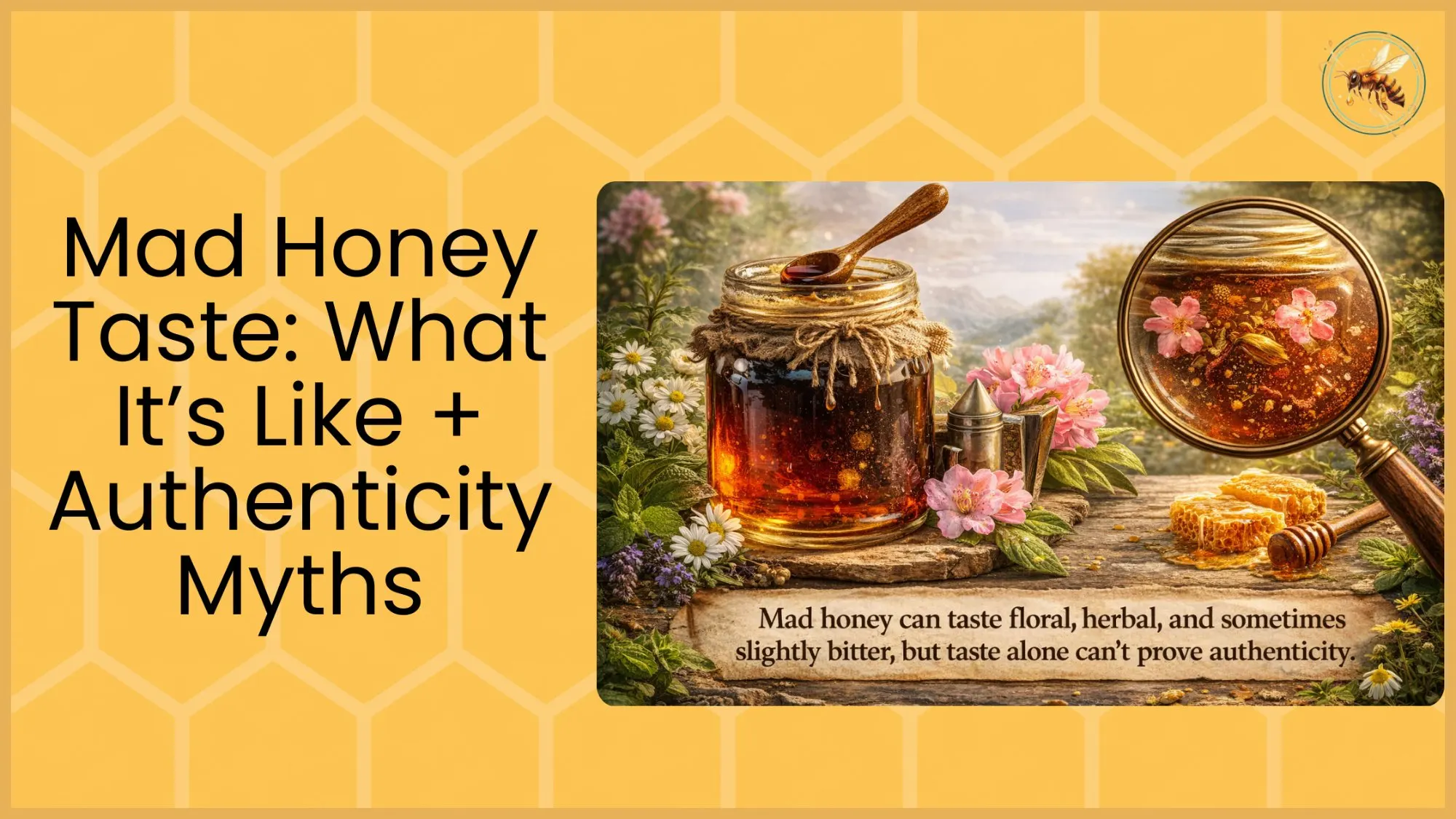
The quickest honest description: sweet like honey, but often more “wild” and herbal, sometimes with a slightly bitter, medicinal-ish finish in certain batches.
The “most common” flavor profile (simple description)
For many people, mad honey starts out familiar: honey sweetness with floral notes. But compared to everyday supermarket honey, it often feels less “one-note.” There’s more going on, wildflower, herb, sometimes a faint earthiness.
If regular honey is “sweet and smooth,” mad honey is often “sweet, then layered.”
The “surprising” part: aftertaste + throat feel
What makes people pause isn’t always the first taste. It’s the finish.
Depending on the batch, you might notice:
- a lingering herbal note (like wild herbs or forest flowers)
- a mild bitterness that rises after swallowing
- a gentle warming sensation in the throat
- a “medicinal” edge (not like medicine flavoring, more like a strong herbal tea)
This is also why mad honey gets described so differently online: some people focus on the sweetness, while others fixate on the finish because it’s the part that feels “distinct.”
Why people describe it differently (expectation + batch + dose)
Three reasons dominate taste confusion:
- Expectation: If someone is expecting a “psychedelic honey,” their brain searches for anything unusual.
- Batch: Season, floral mix, and handling can shift taste a lot.
- Dose: Tiny tastes can feel like normal honey; larger spoonfuls make the aftertaste more noticeable, and can push into “I took too much” territory faster than people expect.
Flavor Notes (A Practical Taste Breakdown)
Below is a tasting breakdown written like simple wine/coffee notes, accessible, not snobby. Use it as a “what to look for” guide, not a purity test.
Aroma (smell)
When you open the jar, the aroma often gives the first hint that this isn’t ultra-processed honey.
Common aroma notes include:
- floral/wildflower (fresh bloom, meadow-like sweetness)
- herbal (like dried herbs, mountain tea, or forest edges)
- earthy (subtle, think damp wood or pollen, not dirt)
If you smell something harsh, burnt, or overly caramelized, that can sometimes indicate overheating or aggressive processing (not always, but it’s a clue).
First taste (initial impression)
On the tongue, mad honey typically starts:
The sweetness may feel slightly less “sugar-syrup” than cheap honey and more like natural nectar sweetness. Some batches feel rounder and more aromatic, almost like the sweetness has a floral direction.
Mid-palate (the “character” shows up)
This is where many people start to notice the “wild” quality. Mid-palate notes can include:
- earthy/woody (like dry wood, bark, or warm pollen)
- spicy (not chili-spicy, more like a gentle tingle or warmth)
- herbal (again, like herbal tea, not mint candy)
This is also the part that can differ a lot between Nepal-style and Black Sea/Turkish-style honeys, depending on floral landscape and handling.
Finish (aftertaste)
The finish is what people remember, because it lingers.
Common finish descriptions:
- slightly bitter (not extreme; more like a herbal tonic note)
- herbal/“medicinal” (in the sense of strong herbs, not cough syrup)
- warming throat feel (some batches)
Important: a strong finish doesn’t automatically mean “better.” It can mean “stronger character,” but it can also mean rough handling, mixed sources, or simply a different floral composition.
What “bitter” does and doesn’t mean (myth-busting)
Bitter can mean:
- a more herb-heavy floral mix
- mineral-heavy terroir
- a stronger finish profile
- certain seasonal batches
Bitter does NOT automatically mean:
- authentic
- “more potent”
- higher quality
- safer
Some authentic mad honey is barely bitter. Some bitter honey is just badly handled. If a seller tells you “the bitterness proves it’s real,” treat that as marketing, not evidence.
Texture, Color, and Consistency (What You’ll See in the Jar)
Taste isn’t the only sensory cue. People also use texture and color as “authenticity clues.” These cues can be helpful for expectations, but again, they’re not definitive proof.
Texture range (runny vs thick vs semi-crystallized)
Mad honey can be:
- runny and pourable (especially when warm or freshly processed)
- thick and slow-moving (common in many raw honeys)
- semi-crystallized (grainy or set-like)
Crystallization is not “bad honey.” It’s a normal behavior of honey depending on sugar composition, storage temperature, and time. A jar crystallizing doesn’t prove fake or real, it mostly proves it’s honey and has been stored a certain way.
Color range (golden/amber/red-brown)
Color can range widely:
- pale gold
- warm amber
- darker amber
- red-brown
Color is influenced by floral sources, minerals, season, and handling. You can’t reliably reverse-engineer authenticity from it.
Why “red” is not a guarantee of authenticity
“Red mad honey” is heavily romanticized online. But “red” is not an authenticity stamp. Real mad honey isn’t always red, and red honey isn’t always real.
Why Mad Honey Taste Varies (Batch Variation Explained)
This is the section that makes the whole page feel authoritative. Because when you explain why it varies, you automatically reduce scams and hype.
Seasonality and bloom cycles
Honey is basically the edible fingerprint of a flowering season. If bloom timing shifts, due to weather, altitude, or region, flavor shifts too. Some seasons create more floral sweetness; others create more herbal edge.
Region differences (Nepal vs Turkey differences)
Different regions = different floral landscapes = different taste “signature.”
- Nepal/Himalayan framing often gets described as aromatic, wildflower-heavy, sometimes with a deeper herbal finish depending on batch.
- Black Sea/Turkish tradition (often called deli bal locally) may have its own distinct “herbal + strong finish” profile depending on the local nectar landscape.
But here’s the real truth: it’s less about country identity and more about the exact flowering zone and batch. A “Nepal mad honey jar” can taste mild. A “Turkey mad honey jar” can taste mild. Region is a clue, not a guarantee.
Handling and storage
Processing choices matter. Filtering level, heat exposure, and storage temperature can shift flavor and aroma.
- Overheating can flatten floral notes and push honey toward caramel tones.
- Poor storage can introduce fermentation notes or off-smells.
Why two jars can taste different even from the same source
Even honest sellers can have batch variation because:
- one batch was harvested earlier in the bloom cycle
- another batch had a slightly different floral mix
- storage time and conditions differed
- blending decisions differed (some brands blend to smooth differences; others don’t)
Can Taste Tell You If It’s Real? (The Truth)
This is where people want a decisive answer. Here it is:
Taste can raise questions, but it can’t prove authenticity.
Why taste-based tests fail
Because taste is influenced by too many variables:
- floral diversity
- season
- processing
- expectation
- even what you ate earlier
A mild-tasting jar can be authentic. A strong-tasting jar can be blended or mislabeled. A “burning” sensation can be batch character or it can be something else entirely.
So if someone tells you “real mad honey always tastes like X,” that’s a red flag.
Common “fake signs” (but not definitive)
Taste-only clues that might suggest something is off (not proof, just signals):
- harsh burnt/caramel flavor (possible overheating)
- sour/fermented notes (possible fermentation)
- flat, one-dimensional syrupy sweetness with no aroma (could be heavily processed or blended)
But again: none of these is courtroom evidence.
What actually matters more than taste
If you want the best chance of buying authentic mad honey, prioritize:
- Origin transparency: specific sourcing story, not just “Himalayan.”
- Batch thinking: batch IDs, harvest window, or at least consistency in communication.
- Responsible dosing guidance: “start low,” “don’t re-dose fast,” and clear warnings.
- Testing/traceability indicators: not vague “lab tested,” but meaningful signals and documentation approach.
- Education instead of hype: sellers who talk about variability, not guaranteed highs.
Best Way to Taste Mad Honey (So You Don’t Overdo It)
This section is not just about taste, it’s about control. Many bad experiences happen because people treat hallucinogenic honey like normal honey and take a big spoonful too quickly.
Start low (tiny amount)
If you’re tasting for the first time, treat it like a “sip,” not a serving. A tiny amount lets you notice aroma and finish without pushing into discomfort territory.
Don’t “stack” spoonfuls quickly
This is the classic mistake: someone doesn’t feel much in 5 minutes and takes more. Whether you’re tasting for flavor or exploring the experience, it’s safer to avoid rapid re-dosing.
Pairing ideas (tea, warm water), but keep it safe and conservative
If you want a clean-tasting experience, simple pairings work well:
- warm water (not boiling)
- mild tea
- neutral foods beforehand (so your palate isn’t dominated by spice or alcohol)
Avoid mixing with alcohol or sedatives if you’re using it for anything beyond flavor.
Conclusion
Mad honey’s taste is often best described as floral sweetness with a wild, herbal complexity, sometimes with a slightly bitter or warming finish. But the most important takeaway is this:
Taste and color are not authenticity proof. Real mad honey varies by batch, region, and season. The safer way to buy is to look for transparency, batch thinking, and responsible guidance, not the most dramatic flavor description online.
FAQs on Mad Honey Taste
Is mad honey supposed to be bitter?
Not necessarily. Some batches have a mild bitterness in the finish; some don’t. Bitterness alone doesn’t prove authenticity or potency.
Why does mad honey sometimes burn a little?
Some people notice a warming throat feel, especially in stronger batches. That can be part of the finish profile. But if it feels harsh, chemical, or unpleasantly sharp, that’s a reason to pause and evaluate quality and handling.
Why is some mad honey red?
Color can shift based on floral sources, minerals, season, and processing. Red-brown honey can be real, but red is not a guaranteed authenticity marker.
Does stronger taste mean stronger effects?
Not reliably. A strong herbal finish can correlate with a “stronger-feeling” batch for some people, but it’s not consistent enough to use as a potency test. Dose and individual sensitivity matter more.
Does mad honey taste different from Turkish “deli bal”?
Yes, it can, but the bigger driver is batch and floral landscape. Regional patterns exist, but they’re not rules.
Can mad honey crystallize? Is that bad?
Yes, it can crystallize like many honeys. Crystallization is usually normal and influenced by storage temperature and time.
How should I store it to preserve taste?
Keep it sealed, away from heat and moisture, ideally at a stable room temperature. Avoid leaving it in hot sunlight or near a stove; heat can flatten the aroma and change the flavor over time.