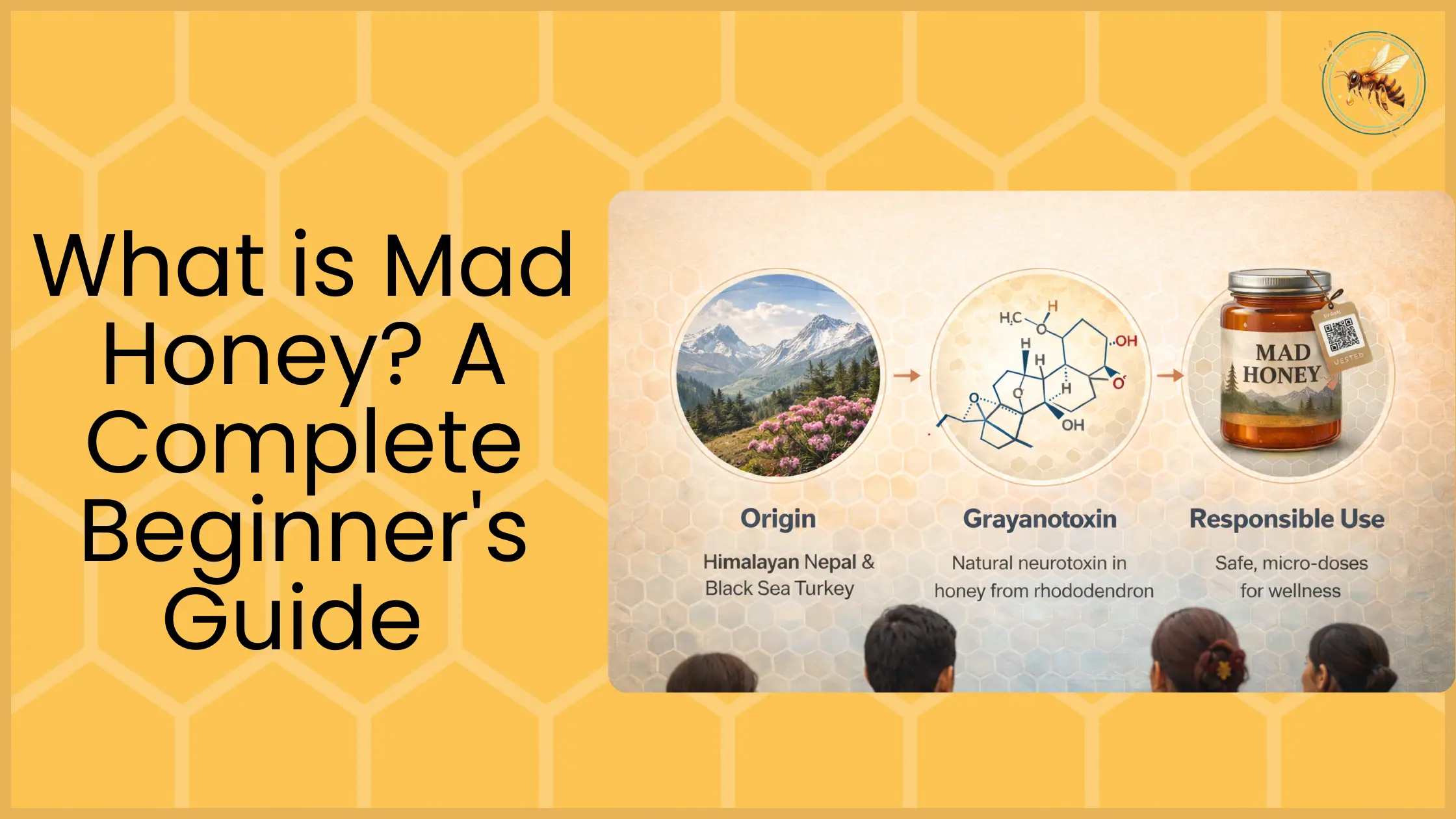

Mad honey, also known as deli bal in Turkey (Rose of the forest honey or Cliff honey in some contexts), is a unique type of honey produced by bees foraging on nectar from certain Rhododendron species.
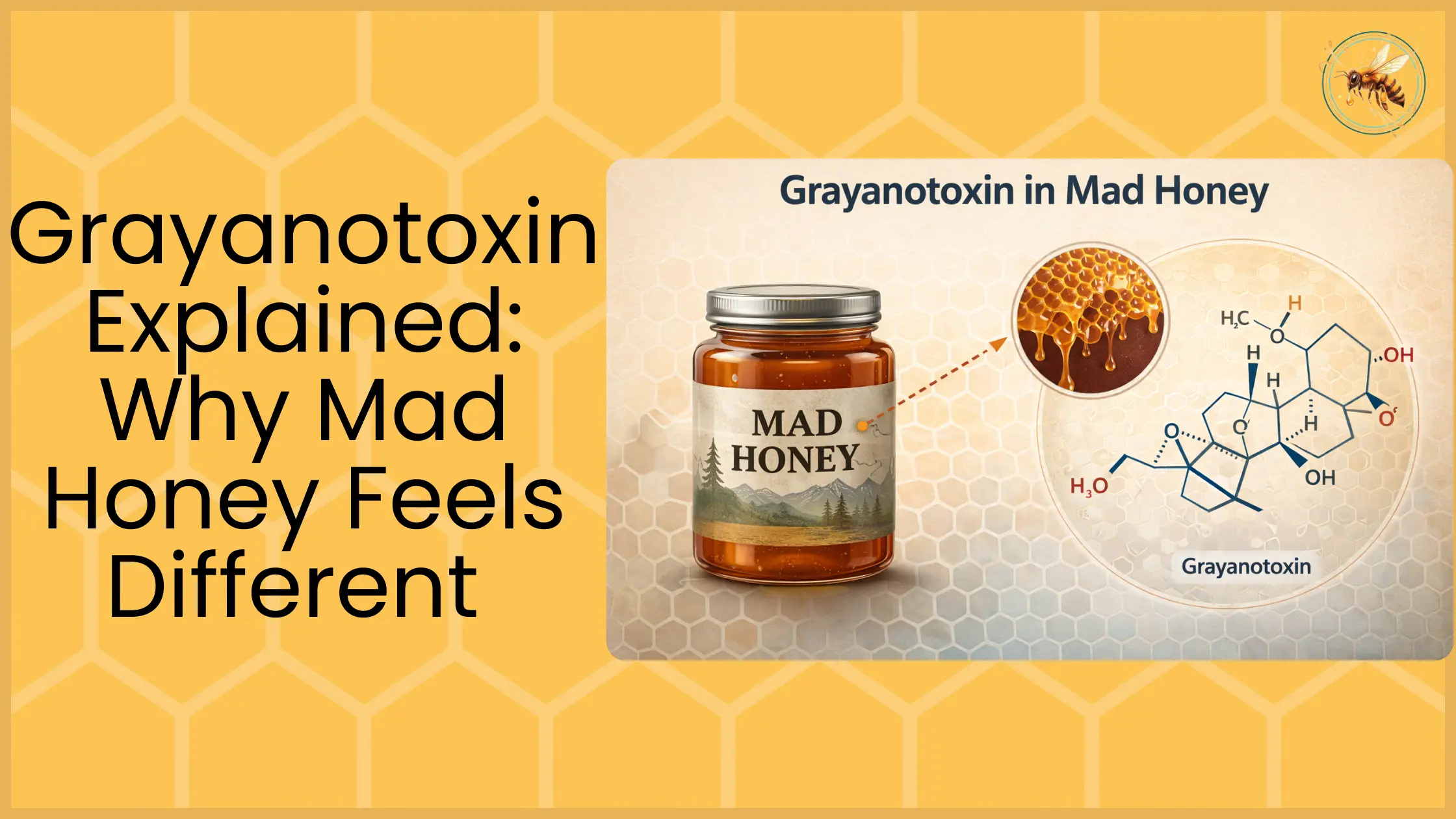
Unlike regular honey, it contains grayanotoxins, natural compounds that can cause intoxicating effects ranging from mild euphoria to serious health issues if not dosed properly.
This guide focuses on safe consumption practices, drawing from scientific research and case studies to help you understand how to approach it responsibly.
tl;dr
- Beginners should begin with no more than 1/2 teaspoon (about 2-3 grams) to assess tolerance, as effects can vary widely due to batch potency and individual sensitivity.
- Mad honey’s grayanotoxins can cause cardiovascular issues like low blood pressure and slow heart rate; always consume in a safe environment and monitor for symptoms.
- Pregnant people, children, those with heart conditions, or those on certain medications should steer clear of it.
- Effects usually begin within 30–90 minutes, and at a low dose the noticeable part often lasts 2–6 hours. Food, dose and batch can shift both.
- Overdose symptoms like severe dizziness or irregular heartbeat require immediate medical attention; treatments include fluids and atropine.
Why dosage matters more with Mad Honey
Mad honey isn’t your everyday sweetener. Its active compounds, grayanotoxins, make it far more potent and unpredictable than regular honey. These toxins, derived from Rhododendron plants, bind to sodium channels in your cells, leading to altered nerve and muscle function. This can result in a range of effects from relaxing euphoria to dangerous intoxication, emphasizing why precise dosing is crucial.
Here’s what authentic mad honey looks like: a dark, reddish hue that’s distinct from clearer varieties.
Batch variability + individual sensitivity
Not all mad honey is created equal. The concentration of grayanotoxins fluctuates based on factors like the specific Rhododendron species (e.g., R. ponticum in Turkey or R. luteum in Nepal), the season (higher in spring), and even the bee colony’s foraging patterns.
For instance, honey from Himalayan giant bees (Apis laboriosa) harvested in Nepal’s cliffs can have varying toxin levels due to environmental differences.
Individual factors play a huge role too: body weight, age, overall health, and even gender can influence sensitivity. Studies show men aged 40-60 are more commonly affected, possibly due to using it as a sexual stimulant or having underlying hypertension.
Women may experience less severe symptoms like vomiting or heart block. Long-term users might develop some tolerance through sodium channel desensitization, but this doesn’t eliminate risks.
The “more is not better” rule
Unlike recreational substances, where higher doses amplify desired effects, mad honey follows a strict “less is more” principle. Exceeding safe limits, often as little as 15-30 grams (about 1 tablespoon), shifts from mild intoxication to poisoning.
Research indicates that even 5-30 grams can trigger symptoms if grayanotoxin concentrations are high. The goal is subtle effects like relaxation or mild euphoria, not overwhelming highs that risk health complications.
Beginner dosage guide (simple starting point)
If you’re new to mad honey, approach it like any potent natural substance: start conservatively and observe. This isn’t medical advice; consult a healthcare professional, especially if you have pre-existing conditions.
First-time dose strategy: start low + wait
For beginners, a safe starting point for mad honey is 1/2 teaspoon (approximately 2-3 grams or 1-2 ml). This minimizes risks while allowing you to experience potential effects. Consume it straight, mixed in tea, or with food to ease digestion, but never on an empty stomach, as this can intensify absorption.
Wait at least 1-2 hours before considering more, as the onset can vary. Track your response: note any changes in heart rate, mood, or physical sensations. Reputable sources recommend not exceeding 1 teaspoon (5 grams) for first-timers.
How to adjust next time if you felt nothing/too much
If your initial dose yields no effects, it could mean low grayanotoxin concentration in that batch or high personal tolerance. Wait 24 hours, then try increasing by 1/4 teaspoon (up to 1 teaspoon max), but never rush; batch variability means one jar might be milder than another.
Conversely, if effects were too intense (e.g., nausea or dizziness), reduce your next dose by half and ensure a calmer setting. Always space sessions at least 24-48 hours apart to allow full toxin clearance. Frequent use (more than 2-3 times weekly) increases side effect risks.
“Teaspoon” can be misleading (density/serving differences)
Measurements like “teaspoon” aren’t foolproof. Mad honey is thick, dense texture, which means 1 teaspoon weighs about 5-7 grams, but this varies by viscosity and temperature. Use a scale for precision if possible. Serving sizes also differ: what feels like a small amount might pack more toxins in potent batches from regions like Nepal’s Himalayas.
Timing: Onset and duration of Mad Honey effects
Most people notice mad honey within 30–90 minutes, but food, dose and batch can push the onset later. That delay is why waiting matters: taking more because the first spoon “hasn’t kicked in” is the most common way people end up feeling worse for longer.
At a low dose, the noticeable effects often fall within 2–6 hours. A larger or repeated dose can stretch that to 6–12 hours or more. For the full timeline (onset, peak, fade-out and the next day) and what lengthens each stage, see our guide to how long mad honey lasts.
Side effects: What’s common vs red flag
Mad honey’s effects stem from grayanotoxins disrupting sodium channels, leading to cholinergic-like symptoms. Distinguish between tolerable and dangerous ones to stay safe.
Mild/Uncomfortable but common
Common side effects include dizziness (51-100% of cases), nausea/vomiting (27-100%), sweating, blurred vision (15-88%), weakness (35-100%), and mild euphoria or hallucinations. These are often dose-dependent and resolve without intervention. Other frequent issues: vertigo, headache, salivation, and lightheadedness.
When to stop and seek help
Red flags signal potential poisoning: severe bradycardia (slow heart rate, 43-95%), hypotension (low blood pressure, 87-100%), arrhythmias like atrial fibrillation (1-12%), complete heart block (2-36%), seizures, respiratory depression, or unconsciousness. If you experience chest pain, syncope, or persistent vomiting, seek emergency care immediately. Treatments like IV atropine (0.5-2 mg) and fluids are effective. Learn more about mad honey poisoning symptoms.
Who should avoid Mad Honey
While mad honey has traditional uses for ailments like hypertension or indigestion in regions like Turkey and Nepal, its risks outweigh the benefits for many. Here’s a caution list:
- Cardiovascular risks: Those with heart conditions, hypertension, or on beta-blockers/CCBs, grayanotoxins can exacerbate bradycardia and hypotension.
- Pregnant or breastfeeding: Limited data, but potential sodium channel effects pose risks to fetuses or infants.
- Children and elderly: Higher sensitivity; children may consume proportionally more, leading to low margins of exposure.
- Neurological conditions: Avoid if you have epilepsy or a seizure history, as convulsions are possible.
Grayanotoxins also may interact with antihypertensives, amplifying blood pressure drops, or with drugs affecting sodium channels. Avoid combining with alcohol, which heightens intoxication. Always consult a doctor if on medications.
Conclusion
Mad honey offers intriguing cultural and potential medicinal value, but safety must come first. Stick to low doses, know your risks, and source from reputable vendors in Nepal or Turkey. For deeper dives, explore the science behind grayanotoxins or what mad honey is. Remember, this isn’t a substitute for professional medical advice: prioritize health over curiosity.
Evidence & Sources
No universal safe human dose of mad honey has been established in the peer-reviewed literature. No controlled human dose-response study has been conducted, for ethical and practical reasons.
The closest thing to an official reference point comes from a 2023 European Food Safety Authority (EFSA) risk assessment, which derived an acute reference dose of 15.3 micrograms per kilogram of body weight (combined GTX I and III) based on animal data showing reduced heart rate.
Grayanotoxin concentration varies significantly between batches depending on region, season, and the specific rhododendron source, meaning the same spoonful from two different jars can carry very different potency.
Effects typically begin within minutes to a few hours of ingestion, with one clinical review citing an average onset around 2.8 hours.
Sources: EFSA Panel on Contaminants in the Food Chain, EFSA Journal 2023;21(3):e07866. Jansen, S.A. et al., Cardiovascular Toxicology 12 (2012). Silici, S. & Atayoglu, A.T., Food and Chemical Toxicology 86 (2015), PMID 26547022.