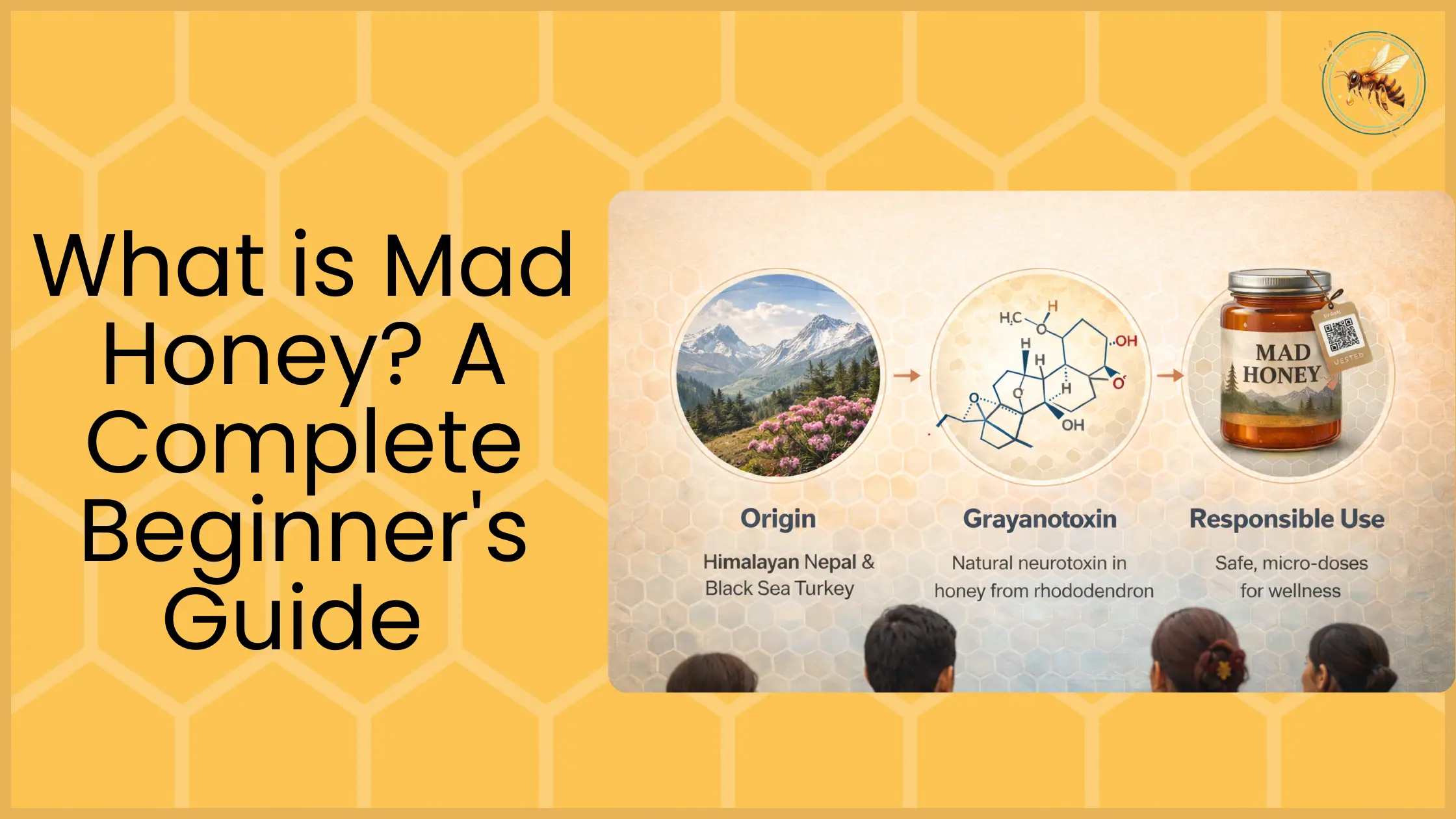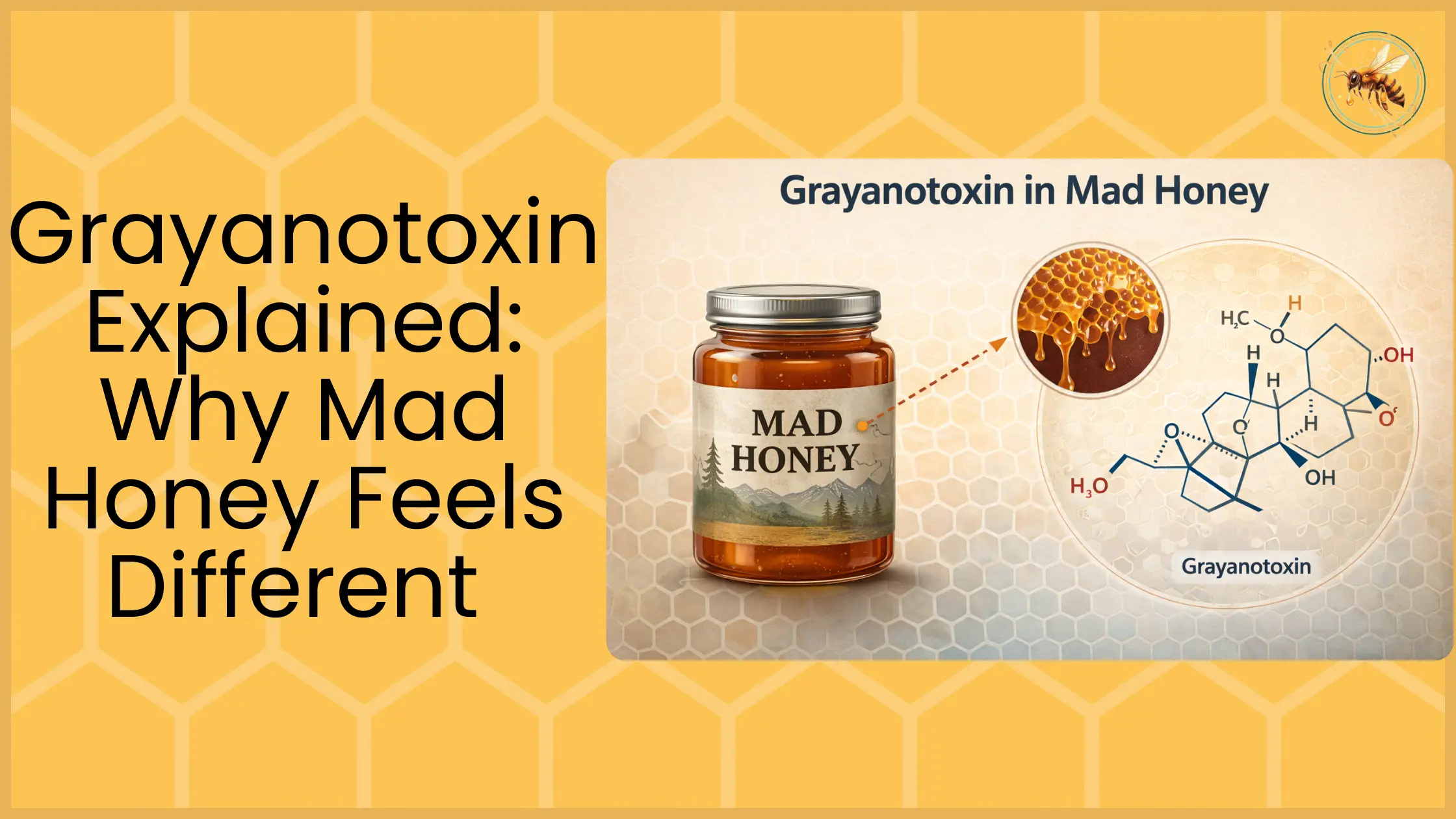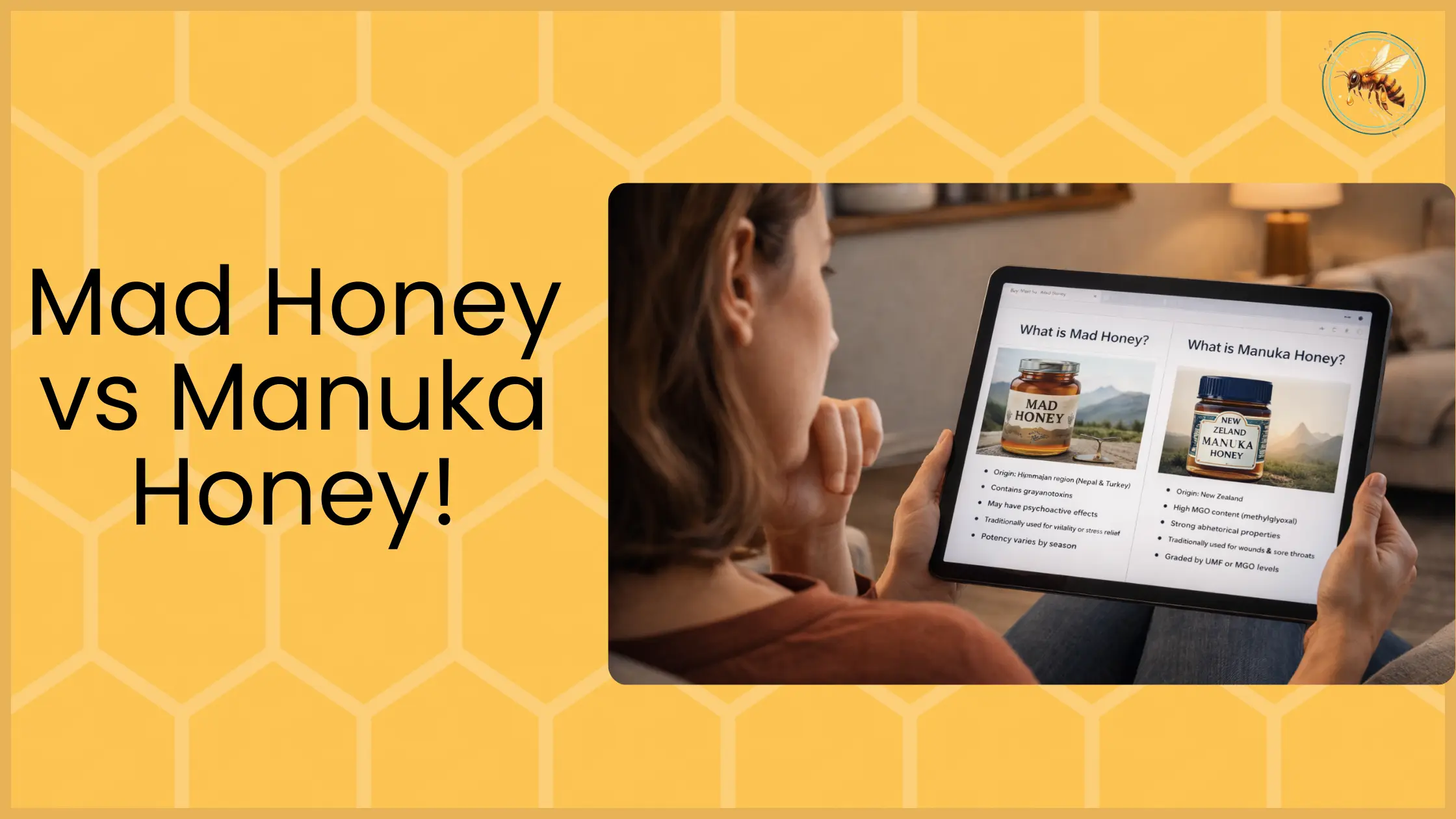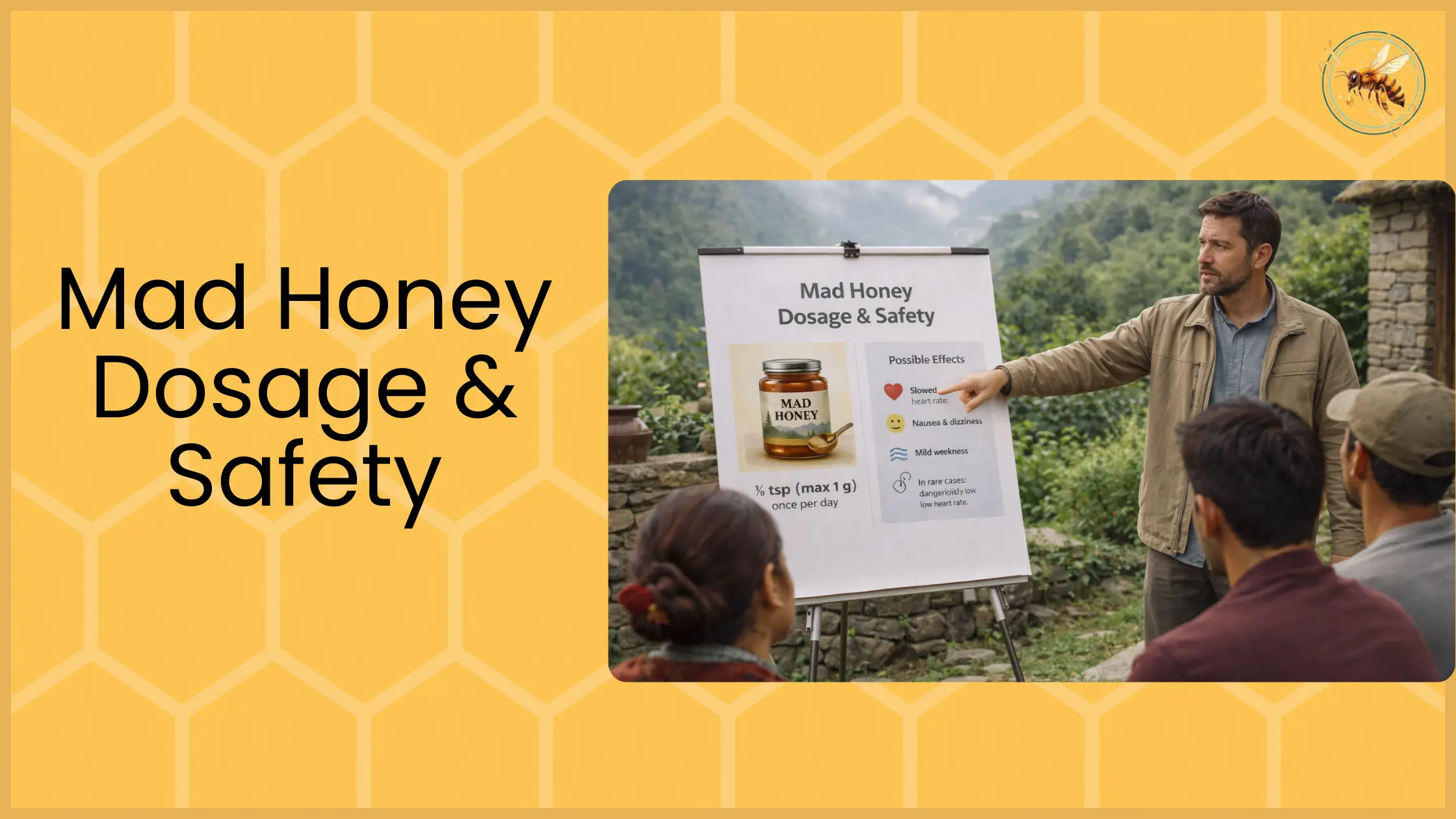
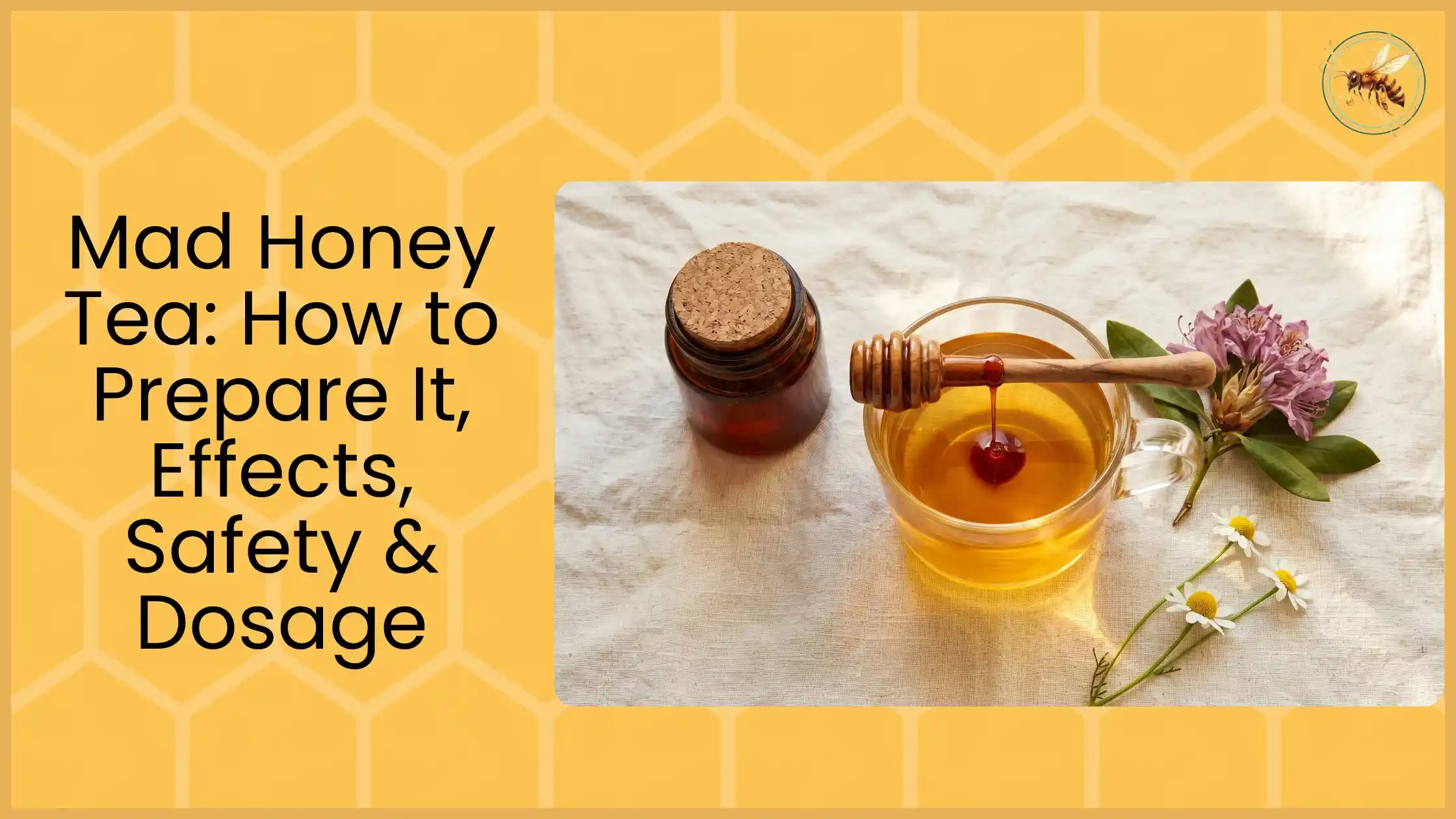
Mad honey tea is one of the simplest ways people use mad honey: warm water or herbal tea, a small amount of honey, and a slower evening-style ritual. It can feel more approachable than taking honey straight from the spoon because it turns the product into a warm drink rather than a concentrated taste experience.
But mad honey tea still needs a safety-first approach. Adding mad honey to tea does not remove grayanotoxins, does not make the effects more predictable, and does not make a strong batch safer. Mad honey can cause dose-dependent effects, and documented intoxication cases commonly involve symptoms such as dizziness, nausea/vomiting, sweating, low blood pressure, and slow heart rate.
The safest approach is to treat mad honey tea as a low-dose, calm-setting ritual, not a stronger version of normal tea and not a shortcut to intense effects.
Practical preparation and safety checks
Use warm water for mixing and flavor, but do not treat temperature as a detox step. Ordinary drink preparation does not provide a validated way to measure or remove grayanotoxins. Stir thoroughly, avoid reheating the same cup repeatedly, and do not top it up with extra honey before you know how the first serving affects you.
Batch strength can vary because toxin concentration is not uniform across products. A clinical review of grayanotoxin poisoning describes dizziness, low blood pressure, slow heart rate, nausea, vomiting, and fainting among the typical signs. For that reason, avoid combining the drink with alcohol, cannabis, sedatives, or medicines that affect blood pressure or heart rate unless a clinician has specifically cleared it. Do not drive or use it while alone.
Stop immediately if symptoms begin. Sit or lie down, ask someone to stay with you, and seek urgent medical help for fainting, chest pain, trouble breathing, confusion, severe weakness, or persistent vomiting. Keep the product container and batch details available for medical staff.
tl;dr
- You can put mad honey in tea, but heat does not make it risk-free; mad honey should still be used conservatively because grayanotoxins may remain relevant.
- The safest tea method is warm, not boiling: prepare the tea first, let it cool slightly, then stir in a small amount of mad honey.
- Mad honey tea can feel subtle at low amounts, but too much can cause dizziness, nausea, sweating, weakness, low blood pressure, or a slow heart rate.
- Do not mix mad honey tea with alcohol, sedatives, sleep aids, recreational substances, or medications without medical clearance.
- Children under 12 months should never be given honey of any kind because of the risk of infant botulism, and mad honey is not appropriate for children at all.
Quick Answer – Can You Put Mad Honey in Tea?
Yes. Mad honey can be stirred into warm tea or warm water.
The important part is how you frame it. Mad honey tea is not automatically safer than taking mad honey directly. It may feel gentler because it is diluted in a drink, but the amount of mad honey used still matters. If the tea contains the same quantity of honey, the grayanotoxin exposure can still be similar.
Yes, but keep it warm rather than boiling
Tea does not need to be boiling when mad honey is added. A better method is to brew the tea first, let it cool until it is comfortably warm, and then stir in the mad honey.
This has two advantages. It protects flavor, and it avoids the false belief that boiling water is required to “activate” the honey. Mad honey does not need activation.
Heat does not make mad honey safe
Hot water can dissolve honey, but it should not be treated as a detox method. It does not turn mad honey into regular honey, and it should not be relied on to remove active compounds.
The simplest safe takeaway
Make the tea mild, use a conservative amount, avoid mixing, and wait before considering more. If the goal is intensity, mad honey tea is the wrong format.
What Is Mad Honey Tea?
Mad honey tea is usually a warm drink made by adding mad honey to tea or warm water after brewing. It can be made with plain warm water, ginger tea, chamomile, mint, lemon, or other non-caffeinated herbal teas.
A simple preparation, not a separate product
Mad honey tea is not a different product from mad honey. It is simply mad honey diluted into a beverage. That means the same safety principles apply: dose matters, batch matters, personal sensitivity matters, and mixing matters.
Why people make it this way
People often choose tea because it feels calmer and more ritual-like than taking honey straight from a spoon. Warm tea can also soften the strong taste of mad honey, especially if the batch has earthy, bitter, herbal, or resin-like notes.
Why “tea” does not reduce the need for caution
A warm drink can feel gentle, but the body still responds to the amount of mad honey consumed. If someone uses too much, tea does not prevent side effects. It may even make it easier to consume more quickly because the flavor is diluted.
How to Make Mad Honey Tea Safely
Mad honey tea should be prepared simply and conservatively. The goal is a controlled drink, not a concentrated “shot.”
Step 1: Brew your tea first
Start with your tea base. Herbal tea is often the best fit because it avoids caffeine and keeps the experience calmer. Chamomile, mint, lemon balm, ginger, or plain warm water are common options.
If you use black or green tea, remember that caffeine can change how the body feels and may make it harder to interpret sensations like heart rate, anxiety, or lightheadedness.
Step 2: Let it cool slightly
Let the tea cool from boiling to comfortably warm before adding mad honey. This helps preserve aroma and taste, and it also prevents the honey from being exposed to unnecessary heat.
A simple rule: if the tea is too hot to sip comfortably, wait longer.
Step 3: Measure the mad honey separately
Do not pour straight from the jar into the cup. Measure separately so you know what you are taking. This prevents accidental overuse and helps you learn how your body responds.
A low-dose approach is especially important for first-time users because mad honey can vary by batch and person.
Step 4: Stir fully and sip slowly
Stir until the honey is fully dissolved. Sip slowly rather than drinking the entire cup quickly. This keeps the experience calmer and gives your body time to respond.
Step 5: Wait before deciding anything
Do not immediately make a second cup because you “feel nothing.” Delayed onset is one of the easiest ways people overdo mad honey. Wait long enough to understand the first amount before considering more.
Best Tea Types to Pair With Mad Honey
The best tea pairing is one that supports a calm, simple experience and does not add unnecessary variables.
Mild herbal teas
Herbal teas are usually the easiest pairing because they are naturally caffeine-free and less likely to complicate the experience. Good options include:
- chamomile
- mint
- lemon balm
- ginger
- rooibos
These teas can soften the flavor and make the drink feel more like an evening ritual.
Black tea
Black tea can work from a flavor perspective, especially if you like stronger, deeper, tannic notes. But black tea contains caffeine, which can complicate the experience for sensitive users. Caffeine may make some people feel more alert, anxious, or aware of their heart rate.
Green tea
Green tea is lighter and more delicate, but it still contains caffeine. It can pair well with floral or herbal honey notes, but it may not be the best choice for someone using mad honey in the evening or someone prone to anxiety.
Lemon and citrus
Lemon is common in honey tea and can make the flavor brighter. It does not “neutralize” mad honey or make it safer. Use lemon for taste, not as a safety strategy.
What to avoid
Avoid combining mad honey tea with alcohol, strong sedative herbs, cannabis drinks, kava, or other products intended to relax or alter mood. Stacking effects make the experience harder to predict and harder to troubleshoot if symptoms appear.
Does Hot Water Destroy Mad Honey?
Hot water may change taste and aroma, but it should not be relied on to remove mad honey’s active risk.
Heat can affect honey quality and flavor
Honey can lose some delicate aroma and fresh flavor when exposed to high heat. Very hot water can also make honey taste flatter or more “cooked.” For quality, warm water is better than boiling water.
Heat is not necessary to blend honey
Honey dissolves well in warm liquid. You do not need boiling water. If the drink is warm enough to sip, it is usually warm enough to dissolve honey with stirring.
Heat does not make mad honey safe
The most important point is safety. Heating the drink at normal tea temperatures should not be treated as a reliable way to remove grayanotoxins or make the honey harmless. If the honey is strong, the tea can still be strong.
Practical rule
Use warm water for comfort and flavor. Do not use heat as a safety method.
How Much Mad Honey Should You Add to Tea?
The safest approach is conservative because there is no universal amount that works for everyone.
Start with a conservative amount
For a first experience, the goal should be to learn sensitivity rather than to feel a dramatic effect. Mad honey varies by batch, and individual sensitivity differs. A beginner should think in terms of a small, measured amount rather than a full spoon added casually.
Why tea does not change the dose
Dilution changes taste and mouthfeel, not the amount of honey consumed. If you stir the same amount of mad honey into tea, you still consume that amount. The cup may feel gentler, but the body still processes the same honey.
Do not “top off” the cup
A common mistake is adding more honey halfway through the drink because the taste is pleasant or the effects are not obvious yet. That makes it easy to lose track of the amount. Measure once, stir, drink slowly, and wait.
When a cup is enough
One cup should be treated as a complete serving experience. Avoid making multiple cups in one session, especially as a first-time user or with a new batch.
What Does Mad Honey Tea Taste Like?
Mad honey tea can taste different depending on the batch, tea base, and amount used.
Sweet, floral, herbal, sometimes slightly bitter
Mad honey is still honey, so sweetness is the foundation. But many batches have more complex notes than common table honey. People may notice floral, herbal, earthy, woody, bitter, or resin-like flavors.
Why tea can soften the bitterness
Warm water and herbal tea can round out the sharper notes. Chamomile, mint, ginger, or lemon can make the flavor feel smoother and easier to drink.
Why taste alone cannot prove strength or authenticity
Taste is not a reliable safety test. A stronger taste does not always mean stronger effects, and a mild taste does not prove the honey is weak. Color, bitterness, thickness, and aroma can all vary for reasons that are not directly tied to potency.
Taste and authenticity myths
Do not judge mad honey only by whether it tastes bitter, burns the throat, or looks dark red. These can be clues, but they are not proof. Origin, batch transparency, and lab reporting are better authenticity signals.
What Effects Should You Expect?
Mad honey tea effects depend on the amount used, batch strength, personal sensitivity, stomach contents, and whether anything else was taken with it.
At low amounts
A low amount may feel subtle. Some people describe:
- gentle calm
- warmth
- body heaviness
- slightly slower pace
- relaxed evening feeling
Some people feel very little. That does not automatically mean the honey is fake. It may mean the amount was low, the batch is mild, the food slowed onset, or the person is less sensitive.
If you took too much
Too much mad honey can feel uncomfortable rather than relaxing. Symptoms can include dizziness, nausea, vomiting, sweating, weakness, confusion, low blood pressure, and slow heart rate. Clinical case summaries of mad honey poisoning commonly describe hypotension and bradycardia, often with nausea/vomiting and sweating.
If it feels intense, stop
If the tea causes strong dizziness, nausea, sweating, weakness, faintness, chest discomfort, breathing trouble, or confusion, do not take more. Sit or lie down and seek medical help if symptoms are severe, persistent, or worsening.
How Long Does Mad Honey Tea Take to Kick In?
Mad honey tea does not always feel immediate. Timing depends on food, batch, amount, and personal sensitivity.
Onset can vary
Some people may notice effects within under an hour, while others may notice them later. Case reports and poison-control summaries describe mad honey symptoms appearing after ingestion and involving cardiovascular and gastrointestinal symptoms.
Why tea can create false confidence
Because tea is warm and soothing, a person may assume it is mild. That can lead to taking more too soon. The drink may feel gentle at first, but the effects can build later.
Wait before re-dosing
Do not make a second cup quickly. Waiting is part of the safety process. This is especially important with a new batch.
What Not to Mix With Mad Honey Tea
Mad honey tea should stay simple.
Alcohol
Do not mix mad honey tea with alcohol. Alcohol can increase dizziness, nausea, dehydration, impaired judgment, and fall risk. If mad honey also lowers blood pressure or slows heart rate, the combination becomes harder to predict.
Sleep aids or sedatives
Avoid combining mad honey tea with sleep medication, sedatives, muscle relaxants, strong antihistamines, or calming products that make you drowsy. Stacking can increase weakness, dizziness, confusion, and poor coordination.
Blood pressure or heart-rate medication
People taking medication that affects blood pressure or heart rate should not use mad honey without medical guidance. Mad honey’s cardiovascular effects can overlap with those of these medications.
Strong calming supplements
Avoid stacking with kava, cannabis products, mushroom gummies, valerian, strong relaxation blends, or other products used for mood or body effects. Even if each item seems mild on its own, the combination can be unpredictable.
Who Should Not Drink Mad Honey Tea?
Mad honey tea is not suitable for everyone.
People with low blood pressure
Mad honey can contribute to low blood pressure symptoms. People who already have low blood pressure, frequent dizziness, or fainting tendencies should avoid it.
People with heart conditions
People with heart rhythm issues, slow heart rate concerns, a history of fainting, or diagnosed heart disease should avoid mad honey unless medically cleared.
Pregnant or breastfeeding women
Pregnancy and breastfeeding call for conservative avoidance. There is no reliable safe-use standard for mad honey, and the risk-to-benefit balance does not make sense.
Children
Children should not drink mad honey tea. Honey is also not safe for infants under 12 months because of infant botulism risk; CDC advises that honey should not be given to children younger than 12 months or added to their food, water, formula, or pacifier.
Medication users without medical clearance
Anyone taking medication for blood pressure, heart rhythm, anxiety, sleep, sedation, or dizziness-related conditions should avoid mad honey unless a clinician says it is appropriate.
Safety Tips for First-Time Mad Honey Tea
A first mad honey tea should be calm, measured, and simple.
Use a calm setting
Choose a quiet environment where you can sit comfortably and do not need to drive, work, exercise, or make important decisions.
Do not drive or work afterward
Do not use mad honey tea before driving, cycling, swimming, exercising, operating tools, or taking care of children alone. Dizziness can appear after a delay.
Keep the serving measured
Measure the mad honey before adding it to the cup. Do not keep adding extra spoonfuls because the tea tastes good.
Sip slowly
Drink slowly and give your body time to respond. Treat the first cup as a sensitivity check.
Have someone aware if nervous
If you are anxious, sensitive to body sensations, or trying a new batch, have a trusted person nearby or at least let someone know. This is especially useful if you are worried about dizziness or fainting.
What To Do If Mad Honey Tea Makes You Feel Unwell
If symptoms appear, the goal is to avoid making the situation worse.
Stop taking more immediately
Do not drink the rest of the cup if symptoms feel strong. Do not make another cup.
Sit or lie down
If you feel dizzy, weak, or faint, sit or lie down and avoid standing quickly. This reduces fall risk.
Monitor symptoms
Pay attention to whether symptoms are improving or worsening. Mild discomfort may pass, but worsening symptoms need attention.
Hydrate slowly
Sip water if you can keep it down. If you are vomiting, avoid forcing large amounts quickly.
Seek medical help for red flags
Seek help if you experience fainting or near-fainting, chest pain, trouble breathing, severe weakness, confusion, persistent vomiting, or a very slow pulse sensation. Tell the medical professional you consumed mad honey or honey that may contain grayanotoxins.
Mad Honey Tea vs Taking It Straight
Both methods use the same product, but the experience can feel different.
Tea can make the experience feel gentler
Dilution can soften the taste and slow the drinking pace. For many people, a warm tea ritual feels calmer than taking honey directly from a spoon.
The dose is still the dose
If the amount of honey is the same, the exposure is still the same. Tea does not erase the active compounds.
Tea can also encourage overuse
Because tea tastes familiar and pleasant, people may add more than they would take straight. That is why measuring matters.
Use tea as a comfort format, not a safety shortcut
Mad honey tea is best understood as a more comfortable serving style, not as a risk-free version of mad honey.
Conclusion
Mad honey tea can be a simple, calm way to use mad honey, but it should be treated with the same caution as mad honey taken directly. Tea changes the serving style; it does not remove grayanotoxins, erase batch variability, or make overuse safe.
The safest approach is clear: use warm, not boiling, tea, measure conservatively, sip slowly, avoid mixing, stay in a calm setting, and stop if symptoms feel uncomfortable. Mad honey tea should be a controlled ritual, not a stronger experiment.
FAQs – Mad Honey Tea
Can you put honey in hot tea?
Yes, but warm tea is better than boiling tea for preserving flavor. Brew the tea first, let it cool slightly, then stir in the honey.
Should tea be boiling when adding mad honey?
No. There is no need to add mad honey to boiling water. Comfortably warm tea is enough.
Will hot tea make mad honey safer?
No. Heat should not be relied on to remove grayanotoxins or make mad honey safe.
How much mad honey should I put in tea?
Use a conservative, measured amount. There is no universal amount because batch strength and personal sensitivity vary.
Can I make a second cup?
Avoid making a second cup quickly. Wait long enough to understand the first cup’s effects, especially with a new batch.
How long does mad honey tea take to work?
Timing varies by person, amount, food, and batch. Do not assume no effect just because nothing happens immediately.
Can I drink mad honey tea every day?
Daily use is not the safest default. Mad honey is batch-variable and dose-sensitive, so occasional conservative use is safer than routine use.
Can I mix mad honey tea with alcohol?
No. Alcohol increases dizziness, nausea, dehydration, impaired judgment, and risk.
Is mad honey tea safe for children?
No. Children should not take mad honey. Infants under 12 months should not be given any honey because of botulism risk.
What should I do if I feel dizzy after drinking it?
Stop taking more, sit or lie down, hydrate slowly if possible, and seek medical help if symptoms are severe, persistent, or include fainting, chest pain, trouble breathing, confusion, or persistent vomiting.