
Nepal and Turkey are the two regions most people hear about when they start researching mad honey. Both are connected to rhododendron nectar, grayanotoxins, traditional use, and honey that can feel very different from regular table honey. But they are not the same product in a practical sense. The origin story, harvesting method, cultural background, taste profile, market structure, and documentation standards can differ a lot.
Nepal mad honey is usually known for Himalayan cliff harvesting, Apis laboriosa, Gurung honey hunters, and the dramatic image of wild combs hanging from steep rock faces. Turkish mad honey is usually known as deli bal, a Black Sea rhododendron honey with a long regional tradition and a strong presence in clinical case literature on grayanotoxin intoxication.
The most important point is that a country alone does not tell you how strong, safe, authentic, or high-quality a mad honey batch is. A Nepal batch can be mild or strong. A Turkish batch can be mild or strong. What matters most is the actual batch: where it came from, when it was harvested, which flowers influenced it, whether it was tested, and whether the seller provides realistic safety guidance.
tl;dr
- Nepal mad honey is best known for its Himalayan cliff-harvest story, while Turkish mad honey is best known as deli bal from the Black Sea region.
- Both Nepalese and Turkish mad honey can contain grayanotoxins, but potency cannot be ranked by country because batch variation is the real deciding factor.
- Nepal’s identity is strongly linked to Apis laboriosa, wild cliff combs, and honey-hunting communities, while Turkey’s identity is strongly linked to rhododendron-rich forests and a long deli bal tradition.
- Turkish mad honey appears often in medical literature because Turkey has a long history of deli bal consumption and many documented intoxication cases.
- The best mad honey is not automatically Nepalese or Turkish; it is the one with a clear origin, batch transparency, responsible safety guidance, and realistic claims.
Quick Answer: Is Nepal or Turkish Mad Honey Better?
The better choice depends on what the buyer actually values. If someone wants the strongest cultural story, Nepal mad honey often stands out because of the Himalayan cliff-harvest tradition. If someone wants the classic deli bal reference point, Turkish mad honey is usually the better-known origin. If someone wants the safest buying decision, neither country wins automatically. The safer choice is the batch with better testing, clearer labeling, and more conservative guidance.
Nepal mad honey is usually known for the cliff-harvest story
Nepal mad honey is closely associated with Himalayan honey hunting. The image most people recognize is a honey hunter hanging from a rope ladder beside a cliff, with smoke rising around giant exposed honeycombs. This story is powerful because it is real, rare, dangerous, and culturally rooted.
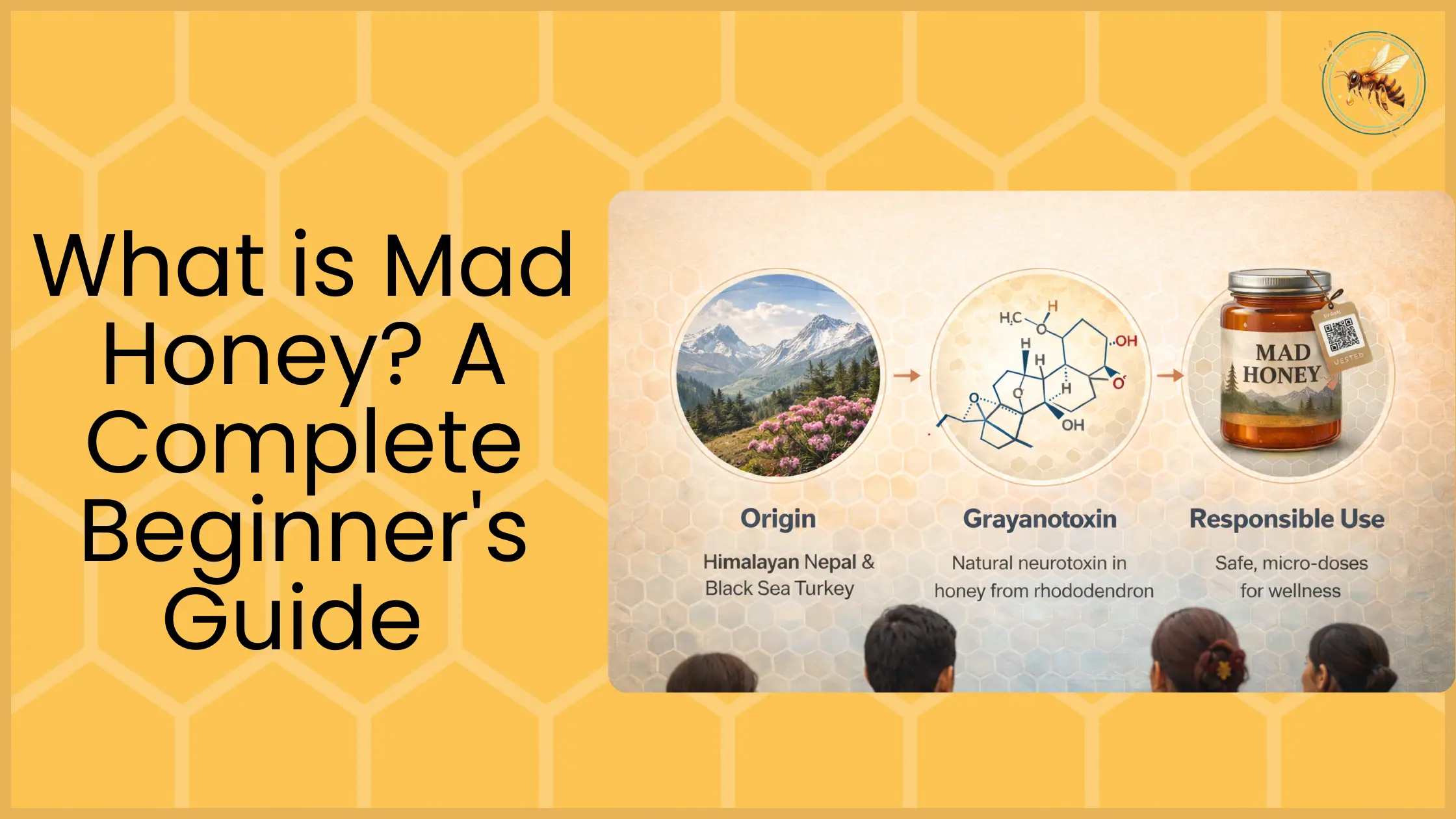
Nepal’s mad honey identity is also linked to Apis laboriosa, the Himalayan giant honey bee. These bees can build large open combs on cliff faces in mountainous regions. In some seasons and locations, the bees may collect nectar from rhododendron blooms, which can contribute grayanotoxins to the honey.
For buyers who care about origin story, rarity, and traditional harvesting, Nepal mad honey often feels more distinctive.
Turkish mad honey is usually known as deli bal
Turkish mad honey is commonly called deli bal, which is often translated as “mad honey.” It is strongly associated with Turkey’s Black Sea region, where rhododendron-rich landscapes have supported a long tradition of honey with unusual effects.
Turkey is also one of the most important reference points in modern discussions of mad honey safety. Many clinical reports and toxicology discussions involve Turkish deli bal, partly because the product has a long regional use history and cases of grayanotoxin intoxication have been documented there repeatedly.
For buyers who care about traditional deli bal, Black Sea origin, and the historically documented mad honey region, Turkey is highly relevant.
Better depends on what the buyer values
For cultural stories, Nepal usually has a stronger visual and anthropological appeal. For the deli bal tradition, Turkey is the classic reference. For buying safety, the winner is whichever product gives you a tested batch, clear origin, and cautious instructions. For authenticity, traceability matters more than the country name. For potency, a lab report matters more than whether the jar says Nepal or Turkey.
The best simple answer is this: the best mad honey is not “Nepal” or “Turkey” by default. It is the one with a clear origin, batch transparency, responsible safety guidance, and realistic claims.
What Nepal Mad Honey Is
Nepal mad honey is usually described as Himalayan mad honey connected to wild bee colonies, cliff harvesting, and rhododendron bloom zones. It is one of the most visually recognizable types of mad honey because of the way it is harvested and the landscapes it comes from.
Himalayan cliff honey context
Nepal mad honey is often associated with honey collected from wild colonies in steep Himalayan foothill and mountain areas. Instead of ordinary managed hives, the most famous Nepal honey stories involve exposed combs built on cliffs. Harvesters may use ropes, ladders, smoke, baskets, and coordinated team methods to collect sections of comb.
This harvesting style gives Nepal mad honey its strong cultural identity. It feels less like a standard market honey and more like a seasonal wild harvest connected to a specific landscape.
The role of Apis laboriosa
Apis laboriosa is the Himalayan giant honey bee. It is known for nesting on difficult cliff faces and building large, exposed combs. This bee species is one reason Nepal mad honey has such a distinct reputation.
However, the bee species alone does not make honey “mad.” The bee creates the honey and shapes the harvest context, but the intoxicating potential comes from the nectar source. If the bees are foraging from rhododendron or other relevant toxic blooms during the right season, the honey may contain grayanotoxins. If they are foraging from other flowers, the honey may be wild cliff honey without the same effect profile.
The role of the rhododendron bloom
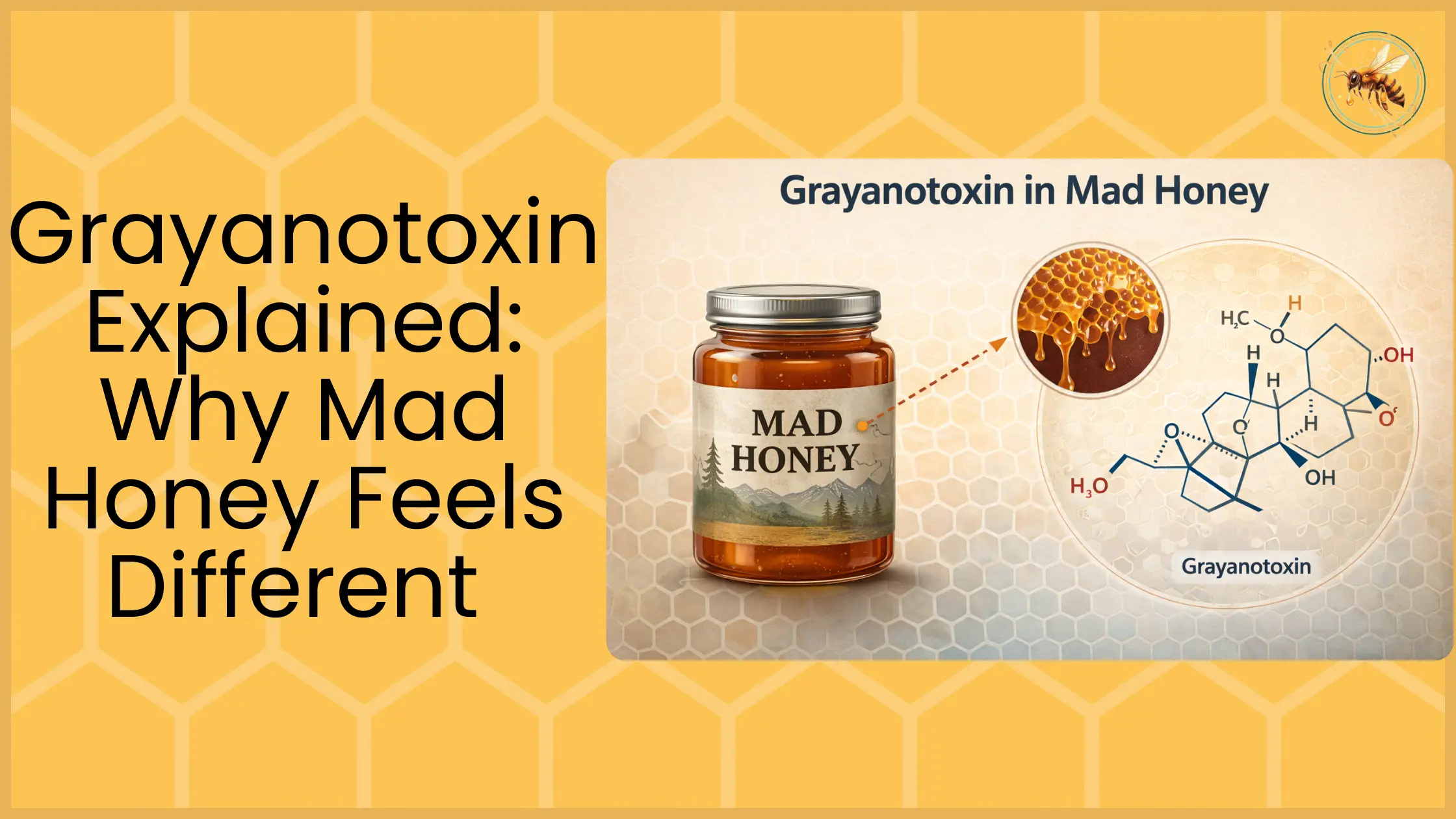
Rhododendron bloom is central to the mad honey discussion. Certain rhododendron species can produce nectar containing grayanotoxins. When bees forage heavily from those blooms, the resulting honey may have dose-dependent effects.
In Nepal, this is often connected to spring harvests. Spring bloom can change the nectar profile, and some batches may become more active because of the flowers available at that time. But this varies by location, altitude, weather, and season.
Important correction
Not all Nepal cliff honey is mad honey. This is one of the biggest misunderstandings in the category. A honey can be from Nepal, harvested from cliffs, and produced by wild bees without necessarily being strongly grayanotoxin-active. The intoxicating character is seasonal and localized. It depends on the floral source, grayanotoxin presence, and batch conditions.
What Turkish Mad Honey Is
Turkish mad honey is one of the most historically and medically discussed forms of mad honey. It is commonly tied to the Black Sea region and to rhododendron species that are repeatedly mentioned in mad honey research and poisoning reports.
Deli bal meaning
In Turkey, mad honey is often called deli bal. The term refers to honey known for unusual effects when consumed in certain amounts. It has a traditional regional reputation and is often discussed as both a folk product and a toxicology concern.
The name itself carries part of the story. Deli bal is not just “special honey.” It is well-known for its ability to cause noticeable body effects, especially when taken carelessly or in larger amounts.
Black Sea region
The Black Sea region is the core Turkish mad honey area. Its climate, forests, mountainous zones, and rhododendron growth make it one of the most important regions for deli bal production.
Because Turkish deli bal has a long local consumption history, it also appears frequently in real-world safety discussions. People in the region may know the product culturally, but that does not remove the risks. Traditional familiarity and biological safety are not the same thing.
Rhododendron ponticum and Rhododendron luteum
Rhododendron ponticum and Rhododendron luteum are especially important in the Turkish context. These species are associated with grayanotoxins and are often discussed in relation to Turkish mad honey.
Their presence helps explain why Turkey is such a major reference point for grayanotoxin honey. The plant source is central. Turkish deli bal is not defined by a famous cliff bee species in the way Nepalese honey often is. It is more strongly defined by rhododendron ecology and regional tradition.
Why Turkish mad honey appears often in medical literature
Turkey has a long tradition of deli bal consumption, and many intoxication cases have been documented there. This makes Turkish mad honey a major reference point for grayanotoxin poisoning research.
That does not mean Turkish honey is always more dangerous than Nepalese honey. It means Turkey has a strong combination of tradition, access, clinical reporting, and regional rhododendron honey use.
Origin and Geography Comparison
Geography matters because mad honey is not a standardized factory product. It is shaped by plants, bees, altitude, season, and local harvesting practices.
Nepal origin profile
Nepal mad honey is associated with the Himalayan foothills, cliff regions, and honey-hunting districts such as Lamjung and Kaski. These areas are linked to wild bee habitats, rugged terrain, and community-based harvesting practices.
The origin profile is often remote and seasonal. Supply can be limited because harvests depend on access, weather, bee activity, and local labor. This contributes to the rarity story, but it also makes traceability important. A vague “Himalayan” label is not enough. Buyers should look for region, harvest season, and batch details.
Turkey origin profile
Turkish mad honey is associated with the Black Sea region, rhododendron-rich forest zones, and local deli bal tradition. Compared with Nepal, the Turkish market can feel more regionally commercialized, with deli bal sold through local and online channels.
The Turkish origin story is less about dramatic cliff harvesting and more about regional rhododendron honey, traditional use, and the known Black Sea connection.
Why geography affects the honey
Altitude, climate, bloom timing, plant species, soil, rainfall, and bee foraging patterns all influence the final honey. A dry season can change nectar flow. A heavy bloom period can shift the floral source. A different altitude can change which plants are available. This is why two batches from the same country may still feel different.
Bee Species: Nepal vs Turkey
Bee species help explain harvesting style and regional identity, but they do not independently determine potency.
Nepal: Apis laboriosa
Nepal’s mad honey story is strongly linked to Apis laboriosa. This bee is famous for building large combs on cliff faces in the Himalayan regions. The scale of the combs, the danger of the harvest, and the traditional knowledge required all contribute to the mystique of Nepal mad honey.
Apis laboriosa is important for the Nepal story because it connects the honey to wild harvesting, mountain ecology, and cultural tradition.
Turkey: managed and wild honeybee context
Turkish deli bal is more strongly defined by the rhododendron source and Black Sea ecology than by one famous bee species. The key factor is not whether the honey came from a dramatic cliff colony. It is whether bees collected nectar from grayanotoxin-containing rhododendron species.
This makes Turkish mad honey less visually famous but still scientifically and culturally important.
Why bee species alone does not define mad honey
The bee matters for honey style, nesting behavior, comb structure, harvest method, and local ecology. But grayanotoxin content depends mainly on the nectar source. A cliff bee can produce non-intoxicating honey if the nectar source is not relevant. A managed bee colony can produce grayanotoxin-containing honey if it forages from the right rhododendron flowers.
Do not assume “cliff bee honey” automatically means stronger mad honey.
Harvesting Method Comparison
The harvest method is one of the clearest visible differences between Nepal and Turkey.
Nepal: cliff hunting
Nepal mad honey is famous for cliff hunting. Traditional harvests may involve rope ladders, smoke, wild cliff combs, team-based collection, and dangerous descents. The process requires skill, coordination, and local knowledge.
This type of harvesting creates a strong cultural and visual identity. It also helps explain why Nepalese mad honey is often positioned as rare and premium. The harvest is difficult, seasonal, and not easily scaled.
Turkey: regional honey production
Turkish deli bal is usually associated with regional honey production in Black Sea rhododendron zones. It is less globally famous for cliff hunting and more associated with local markets, forested regions, traditional use, and the deli bal reputation.
This does not make Turkish honey less authentic. It simply means the authenticity signals are different. For Turkey, the important signals are Black Sea origin, rhododendron context, batch transparency, and realistic effect language.
Why Nepal has stronger visual storytelling
Nepal has stronger visual storytelling because the harvest itself is cinematic. Cliff faces, smoke, giant bees, and hanging combs are immediately memorable. But visual drama does not prove potency. A beautiful harvest photo tells you something about culture and origin, but it does not tell you the grayanotoxin level of the jar.
Culture and History Comparison
Both Nepal and Turkey have cultural depth. They should not be reduced to stereotypes.
Nepal cultural angle
Nepal’s cultural angle centers on honey hunting as livelihood, heritage, social identity, and community practice. Honey hunting can involve inherited skills, local decision-making, seasonal labor, and community participation. The harvest is not only a product story. It is also a human story.
For many readers, Nepal mad honey is compelling because it connects the jar to people, cliffs, bees, and mountain life.
Turkey cultural angle
Turkey’s cultural angle centers on deli bal as a traditional regional honey with a folk-use history. The Black Sea region gives Turkish mad honey a strong identity, and deli bal has long been associated with unusual effects, traditional use, and caution.
Turkey’s story is not only about poisoning reports. It is also about regional honey culture and a long relationship between people, rhododendron landscapes, and local food traditions.
Historical overlap
Ancient Black Sea and Pontus accounts are often linked to the broader history of mad honey. This gives Turkey a strong historical connection in many mad honey articles, especially those discussing Xenophon, ancient armies, and early records of honey intoxication.
Nepal and Turkey both matter, but in different ways. Nepal often carries the strongest harvesting story. Turkey often carries the strongest historical and clinical reference story.
Effects Comparison
Both Nepalese and Turkish mad honey can produce dose-dependent body effects if they contain enough grayanotoxins. The overlap is important, but it should be described carefully.
What both have in common
Both can contain grayanotoxins, and both may affect the body differently from regular honey. Effects are not guaranteed and should not be exaggerated. They depend on the batch, amount, person, timing, food intake, and individual sensitivity.
Low-dose reports
At lower amounts, users may report warmth, calm, body heaviness, mild relaxation, or altered body sensation. These reports should be understood as subjective experiences, not medical claims. Some people may feel very little, especially if the batch is mild or the serving is small.
Too much
Too much Nepal or Turkish mad honey can cause dizziness, nausea, sweating, weakness, low blood pressure, slow heart rate, and risk of fainting. These symptoms are part of why mad honey needs conservative use.
Why effects cannot be ranked by country
Effects cannot be ranked by country because individual sensitivity and batch strength matter more than Nepal vs Turkey. A lab-tested Nepal batch can be stronger than a Turkish batch, or a lab-tested Turkish batch can be stronger than a Nepal batch. Without batch data, country-based potency claims are mostly marketing.
Grayanotoxin Comparison: Which Has More GTX?
There is no fixed answer. Grayanotoxin levels vary widely, and that variation is the central safety issue in mad honey.
Why there is no fixed answer
Grayanotoxin content can vary by plant species, bloom period, environment, harvest timing, dilution with other nectar sources, and production practices. Even within one country, one region, or one seller’s supply chain, two batches can differ.
This is why “Nepal is stronger” or “Turkey is stronger” is the wrong way to compare them.
Turkey data
Turkish Black Sea mad honey has documented GTX variability across multiple studies. Different samples can show very different levels of GTX I, GTX III, or total grayanotoxins. This makes Turkey a valuable reference point for research, but it also shows why a single country’s reputation cannot replace testing.
Nepal data
Nepal and Himalayan-region mad honey samples also show variable grayanotoxin levels in published data, including samples tested outside Nepal from honey described as Himalayan-region origin. This supports the same conclusion: Nepal mad honey is not one uniform potency category.
Correct interpretation
A lab-tested Nepal batch can be stronger than a Turkish batch, or vice versa. Country is not a reliable potency measurement. The correct potency question is: What are the actual grayanotoxin results for this batch?
Taste and Appearance Comparison
Taste and appearance can help set expectations, but they cannot prove authenticity or strength.
Nepal mad honey taste
Nepal mad honey is often described as earthy, floral, herbal, sometimes bitter, and more complex than regular honey. Because it is often tied to wild harvesting and mixed mountain flora, the flavor can feel layered rather than simple.
Some batches may have a reddish or amber tone, especially when marketed as spring honey. But color depends on nectar mix, age, storage, and handling.
Turkish mad honey taste
Turkish mad honey is often described as dark, bitter, sharp, resinous, herbal, and less “sweet-only” than regular honey. Deli bal can have a strong character because of its rhododendron source and regional identity.
The bitterness is part of its reputation, but bitterness alone does not prove strength.
Color differences
Nepal spring honey may be marketed as red honey. Turkish deli bal can also appear dark or reddish depending on the source and processing. Both categories can vary visually.
Important buyer note
Taste and color cannot prove strength or authenticity. A dark jar is not automatically stronger. A red jar is not automatically real. A bitter taste is not a lab result.
Safety Comparison
The safer product is not the one from a certain country. The safer product is the one with better testing, clearer warnings, and more conservative guidance.
Shared safety risks
Both Nepalese and Turkish mad honey can cause grayanotoxin-related symptoms, especially at higher intake. The main risk is not that the honey is “bad.” The risk is that active compounds can be unpredictable when the batch is not measured or when the person takes too much.
Cardiovascular risk
Hypotension and bradycardia are central warning patterns in grayanotoxin exposure. In plain language, this means blood pressure may drop, and heart rate may slow. This can lead to dizziness, weakness, faintness, or more serious symptoms in sensitive people.
Anyone with low blood pressure, heart rhythm issues, a history of fainting, pregnancy, breastfeeding, or relevant medication use should avoid mad honey unless medically cleared.
Batch variability risk
The same spoonful can behave differently across different batches. This matters for both Nepal and Turkey. A person may tolerate one jar and react strongly to another. That is why re-dosing quickly or chasing the strongest batch is risky.
Safety conclusion
The best safety signals are batch testing, clear instructions, conservative serving guidance, high-risk-group warnings, and realistic effect language. A seller who explains limits is more trustworthy than a seller who only promises intensity. Thinking of traveling to buy in either region? See the travel guide.
Authenticity and Scam Risk
Mad honey is easy to romanticize, and that makes it easy to mislabel. Buyers should look beyond the country name and check whether the seller can actually support the claim.
Nepal mad honey red flags
Be cautious with vague “Himalayan” claims, no region or harvest details, stock cliff-hunting photos with no traceability, no safety guidance, or “guaranteed trip” language. A dramatic photo does not prove that the jar came from that harvest.
Turkish mad honey red flags
Be cautious with vague “deli bal” claims, no Black Sea region details, no batch information, exaggerated potency claims, or no lab report. Turkish origin should come with a regional context, not just a label.
What real transparency looks like
Real transparency means the seller provides country, region, harvest season, batch ID, lab report or COA, realistic effects guidance, and warnings for high-risk groups. The more specific the seller is, the easier it is to trust the product.
Best buyer rule
If the seller markets intensity but hides documentation, skip it.
Nepal vs Turkey for First-Time Buyers
First-time buyers usually ask which one is safer, which one is stronger, which one is more authentic, and which one tastes better. The best beginner answer is not based on origin alone.
Best beginner choice
Choose the product with clear dosage guidance, batch transparency, realistic claims, safety warnings, and support or contact information. Beginners should care less about country prestige and more about whether the seller helps them avoid overuse.
What beginners should avoid
Avoid sellers using language like “strongest,” “psychedelic,” “guaranteed high,” or “no limits.” This type of marketing encourages the exact mindset that makes mad honey riskier.
Nepal vs Turkey for Cultural Interest
For cultural interest, the choice depends on which story you want to understand more deeply.
Choose Nepal if you care about cliff-harvest heritage
Nepal is the better fit for readers interested in honey hunters, Apis laboriosa, Himalayan sourcing, wild combs, mountain villages, and harvesting traditions. It is the more visually dramatic origin.
Choose Turkey if you care about deli bal history
Turkey is the better fit for readers interested in Black Sea rhododendron honey, ancient-history links, regional Turkish tradition, and the clinical literature around mad honey intoxication.
Both stories deserve respect. Nepal is not only “wild cliff honey,” and Turkey is not only “poisoning cases.”
Which One Is More Expensive?
Price can be influenced by rarity, origin story, labor, shipping, and documentation. It should not be used as proof of potency.
Nepal price factors
Nepal mad honey may cost more because of risky cliff harvesting, low supply, a strong visual and cultural story, international shipping, and rarity marketing. When the sourcing is genuine, the harvest process itself can justify a premium.
Turkey price factors
Turkish mad honey pricing can be shaped by deli bal reputation, Black Sea origin, seasonal availability, and regional authenticity. Some Turkish products may be easier to source through established regional trade, while others may still be rare or premium.
Price warning
Expensive does not automatically mean authentic or stronger. A high price should come with better documentation, not just better storytelling.
Legal and Import Considerations
Mad honey legality depends on the country where it is sold, the way it is labeled, and the claims made around it.
Country of origin can affect customs treatment
Some countries may inspect honey imports, especially if the product is marketed in a way that sounds unsafe, drug-like, or medicinal. Honey is a food product, but import paperwork, labeling, declared contents, and buyer intent can still matter.
Product claims matter
Claims like “psychedelic,” “trip,” “high,” or disease-treatment promises can create more legal and compliance friction. Responsible sellers use food-safe, experience-based, and safety-first language.
For broader legal guidance, you should check Is Mad Honey Legal? What “Legal” Actually Means (US, UK, Canada, and More)
Nepal vs Turkish Mad Honey Comparison Table
The table reinforces the main point: “best” depends on traceability, testing, and purpose, not country alone.
| Category | Nepal Mad Honey | Turkish Mad Honey |
| Main region | Himalayan foothills and cliff regions | Black Sea region |
| Common identity | Bhir Maha (Himalayan cliff honey) | Deli bal |
| Bee species context | Strongly linked to Apis laboriosa | More defined by rhododendron ecology than one famous bee species |
| Plant source | Rhododendron bloom zones and mixed mountain flora | Rhododendron ponticum, Rhododendron luteum, and the regional Black Sea flora |
| Harvesting method | Often associated with cliff hunting, ropes, smoke, and wild combs | More associated with regional honey production and local deli bal trade |
| Cultural story | Gurung honey hunters, mountain livelihood, wild harvest heritage | Black Sea tradition, deli bal history, folk use, clinical case history |
| Common taste notes | Earthy, floral, herbal, sometimes bitter, wild-honey complexity | Dark, bitter, sharp, resinous, herbal |
| Main safety concern | Batch variability, grayanotoxin exposure, and overuse | Batch variability, grayanotoxin exposure, and overuse |
| Authenticity signals | Region, harvest season, batch ID, real sourcing details, safety guidance | Black Sea origin, batch ID, lab report, deli bal context, safety guidance |
| Best for which buyer | Cultural story, Himalayan heritage, cliff-harvest interest | Deli bal tradition, Black Sea origin, historical and clinical context |
Conclusion
Nepal mad honey and Turkish mad honey are two different expressions of the same broader phenomenon: rhododendron-linked honey with variable grayanotoxin content. Nepal is known for Himalayan cliff harvesting, Apis laboriosa, and Gurung honey-hunting heritage. Turkey is known for deli bal, Black Sea rhododendron honey, and a strong presence in historical and clinical discussions.
The wrong question is “Which country is stronger?” The better question is: which batch is traceable, tested, responsibly labeled, and realistic about safety?
Nepal may offer a stronger cliff-harvest story. Turkey may offer a stronger deli bal history. But the best mad honey is the one that treats potency, authenticity, and safety with transparency instead of hype.
FAQs: Nepal vs Turkish Mad Honey
Is Nepal mad honey stronger than Turkish mad honey?
Not automatically. Strength depends on grayanotoxin content in the specific batch, not the country name.
Is Turkish mad honey the same as deli bal?
Yes, Turkish mad honey is commonly called deli bal, especially in the Black Sea region context.
Is Nepal mad honey always cliff honey?
Not always. Nepal mad honey is often marketed through the cliff-harvest story, but buyers should still verify origin and harvest details.
Is all Apis laboriosa honey mad honey?
No. Apis laboriosa can produce cliff honey, but the honey becomes “mad” only when the nectar source contributes meaningful grayanotoxins.
Which one tastes better?
Taste is personal. Nepal mad honey may taste earthy, floral, and wild. Turkish deli bal may taste darker, sharper, more bitter, and more herbal.
Which one is safer?
The safer one is the batch with better testing, clearer labeling, conservative guidance, and realistic claims.
Which one is more authentic?
The more authentic one is the product with better traceability. Country labels alone do not prove authenticity.
Why does Turkey appear more often in poisoning reports?
Turkey has a long deli bal tradition and many documented intoxication cases, which makes it a frequent reference point in clinical literature.
Why is Nepal mad honey more famous online?
Nepal mad honey is visually famous because of cliff hunting, Apis laboriosa, Himalayan scenery, and the cultural story of honey hunters.
Can lab testing show which one is stronger?
Yes. A lab report can measure grayanotoxin levels and give a more useful potency indication than origin claims.
Which one should beginners choose?
Beginners should choose the product with clear dosage guidance, batch transparency, safety warnings, and responsible seller support.