Mad honey and kava get compared for one simple reason: people are looking for a wind-down. Something that feels calming, slower, “evening-friendly,” and different from a standard sugary snack or a caffeinated drink. Online, that “relaxation intent” often turns into a bigger question: Which one is safer? Which one is more predictable? And can I take both?
Here’s the straight framing this article will stick to:
- Kava is a traditional root beverage that many people use as a routine drink with a relatively consistent ritual pattern (especially when you buy reputable, standardized products).
- Mad honey is a wild, batch-variable honey that can feel subtle at low amounts but can become uncomfortable, sometimes seriously, if you overshoot the dose or stack too quickly.
They’re not interchangeable, and they don’t “scale” the same way when you take more. And if your real question is “can I combine them,” the safest answer is simple: don’t, because stacking two “wind-down” substances can make side effects harder to predict and harder to interpret.
tl;dr
- Kava is generally the more predictable, routine-friendly option for calm, while mad honey is more variable and more sensitive to dose and batch.
- Mad honey “more” can flip from subtle to unpleasant quickly; with kava, “more” more often means heavier sedation or upset, but it’s typically easier to dose consistently when the product is standardized.
- If you’re choosing one for a first try, choose based on risk tolerance: kava for predictability, mad honey only if you’re willing to start very low and wait.
- Mixing mad honey and kava is a bad idea if your goal is safety and clarity, because the combination can amplify dizziness, nausea, and “I feel off” symptoms.
- If you have blood pressure/heart-rate concerns, or you’re generally risk-averse, mad honey is usually the one to avoid first.
Quick Answer: What’s the Difference Mad Honey vs Kava (If You’re Deciding Between Them)
Let’s make the choice simple before we go deep.
Choose kava if you want… predictable calm + a routine beverage
If your goal is a consistent, repeatable evening wind-down and you like beverage rituals, kava is usually the more logical starting point, assuming you choose quality product, use it responsibly, and pay attention to your own tolerance.
Choose mad honey if you want… a rare honey ritual (start low, wait)
If your curiosity is specifically about mad honey as a “specialty honey experience,” it can make sense, but only if you treat it like a micro-dose ritual rather than a “stronger is better” product.
If your real question is “can I take both?” → safest answer: avoid mixing
If you combine them and feel weird, you won’t know what caused what, and you increase the chance of dizziness and nausea. If your goal is a calm evening, there are easier ways to get there than stacking two variable experiences.
What They Are (Plain English Definitions)
Before comparing effects, it helps to define what each thing actually is, because online comparisons often blur categories.
What is kava? (traditional root beverage; high-level)
Kava is a traditional drink made from the root of Piper methysticum, used historically in Pacific Island cultures. In modern use, people often describe it as a beverage that supports relaxation and social ease, with a “grounded” feel rather than a buzzy stimulant feel.
Importantly, kava products vary too, instant mixes, extracts, traditional grind, different cultivars, so “kava” isn’t one perfectly uniform thing, but it’s generally easier to standardize than wild honey.
What is mad honey? (rhododendron-linked honey; high-level)
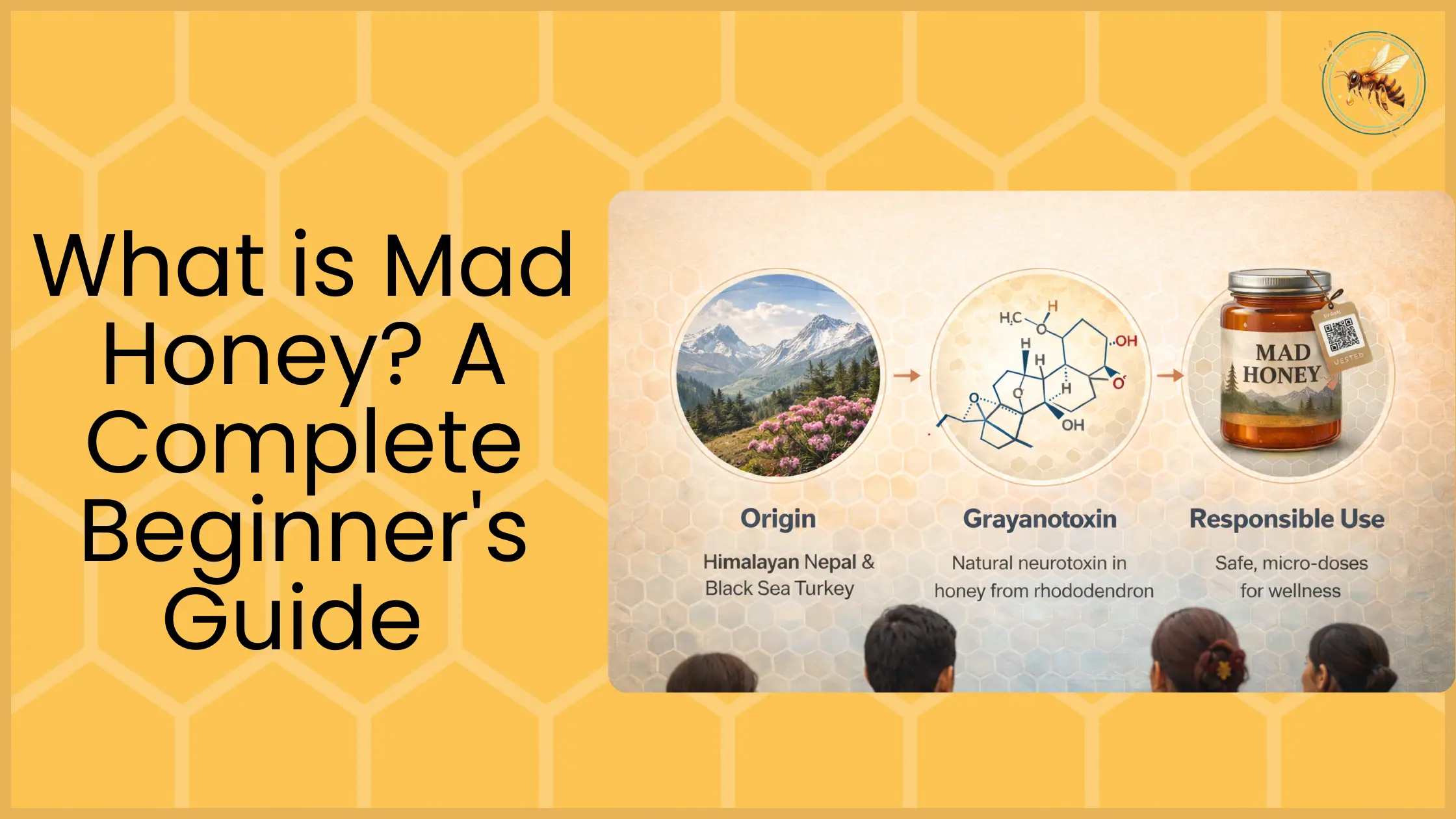
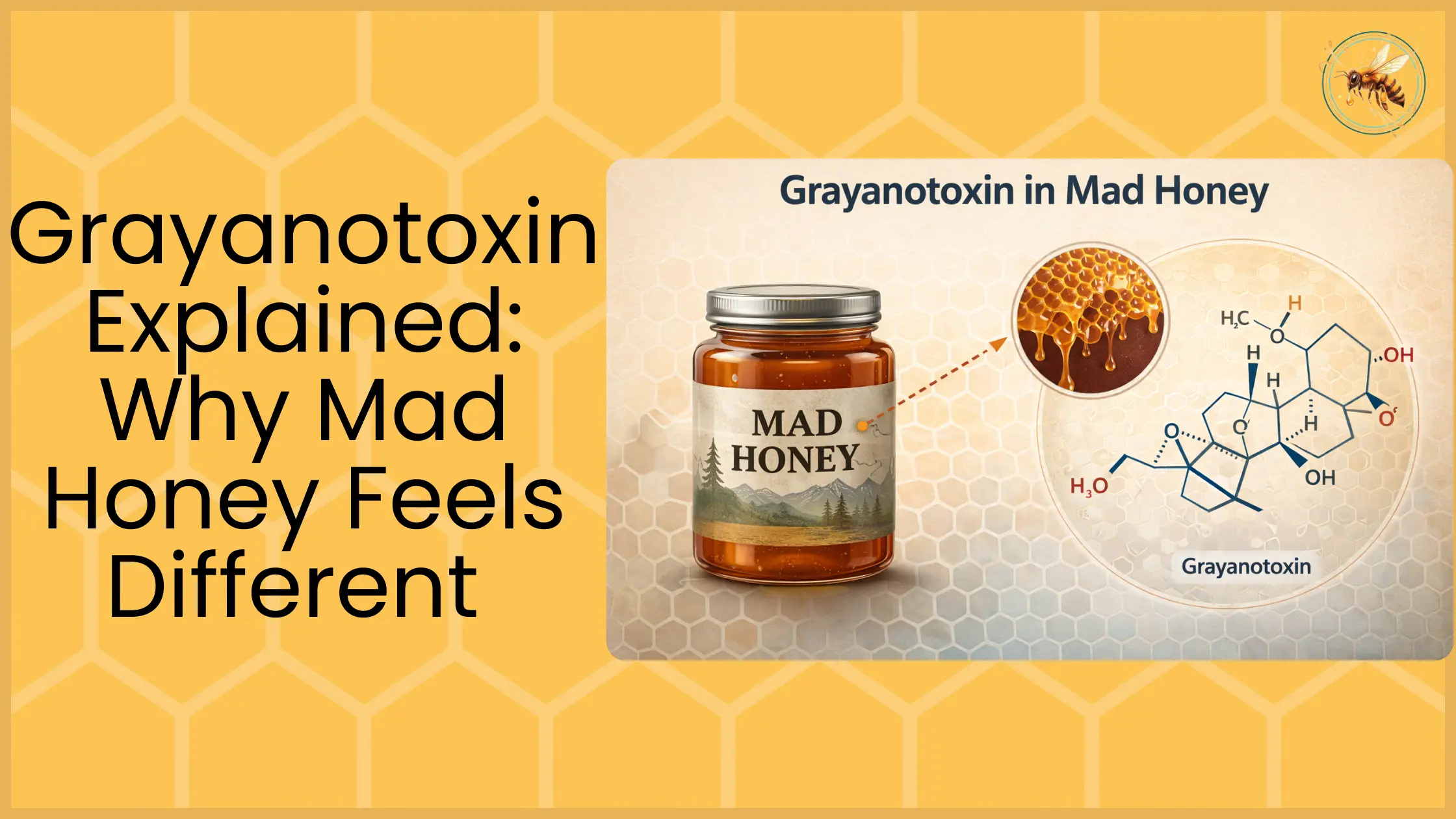
Mad honey is honey that can be associated with nectar from certain rhododendron species and naturally occurring compounds (grayanotoxins) that can cause dose-dependent intoxication effects. It’s also strongly batch-variable: region, season, nectar mix, and handling can all shift how noticeable it feels.
Why they get compared (same “wind-down” search intent)
People aren’t really comparing “honey vs root.” They’re comparing how they feel afterward. The overlap is that both can be framed as relaxing. The difference is that one is typically used as a repeatable beverage ritual, while the other is better understood as a rare specialty honey where dose and variability matter a lot.
How They Feel (Experience Comparison)
This section is about typical reports, not promises. The goal is to help people choose based on the shape of the experience, calm vs heavy, social vs solitary, predictable vs variable, not to sell a guaranteed outcome.
Kava: what people commonly report
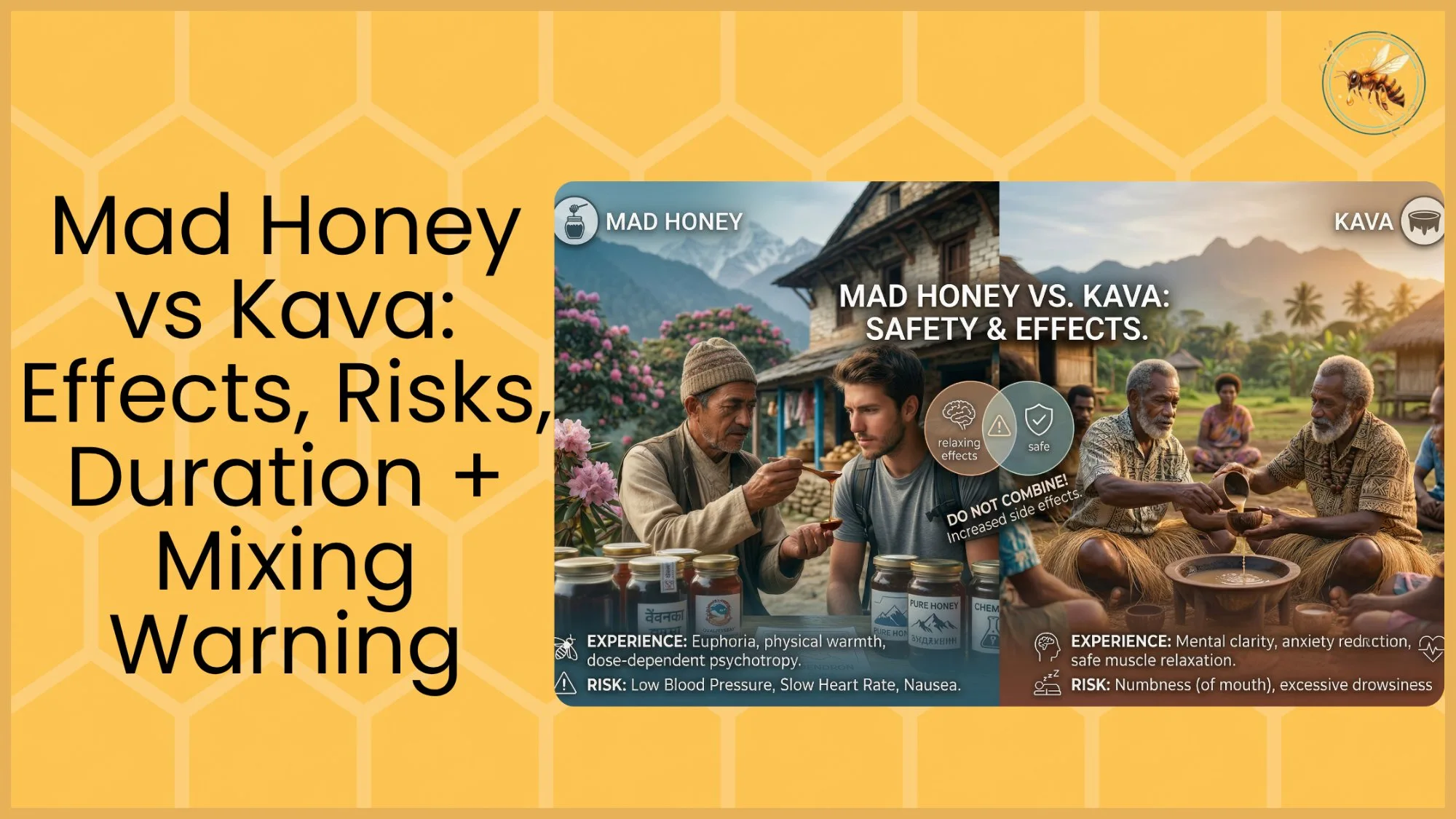
Many kava users describe a calm, softened edge to the evening: less mental noise, a smoother body feel, a mild “social ease” in conversation, and a general sense of settling down.
It’s often described as relaxing without being chaotic. Some people also report a numbing sensation in the mouth from traditional preparation, which is a distinctive cue of the drink.
Kava also has a “routine” vibe. People often take it at roughly similar times, in similar amounts, and get a similar outcome, especially once they find a product and dose that fits them.
Mad honey: what people commonly report
Mad honey at low amounts is often described as subtle and body-led: a gentle wind-down, a slower pace, heavier eyelids, a grounded feeling. Some people feel almost nothing and assume it’s weak. That’s where many bad stories begin, because they add more too fast.
When someone overshoots their dose, the experience can stop being “relaxing” and become “I need to lie down.” Uncomfortable reports cluster around nausea, dizziness, sweating, weakness, and “I feel unstable” sensations. This is why mad honey needs more respect as a dose-sensitive product.
What feels similar vs what’s totally different
The similarity is the wind-down intent: both can move you away from stimulation and toward rest. The difference is control and predictability. Kava tends to feel like a calm beverage routine; mad honey can feel like a specialty honey with a wider swing between “mild” and “too much.”
How They Work (Simple Mechanism, No Jargon)
You don’t need a science lecture to understand why these feel different. The high-level mechanism explains the real-world behavior: why one is steadier, and the other can flip quickly.
Kava’s active compounds (kavalactones, high-level)
Kava contains compounds commonly referred to as kavalactones. People typically discuss these in relation to relaxation effects and a calm body feel. The practical point isn’t biochemical detail; it’s that kava products can be prepared and dosed with more consistency than wild honey, so the experience is often easier to repeat.
Mad honey’s compounds (grayanotoxins, high-level)
Mad honey’s distinctive effects are linked to grayanotoxins associated with certain nectar sources. These are the compounds behind the “mad honey intoxication” pattern in higher exposures. Again, the practical point is that this category is dose-sensitive and batch-variable.
Why mad honey is more “dose sensitive”
Mad honey has two uncertainty layers:
- you don’t always know the batch strength, and
- small dosing changes can produce disproportionately bigger effects in some people.
That’s why “one more spoon” can be a mistake, especially if you didn’t wait long enough to understand the first dose.
Timeline (Onset + Duration) of Kava and Mad Honey
If you’re choosing between these for an evening routine, timing matters. When does it start? When does it peak? When are you back to normal?
Kava onset and duration (typical user expectation)
Kava is usually described as something that comes on within a reasonable window after drinking, and then tapers off as the evening goes on. People often treat it like a “session beverage,” especially in social contexts.
The exact timing depends on preparation style, amount, and individual response, but the important thing is that many users experience it as relatively predictable once their routine is set.
Mad honey onset and duration (variable by batch/dose)
Mad honey timing is less uniform. Onset can feel later than people expect, especially if taken with food, so impatience leads to re-dosing. Peak can be mild at low amounts, or very uncomfortable at higher amounts. Duration can also feel longer if someone overshoots the dose and spends hours “waiting it out.”
Why duration varies more with mad honey
Because mad honey is influenced by batch strength, dose, and individual sensitivity, it’s simply harder to predict. Kava varies, too, but mad honey has that extra layer of wild variability, so the time profile can surprise you more often.
Safety & Risks (The Real Difference) Related to Kava and Mad Honey
This is the section that actually decides the answer for many readers. “Which one should I choose?” is often just “Which one is less likely to go wrong?”
Mad honey risk profile
Mad honey risk concentrates around the “too much” pattern. At higher exposure, people can experience strong dizziness, nausea/vomiting, weakness, sweating, and blood pressure/heart-rate effects that can become dangerous in some cases. The category is also more risky when people mix it with alcohol or take it when dehydrated, sleep-deprived, or already sensitive to blood pressure shifts.
This is why mad honey safety guidance always repeats the same principles: start low, wait, don’t stack, and know who should avoid it.
Kava risk profile
Kava has its own considerations. People talk about variability by product quality and preparation, and some people experience stomach upset or excessive sedation if they overdo it. There are also general “don’t overdo it” and “be cautious about mixing” principles that apply, especially if someone is using it frequently or alongside other substances.
The key point for this comparison: kava’s risks are often about product quality and overuse, while mad honey’s risks are often about dose overshoot and physiological instability.
Who should avoid each (high-level)
If someone has blood pressure/heart-rate concerns or a history of fainting/lightheadedness, mad honey is usually the more concerning choice to experiment with. If someone is very sensitive to sedation or has a complicated medication situation, both require extra caution, and mixing is not the right move.
Mixing Mad Honey and Kava
If you’re looking for a calm evening, mixing is where people create avoidable problems.
Why stacking can increase side effects
Kava can make you feel more sedated and relaxed; mad honey can also make you feel heavy or dizzy, depending on the dose and batch. When you stack them, you can increase the chance of stronger sedation, dizziness, and nausea.
Even if neither is extreme on its own, combining them can push you into an uncomfortable zone, especially if you’re dehydrated or you took more than you think.
The other issue is diagnostic: if you feel bad, you won’t know which substance is driving it, so you can’t learn your own response reliably. That’s why mixing is both a safety risk and a “you’ll never understand your tolerance” trap.
If someone already mixed them (safe guidance)
If someone has already combined them and feels unwell, the safest approach is simple: stop taking more, rest, hydrate gently, and watch for red-flag symptoms (fainting, chest pain, breathing trouble, persistent vomiting, severe weakness, or confusion that worsens). If severe symptoms appear, treat it as urgent and seek medical help.
Choosing the Right One (Decision Guide)
This is the “tell me what to do” section, but it stays safety-first and realistic.
If you want a nightly routine → kava (with product quality awareness)
If what you want is a consistent evening beverage you can repeat, kava usually fits that goal better. It’s easier to build a routine around something that can be dosed consistently and evaluated over time.
If you want a rare “ritual honey” experience → mad honey (start low, wait)
If your goal is mad honey specifically, because you’re curious about the tradition and the unique experience, then approach mad honey tea like a specialty ritual. That means low amount, patience, and absolutely no stacking because “it didn’t kick in.”
If you’re risk-averse or have BP/HR concerns → avoid mad honey
If your baseline risk tolerance is low, or you have blood pressure or heart rhythm concerns, mad honey is usually the higher-risk option to experiment with. If you want something calming in those contexts, choose a more predictable approach and avoid anything that can unpredictably shift your physiological state.
If you’re buying → authenticity and transparency matter more than “strength”
For mad honey, the safest purchases are the ones with transparency: origin clarity, batch practices, and responsible guidance. “Strongest” marketing is not a quality signal; it’s often a red flag.
Also read: Mad Honey vs Mushroom Gummies: Not the Same Category
Conclusion
Mad honey and kava can both be framed as “relaxing,” but they’re different tools. Kava is usually the better fit for a predictable nightly routine. Mad honey is a rarer, more variable category where dose and batch matter enough that “start low and wait” is not optional.
The safest practical summary is this: choose based on predictability and risk tolerance, and avoid mixing. If you want to explore both, do it on separate occasions so you can understand your body’s response clearly.
FAQs: Mad Honey vs Kava
Is mad honey stronger than kava?
They’re not in the same category. “Stronger” doesn’t map cleanly because they produce different kinds of effects. Mad honey can become more physically intense (and more risky) if you overshoot the dose, while kava is often used for a steadier wind-down.
Which one is safer?
In general, kava is often the more predictable routine choice when used responsibly with quality product, while mad honey carries more “batch + dose” unpredictability and can be riskier if overconsumed.
Can mad honey feel like alcohol?
Some people describe it as “drunk-like” when they take too much because of dizziness and weakness, but that’s not the same as a social alcohol buzz. If you’re seeking a safe wind-down, chasing that comparison is the wrong goal.
Can kava show up on a drug test?
Drug tests vary by employer and panel, and this is not something to assume casually. If testing is a serious concern, the safest choice is to avoid substances you’re uncertain about and check the policy context.
Is mad honey legal where I live?
Often it’s treated as a food, but import rules and marketing claims vary by country. Use your legality hub page for the most relevant guidance.
What’s the safest beginner dose for mad honey?
The safest beginner approach is always conservative: start very small, wait long enough to judge onset, and do not re-dose quickly.