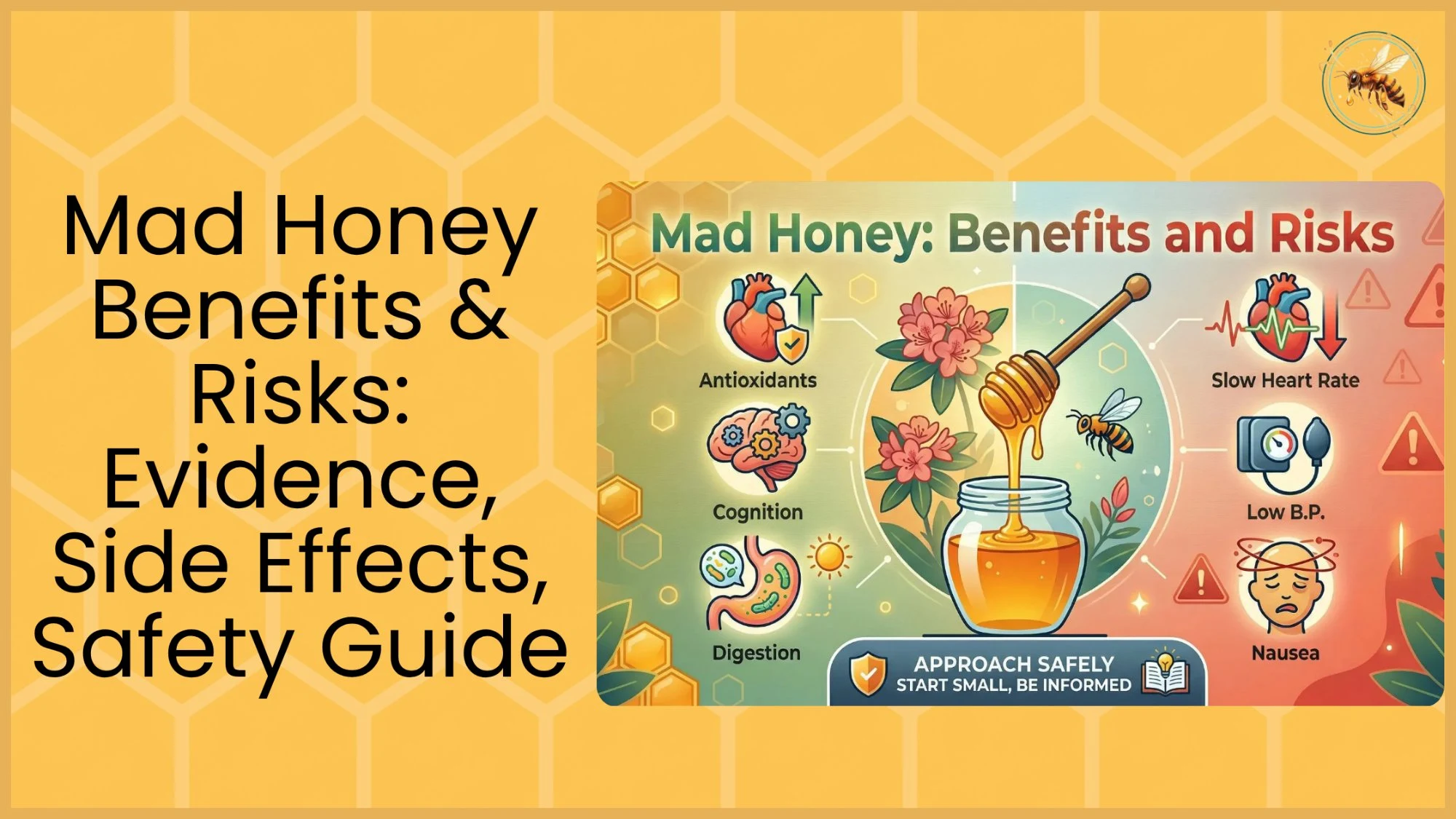
Mad honey is one of the few “natural products” where the same thing people chase for “benefits” is also what creates the risk. That’s because certain batches can contain grayanotoxins (from rhododendron-linked nectar), and those compounds are dose-sensitive; mild exposure can feel subtle for some people, while higher exposure can cause strong dizziness, nausea, and, in some cases, dangerously low blood pressure and slow heart rate.
This guide is intentionally no-hype. It separates what people claim, what the research actually supports, and what can go wrong in real life, then gives a practical safety framework for anyone deciding whether to try it at all. The most important idea to keep in mind from the start is this: mad honey is batch-variable, so “one spoon” isn’t a reliable unit of effect or safety.
tl;dr
- The “benefits” people talk about and the “risks” doctors treat come from the same mechanism, grayanotoxins acting on sodium channels, so dosage and variability are everything.
- The strongest human evidence isn’t “it cures X”, it’s clinical case patterns showing dose-dependent cardiovascular effects (especially low blood pressure and slow heart rate).
- Batch variability is not a minor detail; it’s the main safety problem, two jars sold under the same label can deliver very different grayanotoxin exposure.
- “Stronger” is not a quality metric; in practice, it often just means higher risk (and more unpredictability), especially without lab reporting and conservative guidance.
- The safest way to think about mad honey is: a bioactive honey with a narrow comfort zone, approach it like a dose-sensitive product, not like everyday honey.
Quick Answer – Are the Benefits of Mad Honey Worth the Risks?
If your question is “Does mad honey have real biological effects?” the honest answer is yes, its effects are well-explained mechanistically, and clinical literature repeatedly describes a recognizable symptom pattern when people take too much.
If your question is “Is there solid proof it provides reliable health benefits for most people?” the answer is much weaker. A lot of what’s called “benefit” online is traditional use, anecdote, or early-stage research that doesn’t translate cleanly into safe, repeatable outcomes for consumers.
So “worth it” depends on what you mean:
- If you’re chasing a predictable wellness outcome (like you would with a standardized supplement), mad honey is a poor fit because variability + dose sensitivity get in the way.
- If you’re curious about a rare traditional product and you’re willing to be conservative, careful, and selective about sourcing, the “value” becomes more about culture + experience + respecting safety boundaries than guaranteed outcomes.
What Mad Honey Is (and Why It Has “Benefits” and “Risks”)
Before we talk benefits, it helps to define what mad honey actually is in biological terms.
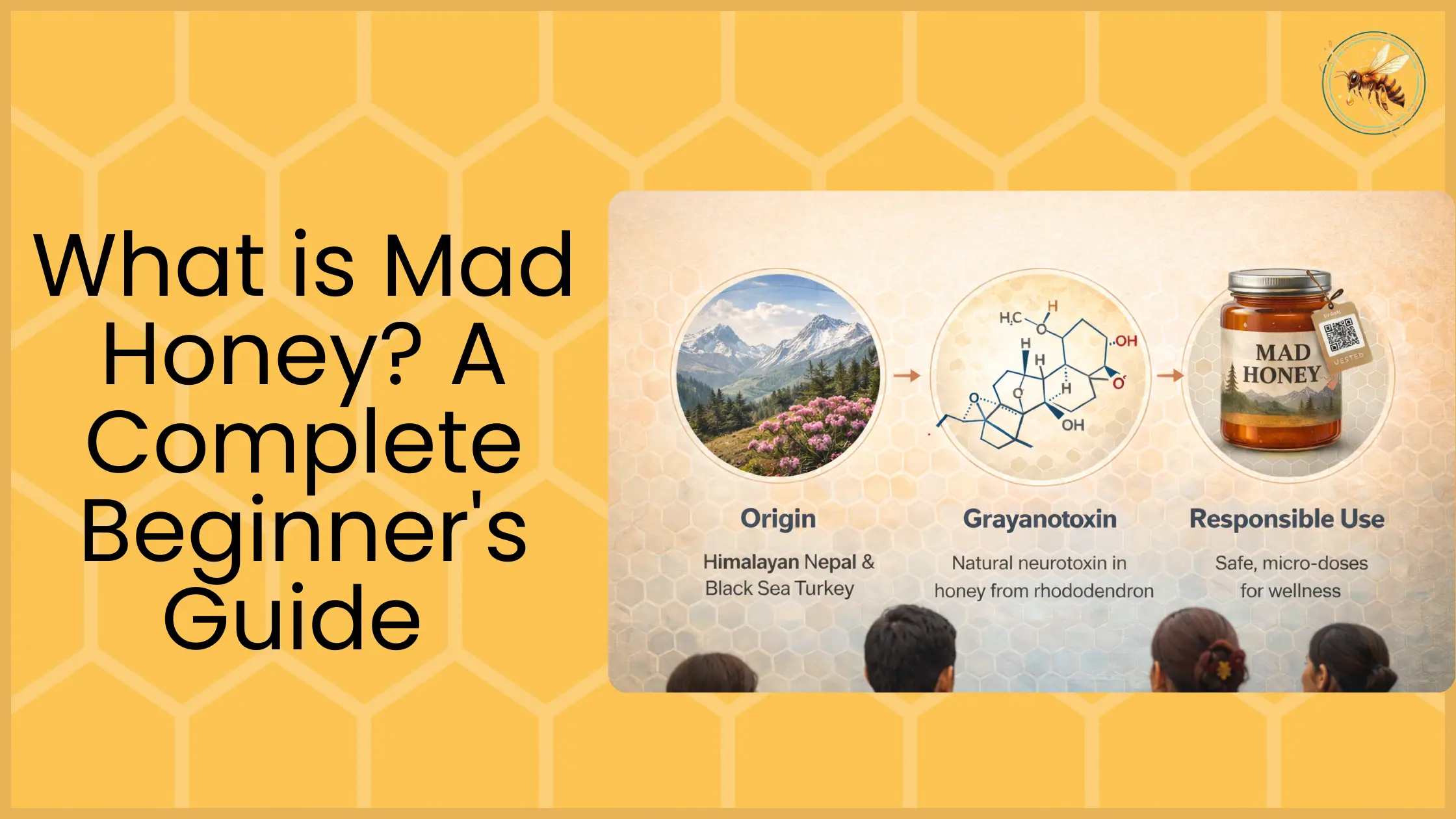
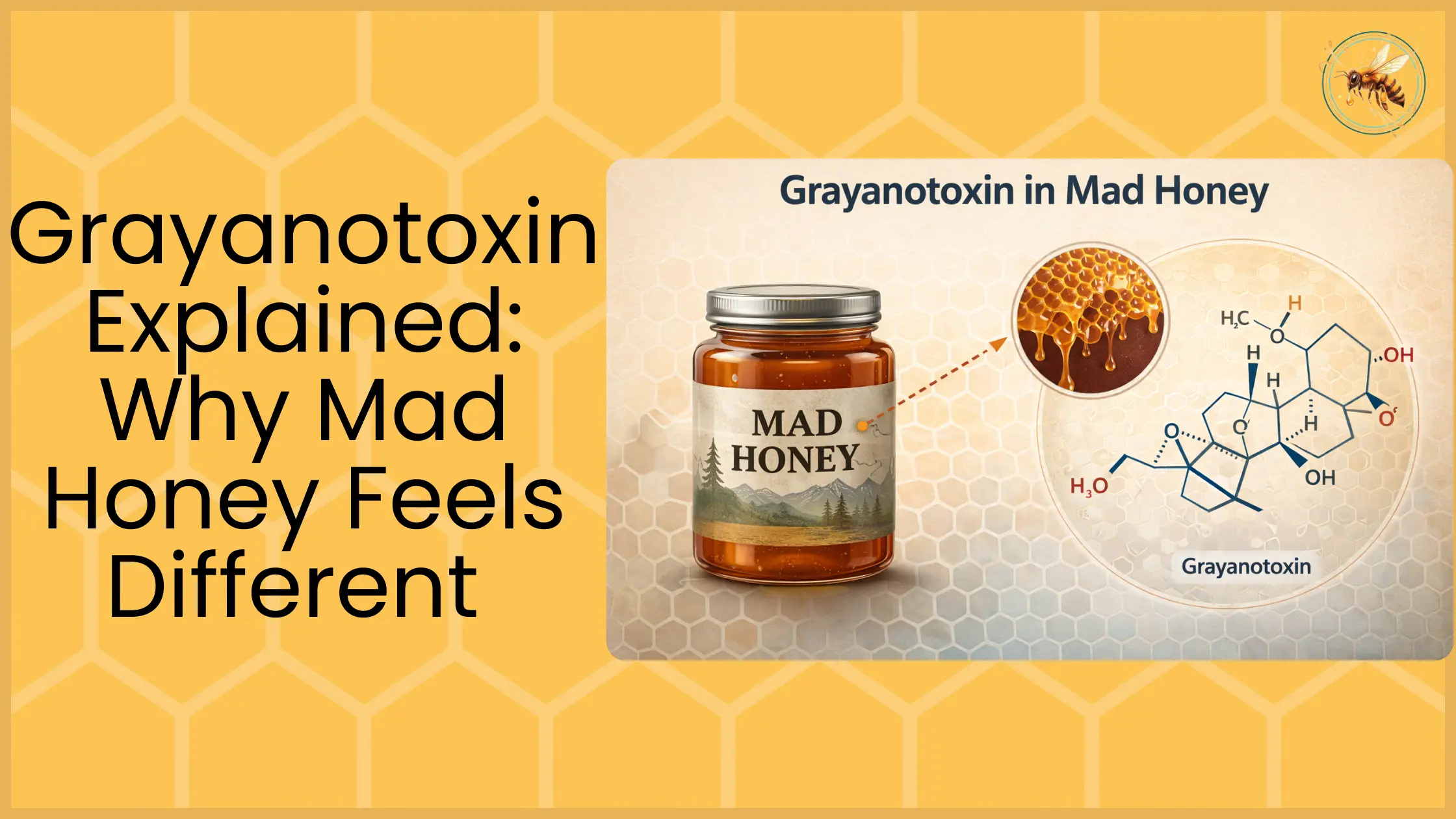
Mad honey (often called deli bal in Turkey) is honey produced when bees collect nectar from certain Rhododendron species. Those plants can contain grayanotoxins, and those compounds can carry into the honey.
Here’s the core point that makes this topic confusing: the “good” and the “bad” are not separate. They’re two ends of the same dose-response curve.
The mechanism in plain English (why it can feel strong)
Grayanotoxins interact with voltage-gated sodium channels, the electrical “gates” that cells use for signaling, by preventing normal inactivation. The result is prolonged depolarization and downstream effects that can shift autonomic balance (vagal/parasympathetic tone), which is why the hallmark issues are often slow heart rate and low blood pressure at higher exposure.
This is also why the experience can feel “intense” in a way that surprises people: small changes in exposure can create noticeable changes in symptoms, especially because the cardiovascular system is involved.
Why it’s not like regular honey
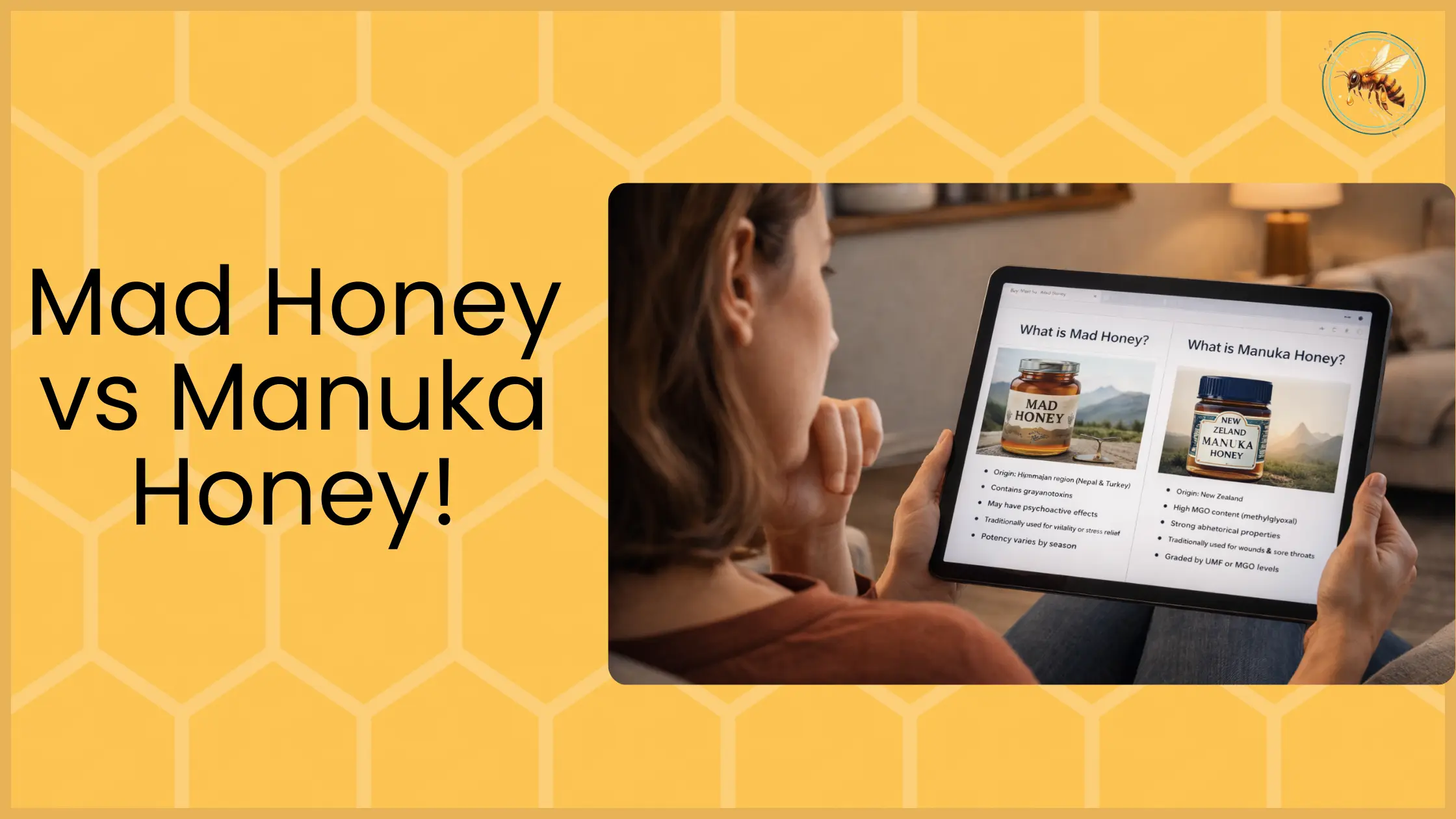
Regular honey is basically a food with minor bioactive components (and yes, some honeys have interesting properties). Mad honey is different because it may contain a dose-sensitive toxin that can create pharmacologic-feeling effects.
That’s why “mad honey benefits” and “mad honey risks” are inseparable topics.
BENEFITS of mad honey: what’s claimed vs what evidence exists
Let’s keep this section grounded. People use mad honey for “benefits” in two main ways:
- Traditional/cultural use (folk medicine, ritual, vitality)
- Modern curiosity (relaxation, “buzz,” experimentation, trending content)
The evidence quality is very different across those.
Reported / Traditional Uses (What People Historically Used It For)
Traditional use shows up repeatedly in regions where mad honey is culturally established (especially parts of Turkey and Nepal). The common themes include use contexts such as blood pressure, gastrointestinal issues, and sexual vitality/aphrodisiac framing, alongside broader “tonic” narratives.
This matters because it explains why people seek it out. But it’s not the same thing as clinical proof; traditional use is often about lived experience, scarcity, and cultural meaning, not standardized dosing and controlled outcomes.
The important nuance most articles miss
Some “traditional benefits” line up with the mechanism in a way that sounds plausible (for example, a compound that can lower heart rate and blood pressure will obviously be discussed in the context of hypertension).
But plausibility doesn’t solve the consumer problem: you can’t reliably aim for a mild effect if you can’t reliably know the dose.
What Research Actually Suggests (and what it doesn’t prove yet)
This is where expectations need a reset.
What you’ll most often see in the literature
Modern medical literature on mad honey heavily includes:
- Clinical case reports/series describing intoxication (harms, symptom patterns, timelines)
- Chemical/analytical work on grayanotoxin detection and variability across samples
- Animal and lab studies exploring mechanisms and potential signals (not consumer-ready “benefits”)
So the strongest “research certainty” is about mechanism + risk pattern, not about guaranteed wellness outcomes.
Why researchers still care (the “therapeutic interest” angle)
The same reason mad honey can cause problems is why researchers remain curious: dose-dependent bioactivity can be scientifically interesting. The 2025 toxicology review frames mad honey as having a “dual” profile, traditional medicinal interest alongside well-documented toxicity and a need for standardization and public guidance.
But “therapeutic interest” in papers is not permission for casual self-treatment. It’s usually the opposite: a reason to study dosage, safety thresholds, and standardization.
The key limitation (and it’s huge)
Even if a study suggests a potential signal in an animal model, two issues immediately appear for real life:
- Dose equivalency: animal doses don’t translate cleanly to human food use.
- Whole honey vs isolated compounds: mad honey isn’t a standardized extract; it’s a variable natural matrix.
So you can’t read “potential” and assume “safe, repeatable benefit.”
RISKS of mad honey (side effects)
This is the part where clarity matters most, because the risks are the most consistently documented in humans.
The Real Risks (What Can Go Wrong)
Mad honey intoxication is described as a recognizable syndrome: people can experience dizziness, nausea/vomiting, sweating, weakness, and most notably cardiovascular effects such as hypotension (low blood pressure) and bradycardia (slow heart rate), with severe cases involving conduction issues and other complications.
The mechanism explains the pattern: autonomic disruption and sodium-channel effects can push the body into a state where blood pressure drops and the heart rate slows more than the person expects.
“Too much” often doesn’t feel like a fun “high”
This is where internet framing causes harm. Many people search for “benefits” expecting a clean “relaxation” outcome, but when the dose gets too high, the experience often shifts to uncomfortable intoxication, dizziness, nausea, weakness, and a sense of instability (sometimes fainting).
That mismatch, expecting a gentle wellness moment and getting a cardiovascular-heavy intoxication, is a major reason this topic needs safety-first writing.
Batch Variability: The Core Risk Multiplier
If there’s one risk factor that makes mad honey uniquely tricky, it’s variability.
Grayanotoxin levels can vary dramatically by region, season, and botanical source, and that “wild/single origin” honeys may be less diluted than commercial blended products.
Without testing, standardized dosing becomes guesswork, and the boundary between mild and severe can be “thin and invisible.”
That’s why “strongest mad honey” marketing is such a red flag: it’s essentially selling the riskiest feature as if it were quality.
Long-Term/Emerging Concerns (what’s still uncertain)
Good safety writing also says “we don’t know” when we don’t know.
Long-term risk questions are harder to settle because most clinical attention focuses on acute poisoning episodes, while broader safety concerns (including chemical quality issues like processing/storage markers) require different research designs and consistent product characterization.
So it’s fair to say: acute effects are better described than long-term safety, and that’s another reason conservative use and transparency matter.
SAFETY: practical guidance (without turning into a “how to get high” guide)
This section is about reducing avoidable harm and setting boundaries.
Who Should Avoid Mad Honey (high-risk groups)
Because the main serious risks involve blood pressure and heart rhythm, anyone with cardiovascular issues or a history of low blood pressure should treat mad honey as high-risk. The toxicology review and your science summary both emphasize cardiovascular manifestations as a core issue in intoxication cases.
Also, be cautious if you’re on medications that affect blood pressure/heart rate (this is exactly the scenario where “it’s natural” becomes a dangerous assumption). And for pregnancy/breastfeeding, the conservative posture is avoidance because risk tolerance is lower and dosing is uncertain.
If Someone Chooses to Try It: the safest approach
A safe-minded consumer approach has three pillars:
- Conservative starting point (start low; don’t stack quickly)
- Time discipline (wait long enough to judge onset and peak, don’t re-dose “because nothing happened yet”)
- Context control (don’t combine with other substances that complicate symptoms or increase dehydration/instability)
You don’t need a “how much” number in a benefits/risks article; what matters is the logic: mad honey is dose-sensitive and variable, so the safest strategy is minimum effective exposure + patience + no stacking.
Red flags where you should seek medical help
Hallmark risks and symptom windows (onset can occur within a broad window, and symptoms can last many hours), and the toxicology review highlights cardiovascular complications and clinical management.
So in plain language: if someone has severe dizziness/fainting, chest pain, breathing difficulty, persistent vomiting, or feels like their heart rhythm is off, don’t “sleep it off.” Seek medical evaluation.
BUYING + TRANSPARENCY: how to reduce risk in the real world
Because variability is the main multiplier, buying choices are a safety decision.
What a responsible seller should provide
A responsible seller doesn’t just say “lab tested.” They explain:
- What was tested (e.g., grayanotoxins such as GTX I/III)
- Batch-specific reporting (not a generic “certificate” that could apply to anything)
- Origin context (region/season framing, not vague “Himalayan”)
- Conservative safety guidance (a green flag because it shows they’re not selling “strongest” hype)
“safe” should mean low/consistent levels verified by analysis, and consumers should ask brands about which GTX compounds they test for and what the mg/kg results are.
Red flags you should take into account
If a listing leans hard on “psychedelic,” “guaranteed trip,” “strongest,” or celebrity-bait marketing, that’s not just cringe, it’s also a risk signal, because it’s pushing consumers toward higher exposure and faster re-dosing behavior.
Conclusion (The balanced takeaway)
Mad honey is a real, bioactive product with a long history and a clear mechanism, which is why people experience noticeable grayanotoxin effects, and why clinicians see predictable risk patterns when people take too much. The most consistent evidence comes from rat studies on grayanotoxin toxicity.
The most honest summary is:
- Benefits: mostly traditional use + early scientific interest, with limited consumer-reliable proof of consistent outcomes.
- Risks: well-documented acute intoxication pattern, especially cardiovascular effects, amplified by batch variability.
- Best practice: conservative expectations, conservative approach, and transparency-first buying.
Also Read: Mad Honey vs Kava: What’s Different and Which One Should You Choose?
FAQs – Mad Honey Benefits and Risks
What benefits are actually proven?
The most consistent “proven” part is mechanism and the clinical pattern of what happens when people take too much, not reliable therapeutic benefits for a specific condition.
Can mad honey lower blood pressure?
The clinical literature repeatedly describes hypotension as a common intoxication feature, which is exactly why people with blood-pressure concerns should be cautious rather than “trying it as treatment.”
Why do effects differ so much between people?
Dose, sensitivity, and batch variability. Individual factors and batch differences are key drivers of different experiences.
Is it safe to use regularly?
Because potency can vary and long-term safety is harder to conclude from the existing clinical pattern (which focuses on acute episodes), “regular use” is exactly the scenario where conservative, tested, transparent sourcing becomes non-negotiable. Whether repeated use can lead to dependence is a separate question, covered in is mad honey addictive?
How do I reduce risk if buying?
Prioritize batch transparency and testing language that is specific (what compounds, what results), plus conservative safety guidance. If you are buying in the UK, mad honey UK law sets out what a seller may and may not claim.