Quick Answer – Can Mad Honey Lower Blood Pressure?
Yes, mad honey can lower blood pressure in some people. The effect is most often discussed in the context of mad honey intoxication, where low blood pressure can appear together with slow heart rate, dizziness, nausea, weakness, and sweating.
Why does that not mean it should be used as a blood-pressure medicine
A product can affect blood pressure without being a safe treatment. Mad honey is not standardized like a medication. Its grayanotoxin content can vary depending on region, season, floral source, harvest conditions, and batch handling. The International Mad Honey Standards Institute notes there is no internationally established safe dosage for mad honey and that grayanotoxin levels vary widely, making controlled consumption difficult.
That means mad honey should never be treated as a DIY blood-pressure tool. If someone has high blood pressure, low blood pressure, heart rhythm concerns, or takes medication, the safest approach is medical guidance, not self-experimentation.
The safest takeaway
Mad honey may lower blood pressure, but the effect is not predictable enough to use therapeutically. It is better understood as a potential safety concern than a benefit.
Why Mad Honey Affects Blood Pressure
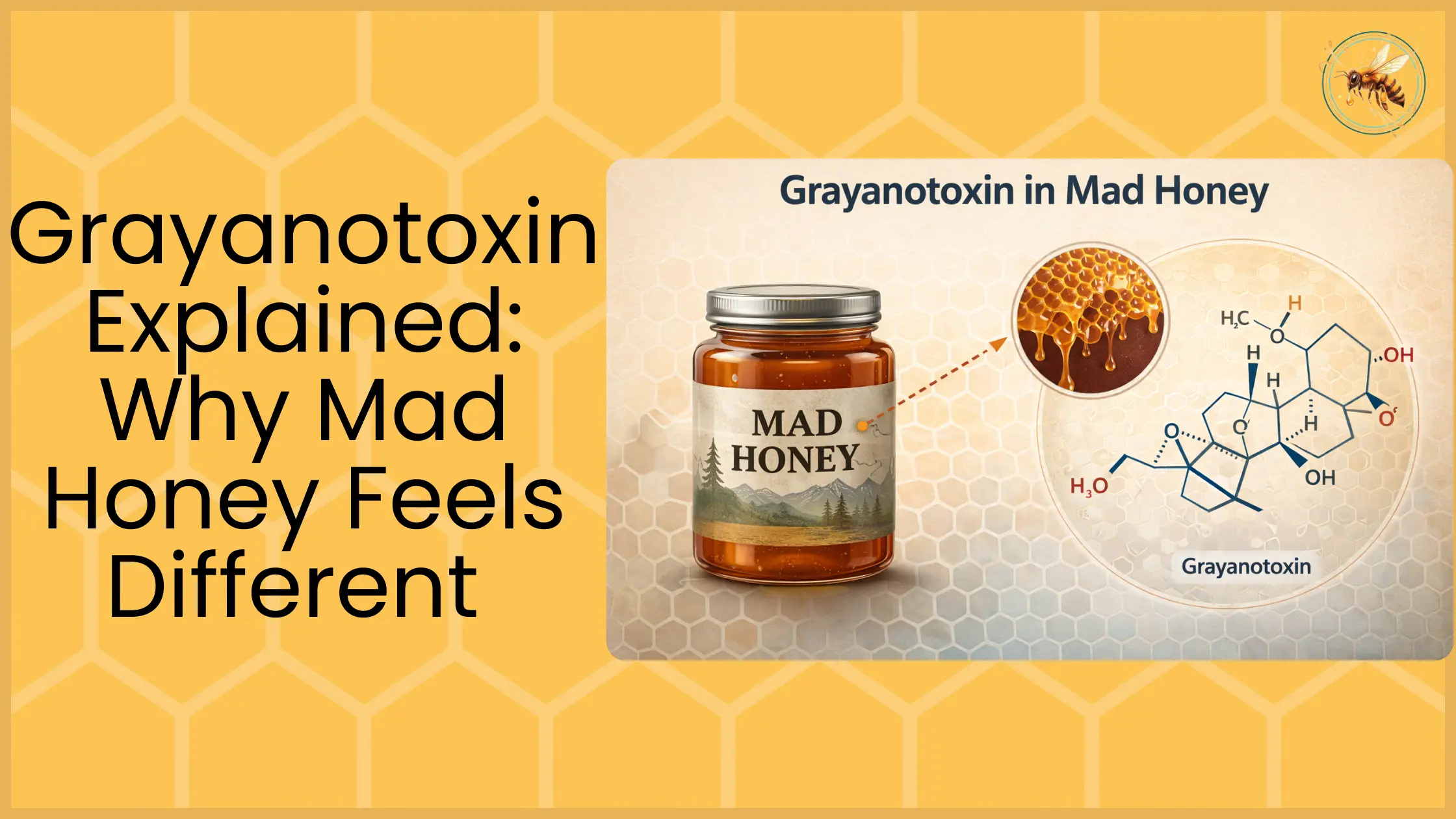
Mad honey affects blood pressure because of its active compounds: grayanotoxins. These compounds are found in certain rhododendron plants, and they can enter honey when bees collect nectar from those flowers.
The role of grayanotoxins
Grayanotoxins are the compounds most associated with mad honey’s unusual effects. They can affect electrical signaling in nerves, muscles, and heart-related pathways. This helps explain why mad honey’s effects are not just “mental” or “mood-based.” They can be physical, including changes in blood pressure and heart rate.
The simple mechanism
The simplest explanation is that grayanotoxins can influence autonomic nervous system activity. This system controls involuntary functions such as heart rate, blood pressure, sweating, digestion, and fainting responses.
When the balance shifts too strongly toward a vagal or parasympathetic response, the result can include:
- lower blood pressure
- slower heart rate
- dizziness
- nausea
- sweating
- weakness
- faintness
This is why mad honey can feel like a “body crash” when someone takes too much.
Vasodilation and reduced sympathetic tone
Blood pressure depends partly on how tight or relaxed blood vessels are, how strongly the heart pumps, and how fast the heart beats. If vascular tone drops, heart rate slows, or the body’s normal compensatory response weakens, blood pressure can fall. That drop can become noticeable when a person stands up, moves around, or has not eaten or hydrated well.
Why blood pressure and heart rate are linked
Mad honey’s low-blood-pressure risk often appears together with a slow heart rate. That combination matters because the body has fewer ways to compensate. If blood pressure drops but the heart does not speed up enough to maintain circulation, symptoms like dizziness or near-fainting become more likely.
What Low Blood Pressure From Mad Honey Can Feel Like
Low blood pressure is not always obvious at first. Many people describe it as a general “something feels wrong” sensation before realizing it may be cardiovascular.
Common sensations
People may feel:
- lightheaded
- dizzy
- weak
- unusually heavy or tired
- nauseous
- sweaty or clammy
- shaky
- cold or “washed out”
- worse when standing up
Some may also feel like they need to sit or lie down immediately. Standing, walking, showering, or climbing stairs can make symptoms more noticeable if blood pressure is low.
Near-fainting and fainting
When blood pressure drops enough, the brain may briefly receive less blood flow. That can cause:
- tunnel vision
- blurred or gray vision
- ringing in the ears
- sudden weakness
- feeling like you may black out
- actual fainting
This is why low blood pressure is not just uncomfortable; it can become dangerous through falls, injuries, or delayed medical attention.
Why people may mistake this for a “strong effect”
Some people describe dizziness, heaviness, or disorientation as “strong mad honey effects.” That framing can be risky. A strong physical reaction is not automatically a desirable effect. If the experience includes faintness, sweating, nausea, weakness, chest discomfort, or trouble standing, it should be treated as a warning sign, not as proof that the honey is “working.”
Mad Honey, High Blood Pressure, and the Traditional Use Problem
Mad honey is sometimes discussed in traditional contexts as something people have used for blood pressure. That history is part of why many people search for this topic. But traditional use does not mean it is safe for self-treatment.
Why mad honey has been used traditionally for hypertension
Because mad honey can lower blood pressure, some people have historically associated it with high blood pressure use. The logic is easy to understand: if something can lower blood pressure, people may assume it can help with hypertension.
The problem is that a blood-pressure drop caused by a variable, dose-sensitive honey is not the same as a controlled medical treatment.
Why traditional use does not equal safe modern dosing
Modern blood-pressure medication is dosed, standardized, studied, and monitored. Mad honey is not standardized in the same way. The IMHSI material specifically highlights the absence of internationally established safe dosage standards and the wide variation in grayanotoxin levels by region, season, and floral source.
That means two jars can create different effects, even if someone takes the same spoon size. For blood pressure, that unpredictability matters.
Why self-treatment is risky
Using mad honey to lower blood pressure can backfire. A person may take more because they believe it is “helping,” then experience a sudden drop that causes dizziness, fainting, or a slow pulse. For someone already taking blood-pressure medication, the combined effect may be stronger than expected.
Mad honey may lower blood pressure, but that is a risk signal, not a reliable treatment plan. Anyone with hypertension should work with a medical professional instead of using mad honey as a blood-pressure strategy.
Blood Pressure + Heart Rate: The Dangerous Pair
Low blood pressure becomes more concerning when it appears together with a slow heart rate.
Hypotension + bradycardia
- Hypotension means blood pressure is too low.
- Bradycardia means heart rate is too slow.
Mad honey intoxication has been reported with both hypotension and bradycardia. When they happen together, symptoms may feel stronger because the body’s normal compensation is reduced.
What clinical cases show
Clinical descriptions of mad honey intoxication commonly focus on cardiovascular symptoms. People may present with low blood pressure, slow heart rate, dizziness, nausea, vomiting, sweating, weakness, or fainting. The issue is not simply that someone feels “relaxed.” The concern is that the cardiovascular system may be responding too strongly.
Why this matters
Low blood pressure can be uncomfortable on its own. Low blood pressure combined with a slow pulse can become more serious because the body may struggle to keep enough blood flowing to the brain. This is the pattern behind fainting and near-fainting episodes.
Who Should Avoid Mad Honey Because of Blood Pressure Risk?
Some people have a lower safety margin. For them, even a small amount may carry more risk than expected.
People with naturally low blood pressure
Anyone who already gets dizzy when standing, feels faint easily, or has been told they have low blood pressure should avoid mad honey. The main concern is that mad honey may push blood pressure even lower.
People with heart conditions
People with arrhythmias, slow heart rate, heart block, unexplained fainting, or other heart conditions should avoid mad honey unless medically cleared.
People taking blood-pressure or heart-rate medication
This includes people taking medication for high blood pressure, heart rhythm, heart rate, or fluid balance. The concern is the additive effect: medication may already influence blood pressure or pulse, and mad honey may push the same system further.
Pregnant or breastfeeding women, children, and older adults
Pregnancy, breastfeeding, childhood, and older age all call for conservative avoidance. Children have smaller bodies and less ability to describe symptoms. Older adults are more vulnerable to falls, dehydration, medication interactions, and blood-pressure swings.
People with fainting history
If someone has a history of fainting, near-fainting, orthostatic hypotension, or unexplained dizziness, mad honey is a poor fit. Even if the honey itself does not cause severe symptoms, sudden dizziness can create a fall risk.
Red Flags: When Low Blood Pressure Becomes Urgent
Not every dizzy feeling is an emergency, but certain symptoms should be taken seriously.
Stop and monitor if you feel
- strong dizziness
- nausea
- weakness
- sweating
- blurred vision
- unusual fatigue
- lightheadedness when standing
- mild confusion or feeling “off”
Stop taking more. Sit or lie down. Do not drink alcohol or take other substances to “balance it out.” Hydrate slowly if you can keep fluids down.
Seek medical help if you have
- fainting or near-fainting
- chest pain or pressure
- trouble breathing
- persistent vomiting
- severe weakness
- confusion
- very slow pulse
- symptoms that keep worsening
- symptoms that do not improve with rest
It is advised to contact a doctor if symptoms persist and mention that you consumed honey containing grayanotoxins.
What to tell a medical professional
Say clearly:
- you consumed mad honey
- approximately how much
- when you took it
- whether you took alcohol, medication, or supplements
- that mad honey may contain grayanotoxins
- what symptoms are you experiencing
This helps medical professionals connect the symptoms to a known mad honey intoxication pattern.
Timeline: When Blood Pressure Effects Can Start and How Long They Last
Mad honey does not always hit instantly. Timing depends on the person, amount, stomach contents, and batch.
Onset window
As for first-use guidance, it is said effects begin around 45–60 minutes and advises waiting before considering more. Some people may notice effects earlier or later, depending on food, sensitivity, and batch strength.
Peak window
The strongest period is often when dizziness, nausea, sweating, heaviness, or blood-pressure symptoms are most noticeable. This is also when standing up too quickly can feel worse.
Recovery window
Mad honey effects last roughly 3 hours, while more uncomfortable reactions may take longer to settle, depending on the amount, sensitivity, and whether someone mixed with other substances. If symptoms persist, worsen, or include red flags, medical help is appropriate.
What can make symptoms last longer
Symptoms can last longer or feel worse if someone:
- takes more too soon
- mixes with alcohol
- is dehydrated
- has an empty stomach
- is taking medication
- has a stronger batch
- already has low blood pressure or heart-rate sensitivity
Dose and Batch Variability: Why Blood Pressure Risk Is Hard to Predict
Blood-pressure risk is not just about spoon size. It is about grayanotoxin exposure.
Same spoon, different batch, different result
A teaspoon from one jar may not equal a teaspoon from another jar. IMHSI materials emphasize that grayanotoxin levels can vary widely depending on region, season, and floral source, making controlled consumption difficult.
This is especially important for blood pressure because the difference between “mild effect” and “too much” may not be obvious until symptoms appear.
Why “start low” matters
It is advised to start small and not stack doses because wild honey varies. That advice is especially relevant for blood pressure because delayed onset can trick people into taking more before the first amount has fully shown up.
Why “strongest batch” marketing is dangerous
A stronger batch may sound appealing, but for blood pressure risk, it means less room for mistakes. Buyers should avoid sellers who frame “strongest” or “highest potency” as the main selling point without conservative guidance, batch transparency, and safety warnings.
What To Do If You Feel Your Blood Pressure Dropping After Mad Honey
The safest response is simple and conservative.
Step 1: Stop taking more
Do not take another spoonful. Do not try to “balance it out” with alcohol, caffeine, sedatives, or other substances.
Step 2: Sit or lie down
If you feel faint, lie down and avoid standing quickly. This reduces fall risk.
Step 3: Hydrate slowly
Sip water if you can. If you are nauseous or vomiting, do not force large amounts quickly.
Step 4: Monitor symptoms
Watch for worsening dizziness, faintness, chest pain, breathing problems, persistent vomiting, confusion, or severe weakness.
Step 5: Get help if symptoms are severe or persistent
If symptoms do not improve or if red flags appear, contact medical help. Mention mad honey and grayanotoxins.
Can You Take Mad Honey If You Have High Blood Pressure?
High blood pressure does not automatically make mad honey safe.
Don’t use it as a treatment
Mad honey should not be used as a blood-pressure treatment. Its effect is not controlled, standardized, or predictable.
Medication interaction concern
Many people with high blood pressure take medication. Combining those medications with a product that can lower blood pressure or slow heart rate may increase the chance of dizziness, fainting, or other unwanted effects.
Ask a doctor first
If you have hypertension, heart disease, or take medication, speak with a medical professional before using mad honey. Bring the product label, batch information, and any COA if available.
Safer framing
The correct framing is not: “Can mad honey lower my blood pressure?” The safer framing is: “Could mad honey make my blood pressure drop too much?”
Conclusion
Mad honey can affect blood pressure, and for some people, that effect can become a real safety concern. The main risk of mad honey is not simply “feeling relaxed.” It is the possibility of low blood pressure, often alongside a slow heart rate, dizziness, nausea, weakness, or faintness.
The safest approach is clear: do not use mad honey as a blood-pressure treatment, avoid mad honey if you have low blood pressure or heart conditions, do not combine it with medication without medical guidance, and respect batch variability.
FAQs – Mad Honey Blood Pressure
Does mad honey lower blood pressure?
It can lower blood pressure in some people, especially at higher exposure. This is one of the main safety concerns associated with mad honey.
Can mad honey cause hypotension?
Yes. Mad honey intoxication has been clinically reported with hypotension, bradycardia, dizziness, and nausea.
Is mad honey safe if I have high blood pressure?
Not automatically. If you have high blood pressure or take blood-pressure medication, ask a medical professional before using mad honey.
Is mad honey safe if I have low blood pressure?
No. People with low blood pressure should avoid mad honey.
Can I take mad honey with blood-pressure medication?
Do not combine mad honey with medication or supplements without consulting a medical professional.
Why do I feel dizzy after taking mad honey?
Dizziness may come from low blood pressure, slow heart rate, nausea, or a combination of body-level effects. Sit or lie down, stop taking more, and seek help if symptoms are severe or persistent.
How long do blood-pressure effects last?
First-use guidance is said to be effective around 45–60 minutes and last roughly 3 hours, but uncomfortable symptoms may last longer depending on the amount, batch, sensitivity, and mixing.
When should I seek medical help?
Seek help if you faint, nearly faint, have chest pain, trouble breathing, persistent vomiting, severe weakness, confusion, or symptoms that worsen instead of improving.
Is low blood pressure from mad honey the same as a “comedown”?
No. Low blood pressure is a physiological effect, not just a comedown. If symptoms feel severe or unusual, treat them as safety signals.
Does mad honey also affect heart rate?
Yes. Mad honey intoxication has been associated with bradycardia, meaning slow heart rate, often alongside low blood pressure.