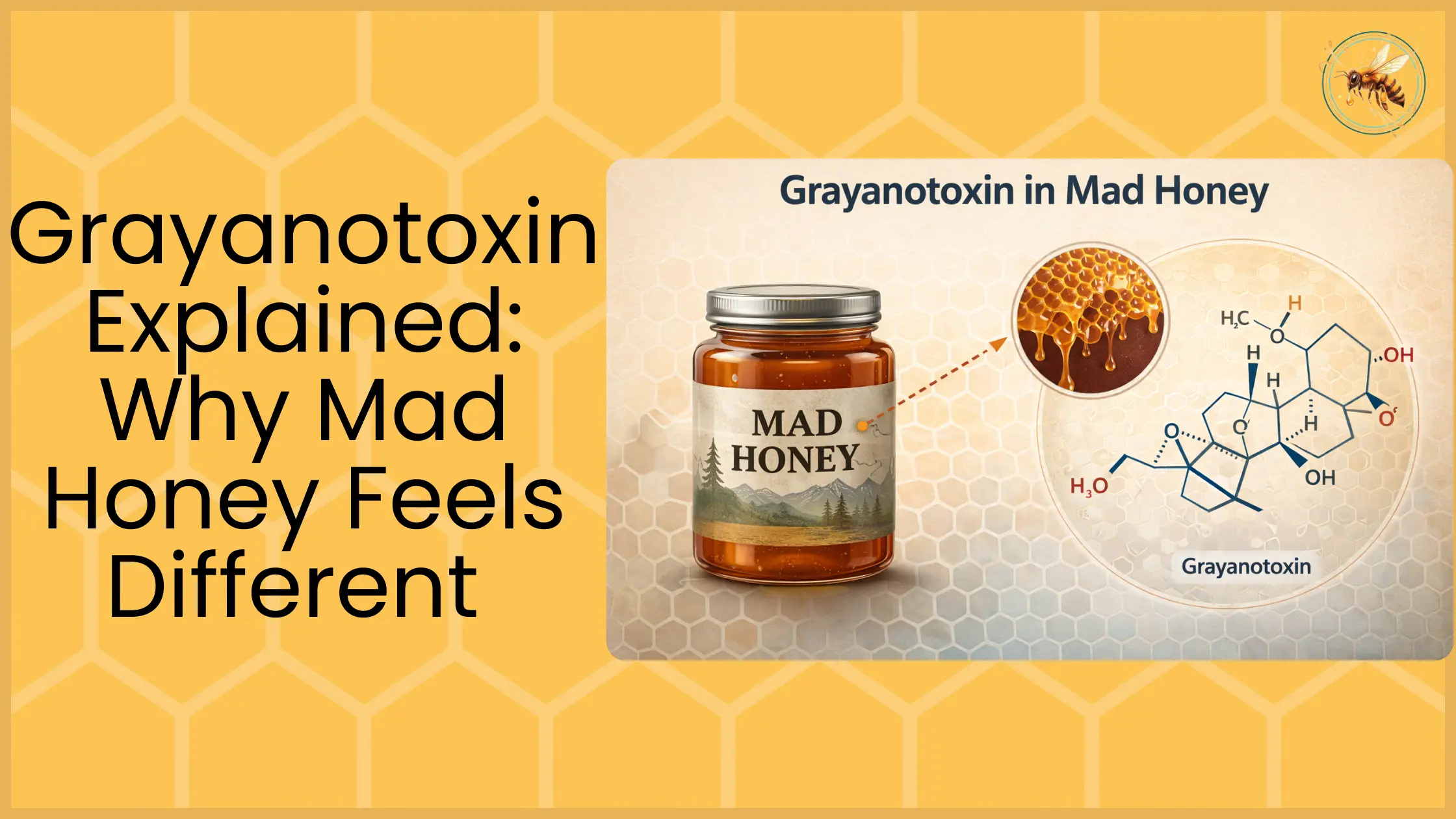
Mad honey can affect your heart rate in a way that surprises people, because the “main event” isn’t a stimulant buzz. In higher exposures, mad honey is more likely to cause cardiovascular depression: a slower pulse (bradycardia) and lower blood pressure (hypotension) that can make you feel dizzy, weak, clammy, or like you might faint. This is the same core pattern described across toxicology summaries and case reports of “mad honey poisoning.”
This page is built for a safety-first reader who’s asking: “My heart rate feels weird, what does this mean, and when is it dangerous?” It’s not medical advice, but it will help you interpret what’s happening, understand why it happens, and decide what to do next.
tl;dr
- Yes, mad honey can change your heart rate, and the most common direction is slower, not faster. The clinical pattern of grayanotoxin intoxication is often bradycardia + hypotension.
- People often call it a “high,” but the scary part is frequently cardiovascular. Dizziness, weakness, sweating, and near-fainting are often tied to low BP and a slow pulse, not a “psychedelic” effect.
- Timing matters: symptoms can start ~20 minutes to 4 hours after ingestion and commonly resolve within about a day (sometimes up to 1–2 days in clinical summaries).
- A teaspoon isn’t a stable dose. Grayanotoxin levels vary widely by region, season, and batch; “same amount” can hit very differently.
- Red flags are simple: fainting/near-fainting, chest pain, breathing trouble, severe confusion, or persistent vomiting are “get help now” signals, especially if you also feel very weak or your pulse feels very slow.
Quick Answer – Can Mad Honey Change Your Heart Rate?
Yes. It can. Mad honey’s active compounds, grayanotoxins, affect excitable tissues (nerves, muscles, heart) by binding to voltage-gated sodium channels and preventing normal inactivation. The downstream effect is a shift toward increased vagal (parasympathetic) tone, which can slow the heart and lower blood pressure.
The short answer
- Most common effect: slower heart rate (bradycardia), often with low blood pressure.
- Why it’s confusing: internet videos frame it as a “high,” but many “bad” episodes are actually a toxin-like autonomic response pattern (dizziness, sweating, nausea, syncope).
What People Mean by “Heart Rate Effects”
Before getting technical, let’s translate what readers usually notice. When people say “mad honey changed my heart rate,” they typically mean one of three things:
- My pulse feels slow or “too quiet,” and I feel heavy or weak.
- My pulse feels weird, like it’s pounding, skipping, or fluttering.
- I’m dizzy when standing, and it feels like my body can’t stabilize.
The first and third are especially common in grayanotoxin intoxication because bradycardia + hypotension together can reduce blood flow to the brain when you stand up, creating that “I’m going to pass out” feeling.
Bradycardia in plain English
Bradycardia just means a slower-than-normal heart rate. For healthy, athletic people, a slow pulse can be normal. But in this context, what matters is how you feel and whether you have a pattern of other symptoms (dizziness, weakness, fainting, chest pain, breathing trouble).
Why it can feel scary even if it resolves
Mad honey symptoms can feel dramatic because the onset can be fairly sudden, the body sensations are strong (clammy sweat, heavy limbs, nausea), and standing up can make it worse. The good news is that many reported cases resolve with supportive care as the toxin clears.
Why Mad Honey Can Slow Heart Rate (Simple Mechanism)
This is the “why” section, kept simple, but not watered down. GTX III heart-rate effects are documented in rat studies.
Grayanotoxins bind to voltage-gated sodium channels when they’re open and prevent them from inactivating, keeping cells in a persistently depolarized state.
That persistent depolarization stimulates vagal pathways and increases “rest-and-digest” signaling (parasympathetic tone). When vagal tone becomes excessive, it can inhibit the heart’s pacemaker and lower sympathetic output, leading to:
- Bradycardia (slow heart rate)
- Hypotension (low blood pressure)
- A “cholinergic/vagal” symptom cluster: sweating, nausea, vomiting, dizziness, weakness
Why small changes can flip the whole experience
The dose-response curve is steep. Higher exposure can overwhelm the system and lead to severe bradycardia (reported as common in cases), hypotension, AV blocks, syncope, nausea, and respiratory issues.
That’s why “just a little more” can be the difference between “mild” and “concerning.”
Heart Rate + Blood Pressure: Why They’re Often Connected
If you only remember one thing: a slow pulse isn’t the only problem; low blood pressure often travels with it.
Why low blood pressure symptoms show up at the same time
When blood pressure drops, your brain may get less perfusion, especially when you change posture. That’s why people often describe:
- dizziness when standing
- “gray” vision or cloudy vision
- lightheadedness/pre-syncope
- needing to sit or lie down quickly
Dizziness and weakness are extremely common, hypotension is frequent, and syncope can occur in a subset of cases.
What “orthostatic” dizziness looks like (standing up feels worse)
A common tell is: you feel relatively okay lying down, then standing makes you instantly worse, your heart feels slow, your head feels floaty, legs feel weak. That “worse on standing” pattern is a practical clue that blood pressure is part of the picture.
For the full safety picture, see Is Mad Honey Safe?
Signs You May Have Taken Too Much (Symptom Ladder)
This section is meant to be skimmable without turning the whole article into bullet soup. Think of it like a staircase: mild → moderate → serious.
Mild–moderate (stop, rest, monitor)
This is the zone where many people feel “off” but can still think clearly, and symptoms aren’t escalating:
- lightheadedness, especially when standing
- mild nausea
- sweaty/clammy feeling
- heavy-body weakness
- pulse feels “slow-ish,” but you’re alert and stable
These are consistent with the early symptom cluster in clinical descriptions: dizziness, nausea/vomiting, sweating, weakness, often driven by vagal/autonomic effects.
Severe/red flags (get medical help)
This is the zone where you shouldn’t “wait it out”:
- fainting or near-fainting
- chest pain/pressure
- trouble breathing
- confusion or extreme weakness (can’t function)
- persistent vomiting (can’t keep fluids down)
Severe cases in clinical literature can include significant bradycardia/hypotension and rhythm disturbances such as AV block.
Timeline – When Heart Rate Effects Start and How Long They Last
This is one of the biggest anxiety drivers: “Am I at the beginning or is this the worst part?”
Onset (when it starts)
Onset typically ranges from ~20 minutes to 4 hours, which aligns with clinical summaries and consumer reports.
Why the range is wide:
- empty stomach vs after food
- total amount taken
- potency of the batch
- your individual sensitivity
Peak (when symptoms feel strongest)
Peak tends to be when the full cluster shows up: dizziness, weakness, sweating, nausea, and the “my pulse feels slow / I feel wiped out” feeling. The peak can be amplified if someone re-dosed because they “felt nothing” initially. Start small and wait before re-dosing.
Recovery (back to baseline)
Symptoms can last up to ~24 hours as toxins are metabolized. Clinical summaries often describe recovery within 1–2 days in many cases, especially with supportive care.
What can make it last longer
The most common “duration multipliers” are:
- stacking doses
- mixing with alcohol/other substances
- dehydration (especially if vomiting)
- a stronger batch than you assumed
Who Is at Higher Risk?
This section is important because “slow pulse” is not equally risky for everyone. Risk depends on your baseline cardiovascular buffer. Caution is especially important during pregnancy or breastfeeding, when circulation and heart rate are already changing.
People with low BP, heart rhythm issues, or fainting history
If your baseline already includes hypotension, arrhythmias, or fainting, the classic grayanotoxin pattern directly overlaps your vulnerability.
People on BP/HR-affecting medications
Anything that already influences heart rate or blood pressure can reduce your margin. Mad honey should be avoided by people with heart issues, and bradycardia/hypotension are documented effects.
Older adults
Lower physiologic reserve + higher fall risk make dizziness more dangerous.
First-timers
No baseline + batch variability creates the “redosing mistake” risk. Our beginner guide emphasizes conservative starting and waiting before re-dosing.
People who are dehydrated or haven’t eaten
An empty stomach can accelerate onset and amplify how strongly effects are felt. Dehydration reduces your blood pressure buffer, making hypotension symptoms (dizziness, near-fainting) more likely to show up faster.
What To Do If Your Heart Rate Feels “Too Slow” After Mad Honey
This is a non-medical, safety-first response plan. It’s not a substitute for care, but it helps you not make things worse.
Step 1: Stop taking more (and don’t mix anything else)
The biggest mistake is trying to “balance it out” with alcohol, caffeine, or sedatives. Don’t add variables.
Step 2: Sit or lie down; hydrate slowly
If you’re dizzy, lying down reduces fall risk. Sip fluids if you can keep them down.
Step 3: Avoid sudden standing; pay attention to “standing makes it worse”
If getting up makes symptoms spike, that’s a sign blood pressure may be involved. Move slowly.
Step 4: Decide when to call for help
Seek urgent medical care if you have:
- fainting/near-fainting
- chest pain/pressure
- trouble breathing
- severe confusion or extreme weakness
- persistent vomiting
Clinical literature describes supportive management and, in some cases, atropine to counter vagal stimulation when bradycardia/hypotension is significant.
What to tell a medical professional (useful context)
If you seek care, the most helpful details are:
- what you took (mad honey/deli bal)
- approximate amount
- time taken and when symptoms began
- whether alcohol/other substances were involved
- any baseline risks (heart/BP issues, meds)
Prevention: How to Reduce Heart-Rate Risk Next Time
Prevention is mostly about dose discipline and buying discipline, because variability is the hidden enemy.
Start low + wait long enough
Start conservatively and wait before re-dosing, precisely because the onset can be delayed and effects are dose-dependent.
Don’t chase “strongest” batches
Mad honey is batch-variable: grayanotoxin levels shift with season, region, and how the honey was processed. That means ‘strongest’ doesn’t describe a reliable product; it describes the highest-risk end of an unpredictable range. Sellers who lead with strength claims are the ones least likely to tell you to start low or who should avoid it entirely.”
Avoid mixing (especially alcohol)
Mixing increases dizziness and reduces your ability to interpret early warning signs.
Prefer transparency-first products
Be clear about what “tested” should mean: batch-linked analysis, clear reporting of GTX I/III where possible, and recognition that “no unregulated product is truly risk-free.”
Conclusion
Mad honey can absolutely affect your heart rate, most often by slowing it down through a grayanotoxin-driven vagal/autonomic mechanism.
For most people, the practical safety lesson is simple: dose discipline, no mixing, and respect for variability. If symptoms escalate into fainting/near-fainting, chest pain, breathing trouble, severe weakness/confusion, or persistent vomiting, treat it as urgent.
FAQs – Mad Honey Heart Rate
Can mad honey cause bradycardia?
Yes. Bradycardia is a hallmark clinical feature of grayanotoxin intoxication, commonly accompanied by hypotension and symptoms like dizziness, weakness, sweating, and syncope in more severe cases.
How do I know if my pulse is “too slow”?
A number alone isn’t enough; what matters are the symptoms. If you feel faint, have chest pain, trouble breathing, severe weakness/confusion, or can’t keep fluids down, treat it as urgent.
Can mad honey cause palpitations?
Some people report “weird heartbeat” sensations, especially when anxious or dehydrated. The more concerning scenario is when palpitations are paired with chest pain, fainting, or breathing trouble, then it’s a red-flag situation. Severe cases can include conduction disturbances like AV block.
Why does standing up make it worse?
That’s a classic low-blood-pressure pattern: standing reduces brain perfusion when BP is low, producing dizziness/near-fainting.
How long will the slow-heart-rate feeling last?
Symptoms can begin within ~20 minutes to 4 hours and often resolve as toxins metabolize (commonly within about a day; some clinical summaries describe 1–2 day resolution).
Is it safe if I have high blood pressure?
Mad honey’s primary cardiac effect is lowering blood pressure and slowing heart rate — the opposite direction from what you might expect if you’re thinking ‘it’ll help my high BP.’ The concern is unpredictability: grayanotoxin levels vary by batch, so a ‘small dose’ can produce a significant BP drop in someone whose cardiovascular system doesn’t have much buffer.
People with high blood pressure who are also on medication for it face an added risk because the effects can compound. The safest position is: speak with a doctor before use if you have any cardiovascular history.
Can I take mad honey if I’m on heart medication?
This is a high-risk situation. Mad honey is discouraged for people with heart issues, and cardiovascular effects like bradycardia/hypotension are documented risks.
Evidence & Sources
A slowed heart rate (bradycardia) is one of the most consistently reported effects of grayanotoxin exposure. Some published case series report heart rates as low as 35-60 beats per minute during acute poisoning.
This happens through the same vagal-nerve mechanism responsible for the blood-pressure effect — grayanotoxins amplify the body’s natural “slow down” signal to the heart.
In more severe cases, this can progress to an AV block — a disruption in the heart’s electrical conduction visible on an ECG — which is why significant or persistent symptoms warrant medical evaluation rather than waiting at home.
People with existing heart-rhythm conditions, or taking medication that affects heart rate, face compounded risk and should be more cautious than a healthy adult with no cardiac history.
Sources: Jansen, S.A. et al., Cardiovascular Toxicology 12 (2012), PMC3404272. Silici, S. & Atayoglu, A.T., Food and Chemical Toxicology 86 (2015), PMID 26547022.