Quick Answer – What Makes the “Best” Mad Honey in 2026?
The “best” mad honey is the one you can verify, dose conservatively, and trust across time, not the one that promises the biggest effect.
Here are the five non-negotiables that define “best” in 2026:
1) Traceable origin (country + region + harvest context)
“From Nepal” or “from Turkey” is not enough. Real traceability looks like region-level specificity, harvest season context, and a sourcing story that holds together (not generic stock copy). Grayanotoxin sources vary by rhododendron species and ecology, so “origin proof” is a functional safety feature, not just a marketing flex.
2) Batch/harvest info (or a batch ID)
Mad honey is not one standardized product; each batch can differ significantly. The seller should treat batch identity as normal: batch ID, harvest window, and the plain truth that effects vary jar to jar.
3) Responsible education/safety guidance
A responsible seller doesn’t tell you to “take a spoon and fly.” They tell you to start low and wait, avoid mixing with alcohol/sedatives, and they clearly flag who should avoid it. That kind of cautious guidance is aligned with how the toxicology literature describes risk (dose sensitivity, cardiovascular effects).
4) Realistic expectations (no guaranteed effects)
Because dose response is steep and individual sensitivity differs, any listing promising “guaranteed high” is basically admitting it’s optimized for hype, not buyer safety.
5) Authenticity signals (documentation + consistency + reputation)
In a high-fraud category, consistency matters: stable brand presence, clear contact info, repeatable jar labeling, and verifiable documentation. A “batch traceability system” linked to lab COAs is explicitly framed as a core trust mechanism for consumers and regulators.
The biggest mad honey trap in 2026: buying based on “red color,” “thick texture,” “Himalayan” in the title, or “strongest/highest grayanotoxin” claims, none of which prove authenticity, and the last one actively pushes buyers toward higher-risk behavior.
Why “Best Mad Honey” Is a Misleading Question (Without Standards)
If you were buying manuka, you’d expect some standardization. With mad honey, the market is still catching up.
Mad honey isn’t a standardized supplement
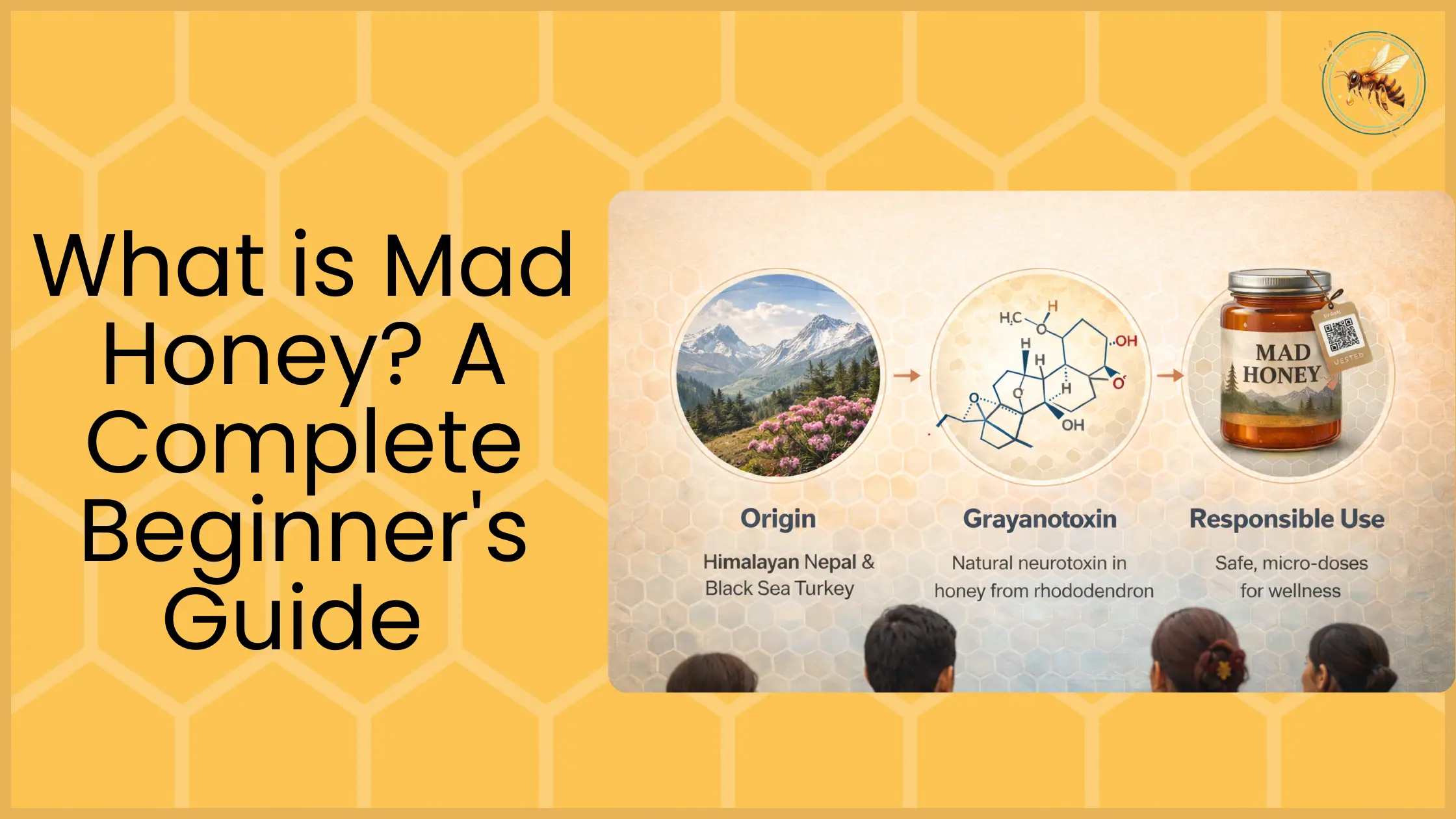
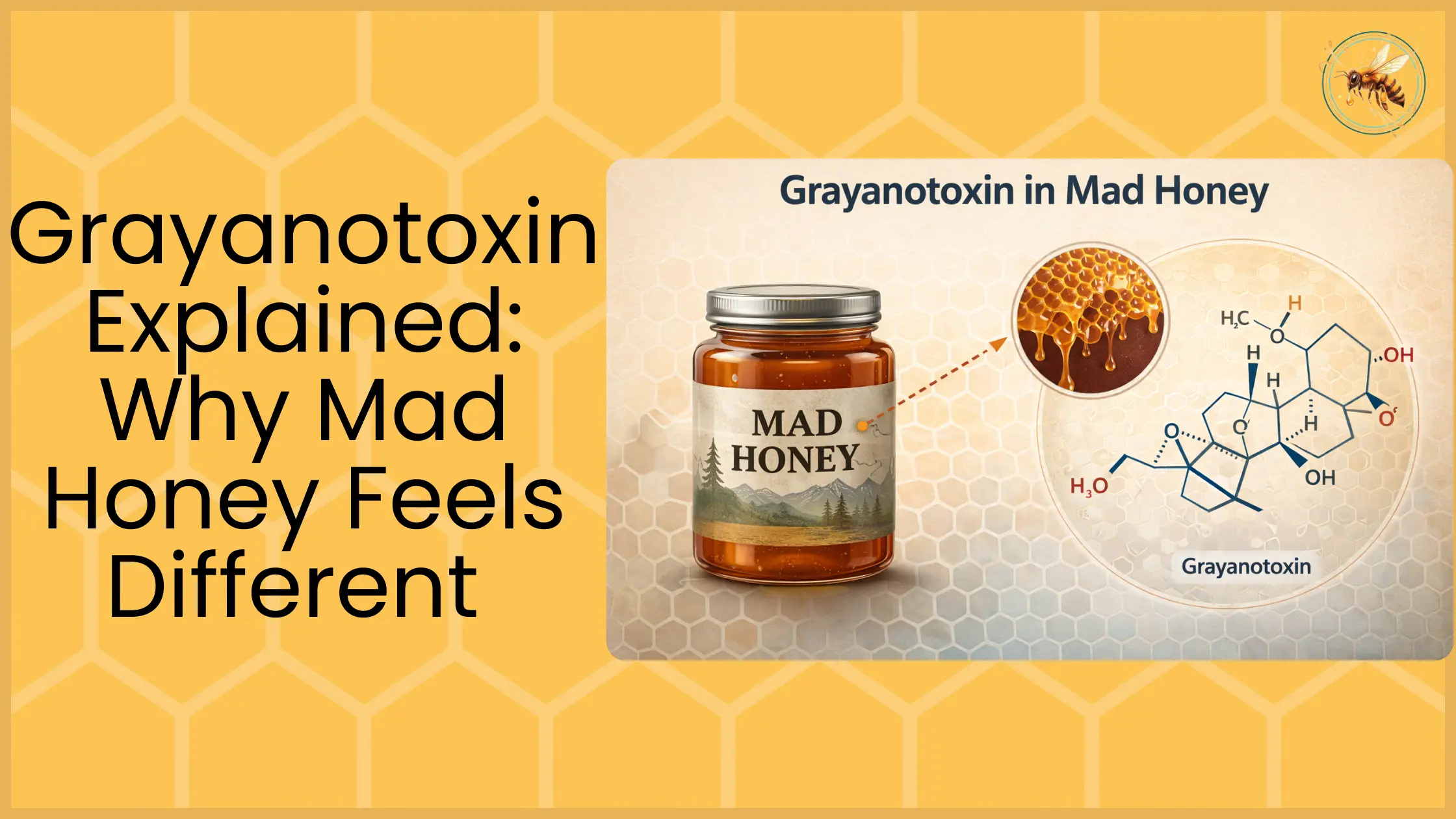
The same mechanism that makes mad honey “feel different” also makes it hard to standardize at the consumer level: grayanotoxins bind to sodium channels and can produce vagal/autonomic effects that scale sharply with dose.
Variability is inherent (season, region, nectar mix)
No two batches are identical, and variability is driven by seasonal bloom, regional plant differences, and blending/processing practices.
A buyer who ignores variability ends up in the most common “bad first experience” loop:
- they don’t feel much quickly
- they re-dose too soon
- they overshoot into nausea/dizziness/weakness territory
This is exactly why “best” should mean “most responsibly sold,” not “most intense.”
Reviews alone can be unreliable
Reviews are often about “how it felt,” but experience isn’t a stable product metric here. Batch variability + individual sensitivity means the same jar can be described very differently by different people.
Best-by-Goal (Choose Your Buyer Type)
This section helps you match your intent to the safest buying strategy, because not everyone searching “best” wants the same thing.
If you’re brand-new and risk-averse
Your goal is not intensity. Your goal is verification + conservative guidance + predictable handling. You should prioritize:
- the clearest origin story
- batch transparency
- safety-first instructions (start low, wait; who should avoid)
If you care about authenticity above everything
You want the jar you can most confidently say is real. Your priority becomes:
- region + harvest context
- batch ID
- documentation that is batch-linked and explainable (not vague “tested”)
If you’re experience-curious (but still want to keep it safe)
You want the “ritual” experience, not a reckless outcome. The best approach is:
- calibrated expectations (dose-sensitive, variable)
- no stacking / no mixing
- sellers who discourage “strongest” logic
If you’re price-anxious
This category is expensive because the supply chain is hard (rarity, labor, documentation, compliance). The safest “value” mindset in 2026 is:
- avoid cheap listings (high fake risk)
- evaluate price per jar only after the non-negotiables are satisfied
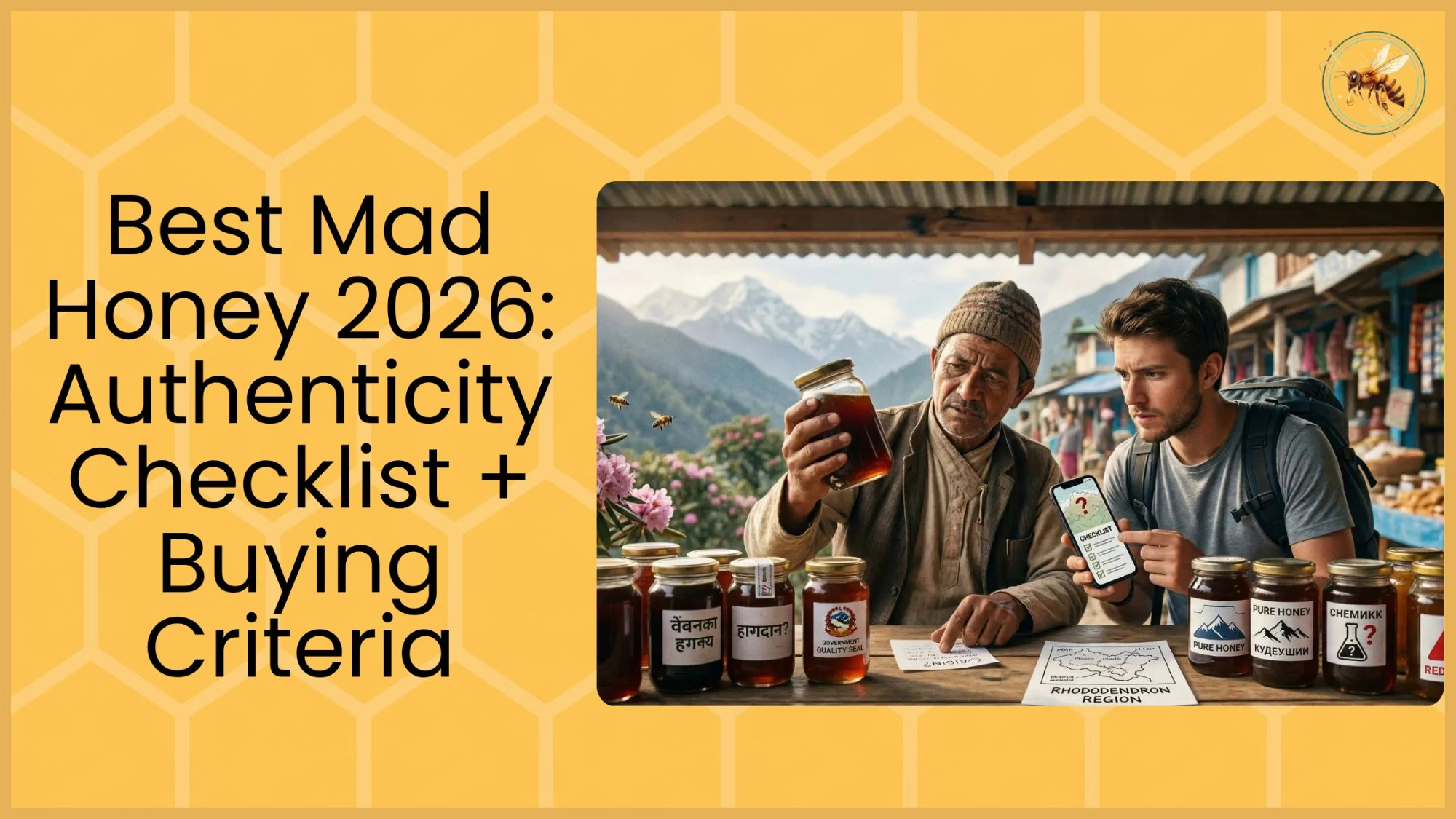
The 2026 Buyer Checklist (Scorecard Criteria)
Think of this as your “money page” section. You can copy/paste these checks and run them on any listing.
1) Origin proof (not just “Himalayan”)
“Himalayan” is often used loosely. A legitimate listing will tell you:
- country + region (not only the country)
- harvest context (“spring harvest,” “Black Sea region,” etc.)
- how the product got from source to jar (even at a high level)
Why this matters: mad honey forms when bees forage heavily on toxic rhododendron during bloom, and ecology + plant species selection drives toxin presence and concentration.
2) Batch transparency
In 2026, “best” sellers behave as if batch transparency is normal:
- a batch ID or harvest date/window
- a statement that effects can vary by batch and person
- “start low” as default
This directly matches the “variability is inherent” principle described in the grayanotoxin explainer.
3) Safety guidance (a credibility test)
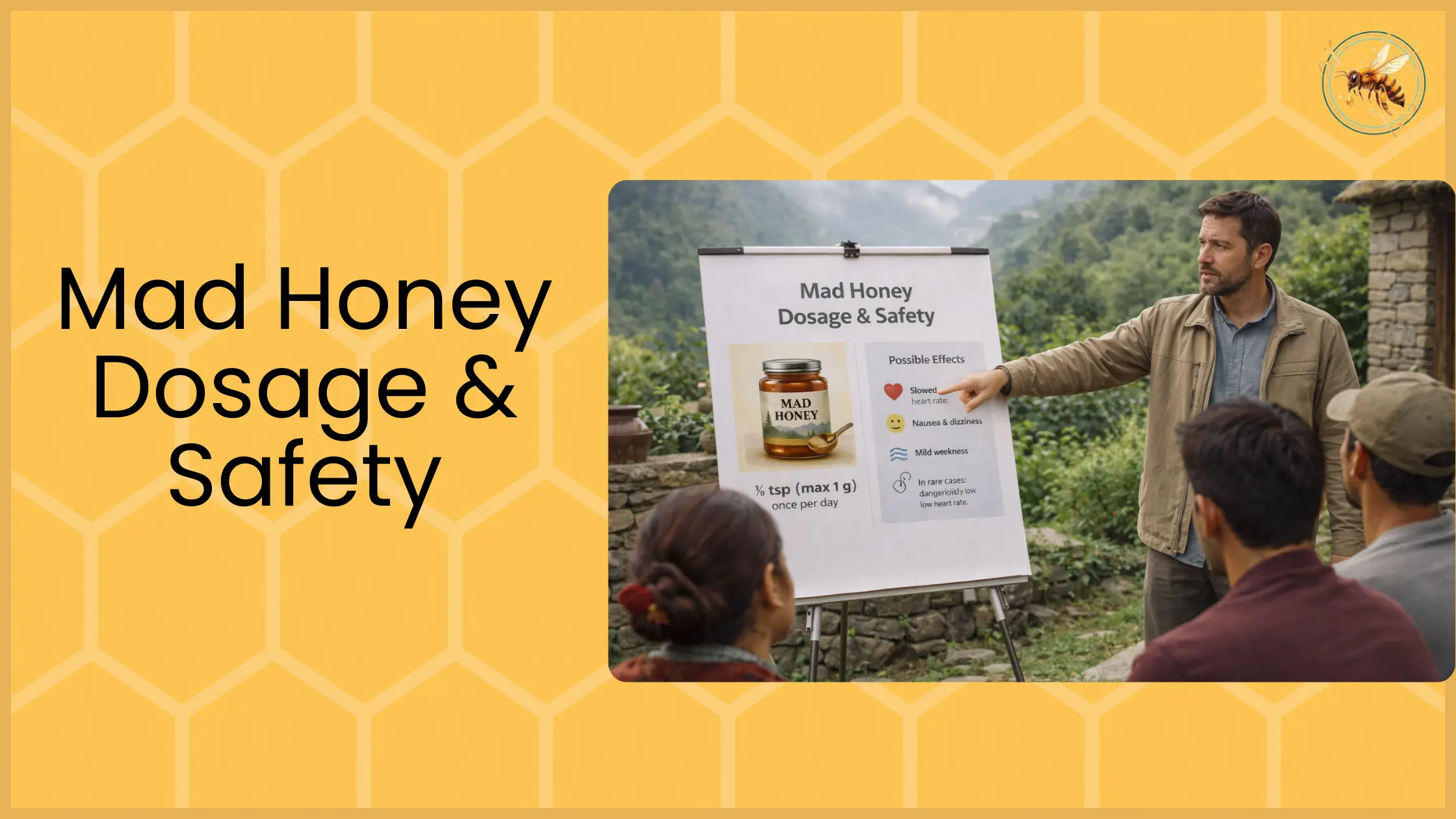
Mad honey’s “hallmark risks” at higher exposure include hypotension and bradycardia.
So a credible seller should clearly state:
- beginner caution (start low, wait, don’t re-dose fast)
- avoid mixing with alcohol/sedatives
- who should avoid (BP/HR issues, certain meds, pregnancy, conservative framing)
If a listing has no safety section, that’s not neutral; it’s a negative signal.
4) Testing signals (what “lab tested” should mean)
This is where most “best mad honey” pages either become fluff or become useful.
A meaningful testing claim answers four questions:
a) What was tested?
At a minimum, grayanotoxins most relevant to cases (often GTX I and III) are discussed as key.
b) How was it tested?
Common methods such as LC-MS/MS for quantifying GTX I and III, plus options like HPLC, NMR, and pollen analysis (for origin confirmation).
c) What were the results (and units)?
Vague “passed” language is not enough. Results should be numeric and batch-linked. “safe” means low, consistent GTX verified by lab analysis.
d) Is the test batch-matched?
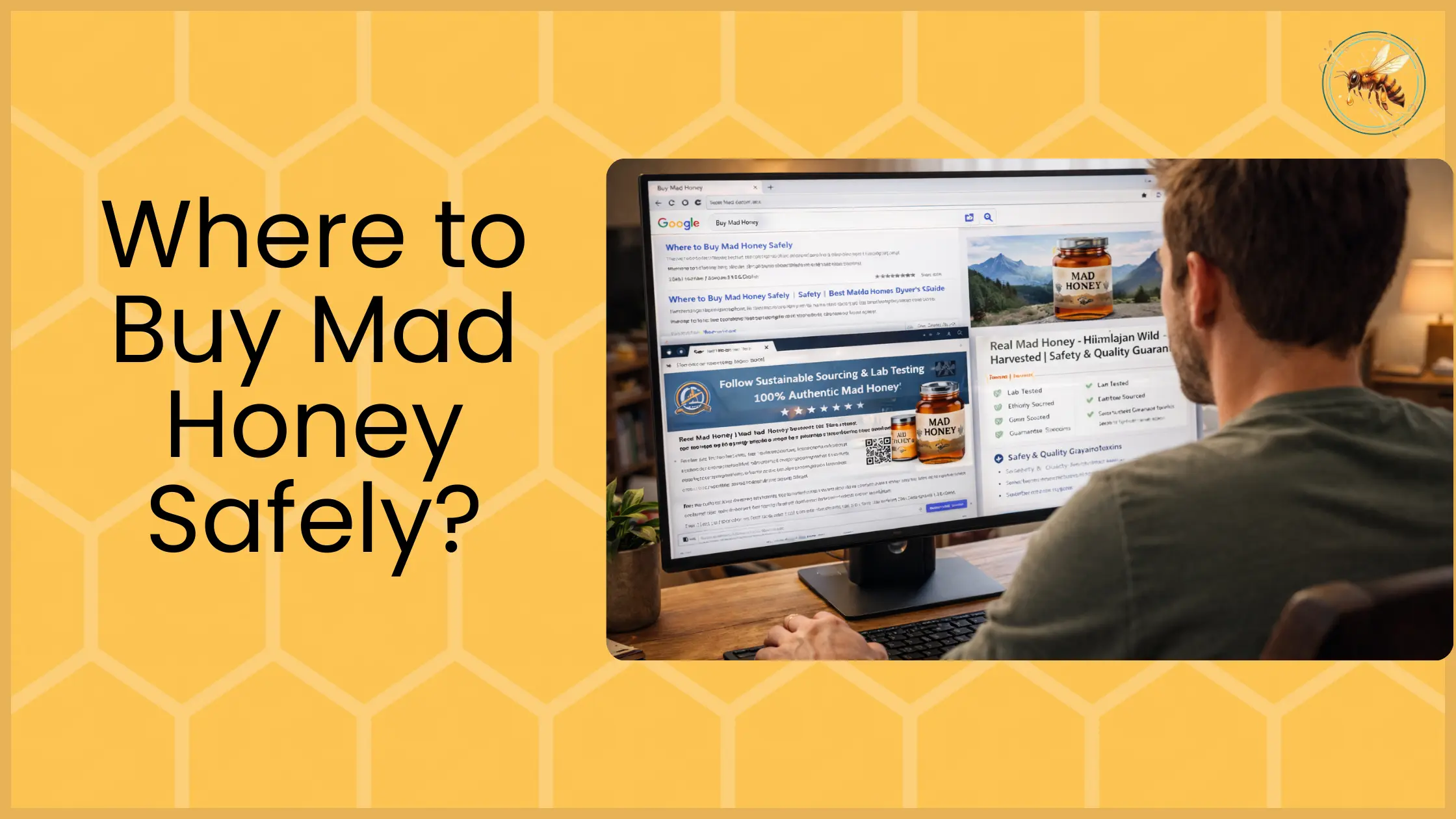
A COA that isn’t clearly tied to the batch you’re buying is marketing decoration. Batch-linked COAs are a core part of traceability.
5) Seller behavior (the hidden tell)
A lot of buyers focus on the jar and ignore the seller. In 2026, seller behavior is one of the strongest authenticity filters:
- clear contact info and customer support
- realistic shipping timelines and policies
- consistent product photos and labeling (no mismatched jars across listings)
- no pressure tactics (“only 5 left, buy now!!”) unless it’s credible and consistent with the brand
Bonus points (the “best-in-class” tier)
These don’t have to exist for every purchase, but if you see them, it’s a strong sign you’re looking at a serious operator:
- education-first content (not sensational)
- clear legality/import expectation setting (non-legal-advice framing)
- a published transparency philosophy (why they test, how they label, what “safe” means)
Red Flags (What the “Worst” Listings Have in Common)
This section is intentionally blunt: it’s here to prevent bad purchases.
1) Hype language that pushes intensity
Words like “psychedelic,” “trip,” “guaranteed high,” and “strongest” are not only misleading, they’re also dangerous because they nudge people toward re-dosing and stacking. Myth-busting and harm-minimization are core priorities.
2) Vague origin (“Himalayan”) with no region/harvest detail
If “Himalayan” is the entire origin story, you’re looking at a label, not traceability.
3) Fake proof and social manipulation
- suspicious reviews with identical phrasing
- stock photos used as “harvest proof”
- “as seen on” without verifiable references
- inconsistent jar images (different jars every time)
4) No safety guidance at all
For a dose-sensitive category with known clinical risk patterns at higher exposure, no safety section is a red flag by itself.
Nepal vs Turkey vs “Himalayan”: Which Is Best?
This is one of the most common buyer confusions, so here’s the clean framing.
Similarity: rhododendron link + bioactive variability
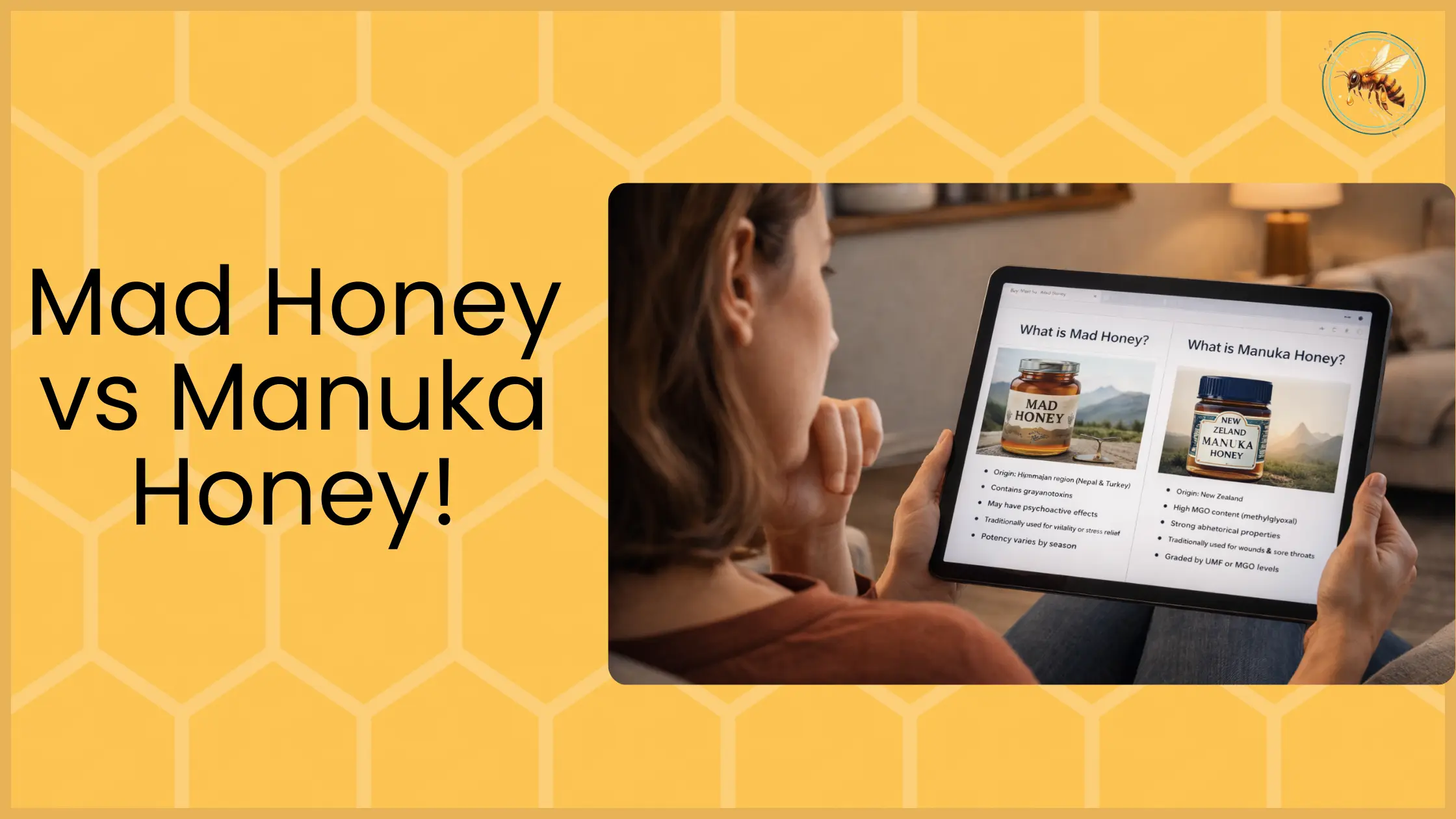
Both Nepal and Turkey are repeatedly discussed in relation to rhododendron-linked mad honey and grayanotoxin presence.
Differences that matter to buyers
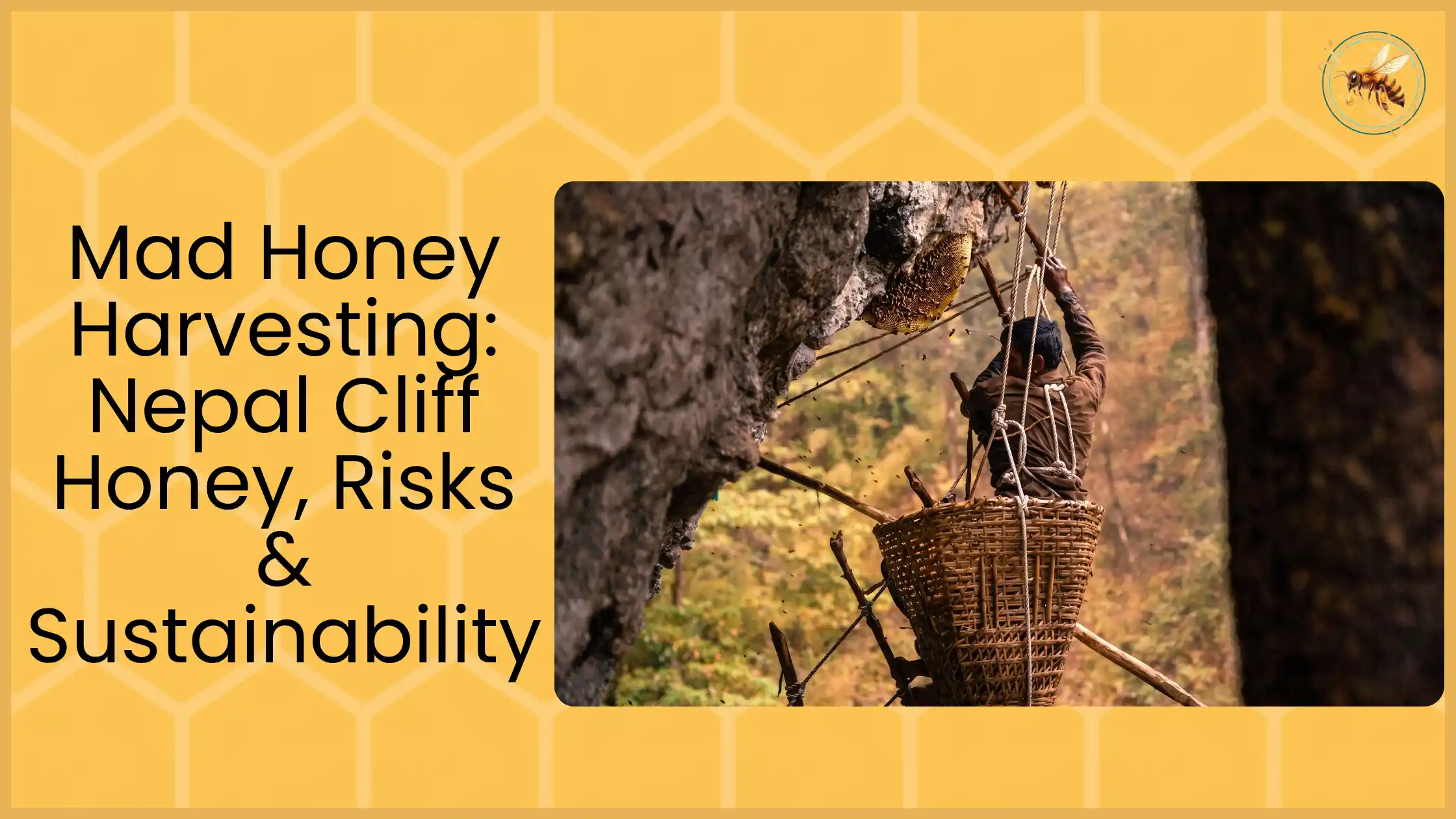
- Nepal is often framed through cliff harvest narratives and wild sourcing; Small-batch wild honey can retain higher toxin levels while blending dilutes toxins.
- Turkey (deli bal) is often linked to the Black Sea rhododendron ecosystem, with different supply chain patterns. (You’ll cover this in the Turkish page.)
Why “which is stronger” is the wrong KPI
Because dose response is steep and variability is high, “stronger” is usually just “less predictable.” The smarter KPI is:
Which source gives me the most transparency, the most conservative guidance, and the clearest batch identity?
What About “Red Mad Honey?”
A lot of scam listings use “red” as a shortcut to “real.”
Why color is not a quality metric
Color can vary for many reasons: nectar mix, season, processing, and storage. Even real mad honey can vary in appearance. Mad honey forms under specific bloom conditions, and commercial mixing dilutes toxins — neither of which is visible by color alone.
What color can indicate (and what it can’t)
Color can be a descriptive trait, but it can’t confirm:
- authenticity
- grayanotoxin content
- safety
- origin
So: treat “red” as not proof. Treat documentation as proof.
Best Practices Before You Buy (2026 Safety Layer)
Even the “best” jar is still a variable, dose-sensitive product. So, before you buy mad honey, the safest approach is to plan your first use conservatively.
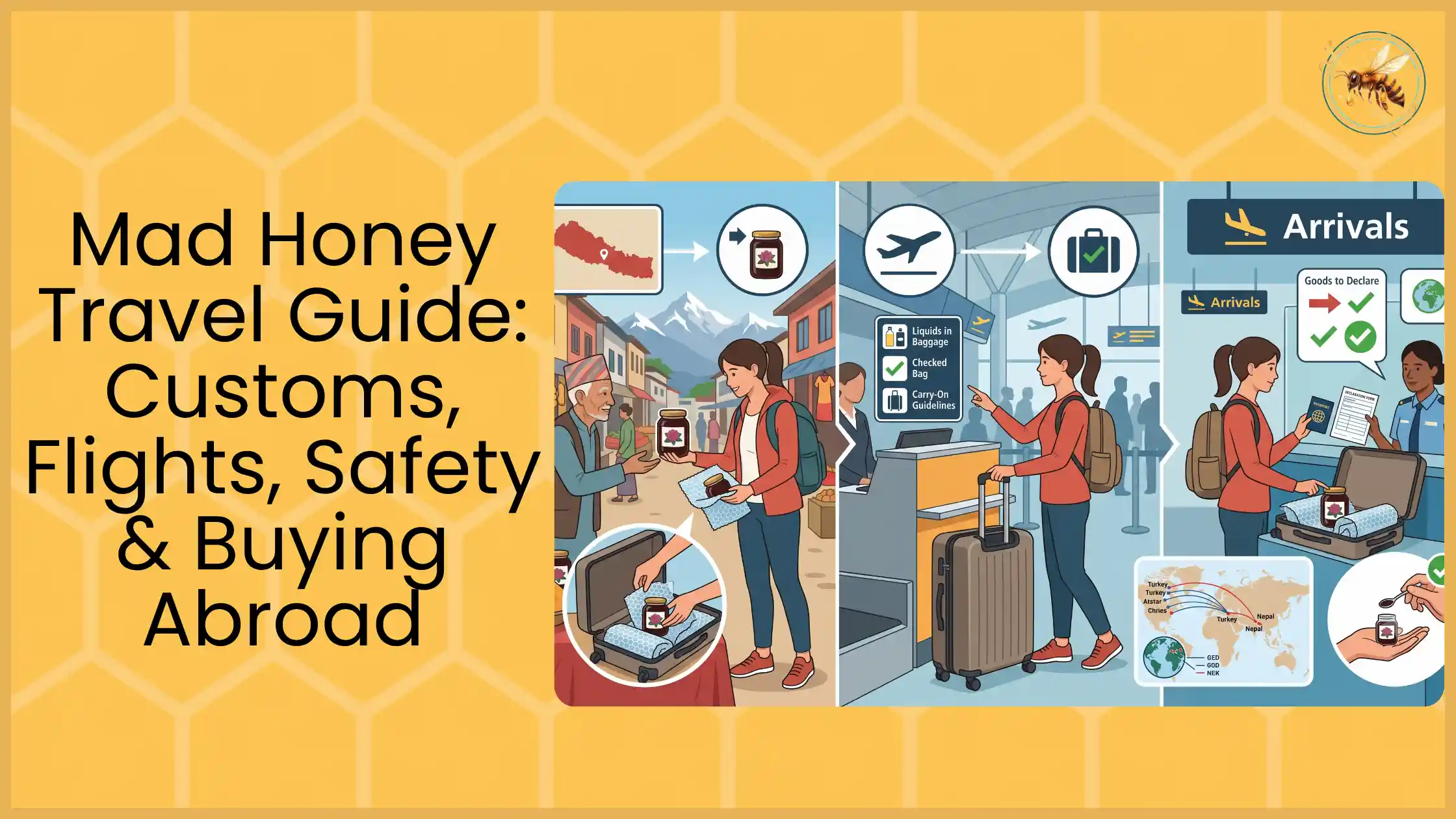
Check legality/import expectations (reduce friction)
Mad honey is generally treated as a food in many places, but “legal” in practice often depends on customs, labeling, and marketing claims. (Your legality hub will handle details country-by-country.)
Plan your first use safely
“safe” is low, consistent GTX verified by lab analysis, and no unregulated product is risk-free.
So your first-use plan should be:
- start low
- wait
- don’t mix
- avoid risky activities
- know red-flag symptoms and when to seek help
Conclusion
In 2026, “best mad honey” is not a trophy for the strongest jar. It’s a buying standard built around trust: Best = traceability + batch transparency + responsible guidance + meaningful testing. Buying on a trip? See traveling with mad honey.
FAQs – Best Mad Honey 2026
What is the best mad honey brand in 2026?
The safest answer is: the “best” is the seller who meets the criteria above, traceability, batch identity, conservative guidance, and meaningful testing, because lists and endorsements don’t protect you from fakes.
Is Nepal mad honey better than Turkish mad honey?
Not automatically. “Better” is mostly about transparency and safety practices. Both can be authentic; both can be misrepresented; both can vary.
Is red mad honey always authentic?
No. Color is not proof. Use origin + batch + testing + safety guidance as your real filters.
Do I need lab testing?
In a category where variability is inherent and dose response is steep, testing is one of the clearest ways to reduce uncertainty, especially if it’s batch-linked and specific (GTX I/III quantified via methods like LC-MS/MS).
Is mad honey legal in my country?
Usually, it’s not treated like a controlled drug, but import/marketing rules vary. Use the legality hub and your country page for specifics.
What’s a safe beginner dose?
This “best” guide intentionally doesn’t give a “take X teaspoons” recipe. The safest beginner rule is simple: start small and don’t re-dose fast, because effects are dose-sensitive and batches vary.