Mad honey is easy to misunderstand. One video presents it as a natural psychedelic. A product page describes it as a calming wellness ritual. Someone in the comments insists that the real thing must be dark red and bitter.
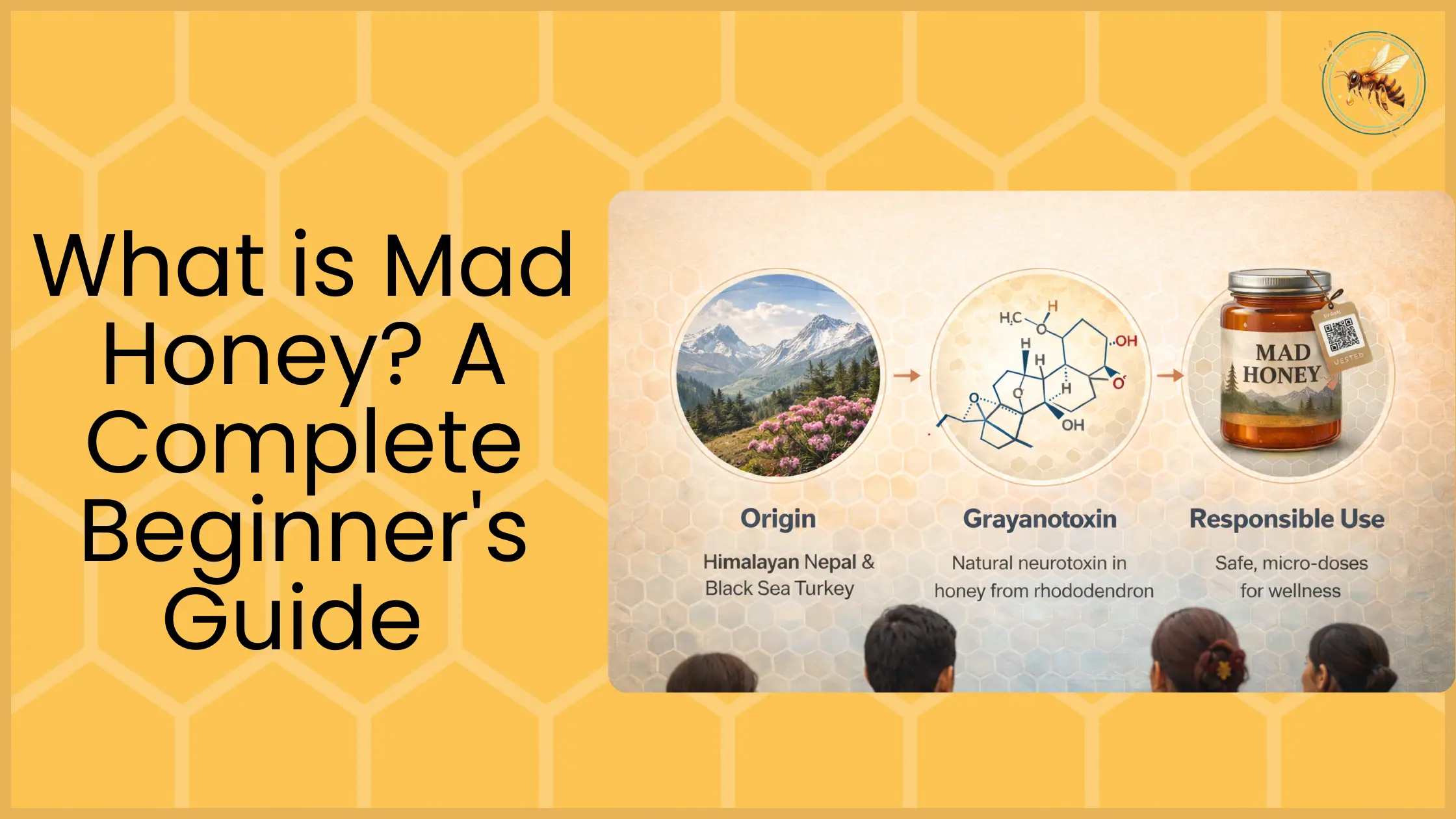
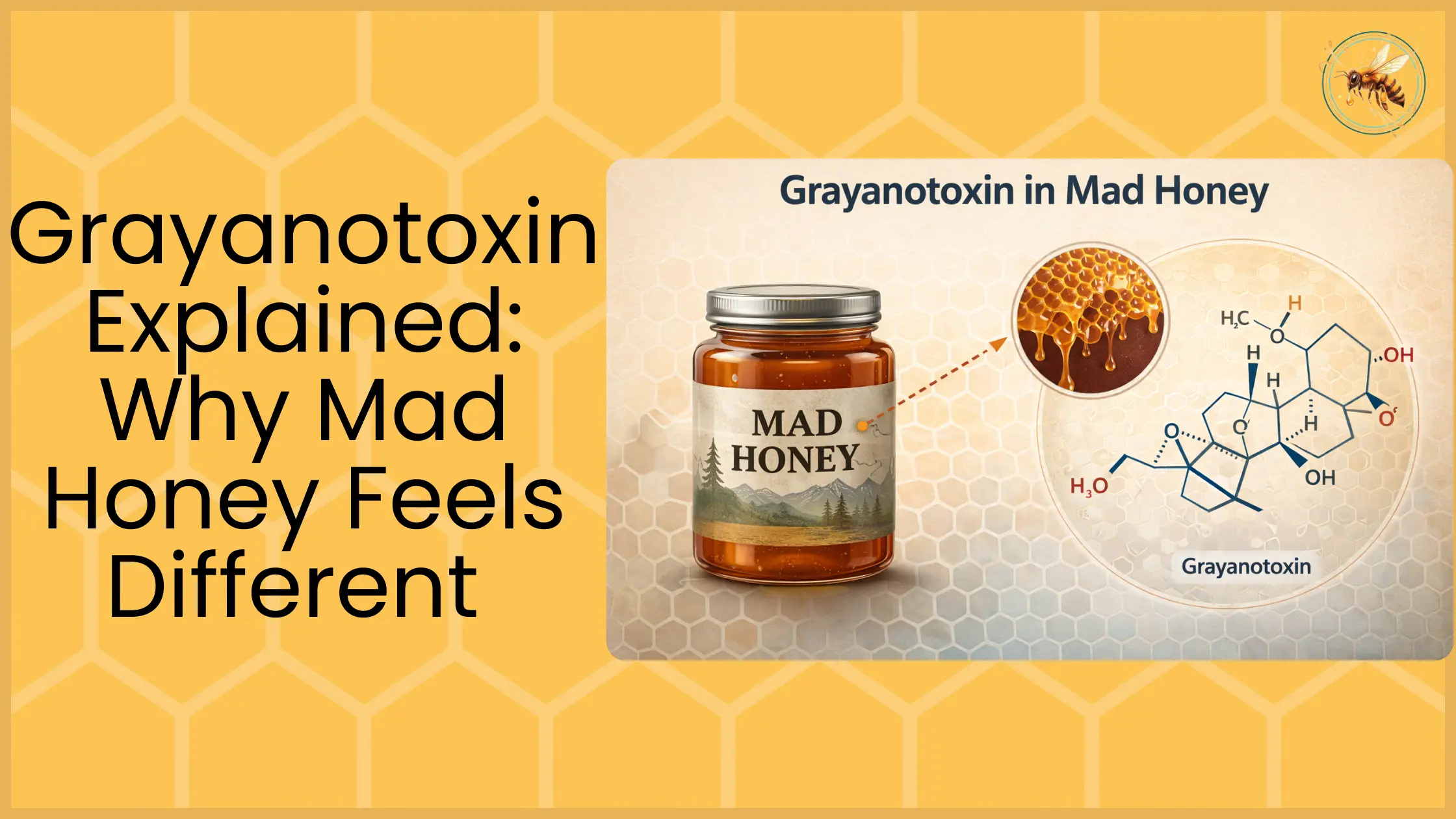
One of the biggest misconceptions is that mad honey is a natural psychedelic. Mad honey is not a classic psychedelic. Its effects come from grayanotoxins, which affect nerve signalling and cardiovascular function. Confusion or hallucinations reported during poisoning should not be presented as evidence of a predictable psychedelic experience.
Other claims are less dramatic but still misleading, such as the belief that genuine mad honey must be red and bitter or that a small spoonful is safe for everyone.
This article examines five common misconceptions against the available evidence. Where research supports a clear answer, we explain it. Where knowledge is limited, we make that uncertainty clear so you can assess the claims without relying on hype.
tl;dr
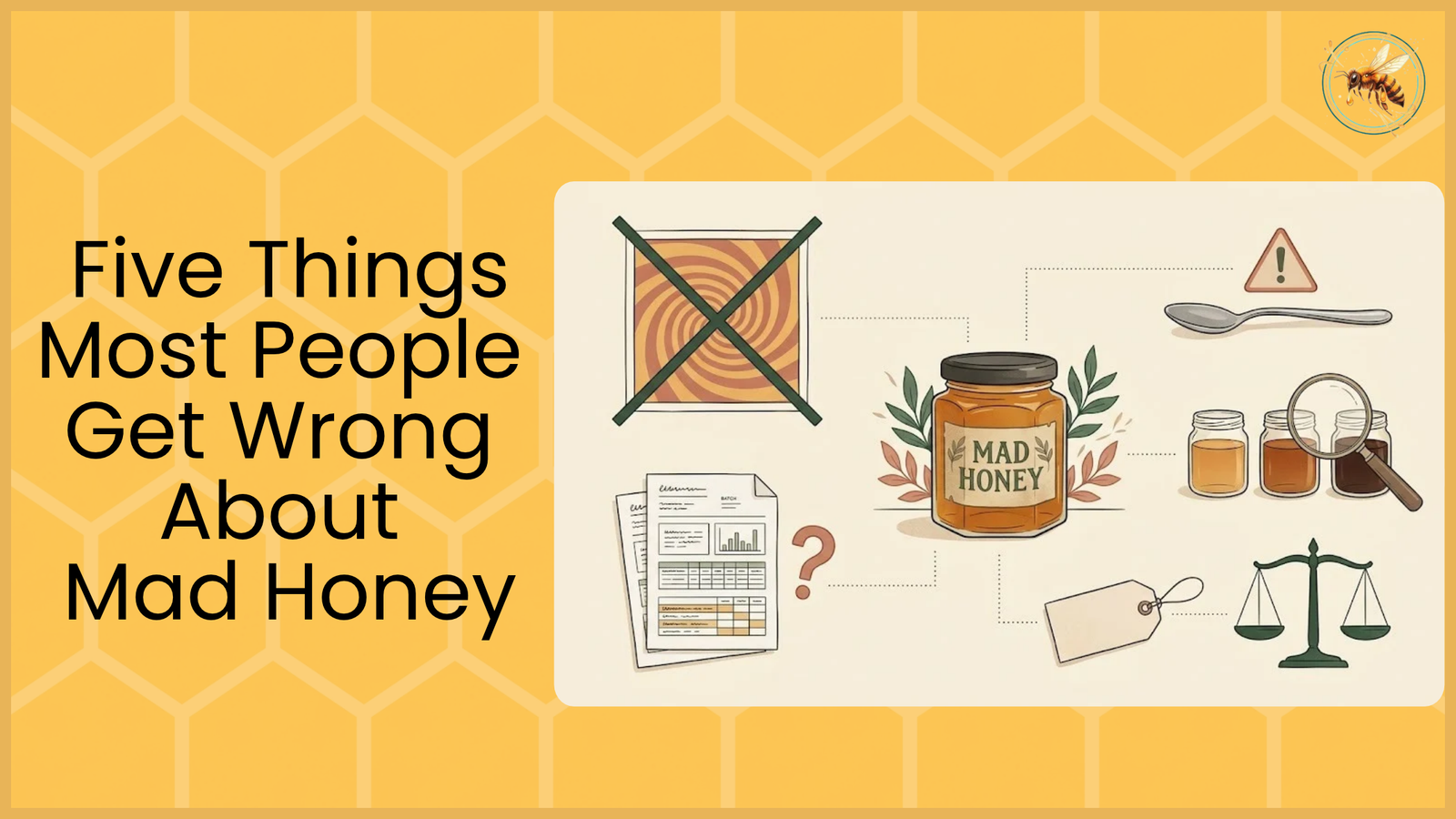
- Mad honey’s effects stem from grayanotoxins that impact nerve signaling and cardiovascular function rather than producing a classic psychedelic trip.
- A small spoonful doesn’t guarantee safety because a spoon measures volume, not toxin concentration, and batch variability means potency varies across jars.
- Sensory traits such as red color, bitterness, and thick texture cannot independently verify a product’s authenticity, origin, or strength.
- A “lab tested” label is only useful when you know the specific tests performed, whether grayanotoxins were measured, and how the report connects to the specific batch you are purchasing.
- Premium pricing, dramatic harvest stories, or strong physical reactions do not establish better quality or safe consumption.
1. “Mad Honey is basically a natural psychedelic”
The phrase “psychedelic honey” makes a strong first impression. It suggests that mad honey belongs in the same category as substances taken for a psychedelic experience.
That is a misleading way to describe it.
Mad honey’s effects are associated with grayanotoxins, which interfere with electrical signalling in nerve and muscle cells. Its recognised risks include effects on heart rate, blood pressure and consciousness.
This distinction matters because expectations influence how people interpret symptoms. Someone expecting a trip may dismiss dizziness, confusion or feeling faint as part of the experience.
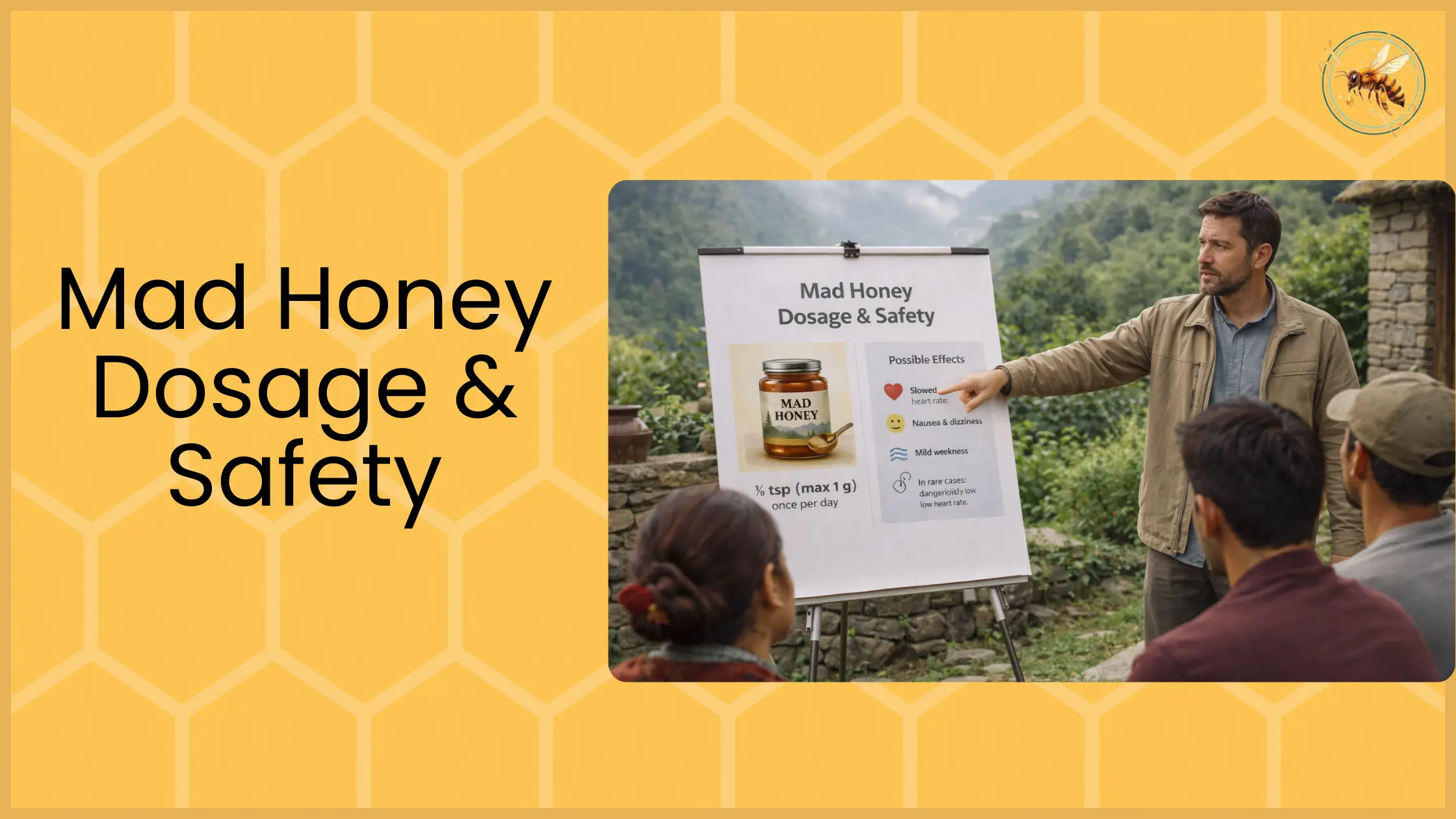
Utah Poison Control’s mad honey case file describes a patient who experienced hallucinations alongside chest pain, lightheadedness, and low blood pressure. She needed treatment and hospital observation.
That report does not make mad honey a classic psychedelic. It shows that hallucinations can occur in a poisoning context and should not be promoted as an expected benefit.
For a fuller explanation, our article on whether mad honey gets you high explores the difference between subjective descriptions and documented intoxication.
The correction: Mad honey should be understood through its grayanotoxin effects, rather than marketed as a predictable psychedelic experience.
2. “A small spoonful is safe for everyone”
A teaspoon looks familiar. We use one for sugar, ordinary honey, and countless other foods, so it can feel like a sensible measure of safety.
But a spoon measures the amount of honey. It does not measure the amount of grayanotoxin inside it.
The European Food Safety Authority’s assessment of grayanotoxins in honey describes differences in toxin concentrations and found that the available human case studies could not establish a no-observed-adverse-effect level.
In practical terms, the evidence does not support promising that one particular spoon size will be harmless for everyone.
It also does not support treating a previous uneventful experience as a personal safety test. A different jar may represent a different exposure.
This is where mad honey batch variability becomes important. You cannot assume that equal amounts from two jars contain equal amounts of the compounds responsible for their effects.
Some people may also be more vulnerable because of cardiovascular conditions or medicines that affect heart rate and blood pressure.
What to remember: “Small” describes a serving. It does not establish a safe toxin exposure.
3. “Real Mad Honey must be red, bitter and thick”
People like a simple authenticity test. Colour and taste seem convenient because you can assess them without documents or specialist knowledge.
You may hear that genuine mad honey must be red, intensely bitter, or thick enough to move slowly in the jar. The trouble is that a sensory description is being asked to do the work of verification.
Even if a jar matches the description you expected, you still have unanswered questions:
- Where did it come from?
- Does its label accurately describe the contents?
- Which batch does it belong to?
- What evidence supports the seller’s claims?
A reddish colour cannot answer those questions. Neither can a bitter taste.
This matters particularly when someone uses an intense taste or physical reaction as proof that they bought the “real thing.” Consuming more to test authenticity is a poor substitute for checking the product’s documentation.
Our guide to telling if mad honey is real explains how to assess origin, traceability, and testing claims together.
The correction: Sensory characteristics can describe honey, but they cannot independently verify its identity, composition or potency.
4. “‘Lab Tested’ means everything has been checked”
A laboratory badge can make a product page look convincing. But the phrase “lab tested” leaves out the most useful part: what the laboratory actually did.
A seller might have a report on moisture, composition, or certain contaminants. That does not automatically mean grayanotoxins were measured.
Before relying on the claim, open the report and look for:
| Detail | What it helps you establish |
| Laboratory name | Who performed the analysis. |
| Sample identification | Which sample the results describe. |
| Testing date | When the analysis took place. |
| Tests and results | What was examined and what was found. |
| Units and methods | How to interpret the measurements. |
| Connection to the jar | Whether the report applies to the batch being sold. |
A genuine report for a previous harvest does not automatically describe the current product.
You can ask the seller a straightforward question: “How does this sample number connect to the lot number on the jar I will receive?”
A useful answer makes that connection clear. A reply that repeats “premium quality” does not.
Our explanation of mad honey lab reports walks through the details to check.
One more distinction to keep in mind. Information about a tested sample does not guarantee how an individual will respond to consuming it.
The correction: “Lab tested” becomes meaningful when you can examine the scope, results, and relevance of the analysis.
5. “The most expensive or strongest honey is the best”
Premium packaging, steep cliffs, and a dramatic harvest story can make a jar feel exceptional. A high price may reinforce that impression.
Those details may explain part of the product’s positioning. They don’t provide everything a buyer needs to know.
Price alone cannot confirm sourcing, composition, or the relevance of a laboratory report. Nor does a stronger reaction prove better quality.
A better comparison starts with questions you can answer:
- Is the origin explained clearly?
- Are the contents accurately described?
- Can you examine the evidence behind the testing claim?
- Does the seller explain limitations and risks?
- Are the delivered price and refund conditions clear?
The FTC’s online-shopping guidance recommends checking sellers, comparing the full cost, reading return policies, and critically evaluating reviews. Those habits are useful here too.
Customer comments can help you assess delivery and service. They cannot establish toxin concentration or predict your own experience.
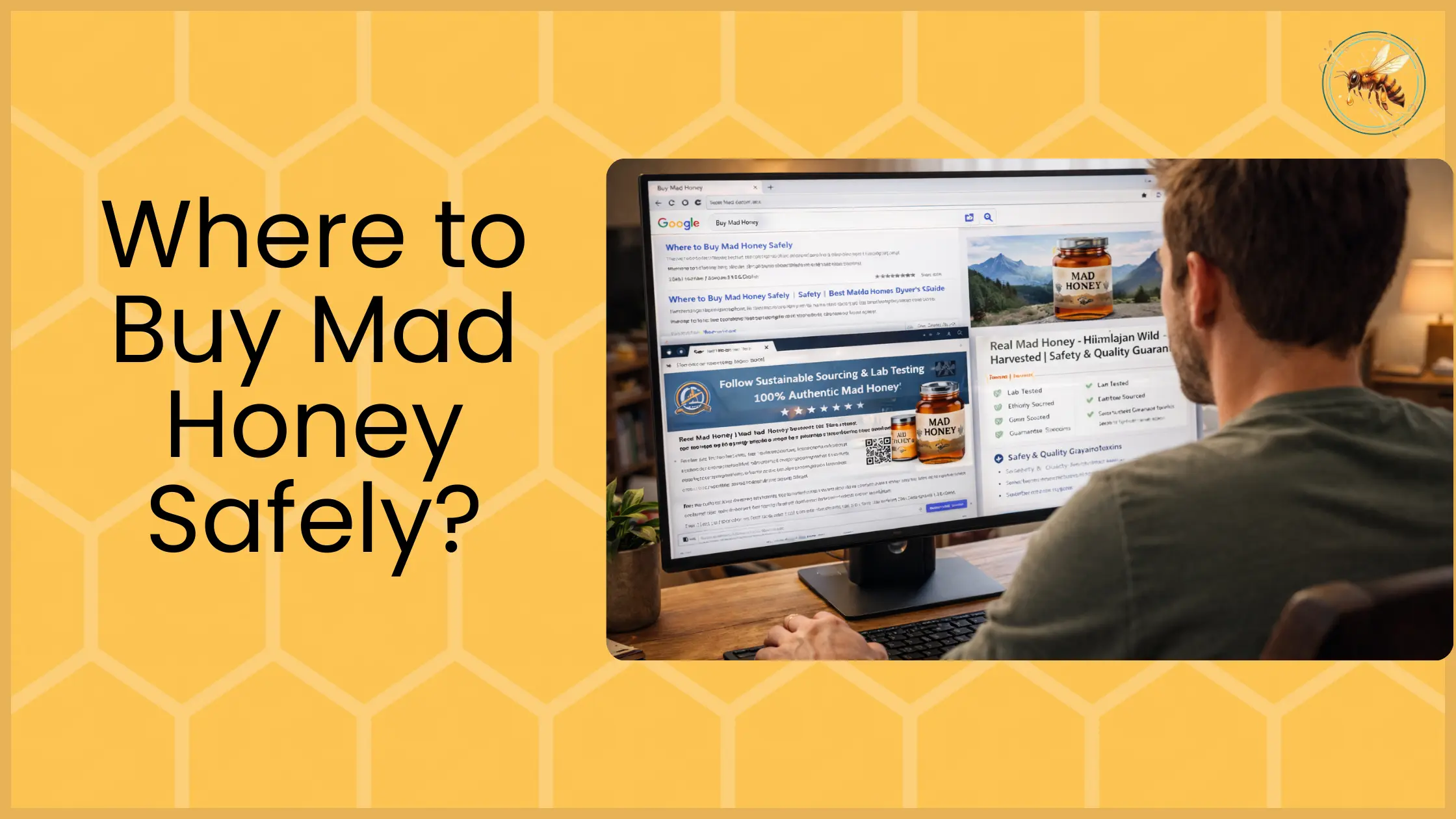
If you are comparing products, AAMH’s guide to where to buy mad honey explains the practical differences between buying routes.
The correction: Judge a product by the information you can examine, not its price or someone else’s experience.
A Few Questions Worth Asking
Is all rhododendron honey Mad Honey?
Don’t assume a flower’s name determines the composition of every jar. Ask what evidence supports the particular product’s grayanotoxin claim. AAMH’s rhododendron honey guide explains the botanical connection in more detail.
Does authentic mean safe?
No. Authenticity concerns whether a product is what it claims to be. Safety concerns the risks of consuming it. Genuine mad honey can contain the compounds responsible for poisoning.
Should strong effects be treated as a sign of quality?
No. Feeling faint, confused, or unusually unwell after consumption should not be interpreted as confirmation that the honey is premium. Seek professional advice about symptoms rather than ranking the product by their intensity.
What is the most useful way to judge a jar?
Look for consistent information across the label, sourcing explanation, batch details, and laboratory report. Notice what is missing as well as what is present. A seller who answers specific questions clearly gives you a better basis for a decision than one who relies on broad promises.