What Regular Honey Is?
Regular honey is what most people know: bees collect nectar from flowers, process it, and store it as honey. That honey varies based on the plant source and region, but it’s fundamentally a food, a natural sweetener with flavor complexity, a distinctive texture, and a long history of culinary use.
It’s important to set this baseline because many people compare mad honey to regular honey as if the difference is like “spicy vs mild.” It isn’t. The normal expectation for honey is that it behaves predictably and fits into daily life. You don’t need a “protocol” for using a spoonful of regular honey.
Typical uses and expectations (food, flavor, general wellness use)
Regular honey is used in a way that’s casual, flexible, and mostly about taste. People stir it into tea, drizzle it over yogurt or oatmeal, add it to sauces, bake with it, or keep it as a household staple for sweetness. Even when it’s purchased for “wellness routines” (like warm water with honey), it’s typically treated as a food habit, not as something that should meaningfully change how you feel.
Another key expectation is predictability. Yes, regular honey differs in color, thickness, and floral notes, but you don’t usually expect one jar to “hit” differently from the next in a way that changes your day. The differences are culinary: one might be lighter, one more herbal, one more caramel-like. That’s the normal honey world.
Mad honey sits outside that expectation. Not because it isn’t honey, but because people don’t buy it primarily for sweetness or cooking. They buy it for the “distinct sensation” reputation, and that reputation has real consequences for safety and use.
What Makes Mad Honey Different?
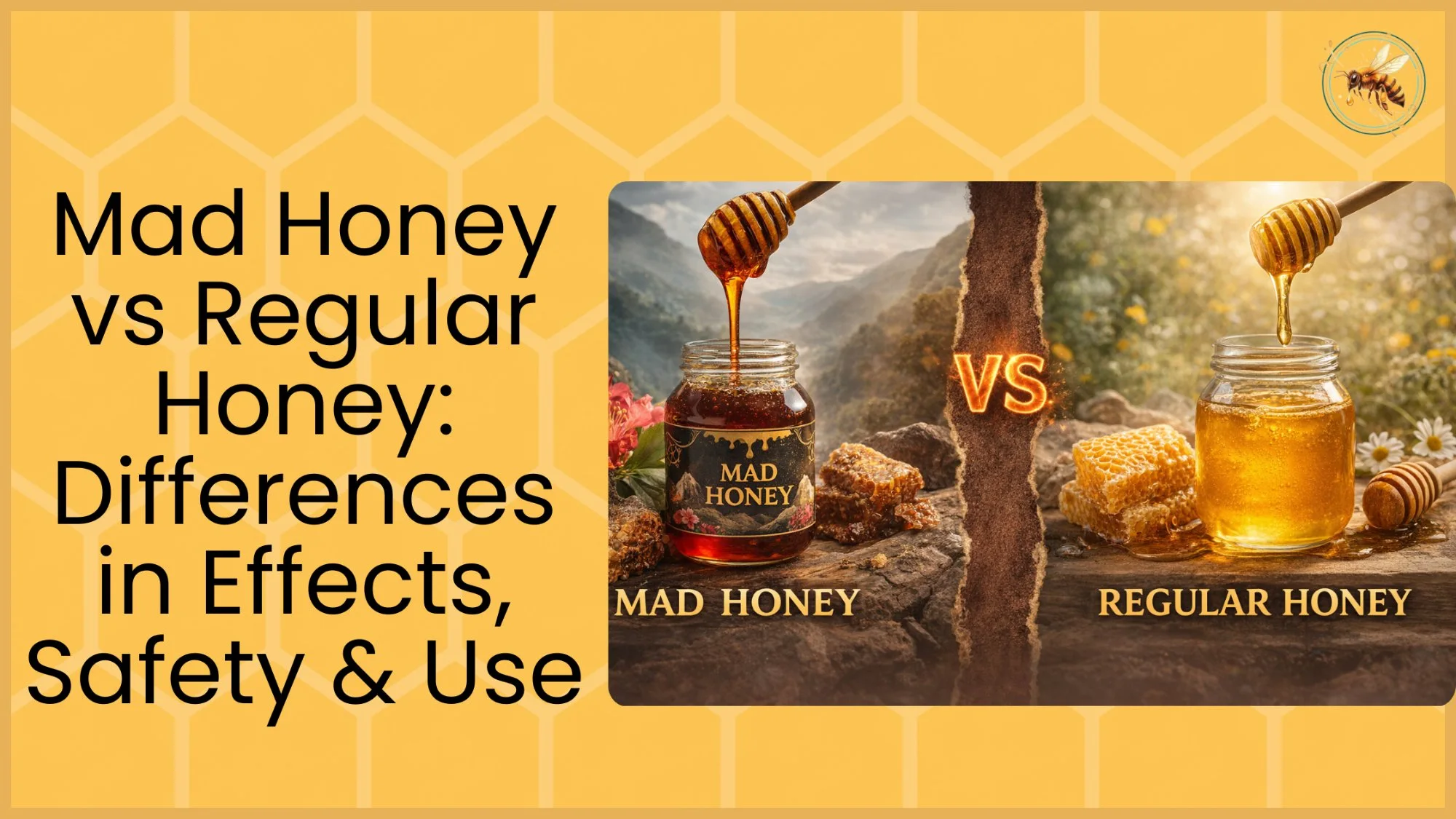
Mad honey is still honey. The difference is not the bees, it’s the botanical source of the nectar in specific regions and seasons, and the fact that some of those flowers can contribute compounds that make the honey feel noticeably different.
There’s also a big market problem here: the term “mad honey” is often used loosely online, including on products that are misrepresented or simply regular honey with a story. That’s why “what makes it different” should always include a reality check: not every jar sold as mad honey is actually the same thing.
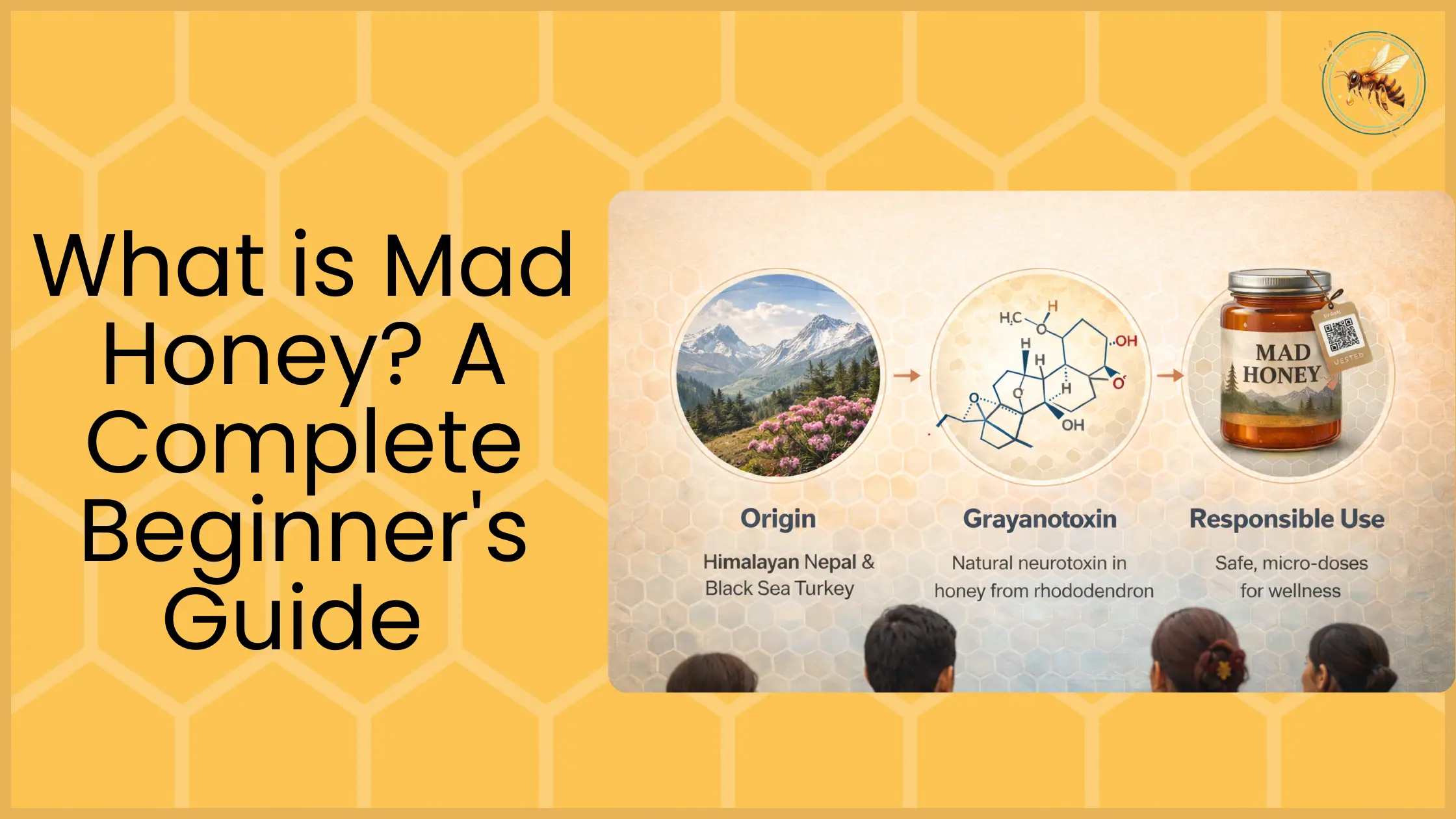
Rhododendron nectar + grayanotoxins
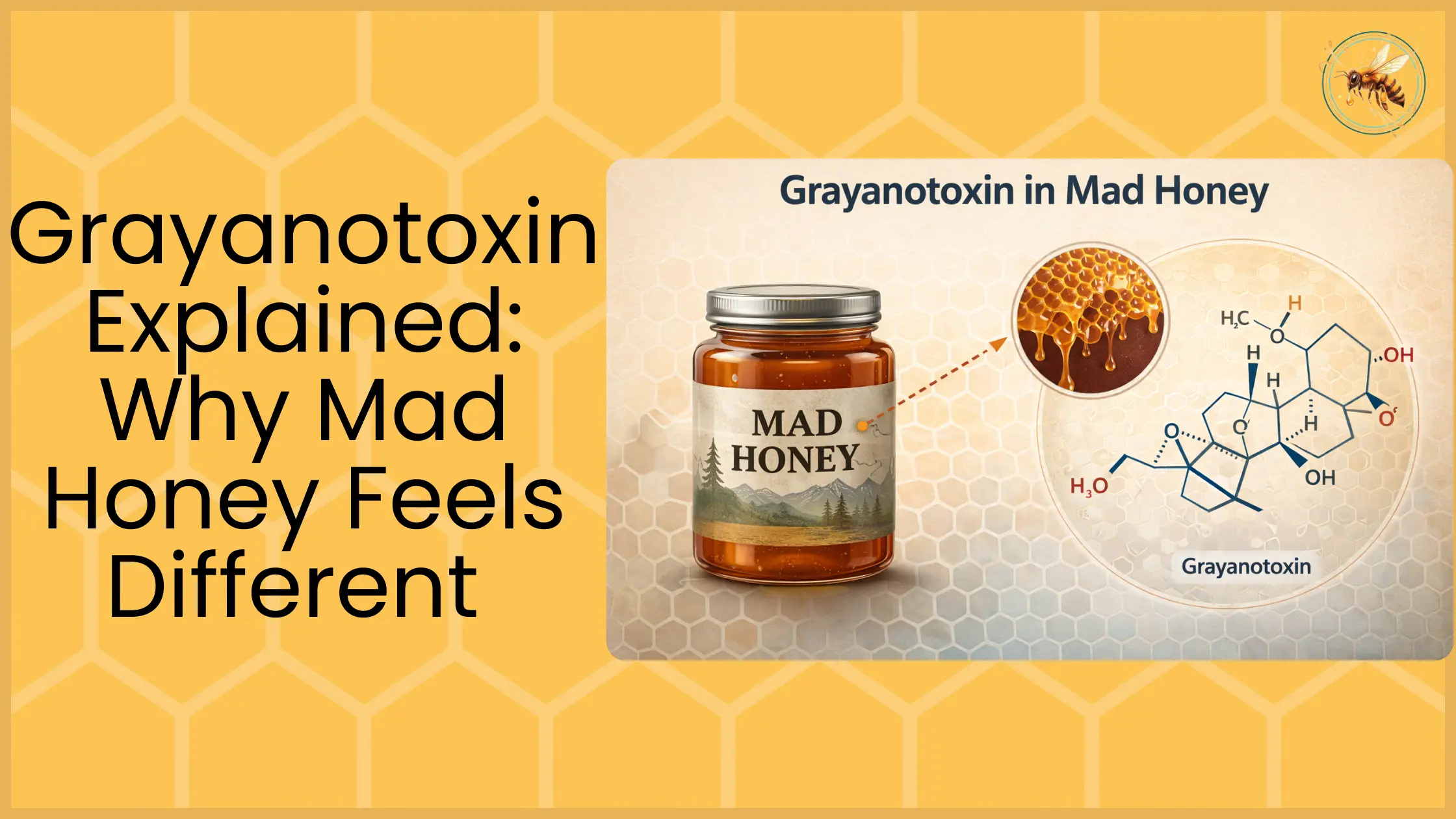
The simplest explanation is this: in some regions, bees collect nectar from certain rhododendron species. Some rhododendrons contain naturally occurring compounds called grayanotoxins. When present in the honey, these compounds are what can create the “mad honey” effect profile.
You don’t need to memorize names or chemical pathways to understand the practical difference:
- Regular honey’s main “effect” is sweetness and flavor.
- Mad honey can be dose-sensitive and can create a body-first shift for some people.
This is why mad honey isn’t a normal replacement for everyday honey. It’s more like a niche product category where you approach with intention, especially if you’re new.
Mad Honey Effects: What People Report (and Why Dose Matters)
This is where most comparison articles fall apart. They either sensationalize (“legal psychedelic”) or sanitize (“it’s just honey”). The more accurate way to explain it is that the experience can sit on a spectrum, and dose is the steering wheel.
Also important: people’s reports are influenced by expectations. If someone takes mad honey believing it’s supposed to be intense, they pay more attention to every sensation. That doesn’t mean the effects are imaginary; it means perception and context can amplify what’s already happening.
Low dose vs high dose
At low amounts, the most common descriptions cluster around the idea of a wind-down. People say they feel calmer, heavier, more grounded, or more relaxed physically. The experience is usually described as body-forward, not like an “in your head” stimulant. Many people frame it like a ritual: quiet setting, slow pacing, and a sense of “settling.”
At higher amounts, the tone of the reports changes. Instead of “calm,” people describe feeling uncomfortably dizzy, nauseous, sweaty, weak, or like they want to lie down and wait it out. This is the point where the experience stops being a “ritual” and starts becoming “I miscalculated.” It’s also where online hype can be dangerous, because people chase intensity without understanding that intensity can mean “sick,” not “fun.”
That’s why the safety philosophy is different from regular honey. With regular honey, “more” just means more sweetness. With mad honey, “more” can change the experience category entirely.
Why effects vary by person and batch (and why that’s normal)
Variability is one of the biggest differences between mad honey and regular honey. Regular honey varies mostly in taste and texture. Mad honey can vary in how noticeable the effects are.
There are two main reasons:
Batch variability (nature + seasonality).
If mad honey is connected to certain bloom zones and seasonal conditions, then it’s inherently variable. Harvest timing, region, and handling can influence what ends up in the final jar. This is why serious sellers talk about batches, not just “the product.”
Personal sensitivity (your body isn’t a machine)
Two people can take the same amount and have different experiences. Food intake, hydration, baseline blood pressure sensitivity, sleep, stress, and other variables can all influence how your body responds. This is not unique to mad honey, but mad honey makes it more obvious because the experience can be noticeable.
This is also why responsible guidance emphasizes starting low and waiting instead of re-dosing quickly.
Safety Differences (Why “More” Isn’t Better)
If you’re comparing mad honey vs regular honey for real-world use, safety is where the gap is largest. Regular honey is generally used freely as a food. Mad honey is typically used with more caution because the experience can become uncomfortable or risky if you overshoot.
It’s not about fear. It’s about treating the product according to its reality.
Common side effects vs serious symptoms
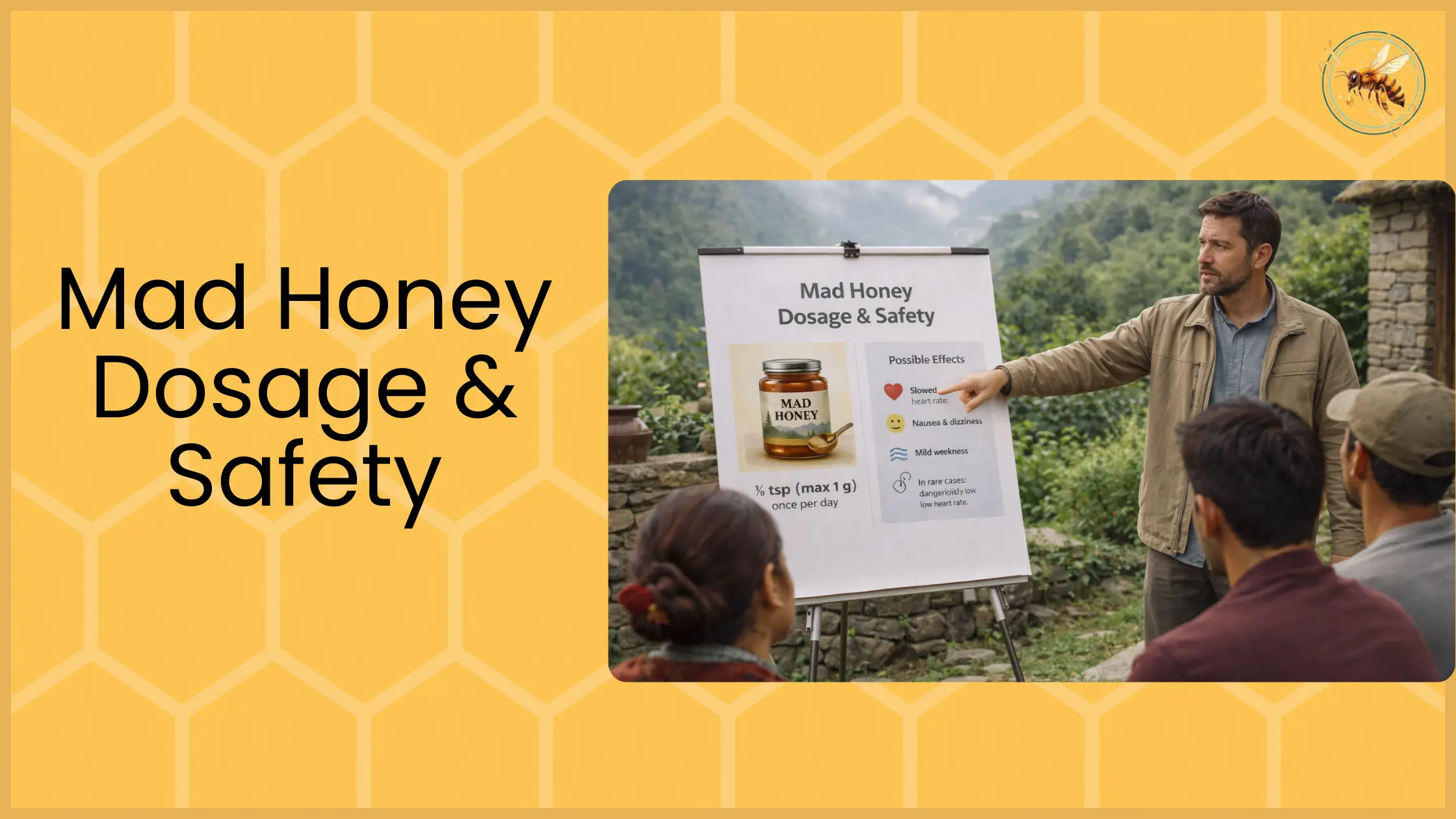
Most people who “take too much” don’t describe it as an interesting experience; they describe it as an unwanted one. Common “overshot” symptoms people report include nausea, dizziness, sweating, weakness, and a general sense of feeling unwell. This is the point where the correct move is not to “push through.” The correct move is to stop escalating and prioritize stability.
More serious situations are when symptoms are intense, worsening, or involve fainting, severe weakness, confusion, chest discomfort, or persistent vomiting. Those are not “part of the vibe.” Those are red flags.
This is also why a good educational ecosystem matters. A responsible site doesn’t just hype mad honey; it teaches people what to do if they misjudge.
The biggest safety lesson is simple: mad honey rewards restraint, not bravado. “More” is not a flex. It’s usually just a mistake.
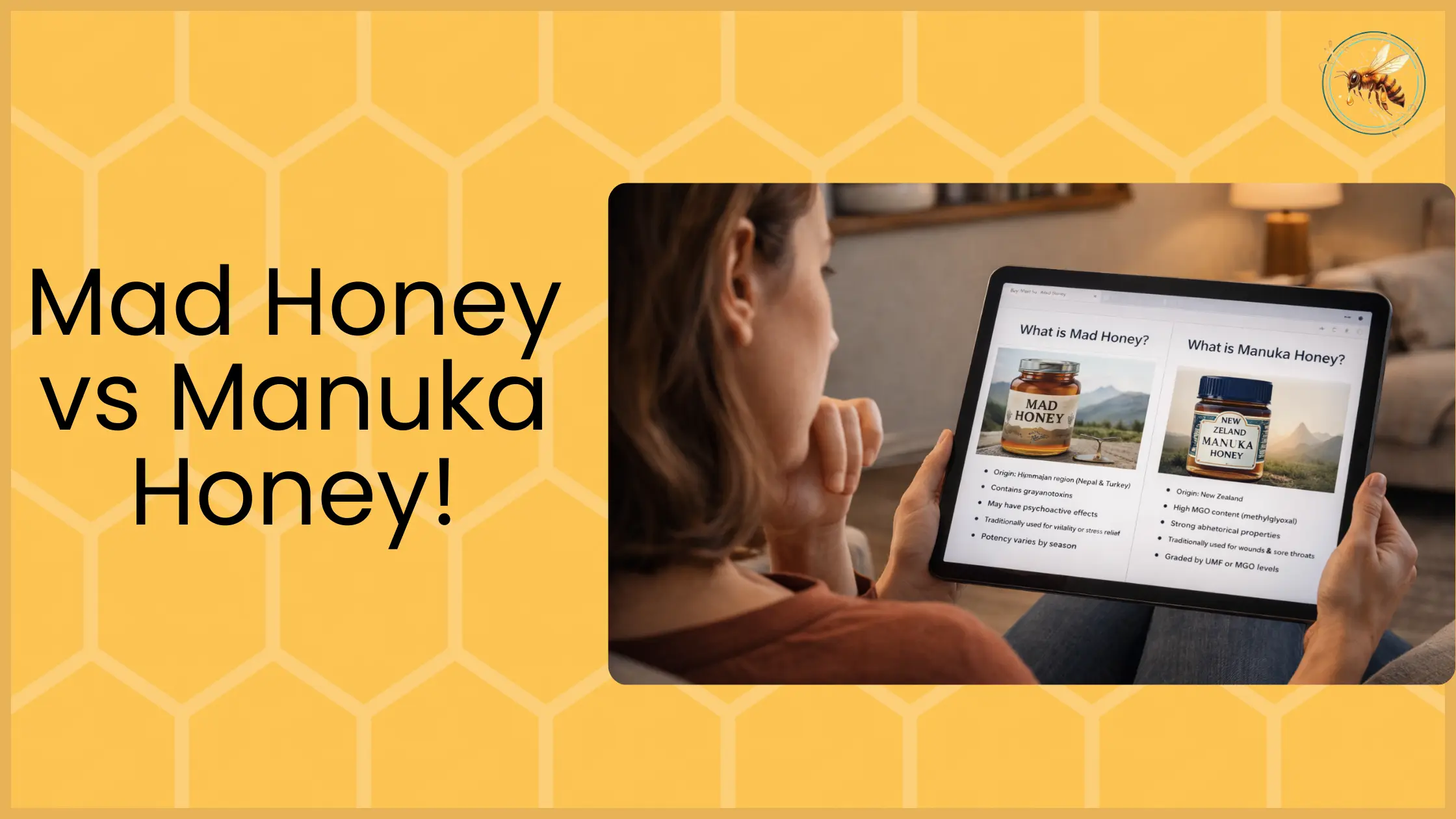
How to Choose Between Regular Honey and Mad Honey?
A lot of people try to pick a “winner.” That’s the wrong goal because mad honey and regular honey are built for different roles.
Think of it like this: you’re not choosing between two brands of the same product. You’re choosing between two use cases.
If you want pure food, honey vs a ritual experience
If you want a honey you can use daily, for tea, recipes, breakfast, baking, regular honey is the correct choice. It fits normal life. It’s predictable. It’s culinary.
If you want a rare, intentional experience, something you approach in a calm setting, with small amounts, and a “wait and see” mindset, mad honey may fit your intent. But only if you accept the tradeoff: variability and the need for responsible use.
This is where many buyers go wrong: they buy mad honey thinking it’s a “better honey.” It isn’t better or worse; it’s different. It’s like buying a specialty item for a specific purpose.
Buying authentic mad honey safely
If you’re going to buy mad honey, the purchase decision is not just about price. It’s about trust signals.
A responsible seller tends to be transparent about origin, avoids drug-like hype language, provides conservative safety guidance, and treats the product like a niche honey with real variability. They don’t sell it as a guaranteed high. They educate you about what it is and what it isn’t.
On the other hand, high-risk sellers often rely on mystery and excitement: vague origin, no batch traceability, extreme claims, and “psychedelic” framing. Even if the product is real, that style of selling increases misuse and disappointment.
Conclusion
Mad honey and regular honey aren’t just different flavors; they’re different categories.
Regular honey is food-first: a predictable daily staple for taste and recipes. Mad honey is experience-first: typically used as a careful, intentional ritual where dose and variability matter.
If you want a honey you can use freely, choose regular honey. If you want to explore mad honey, do it responsibly: start low, don’t rush, buy from transparent sources, and treat “more” as a risk, not a goal.
FAQs on Mad Honey vs Regular Honey
Can I use mad honey like regular honey in recipes?
In practice, you shouldn’t treat mad honey like a normal cooking honey. Recipes encourage casual, larger amounts and repeated tasting, which conflicts with responsible use. If your goal is baking, sauces, tea, and daily spoon use, regular honey is the correct tool.
Is mad honey healthier?
“Healthier” isn’t the right comparison because the products serve different roles. Regular honey is generally used as a food. Mad honey is sought for an experience and comes with more variability and safety considerations. If you want everyday honey for your routine, regular honey (or manuka, depending on your goals) usually makes more sense than using mad honey as a daily habit.
Does mad honey expire differently?
Honey is generally stable when stored properly (sealed, away from moisture and heat). Mad honey doesn’t “expire” in a special way compared to other honeys. What matters is storage conditions and preventing contamination (for example, introducing moisture into the jar).
Why is mad honey expensive?
Mad honey is often expensive because it’s linked to specific regions, seasons, and limited harvest cycles. Supply can be smaller, and demand is amplified by online attention. On top of that, the market has a misrepresentation problem, meaning legitimate, transparent sourcing tends to cost more than anonymous hype listings.