What Is Apis Laboriosa?
Before you can judge “Apis laboriosa honey,” you need a clear picture of the bee. Otherwise, you’re buying a story.
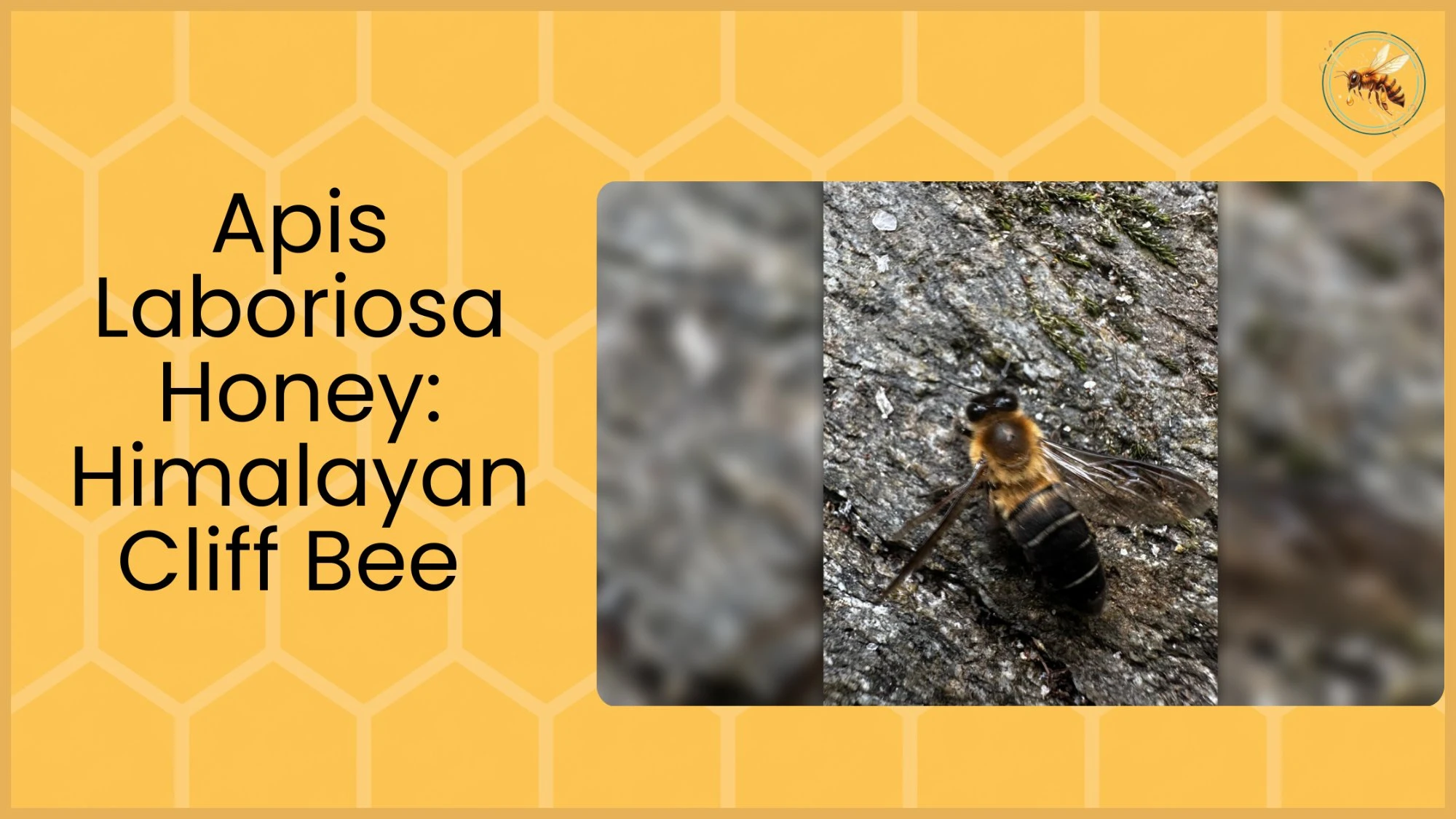
Apis laboriosa is commonly referred to as the Himalayan giant honey bee or cliff honey bee. It is known for living in mountainous ecozones and nesting on cliffs and rock overhangs, an ecology that makes its honey visually tied to dramatic cliff-harvesting imagery.
The Himalayan giant honey bee (where it lives, altitude, habitat)
Across reputable references, Apis laboriosa is described as inhabiting the Himalayan region and neighboring mountainous areas. Distribution discussions include parts of Nepal and the broader Hindu Kush Himalaya region, with scientific work continuing to refine and “revisit” its range using modern reporting and modeling.
The practical takeaway for readers: this is a mountain-adapted bee with nesting behavior shaped by steep terrain. That doesn’t mean every jar labeled “Himalayan honey” came from Apis laboriosa, “Himalayan” is often used loosely, but it does explain why Apis laboriosa is central to the “cliff honey” narrative.
Why it’s called a “cliff bee”
The “cliff bee” nickname comes from nesting behavior: colonies are often found on rock faces and overhangs, and in Nepali it’s referred to as “Bheer-Mauri” (“cliff bee”) in some accounts describing the tradition.
That nesting behavior is also why harvesting videos look so extreme. The location is not a gimmick, it’s ecology.
How it differs from more common honey bees (high-level)
Most people’s mental model of honey is a managed hive box in an apiary. Apis laboriosa sits at the opposite end of that spectrum: wild nesting sites, difficult access, and a tradition of seasonal collection rather than routine managed extraction.
This matters for expectations: “cliff honey” is inherently more variable than standardized commercial honey because the inputs (nectar sources, season, habitat conditions) are more variable.
What Is “Apis Laboriosa Honey?”
Most searchers aren’t really asking for taxonomy, they’re asking, “Is this the famous cliff honey? Is it real? Is it related to mad honey?”
H3: What people mean when they search this
Most of the time, “Apis laboriosa honey” is shorthand for one or more of the following:
- wild cliff-harvested honey associated with Himalayan regions
- the Nepal/Himalaya story (Gurung honey hunters, cliff harvest tradition)
- a possible association with “mad honey” because viral content blends the two narratives
It’s not wrong to connect these things, Apis laboriosa is often mentioned in mad honey context, but you need one correction to stay grounded.
What it does not automatically mean
It does not automatically mean the jar is:
- “mad honey” (grayanotoxin-linked intoxication honey)
- stronger or “psychedelic” by default
- more authentic just because it uses the bee species name
“Apis laboriosa” is frequently used in marketing because it sounds scientific and exotic. A seller can print it on a label without proving origin, batch handling, or safety guidance.
Where Apis Laboriosa Honey Comes From
The phrase “Apis laboriosa honey” can be used accurately only when the origin story is real, and origin is always geography + season, not just a headline.
Himalayan range areas (Nepal focus, broader region context)
Scientific and educational references describe Apis laboriosa as a highland species associated with the Himalayas and neighboring mountainous regions.
Cultural narratives most often highlight Nepal because that’s where cliff-harvesting is widely documented and popularized in media.
A serious seller should be able to say more than “Himalayan.” At minimum: country context, region context, and a harvest window.
Seasonal nectar flow (why spring vs autumn matters)
Seasonality shapes everything. Nectar availability changes across the year, and different plants dominate different windows. That changes the honey’s aroma, bitterness, and overall profile, and in the specific case of “mad honey,” it can also change the likelihood of grayanotoxin-linked effects depending on nectar sources and mix.
Why season affects honey’s taste and characteristics
Think of honey as a “snapshot” of flowering inputs at that time. A spring harvest can lean floral and intense; another season might lean deeper, more herbal, or more earthy depending on local bloom and handling. This is why it’s a mistake to use taste or color as proof of authenticity, season alone can move those variables around.
How Cliff Honey Is Harvested (High-Level, Respectful)
When people say “cliff honey,” they’re often describing a harvesting tradition as much as a honey type.
The traditional cliff harvest process (overview, not a how-to)
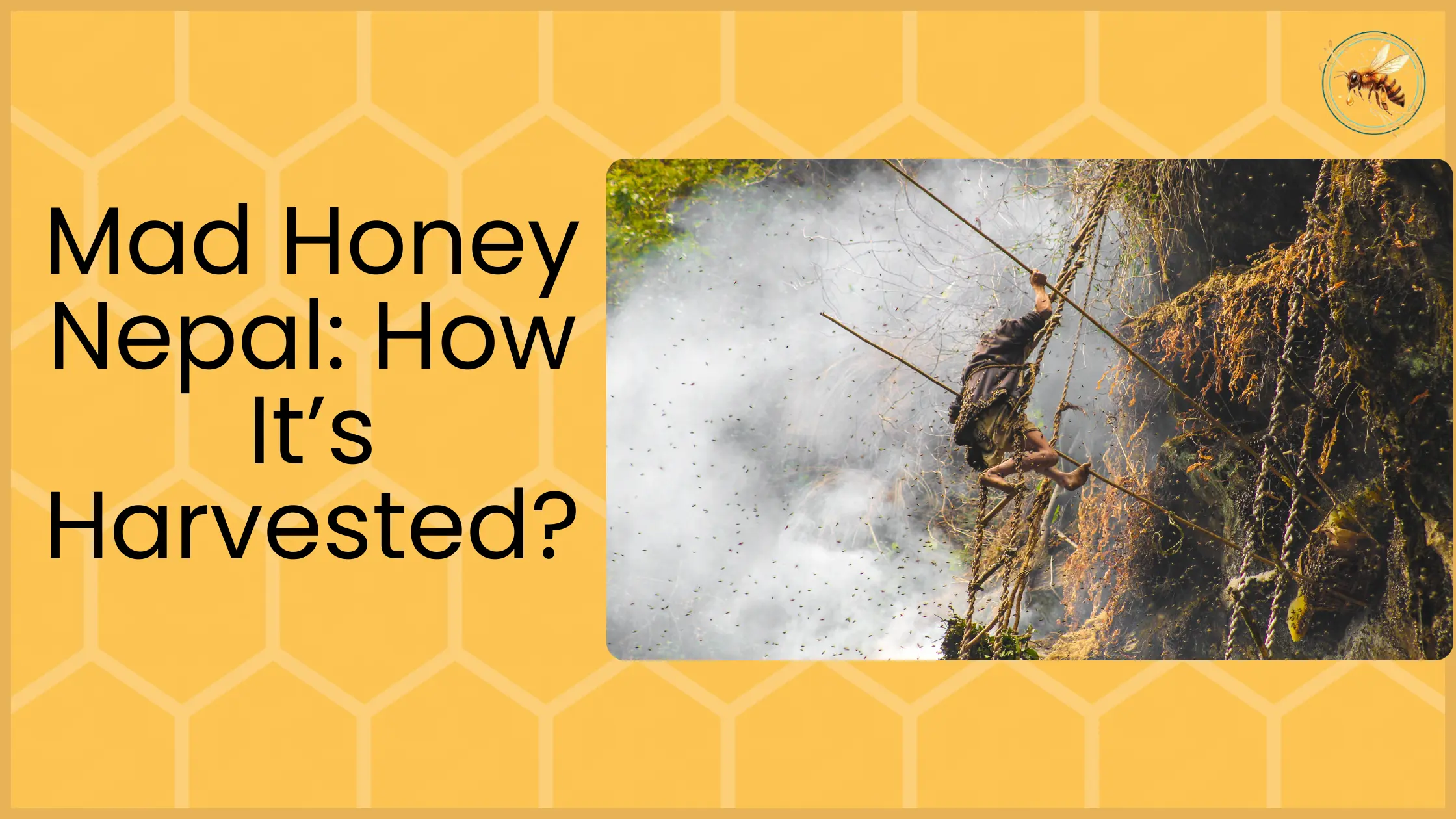
In Nepal’s best-known narratives, teams locate wild combs on cliffs, use smoke to manage bee aggression, and carefully collect honeycomb in a coordinated process. The visual drama is real, but the underlying story is a skilled communal practice, not a stunt.
The role of smoke and safety practices
Smoke is used in many honey collection traditions to reduce aggression and allow work to proceed. It doesn’t make the process “safe,” it just makes it possible. A key honesty point: this is inherently risky work because cliffs and weather don’t negotiate.
Why it’s dangerous and why it’s culturally significant
Harvesting on cliffs is dangerous because of height, weather, bee exposure, and equipment limitations. It remains culturally significant because it connects community, tradition, seasonal cycles, and livelihood. The Mountain Research Initiative describes Gurung honey hunting from cliffs and emphasizes the ecological importance of Apis laboriosa as a pollinator.
How This Connects to “Mad Honey”
This is the part most marketing gets wrong: it treats the bee species as the “active ingredient.” It’s not. Nectar chemistry is.
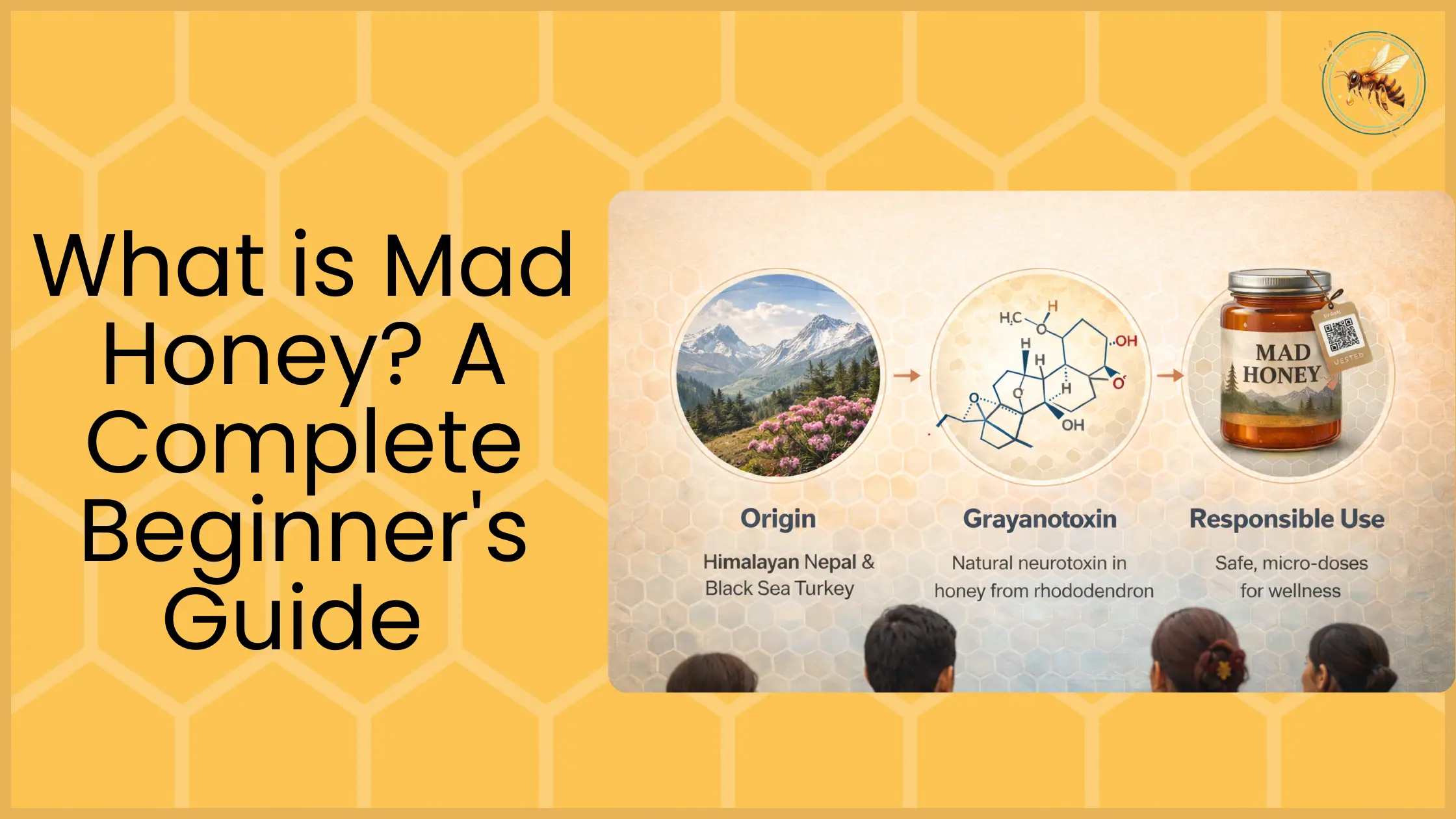
Apis laboriosa is an important part of the story, but it’s not the definition of mad honey, grayanotoxins are.
“Mad honey” depends on nectar sources (often rhododendron)
Poison control and toxicology summaries explain mad honey as honey produced when bees forage on nectar containing grayanotoxin, produced by numerous Rhododendron species.
That means the “mad” association is driven by foraging inputs, not by which bee makes the honey.
Why the same bee species can produce different honey types
A single colony can produce honey that varies by season and forage mix. If rhododendron nectar is a significant input in that harvest window, the honey may be more likely to carry grayanotoxin-linked risk. If it’s not, the honey may behave like “wild honey” without the same intoxication pattern.
When cliff honey may contain grayanotoxins (and when it won’t)
The most responsible way to say this is: sometimes. Grayanotoxin-linked effects are documented in mad honey contexts, but you should not assume every cliff-harvested honey is “mad,” and you should not chase “strongest” claims.
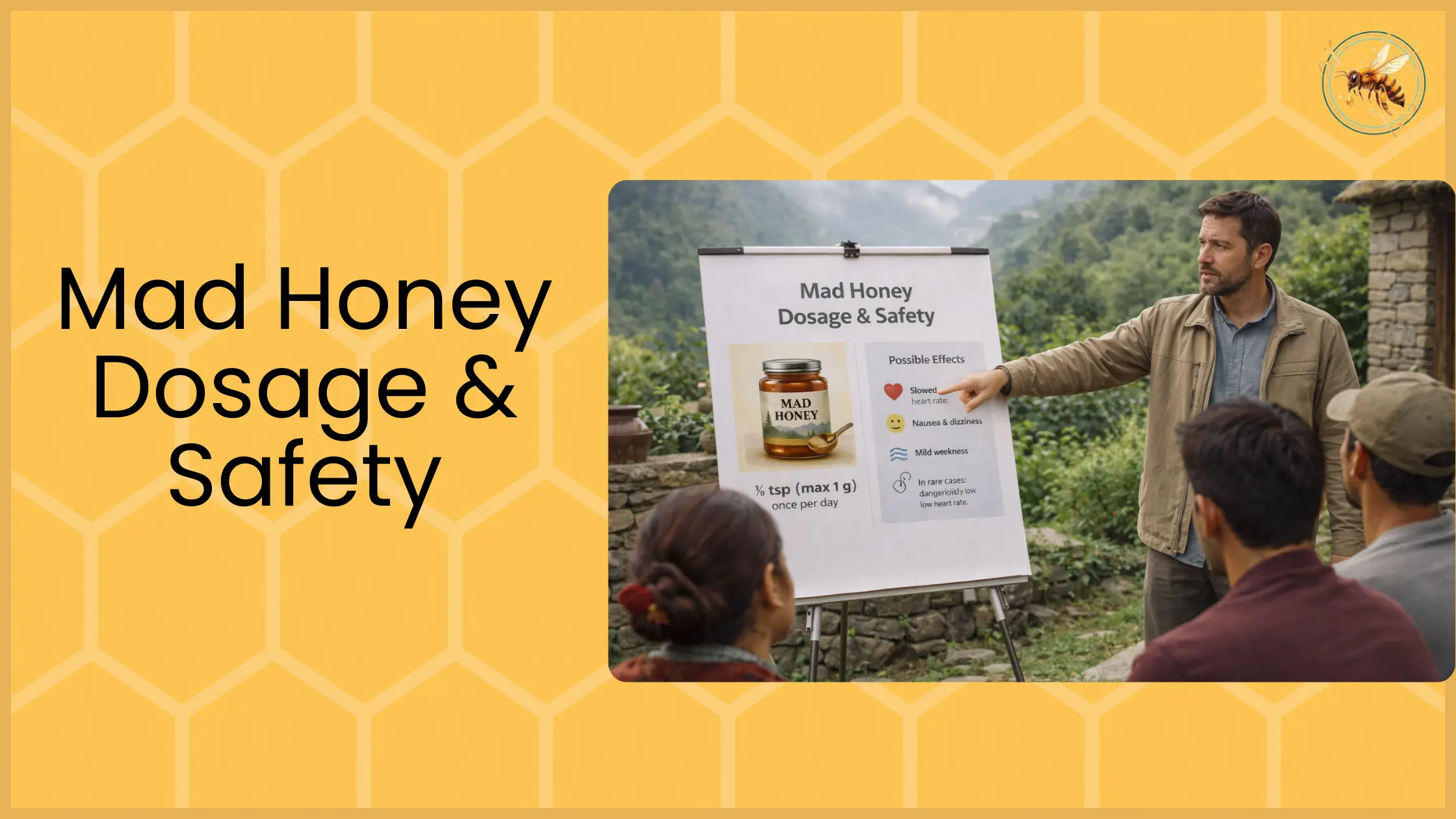
Poison control teaching points emphasize classic symptoms (nausea, vomiting, delirium, hypotension, bradycardia) and supportive treatment, reinforcing that the risk is real when present.
What Apis Laboriosa Honey Tastes Like
Taste is a great way to describe honey, but a terrible way to “verify” honey. Treat taste as a sensory expectation tool, not an authenticity test.
Common “wild honey” flavor notes (floral, herbal, earthy)
Cliff-harvested wild honey is often described with floral, herbal, and sometimes earthy notes, more complex than generic supermarket honey. The exact profile depends on nectar mix and season, so two authentic harvests can taste different.
Why taste varies (nectar mix + season + processing)
Nectar mix changes with bloom cycles; processing and handling can also affect aroma and clarity. Filtering level, heat exposure, and storage conditions can shift the “sharpness” of floral notes or bring out darker tones.
Why taste/color can’t prove authenticity
Color is influenced by floral sources and handling, and “red” is not proof of “mad honey” or proof of Apis laboriosa origin. This is why authenticity needs to be verified through origin transparency and batch accountability instead.
Authenticity and Marketing Misuse
The easiest way to spot misuse is to look for what’s missing: specificity, traceability, and responsible guidance.
“Cliff honey” as a marketing label (what to watch for)
Watch for sellers who use:
- cliff videos as “proof” but offer no origin details
- the words “Apis laboriosa” as a magic stamp
- “Himalayan” without country/region context
- “strongest/psychedelic” claims as the main selling point
Those patterns usually mean the seller is selling story over transparency.
What real transparency looks like
Real transparency doesn’t have to reveal sensitive community details. But it should include:
- Region + harvest season. A real seller can answer “where” and “when” without vagueness.
- Batch information. Lot IDs, harvest references, or a clear batch mindset.
- Responsible safety guidance (if marketed as mad honey). Sellers who are serious about the category educate conservatively rather than promising guaranteed effects.
Red flags (hype, guaranteed effects, vague origin)
The biggest red flags are the ones that increase both scam risk and safety risk: “guaranteed trip,” “instant high,” “strongest on Earth,” and “Himalayan” with no further detail.
Conservation and Ethics of Apis Laboriosa
If you care about cliff honey as a tradition, you should care about whether the systems around it can survive demand.
Why sustainable practices matter for wild honey
Apis laboriosa is an important pollinator in mountain ecosystems, and its nesting habitat can be sensitive to environmental change. Earth Island Journal reports threats including habitat disruption and shifting vegetation patterns, underscoring that this is not an infinite resource.
Fair compensation and respectful sourcing
Ethical sourcing is not just “paying more.” It’s whether communities are compensated fairly, whether middlemen extract most of the value, and whether the product story is used respectfully rather than as a tourism gimmick.
How buyers can support better sourcing standards
The best buyer behavior is to reward transparency: sellers who can explain origin, harvest season, and batch practices, and who avoid sensational marketing that encourages reckless use.
Conclusion
Apis laboriosa honey is best understood as wild Himalayan cliff honey associated with a specific bee species and ecology, not as an automatic synonym for “mad honey.” The honest definition is:
Bee species ≠ guaranteed chemistry. Whether a batch behaves like mad honey depends on nectar inputs (often rhododendron) and dose, not the label alone.
If you want to buy responsibly, focus on what actually matters: origin transparency, seasonality, batch accountability, and responsible guidance, and treat “strongest” marketing as a red flag.
FAQs on Apis Laboriosa Honey
Is Apis laboriosa honey the same as mad honey?
Not automatically. Apis laboriosa is a bee species; “mad honey” is primarily defined by grayanotoxin-linked risk that depends on nectar sources and dose.
Does Apis laboriosa honey get you high?
A “high” is not a reliable expectation. Some mad honey exposures can be intoxicating and risky; the dominant pattern discussed by poison control includes nausea/vomiting, delirium, hypotension, and bradycardia.
Why is it called cliff bee honey?
Because Apis laboriosa nests on cliffs/overhangs, and harvesting often involves cliff access in traditional contexts.
Is it always harvested in Nepal?
No. Nepal is the most famous narrative, but Apis laboriosa is associated with the Himalayan region and neighboring mountainous ecozones; distribution science continues to refine the range.
Is it safe?
As honey, many batches are consumed as food. The specific safety concern arises when honey contains grayanotoxins in significant amounts and is consumed in higher doses, which can cause serious symptoms.
How do I know it’s authentic?
Ignore color myths. Look for origin transparency (country + region), harvest season context, batch/lot accountability, and responsible guidance.
Why is it expensive?
Wild cliff-harvested honey is seasonal, high-effort, and logistically complex; ethical supply chains and documentation also add cost.