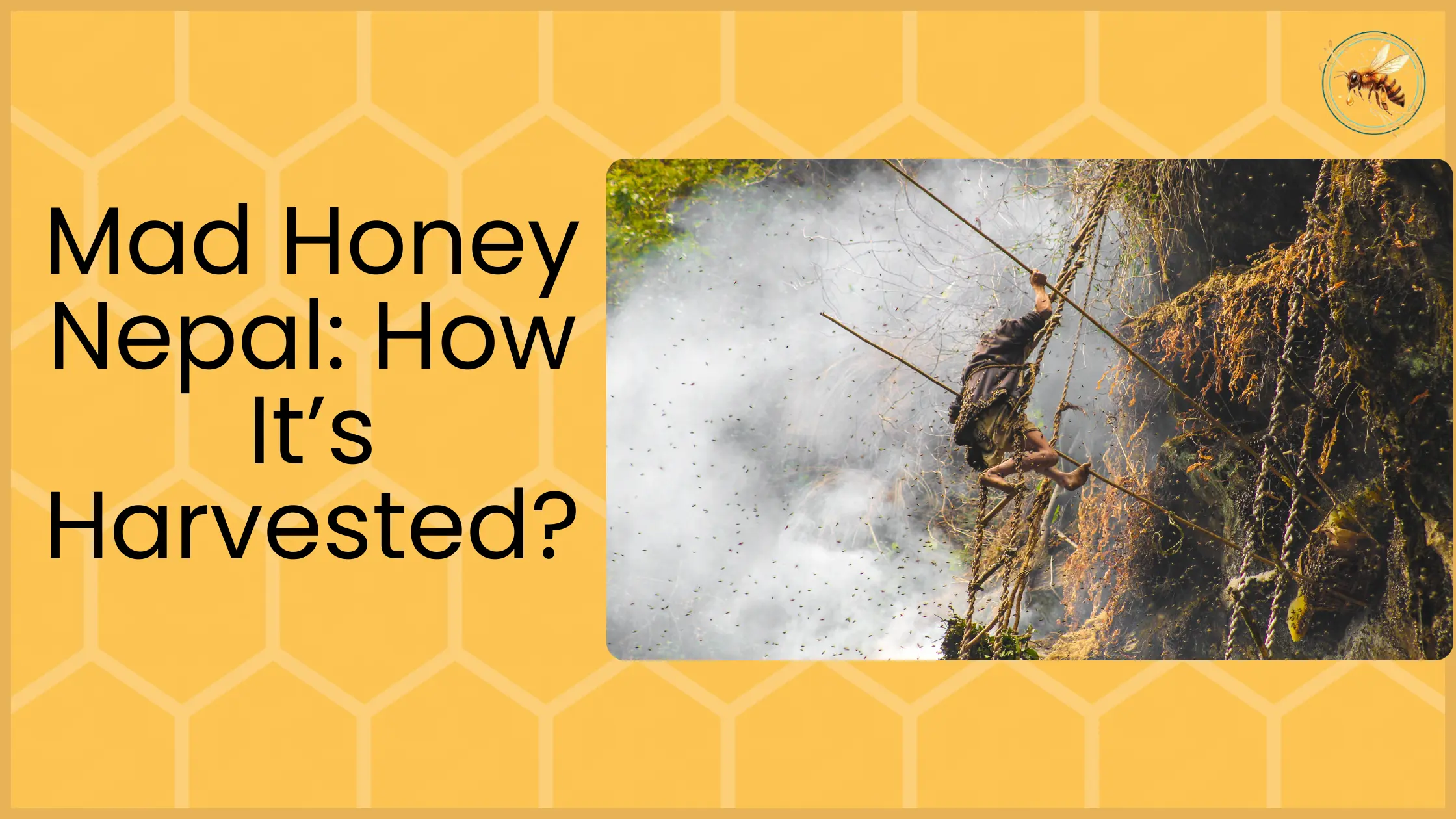
When people search “mad honey Nepal,” they’re usually looking for the real story behind the viral clips: honey hunters on ropes, massive cliff hives, and a honey that’s said to feel “different.”
That story is real, but the internet often compresses it into one dramatic idea: “Himalayan honey = crazy honey.”
In reality, Nepal’s mad honey is best understood as a seasonal, location-specific honey tied to two things happening at the same time:
- Bees foraging in rhododendron-rich mountain zones (where grayanotoxins can enter nectar)
- Wild harvesting from cliff-nesting bees in hard-to-reach places
The result is a honey that can be rare, inconsistent, and sometimes misrepresented online. And that’s why Nepal mad honey needs the same mindset as any powerful natural product category: curiosity + respect + traceability.
tl;dr
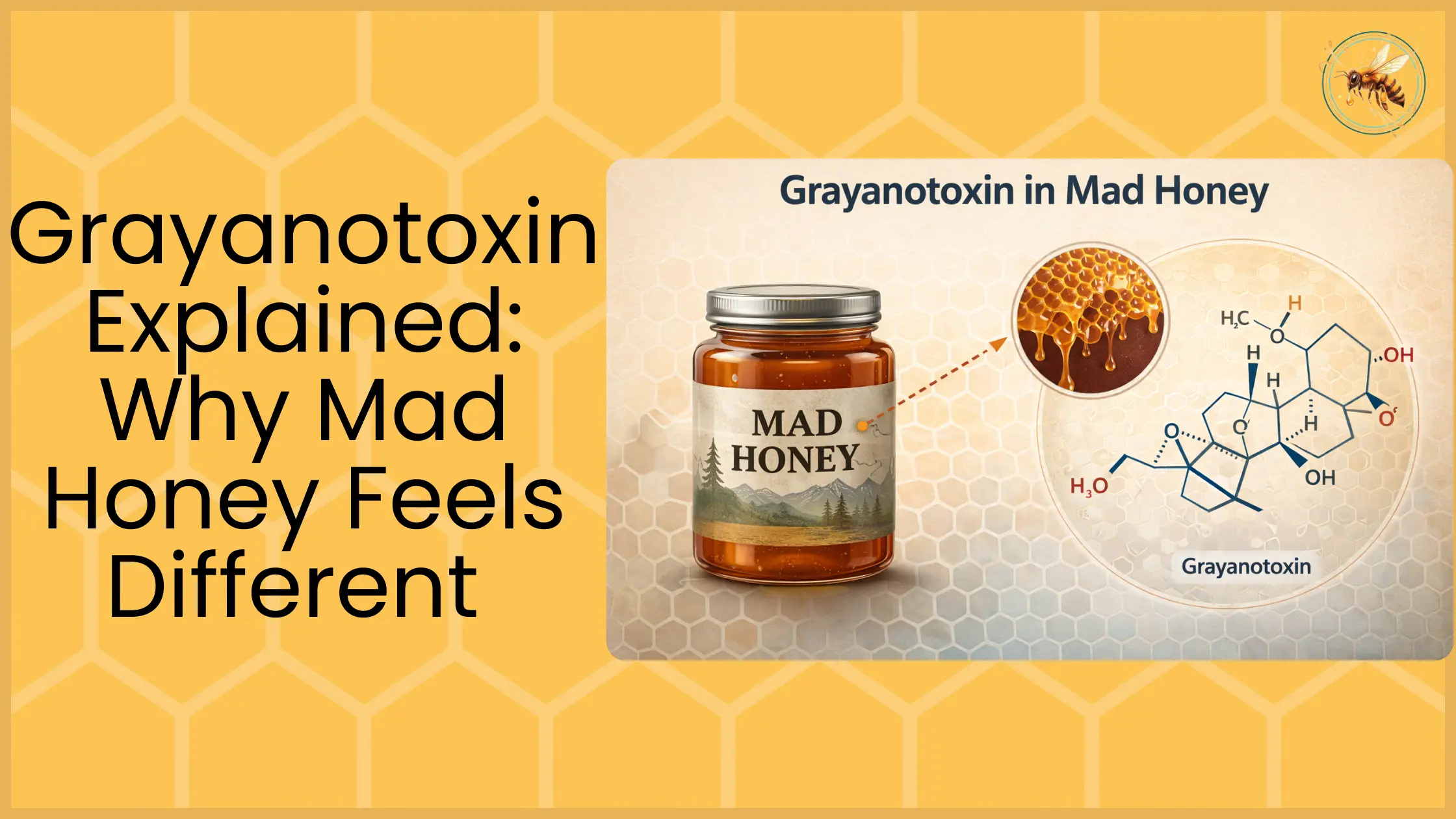
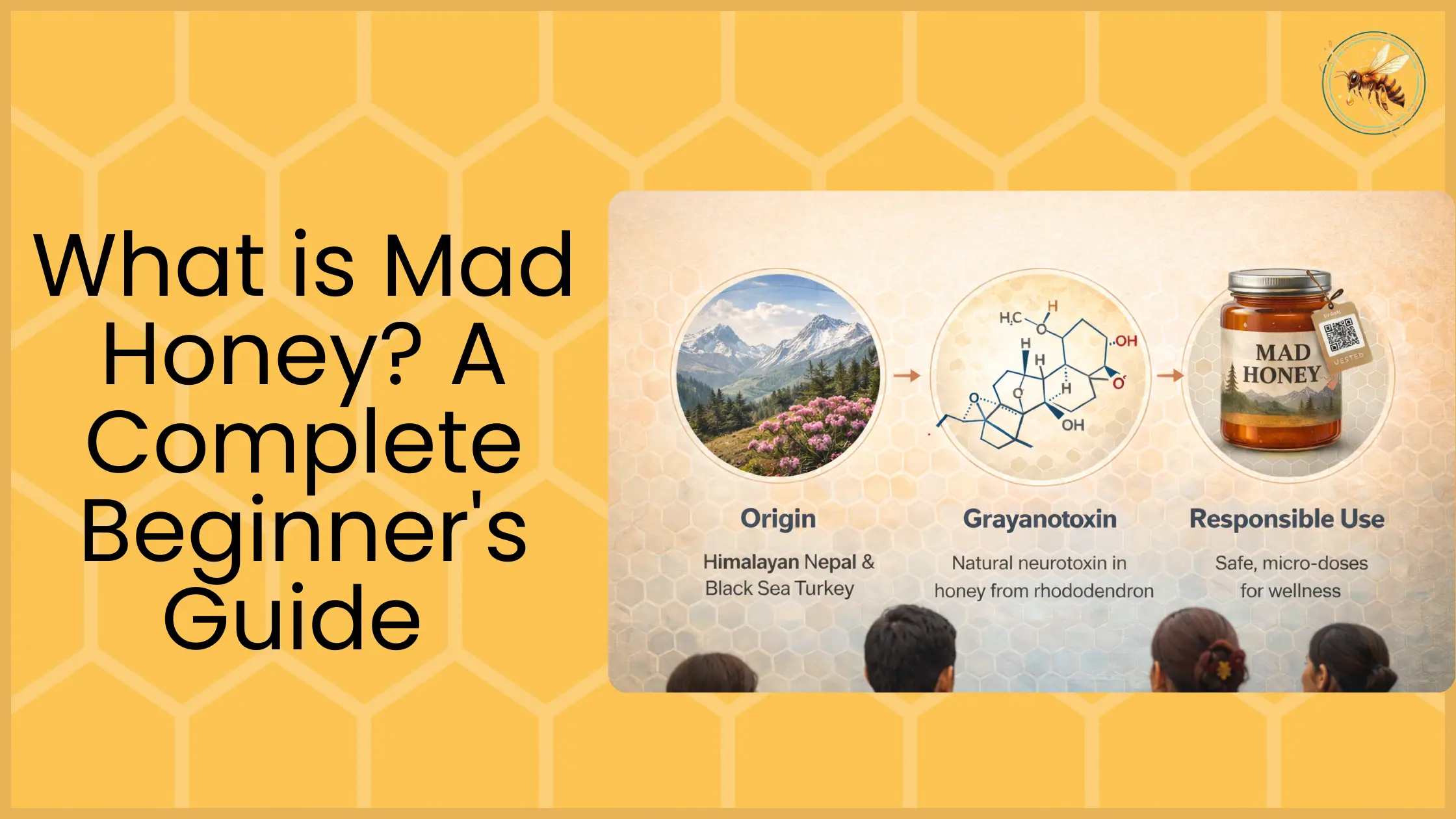
- Mad honey is produced when bees collect nectar from certain rhododendron species, which can contain grayanotoxins; Nepal and Turkey are the two most commonly referenced origin regions.
- In Nepal, mad honey is often linked to wild cliff harvesting by indigenous Gurung honey hunters, collecting from hives associated with the giant Himalayan cliff bee (Apis laboriosa).
- Not all cliff honey is “mad honey.” Local experts emphasize the intoxicating effect is seasonal and localized, and in areas/seasons without toxic blooms, the honey may have no intoxicating effect.
- Grayanotoxins affect the body by interacting with voltage-gated sodium channels, which can increase vagal tone and lead to bradycardia (slow heart rate) and hypotension, plus dizziness/confusion at higher exposure.
- “Himalayan” is often used loosely in marketing. The only reliable way to buy responsibly is to look for traceability + safety guidance + testing transparency (not just dramatic photos).
Where in Nepal Does Mad Honey Come From?
The simplest definition: mad honey comes from places where the right flowers bloom and the right bees forage.
The role of rhododendron bloom zones
Mad honey forms when bees forage heavily on toxic rhododendron during blooming periods, especially in isolated areas with dense plant populations.
That’s why mad honey isn’t evenly “everywhere in Nepal.” Nepal is ecologically diverse. The honey that gets labeled “mad honey” is typically associated with mountain regions where rhododendrons are abundant during certain seasons.
Why “Himalayan” is often used loosely
Online, “Himalayan” often becomes shorthand for “exotic, wild, strong.” But “Himalayan honey” can refer to many different honey types, and not all of them are grayanotoxin-linked.
In fact, discussions with Himalayan honey researchers stress exactly this point: Apis laboriosa forages on many kinds of mountain flora, and not all cliff honey is mad honey.
So “Himalayan” isn’t a potency label. It’s a region label, and that region contains many different honeys.
Where honey hunting is documented
Field research on honey hunting behavior in Nepal often focuses on districts such as Kaski and Lamjung (both in Gandaki Province), where honey hunters and nesting sites have been studied.
How Mad Honey Is Harvested in Nepal
If you only know Nepal mad honey through YouTube clips, you’ve seen the most dramatic part: cliff harvesting. Here’s the high-level reality, without romanticizing it.
The dangers of cliff harvesting
Many stories about Nepal mad honey are linked to wild cliff harvesting, where honey hunters rappel down steep cliffs to collect comb from wild hives associated with the giant Himalayan honeybee (Apis laboriosa).
Why it’s dangerous:
- Height and fall risk (often the biggest hazard)
- Dense bee defense around the comb
- Weather shifts in mountain terrain
- The sheer logistics of extracting comb and getting it back safely
This difficulty directly contributes to why Nepal mad honey is:
- less predictable in supply
- more expensive
- and more likely to be exploited with fakes (because demand exceeds consistent access)
What happens after the comb is collected
Most customers imagine the harvest ends at “comb collected.” But a lot of variability happens after.
Key steps that can affect the final jar:
- Straining/filtration: changes texture and can influence how “raw” it feels
- Storage & handling: impacts taste and stability
- Blending vs. single-batch: affects consistency
If a seller blends honey from multiple harvests, the product may be more consistent. If it’s truly small-batch and unblended, the product may be more variable, which can be a feature or a risk depending on how it’s sold.
Why processing choices can affect consistency
Science summaries of mad honey are clear: commercial honey rarely contains significant toxin levels because nectar from many sources is mixed and diluted, while wild or single-origin honey from rhododendron-rich zones can reach higher concentrations.
Translation for buyers:
- More blending = more consistency (usually less extreme highs/lows)
- Less blending = more variability (sometimes stronger, sometimes weaker, less predictable)
Why Nepal Mad Honey Is Rare (And Why It Varies)
This is the part many blogs miss. They call it “rare” but don’t explain why.
Seasonality and flower availability
Mad honey formation is strongly linked to blooming periods, when rhododendron nectar dominates foraging.
Nepal content also commonly highlights spring as a key season: spring bloom is often associated with higher potency because rhododendrons bloom intensely then.
So even if honey hunting happens multiple times per year, the “mad honey” phenomenon itself is seasonally amplified, not constant.
Region, altitude, and batch differences
Even within Nepal, local conditions change:
- altitude shifts bloom timing
- valleys have different plant mixes
- foraging patterns vary by area
That’s why “same country” doesn’t mean “same honey.”
A key reality check: not all cliff honey is mad honey
This is one of the most trust-building lines you can include.
A Himalayan honey researcher notes the intoxicating factors are seasonal and localized, in areas or seasons without toxic blooms, the honey has no intoxicating effect.
So if you’re building a credible brand narrative, the honest stance is:
- Nepal produces exceptional cliff honey in general
- “mad honey” is one seasonal expression of that broader category, not the entire category
What Nepal Mad Honey Is Known For?
Most people expect either:
- a guaranteed “trip,” or
- a horror story
Both are oversimplifications.
Low-dose “ritual / relaxation” framing
Grayanotoxins can influence the nervous system in a way that some people interpret as calm at low exposure. A science overview explains that low doses may enhance relaxation/euphoria via subtle nervous system modulation, while higher exposure overwhelms the system.
That’s why the best expectation-setting language isn’t “psychedelic honey.” It’s: a ritual honey that can feel noticeably different.
Why dose and individual sensitivity matter
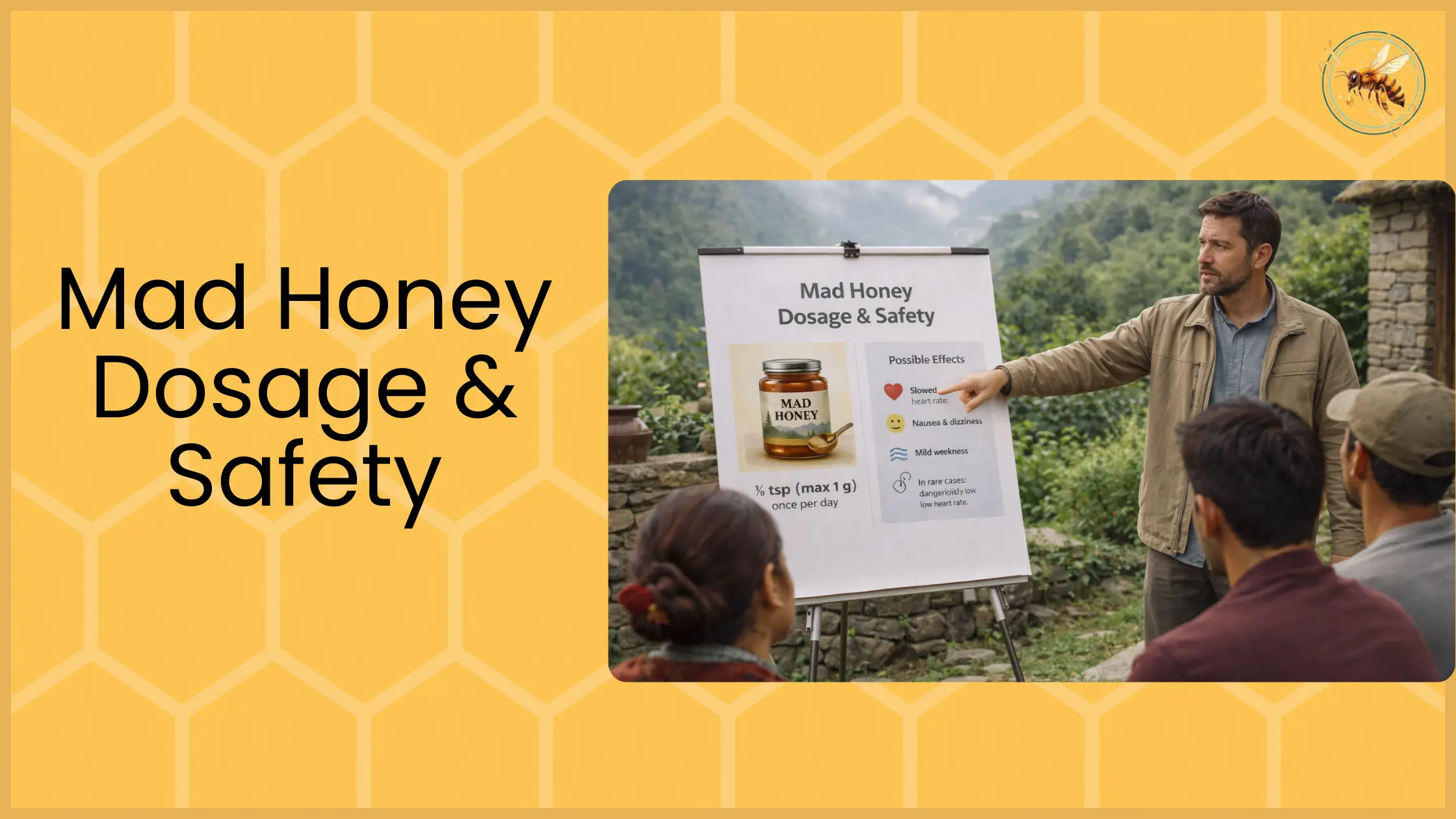
At higher exposure, grayanotoxins can produce a clear pattern: bradycardia, hypotension, dizziness/confusion, nausea/vomiting, sweating, and syncope, with onset ranging from ~20 minutes to 4 hours and effects potentially lasting up to 24 hours.
This is also why so many “legend stories” exist. If someone becomes dizzy, weak, confused, and collapses, it’s easy for that to be described as “madness,” “visions,” or “hallucinations,” even though the underlying mechanism is physiological.
“Red honey” and what it does
Local expert discussion notes that “red honey” harvested in spring from Apis laboriosa combs can cause intoxication (and even hallucinations) if consumed in quantity, linked to plant toxins such as grayanotoxin from wild rhododendrons.
But the same discussion emphasizes:
- it’s seasonal/localized
- not all cliff honey is intoxicating
- even when present, grayanotoxin can be a minor component of the honey
That’s the exact balance your readers want: fascinating, but grounded.
How to Buy Nepal Mad Honey Safely
Buying nepal mad honey sits in a high-risk marketplace:
- high demand
- high price
- low consumer knowledge
- lots of mislabeling
So your job is to give readers a practical filter.
Authenticity checklist (origin transparency, education, testing signals)
1) Origin proof (beyond “Himalayan”)
Look for sellers who provide:
- source region clarity (at least country + region)
- harvest season window
- batch/lot labeling
Even basic traceability signals reduce risk.
2) Education is a green flag
A trustworthy seller should openly discuss:
- dosing mindset (“start low, go slow”)
- what negative symptoms look like
- why batches vary
If a store only sells the fantasy, it’s usually not a good sign.
3) Testing and transparency signals
A science overview suggests what consumers should ask:
- do you test for grayanotoxins (GTX I/II/III)?
- what are the results (mg/kg)?
- what’s the region and season?
- do you blend batches?
It also emphasizes that “safe” should mean low, consistent grayanotoxin levels verified by lab analysis, and that no unregulated product is truly risk-free.
Red flags
Avoid sellers who:
- promise guaranteed “trips”
- claim “strongest” without batch testing info
- hide sourcing details
- provide no safety guidance
If they’re selling something potent enough to be viral, they should be responsible enough to educate.
Conclusion
Nepal mad honey is unique because it’s not just a product, it’s a mix of ecology, seasonality, and tradition. But the “mad honey” part is also often overemphasized.
A more accurate takeaway is:
- Nepal produces exceptional cliff honey
- “mad honey” is a seasonal, localized phenomenon tied to rhododendron blooms and grayanotoxins
- the same wildness that makes it fascinating is what makes it variable and sometimes risky
If you’re buying Nepal mad honey:
- prioritize traceability
- prioritize education
- prioritize testing
- and treat it like a ritual, not a challenge
FAQs on Mad Honey Nepal
Is Nepal mad honey stronger than Turkish mad honey?
Sometimes, but it’s not a rule. “Strength” depends more on batch factors (season, floral dominance, blending) than country labels. Nepal is often linked to wild harvesting and spring bloom potency, but variability is the defining feature.
Why is some mad honey red?
Color can vary based on floral sources and processing. In Nepal discussions, “red honey” is often associated with spring harvesting and rhododendron-linked toxicity, but color alone isn’t a reliable potency indicator.
How do I know Mad Honey actually from Nepal?
Look for:
- traceability signals (region/season/batch ID)
- consistent educational content
- transparent testing claims
If it’s only “Himalayan” + cliff photos + hype claims, assume higher risk.
Is Mad Honey legal to buy/import?
Rules vary by country. A good rule: don’t buy from sellers who suggest deceptive shipping tactics. If you’re unsure, check local regulations for importing honey and any restrictions related to “mad honey.”
How much should a beginner take?
Start with a very small amount, wait, and don’t re-dose quickly.