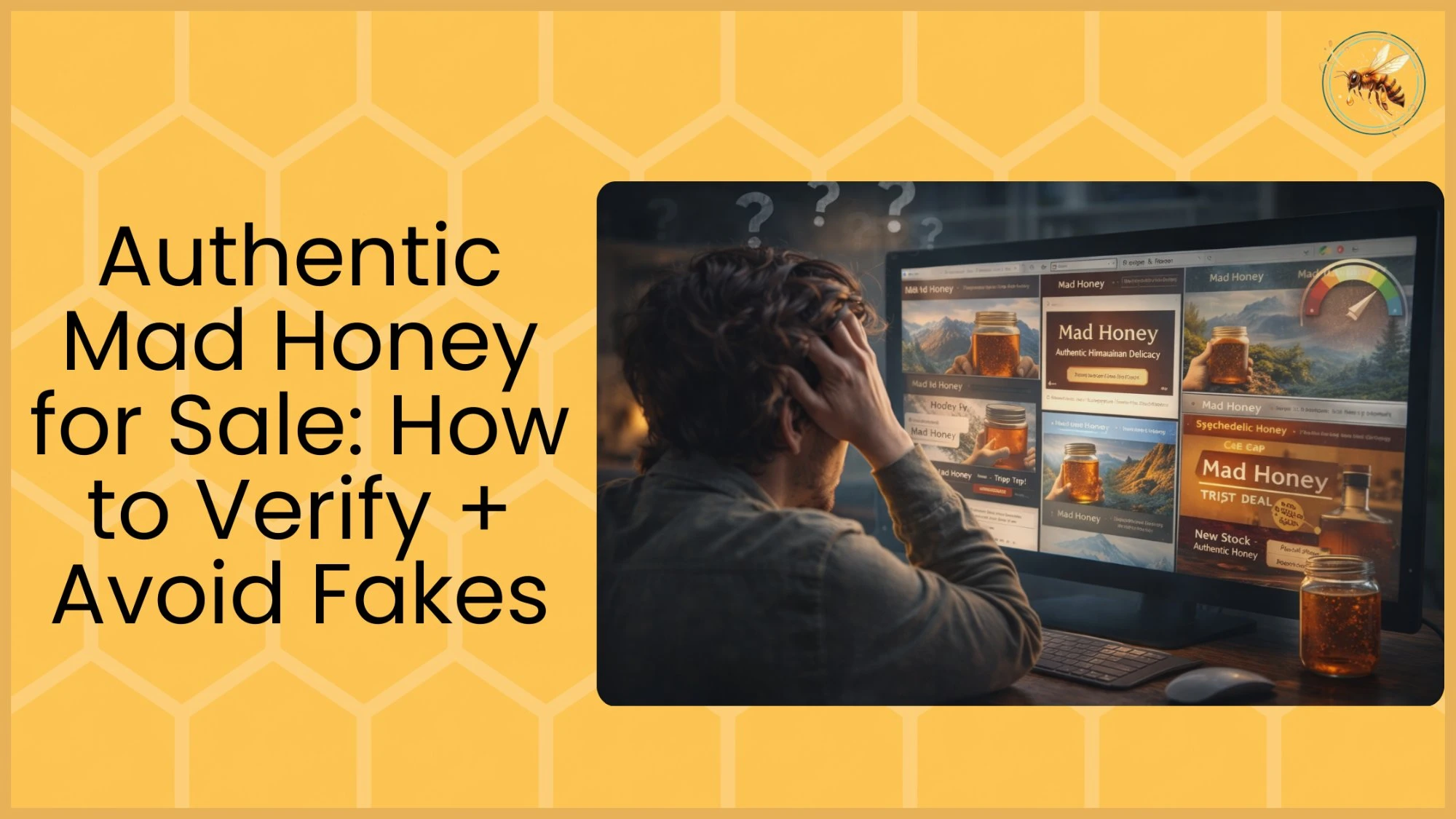
How to Buy Authentic Mad Honey: Quick Answer
If you want the straight practical answer: buy the seller, not the story. A trustworthy source will do three things consistently:
First, they’ll be transparent about origin in a way that’s more detailed than “Himalayan.” “Himalayan” is a mountain range, not a verification method. Good sellers can point to a real region context and explain how they source.
Second, they’ll show batch accountability. Even if they don’t publish every lab sheet on the product page, they should speak clearly about batch variability and have a consistent system (batch ID, lot number, harvest period, etc.).
Third, they’ll provide conservative safety guidance. Not because they’re trying to scare you, but because that’s what responsible sellers do in any product category where people can misuse it.
If you want a fast filter while scrolling listings:
Three strongest authenticity signals (green flags):
- Origin transparency with real detail (not “mystical Himalayas” copy)
- Batch identifiers and consistent batch language (not “strongest every time”)
- Clear safety/expectation guidance that encourages conservative use
Three biggest red flags (walk away):
- The listing sells a “trip” more than a food product
- Origin is vague or unanswerable (“Himalayan” with no further context)
- The seller relies on pressure tactics (fake urgency, extreme discounts, too-perfect reviews)
Now let’s break down exactly how to verify each part.
Why Fake Mad Honey Exists (And Why It’s Hard to Verify)
Before you can spot authenticity, you need to understand why this category attracts so much misleading marketing.
1) Demand spikes + viral content create “easy money” listings
Mad honey shows up in clips and stories that chase shock value. Whenever that happens, search volume jumps, and so do opportunistic listings. It’s the same pattern you see in trending supplements: sellers rush in because the buyer is curious, emotional, and often uninformed about what to verify.
2) “Mad honey” is a label, not a globally standardized category
Unlike products with standardized grading systems or universally recognized certifications, “mad honey” doesn’t come with a single global definition. Online, the term gets slapped onto:
- generic wild honey
- forest honey
- honey with a darker color
- any honey marketed as “strong”
So your job as a buyer isn’t to “find the right label.” It’s to find a seller whose claims are auditable.
3) “Lab tested” is often used as a marketing spell
Testing can be meaningful. But in this niche, “lab tested” is sometimes used the same way “premium” is used, as a word that signals quality without proving anything. If a seller can’t explain what was tested and how it connects to your jar, then the phrase is not building trust, it’s borrowing trust.
This is why your checklist needs to focus on transparency, not slogans.
The Mad Honey Authenticity Checklist (Use This Before You Buy)
This section is intentionally practical. It’s not meant to be “interesting.” It’s meant to save you money and prevent bad experiences.
1) Origin proof (not just “Himalayan”)
Authentic origin proof is less about romance and more about specificity.
A credible seller does not stop at “Himalayan mad honey.” They clarify what that means in practice: country context, region context, and a supply chain that makes sense. That doesn’t mean you need someone to reveal sensitive details or expose communities, but you should see evidence that the seller knows what they’re talking about and isn’t hiding behind vague words.
Here’s what “good origin transparency” usually looks like on a product page or in a seller’s FAQ:
- They specify country and provide more than one line of origin context
- They reference region or sourcing context with consistency (not a different story every month)
- They show photos/video that match the brand’s real handling story (not generic stock media)
- They can answer questions without getting defensive or evasive
What origin transparency is NOT: A dramatic description of cliffs and mountains with no verifiable specifics. “Himalayan” gets used loosely online because it sells. That’s why the next layer of detail matters.
Nepal vs. Turkey cues (without stereotypes)
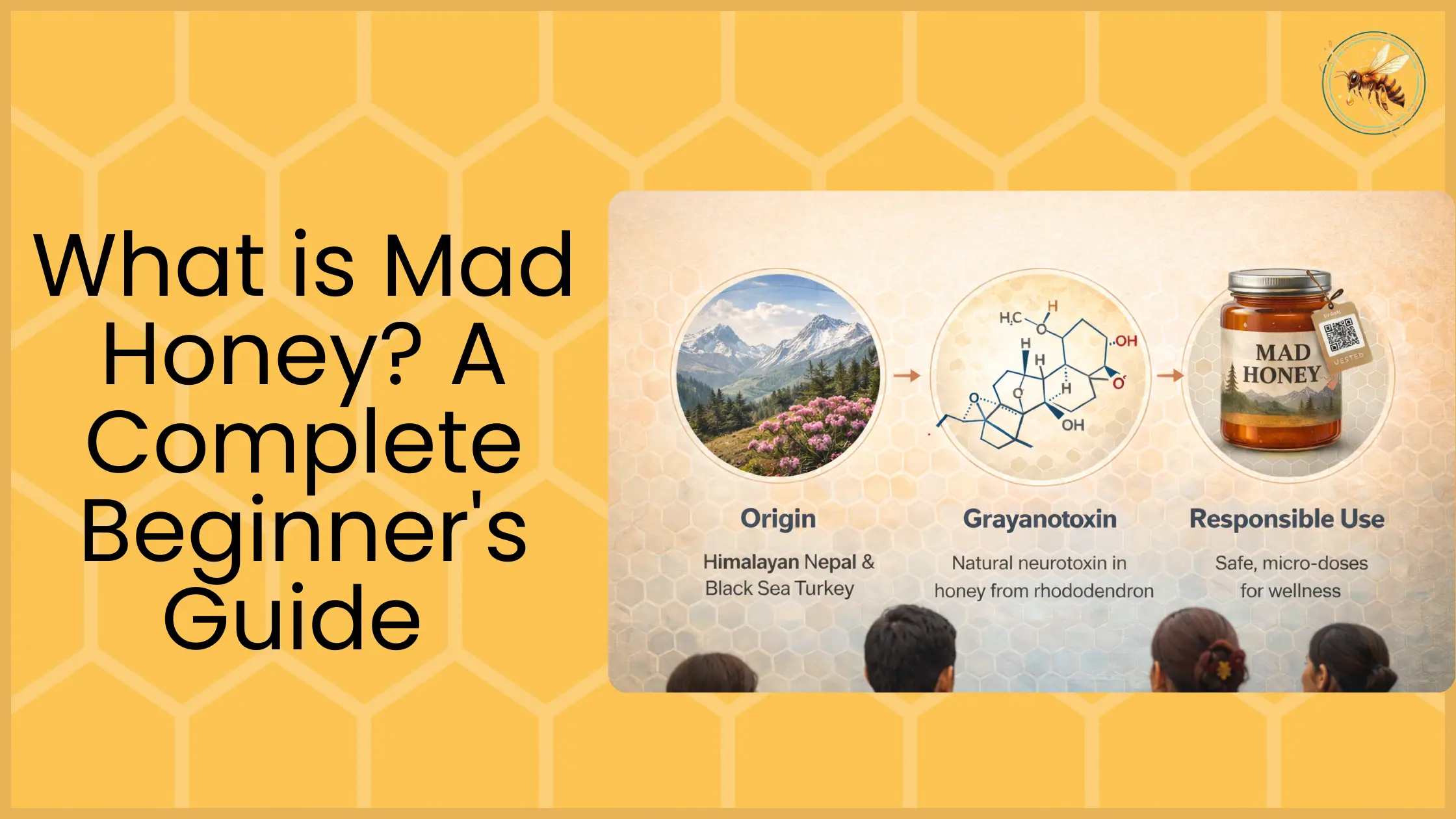
Two regions show up repeatedly in real historical and modern discussions: Nepal/Himalayan harvesting traditions and Turkey’s Black Sea “deli bal” context. If a seller claims one of these, they should be able to answer simple questions about region and sourcing without turning the conversation into vague mysticism.
You don’t need to become an expert in geography, you just need to recognize when a seller’s origin story is grounded vs performative.
2) Batch transparency (the “honesty test”)
If origin is the foundation, batch transparency is the honesty test.
Real mad honey varies. That variability is not a flaw, it’s a reality of nature-based products. Authentic sellers don’t pretend every jar is identical “strongest.” Instead, they communicate batch variation responsibly and give you tools to understand it.
Batch transparency can show up in simple ways:
- a batch ID or lot number
- a harvest period (even if broad)
- language that clearly explains: “effects can vary by batch and person”
- consistent listing info that doesn’t shift wildly across product pages, ads, and customer support responses
What you’re looking for isn’t perfection, it’s accountability. If you buy a jar today and another jar later, does the seller treat those as two distinct products with potentially different characteristics? Or do they sell everything as one myth (“strongest always”)?
A seller who refuses to talk about batch differences is either inexperienced or hiding behind hype.
3) Testing signals (what “good” looks like)
Testing is tricky because most buyers want a simple “yes/no” answer, while real testing is nuance.
The goal isn’t “prove it’s real with one test.” The goal is: reduce uncertainty and build confidence that the seller is operating professionally.
A meaningful testing claim usually includes three components:
1. Specificity: what was tested for?
Even at a high level, the seller should be able to explain the categories (e.g., general safety screening, contaminants, identity-related markers) without hiding behind buzzwords.
2. Traceability: does the test connect to a batch?
If a brand says “we test our honey,” but the documents can’t be linked to the jar you’re buying, you’re not getting real transparency, you’re getting a marketing artifact.
3. Interpretation: what does it mean for the buyer?
The most trustworthy sellers explain what testing can and can’t tell you. For example: testing can help confirm standards and screen for issues, but it won’t guarantee every person experiences the exact same effects.
If you see “lab tested” but no batch tie, no explanation, and no willingness to answer questions, treat it as neutral, not positive.
4) Safety guidance (this is a credibility test)
In this category, safety guidance is not just “nice.” It’s one of the most reliable authenticity signals because it shows the seller is treating mad honey as a real product with real responsibility, not a viral gimmick.
Authentic, responsible sellers will usually do the following:
- encourage a conservative beginner approach (start low + wait)
- discourage “stacking spoonfuls” in a short timeframe
- explain who should be extra cautious or avoid it
- use grounded language: “ritual,” “experience,” “listen to your body,” not “guaranteed trip”
If a listing is hyping intensity but gives no safety direction, it’s a problem whether the honey is real or not, because it signals the seller doesn’t care about outcomes.
5) Seller behavior (how they act reveals what they sell)
When buyers get scammed, it’s rarely because they missed a hidden chemical clue. It’s usually because they ignored seller behavior.
Trustworthy sellers behave like businesses with reputations to protect. They have:
- clear contact info
- realistic shipping expectations
- consistent product pages
- transparent policies
- a willingness to answer questions calmly
Untrustworthy sellers behave like pop-up shops. They lean on pressure and hype because they don’t want you to pause long enough to verify.
Red Flags That Scream “It’s Not Authentic Mad Honey”
This section is blunt on purpose. These patterns show up repeatedly in fake or misleading listings.
Marketing red flags
If the product page reads like it’s selling a drug experience, that’s a major warning sign. Terms like “psychedelic,” “trip,” “guaranteed high,” or “one spoon = instant” are not just exaggerations, they’re often the business model for mislabeling.
Also watch for celebrity name-dropping used as “proof.” A trustworthy product doesn’t need a famous name attached to be legitimate.
Listing red flags
A suspicious listing usually has weak structure: no origin detail, inconsistent photos, and copy that could be swapped onto any product. If every image looks like it came from a different seller, that’s not “batch variation.” That’s a lack of control.
Product red flags (careful)
You’ll see sellers claim that certain tastes or sensations “prove” authenticity. That’s where buyers get trapped. Even real mad honey can vary in taste, thickness, and aftertaste. These sensory cues are not proof, they’re just descriptors.
If a seller is treating sensory myths as verification, be careful.
Price Reality Check (What Authentic Mad Honey Usually Costs and Why)
Price isn’t proof of authenticity, but extreme pricing patterns are informative.
Authentic mad honey tends to cost more because the supply chain is typically smaller, harvests can be seasonal, handling can be more complex, and responsible sellers invest in documentation, customer support, and education. Those costs show up somewhere.
That said, “expensive” can also be pure marketing. So instead of thinking “cheap = fake” and “expensive = real,” use this frame:
- Too cheap often suggests mislabeling or diluted sourcing claims.
- Too expensive might be “story pricing,” paying for hype rather than transparency.
The safest logic is to evaluate price after you evaluate the verification signals. If the seller is transparent and accountable, price becomes easier to judge.
Where to Buy Authentic Mad Honey (Safest Options)
Where you buy shapes what you can verify.
Direct-from-brand websites (best for traceability)
Direct websites are often safest because sellers can provide batch info, publish safety pages, and keep product information consistent. They control storage, packaging, and customer support. Most importantly, they can maintain traceability without marketplace noise.
If a brand site links out to education pages (dosage, side effects, origin explanation), that’s typically a positive sign. It indicates they’re building a long-term business, not flipping a trend.
Specialty retailers (can be good, but verify)
Specialty retailers can be legitimate if they maintain provenance and don’t strip away origin information. The risk here is repackaging or reselling without documentation. If a retailer can’t tell you anything beyond “it’s Himalayan,” your verification options shrink.
Marketplaces (highest risk, but you can reduce it)
Marketplaces are where mislabeling thrives: anyone can list, and “strongest” claims win clicks. If you buy through a marketplace, you need to be stricter, not looser. Only consider sellers who provide origin transparency, batch info, and safety guidance, and skip listings that sell hype first.
Safety Notes Before You Buy Mad Honey (So You Don’t Have a Bad First Experience)
This section isn’t here to scare you, it’s here because first-time negative experiences often come from taking too much too fast or mixing substances.
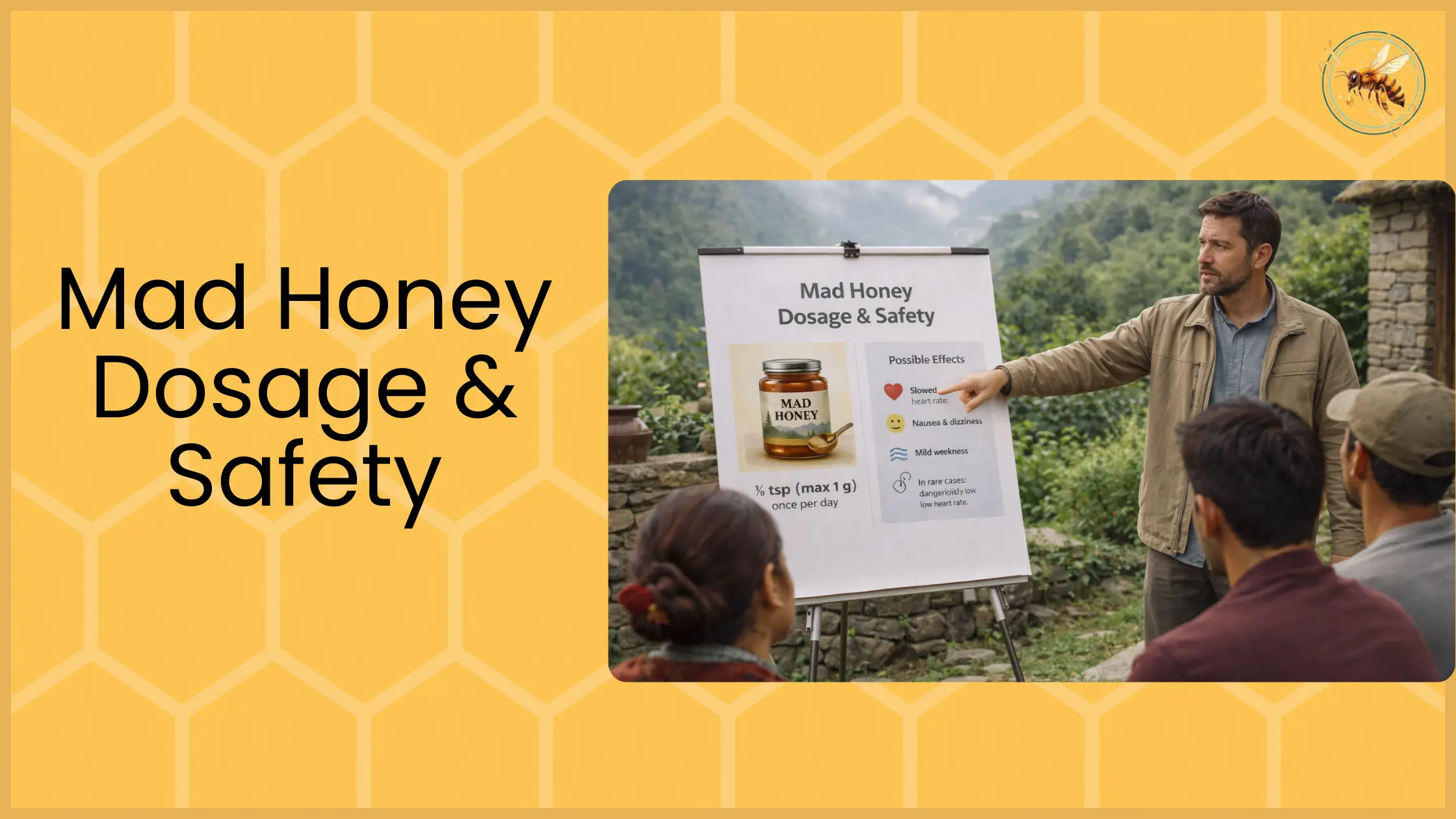
A conservative approach matters because mad honey is dose-sensitive for many people, and individual sensitivity varies. The most common “bad first time” pattern is someone who feels nothing quickly, assumes it’s weak, and takes more too soon.
The simplest safe approach is: start low, wait, and don’t treat it like a challenge.
Also: don’t mix with alcohol or sedatives, and if you have health conditions or are unsure about medication interactions, the safest move is to avoid or consult a professional. This guide is informational, not medical advice, but caution is part of responsible buying.
Conclusion
Authentic mad honey isn’t verified by one dramatic clue. It’s verified by a pattern you can audit: origin transparency + batch accountability + responsible guidance.
If you want the best odds of getting the real thing, buy from sellers who make verification easy, because they have nothing to hide.
FAQs: Authentic Mad Honey for Sale
How do I know it’s real Nepal mad honey?
By seeing a consistent origin claim supported by traceability and seller behavior, not by trusting “Nepal” on a label. Look for region context, batch accountability, and a seller who can answer questions without dodging.
Is red mad honey always authentic?
No. Color varies naturally. “Red” can happen, but it doesn’t prove anything by itself.
Does thicker honey mean it’s real?
No. Thickness depends on moisture, temperature, crystallization, and handling. It’s not a verification method.
What paperwork should a seller have?
At minimum, a consistent batch system and clear testing language. “COA” matters only when it connects to a batch and the seller can explain what it covers.
Is it legal to buy/import where I live?
Legality varies by country and is often more about import rules and marketing claims than “controlled substance” framing. Use your legality hub for specifics.
What’s the safest first dose?
Start very small and wait. Don’t stack spoonfuls quickly. Your first use should be calibration, not escalation.