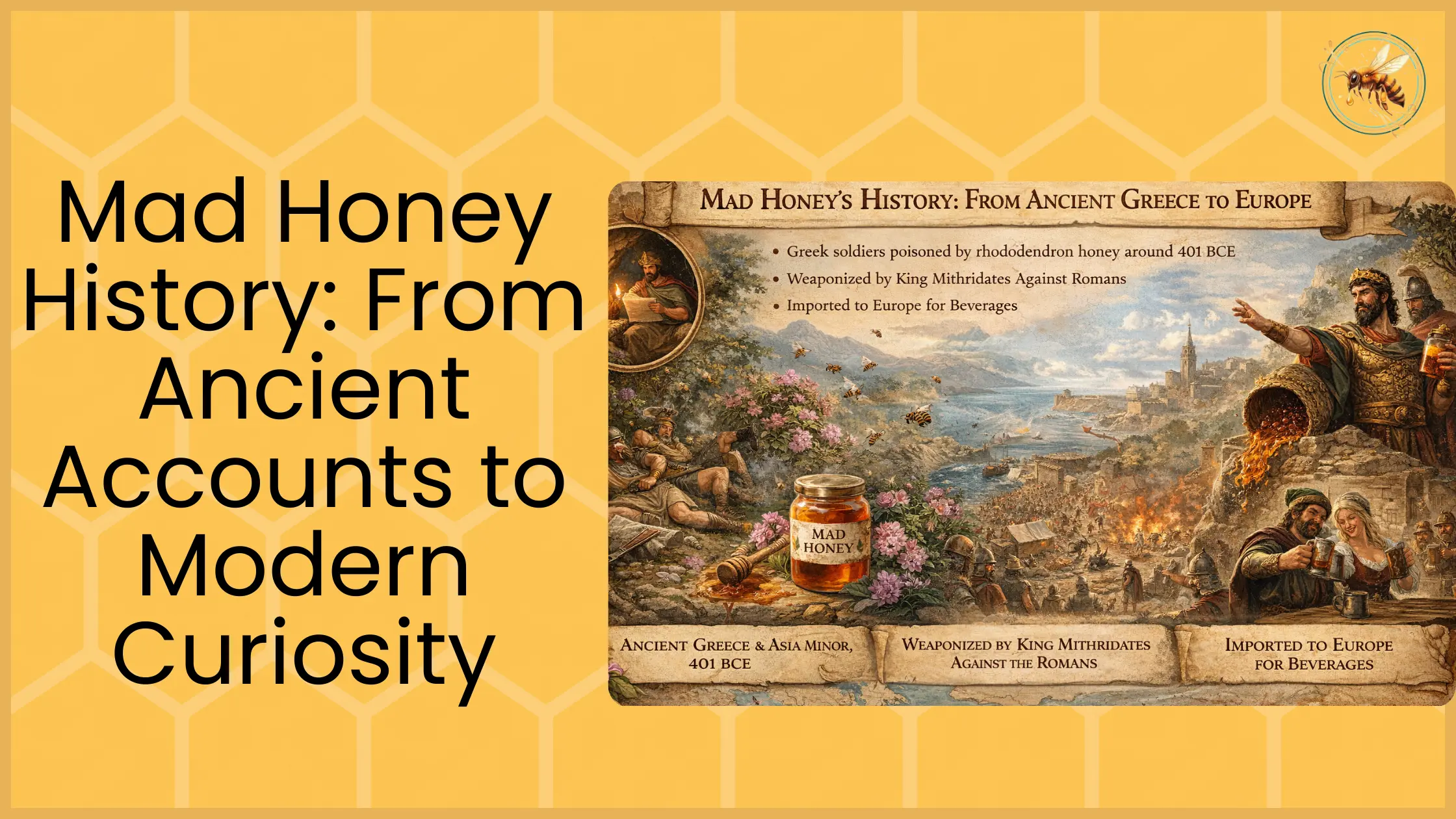
Mad honey has one of the strangest reputations of any food on Earth. In one telling, it’s a sacred mountain product. In another, it’s a weapon of war. In modern times, it’s often framed as a viral “psychoactive honey,” which is catchy, but not quite accurate.
The truth is more interesting and more useful:
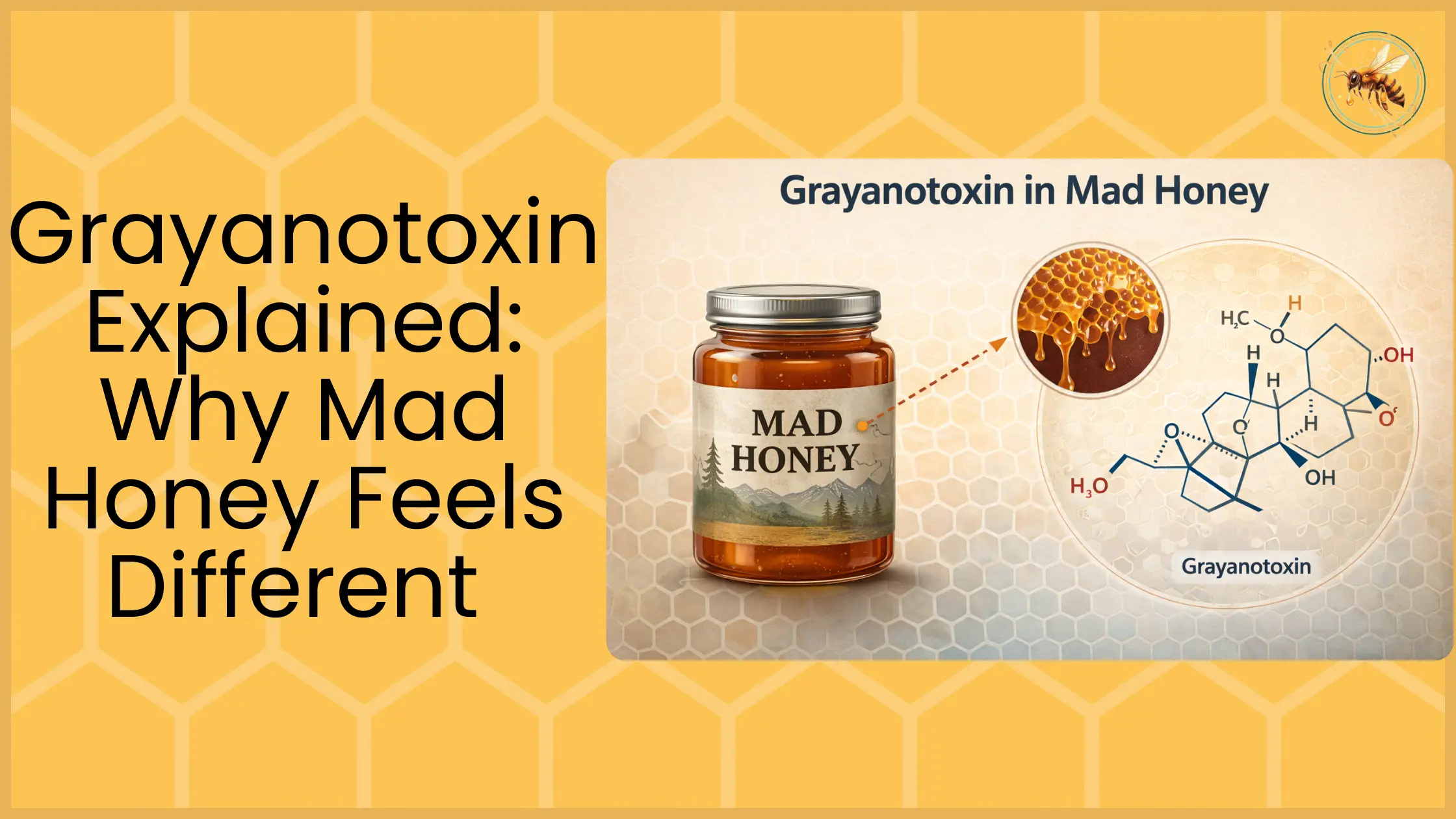
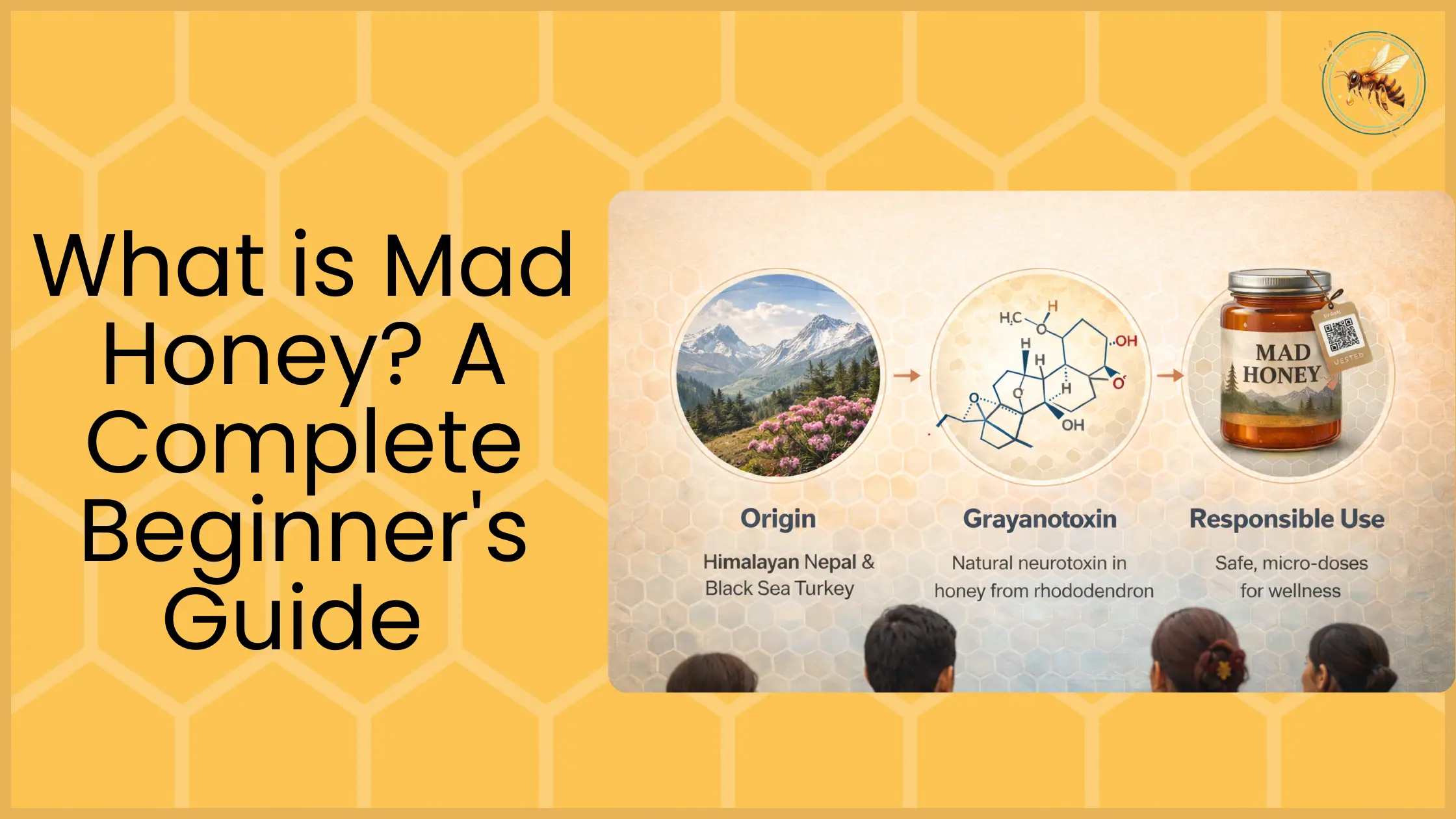
Mad honey is a real, documented phenomenon that appears again and again in the same geographic zones, especially around the Black Sea, because certain Rhododendron species in those regions can contribute grayanotoxins to nectar, which then ends up in honey.
That same basic mechanism explains why ancient accounts read like curses, enchantments, or “madness,” and why modern medical reports describe bradycardia (slow heart rate) and hypotension (low blood pressure).
This article walks the timeline from earliest known records to today, separates myth from what history can’t prove, and finishes by connecting “legend” to modern science and safety.
tl;dr
- The earliest famous written account of Mad Honey comes from Xenophon’s Anabasis (401 BCE): soldiers ate honeycomb and became sick, weak, and disoriented, unable to stand, then recovered over time.
- Ancient writers did not treat mad honey as a joke: Pliny explicitly described “maddening honey” in Pontus and linked it to rhododendron flowers.
- Several sources mention seasonality, that potency changes depending on the time of year, which matches what modern toxicology expects from a plant/nectar-driven toxin.
- The famous “weaponized honey” motif appears in ancient geography writing (commonly attributed to Strabo), describing intoxicating honey placed along routes to incapacitate soldiers.
- Many modern “hallucination” retellings are exaggerations: the core pattern aligns better with poisoning physiology than classic psychedelic effects.
The Earliest Famous Account: Xenophon and the “Mad Honey” Story
What the story says (a quick summary)
Xenophon’s Anabasis is repeatedly cited as the first major “mad honey” episode in Western literature. The narrative places Greek troops moving through the general region of the Black Sea coast (Pontus/near modern Trabzon), where they encounter honeycombs, eat freely, and are soon overwhelmed by symptoms: vomiting, diarrhea, weakness, confusion, and an inability to stand.
A key detail that gets lost in modern retellings: the honey didn’t “trip them out” in a fun way, it incapacitated them. Most recovered after a period of rest (often summarized as within a day or two, with lingering weakness for some).
Why historians take it seriously
It’s not just the drama. It’s the pattern:
- A specific region repeatedly associated with toxic honey
- A consistent symptom cluster (GI distress + collapse/weakness + disorientation)
- A self-limited course with recovery
That’s exactly what you’d expect from a naturally occurring toxin exposure rather than a mythical curse.
What people misinterpret today
Here are the most common misinterpretations of Mad Honey prevalent today:
Misinterpretation #1: “This was an ancient psychedelic.”
It’s more accurate to say: this was a food-based intoxication event that could produce altered mental state secondarily to cardiovascular and neurological effects. Modern reviews of mad honey intoxication list symptoms like dizziness, nausea/vomiting, sweating, impaired consciousness, inability to stand, and weakness, eerily similar to the ancient descriptions.
Misinterpretation #2: “It must have been harmless since they survived.”
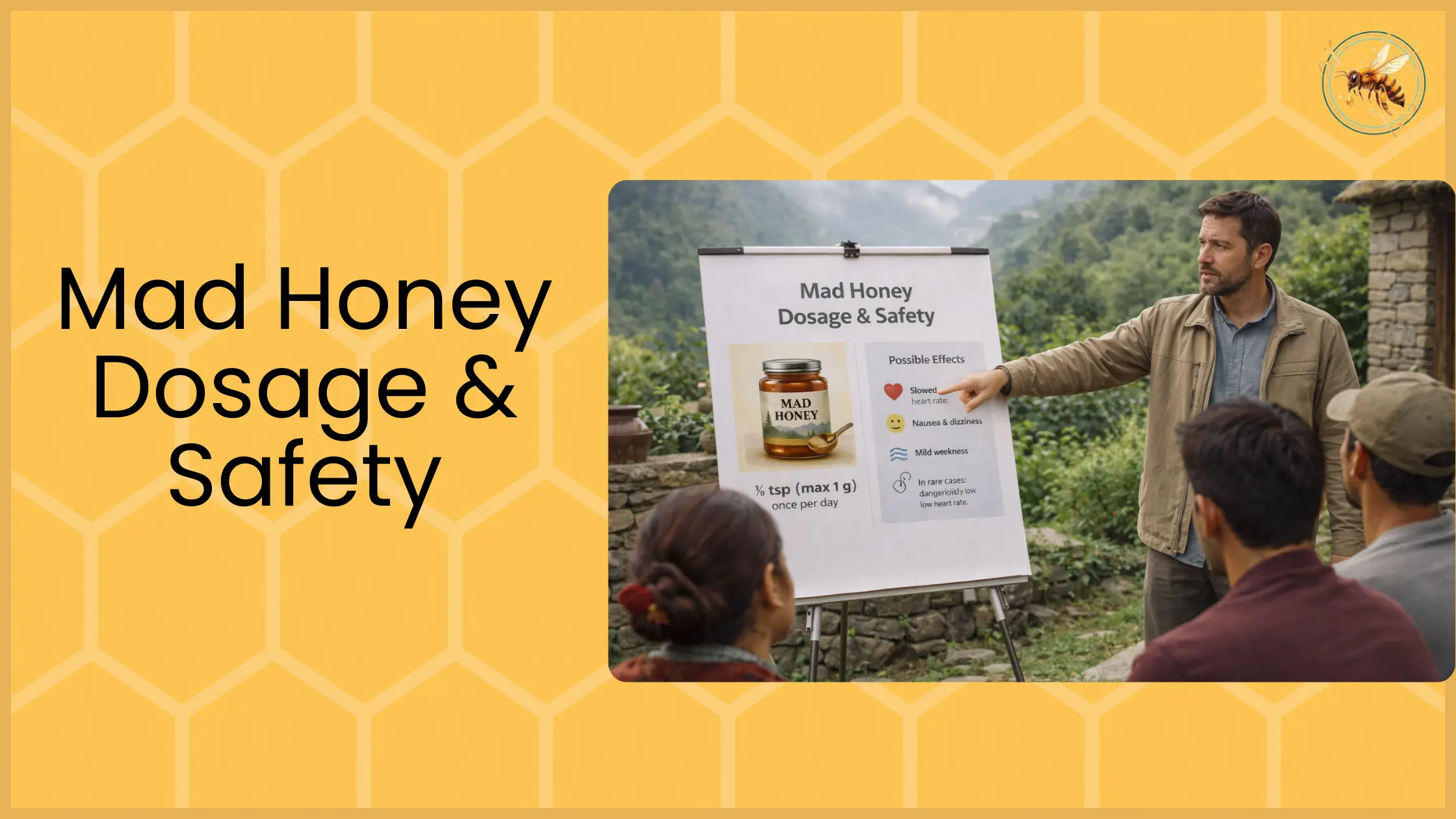
Survival in ancient narratives doesn’t equal safety. Modern case reports show people can present with clinically significant hypotension/bradycardia after mad honey ingestion and sometimes require emergency treatment/observation.
Misinterpretation #3: “So all mad honey does that.”
Not true. Potency is variable: the amount of grayanotoxin can change by season, floral dominance, and batch handling, so one event doesn’t describe every jar.
Mad Honey in the Black Sea Region (Turkey) and Beyond
Here’s what you need to know:
Why this region appears in historical narratives
If you want one “through-line” that connects ancient history to modern headlines, it’s geography.
The Black Sea region is repeatedly connected with “maddening honey” because certain Rhododendron species are common there and can contribute toxins to nectar. This isn’t a conspiracy, ancient writers themselves were already connecting the dots between place → plant → honey effects.
Pliny the Elder explicitly described a “maddening honey” in Pontus and attributed the effect to rhododendron flowers.
That’s remarkable because it shows ancient observers weren’t purely mystical: they were noticing botanical cause.
“Deli bal” and regional naming
In Turkey, mad honey is often referred to as deli bal, literally “crazy honey.” The name is less about romance and more about warning: this honey can feel normal in small amounts and become overwhelming if you misjudge it.
Historical and modern descriptions converge on the same core idea: dose matters, and potency varies.
Mad Honey as a Weapon: How the Story Evolved (and what’s plausible)
The famous “bowl on the road” account
The “weaponized honey” story is commonly attributed to ancient accounts describing honey placed along a route to incapacitate passing soldiers. One modern summary (quoting Strabo’s idea) describes honey mixed with water in bowls, scattered on roads, and consumed by troops who then “lost their senses,” allowing an easy ambush.
Did armies “really” do this?
We need to separate two questions:
- Did ancient texts describe it? Yes, this motif appears and is widely discussed.
- Was it common warfare practice? Harder to prove.
But it is plausible for a simple reason: local populations would have known which honeys were risky, especially in regions where seasonal “bad honey” was familiar. Pliny even notes season-linked hazard (e.g., more dangerous after certain conditions), and other ancient mentions frame danger as cyclical/seasonal.
So the more grounded takeaway isn’t “ancient chemical warfare” as a vibe. It’s: ecological knowledge can become tactical knowledge.
Why the “weapon” framing sticks
Because it solves a narrative puzzle:
- Why would professional soldiers be defeated by food?
- Because the food wasn’t “just food.”
And from a storytelling perspective, it’s perfect: a sweet trap.
The Middle Layer Most Blogs/Articles Skip: Aristotle, Pliny, Dioscorides (the “it’s not random” era)
One reason mad honey history is unusually credible is that it isn’t just one story. Multiple ancient writers refer to toxic or intoxicating honey, and several specify location and seasonality.
Aristotle: “healthy men go mad…”
A line attributed to Aristotle (via De Mirabilibus Auscultationibus / On Marvellous Things Heard) notes that in Trapezus/Pontus, honey from boxwood has a heavy scent; they say healthy men go mad, but epileptics are cured.
Even if modern readers don’t accept the medical claim, the important historical point is: people were cataloging “strange honeys” by place and effect.
Pliny: “maddening honey” and rhododendron
Pliny’s “maddening honey” passage is one of the clearest ancient statements linking effect to rhododendron flowers in Pontus. That’s essentially an early botanical explanation.
Seasonality: the original “batch variability” concept
Ancient sources also recognized that this honey wasn’t always dangerous. Some mentions emphasize that it’s hazardous only at certain times or after certain environmental conditions.
Modern readers should translate that as: this product is inherently variable. (Which is exactly what modern grayanotoxin science and modern case patterns suggest.)
Nepal and the Himalayan Tradition (Modern Continuation)
image
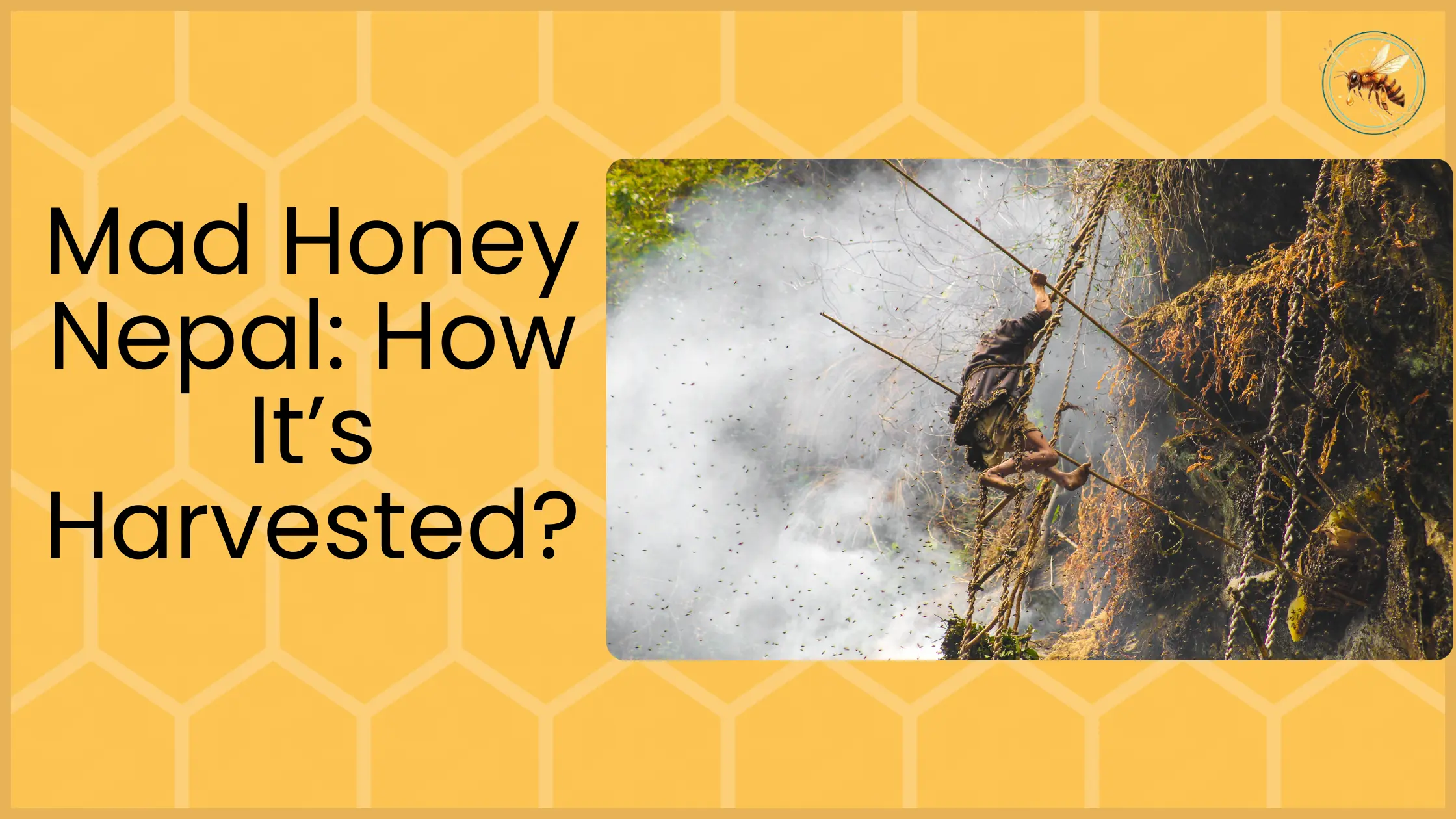
Nepal is not where mad honey “began,” but it’s where the modern global imagination latched on: cliff harvesting visuals, high altitude mythos, and a sense of “ancient ritual.”
What matters historically is continuity:
- Mad honey appears wherever certain Rhododendron species dominate nectar in season.
- Communities develop local knowledge: when it’s strong, when it’s safe-ish, and how to use it traditionally.
- Modern demand repackages the story, sometimes exaggerating it into “psychedelic honey” content.
For your site structure, this is where you bridge to culture pages:
- how harvesting traditions shape identity
- how modern viral media changes the narrative
- why “Himalayan” became a shorthand even though the older written tradition centers heavily on the Black Sea
Myth vs Reality: What History Can’t Prove
This section is where you build trust.
“Hallucinations” vs real physiological effects
Most ancient accounts are not written like psychedelic trip reports. They’re written like:
- collapse
- confusion
- sickness
- incapacity
Modern toxicology describes a cluster that includes dizziness, nausea/vomiting, sweating, impaired consciousness, inability to stand, and weakness, and in more serious cases bradycardia and hypotension requiring treatment.
So when you see modern TikTok-style claims of “mad honey hallucinations,” the more realistic interpretation is:
- some people may report perceptual weirdness
- but the historical core is toxicity physiology, not a classic psychedelic mechanism
Why dose and sensitivity explain most “legend” stories
History tends to flatten variability into one dramatic narrative.
Reality is messier:
- toxin concentration varies by season
- it varies by location
- it varies by batch handling/blending
- people vary by baseline health, medications, and sensitivity
That’s why a story can become “cursed honey” in one telling and “mellow honey” in another.
Conclusion: History → Science → Safety
Mad honey is one of the rare natural products where history and biology keep overlapping:
- Ancient texts describe people collapsing after eating honey.
- Later writers catalog “maddening honey” by region, plant, and season.
- Modern toxicology explains why the same honey can feel mild or severe, depending on grayanotoxin levels and dose.
The responsible takeaway isn’t “wow, war honey.” It’s:
This honey has a real historical footprint because it produces real physiological effects. If you want to explore it today, the smartest path is to understand the mechanism and respect safety basics, especially because batch variability is not a bug, it’s the entire story.
FAQs on Mad Honey History
Did armies really use it as a weapon?
Ancient narrative traditions include descriptions of intoxicating honey used to incapacitate troops (commonly attributed to Strabo’s reporting). What history can’t easily prove is frequency and scale. But it’s plausible in regions where locals understood seasonal toxic honey.
Is the Xenophon story true?
Xenophon’s account is widely treated as one of the earliest detailed descriptions and is consistent with later patterns of mad honey intoxication.
Why do different regions have similar stories?
Because the cause is ecological. Where Rhododendron species contribute toxins to nectar, similar symptom clusters appear and become culture.
Is modern mad honey the same as ancient accounts?
Same mechanism, not always same dose. Modern commercialization can change blending, labeling, and consumer behavior (people chasing intensity), which changes outcomes.
Why do some writers call it “psychoactive”?
Because altered mental state can occur, but in many cases it’s likely secondary to physiological disruption (blood pressure/heart rate changes, weakness, nausea) rather than a classic psychedelic “vision” pathway.