People ask “is mad honey legal?” because the internet talks about it like it’s a controlled drug.
In most places, mad honey is treated as a food product (honey), not a scheduled narcotic, but that doesn’t mean “anything goes.” With mad honey, “legal” has layers:
- Possession (can you own it?)
- Importing (can it cross the border / clear customs?)
- Selling & marketing (what claims trigger enforcement, warnings, or seizure?)
This page is a pillar overview. You’ll publish dedicated country guides for details, but the goal here is to give readers the truth in plain English:
- Mad honey is not usually illegal to possess, but
- imports can be detained/refused, and
- marketing claims are the #1 compliance trigger (especially “treats” anything or “psychedelic” positioning).
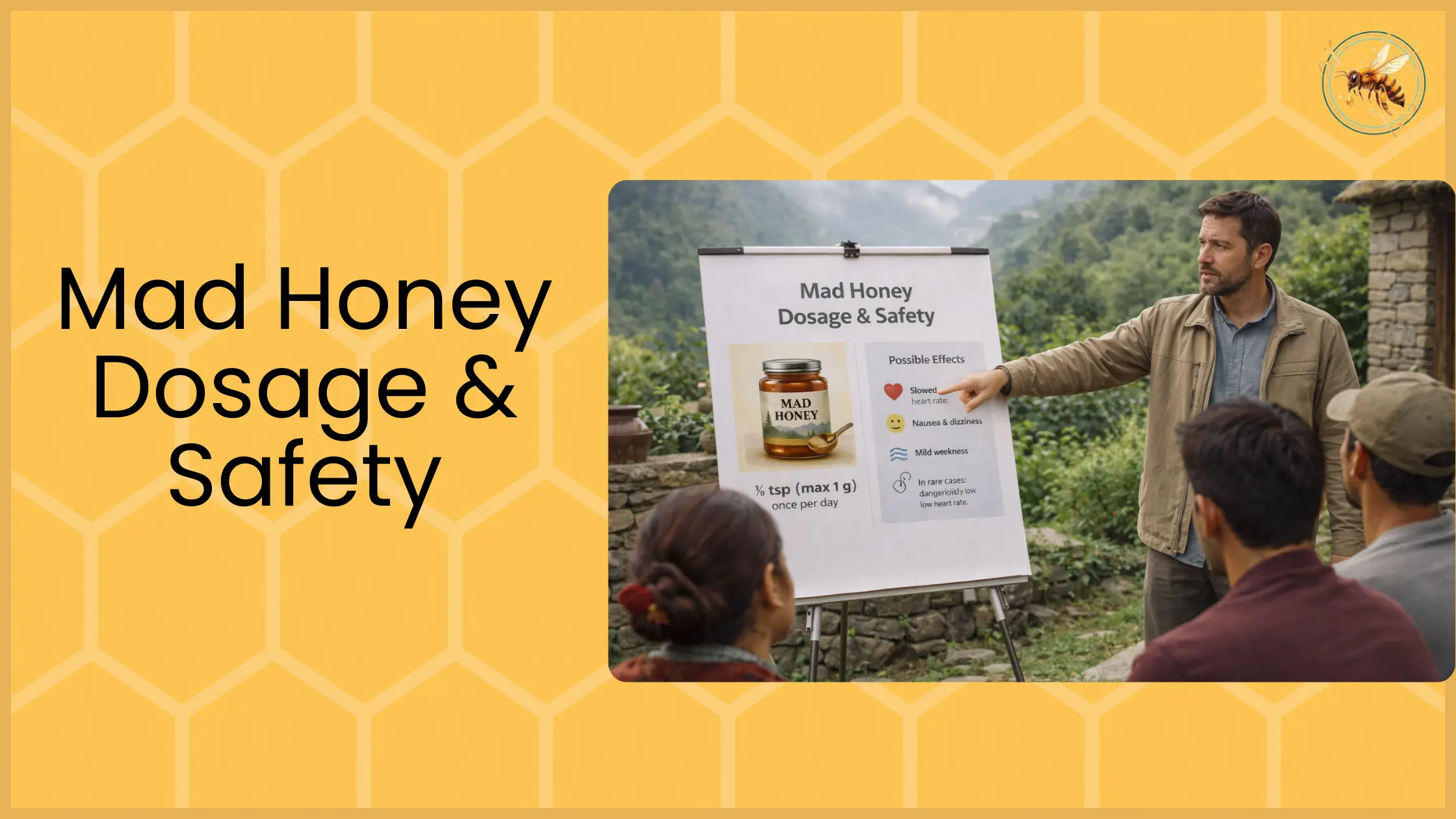
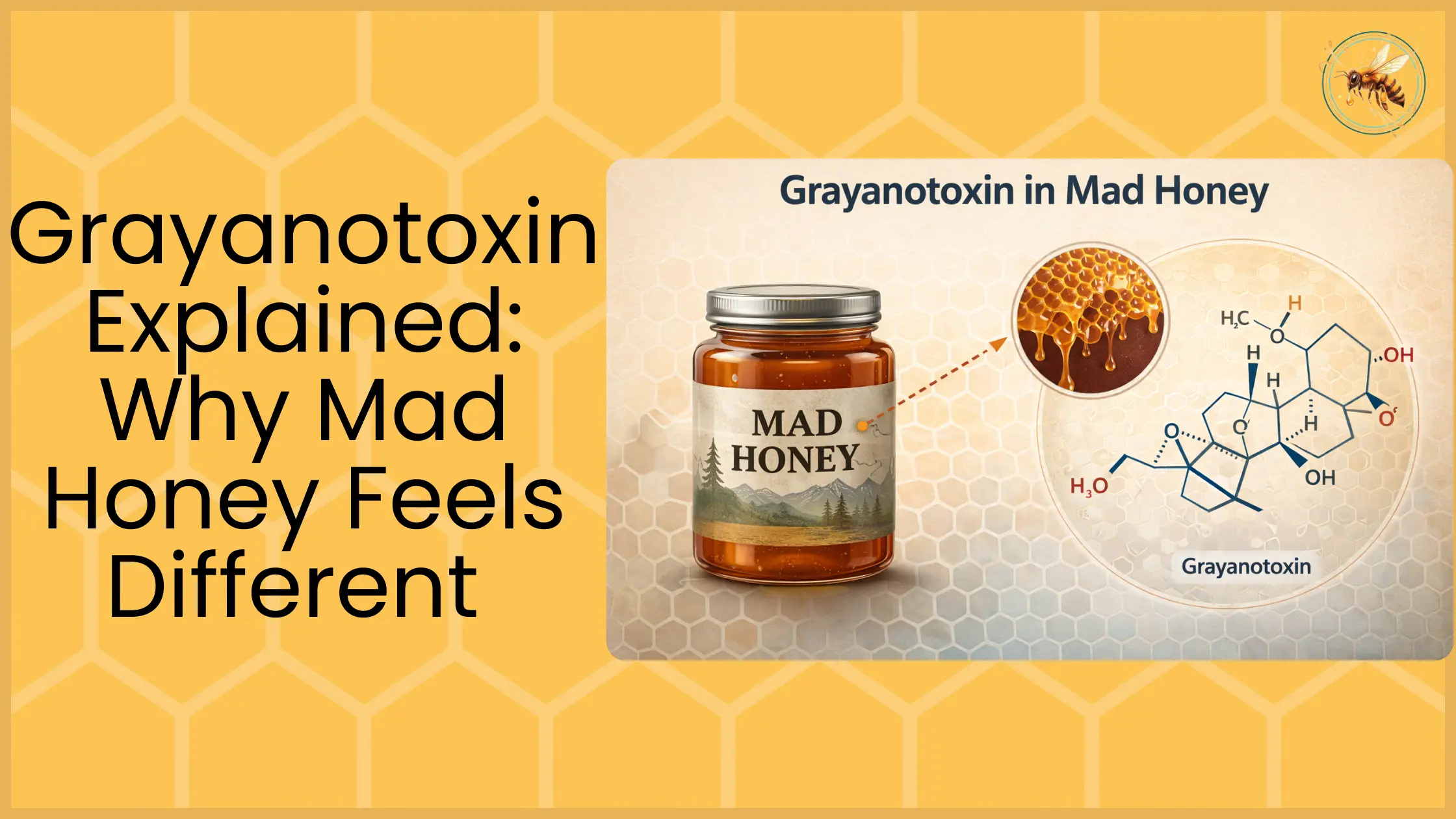
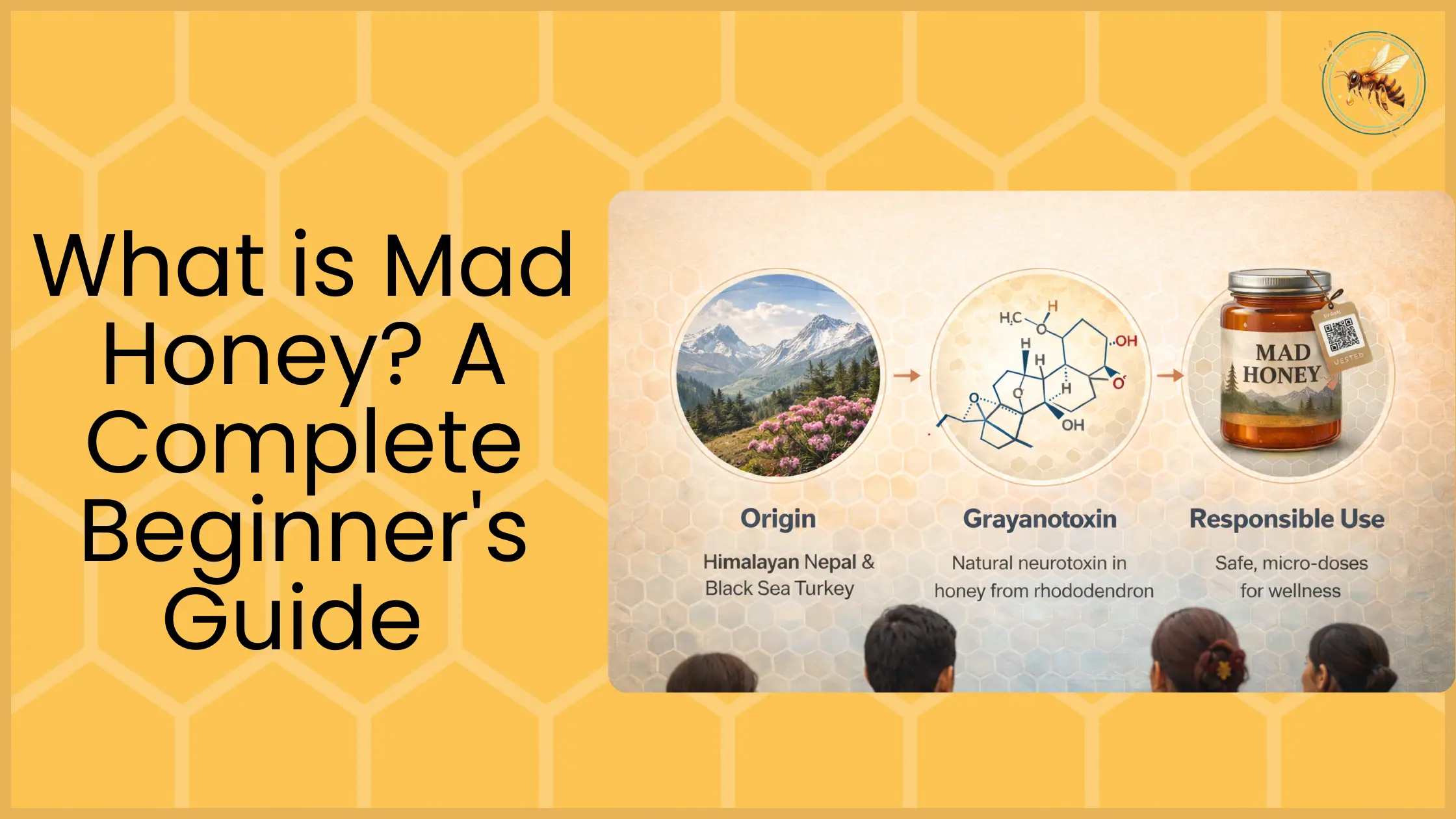
Also: “legal” does not mean “risk-free.” Mad honey’s distinctive effects come from grayanotoxins (typically linked to rhododendron nectar), and intoxication cases are medically documented (hypotension, bradycardia, nausea, delirium, etc.).
tl;dr
- Is Mad Honey a controlled substance? Usually no. In many jurisdictions, mad honey is regulated under food rules, not drug scheduling rules.
- Import is where issues happen. Honey imports commonly require documentation and may be inspected/sampled; shipments can be detained if regulators think the product is unsafe or non-compliant.
- Selling/marketing is the biggest risk. If you market it like a medicine or a “psychoactive” product, you invite “borderline medicine” decisions and advertising enforcement.
- “Legal” ≠ safe. Poison control sources describe typical mad honey intoxication symptoms and supportive treatment.
Is mad honey a “controlled substance”?
Usually, no. Most regulators treat it as honey/food rather than a scheduled drug. But that’s only one part of the picture.
Why does the internet make it sound illegal?
Because mad honey is often framed as “psychedelic honey.” That framing raises red flags because:
- it implies recreational drug use
- it invites unsafe dosing behavior
- and it pushes sellers into the “medicine / drug-like product” lane (which is where regulators get involved)
The actual reality is more boring (and more important):
- Food laws care whether a product is unsafe, misbranded, or marketed with illegal claims.
What “Legal” Means for Mad Honey (3 Layers)
1) Possession (owning it)
In many places, simply owning honey is not a criminal issue. The bigger questions are:
- Is it allowed to be sold?
- Is it allowed to be imported?
- Is it considered unsafe at the point of sale?
2) Importing (customs/border checks)
This is the highest-friction layer. Even normal honey can be heavily regulated at borders due to:
- food safety rules
- animal product controls
- biosecurity (especially in countries like Australia/NZ)
- documentation requirements
Examples (official guidance):
- Great Britain sets out import requirements for honey and other apiculture products, including certification/documentation.
- Canada’s CFIA says importers must meet food safety and consumer protection requirements under Canada’s food regulations.
- Australia’s Department of Agriculture outlines import conditions/tests for honey via its biosecurity framework.
- Singapore requires importers to comply with import requirements for food products and holds the authority to inspect/test consignments.
- Japan requires an import notification for foods for sale/business under its food sanitation framework.
Translation: even if “mad honey” isn’t “banned,” border agencies can still detain/refuse shipments that fail food import rules.
3) Selling/marketing (claims, advertising, classification)
This is the biggest trap. The moment a product is marketed as:
- preventing/treating disease
- acting like a drug
- or delivering guaranteed psychoactive outcomes …you move from “food product” into “regulated medicinal claims” territory.
UK examples:
- The MHRA has guidance for “borderline products” (how they decide if something is a medicine based on presentation/claims).
- UK advertising rules restrict health claims for foods/supplements unless authorized; the ASA provides guidance on compliant claims language.
EU examples:
- EU food law principles prioritize “safe and wholesome food,” and the legal framework is built around preventing unsafe food from being placed on the market.
US examples:
- US law defines when food is “adulterated,” including when it contains substances that may render it injurious to health.
Why Mad Honey Gets Flagged More Than Regular Honey
Naturally occurring compounds + real physiological effects (dose-dependent)
Mad honey’s effects are linked to grayanotoxins (commonly associated with rhododendron nectar).
At higher exposure, documented symptoms include:
- nausea/vomiting
- hypotension (low blood pressure)
- bradycardia (slow heart rate)
- delirium
…and more rarely seizures, with treatment being supportive care in medical settings.
That documented safety profile is why regulators and platforms take “psychedelic honey” marketing seriously.
Safety incidents + sensational coverage
A handful of intoxication cases + viral headlines creates a perception of illegality, even when the legal issue is really food safety / misbranding.
“Drug-like” positioning and exaggerated promises
This is the avoidable part.
If a seller markets mad honey as:
- “hallucinogenic”
- “trip honey”
- “cures anxiety/depression/pain”
- “treats blood pressure”
they push the product into enforcement territory (misleading advertising, unlicensed medicinal claims, unsafe use).
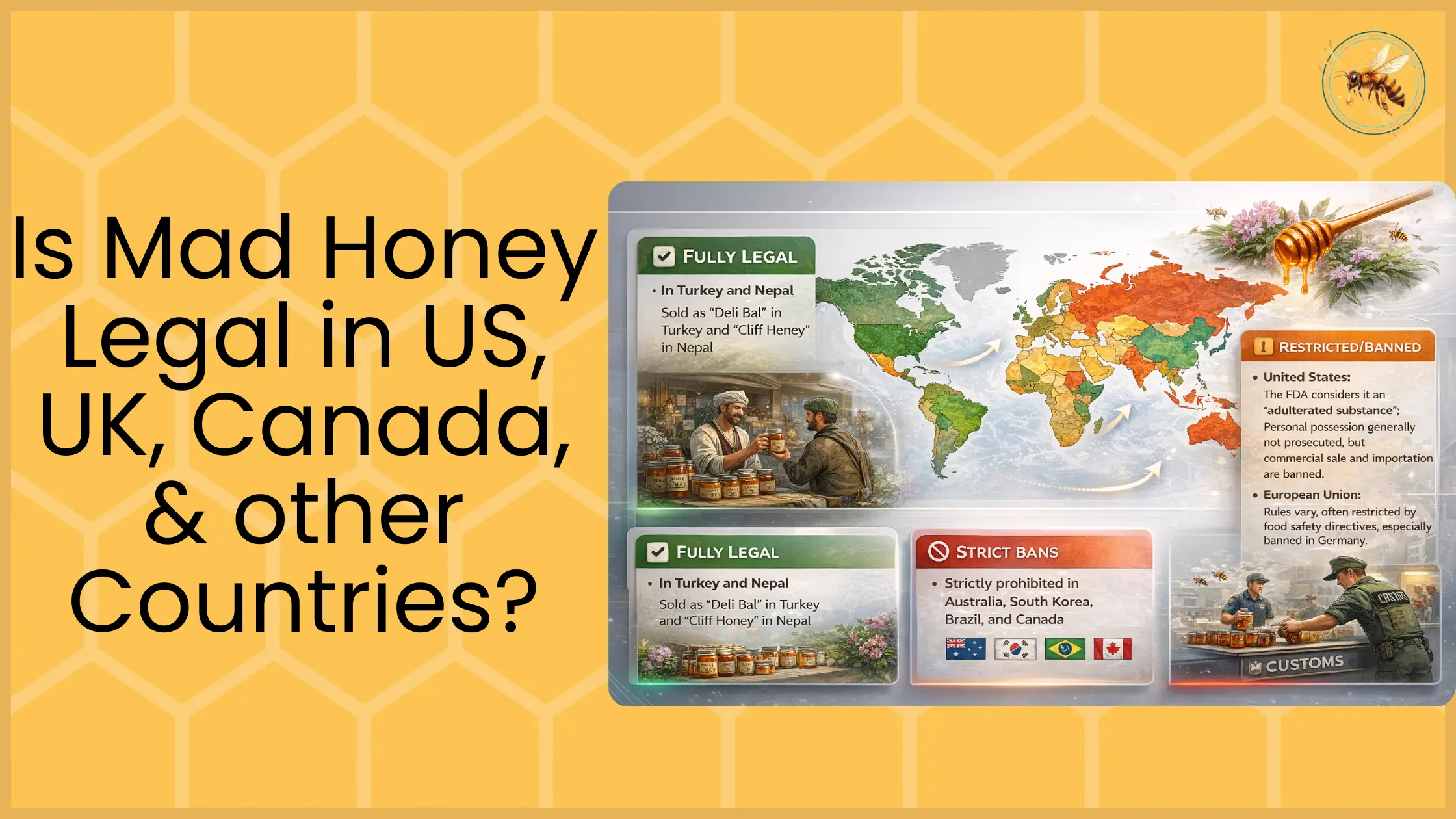
Country Snapshot
Below is a high-level view. Each country gets its own detailed page later.
United States
Big idea: Not typically treated as a controlled drug; food safety and adulteration/misbranding are the key angles.
- Possession: generally not a controlled-substance issue.
- Import/sale: FDA can act against foods considered adulterated or misbranded; US law defines adulteration standards for foods that may be injurious to health.
- Practical reality: shipments may be refused if regulators deem them unsafe or improperly labeled.
United Kingdom
Big idea: Treated as a food import category, but documentation, inspection, and marketing claims matter.
- Importing honey into Great Britain has defined requirements and certification/documentation expectations.
- Product claims can trigger MHRA “medicine” classification (borderline products guidance).
- Advertising: health claims for foods/supplements are restricted unless authorized; ASA guidance explains compliant claim behavior.
Canada
Big idea: Typically treated as a food import regulated under CFIA frameworks; authenticity and compliance matter.
- CFIA states importers must ensure honey meets applicable food safety and consumer protection requirements under Canada’s regulations.
- CFIA also emphasizes compliance and enforcement related to authenticity/deceptive practices in the honey market.
European Union (EU)
Big idea: Honey is regulated as food with defined labeling/composition rules, and overarching food law principles focus on “safe food” on the market.
- The European Commission summarizes EU rules for honey, including the updated Honey Directive and labeling expectations (e.g., origin labeling).
- EU General Food Law (Regulation 178/2002) sets the foundational principles and requirements for food law and safety.
What this means for mad honey:
Even if a product is “honey,” anything seen as unsafe, misleadingly marketed, or non-compliant with labeling/food-safety expectations can face enforcement.
Australia
Big idea: Biosecurity + food import testing frameworks are strict; honey imports are regulated and may be tested.
- Australia’s Department of Agriculture outlines import conditions for honey, including quality/testing parameters and reference to the Biosecurity Import Conditions system.
Practical note:
Australia is especially strict about biosecurity risks. Even “normal honey” can be heavily scrutinized, so any niche honey marketed for effects should expect attention.
New Zealand
Big idea: Biosecurity and honey controls are serious; honey is regulated as a food/biosecurity product category.
- NZ has biosecurity-related permissions and regulatory instruments around honey.
- NZ MPI publishes honey labeling and compliance guidance (export-focused, but demonstrates the seriousness of honey governance).
Singapore
Big idea: Food imports require licensing/registration, compliance, and consignments can be inspected/tested.
- Singapore Food Agency import requirements emphasize compliance for commercial imports.
- SFA explicitly notes imported consignments may be inspected and sampled for lab tests.
- Singapore Customs’ TradeNet framework outlines competent authority requirements for processed food imports.
United Arab Emirates (UAE)
Big idea: Food imports involve approvals, documentation, and food safety law frameworks.
- UAE government information on food safety law notes standards/regulations and mentions approval requirements for first-time imports.
- Abu Dhabi’s food importers’ guide describes health certificates and documentation submitted for imported food consignments.
Japan
Big idea: Imported food for sale/business requires an import notification and must comply with food sanitation requirements.
- Japan’s MHLW explains import notification obligations for food under its imported food safety system.
- Japan Customs also explains food sanitation law requirements for imports.
The #1 Compliance Trigger: Marketing Claims
This is where most “legal” problems are created.
What to avoid saying (high-risk claims)
Avoid claims that imply:
- treatment, prevention, or cure of disease
- guaranteed medical outcomes
- guaranteed psychoactive experiences (“hallucinogenic,” “trip,” “high”)
- “works like X drug”
Why: regulators often decide whether something is a medicine based on how it’s presented and what it claims (not just ingredients).
Safer language (what’s usually defensible)
Focus on:
- taste, origin, tradition, sourcing
- “ritual/experience” framing (without drug analogies)
- conservative guidance: “start small, wait, do not overuse”
Why “lab tested” claims must be specific
Vague “lab tested” claims can backfire (credibility decay + compliance risk). If you say it, specify:
- what was tested (e.g., grayanotoxins, adulterants)
- batch/lot linkage
- what the result means (in plain language)
Practical Buying Checklist (Legality-Friendly)
If your reader is asking “is it legal?”, they’re really asking: how do I reduce the chance of customs issues and sketchy sellers?
1) Transparent origin + batch ID
- Country/region stated clearly
- Batch/lot identification
- Harvest/season info if available
2) Responsible safety/dosing guidance
A serious seller acknowledges reality:
- mad honey can cause adverse effects at higher exposure
- conservative approach is essential
- Poison control sources document common symptoms and supportive treatment expectations.
3) Documentation signals (COA/testing language, traceability)
- Any credible testing language is specific, not vague
- Traceability is visible (not hidden)
4) Red flags that increase legal/customs risk
- “Psychedelic honey” positioning
- disease-treatment promises
- no origin details
- suspiciously cheap “global shipping” listings
- no safety page, no disclaimer, no expectations-setting
Conclusion
So, is mad honey legal? In many places, it’s not treated like a controlled drug, but “legal” depends on:
- import compliance (documentation/inspection/testing)
- food safety (unsafe/adulterated product issues)
- and marketing claims (the #1 trigger)
Most importantly:
- Legal ≠ risk-free. Mad honey’s effects are linked to grayanotoxins, and intoxication cases are documented in medical toxicology channels.
- The safest long-term positioning is: food + transparency + responsible guidance.
FAQs on Mad Honey Legality
Is mad honey legal to buy online?
Often it’s marketed online, but legality depends on your country’s rules for food imports, labeling, and claims. Even when not “banned,” shipments can be inspected or detained.
Can customs seize it?
Customs can detain/refuse imported food products that don’t comply with import rules, documentation, or safety standards. Many jurisdictions explicitly allow inspection/testing of food consignments.
Is it legal to resell?
Reselling raises the strictest layer: food business compliance + labeling + marketing claims. If you’re selling commercially, you may need permits, proper labeling, and compliant advertising (country-specific).
Is it legal to advertise “effects”?
Describing taste/ritual is usually safer than describing drug-like effects. In the UK, “borderline medicine” logic and advertising rules make unapproved health/medical claims especially risky.
Is “hallucinogenic honey” legal?
That phrasing itself is a red flag. It implies psychoactive drug positioning and may trigger regulatory attention and unsafe use. If you care about compliance and long-term category trust, avoid it.