Mad honey is one of those rare products that feels like folklore… until you realize it’s just botany + bees + chemistry.
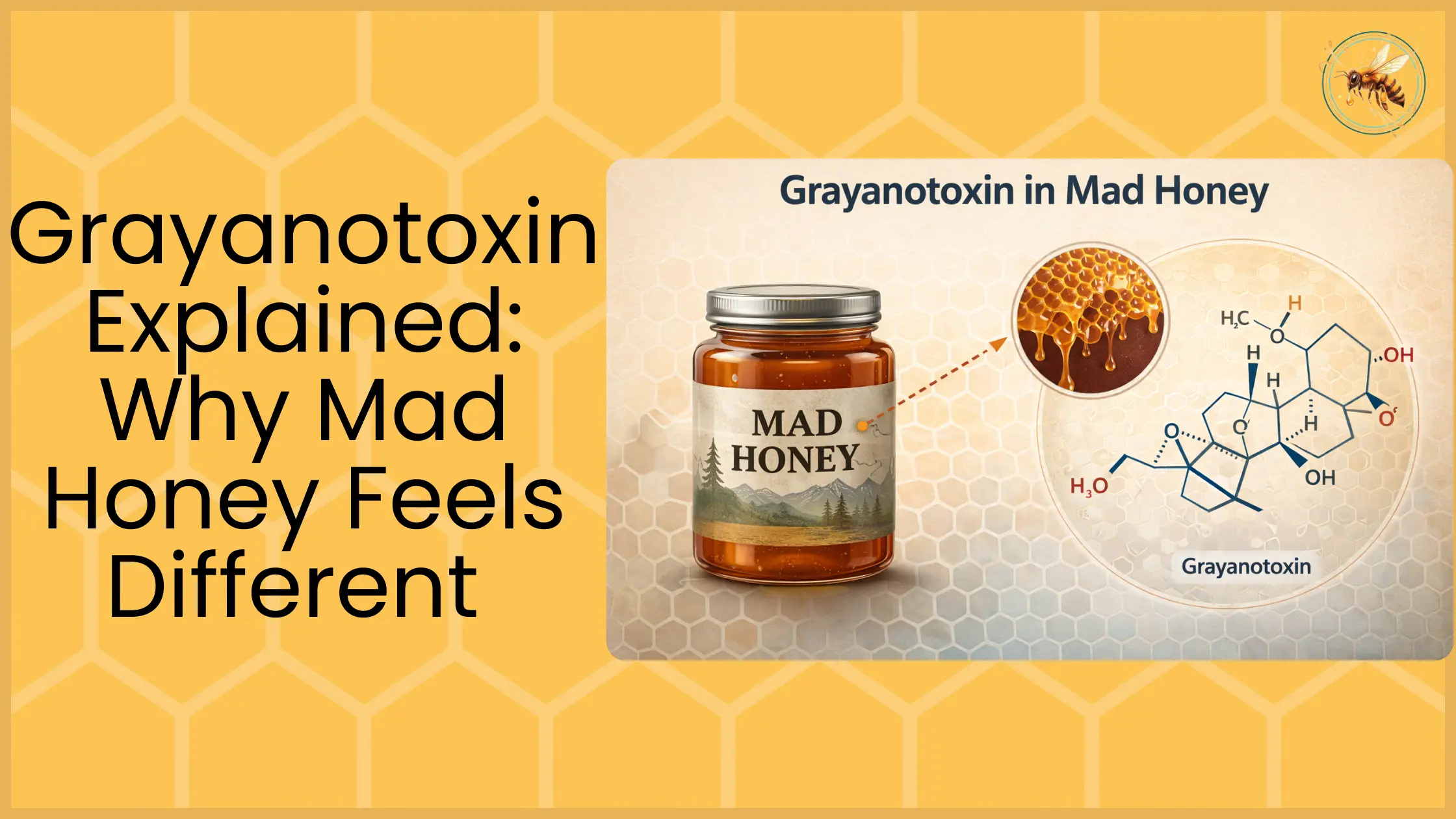
In plain terms: mad honey is honey made from nectar collected from certain rhododendron flowers, and that nectar can contain grayanotoxins, natural compounds that can cause noticeable, dose-dependent effects in humans.
That’s the “what.” The “why people care” is this: unlike regular honey, mad honey can create a distinct body feeling, often described as heavy relaxation, warmth, a floaty calm, or a strong “shift” in how your body feels. And if you take too much (or you’re sensitive), it can quickly turn into the opposite: dizziness, nausea, sweating, low blood pressure, and a slow heart rate.
This guide is written for beginners and the curious, not to hype it up, but to help you understand what it is, what it isn’t, and how to approach it responsibly.
tl;dr
- Mad honey is real honey, but it can contain grayanotoxins from certain rhododendron species, which is what makes it “different.”
- Effects are dose-dependent and batch-dependent, meaning the same spoon can feel different across jars and across people.
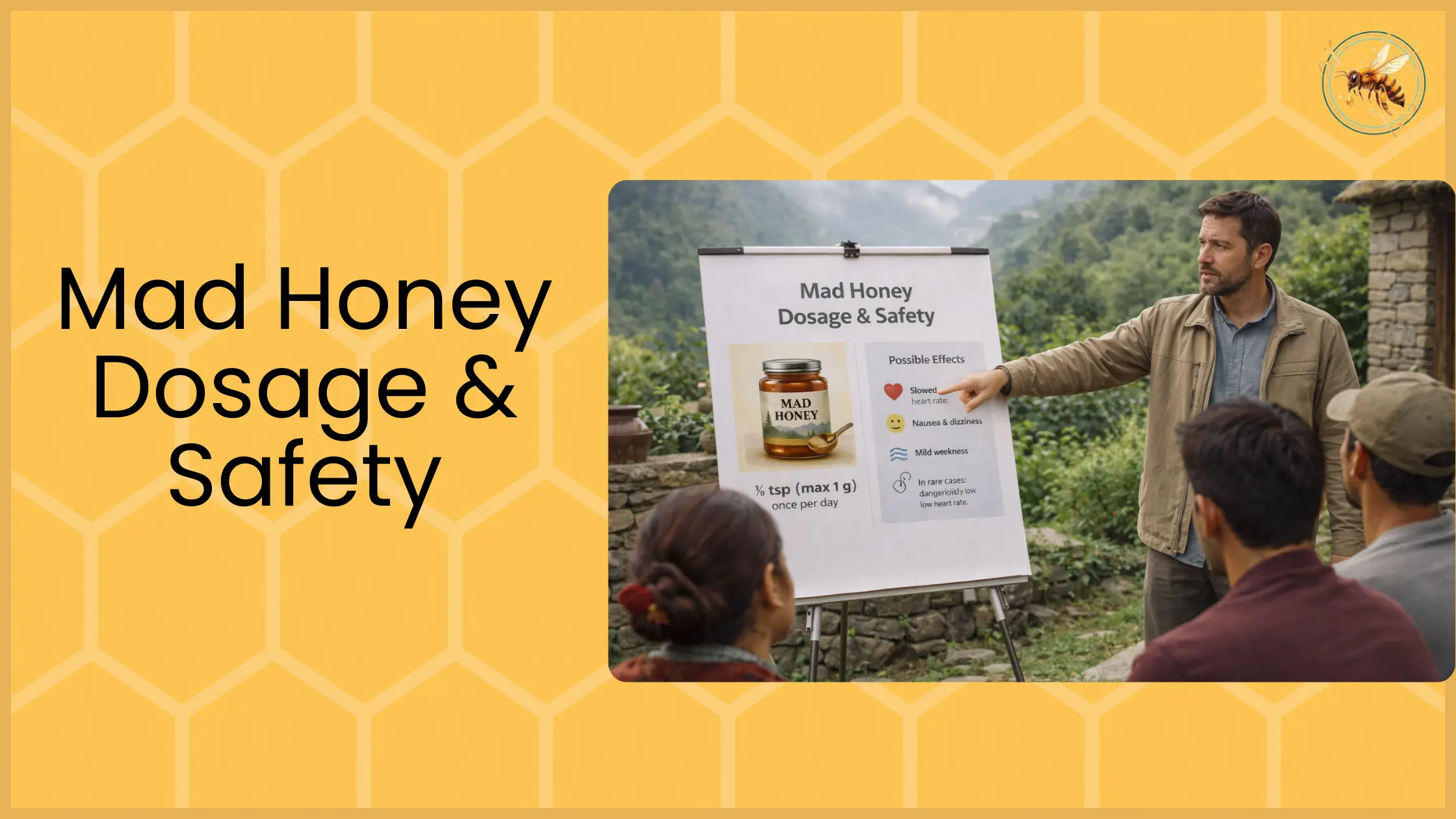
- The most important beginner rule is start low, go slow, and wait before taking more.
- Most “bad experiences” come from taking too much, taking it too fast, mixing it with other substances, or buying a misrepresented product.
- A responsible source should provide clear safety guidance + traceable origin + transparency, not just a dramatic story.
Mad Honey, Explained in Plain English
If regular honey is “nectar turned into sweetness,” mad honey is the same process, but with one important twist:
It starts with the flowers
Certain rhododendron plants naturally contain compounds called grayanotoxins. When bees forage heavily on these blooms, those compounds can end up in the honey.
The honey is still honey
Mad honey isn’t a synthetic product or a “drug.” It’s honey, just chemically influenced by its botanical source.
Why it’s often darker (and sometimes bitter)
Many people describe mad honey as darker, more reddish-brown, and more herbal/bitter than typical supermarket honey. That’s not a universal rule (color varies), but it’s common in consumer descriptions.
Why It’s Called “Mad” Honey
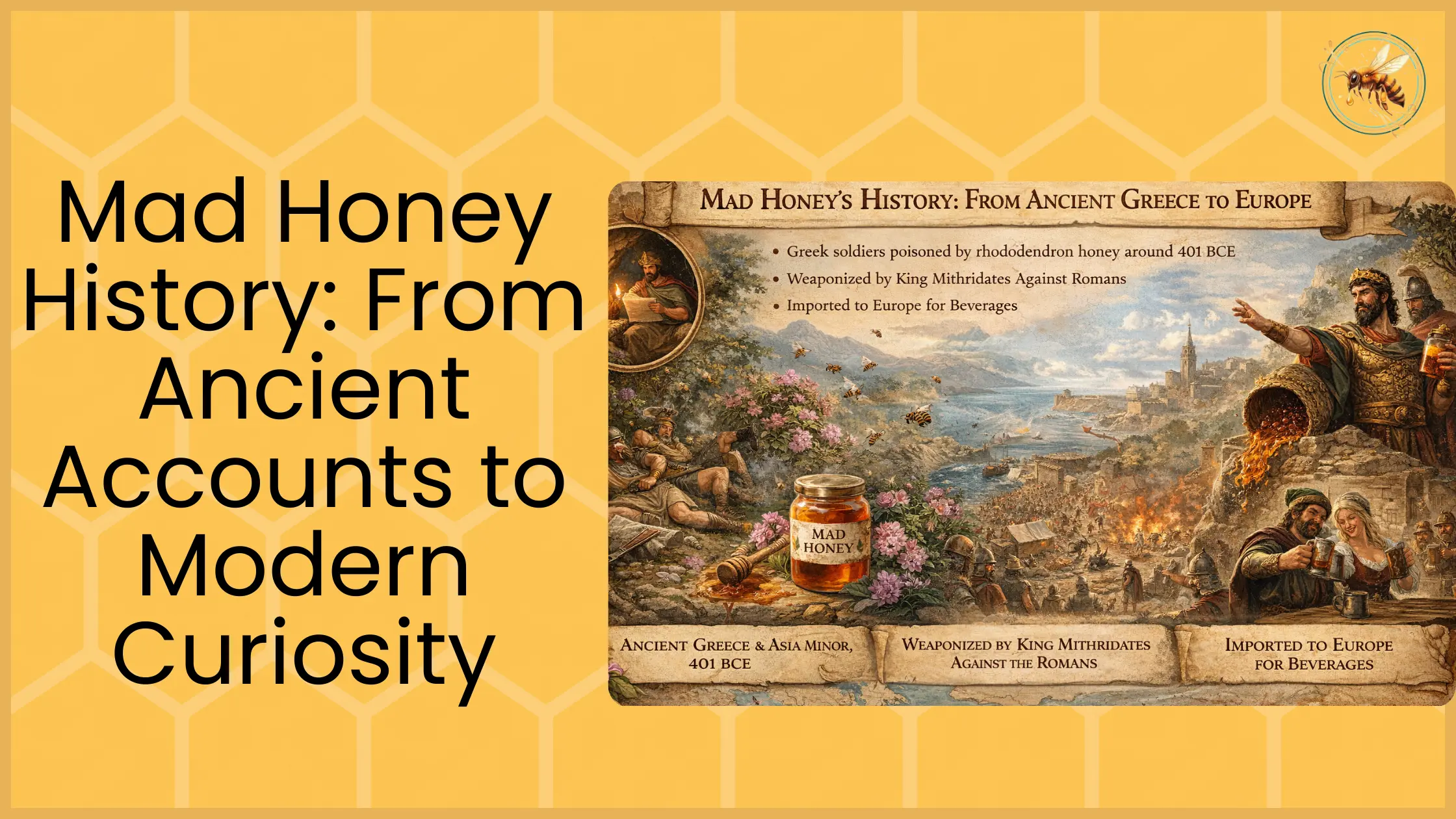
The name comes from the intoxicating or disorienting effects people can experience, especially at higher doses. Historical accounts describe groups becoming sick or confused after eating honey that likely contained grayanotoxins.
But here’s the modern translation:
- Low exposure: people often describe a heavy calm or “mellow shift.”
- High exposure: it stops being “interesting” and becomes a toxic dose problem (nausea, dizziness, faintness, slow heart rate).
So the “mad” isn’t a vibe. It’s a warning label hidden inside a nickname.
Where Does Mad Honey Come From?
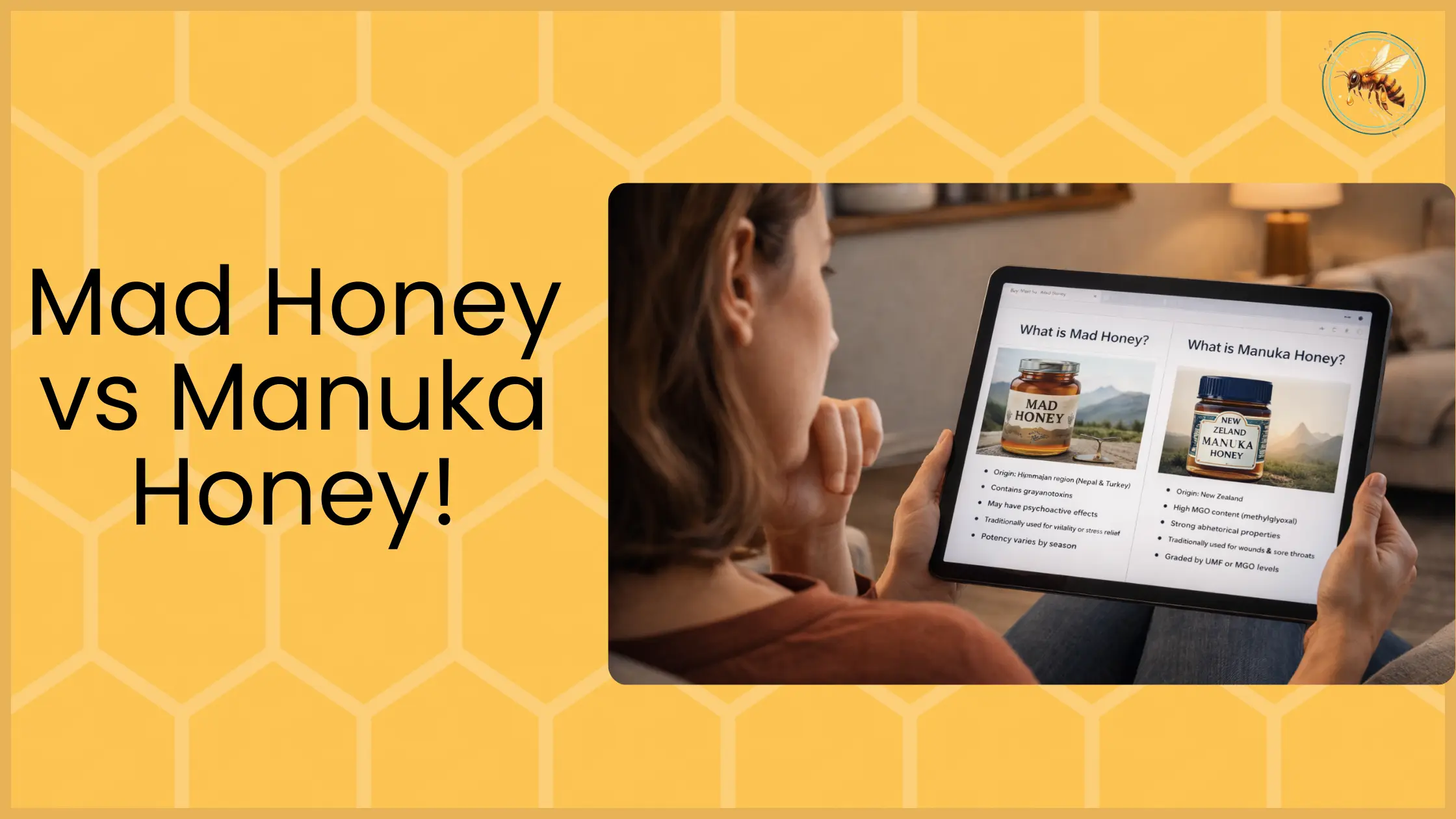
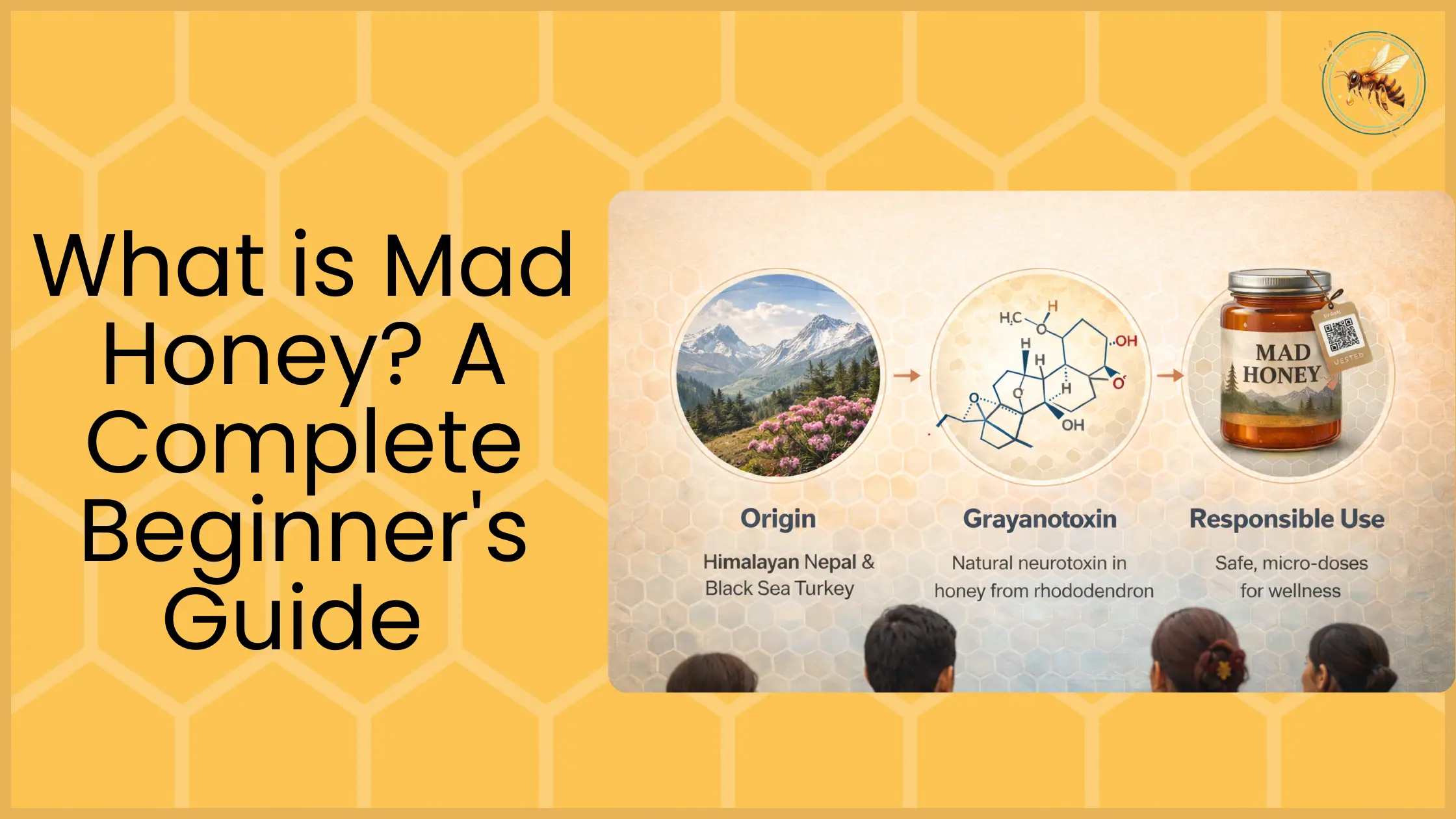
Mad honey is most commonly associated with two regions:
Nepal (Himalayan regions)
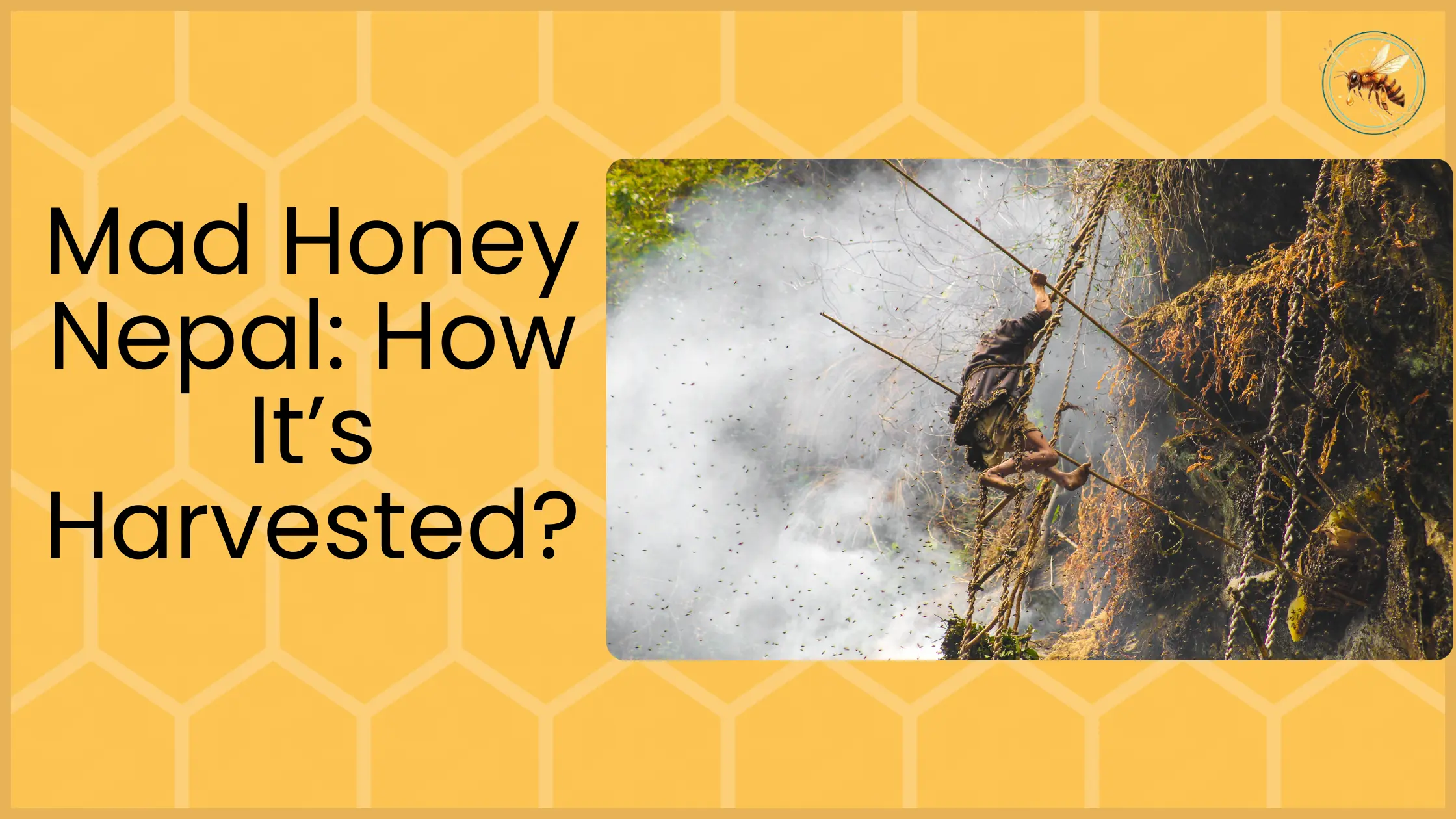
In Nepal, mad honey is linked to traditional cliff harvesting and the giant Himalayan honeybee (Apis laboriosa) in certain areas. The harvest is culturally famous because it can be dangerous and labor-intensive.
Turkey (Black Sea region)
In Turkey, it’s often called “deli bal” and has a long history as a folk product. The botanical source is frequently tied to rhododendron species common to that region.
| Feature | Nepali Mad Honey | Turkish Mad Honey |
| Source Flowers | Rhododendron luteum, Rhododendron campanulatum | Rhododendron ponticum |
| Harvest Method | Wild cliff hunting by hand | Often from managed hives in forests |
| Potency | Typically, higher grayanotoxin levels, due to wild sourcing | Variable, but often milder |
| Cultural Use | Traditional medicine and rituals among the Gurung people | Folk remedy for stomach issues and vitality |
Can Mad Honey exist elsewhere?
Small amounts have been reported from other places where relevant rhododendron species grow. But Nepal and Turkey are the most referenced origins in mainstream discussions.
Important nuance: origin alone doesn’t guarantee anything about potency. “Himalayan” is not a dosage label. Batch variability matters.
What Does Mad Honey Feel Like? (Low Dose vs High Dose)
This is where most articles mess up: they either hype it like a party substance or scare people with worst-case stories. The truth is more practical.
The “relaxation” expectation (what people commonly report)
At lower exposure, people often report:
- a heavy calm
- mild “buzz” or softness in the body
- warmth, slowed pace, relaxed mood
- a sense of “settling” (especially when taken in a quiet setting)
A good mental model: Think “ritual calm” not “recreational thrill.” If you go into it chasing an intense effect, that’s the fastest way to overshoot.
When it becomes too much (why dose matters)
At higher exposure, or if you redose too soon, people can experience:
- dizziness/lightheadedness
- nausea/vomiting
- sweating and weakness
- feeling faint or actually fainting
- a noticeably slow heartbeat and low blood pressure effects
This is why beginner guidance matters. Mad honey is famous because it can cross the line faster than people expect.
Why experiences vary so much
Mad honey is variable in two ways:
- Your body (weight, sensitivity, tolerance, health conditions, medications)
- The batch (flower mix, season, region, handling, dilution/blending)
So two people can do “the same amount” and report totally different outcomes.
What Causes the Effects?
You don’t need a chemistry degree here, just the correct idea.
Grayanotoxins + rhododendron nectar (high-level overview)
Grayanotoxins interact with voltage-gated sodium channels in the body. When those channels don’t behave normally, it can change nerve signaling and influence heart rhythm regulation, commonly producing vagal effects (parasympathetic dominance), which is why the classic risk pattern includes slow heart rate and low blood pressure at higher exposure.
Why batch variability matters (the big missing truth)
A jar of mad honey isn’t a standardized supplement. It’s a natural product, and variability comes from:
- rhododendron species differences
- bloom intensity and harvest season
- geography and microclimates
- whether honey is blended across many hives or kept as small-batch wild harvest
So “how it feels” is not guaranteed. That’s also why responsible sellers focus on education and transparency, not promises.
Mad Honey Safety Basics to Know Before Trying
This is the section that should exist on every “mad honey” page, because it prevents avoidable problems.
The beginner principle: Start low, go slow
If you’re new:
- Start with a small amount
- Wait before considering more
- Don’t stack doses because you “don’t feel it yet”
- Treat it like a slow ritual, not something you rush
Who should avoid it
Avoid mad honey, or speak to a qualified clinician first, if you:
- have heart rhythm issues, low blood pressure, or cardiovascular conditions
- take medications that affect blood pressure or heart rate
- are pregnant or breastfeeding
- are under 18
- have known sensitivity to bee products
This isn’t fear-mongering. It’s responsible expectation setting.
What NOT to mix it with
Most problems come from stacking variables. Avoid combining mad honey with:
- alcohol
- stimulants
- other substances that affect heart rate, blood pressure, or nervous system tone
What to do if you took too much (high-level)
If someone feels unwell after mad honey:
- stop using it
- sit or lie down in a safe place (falls are a risk if dizzy)
- hydrate
- if symptoms are severe (fainting, chest pain, extreme weakness, very slow pulse, confusion), seek urgent medical attention
Keep the jar and batch info if you have it, helpful context.
A Practical “First-Time” Expectation Guide
If you want a simple beginner approach that avoids problems, use this mindset:
1) The goal is calibration, not intensity
Your first time is not about “max effect.” It’s about learning:
- how your body responds
- how quickly it comes on
- how long it lasts
2) Give it time
People often underestimate the lag. Effects may build gradually depending on:
- whether you ate beforehand
- the batch
- your sensitivity
3) Choose setting > chasing sensation
Mad honey is best approached as a quiet ritual:
- evening wind-down
- calm environment
- no driving, no risky plans
- nothing that requires high performance
That single choice prevents most negative stories.
How Long Does Mad Honey Take to Kick In and How Long Does It Last?
Exact timing varies (again: batch + person), but generally:
- Onset: can be gradual rather than instant
- Duration: lower exposure is typically shorter; higher exposure can last much longer, and unpleasant effects can persist for many hours
If you’re new, assume you need a bigger window than you think. Don’t “top up” early.
How to Choose Authentic Mad Honey?
Because “mad honey” is trendy and rare, it’s also commonly misrepresented online. Your goal is to reduce two risks when buying mad honey:
- buying something that isn’t real mad honey
- buying something real but handled/sold irresponsibly
Real vs fake: what buyers should look for
A trustworthy source usually has:
- clear origin details (not just “Himalayan” as a buzzword)
- honest, non-hype language
- clear safety guidance
- education pages (not only sales pages)
- batch logic (even simple batch IDs or harvest timeframe)
Red flags
- “Strongest mad honey” claims
- miracle cure language
- no mention of mad honey safety/dosage
- vague sourcing with dramatic storytelling but no specifics
Why testing/transparency matters
You don’t need a seller to publish a chemistry textbook, but “trust me bro” isn’t enough.
Look for transparency signals:
- testing methodology explained plainly (at least what they test for)
- batch-linked results (not a random COA from years ago)
- a consistent educational stance that doesn’t change when it’s inconvenient
Mad Honey vs Regular Honey
Regular honey
- broadly consistent
- mainly sugar profile + pollen/flavor differences
- typically used as food
Mad honey
- can contain grayanotoxins from rhododendron nectar
- effects can be noticeable and dose-dependent
- requires safety guidance and cautious use
This is why “mad honey” shouldn’t be marketed like a casual snack.
The Sum-Up! Set Expectations, Choose Safety, Buy Transparently
Mad honey is fascinating because it sits at the edge of food, tradition, and natural chemistry. But it’s only “cool” when you approach it with calm expectations and safety-first habits.
If you’re new:
- treat it as a ritual
- start low, wait, and don’t stack
- avoid mixing variables
- buy from sources that educate, not exaggerate
For deeper dives into it, check our Safety, Science, or Guides. Stay safe, and if in doubt, consult a healthcare pro. Curious about more? Explore our basics hub here.
FAQs on Mad Honey
Is mad honey hallucinogenic?
Most people looking for “hallucinations” misunderstand the category. Mad honey is not typically described like classic psychedelics. At high exposure, confusion/delirium-like symptoms can occur, but that’s not a “fun trip,” it’s a sign you took too much.
Is mad honey legal?
In many places it’s sold as honey, but rules vary and it may not be regulated as a standardized product. Always check local regulations and avoid any seller who implies deceptive shipping practices.
How long does mad honey take to kick in?
Timing varies by dose, batch, body, and whether you ate beforehand. The beginner-safe approach is: take a small amount and wait before considering more.
How long does mad honey last?
Lower exposure tends to resolve faster; higher exposure can last many hours and may linger. Plan a wide window and don’t stack doses.
Can you take mad honey every day?
Because batches vary and grayanotoxins are the defining feature, daily use is a “compounding variables” scenario. If someone chooses to use it regularly, the risk management approach becomes even more important (dose discipline, avoidance of mixing, and listening to your body).