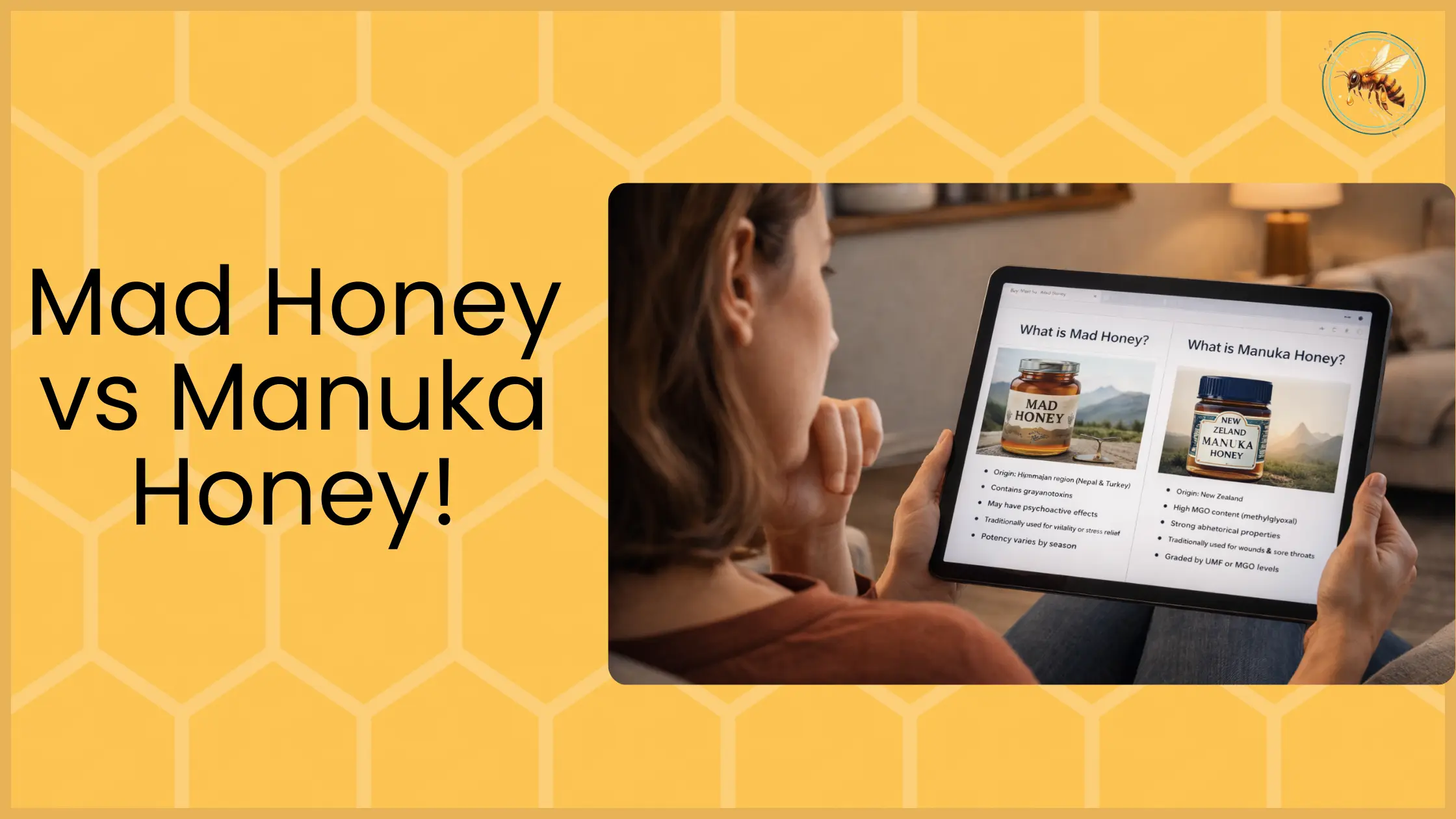
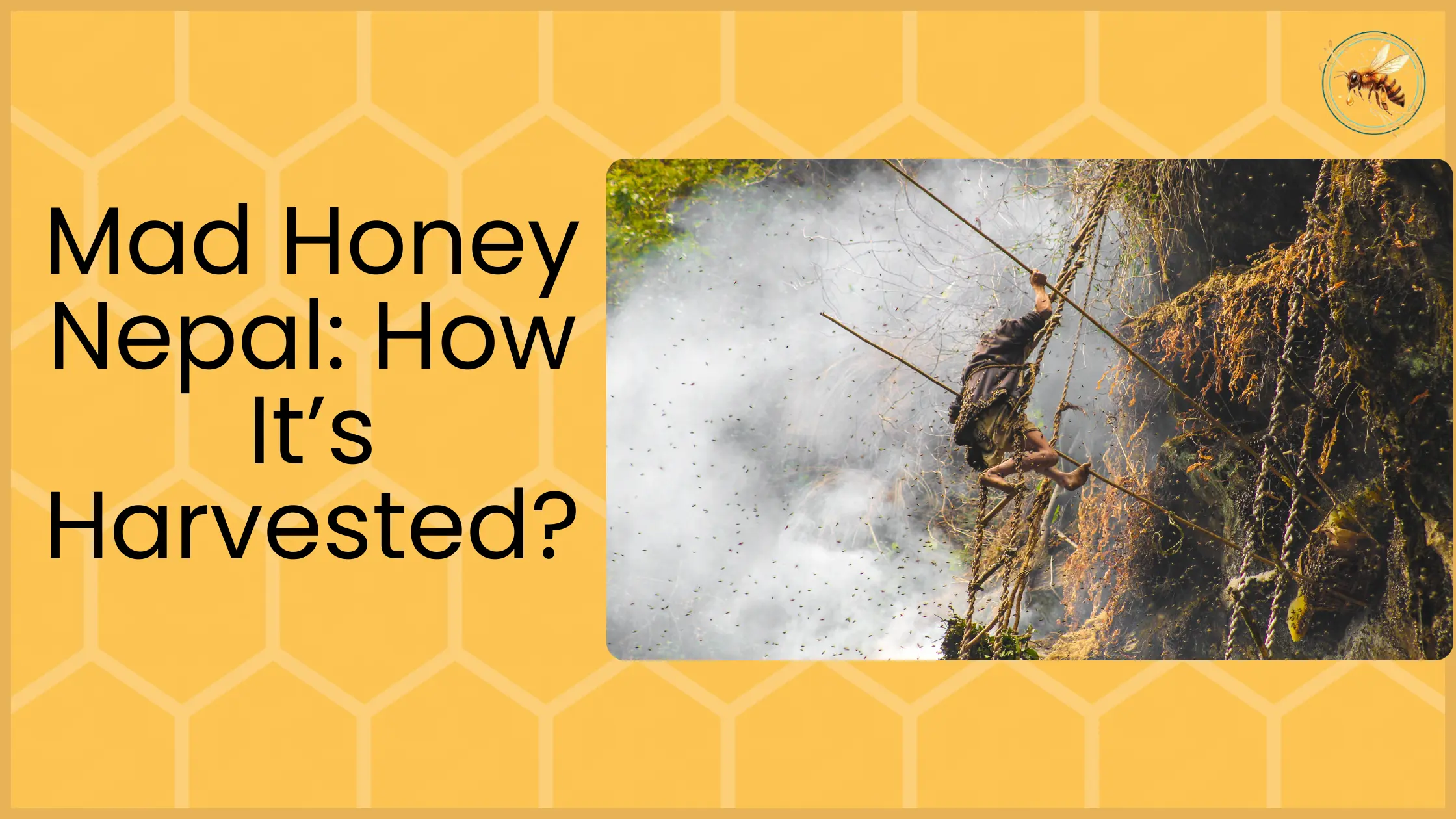
What are Grayanotoxins?
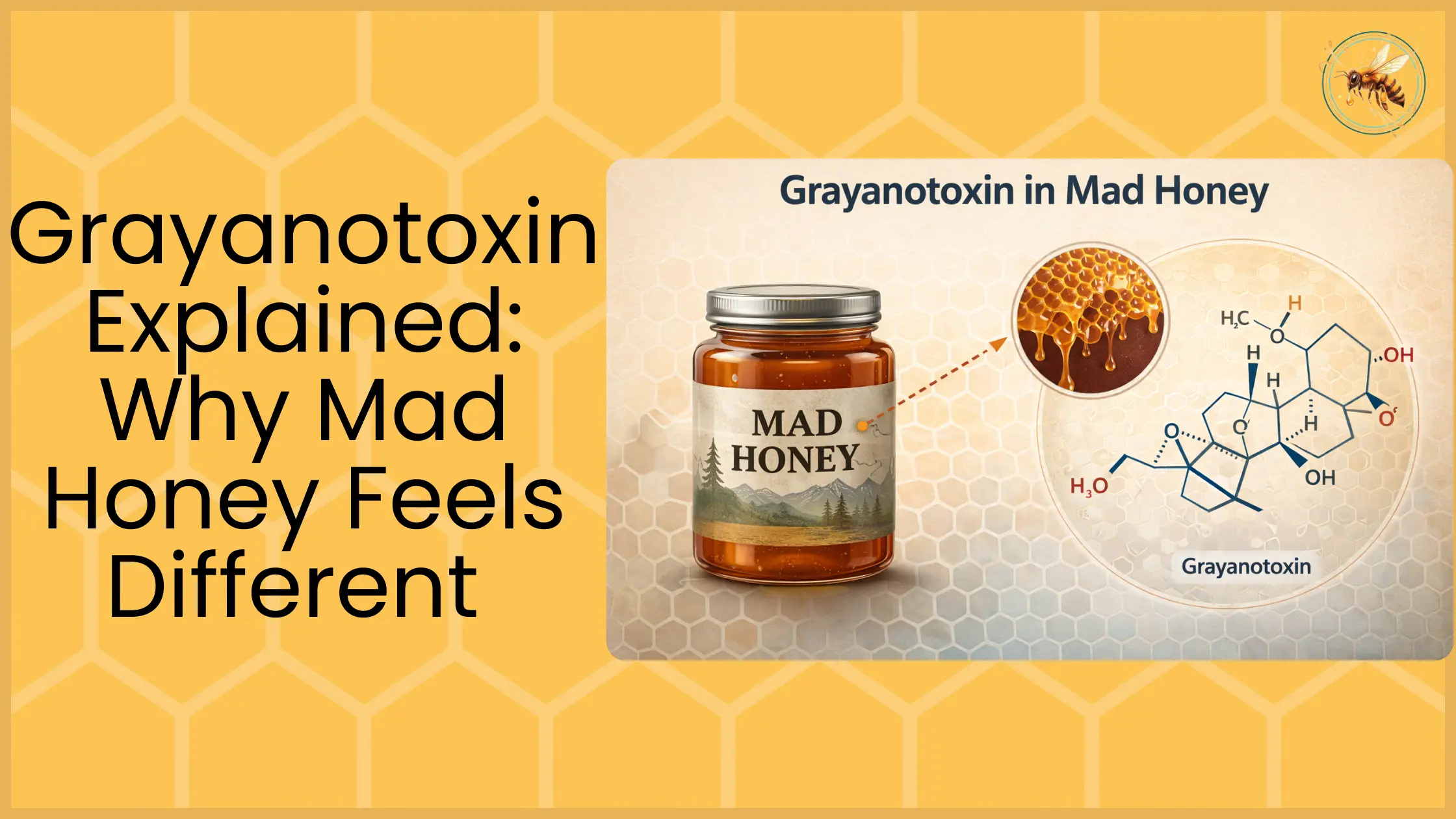
Grayanotoxins (also known historically as andromedotoxin or rhodotoxin) are a family of polyhydroxylated diterpenes naturally produced by plants in the Ericaceae family. They’re not synthetic, and they’re not “added” to honey.
There are 25+ known grayanotoxin isoforms, but in mad honey discussions, the most commonly referenced are:
- Grayanotoxin I (GTX I)
- Grayanotoxin II (GTX II)
- Grayanotoxin III (GTX III)
The document highlights that GTX I and GTX III are especially relevant in human mad honey cases, with GTX I often tied to cardiac effects and GTX III associated with rhythm disturbances.
How Does Grayanotoxin Get Into Honey?
The short version
Bees don’t “make” grayanotoxin. Plants do. Bees simply transport it.
The longer version (the part most articles skip)
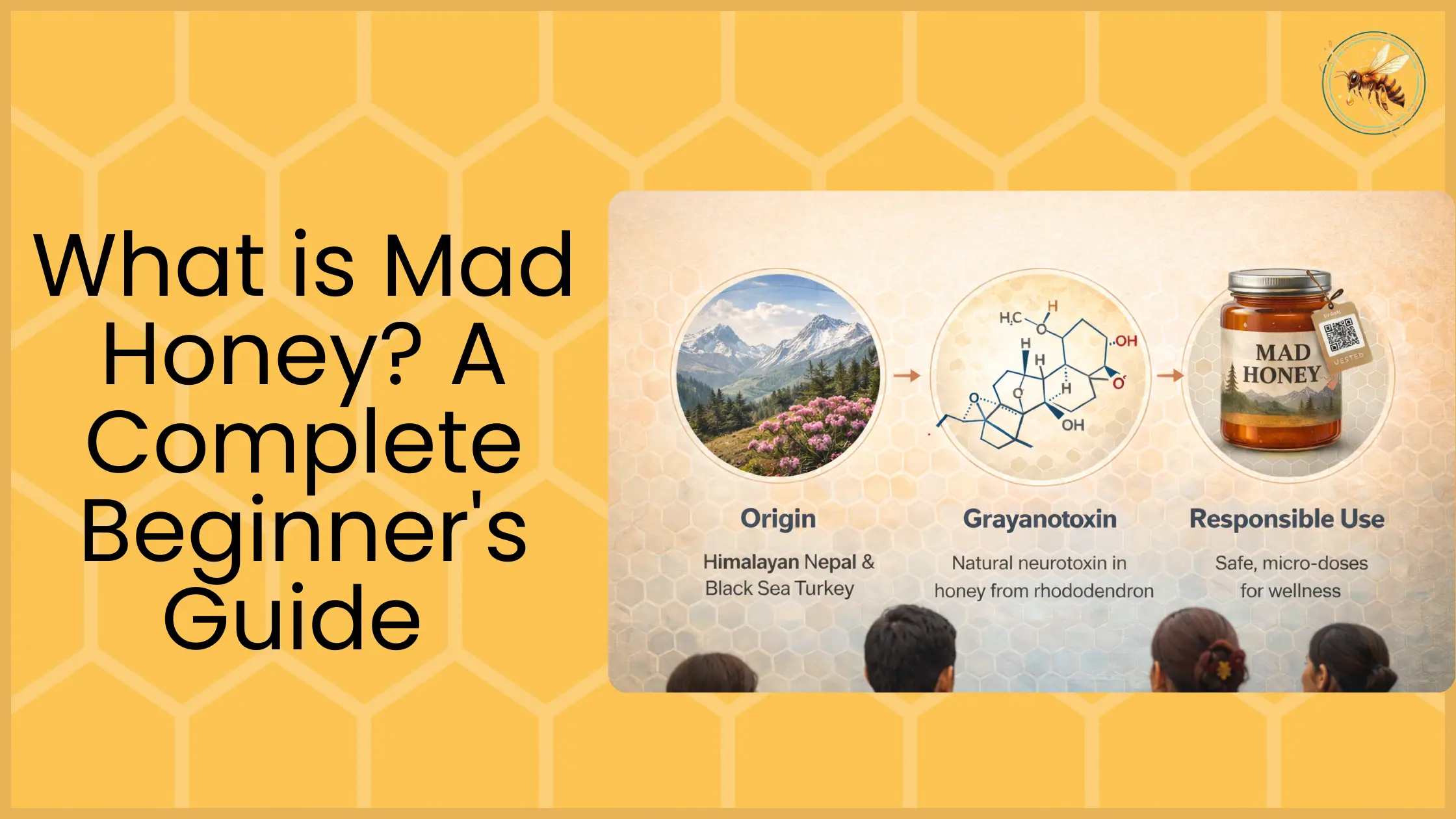
Grayanotoxins originate in the nectar and pollen of certain Rhododendron species; commonly cited examples include R. ponticum, R. luteum, R. flavum, and others. Bees foraging heavily on these blooms can collect nectar that contains grayanotoxins, which then become concentrated in honey.
This is why “mad honey” is often associated with specific regions:
- Turkey’s Black Sea region
- Nepal’s Himalayan areas
- and some parts of Europe and North America, where relevant Rhododendron species exist
Why Do Grayanotoxins Show Up in Some Honeys but Not Others?
This is a huge missing piece in most content, so here’s the clean explanation:
1) Foraging concentration matters
Mad honey tends to occur when bees forage heavily on toxic Rhododendron during bloom periods, especially in isolated areas with dense Rhododendron populations.
2) “Normal” commercial honey is usually diluted by diversity
In typical commercial honey, bees collect nectar from many plant sources. That natural blending usually dilutes any one compound. In contrast, single-source or wild/cliff harvest conditions can create honey with far higher grayanotoxin levels.
3) Processing and blending change exposure
If honey is blended across large batches, grayanotoxins may be lowered and normalized. Small-batch wild honey can retain higher, more unpredictable levels.
How Grayanotoxins Affect the Body
The document gives a strong high-level mechanism, but most readers need it translated into “what it means.”
The core mechanism (simple but accurate)
Grayanotoxins target voltage-gated sodium channels (Nav) in excitable tissues, nerves, muscles, and especially cardiac tissue. They bind preferentially to the open state of the channel and prevent normal inactivation, which keeps sodium influx going longer than it should.
What that causes downstream
When repolarization is delayed and cells remain depolarized longer:
- the nervous system can tilt toward parasympathetic (vagal) dominance
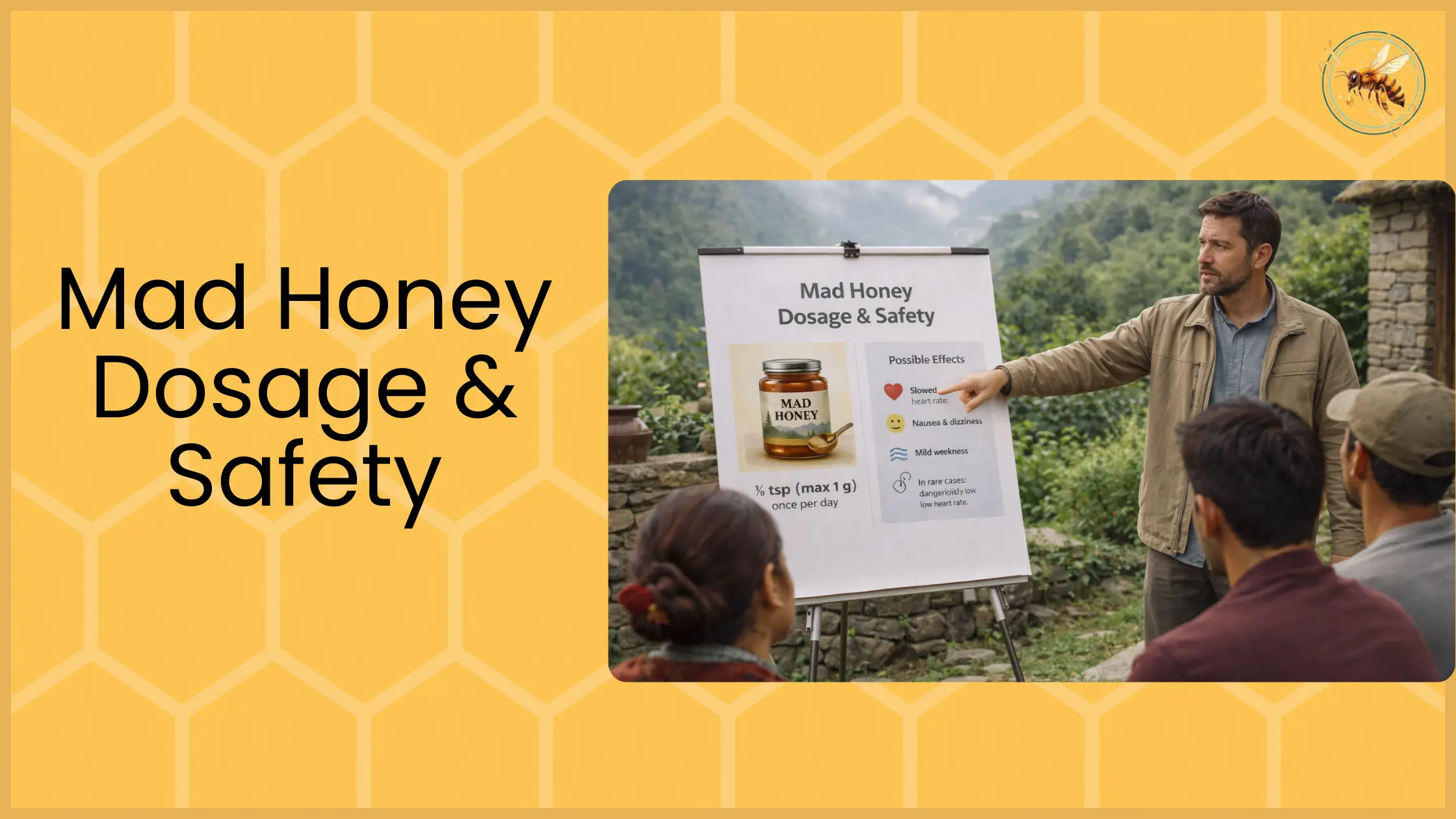
- the heart can slow down (bradycardia)
- blood pressure can drop (hypotension)
- dizziness, sweating, nausea, weakness, and even fainting can follow
Why it can feel “calm” at low exposure
At low exposure, the body may experience mild, transient nervous system shifts that some people interpret as calming or euphoric. The document frames this as mild depolarization modulating neural activity and subtly increasing cholinergic tone.
Why higher exposure gets ugly fast
Once exposure is high enough, the same mechanism becomes a problem:
- severe bradycardia and hypotension
- AV block / rhythm disturbances (in some cases)
- nausea/vomiting, sweating, syncope
- respiratory depression in more serious toxicity
Symptoms: What grayanotoxin exposure looks like
People usually search this keyword because they want to understand risk. This is the “real world” framing:
Onset
Symptoms can begin ~20 minutes to 4 hours after intake.
Common symptom cluster
The document lists typical effects seen in higher exposure:
- slow heart rate (bradycardia)
- low blood pressure (hypotension)
- dizziness, fainting (syncope)
- nausea/vomiting, sweating
- confusion or CNS effects
- respiratory depression in severe cases
Duration
Symptoms may last up to 24 hours as toxins are metabolized.
Important: This isn’t meant to scare people; it’s meant to replace guesswork with reality. If a seller provides no safety guidance, they’re not taking this seriously.
Why does sensitivity differs person to person
Two people can take “the same spoon” and report different outcomes. The document attributes variability to factors like:
- age, sex
- health status (especially cardiovascular baseline)
- genetics/sensitivity
- possible partial desensitization in frequent users (not reliable protection)
It also notes that many reported cases involve men aged 40–60, sometimes using mad honey for sexual enhancement or blood pressure reasons, potentially reflecting underlying vulnerabilities.
Why Grayanotoxin levels vary so much in every batch of Mad Honey
This is one of the most important sections for “Grayanotoxin in Mad Honey” because it explains why the product is inherently inconsistent.
Seasonal bloom windows
Toxicity can spike during intense bloom periods. For example Toxicity peaks in spring (e.g., June – July in Turkey) when Rhododendron blooms intensely, and nectar toxin concentrations rise due to climate, altitude, and plant physiology.
Region + Rhododendron species
Different Rhododendron species and growing conditions can change toxin profiles.
Harvest style (wild vs blended)
Small-batch wild honey can keep high concentrations, while larger blended production tends to dilute.
Real ranges can be extreme
The document notes that some Nepalese samples can reach very high total grayanotoxin sums, while EU retail may be far lower, highlighting just how wide the spread can be.
Translation: a label alone can’t tell you the dose. Testing + transparency is how you reduce uncertainty.
What “Tested” and “Safe” Should Mean
This is where most content gets sloppy. Here’s the non-hype version:
There is no “zero-risk” mad honey
Even a low-toxin jar can cause issues for the wrong person or the wrong dose. “Safe” should mean:
- measured low levels
- consistent batch control
- clear guidance for cautious use
- honest education
“Safe” is about quantification, not vibes
The document suggests a practical framing:
- low grayanotoxin levels (especially GTX I + GTX III)
- ideally in a low range (e.g., <0.1–0.5 mg/kg noted as a target lens)
- and emphasizes that there is no universal safe threshold, but low margin-of-exposure scenarios raise concerns
Bottom line: “raw,” “wild,” “red,” “Himalayan,” “strong,” and “ancient” are not safety metrics.
How Grayanotoxin Testing Works (What Labs Actually Do)
If you want real confidence, you need methods that can quantify grayanotoxins at low concentrations.
The document lists common analytical approaches:
- LC–MS/MS for quantifying GTX I and GTX III (high sensitivity; detection down to very low levels)
- HPLC
- NMR
- Pollen analysis to confirm the Rhododendron origin
The key detail buyers should ask for
Not “lab tested.” Ask for:
- which grayanotoxins were tested (GTX I and GTX III at a minimum)
- results in mg/kg
- batch/lot linkage (COA should match the product batch)
- method used (LC–MS/MS is a strong signal)
- whether they test for other relevant markers/contaminants (optional but trust-building)
The Transparency Checklist (What to Ask Before You Buy)
Use this to filter sellers fast:
Testing
- Do you test for GTX I and GTX III (and ideally other grayananes)?
- Do you share results as mg/kg numbers?
- Is the test tied to a batch/lot I’m purchasing?
Source + traceability
- Region + season/harvest window?
- Is it blended? If yes, how do you standardize levels?
- Do you have traceability beyond “Himalayas / Black Sea”?
Safety guidance
- Do you provide “start low, wait, assess” guidance?
- Do you clearly state who should avoid it?
✅Green flag: education + numbers + batch logic.
🚩Red flag: hype + no data + “strongest effects.”
What to Do If You Suspect Grayanotoxin Intoxication?
This is not medical advice, but it’s practical:
- Stop using the product immediately
- If symptoms are significant (fainting, chest pain, severe dizziness, extreme weakness, very slow pulse), seek urgent medical care
- Do not “counter-dose” by taking more or mixing with stimulants
- If possible, keep the jar/batch details, as clinicians may find it helpful
Conclusion: The Compound Matters, But So Does the Batch
“Grayanotoxin in honey” is the real reason mad honey can feel different, but it’s also why batch variability and personal sensitivity matter so much.
If you take only one rule:
Don’t buy stories. Buy transparency. Look for measured GTX levels, batch traceability, and clear safety guidance, because without those, you’re just guessing.
FAQs
Is grayanotoxin the same as a drug?
No. It’s a natural plant toxin, not a synthetic drug. The effects come from sodium channel disruption, not classic “receptor” pathways like many recreational drugs.
Can mad honey be “hallucinogenic”?
The document suggests true hallucinations are uncommon; more typical reports include perceptual
Can you cook with mad honey to make it safer?
Heat may degrade some compounds, but not reliably enough to treat cooking as a safety strategy.
Does mixing it with tea neutralize grayanotoxins?
No. Warm liquid may dilute and change the experience slightly, but it doesn’t neutralize toxins. Effects remain dose-dependent.