What Does “Toxicity” Mean in Food Testing?
In toxicology, toxicity refers to the capacity of a substance to cause harm at some exposure level. In food science, the practical question is not “could this ever be toxic?” but “is it likely to be harmful at realistic intake levels for the population (and for vulnerable subgroups)?”
That’s why food safety is usually framed around hazard and risk:
- Hazard = something that can cause harm (a toxin, a contaminant, a pathogen, an allergen).
- Risk = the probability of harm given a specific exposure pattern (dose, frequency, and consumer characteristics).
Honey is interesting because the hazard can come from different places:
- Contaminants (things that shouldn’t be there): pesticide residues, antibiotic residues, heavy metals, environmental pollutants, packaging contaminants, or contamination from poor handling.
- Naturally occurring compounds (things that can be “part of the honey”): plant-derived compounds that reflect the floral source. Usually, these are harmless at normal use, but mad honey is a special case where certain compounds can create dose-dependent effects.
- Adulteration (it’s not what you think it is): diluted or syrup-fed “honey” isn’t always a classic “toxicity” hazard, but it is a consumer safety and trust hazard because it can hide poor quality, mislead dosage expectations, and defeat traceability.
Dose matters (the core concept)
Dose is the bridge between chemistry and real life. It includes:
- Concentration in the product (how many mg/kg or ng/mL of a compound exists in the honey)
- Amount consumed (a teaspoon vs several tablespoons)
- Rate and timing (slow intake vs rapid intake; re-dosing)
- Bioavailability and sensitivity (how someone’s body responds)
In classic toxicology, you’ll hear terms like dose–response, NOAEL (no observed adverse effect level), or safety margins. Food safety regulators often set tolerances and limits based on these concepts. Even without going deep into regulatory math, the takeaway is simple: “present” is not the same as “dangerous.” The relationship depends on the dose.
Mad honey makes this concept concrete: a low amount might produce mild or no effects, while higher amounts can shift the experience into “I overdid it” territory. That’s why testing and education need to work together.
Contaminants vs naturally occurring compounds
To understand honey testing, it helps to separate what labs are looking for.
Contaminants are “unexpected guests.” The scientific task is to detect and quantify them at very low levels, often in parts-per-billion or lower. These are typically regulated with maximum residue limits (MRLs) or action levels.
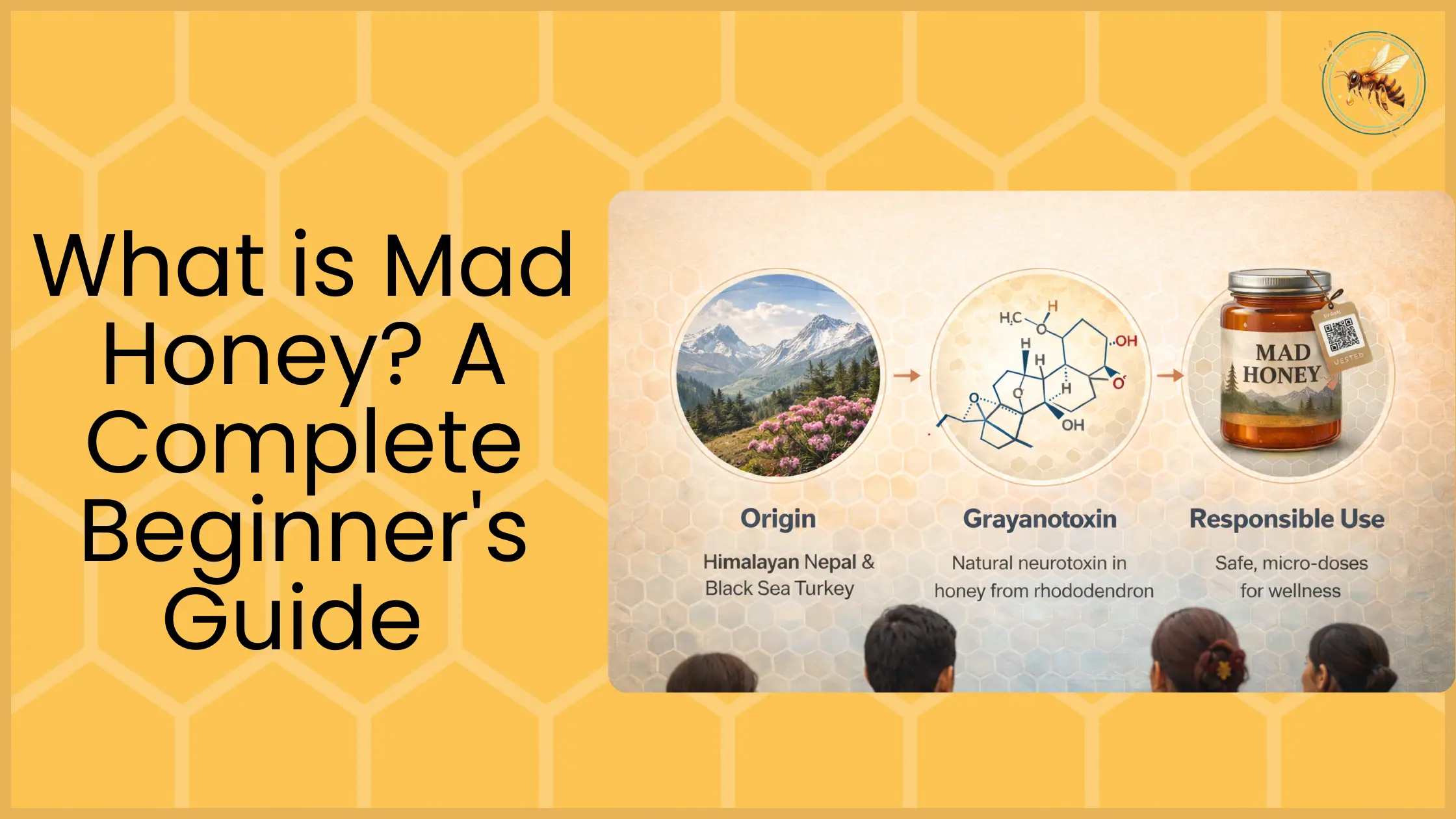
Naturally occurring compounds are “part of the fingerprint” of the honey. They can validate botanical origin or explain sensory and physiological differences. With mad honey, the naturally occurring compounds of interest (grayanotoxins) are not “industrial contamination,” they’re a botanical exposure question. This is why calling mad honey “poison honey” is both simplistic and misleading. The scientific question is: what compounds are present, at what concentration, and what does that imply for responsible intake?
Common Ways Honey Is Evaluated
In real labs, honey evaluation is rarely one-dimensional. It’s more like a pipeline: start broad, then narrow based on what you find and what risks are plausible for that honey’s origin and market.
Basic quality checks (purity/adulteration indicators)
Quality tests answer: Is the honey stable, minimally degraded, and consistent with proper handling?
Common parameters include:
- Moisture content: High moisture increases fermentation risk and can indicate immature honey or poor storage. Codex honey standards include moisture considerations as a fundamental quality parameter.
- HMF (5-hydroxymethylfurfural): HMF increases with heat and storage/aging (especially under warm conditions). It’s used as a marker of overheating or excessive aging, and Codex/EU frameworks have maximum guidance levels (commonly referenced around 40 mg/kg in many contexts).
- Diastase activity (enzyme activity): Diastase decreases with heat and time. It’s another indicator of freshness and gentle handling, and it’s part of Codex-style quality evaluation (often discussed using Schade units).
- Electrical conductivity and acidity: These help characterize honey type and can indicate processing or botanical differences.
Now, how does this relate to “toxicity”? Indirectly. Overheated or poorly handled honey is not automatically “toxic,” but quality failure is a sign the supply chain may be sloppy. Sloppy chains are where contaminant risk and adulteration risk rise.
Authenticity/adulteration screening often overlaps here. Some classic approaches include:
- Stable isotope ratio analysis (IRMS) to detect certain syrup adulterations. For example, C4 sugar adulteration (from corn or sugarcane) can be detected with carbon isotope methods.
- NMR profiling as a pattern-recognition approach compares the honey’s chemical signature to databases of authentic samples. Modern protocols can detect anomalies that pass older “basic” tests.
A key takeaway for consumers: “passes a basic sugar test” doesn’t necessarily mean “authentic.” That’s why serious authenticity programs often use multiple complementary methods.
Contaminant screening (overview)
Contaminant screening answers: Is there anything in this honey that shouldn’t be there or that should be below a certain limit?
Because honey is a high-sugar, sticky matrix, labs typically use sample preparation techniques that separate analytes from the sugar background. One widely used approach in multi-residue screening is QuEChERS extraction (Quick, Easy, Cheap, Effective, Rugged, and Safe), followed by cleanup and analysis by mass spectrometry.
Common contaminant categories:
- Pesticide residues: These are often measured using LC-MS/MS or high-resolution MS workflows capable of screening hundreds of compounds at trace levels, even in complex matrices like honey.
- Veterinary drug/antibiotic residues: Some labs run multi-class screens, depending on region and supply chain.
- Heavy metals: Typically measured using techniques like ICP-MS (inductively coupled plasma mass spectrometry). (This method isn’t in your sources list above, but it’s a standard analytical approach in food testing.)
- Microbiology: Honey is naturally hostile to many microbes due to low water activity, but microbial testing can still matter depending on handling and target population. (For example, certain consumer warnings exist for infants, though that’s more “public health guidance” than routine batch toxicity testing.)
The deeper point: contaminant testing isn’t about “mad honey vs normal honey.” It’s about supply chain hygiene and environmental exposure issues that can affect any honey.
Compound identification (high-level)
Compound identification is where the lab work becomes “detective-level.” Instead of asking, “Does this pass basic standards?” you ask, “What’s in this honey, chemically?”
This often involves:
- Chromatography (LC or GC): separating compounds in time
- Mass Spectrometry (MS): identifying and quantifying compounds based on mass-to-charge and fragmentation patterns
- Targeted vs untargeted analysis: targeted looks for specific known compounds; untargeted looks for patterns and anomalies.
For authenticity, NMR and other fingerprinting methods can be used to profile overall composition and compare against references.
For mad honey, compound identification becomes especially relevant because the compounds of concern are known and measurable (grayanotoxins), and their levels can be quantified with LC-MS/MS methods.
What Testing Means for Mad Honey Specifically
Mad honey is where “toxicity testing” becomes both more specific and more misunderstood. People often want a lab result that guarantees:
- no risk, and
- the same experience every time.
Science can’t promise either in absolute terms, especially with natural products. What it can do is reduce uncertainty and create responsible boundaries.
Why grayanotoxins are the key discussion
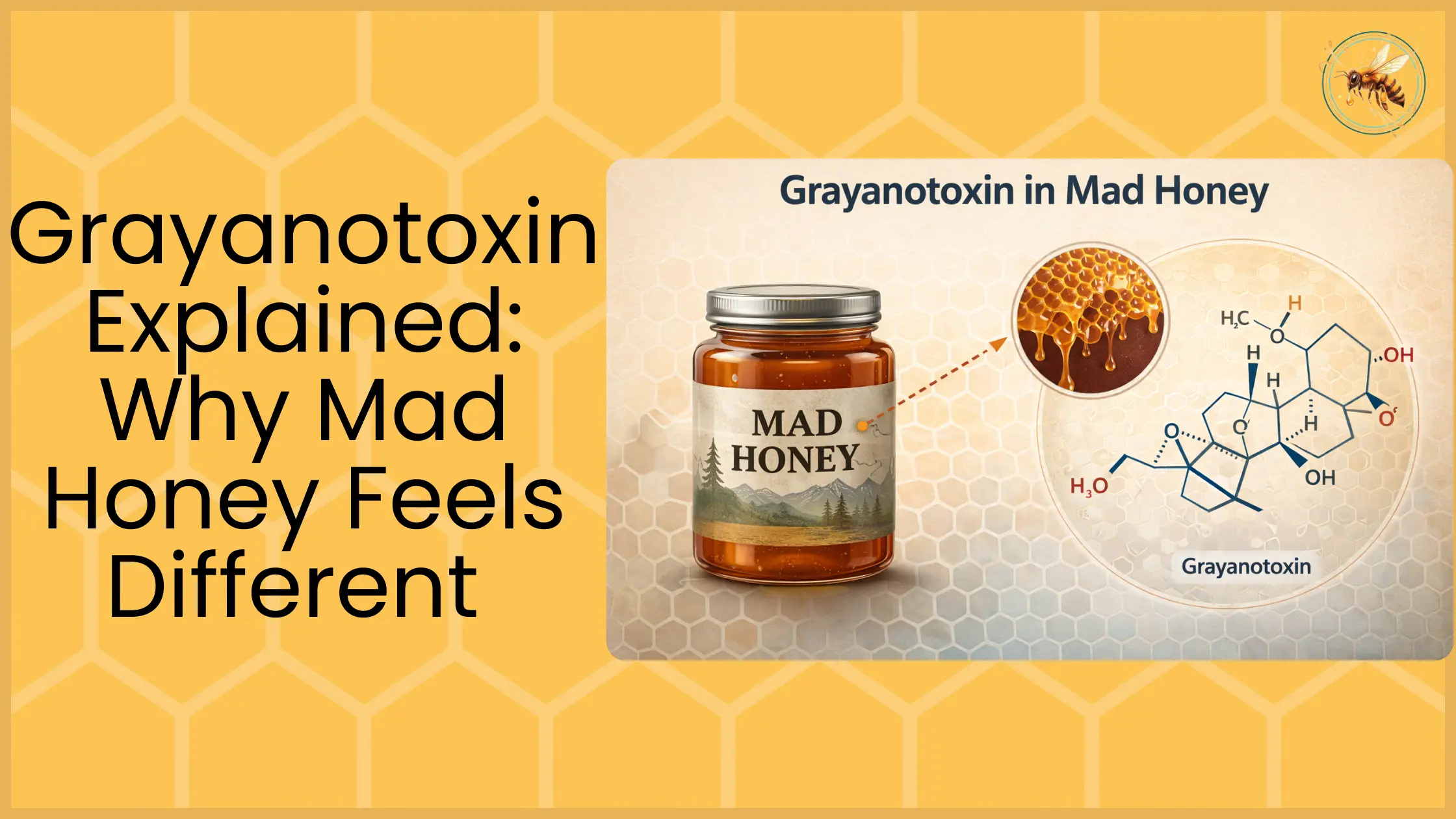
In mad honey, grayanotoxins are the key because they are the best-known botanical compounds linked to the classic “mad honey intoxication” pattern in higher exposures. Analytical studies have developed LC-MS/MS methods to quantify grayanotoxins (e.g., grayanotoxin I and III) in mad honey, including samples associated with Nepal origin in published work.
This matters for two reasons:
1) Authentication and differentiation
If a product is sold as mad honey but has no detectable relevant markers in contexts where they should be expected, that’s a misrepresentation signal (though absence doesn’t always prove “fake” because not all “mad honey” is strongly positive; some samples contain low or non-detectable levels). Studies analyzing many “mad honey” market samples found a wide distribution, including many with non-detectable toxin levels.
2) Batch characterization
Quantification helps a producer understand whether one batch is likely to be milder or stronger relative to others. That supports better consumer guidance and reduces accidental overdosing.
But it’s crucial to be honest: even with quantification, you are not predicting a person’s subjective experience perfectly. Human response varies, and “how it feels” is not a lab unit.
Why education and dosage guidance are part of “safety”
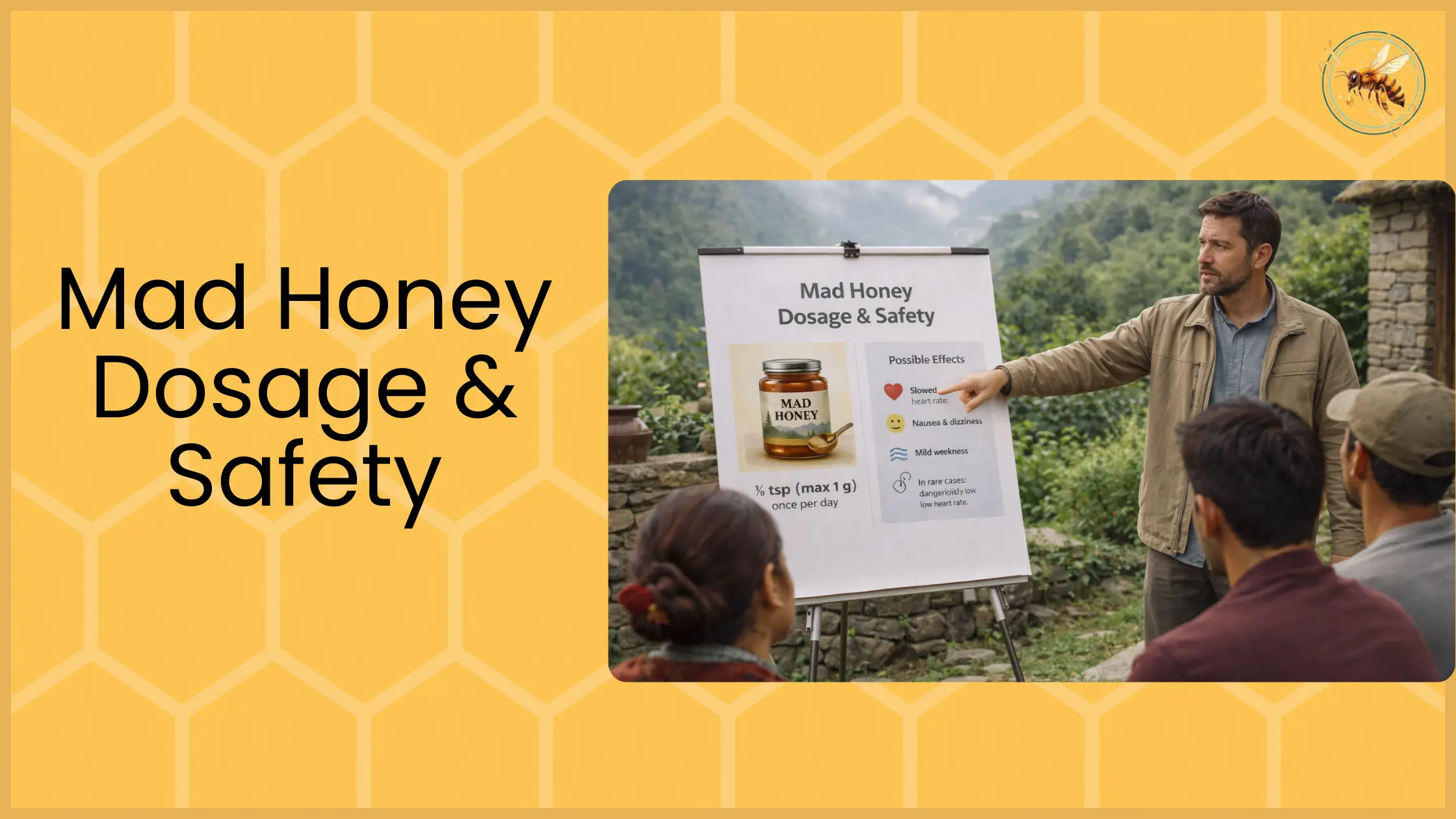
For mad honey, “safety” is not only analytical chemistry. It’s also behavioral risk management.
The most common real-world harm pattern is not “mysterious toxin contamination.” It’s misuse:
- taking too much, too fast
- re-dosing early because the onset can be delayed
- mixing with alcohol or sedatives
- using it despite individual risk factors (blood pressure sensitivity, heart issues, pregnancy, certain medications)
- assuming “more = better,” because that’s how normal honey works
That’s why a responsible mad honey program treats dosage guidance as part of safety. It’s also why “tested” without guidance is a weak trust signal.
In other words, lab testing can reduce unknowns, but good guidance reduces incidents.
Conclusion
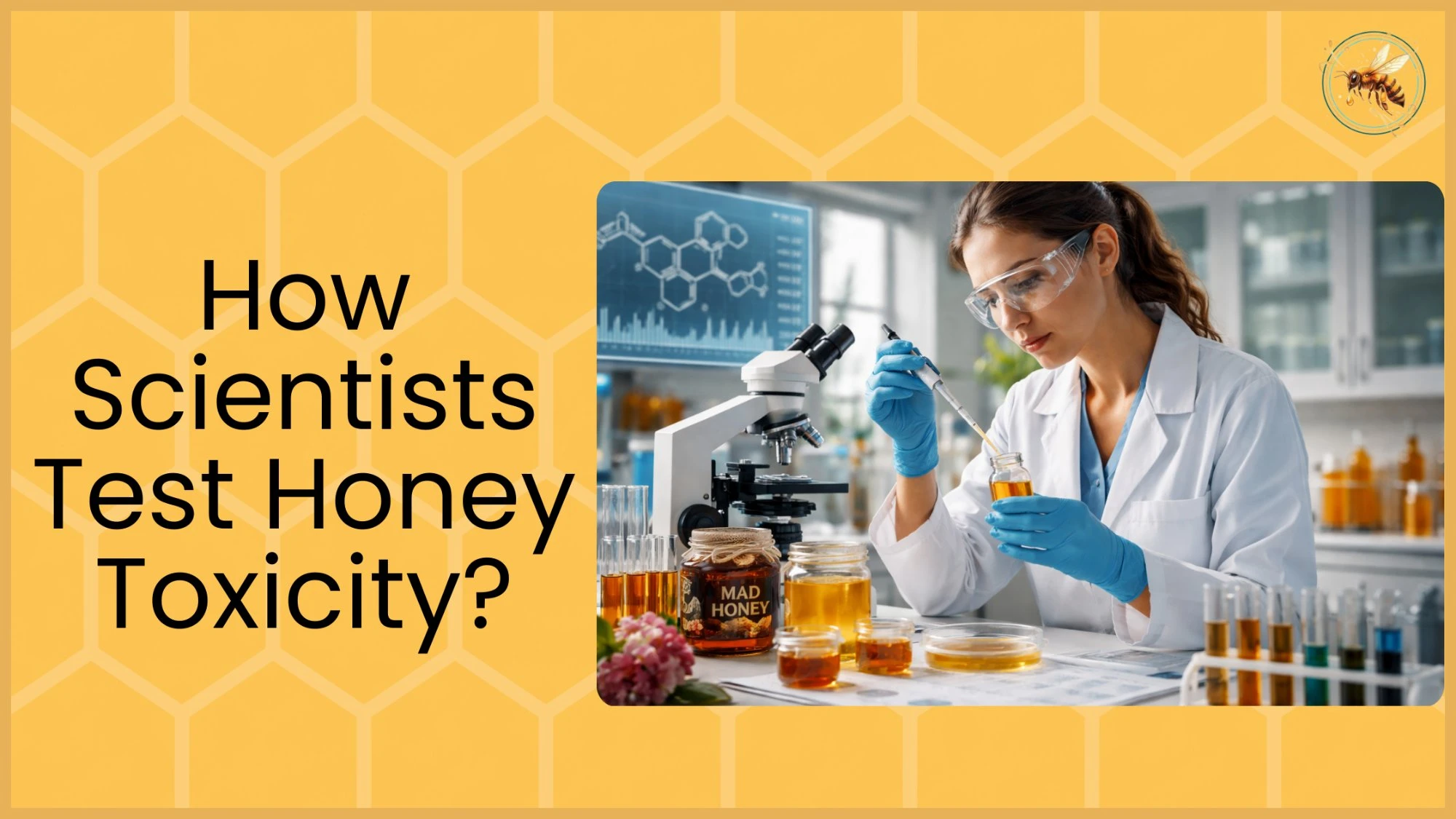
Scientists don’t test honey toxicity with one single definitive test. They evaluate honey through a layered approach: baseline quality parameters (like moisture, HMF, and diastase), authenticity signals (including advanced methods like stable isotope analysis and NMR fingerprinting), and contaminant screening (often using chromatography + mass spectrometry workflows).
For mad honey, the safety conversation becomes more specific: grayanotoxins are the key naturally occurring compounds people care about, and LC-MS/MS methods exist to quantify them, useful for transparency and batch characterization.
But responsible safety also includes education and conservative dosage guidance, because the most avoidable harm comes from misuse rather than mystery chemistry.
FAQs on Honey Testing
Can testing guarantee identical effects?
No. Testing can confirm important safety and integrity dimensions, contaminants, basic quality, authenticity signals, and sometimes key compound levels, but it cannot guarantee identical subjective effects.
There are two reasons: natural variability (batches differ) and biological variability (people differ). Even with the same quantified grayanotoxin level, context matters: meal timing, hydration, baseline sensitivity, and the pace of intake can shift how it feels.
The more realistic promise is: testing increases transparency and reduces preventable risk; it doesn’t turn honey into a pharmaceutical.
Why does mad honey vary by batch?
Because it’s an agricultural product shaped by season, bloom dynamics, region, and handling. Analytical work on “mad honey” samples shows distributions where many samples contain low or non-detectable grayanotoxin levels, and some contain higher levels, supporting the idea that batch variability is real.
Also, the market has a misrepresentation problem. Some products are sold under the mad honey label for attention, even when they lack origin transparency or relevant compound context. That’s why traceability and authenticity checks matter alongside “toxicity testing.”
What should a buyer ask a brand?
Instead of “Is it lab tested?” (which gets you marketing language), ask questions that force specificity:
Ask whether results are batch-specific. Ask what categories are tested (quality metrics like HMF/diastase, authenticity methods, contaminant panels). Ask whether they can explain their approach in plain language and whether they publish traceability signals like batch IDs.