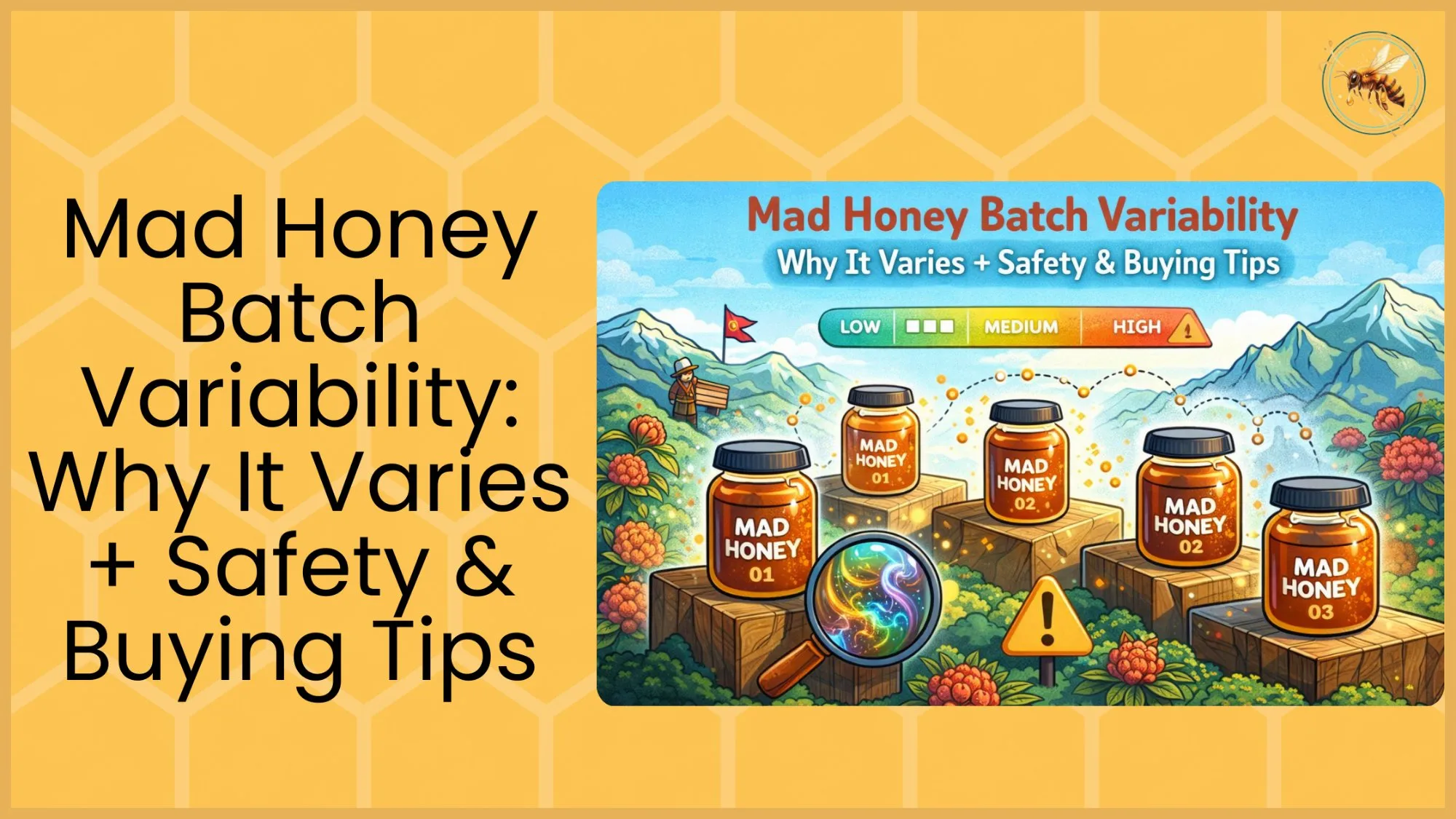
Quick Answer: What “Batch Variability” Means
Batch variability is the simple idea that two jars sold under the same name can behave differently because they are not chemically identical. In standardized products, variability is minimized by controlled inputs and measured active doses.
In wild honey, the inputs are biological and seasonal: the bees collect what’s flowering, the ecosystem changes week-to-week, and the resulting honey can reflect that change.
Why the “same product” can feel different from jar to jar
Most people think “same label = same experience.” That’s not a safe assumption for mad honey. Even when honey is authentic and honestly sourced, it can vary because the composition varies.
Reviews and toxicology discussions emphasize that grayanotoxin-linked intoxication depends on what nectar was involved and how much was consumed; that inherently creates variability across harvests and jars.
What varies: taste, texture, potency, onset
Variability isn’t just “it tastes different.” It can show up in multiple dimensions:
Taste and aroma can shift with nectar mix and handling. Texture can shift with moisture, temperature, filtration, and time. The most important variability for safety is potency-related: the same spoon size can feel mild in one jar and too much in another if the chemical profile differs and your sensitivity differs.
Onset and duration also vary for practical reasons. Some people re-dose because they “don’t feel it yet,” then experience a stronger peak when both doses overlap. Poison control case discussions reinforce how quickly symptoms can become significant in susceptible situations and why conservative pacing matters.
Why Internet expectations are often wrong
The internet sells mad honey as if it’s a consistent “experience product.” That framing causes problems because it trains people to chase a certain feeling rather than respect variability. It also amplifies myths (“red honey means stronger,” “spring is always stronger,” “one spoon equals a trip”) that don’t hold up reliably across real-world variability and clinical patterns.
The #1 Driver: Botanical Source (Rhododendron Species + Nectar Mix)
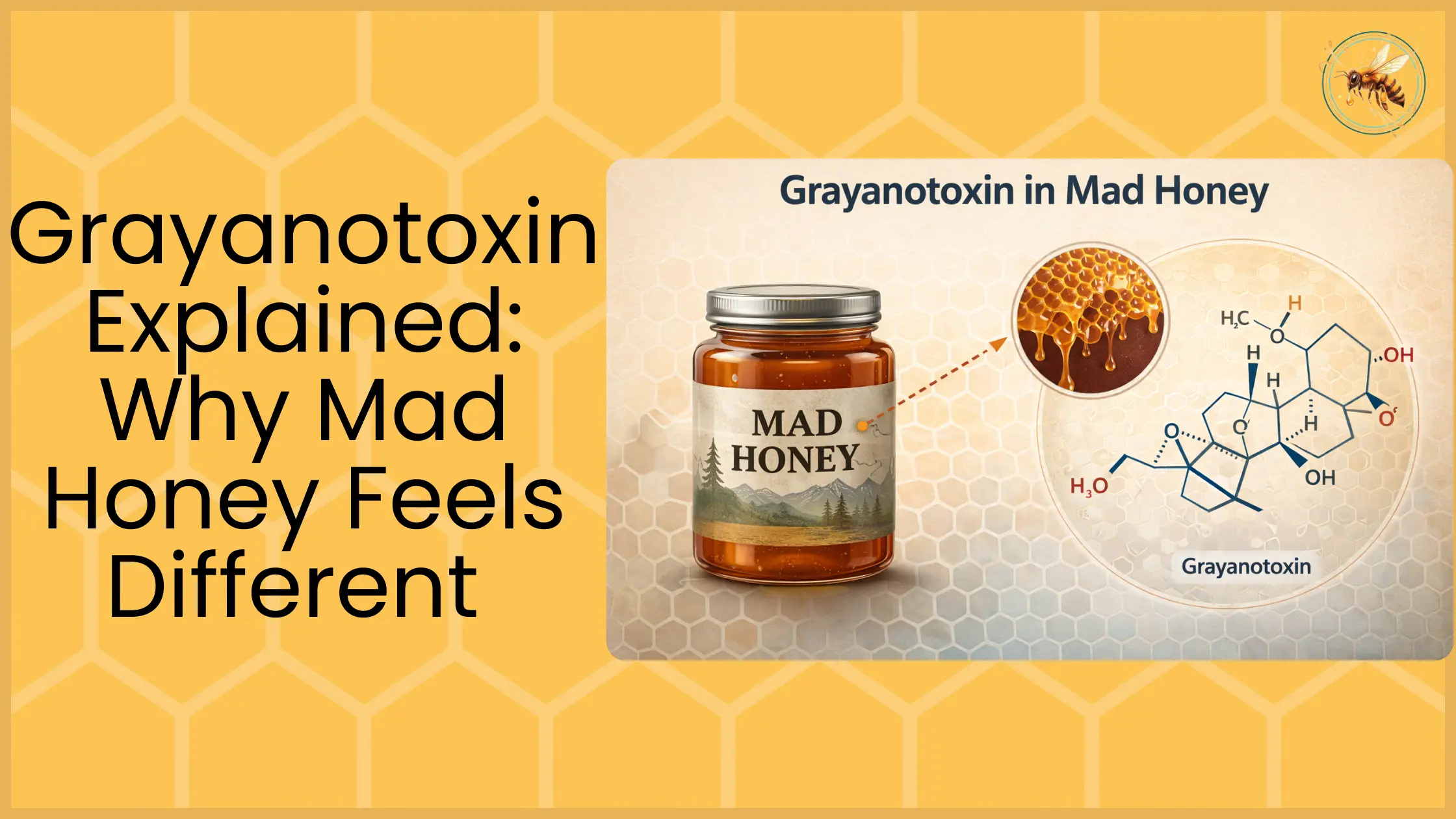
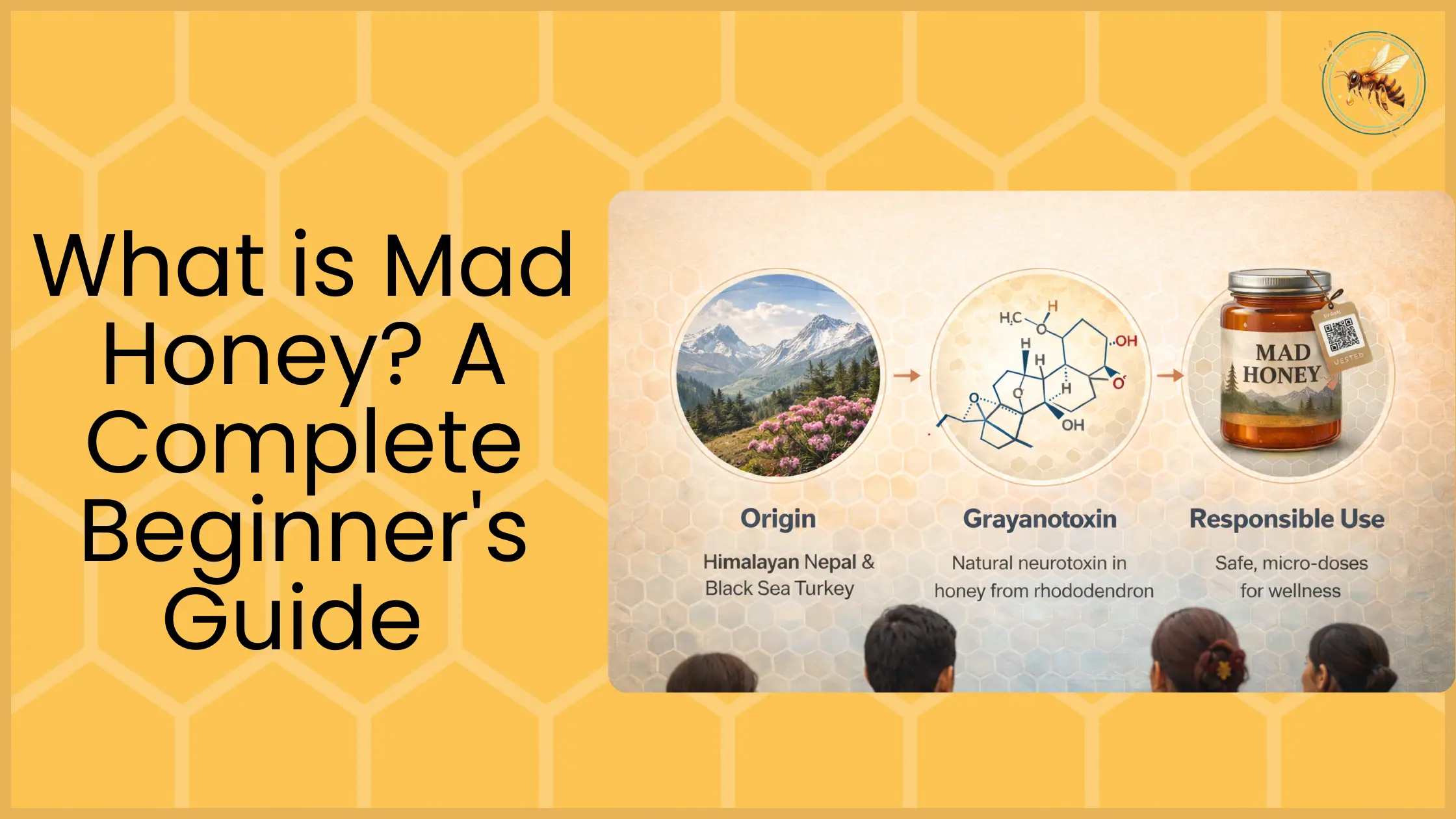
If you want the most honest scientific answer for why mad honey varies, it starts with botany. Mad honey intoxication is linked to grayanotoxins, which are plant toxins found in certain plants, including various Rhododendron species, and can enter honey when bees process nectar from those plants.
Not all rhododendrons are the same
This is where simplistic marketing breaks down. “Rhododendron honey” is a broad phrase. Different species can contain different levels and profiles of grayanotoxins, and the concentration that ends up in honey can vary with local ecology and bloom conditions.
The German Federal Institute for Risk Assessment (BfR) explains grayanotoxins as plant toxins occurring in certain rhododendron species (among others) and notes they can be found in honey if bees process nectar from these plants.
Nectar mix changes depending on what’s blooming
Even in a region known for Rhododendron, bees aren’t collecting from one plant only. Honey is often a blend of multiple nectar sources collected across a time window. So the “mad honey” profile can shift depending on whether rhododendron is a dominant contributor or a smaller contributor during that harvest period.
This is also a reason why two harvest windows in the same region can feel different: the floral landscape changes, the weather changes, and the bloom intensity changes.
Why “rhododendron honey = identical effects” is false
Even when grayanotoxins are present, the experience isn’t identical jar-to-jar because:
- concentration can vary,
- other nectar sources and honey composition can influence absorption and perception, and
- the human response varies.
Poison control literature and reviews describe clinical diagnosis based on symptom patterns after honey ingestion, not a predictable “effect profile” like a standardized drug.
Internal link fit: /science/grayanotoxins-explained/
Seasonality (Spring vs Autumn Harvest)
People love simple rules like “spring honey is stronger.” Seasonality does matter, but it’s not a guarantee, and it’s not a replacement for dose discipline.
Bloom cycles and flower availability
Season controls what’s available. In mountain ecosystems, bloom windows can be intense and short, and weather can dramatically shift bloom timing. That changes what bees collect. If the rhododendron bloom is more dominant during one window, that can influence the chance of a grayanotoxin-linked profile.
Weather and altitude effects
Weather and altitude influence bloom timing and nectar flow. A cold snap, heavy rain, or an unusually warm stretch can shift floral availability. Altitude creates microclimates; two valleys can have different bloom timing even if they’re geographically close.
Why “spring harvest is stronger” is an oversimplification
Some sources describe spring-associated toxicity patterns in certain contexts, but “always stronger” is too blunt to be useful as buyer guidance.
A review of mad honey discusses seasonal toxicity claims, yet the same body of literature also emphasizes variability, geography, and the dominance of case-based evidence rather than standardized measures. The safe conclusion is: season can influence risk, but it does not produce a dependable potency guarantee for consumers.
Geography (Nepal vs Turkey vs “Himalayan” Labeling)
Geography shapes nectar ecosystems, but the internet uses geography as a marketing costume. Those are different things.
Regional ecosystems create different nectar profiles
Turkey’s Black Sea region is frequently discussed in mad honey poisoning literature and is known for its rich Rhododendron presence; a recent study quantified grayanotoxin (GTX-III) in honey and rhododendron flower samples collected from the Black Sea region, illustrating how chemistry can be region-linked.
Nepal is also a common association in cultural and case literature, and poison control summaries reference Nepal in a historical/traditional context.
But the key buyer lesson is not “Turkey vs Nepal.” It’s that ecosystems differ, and within any country, micro-regions can differ.
Why “Himalayan” is often used loosely
“Himalayan” sells because it sounds rare and pure. But it can be used without proof. A jar can be labeled “Himalayan mad honey” even if it’s not from Nepal, not cliff-harvested, and not linked to any credible batch system. This is why origin transparency is a trust signal and why vague labels are a red flag.
Practical impact: why comparisons must be criteria-based
The safest way to compare regions is criteria-based: origin clarity, harvest season context, batch traceability, testing language quality, and safety guidance. Otherwise, “Nepal vs Turkey” becomes folklore. If you publish a comparison page, it should emphasize these criteria rather than “stronger” claims.
Processing & Handling (What Happens After Harvest)
Even if nectar inputs were identical, handling can still change what a buyer experiences, especially taste, texture, and perceived intensity.
Wild comb selection and blending decisions
Wild-harvested honey can involve choices about which comb sections are collected and how honey is pooled. Some sellers may blend to smooth out variability; others may keep batches separate. Blending can reduce extremes but can also obscure traceability if it’s done without batch discipline.
Filtration and storage practices
Filtration level changes texture and appearance. Storage temperature changes crystallization and aroma volatility over time. None of these proves authenticity or potency, but they absolutely change the sensory profile that consumers use to form expectations.
Why “unfiltered” doesn’t automatically mean better
Unfiltered honey can carry more particulates and a more rustic character; filtered honey can be cleaner and more consistent. “Better” depends on your priorities, but “unfiltered” is not a safety or potency guarantee. If anything, the most responsible sellers are the ones who explain handling choices plainly rather than using them as mystic proof.
What Science Says About Variability (No Jargon)
Let’s translate the research mindset into buyer language without hiding the real mechanism.
Grayanotoxin concentration is a moving target
One of the most concrete points in the literature is that grayanotoxin-linked poisoning depends on the presence and level of grayanotoxins. Analytical chemistry work measures grayanotoxins in honey using methods like LC-MS/MS and related approaches, showing that concentrations can be quantified and are not assumed constant.
That matters because if the active risk compounds can vary, the experience and risk can vary.
Why is the dose-response steep (small changes matter)
Grayanotoxins act on sodium channels in a way that can produce disproportionate downstream effects; ScienceDirect’s toxicology overview notes that grayanotoxins increase sodium conductance and can help explain cardiac and CNS manifestations of poisoning.
When small changes in dose can move you into a different physiological state, variability becomes obvious: two spoon sizes, two people, two different outcomes.
Why human responses vary even within the same batch
Even if two people consumed the same batch, differences in body size, baseline blood pressure sensitivity, hydration, sleep, and medications can change the response. Clinical descriptions repeatedly emphasize diagnosis based on presentation after consumption rather than a predictable user experience.
Poison control’s case write-ups include situations where symptoms include low blood pressure, slow heart rate, chest pain, and even hallucinations in a reported case, illustrating how wide the symptom range can be when things go wrong.
What Batch Variability Means for Effects (Practical)
This is where the science turns into real-life questions: why did it feel calm last time and not this time?
Why onset and duration can change
Onset and duration shift with dose, food, and individual state. But variability also influences perceived onset: a milder batch might feel subtle longer, and that can tempt people to re-dose. A stronger batch might feel noticeable sooner. These differences are exactly why “wait before re-dosing” is part of responsible guidance.
Why one batch feels “calm” and another feels “too much”
A “calm” report usually describes mild body heaviness and wind-down. A “too much” report often includes dizziness, nausea, sweating, weakness, and sometimes near-fainting, symptoms consistent with the documented intoxication pattern.
If you assume the calm batch is the standard and dose accordingly, a more potent batch can punish that assumption.
The “I felt nothing, so I took more” trap
This is the classic failure mode. The early phase can be subtle, especially after food, and people interpret that as “weak.” Then they stack. Poison control’s educational framing and case descriptions consistently reinforce that dose and timing are critical, because the downside pattern is real and can require medical attention.
Safety Implications (Why “Start Low” Isn’t Optional)
Batch variability isn’t just interesting; it’s the reason safety advice is conservative.
Beginner protocol: start low + wait
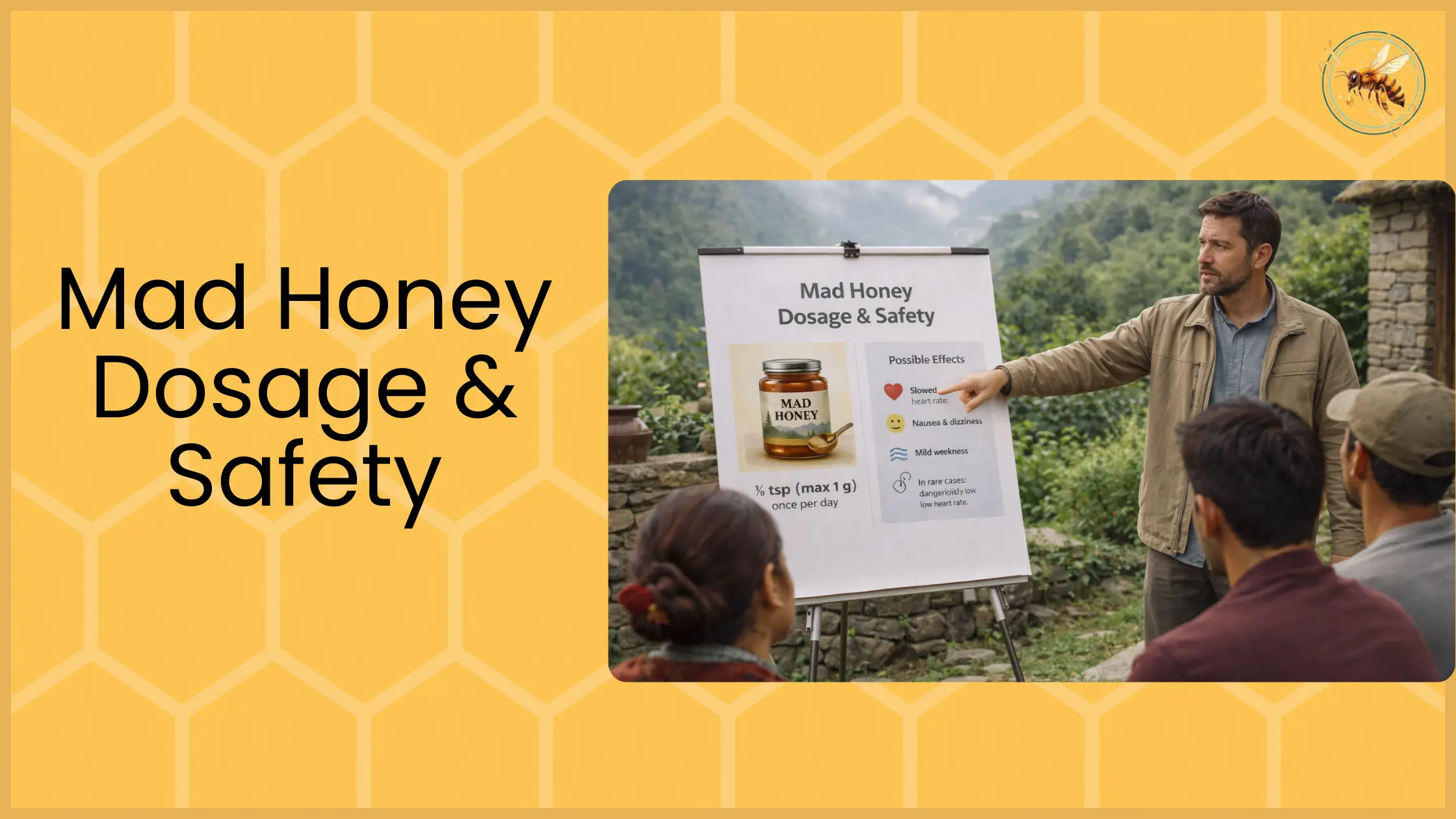
A beginner protocol exists for a reason: you don’t know your sensitivity, and you don’t know the batch. When you combine unknowns, the correct move is to reduce the dose and increase patience. That’s not fear-mongering; it’s rational risk control in a variable product category.
Avoid stacking and mixing (alcohol/other sedatives)
Mixing adds unpredictability and increases the chance that dizziness and nausea become unmanageable. Alcohol also increases dehydration and judgment impairment, which makes “I’ll just take another spoon” more likely.
Red flags that mean stop and seek help
If someone has fainting, chest pain, breathing difficulty, persistent vomiting, confusion that worsens, or severe weakness, treat it as urgent and seek medical help. Poison control resources emphasize the seriousness of hypotension/bradycardia patterns in grayanotoxin poisoning contexts.
Buying Implications (How to Choose a Responsible Seller)
Variability also explains why the best sellers talk differently from hype sellers.
What transparency looks like
A responsible seller doesn’t pretend that variability isn’t real. They operationalize it:
- They tell you the country/region origin in a specific way (not “Himalayan” vibes).
- They provide harvest window context.
- They treat batches as real: lot codes, batch IDs, or, at a minimum, consistent batch practices.
- They give conservative guidance and acknowledge variability rather than promising guaranteed effects.
This approach reduces risk and also reduces buyer confusion. It’s the difference between “sell a jar” and “build a category responsibly.”
What “testing” should mean (high level)
Testing talk should be specific. Analytical chemistry papers show that grayanotoxins can be measured with methods like LC-MS/MS and related chromatography/mass spectrometry approaches.
That doesn’t mean every consumer needs a lab report in hand, but it does mean “lab tested” should not be a vague badge. If a seller claims testing, they should be able to explain what was tested, whether it’s batch-linked, and what it can and cannot guarantee.
Red flags that correlate with poor transparency
The biggest red flags are the ones that deny variability while pushing intensity: “strongest,” “guaranteed high,” “works every time,” or drug-like marketing language. Those sellers are often the least likely to provide meaningful traceability or responsible guidance, because hype doesn’t survive scrutiny.
Conclusion
Batch variability is normal for a bioactive wild honey category. The smart approach is not chasing “strongest” or using color and taste as proof. The smart approach is transparency + conservative dosing + realistic expectations.
FAQs on Mad Honey Batch Variability
Why does mad honey vary so much?
Because its inputs vary: nectar sources, season, region, and handling all change the chemistry and sensory profile, and human sensitivity differs.
Does darker/red mad honey mean stronger?
Not reliably. Color is influenced by floral sources and handling, and it’s not a potency meter.
Can two jars from the same seller feel different?
Yes, especially if they’re different batches or harvest windows. That’s why batch identifiers and honest variability language are green flags.
Can lab testing guarantee consistent effects?
Testing can reduce uncertainty about composition and safety screening, but it can’t guarantee identical effects because dose and human sensitivity still vary.
How do I dose safely if batches vary?
The conservative rule is stable: start low, wait, don’t stack, and don’t chase “strongest.” Variability is exactly why this rule exists.
Which regions are “stronger”?
That’s not a reliable question because “region” is too broad, and potency depends on nectar mix and batch-specific factors. Treat “stronger region” marketing as less useful than origin transparency + batch practices + responsible guidance.