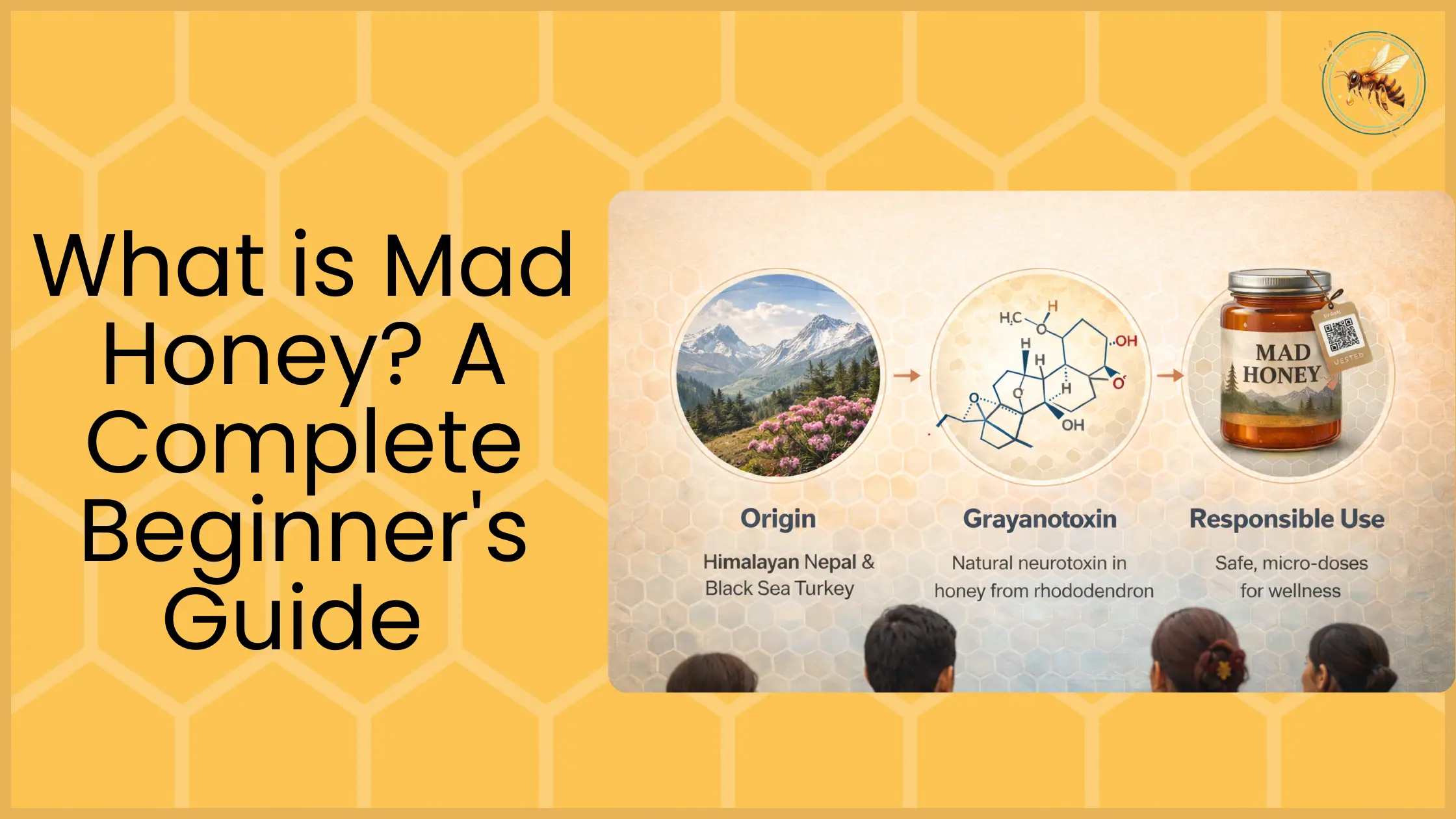
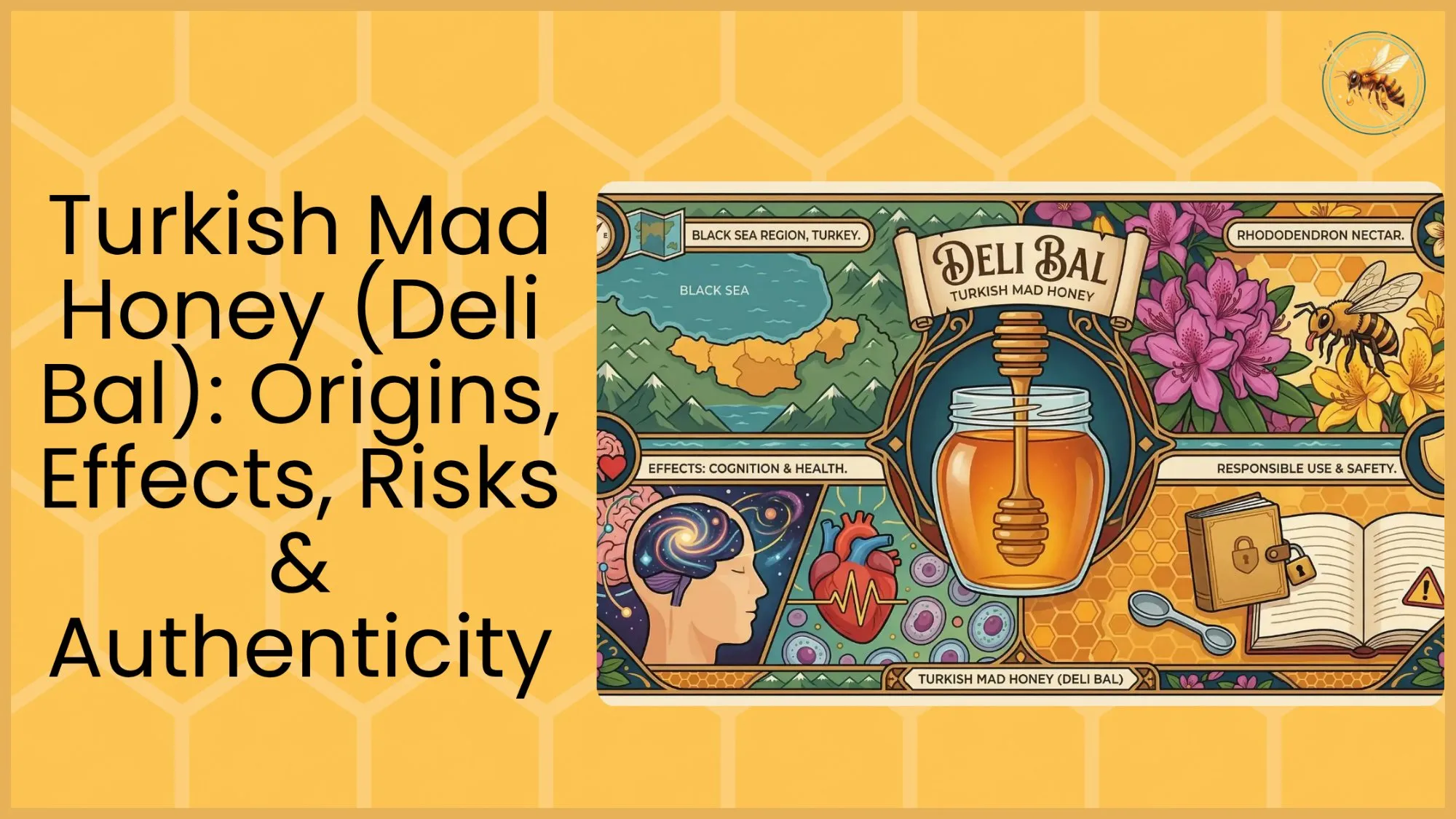
Turkish mad honey, known as deli bal, is honey from Turkey’s Black Sea region that can contain grayanotoxins from certain rhododendron plants. These naturally occurring toxins can cause dizziness, nausea, low blood pressure, and a slow heart rate. Although often marketed as “hallucinogenic honey,” deli bal should not be described as a predictable psychedelic.
This guide will walk you through what Turkish mad honey is, where it comes from, why it can cause noticeable effects, how it differs from Himalayan/Nepal mad honey, and how to avoid misleading “deli bal” listings.
tl;dr
- Turkish mad honey (“deli bal”) is honey from the Black Sea region that can contain naturally occurring grayanotoxins from certain rhododendron species.
- Its documented effects include dizziness, nausea, low blood pressure, and a slow heart rate. Descriptions of reliable psychedelic “visions” are misleading.
- Grayanotoxin levels vary between batches, so the same amount of honey can produce different effects.
- Color, bitterness, or a “burning throat” sensation cannot prove authenticity; traceability and testing information matter more.
- There is no established safe serving size for mad honey. Small amounts are not guaranteed to be safe, and “strongest honey” marketing should be treated as a warning sign.
What is Turkish Mad Honey?
Turkish mad honey is honey produced in parts of Turkey, especially around the Black Sea, where bees forage on rhododendron species whose nectar can contain grayanotoxins, a group of naturally occurring diterpenoid compounds.
“Deli bal” explained
“Deli bal” is the commonly used name in Turkey for this rhododendron-linked honey. Its intoxicating properties come from naturally occurring plant compounds, rather than added drugs.
Why people call it “hallucinogenic honey”
The term “hallucinogenic” spreads because it is dramatic, and historical retellings often blur intoxication, confusion, and disorientation into “tripping.” However, a clinical review of grayanotoxin poisoning describes digestive symptoms and effects on blood pressure and heart rate as characteristic features of poisoning, rather than a consistent psychedelic experience.
Where Turkish Mad Honey comes from
To understand Turkish deli bal, you need the geography and the plants. That context explains why Turkey appears repeatedly in historical accounts and modern case reports.
The Black Sea region
The Black Sea region is associated with mad honey because rhododendron-rich ecosystems exist there, and local honey traditions include harvesting honey produced during rhododendron bloom periods.
The main rhododendron sources
The rhododendron species most often referenced in the toxicology literature as contributors include Rhododendron ponticum and Rhododendron luteum.
These plants are part of the Ericaceae family, which includes several genera capable of producing grayanotoxins.
Why local ecology matters more than country of origin alone
“Made in Turkey” does not automatically mean a honey contains grayanotoxins, and “Himalayan” does not automatically mean it is potent. The determining factors include the local nectar environment, the bees’ foraging range, and seasonal conditions. Two honeys from the same country can therefore have very different compositions.
How grayanotoxins in Turkish Mad Honey work
Understanding the mechanism helps explain why mad honey can affect the body and why those effects can become dangerous.
Grayanotoxins are the compounds responsible
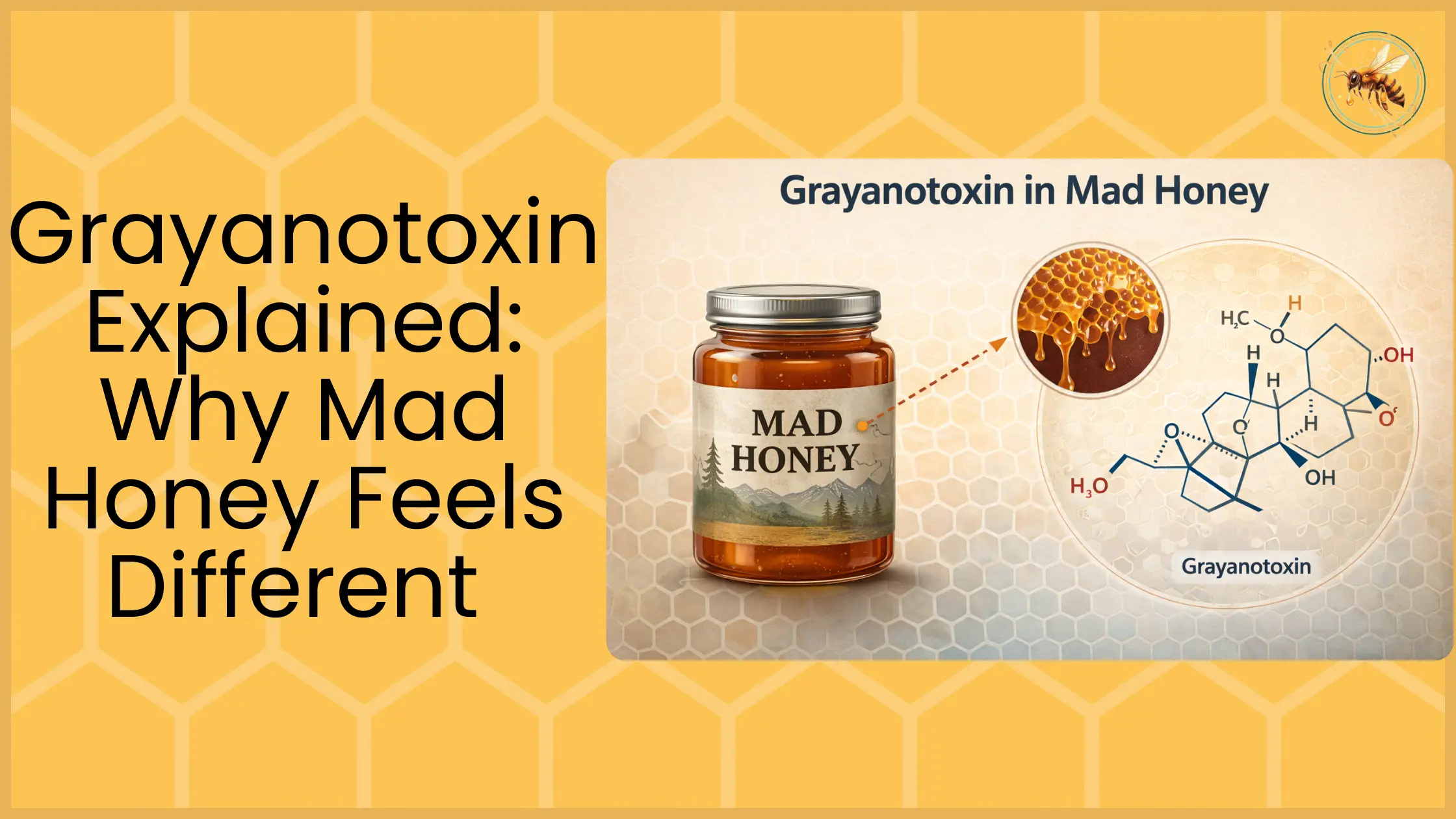
Mad honey’s intoxicating effects are linked to grayanotoxins, naturally occurring compounds that can appear in honey when bees collect nectar from certain Ericaceae plants.
The mechanism in plain language
Grayanotoxins interfere with voltage-gated sodium channels involved in nerve and muscle signaling. This helps explain the characteristic risks of low blood pressure, known as hypotension, and a slow heart rate, known as bradycardia.
Our guide to grayanotoxin effects on the body explores the mechanism and associated symptoms in more detail.
Why effects vary between batches
The effects depend on both the amount consumed and the grayanotoxin concentration in that particular batch. Plant sources and environmental conditions can influence toxin levels, so an amount previously consumed without symptoms does not establish a safe amount for another jar.
Turkish Mad Honey Effects
Turkish mad honey can cause intoxication affecting the digestive system, blood pressure, and heart rate. Effects vary, and online descriptions of a pleasant “trip” do not reliably describe what someone will experience.
Are relaxation effects reliable?
Reports of warmth, relaxation, or mood changes are anecdotal. They do not establish a predictable benefit or a safe dose.
Signs of mad honey poisoning
Reported symptoms include nausea, vomiting, dizziness, sweating, weakness, low blood pressure, and a slow heart rate. Fainting can also occur. These symptoms should be treated as possible poisoning rather than an expected recreational experience.
Why “high” can be a misleading description
People sometimes call the experience “getting high” because body sensations can feel intense or disorienting, especially when accompanied by lightheadedness. However, those sensations can reflect poisoning rather than a predictable recreational effect.
Is Turkish Mad Honey safe?
There is no established safe serving size that applies across mad honey products. Grayanotoxin concentrations vary, and a small serving cannot be assumed to be harmless.
The European Food Safety Authority’s assessment of grayanotoxins in honey identified concerns about acute toxicity and could not establish a health-based guidance value.
Common side effects and risks
The commonly described symptoms include nausea, vomiting, dizziness, low blood pressure, and a slow heart rate. More serious cases can involve disturbances in the heart’s electrical conduction.
When to seek medical help
Seek urgent medical help for fainting, chest pain, breathing difficulty, severe weakness, confusion, or persistent vomiting after consuming mad honey.
For other suspected poisoning symptoms, contact a poison information service or healthcare professional promptly. Tell them what was consumed and keep the container available. Do not assume symptoms are harmless because the product is honey.
Who should avoid it?
Avoidance is especially important for people who:
- Have blood pressure or heart rhythm problems.
- Take medications that affect blood pressure or heart rate.
- Are pregnant or breastfeeding, because safety has not been established.
Do not combine mad honey with alcohol or sedatives. The absence of these risk factors does not establish that consumption is safe.
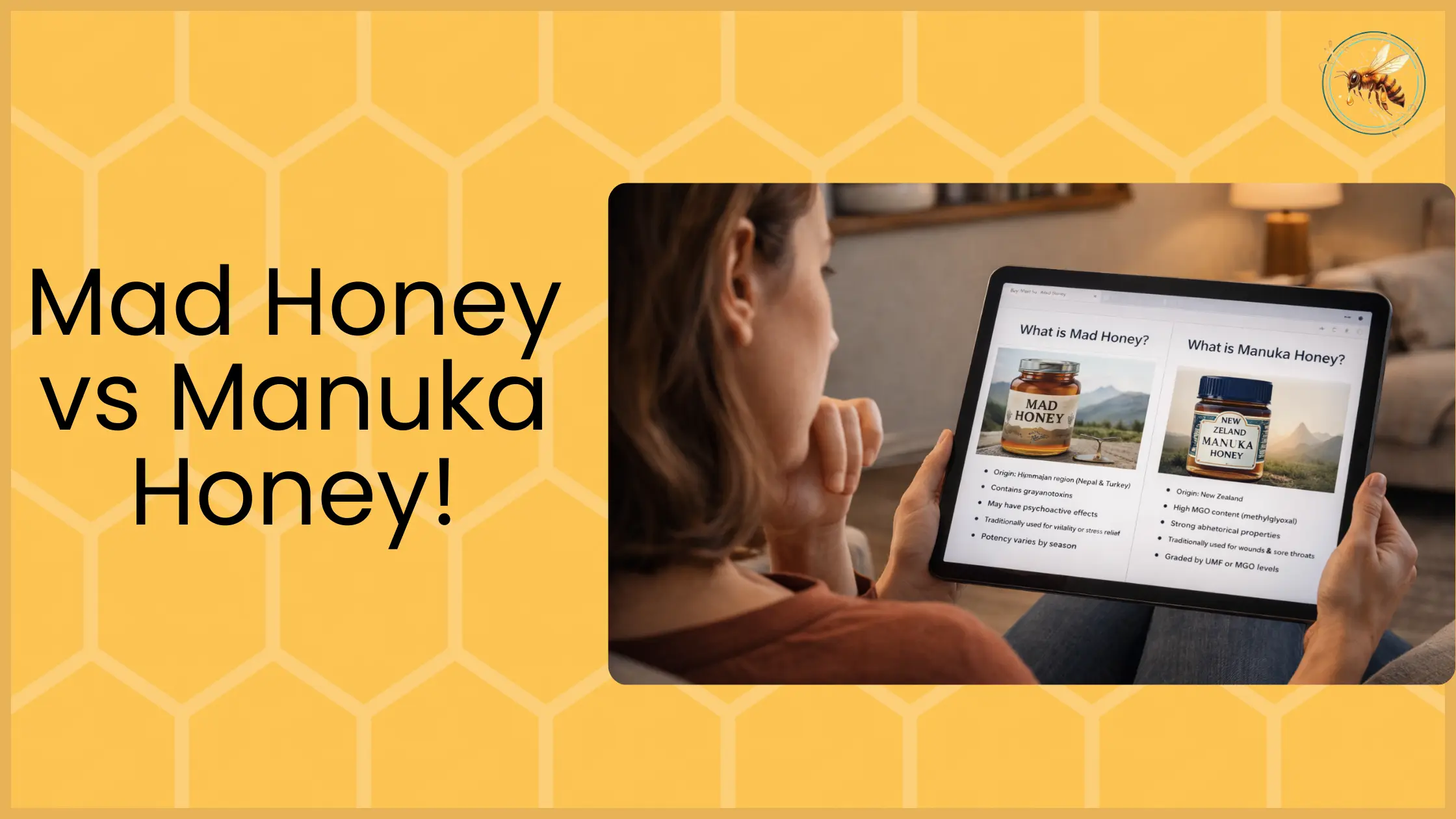
Turkish Mad Honey vs Himalayan/Nepal Mad Honey
“Mad honey” is a category label that spans regions, traditions, and supply chains.
Similarity: rhododendron and grayanotoxins
Both Turkish deli bal and Nepalese mad honey can be associated with rhododendron nectar and naturally occurring grayanotoxins.
Differences: harvesting context and regional traditions
The distinction often lies in how the honey is produced and marketed.
In Nepal, much of the international attention centers on cliff-harvesting traditions, often involving Himalayan giant honey bees and cliff combs.
In Turkey, deli bal is associated with the Black Sea ecosystem, regional beekeeping, folklore, and local use.
Our comparison of Nepalese and Turkish mad honey examines these differences in origin and harvesting context more closely.
Is Turkish or Nepalese mad honey stronger?
Neither origin guarantees a stronger product. Potency varies with plant sources, environmental conditions, and batch composition.
Country of origin alone cannot establish potency or safety. A regional label is not a substitute for information about the specific batch.
Seasonality and batch variability
Even within Turkey, deli bal is not one fixed product. Its composition can vary with plant sources and environmental conditions.
Spring versus later harvests
Honey produced during different bloom periods may have different compositions. Harvest timing alone, however, cannot reliably establish a jar’s grayanotoxin concentration.
Environmental factors
Local growing conditions and the mix of plants available to bees can influence the honey’s composition. A product sold under the same name may therefore vary between harvests and years.
Understanding why mad honey varies between batches helps explain why a familiar label does not guarantee consistent effects.
Why chasing the “strongest” honey is a bad strategy
Higher grayanotoxin concentrations can increase poisoning risk. Treat “strongest deli bal” marketing as a warning sign, not evidence of quality.
Turkish Mad Honey taste and appearance
Turkish mad honey is often described as dark and sometimes bitter. However, taste and color are unreliable authenticity tests.
Typical taste and color descriptions
Some descriptions mention reddish tones and a slightly bitter profile, sometimes paired with a sharp or “burning” throat sensation that people interpret as potency.
These descriptions are not a reliable way to identify grayanotoxins or judge safety. Do not taste honey to test its potency.
Why color and taste cannot prove authenticity
Plenty of honeys are dark, and plenty are bitter. Processing and storage can also change texture and flavor.
That is why traceability and appropriate testing are more useful than assumptions such as “it looks red, so it must be real.”
How to Check Turkish Mad Honey Authenticity
A deli bal label alone does not verify a product’s origin, composition, or safety. When evaluating a seller, use the evidence-based checks in our guide to how to tell whether mad honey is real, rather than relying on appearance or promised effects.
What a responsible seller should provide
Look for three things:
- Clear origin information: A specific harvest region and identifiable producer, rather than vague “Black Sea” or “Himalayan” marketing.
- Batch details: A batch ID, harvest information, and an acknowledgment that composition can vary.
- Clear risk information: An explanation that no safe serving size has been established and that poisoning symptoms require medical attention.
Transparency helps you evaluate a seller’s claims, but it does not guarantee that a product is safe to consume.
Red flags
Be skeptical of:
- “Guaranteed trip” or predictable psychedelic-effect claims.
- Vague or contradictory origin descriptions.
- Missing batch details and pressure tactics.
- “Lab tested” claims without an explanation of what was measured.
- Claims that a particular teaspoon amount is safe for everyone.
Testing and transparency
If a seller claims testing, look for a report that matches the product’s batch and identifies the laboratory, test method, substances measured, and results. Knowing how to read a mad honey laboratory report can help you distinguish specific findings from a vague “lab tested” claim.
Honey authenticity testing and grayanotoxin testing answer different questions. An authenticity report does not necessarily measure grayanotoxins, and a grayanotoxin result does not by itself verify every claim about geographic origin.
Testing information can help characterize a sample. It should not be presented as a guarantee of a safe serving size.
Conclusion
Turkish mad honey, or deli bal, is a regional Black Sea honey associated with rhododendron nectar and naturally occurring grayanotoxins. Its origin, taste, and traditional use do not establish safety.
Traceable sourcing and clear testing information help explain a product, but neither guarantees that it is safe to consume.
Frequently asked questions
Is Turkish mad honey the same as deli bal?
Yes. Deli bal is the common term used for Turkey’s rhododendron-linked mad honey. The name alone does not verify a jar’s composition or origin.
Does Turkish mad honey cause hallucinations?
“Hallucinogenic honey” is a misleading shorthand. Intoxication can involve confusion and disorientation, but a predictable psychedelic experience is not established. The better-documented risks include dizziness, nausea, low blood pressure, and a slow heart rate.
How long do Turkish mad honey effects last?
Duration varies with the exposure and the person. A systematic review of 1,199 reported mad honey intoxication cases reported that patients were generally discharged within 24 hours after recovery, often following medical treatment.
This is not a reason to wait for symptoms to pass; suspected poisoning needs prompt medical advice.
Is Turkish mad honey legal where I live?
Rules depend on your location and may differ for sale, possession, and import. Our guide to mad honey legality by country provides a starting point, but check current guidance from your country’s food-safety and customs authorities before ordering.
Why is Turkish mad honey stronger sometimes?
Grayanotoxin concentrations can vary with plant sources, harvest conditions, and the batch. A familiar label or country of origin does not guarantee consistent effects.
How do i know whether Turkish mad honey is authentic?
Do not rely on color or bitterness alone. Look for traceable origin, batch details, and testing that supports the specific claims being made. Authenticity and safety are separate questions.
Is there a safe dose of Turkish mad honey?
No, there is no established safe serving size that applies across mad honey products. Grayanotoxin levels vary, so teaspoon-based advice cannot guarantee safety.