Ancient “mad honey” stories get repeated so often online that they’ve turned into a kind of legend: soldiers eat a spoonful, instantly trip, and honey becomes a weapon. Xenophon’s actual account is both more specific and more useful, because it describes a dose-dependent poisoning pattern that looks a lot like what modern clinicians still see in real “mad honey” cases today.
In this guide, we’ll walk through who Xenophon was, what his account really says (without long quotes), what people commonly get wrong, and the most likely modern explanation (rhododendron honey + grayanotoxins) without overclaiming.
We’ll also connect the ancient pattern to modern poisoning reports and finish with the one practical takeaway the story supports: dose matters, and “more” isn’t better.
tl;dr
- Xenophon doesn’t describe a psychedelic “high.” He describes a body-first intoxication: vomiting/diarrhea, inability to stand, and behavior “not unlike drunkenness” at low amounts, worse at higher amounts.
- Dose matters in the original story. Xenophon clearly distinguishes between small and large amounts producing different severity. That’s the same core principle emphasized in modern clinical reports (mild → severe hypotension/bradycardia patterns).
- The location fits the Black Sea “deli bal” context. The episode occurs in the broader Pontus/Black Sea region (Xenophon reaches Trapezus/Trebizond right after), which is exactly where toxic rhododendron honey has long been documented.
- Recovery timeline is part of why it’s famous. Xenophon notes that nobody died, and most recovered roughly within a day, with stronger recovery by day 3–4, again matching modern “supportive care + time” outcomes in many cases.
- What the story really teaches is the timeless safety rule: more isn’t better. The danger isn’t “mystical honey,” it’s overdoing a dose-sensitive product that can cause bradycardia/hypotension and a “drunk” collapse feeling.
Who Was Xenophon (and Why His Account Matters)
Xenophon wasn’t a storyteller writing centuries later, he was an Athenian soldier and historian who participated in the famous retreat of Greek mercenaries (“the Ten Thousand”) after Cyrus the Younger’s failed campaign. His work Anabasis blends travel narrative, military logistics, and first-hand reporting. That matters because the “mad honey” incident isn’t presented as folklore. It’s presented as a weird, alarming field event during a march, exactly the kind of detail that tends to be reliable in historical sources.
It’s also why modern “mad honey” articles constantly cite him: he gives one of the earliest clear descriptions of a honey intoxication episode in the Black Sea region, with enough symptom detail to compare to modern toxicology.
The Xenophon Mad Honey Incident (What the Account Says)
Xenophon matters here because he isn’t repeating hearsay centuries later, he’s writing as a participant in a military expedition with a strong incentive to record practical details. That makes his honey episode valuable not as a “wild story,” but as an early example of a real-world incident we can compare to modern patterns
Where it happened (region context: Black Sea / Pontus area)
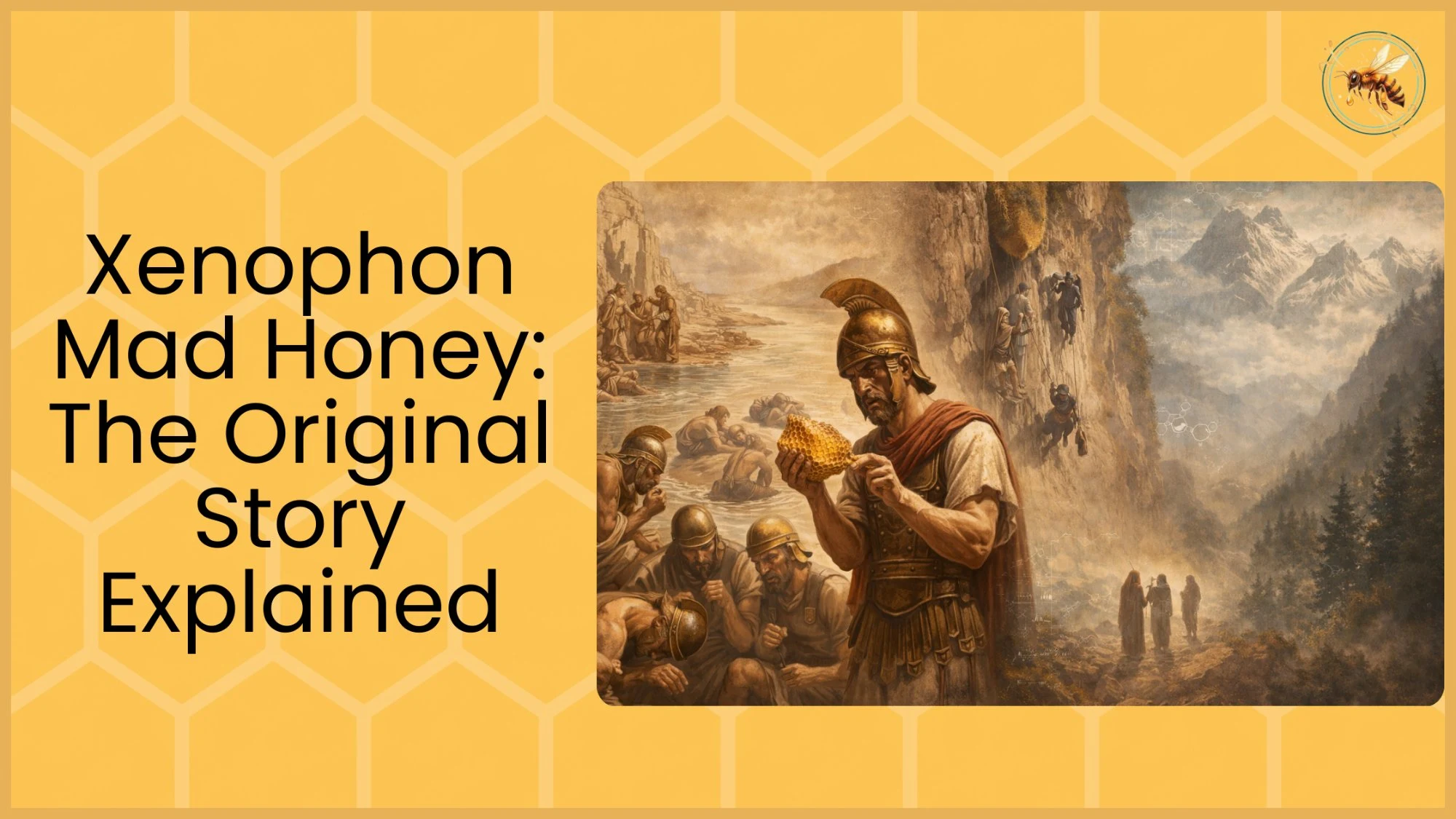
In Xenophon’s narrative, the army is moving through an area that leads to Trapezus (modern Trebizond/Trabzon on the Black Sea). Right before reaching the city, they stay in villages where supplies are abundant, and Xenophon notes something that stands out: an astonishing number of beehives and honey with “certain properties.”
That location detail is important because it anchors the story in a geography that still appears in modern medical literature on “mad honey” poisoning, particularly along Turkey’s Black Sea coast.
What the soldiers did
Xenophon says the soldiers tasted the honeycombs, not that they took it as a drug, not that they sought hallucinations, and not that they were intentionally “microdosing.” They were hungry, curious, and surrounded by plentiful food after a brutal march.
What symptoms were described (high-level summary)
Xenophon’s symptom list is surprisingly clinical in feel:
- They became “quite off their heads” (behavioral/mental confusion)
- Vomiting and diarrhea
- Inability to stand steady
- A small amount felt like violent drunkenness
- A large amount looked like a fit of madness
- Many collapsed “as if there had been a great defeat”
This is exactly why the story persists: it’s vivid. But it’s also why people misread it, because “acting mad” gets translated into “psychedelic high,” when the description is very compatible with severe intoxication + weakness + low blood pressure / slow heart rate feelings, which can look dramatic from the outside. Modern case series commonly describe dizziness, weakness, nausea/vomiting, sweating, hypotension, and bradycardia, symptoms that can absolutely make someone appear “drunk,” confused, or collapsing.
The timeline (how quickly + recovery arc)
Xenophon adds a key detail that internet retellings often skip: nobody died, and recovery happened on a fairly tight timeline. He writes that the next day none had died, and around the same time of day as ingestion they recovered their senses, with further recovery over the next few days.
That recovery arc aligns with a lot of modern clinical framing: most cases improve with supportive care (fluids, monitoring; atropine in bradycardia; more intensive measures rarely).
What People Get Wrong About the Story (Myth vs Source)
Most myths come from one habit: people translate Xenophon’s dramatic wording into modern “drug language.” But the original passage is describing impairment and illness in a battlefield context, not a recreational experience. This section separates what Xenophon says from what modern retellings assume.
Myth 1: “Xenophon said it caused hallucinations”
He doesn’t. The language is about madness-like behavior and intoxication, paired with very physical symptoms (vomiting/diarrhea, inability to stand). Those are not classic “vision quest” cues. If anything, the text reads like: they ate something, their bodies crashed, and their behavior looked bizarre because they were severely unwell.
Myth 2: “It was a weaponized honey trap”
That’s a different historical trope that gets blended into Xenophon’s account. Xenophon describes a mass illness after eating honey from combs, not an enemy strategy scene where honey is deployed like a tool. In his telling, it’s an environmental hazard encountered by soldiers moving through villages with beehives.
Myth 3: “One spoon = instant trip”
Again, Xenophon explicitly makes it dose-dependent: a small amount resembles drunkenness; larger amounts cause far more severe reactions. That’s the opposite of the viral “one spoon, and you’re gone” framing.
The Most Likely Explanation (Modern Lens, No Overclaiming)
We can’t lab-test ancient honey, so we shouldn’t pretend to “prove” anything about a specific toxin in 401 BC. What we can do is compare Xenophon’s symptom pattern and location to what modern toxicology already understands about rhododendron-related “mad honey” incidents, and see why the match is compelling.
Rhododendron honey (“deli bal” context)
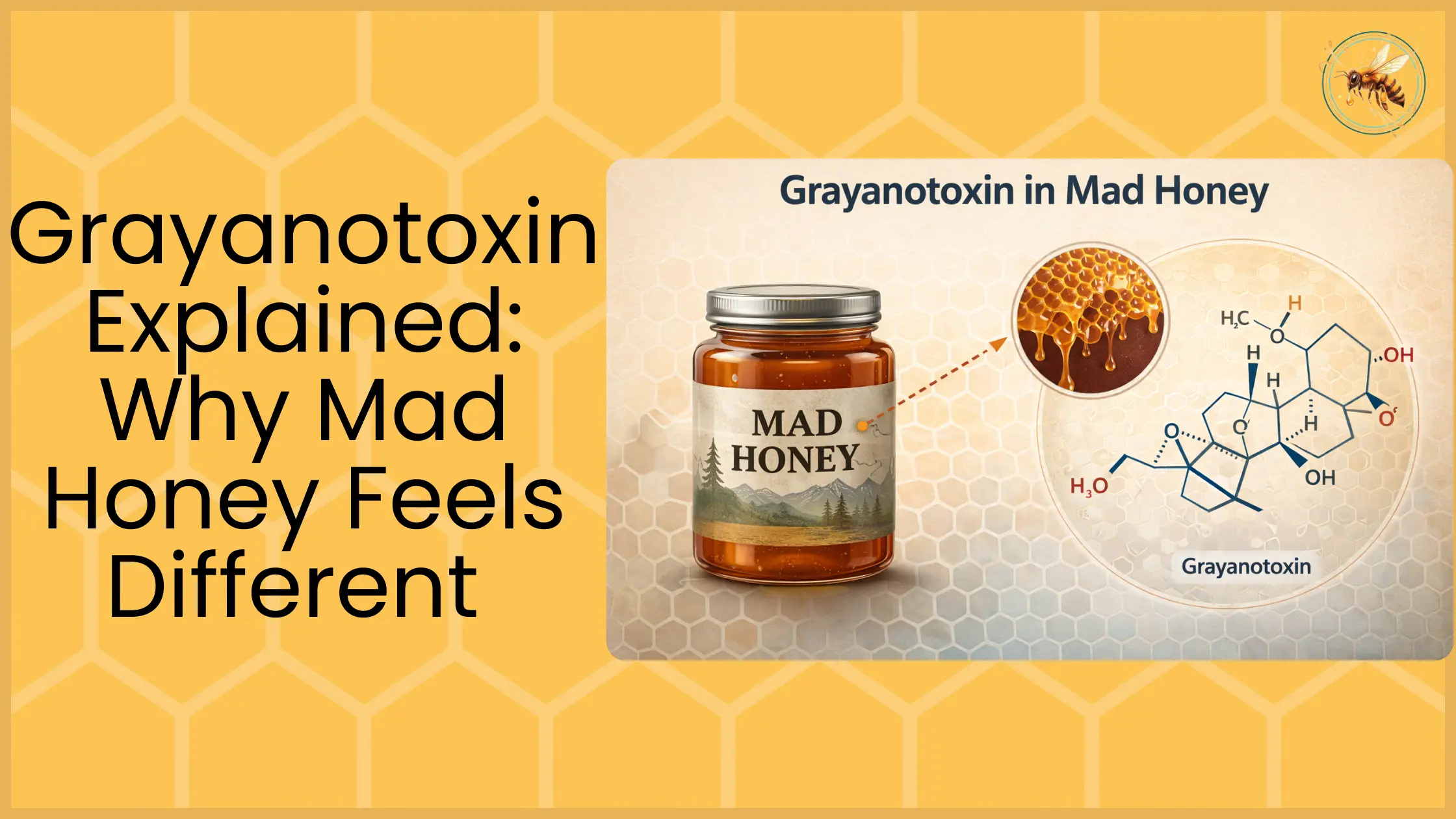
Modern toxicology connects “rhododendron mad honey” episodes to honey produced when bees collect nectar from certain Rhododendron species containing grayanotoxins. This is widely discussed in clinical and poison control literature about “mad honey” intoxication.
The Black Sea region context matters because it’s one of the best-known areas for this phenomenon in modern reports, helping bridge the ancient account to a plausible mechanism without forcing certainty beyond what history can prove.
Grayanotoxins explained simply (why “body-first” symptoms happen)
Grayanotoxins act on voltage-gated sodium channels, interfering with normal electrical signaling in nerves and muscles. In plain English: they can push the body toward a state where heart rate slows and blood pressure drops, while nausea, sweating, dizziness, and weakness ramp up.
That mechanism matches why ancient witnesses might describe people as “mad,” “drunk,” or “collapsed”: a person who can’t stand, is vomiting, sweating, dizzy, and weak will look dramatically impaired, even without any true psychedelic effect.
Why Xenophon’s symptoms “fit” modern patterns
Modern emergency medicine descriptions of “mad honey” poisoning repeatedly emphasize a recognizable cluster: nausea/vomiting, dizziness/weakness, sweating, hypotension, bradycardia, sometimes conduction abnormalities on ECG.
Now look back at Xenophon’s key observations:
- severe GI upset
- inability to stand steady
- “drunkenness-like” impairment
- collapse-like scenes
- recovery over a day or two
That’s not proof of a single exact toxin in 401 BC, but it’s a strong pattern match, which is why clinicians and historians keep returning to this passage.
How Xenophon Connects to Modern Cases
The reason this passage still gets cited isn’t just historical curiosity. It’s that modern clinicians continue to see a similar cluster of symptoms and a similar theme: dose-dependence and variability. Looking at the overlap helps readers understand what’s timeless about the risk.
Similar symptom patterns in modern reports
Modern case series from the Black Sea region and other settings repeatedly show the same “headline” problems: people arrive with dizziness/weakness, nausea/vomiting/sweating, and vital-sign changes (notably low blood pressure and slow heart rate).
The repeating themes: dose-dependence + variability
Even today, two people can consume “mad honey” and have different experiences. Dose, individual sensitivity, and batch variability matter. Xenophon’s account already hints at this by splitting the experience into “small” and “large” consumption effects, essentially an early warning that quantity changes the entire outcome.
Why “start low” is the timeless lesson
If there’s one modern takeaway that history supports, it’s this: more isn’t better. The most unpleasant and risky experiences tend to begin where people chase intensity, stack spoonfuls, or treat the honey like a thrill substance instead of a dose-sensitive product. Modern poison control education emphasizes caution, and Xenophon’s story shows why that caution exists.
Why This Story Still Matters Today
Once you strip away the hype, Xenophon’s account becomes a useful anchor for three modern problems: misinformation, unsafe dosing behavior, and scammy marketing. In other words, it’s not just “old history,” it’s a reference point for responsible expectations today.
1) It anchors “mad honey” in documented history (not an internet fad)
The Xenophon passage is one reason “mad honey” isn’t just a modern headline. A real historical source recorded a striking intoxication event in a real region, long before social media existed.
2) It highlights the reality behind the sensationalism
When people call it “psychedelic honey,” they often skip the boring but crucial part: the risk is physical. The story is famous because it’s dramatic, and it’s dramatic because the symptoms can be intense when overdone.
3) It helps prevent scams and misinformation
Scammy sellers lean on the Xenophon myth to imply guaranteed “trip” effects. Understanding the original account helps readers spot exaggeration: Xenophon describes a sickness, not a recreational product.
Conclusion
To close the loop, we’ll summarize what happened, why it’s cited so often, and what the safest modern interpretation is. The goal isn’t to make the story more sensational, it’s to make it more accurate and more useful.
Xenophon’s “mad honey” account endures because it’s vivid, but the real value isn’t the drama. It’s the clarity. He records a dose-dependent intoxication in the Black Sea region with a recovery timeline that looks surprisingly similar to many modern reports.
If you want the clean modern framing, it’s this:
- History gives us the earliest famous pattern.
- Science explains the likely mechanism (grayanotoxins; body-first effects).
- Safety gives the practical rule: start low, don’t chase intensity, and don’t confuse “acting mad” with a guaranteed “high.”
FAQs on Xenophon and Mad Honey
Did Xenophon say it caused hallucinations?
No. He describes intoxication-like behavior plus strong physical symptoms (vomiting/diarrhea, inability to stand).
Where exactly did it happen?
In the stretch of the march leading to Trapezus (modern Trebizond/Trabzon) on the Black Sea, in the broader Pontus/Colchis context, Xenophon describes.
Was the honey definitely from rhododendrons?
History can’t lab-test 401 BC honey. But the region + symptom pattern matches what modern toxicology associates with rhododendron-related “mad honey” (grayanotoxins).
Is this the same as modern “mad honey”?
It’s the best-known ancient parallel: toxic honey in the Black Sea region producing a classic intoxication cluster and recovery pattern. Modern cases show similar clusters, though effects can vary by dose and product.
How long did the effects last in the story?
Xenophon says nobody died; most recovered their senses by the next day, around the same time they ate, and were back on their legs in the following days.
Does the story prove mad honey is safe or unsafe?
It proves one thing: it’s not ordinary honey. People can recover, but the episode was serious enough to drop “hundreds” of soldiers. The modern lesson is to treat it as dose-sensitive and safety-first.