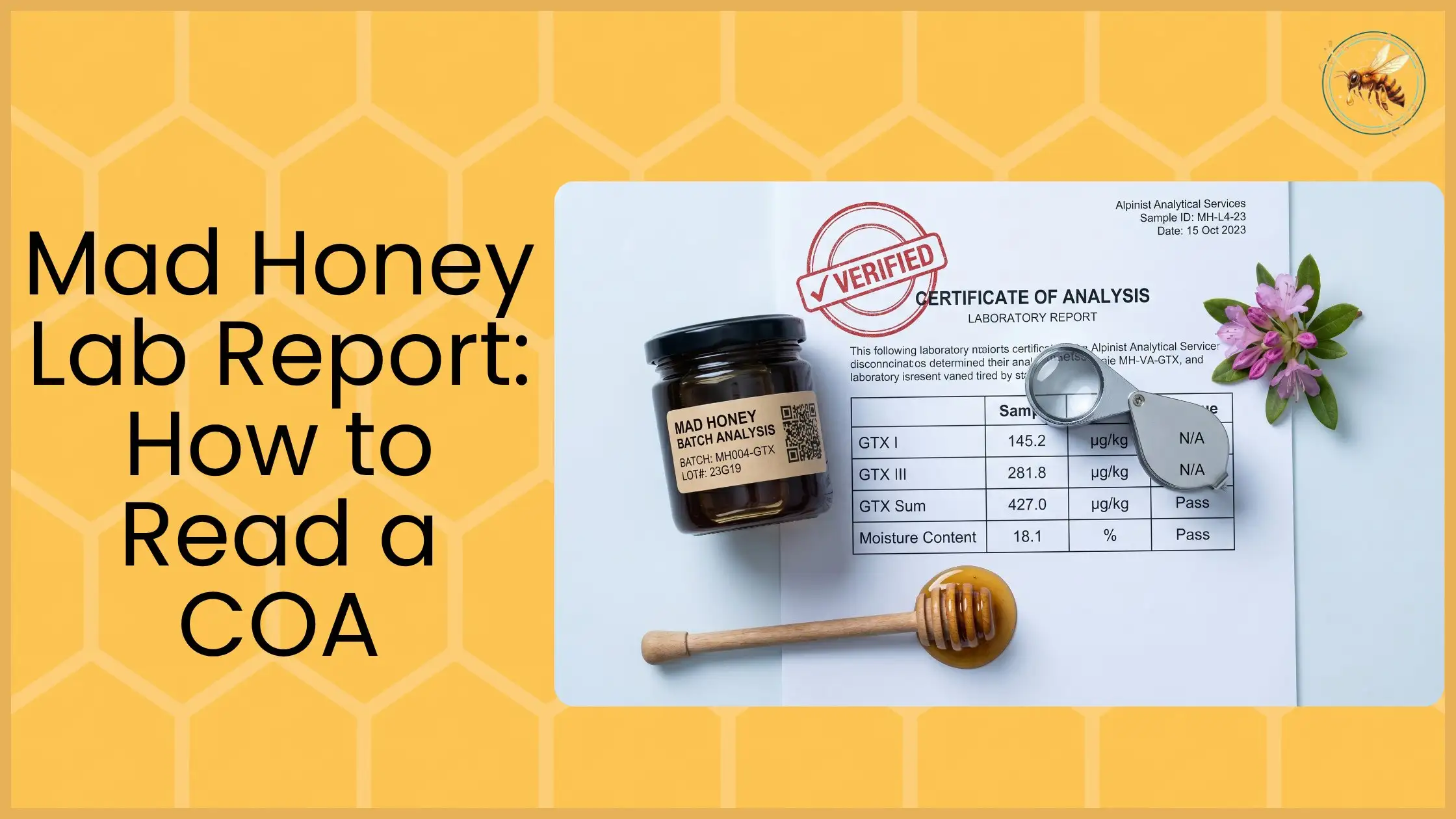
A “lab tested” label doesn’t mean much unless you can see a real, batch-matched report and understand what it says. With mad honey, this matters even more because the category is dose-sensitive and batch-variable, so you want proof of what’s in that jar, not a generic claim.
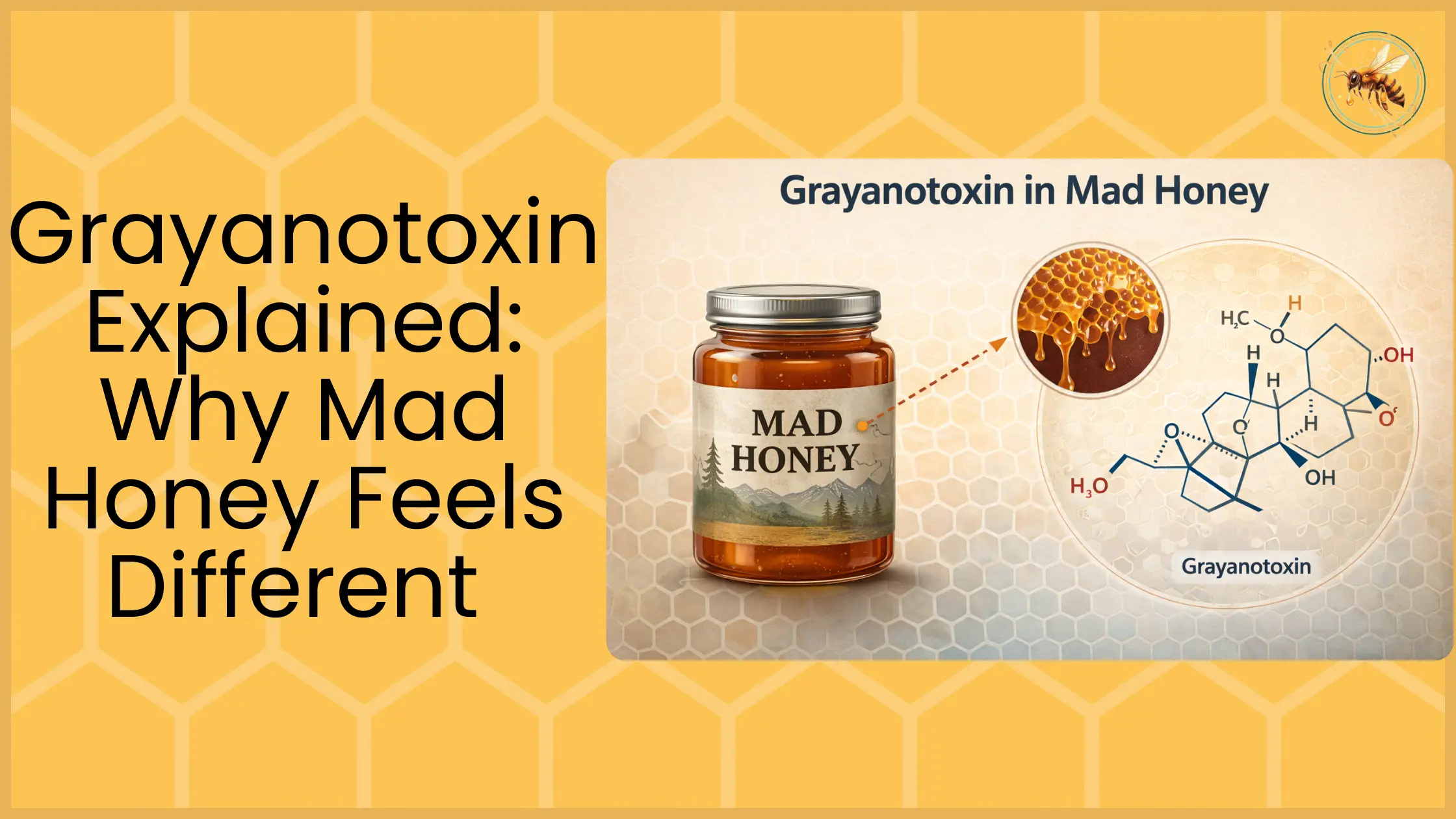
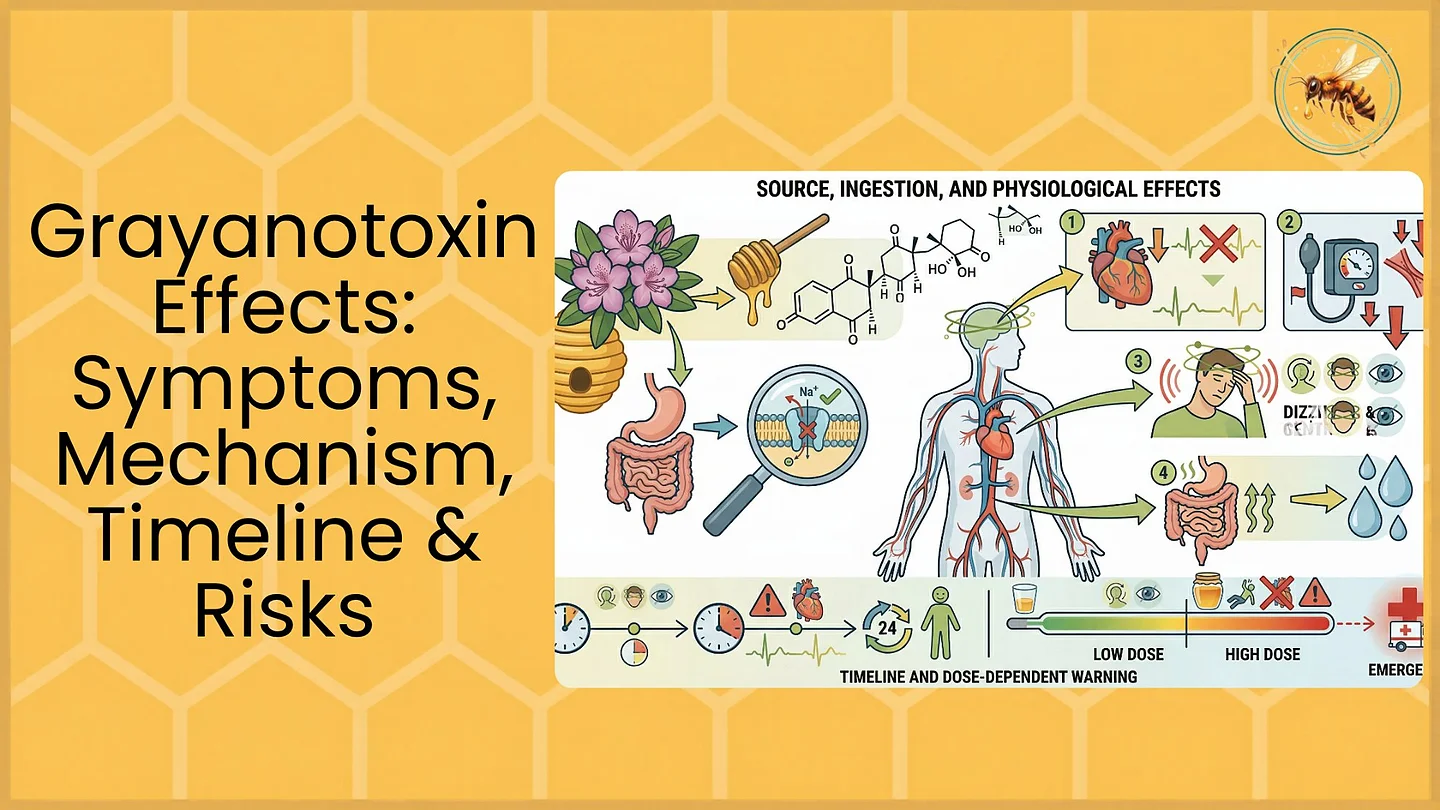
This guide explains what a strong mad honey lab report (COA) includes, how to read the grayanotoxin (GTX) section, what other safety panels should be tested (pesticides, heavy metals), how to spot fake or recycled documents, and how to verify a COA before you buy.