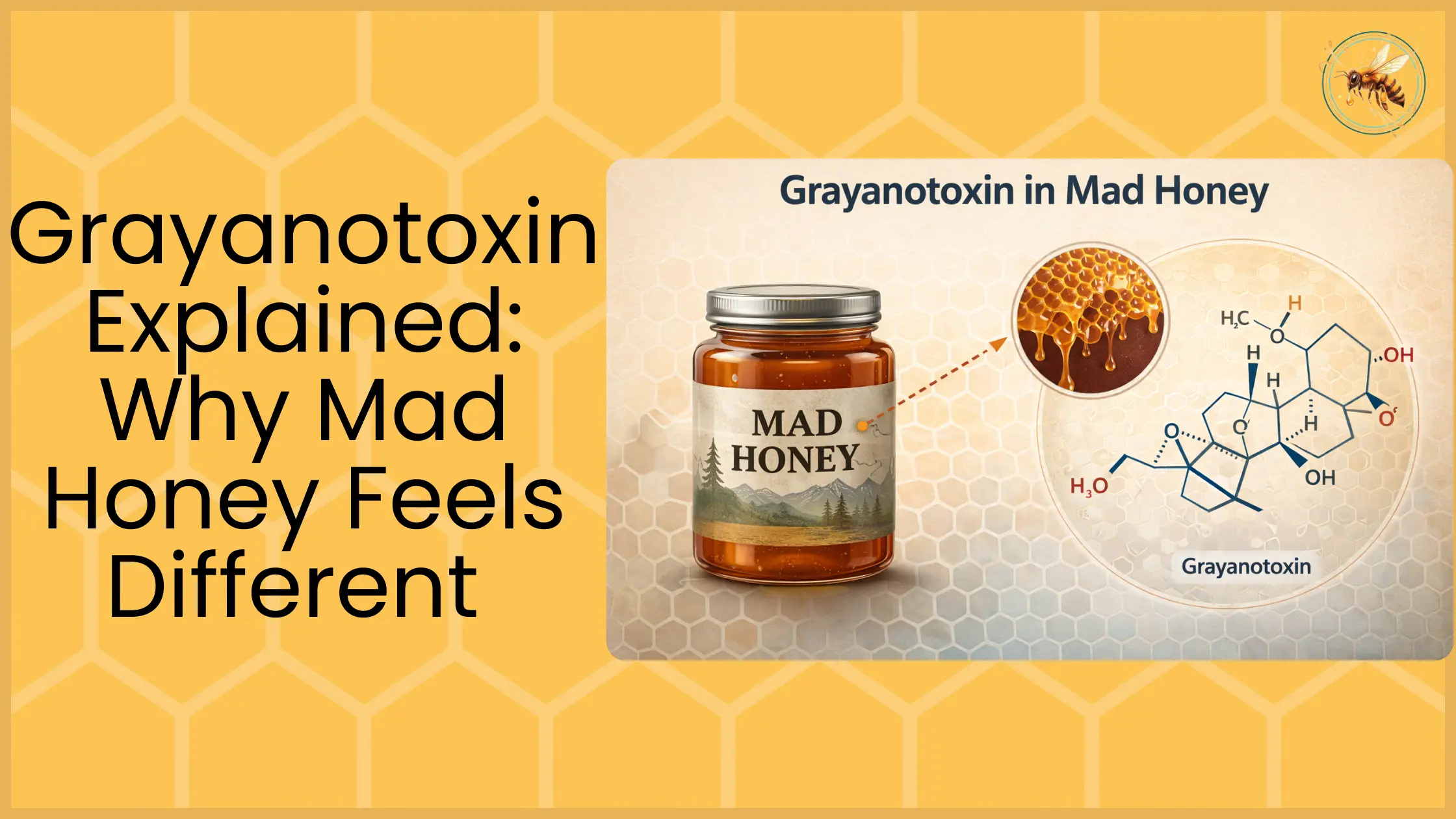
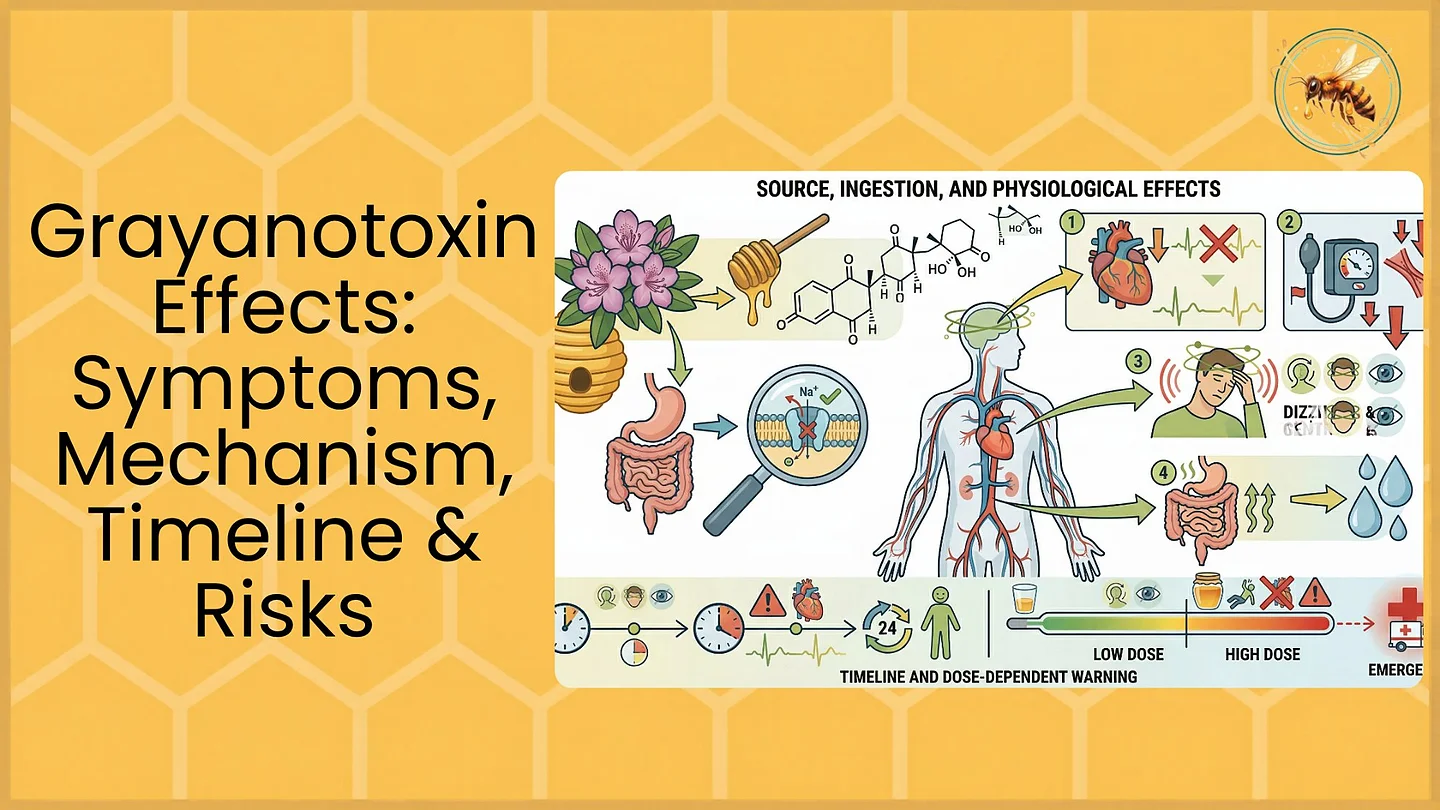
Grayanotoxins are the compounds behind what most people call “mad honey.” They’re not a mystery ingredient, and they’re not a psychedelic. They’re naturally occurring chemicals produced by certain Rhododendron species that interact with how nerve and muscle cells fire, producing a very specific, dose-dependent pattern of effects.
Online, the framing is often dramatic: “hallucinogenic honey,” “legal high,” “ancient weapon.” In clinical toxicology, the framing is more precise: bradycardia (slowed heart rate), hypotension (lowered blood pressure), dizziness, nausea, and weakness, a recognizable poisoning profile that’s been documented in case reports across multiple countries and has a consistent, predictable structure.
Most people land on this page for one of two reasons: they want to understand the mechanism before they make a decision, or they’ve already consumed mad honey, and they’re trying to figure out whether what they’re feeling is normal. Both are legitimate questions. This page addresses both, with the safety layer front and center.