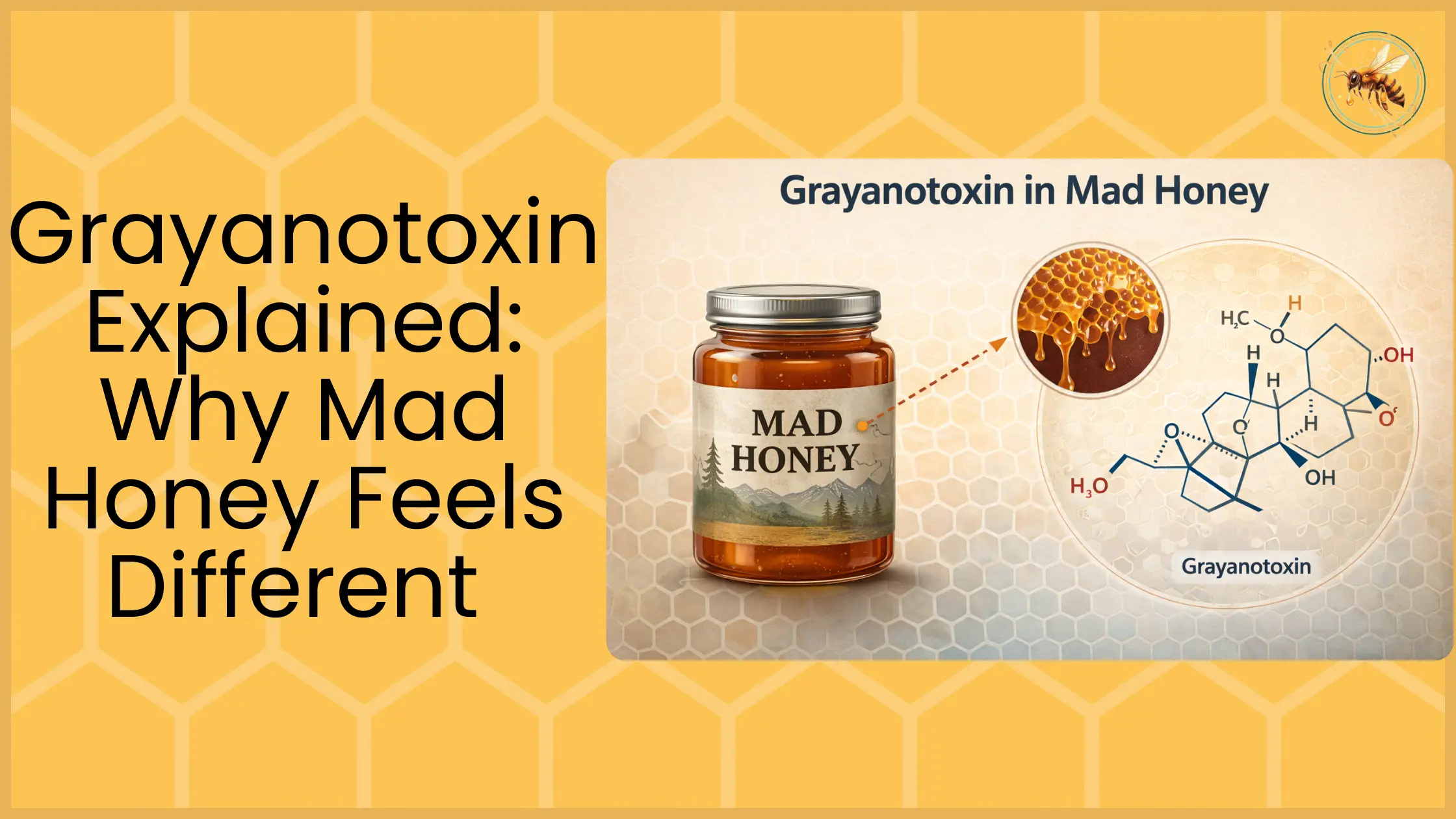
If you’ve ever wondered why certain “mad honey” products can feel noticeably different from regular honey, the answer usually comes down to grayanotoxins.
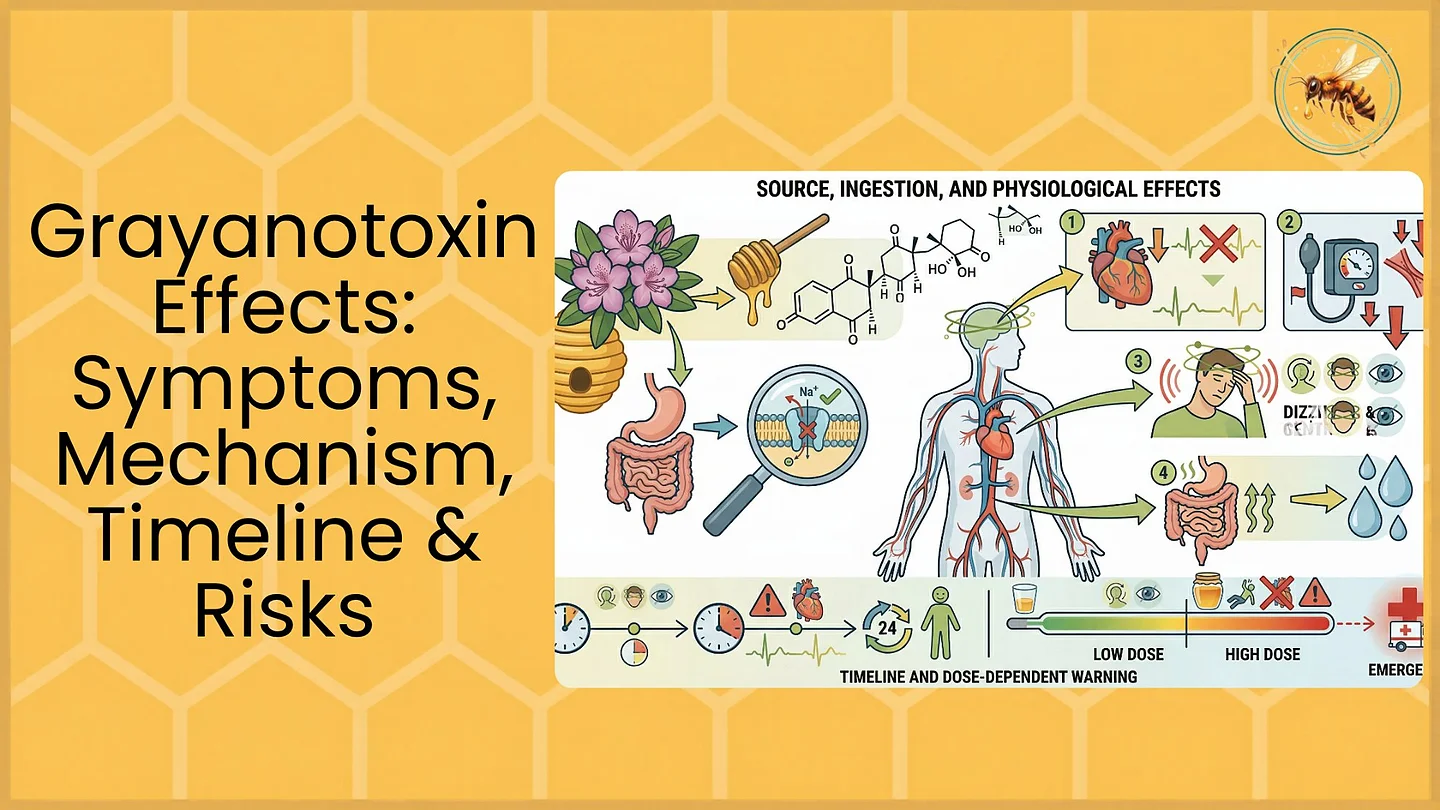
Grayanotoxin in honey isn’t an additive or a drug. It’s a natural plant toxin that can end up in honey when bees collect nectar from specific Rhododendron species. When present at meaningful levels, grayanotoxins can create effects people describe as calm, heavy, warm, floaty, or, at higher exposure, unpleasant and potentially dangerous symptoms like dizziness, low blood pressure, and a slow heart rate.
This article explains the science simply: what grayanotoxins are, how they work in the body, why effects vary so much, and what “safe” should mean when you’re dealing with a product that can change from batch to batch.