If you’re reading this because you (or someone you’re with) feels dizzy, weak, nauseated, sweaty, or “about to faint” after taking mad honey, this page is meant to help you make calm, safe decisions fast.
Mad honey poisoning (also called mad honey intoxication) is typically linked to grayanotoxins, naturally occurring compounds that can appear in some honey batches depending on nectar sources and season, and the risk rises sharply with dose.
Most cases improve with time and supportive care, but some symptoms are urgent, especially fainting, severe weakness, chest pain, breathing trouble, or repeated vomiting, because low blood pressure and slow heart rate can become dangerous.
This guide explains what “mad honey poisoning” is, how to recognize mild vs severe symptoms, what to do right now, when to call emergency services, and how to prevent it next time.
tl;dr
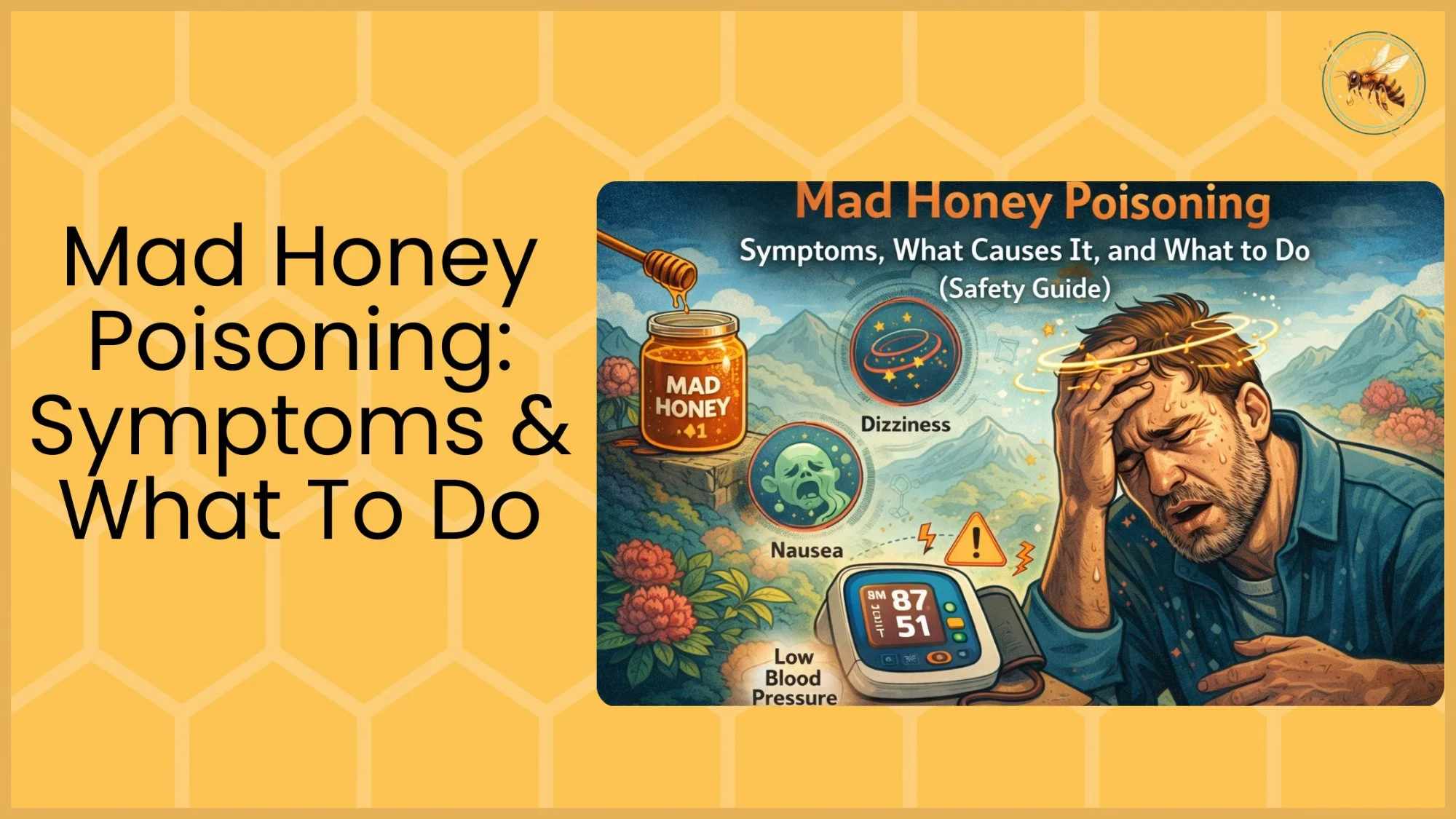
- Mad honey poisoning is usually dose-related and most commonly involves dizziness/weakness and nausea/vomiting, often alongside low blood pressure and slow heart rate.
- The safest immediate move is stop consuming, sit/lie down, and avoid standing or driving until symptoms clearly improve.
- Call emergency services right away for fainting, chest pain, breathing difficulty, confusion, or persistent severe symptoms, because these can signal serious cardiovascular effects.
- The most common cause of “I overdid it” is stacking (taking more because you “didn’t feel it yet”), especially on an empty stomach.
- Prevention is simple and effective: start low, wait, don’t stack, and avoid mixing with alcohol/sedatives or using if you’re in a high-risk group.
What Is “Mad Honey Poisoning”?
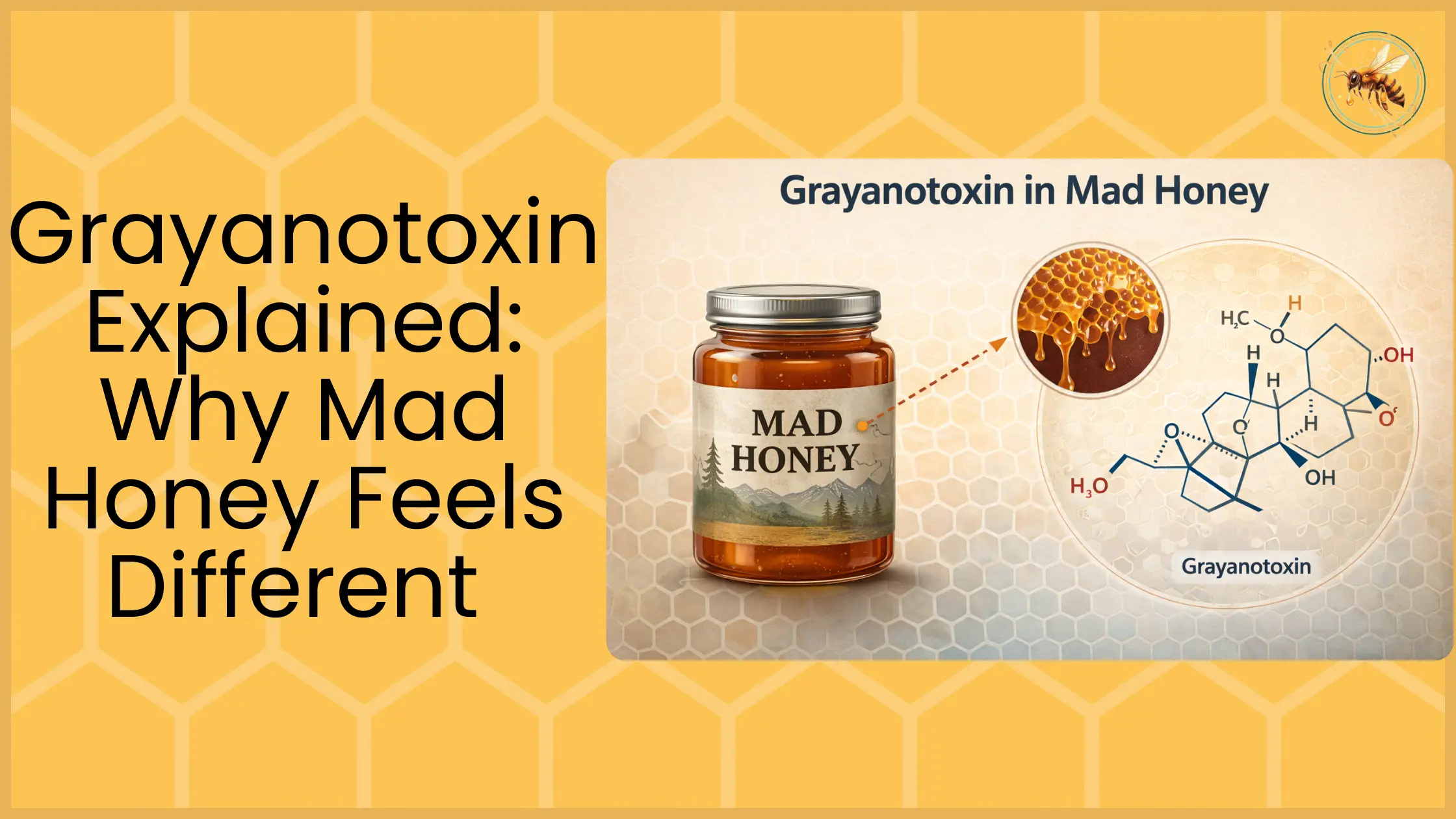
Mad honey poisoning is a pattern of symptoms that happens after consuming honey that contains grayanotoxins, compounds associated with nectar from certain Rhododendron species.
You’ll also see it described as “mad honey intoxication” in medical literature, because the effect is not an infection; it’s an exposure that can alter how the body regulates heart rate, blood pressure, and nervous system signaling.
The key idea is that this isn’t about “being high” in the recreational sense; it’s often a body-first reaction, and the most important question is whether your symptoms are mild and improving or severe and escalating.
Why it happens (grayanotoxins, dose)
Grayanotoxins affect voltage-gated sodium channels, leading to persistent activation and downstream effects that can include bradycardia (slow heart rate), hypotension (low blood pressure), and nausea/vomiting, the clinical triad emphasized in many summaries.
A practical way to think about it: small changes in dose can create big changes in how you feel, especially if the batch is stronger or you’re personally sensitive.
Mad Honey Symptoms Checklist (Mild vs Severe)
Symptoms can range from uncomfortable-but-manageable to urgent. Use the categories below to decide what to do next, and when in doubt, choose the safer option.
Mild/moderate (monitor closely, do not re-dose)
These symptoms are common in case descriptions and safety summaries and may resolve with rest, especially if they are mild and trending better:
- Lightheadedness or dizziness (especially when standing)
- Weakness, heavy limbs, “need to sit down” feeling
- Nausea, mild stomach upset
- Sweating or a clammy feeling
- Mild headache or “off” feeling
- Mild blurred vision or unusual body sensations (some cases report vision changes)
What matters most: Are these symptoms improving over time when you rest and stop consuming? If yes, that’s reassuring.
Severe (urgent)
Seek urgent help immediately if any of the following are present; these are the kinds of features associated with more serious presentations in clinical descriptions:
- Fainting (syncope) or repeated near-fainting
- Chest pain, severe palpitations, or feeling like your heart rhythm is abnormal
- Breathing difficulty or severe shortness of breath
- Confusion, significantly impaired consciousness, or inability to stay awake (some summaries note impaired consciousness can occur)
- Persistent vomiting (can’t keep fluids down)
- Severe weakness (can’t stand or walk safely)
- Symptoms that are rapidly worsening instead of stabilizing
If you’re unsure whether a symptom “counts,” treat fainting, chest pain, breathing difficulty, or worsening symptoms as your hard line for emergency care.
What To Do Right Now
The goal in the moment is to prevent falls, prevent worsening, and get the right level of help early, without trying random “remedies” that can make it worse.
Immediate steps
- Stop consuming mad honey immediately. Don’t “balance it out” by taking more, and don’t stack another spoon.
- Sit or lie down somewhere safe. If you feel dizzy, lying down is safer than sitting upright. Avoid stairs and hot showers.
- Do not drive or use machinery. Even if you feel mentally okay, your body can be unstable or lightheaded.
- Sip water slowly if you’re not vomiting and can tolerate it. The goal is gentle hydration—not chugging.
- Avoid alcohol, sedatives, and other substances. Mixing increases risk and makes symptoms harder to interpret.
- Have someone stay with you if symptoms are moderate or you feel faint, especially during the peak period.
These steps align with the general safety approach implied by poison control and clinical pattern summaries: stop exposure, prevent injury, and seek help for severe symptoms.
When to call emergency services
Call your local emergency number (e.g., 911/112) immediately if you have severe symptoms listed above, especially fainting, chest pain, breathing difficulty, or persistent vomiting.
If you’re in the United States and symptoms are not immediately life-threatening but you need expert advice, you can also contact Poison Control at 1-800-222-1222. (Outside the U.S., use your local poison center/emergency guidance.)
What to tell a medical professional (context)
If you seek medical help, clarity helps. Tell them:
- It may be “mad honey” exposure (possible grayanotoxin-containing honey)
- How much you consumed (teaspoon vs tablespoon; and whether you re-dosed)
- When you took it (time since ingestion)
- Symptoms (dizziness, vomiting, fainting, chest pain, etc.)
- Any mixing (alcohol, sedatives, other substances)
- Any medical context (heart conditions, blood pressure issues, pregnancy, relevant medications)
This matters because diagnosis is often clinical, based on a history of honey intake + symptom pattern such as bradycardia/hypotension with nausea/vomiting or syncope.
How to Prevent Mad Honey Poisoning Next Time
Prevention is mostly about dose discipline and context. The goal isn’t to “prove you can handle mad honey.” The goal is to avoid crossing the line into symptoms.
Start low + wait rule
The safest beginner pattern is: start very small and wait long enough for onset and peak to declare themselves, especially because many people get into trouble by taking more when they “don’t feel it yet.”
Poison control summaries highlight that hypotension, bradycardia, and nausea/vomiting are common in grayanotoxin poisoning, meaning overshooting the dose has predictable downsides.
Practical framing (non-medical): Treat your first use like a calibration.
If you want the detailed dosing idea, read our dedicated page: Mad Honey Dosage & Safety: How Much to Take, Side Effects, and Who Should Avoid It
Avoid stacking with other substances
Avoid mixing mad honey with:
- alcohol
- sedatives or sleep aids
- other substances that can worsen dizziness or blood pressure effects
Mixing doesn’t make the experience “better,” it mainly makes it more unpredictable and increases the chance of nausea, faintness, and unsafe decisions.
Conclusion
Mad honey poisoning is typically a dose-dependent reaction linked to grayanotoxin-containing honey, and the most common clinical effects include hypotension, bradycardia, and nausea/vomiting, often with dizziness and weakness.
Most mild cases improve with time, rest, and stopping exposure, but severe symptoms (fainting, chest pain, breathing trouble, confusion, persistent vomiting, extreme weakness) should be treated as urgent.
The simplest prevention strategy is also the most effective: start low, wait, don’t stack, and don’t mix.
FAQs on Mad Honey Poisoning
How long does it last?
Duration varies by dose, batch, and individual sensitivity, but the clinical pattern often follows onset → peak → recovery with improvement over time, especially with supportive care.
If symptoms are not improving or are worsening after several hours, treat that as a reason to seek medical evaluation.
Can Mad Honey be fatal?
Most reported cases recover, especially with timely supportive care, but severe cardiovascular effects (very low blood pressure, dangerous rhythm issues) can be serious. That’s why fainting, chest pain, breathing difficulty, severe weakness, or persistent vomiting should be treated urgently.
The safest way to write this for readers is: it can be dangerous, and you should not try to “wait it out” if severe symptoms are present.
Who is most at risk?
Risk is higher if you:
- take a higher dose or re-dose quickly
- have baseline blood pressure or heart rhythm issues
- are dehydrated, sleep deprived, or on certain medications
- mix with alcohol/sedatives
This is why conservative guidance often includes “who should avoid” content, not just dosing tips.
Evidence & Sources
Common symptoms include dizziness, nausea and vomiting, low blood pressure, a slowed heart rate, blurred or double vision, tingling or numbness, and sweating.
In more severe cases, symptoms can include a significant heart-conduction disturbance (AV block), fainting, and, rarely, seizures or breathing difficulty.
A 2015 systematic review of 1,199 published poisoning cases found no fatalities reported among the cases it covered. Most people recover fully with supportive care within 24 to 48 hours, based on the published literature reviewed. We look at whether mad honey can ever be fatal in can mad honey kill you?
If symptoms go beyond mild dizziness — fainting, chest pain, a very slow or irregular heartbeat, or difficulty breathing — treat it as a medical situation: stop eating it, lie down, and seek medical attention or contact poison control rather than waiting it out.
Sources: Silici, S. & Atayoglu, A.T., “Mad honey intoxication: A systematic review on the 1199 cases,” Food and Chemical Toxicology 86 (2015), PMID 26547022. Jansen, S.A. et al., Cardiovascular Toxicology 12 (2012), PMC3404272.