Mad honey is still honey, so it’s naturally shelf-stable compared to most foods. But it’s also a product people watch closely: a jar crystallizes, darkens, thickens, or tastes a little different, and the first thought becomes, “Did it go bad?” or “Is this fake?”
In most cases, what you’re seeing is normal honey behavior (especially crystallization and gradual color change). The real enemies of honey storage are surprisingly simple: heat, light, and moisture. Store mad honey correctly, and it will stay stable for a long time, while keeping its flavor and texture more consistent.
tl;dr
- Store mad honey cool-ish (room temp), dark, sealed, and dry; that’s the whole game.
- Refrigeration is usually unnecessary and can make crystallization happen faster.
- Crystallization is normal and doesn’t mean it’s spoiled or fake.
- The two biggest mistakes are storing it near heat (stove/window) and using a wet spoon (moisture can cause fermentation).
- “Weird” changes to watch for are mostly fermentation signs (fizz, sour/yeasty smell) or visible mold (rare, usually due to moisture contamination).
Quick Answer – Best Way to Store Mad Honey
If you want a simple checklist that covers 95% of situations:
Ideal storage conditions
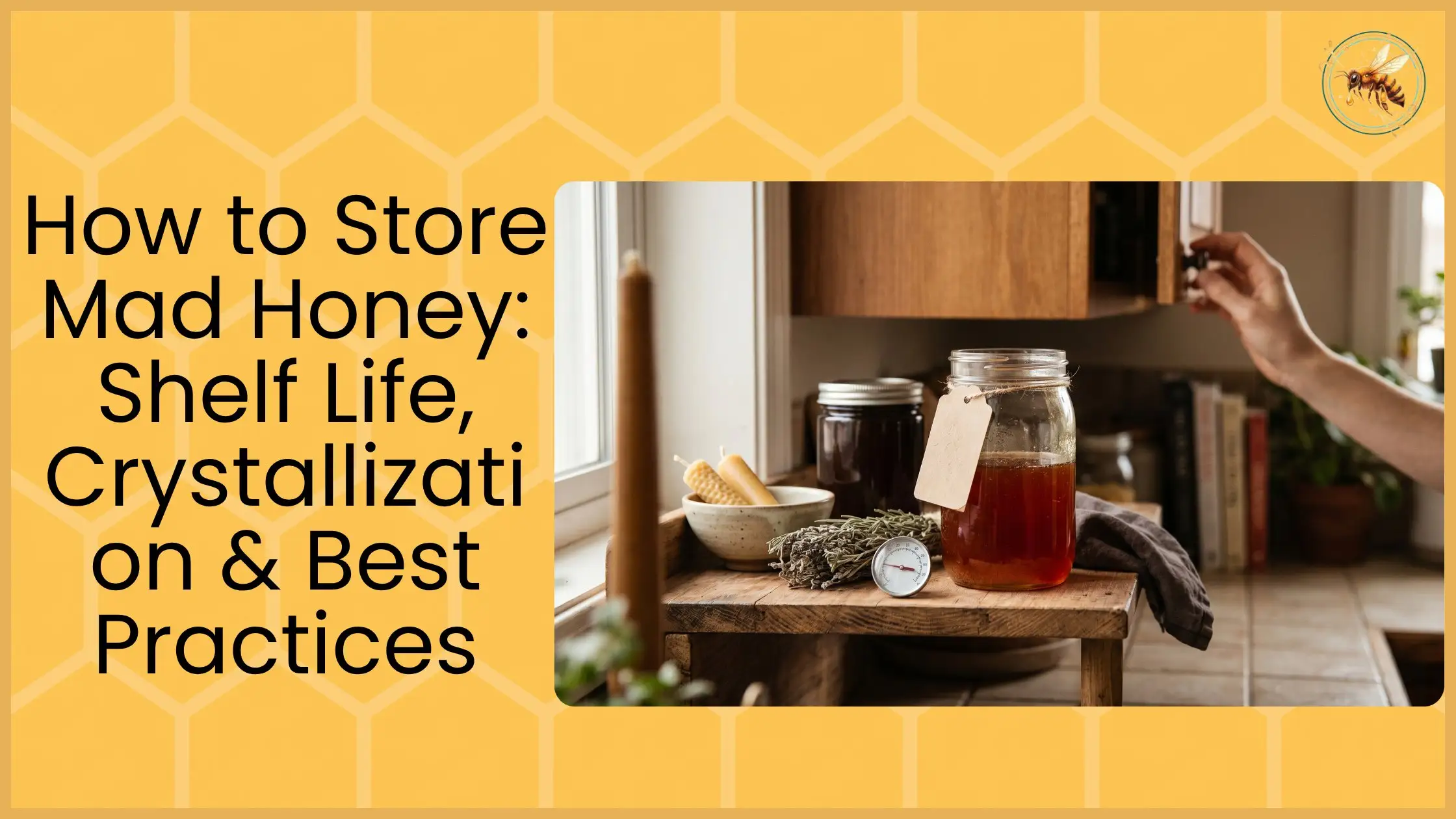
- Keep it at room temperature on the cool side (think pantry/cupboard, not a warm kitchen shelf).
- Keep it out of sunlight (light + heat slowly degrade aroma and can darken honey faster).
- Keep the lid tightly closed between uses.
- Use a clean, dry spoon every time.
The two biggest mistakes
- Storing near heat (stove, oven vent, sunny windowsill, hot car).
- Introducing moisture (wet spoon, water droplets, double-dipping).
Those two mistakes are what turn “stable honey” into “why is this acting strange?”
Does Mad Honey Need to Be Refrigerated?
Short answer: usually no. Honey is low in water activity and naturally resists microbial growth when kept sealed and dry, so it doesn’t need the fridge the way syrups or juices do.
Why is refrigeration of mad honey usually unnecessary
Refrigeration doesn’t “protect” honey from spoilage in a meaningful way. What it mostly does is change the texture. In many cases, cooler temperatures encourage the honey to thicken and crystallize sooner. If your main concern is keeping mad honey smooth and pourable, the fridge is often the opposite of what you want.
What refrigeration actually does (and why it matters)
Cold temperatures:
- make honey more viscous (thicker)
- can make crystallization happen more quickly
- can make it harder to scoop or drizzle
When refrigeration might make sense (rare cases)
If you live in a very hot climate and your “room temperature” regularly becomes truly warm (especially for long periods), refrigeration can be a practical workaround to avoid heat exposure, but only if you accept the texture trade-off. In that scenario, a better first move is usually finding a cooler indoor storage spot (a cabinet away from the kitchen heat zone).
Best Temperature Range (and Why Heat Is the Enemy)
The easiest way to ruin the experience of honey isn’t “age.” It’s heat.
What heat can change
Over time, warmer storage can:
- dull aroma and flavor notes (especially subtle floral/herbal tones)
- accelerate darkening
- make honey taste more “cooked” or less fresh
- increase pressure for texture shifts (thinner when warm, then crystallizes later)
None of this necessarily means the honey is unsafe, but it can make it feel lower quality.
Common “too warm” storage spots to avoid
A lot of people accidentally store honey in heat zones:
- above or near the stove
- next to the oven
- near a window or on a sunny counter
- above a dishwasher
- inside a car bag or suitcase that sits in heat
“Warm water use” vs “storing warm”
This is an important distinction: Using gentle warmth briefly to soften or liquify honey is not the same as storing your honey in warmth all the time.
If you want the jar to stay stable and taste good, the goal is: stable, cool-ish storage with minimal daily temperature swings.
Crystallization: The #1 Thing People Misunderstand
Crystallization is the most common “is this bad?” moment with honey, mad honey included.
What crystallization is (simple explanation)
Honey is mostly sugar and water. Over time, sugars can form crystals, especially glucose. That’s crystallization. It can happen slowly (fine crystals) or quickly (grainier texture), depending on the honey’s sugar profile, temperature, and how it was handled.
Is crystallized mad honey still good?
Almost always, yes. Crystallized honey is typically still safe and usable. It might even taste slightly different (sometimes a bit milder or creamier), but crystallization is not spoilage.
How to liquify it gently (safe method)
If you want it smooth again, use gentle warming:
- Put the jar in a warm water bath (not boiling, just warm).
- Let it sit and warm slowly.
- Stir gently if needed (with a dry utensil).
- Repeat if necessary, patience wins.
The best approach is slow and low. You’re trying to warm the honey enough to dissolve crystals, not cook it.
What NOT to do
- Microwave the jar (hot spots can overheat parts of the honey and make a mess).
- Use boiling water.
- Put it directly on a stove burner or in a pan.
- Leave it in a hot place “until it fixes itself.”
If you see people online microwaving honey, that’s more about convenience than quality.
Color Changes (Including “Red” Honey): What’s Normal?
Color is one of the biggest authenticity myths in this category. People assume darker or redder = stronger or “more real.” Storage makes this even messier.
Why color can vary by batch
Color can differ because of:
- nectar mix (what flowers were blooming)
- region and season
- filtration/handling choices
- natural aging and storage conditions
So yes, two real jars can look different, even from the same general region.
Darkening over time: when it’s normal vs when to question it
Gradual darkening is often normal, especially if the honey has been stored warmer than ideal or exposed to light. That doesn’t automatically mean it’s spoiled.
When you should pause and evaluate isn’t “it got darker.” It’s:
- sudden and strong sour/fermented smell
- visible bubbles or fizzing
- leakage/pressure that suggests fermentation
- visible mold (rare)
Why color does not prove authenticity
Color can be influenced by storage and natural variation, so it’s a weak “real vs fake” test. If you’re worried about authenticity, the safer signals are origin transparency, batch info, and responsible guidance, not just appearance.
Shelf Life: Does Mad Honey Expire?
Honey is famous for being long-lasting, and that reputation is largely earned when it’s stored properly.
Honey stability basics (low moisture, naturally stable)
Honey resists microbial growth because it has low water activity and natural acidity. That’s why properly stored honey can remain usable for a long time.
“Best by” dates are usually about quality, not safety
A “best by” date on honey is often a quality marker (flavor/aroma/texture). Over time, honey may darken, crystallize, or taste slightly different, without being unsafe.
How to store for long-term (months/years)
For longer storage:
- keep it sealed tightly
- store in a darker, cooler cabinet
- minimize repeated opening if you’re not using it often
- never introduce moisture
If you’re storing a jar “as a keep,” treat it like a pantry collectible: stable conditions and minimal contamination.
Signs Something Is Wrong (Rare, But Important)
Most “weirdness” fears are crystallization. Actual spoilage is rarer, but it can happen if moisture gets introduced.
Fermentation signs
Fermentation becomes possible when water content rises (often from contamination):
- fizzy bubbles or foam
- sour or yeasty smell (like beer/bread)
- unusual pressure when opening
- tangy taste that wasn’t there before
If you notice these, don’t keep “testing spoonfuls.” Move to a cautious approach: stop using it and evaluate whether it’s truly fermented.
Contamination signs
Honey doesn’t commonly grow mold, but it can if moisture or food particles get introduced:
- visible mold on the surface or around the rim
- foreign debris that looks like it’s “growing” rather than just stuck
If you suspect spoilage: what to do
- Don’t consume more “to check.”
- Close the jar and take photos of the surface/rim and the label/batch info.
- Compare smell/behavior to a normal honey jar if you have one.
- If it’s clearly fermented or moldy, treat it as spoiled.
Storage Hygiene (Small Habits That Prevent Problems)
Most storage “problems” are actually hygiene problems.
Use a clean, dry spoon
Water is the enemy. A spoon rinsed and “mostly dry” is not dry enough for a honey jar.
Don’t double-dip
Double dipping introduces saliva and food particles, tiny amounts, but enough to raise the chance of fermentation or off smells over time.
Keep the jar rim clean and sealed
Sticky rims attract humidity and debris. Wipe the rim if needed and reseal firmly.
Avoid cross-contamination (water, tea, saliva)
The most common accidental contamination is someone stirring honey into a drink and then dipping the spoon back in. If you’re adding honey to tea or warm water, portion it out first.
Travel Storage Tips (Bonus)
If you travel with mad honey, treat it like any sticky, temperature-sensitive food.
Keep sealed and upright
Use a secondary container (zip bag) and keep the jar upright to reduce leaks.
Avoid leaving mad honey in hot cars
Heat exposure is the fastest way to degrade flavor and change texture.
Pressure/altitude considerations
If you fly or go high altitude, keep it contained (bagged). Changes in pressure can force sticky leaks if the jar isn’t perfectly sealed or if the container flexes.
Also Read: Best Mad Honey in 2026: Nine Brands Ranked by What They Can Actually Prove
Conclusion
Storing mad honey is simple when you focus on what actually matters:
Keep it cool, dark, sealed, and dry. Crystallization is normal. Heat and moisture are the real threats. If anything truly “goes wrong,” it’s usually because water or contamination got into the jar, not because the honey “expired.”
FAQs – How to Store Mad Honey
Should I refrigerate mad honey?
Usually no. It’s shelf-stable. Refrigeration often just speeds crystallization and makes it harder to use.
Why did my mad honey crystallize?
Normal honey behavior, driven by sugar profile and temperature. It doesn’t automatically mean it’s fake or spoiled.
Can I microwave mad honey to liquify it?
Not recommended. It can overheat unevenly and degrade quality. A warm water bath is safer and gentler.
Why did the color get darker?
Often, normal aging or warmer storage. Worry more about fermentation signs (fizz, sour smell) than gradual darkening.
How long does mad honey last?
A long time if stored sealed and dry. “Best by” usually refers to quality changes, not a hard spoilage cutoff.
Is crystallized honey fake?
No, crystallization is common in real honey. Authenticity is better evaluated using sourcing and transparency signals than texture alone.
What does fermented honey smell/taste like?
Often sour, yeasty, or “beer-like,” sometimes with bubbles or fizz.