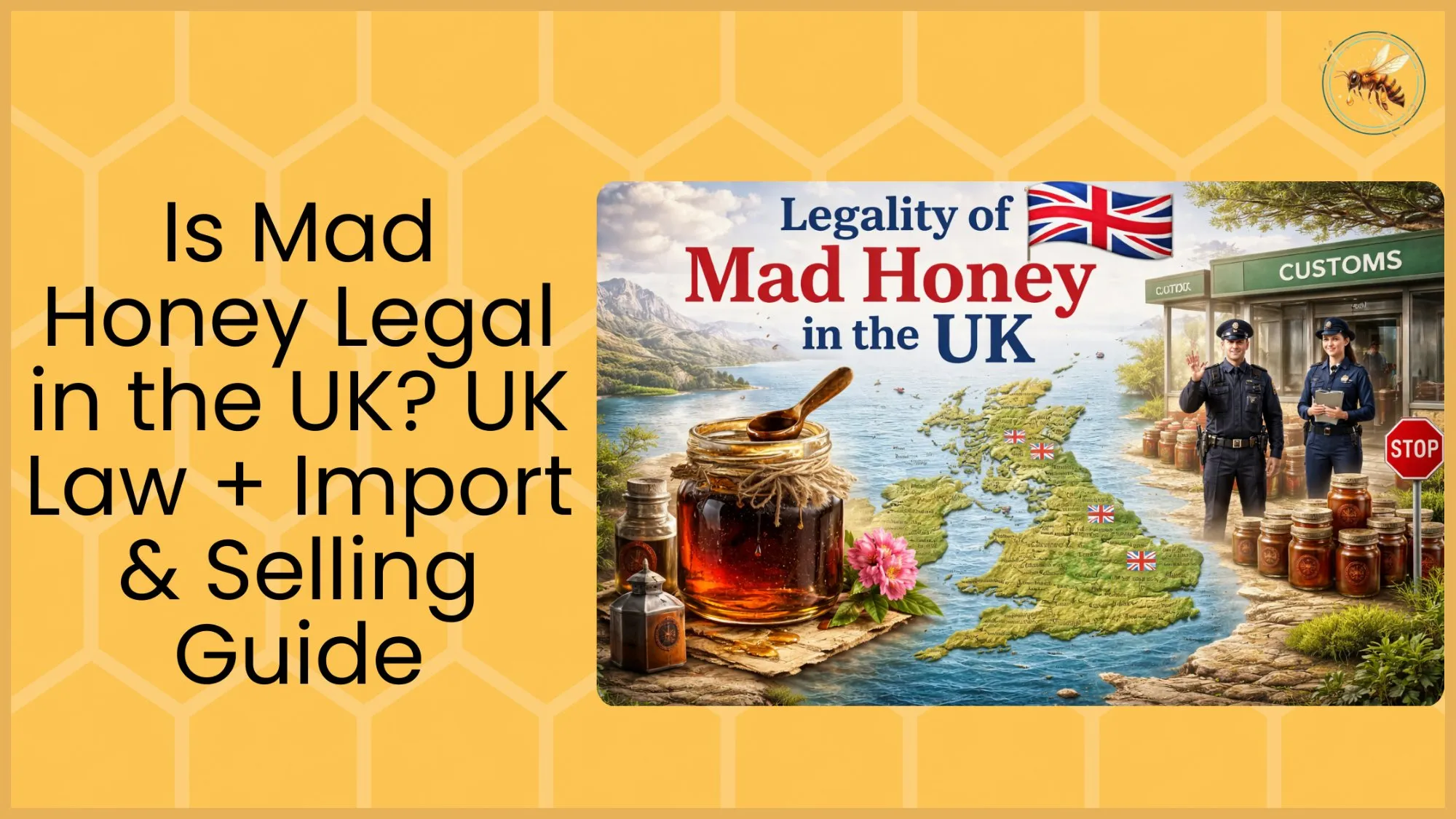
If you’re searching “mad honey legal in UK” (or “mad honey UK law”), you’re usually trying to avoid one of these outcomes:
- buying something that gets stopped at the border,
- accidentally selling/advertising it in a way that triggers enforcement, or
- getting pulled into misinformation that treats mad honey like a controlled drug.
Here’s the most honest way to frame it:
In the UK, mad honey is generally treated as a food product, not a controlled substance. The legal and compliance risks are usually not about possession, but about how the product is described, labelled, imported, and marketed, especially if a seller pushes drug-like or disease-related claims.
This matters because honey is not “unregulated.” In the UK, “honey” is a legally defined product category with compositional expectations and reserved descriptions (like “blossom honey,” “comb honey,” etc.). Those rules exist to prevent misleading sales and protect consumers.
So instead of asking “Is mad honey legal?” in a single sentence, this guide breaks “legal” into what it means in real life:
- owning/buying it,
- importing it, and
- selling/marketing it (which is where most problems actually come from).