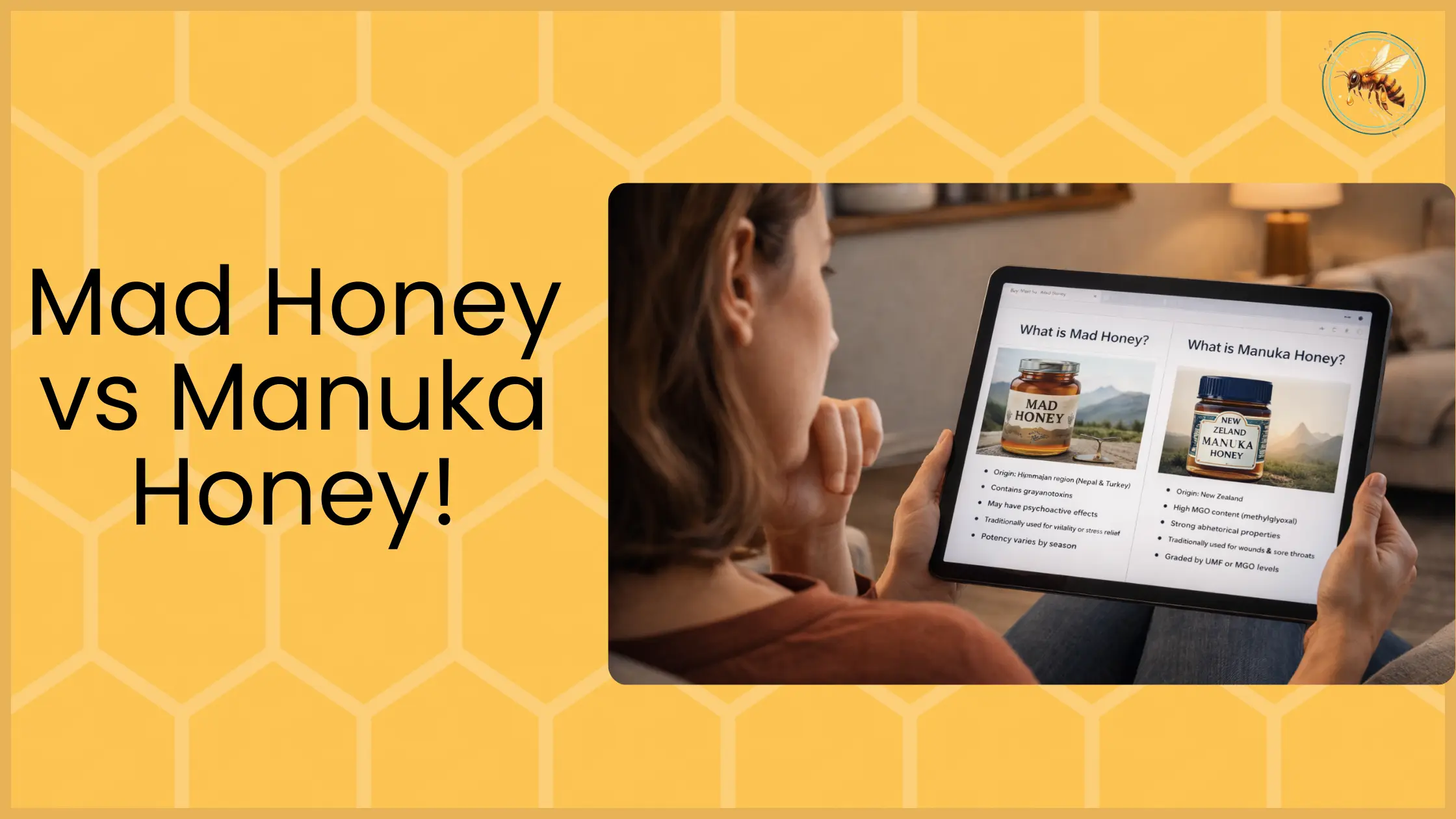
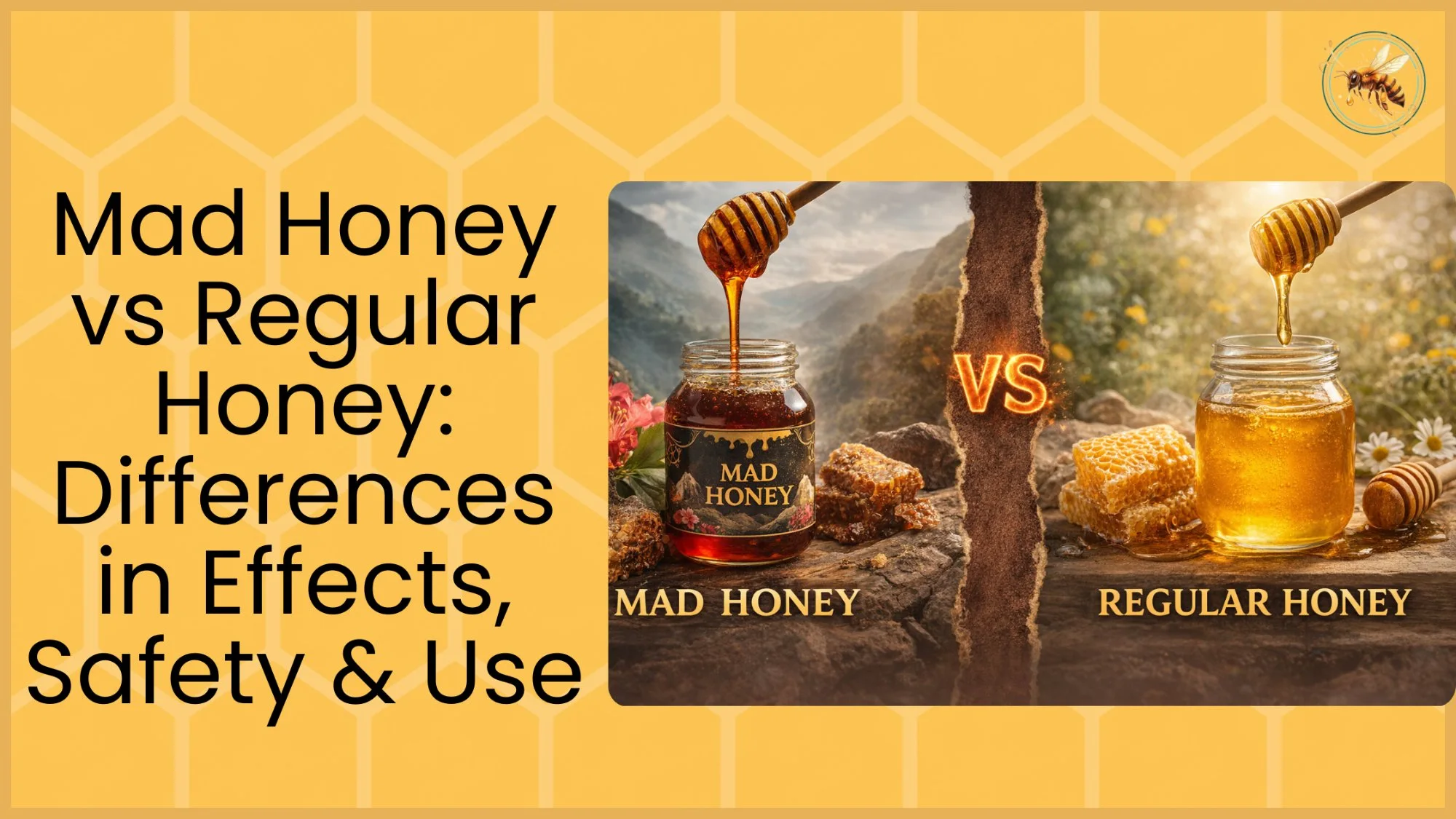
At first glance, “mad honey” and regular honey sound like variations of the same thing, like wildflower vs clover. But in real life, they function differently for most people.
Regular honey is a pantry staple: you use it for sweetness, flavor, and everyday food routines. Mad honey is usually bought for a different reason: people expect a noticeable experience, often described as a calm, body-forward wind-down at low amounts, and that expectation changes how you should approach it.
Here’s the simplest way to think about the difference:
- Regular honey is “food-first.”
- Mad honey is “experience-first.”
That doesn’t mean mad honey is automatically dangerous, and it doesn’t mean regular honey is “basic.” It means the use case and risk profile aren’t the same. With regular honey, you can drizzle, stir, bake, and snack without much thought. With mad honey, you’re supposed to slow down, start conservative, and treat it like a product where dose and variability actually matter.
This guide compares them in a practical way: what regular honey is as a baseline, what makes mad honey different, what people report (and why “more” can be a mistake), and how to choose between them based on your real intent, not internet hype.