Quick Answer: What Is Mad Honey in Turkey?
Let’s clear the definition before we go deeper, because most confusion starts here.
What “deli bal” means (and what it doesn’t mean)
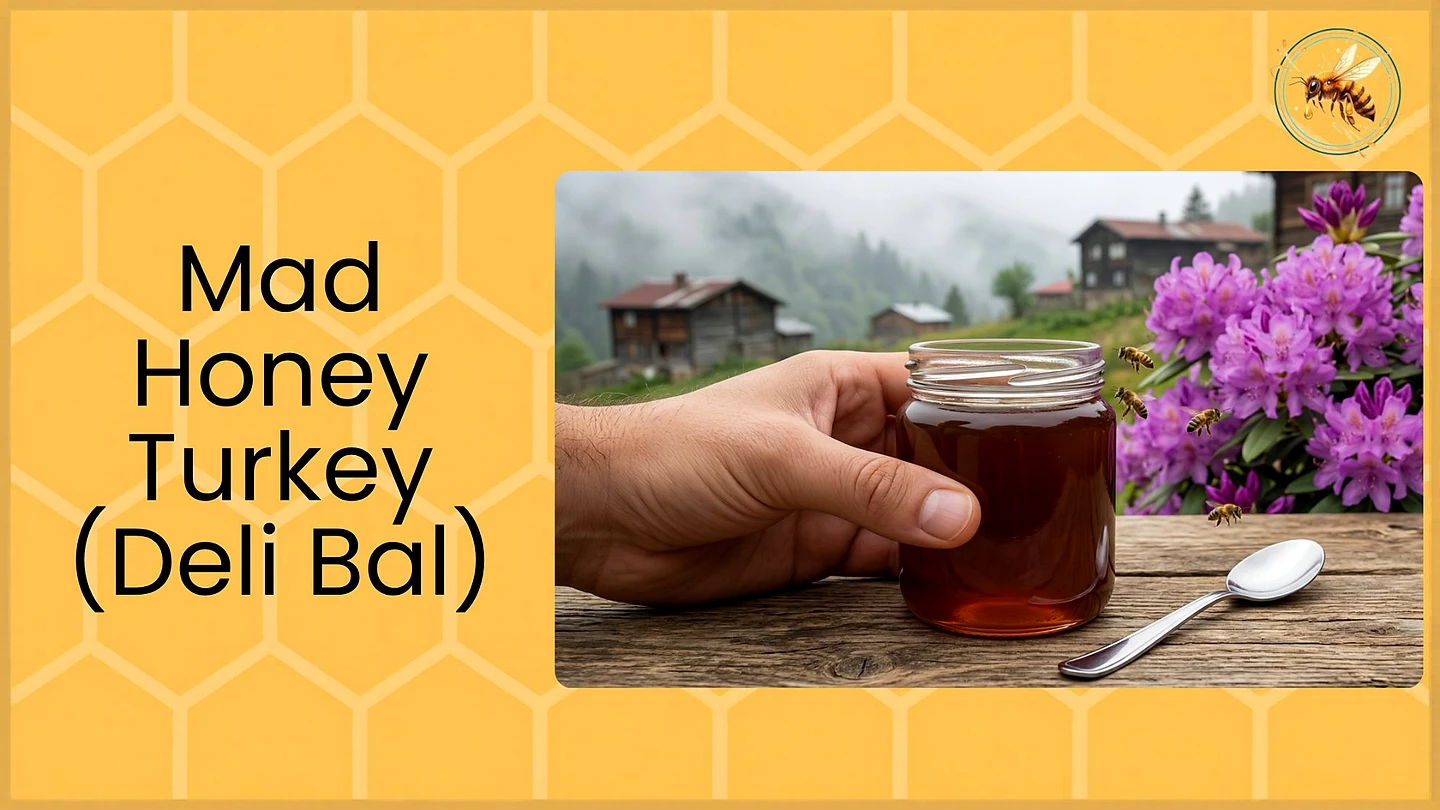
Deli bal is the common Turkish name associated with “mad honey.” Online, it often gets translated loosely as “crazy honey,” which pushes people toward the wrong mental model: something like a legal psychedelic. In reality, deli bal is better understood as a food product that can be bioactive when it contains meaningful levels of grayanotoxins, so effects (and risks) are dose-dependent and variable.
Why Turkey is one of the most cited regions online
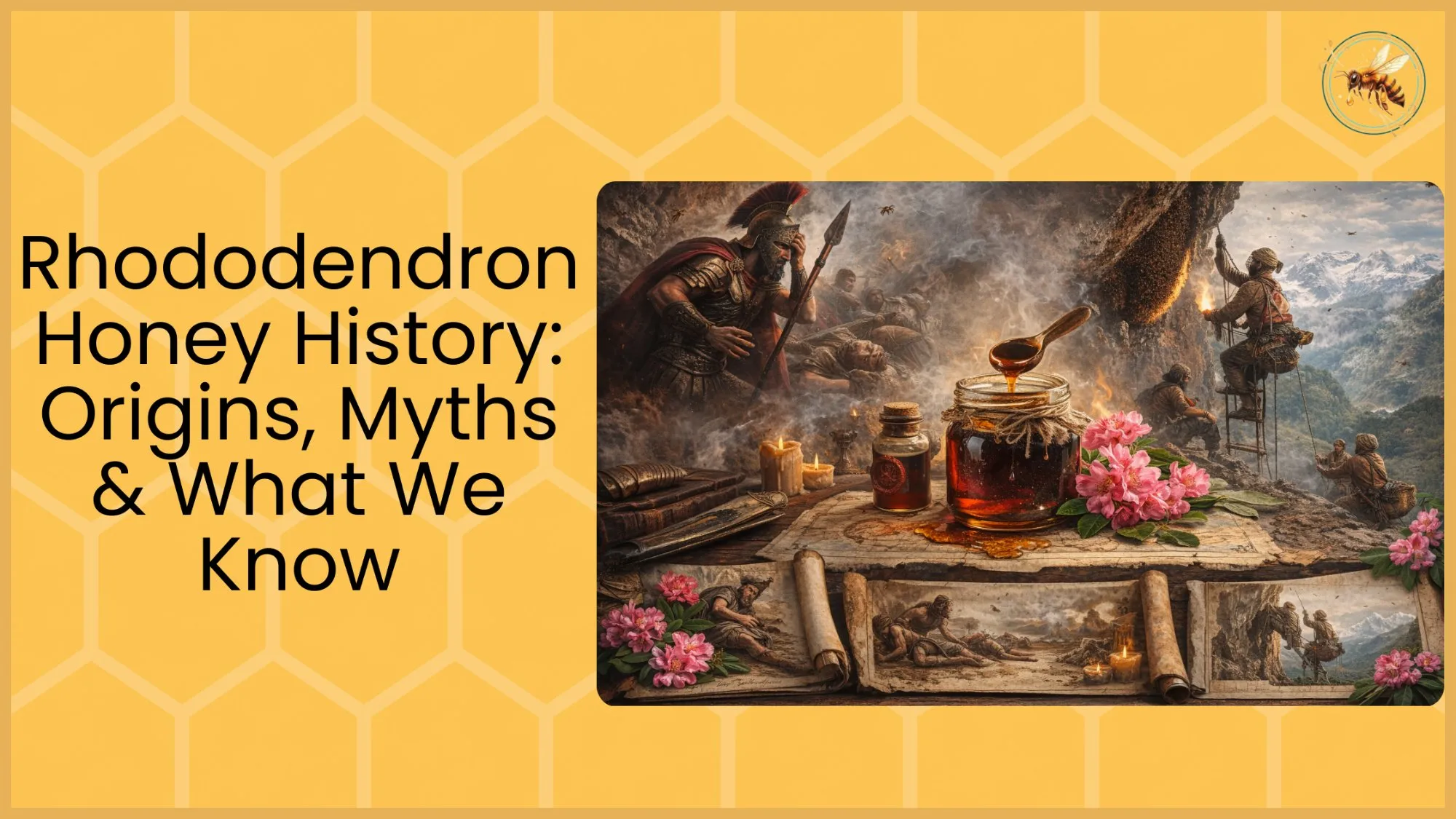
Turkey shows up constantly in modern mad honey articles for a simple reason: there’s a long history of documented “mad honey” incidents and case reports connected to the Black Sea region, and deli bal has remained part of folk tradition in some areas.
“Turkey mad honey” vs “Himalayan mad honey” (why people mix them up)
Many listings treat “Himalayan” as a generic premium label. But Turkey and Nepal are different contexts: different landscapes, different supply chains, different typical marketing narratives. Both can involve rhododendron nectar and grayanotoxins, but “Himalayan” is not a synonym for “mad honey,” and “mad honey” is not automatically Nepal.
Where It Comes From in Turkey (Geography + Nectar Sources)
Now that the definition is set, here’s the origin story that actually matters for buyers: not “country = quality,” but “ecosystem + nectar source = what the honey can be.”
Why the Black Sea region keeps coming up
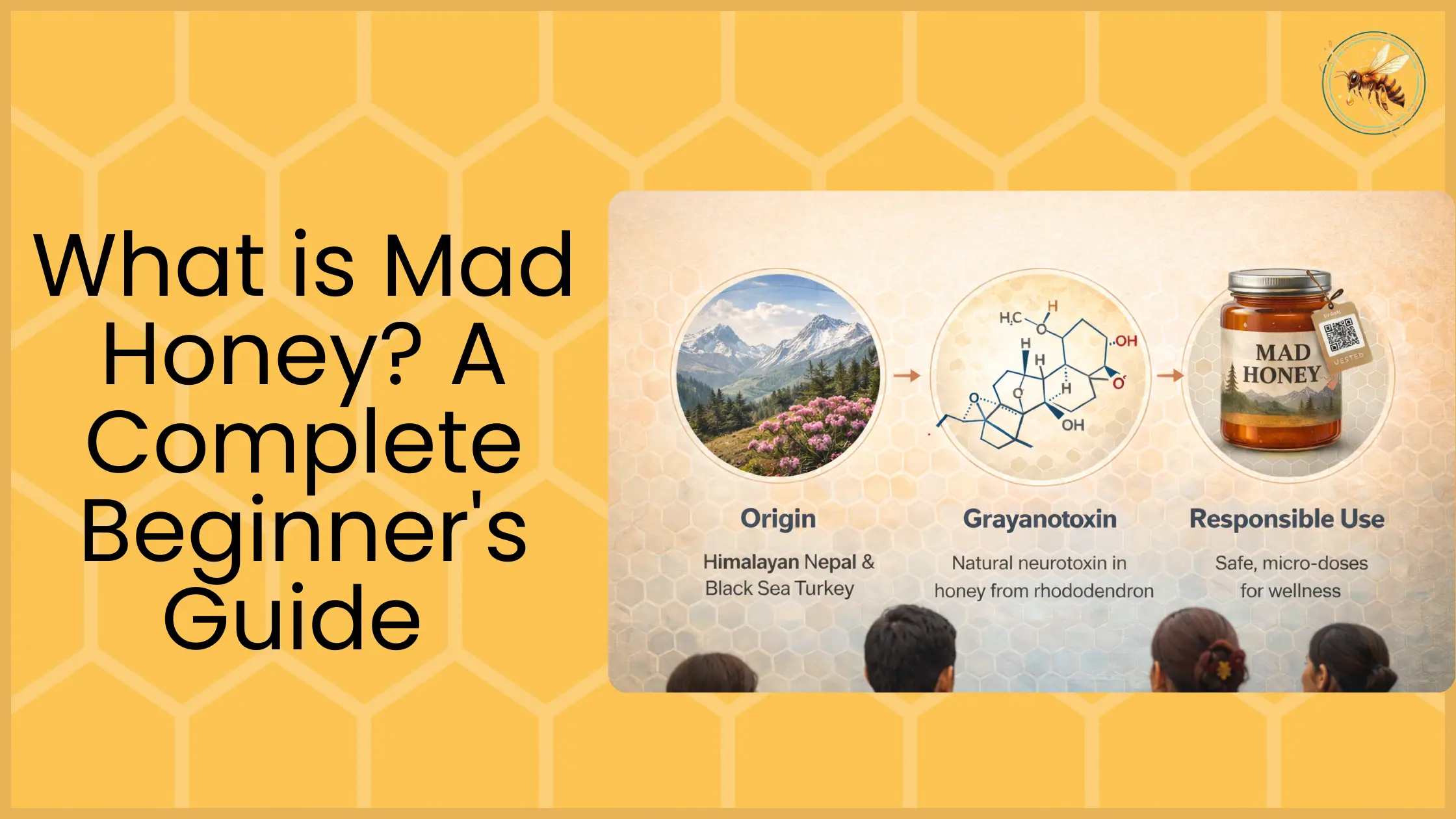
The best-known Turkish “mad honey” context is tied to the Black Sea / Pontic area, where rhododendron-rich habitats make grayanotoxin-containing honey more plausible than in regions without those plants.
The rhododendron connection (high-level, no jargon)
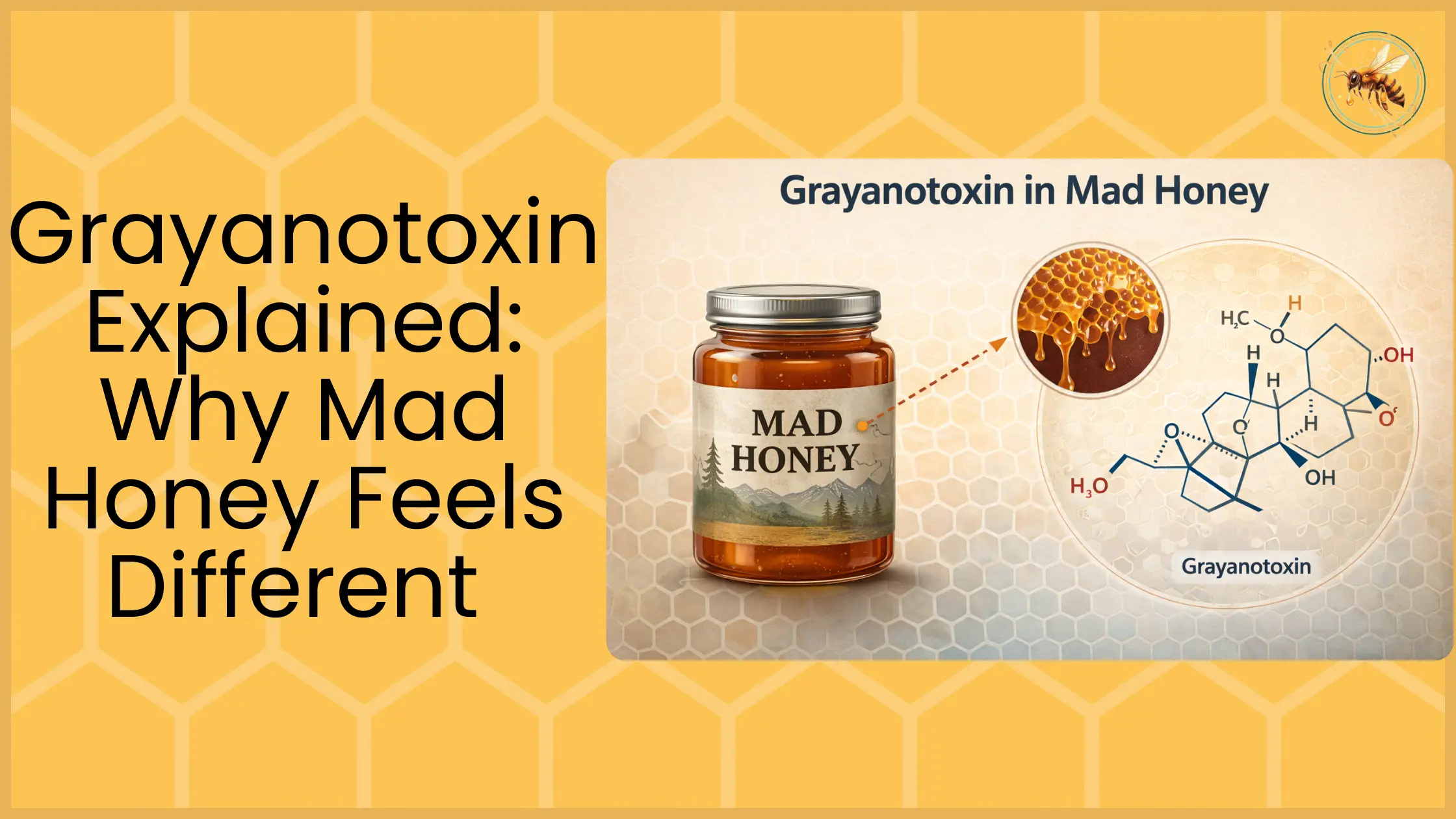
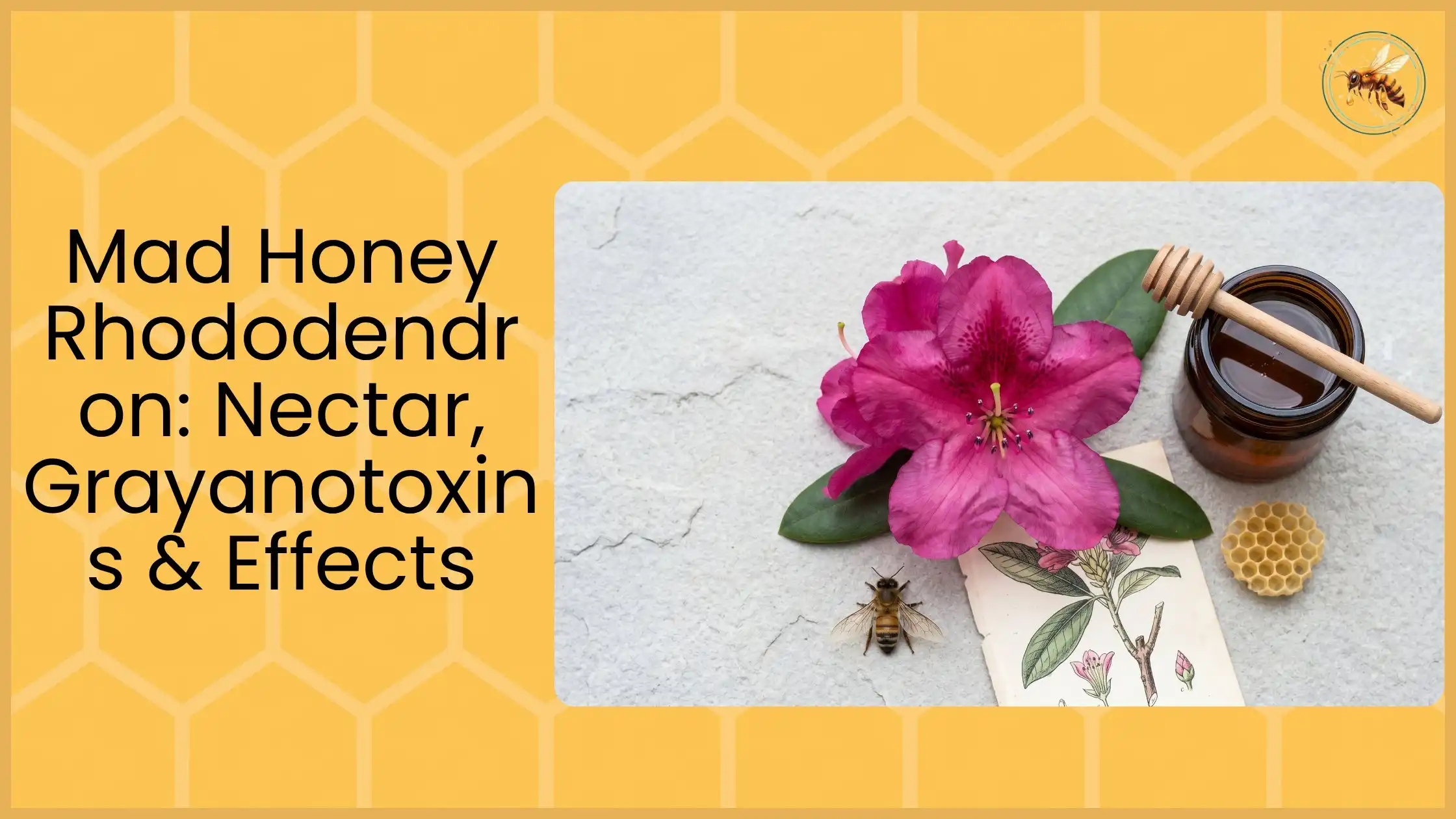
Mad honey forms when bees forage heavily on certain Ericaceae plants, most notably Rhododendron, during bloom. Your science explainer frames it simply: grayanotoxins originate in rhododendron species (including R. ponticum and R. luteum) and can be concentrated into honey when foraging is dense, and conditions align.
Why “from Turkey” isn’t enough without region/season detail
Even within Turkey, “deli bal” can vary massively depending on:
- which rhododendron species dominate the nectar mix
- when it was harvested
- how much blending happened during processing
- whether it’s truly monofloral-ish or diluted by other nectar sources
That’s why region + season + batch transparency is more meaningful than a country flag on a label.
What It Feels Like (Expectation Setting Without Hype)
This section is about realistic expectation-setting. It’s not a “trip guide,” and it’s not a promise of outcomes, because the honest story is variability.
At a high level, what people describe as “effects” tends to fall into two buckets: low-exposure experiences that feel subtle and “relaxing,” and higher-exposure experiences that feel like intoxication and can become unpleasant quickly.
Low-dose reports (what people commonly mean by “relaxing”)
At lower exposures, people commonly report a wind-down, body relaxation, mild mood shift, or a “wavy calm.” Your grayanotoxin explainer links this to mild cholinergic/autonomic modulation, basically, small shifts in nervous system signaling that can feel calming for some people.
A crucial reality check: this is not a standardized product. If someone tells you “one spoon always feels like X,” they’re describing their pattern, not a guaranteed outcome.
Too much (what changes when you cross the line)
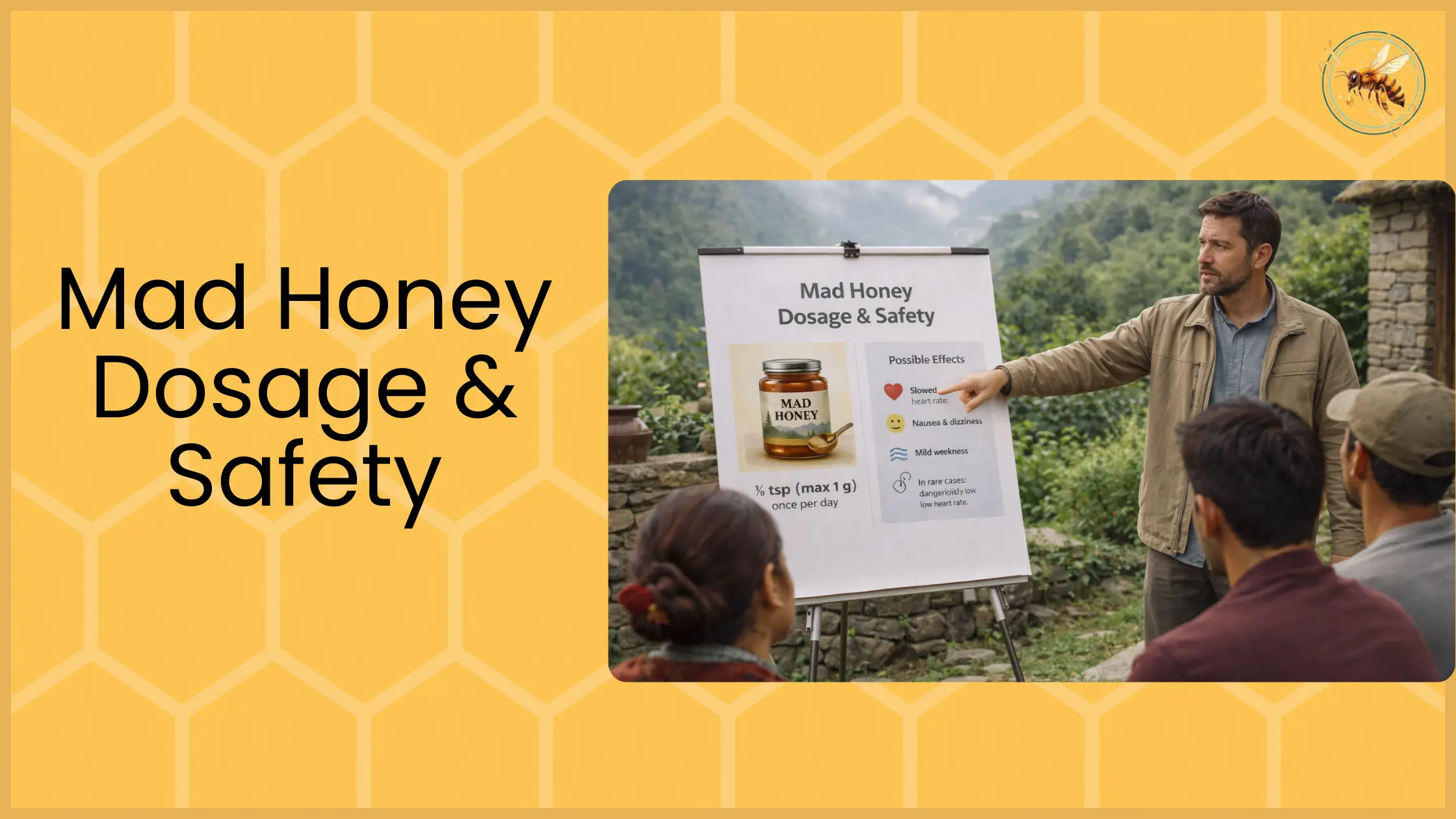
When exposure climbs, the experience often stops being “fun.” The common uncomfortable pattern includes nausea, dizziness, sweating, weakness, and the more specific hallmark risks discussed below: bradycardia and hypotension. Your beginner guide notes that Turkish case studies often describe hospital presentations involving conduction issues (like AV block) alongside hypotension.
Why “high” is a misleading word for most experiences
“High” suggests a predictable, recreational trajectory. But mad honey’s effects are better described as dose-sensitive intoxication: small increases can feel disproportionately strong, and higher exposure can look like a medical problem rather than a party experience.
Safety First (The Real Risks)
Here’s the part most listings hide behind marketing. If you’re going to discuss Turkey’s deli bal honestly, you have to name the risk pattern clinicians consistently flag.
Common side effects
Milder-to-moderate side effects often overlap with intoxication symptoms: GI upset, dizziness, sweating, weakness, and feeling unsteady, especially if exposure is higher than your body tolerates.
The hallmark risks (blood pressure/heart rate effects)
Toxicology reviews describe the core mechanism and clinical pattern: grayanotoxins act on voltage-gated sodium channels, increase vagal tone/autonomic disruption, and can lead to hypotension and bradycardia, sometimes with conduction abnormalities.
This matters because it explains why someone might feel faint, collapse, or show up in a clinic looking “drunk” but with a very different underlying cause.
Also read: Is Mad Honey Safe? The Honest Safety Guide
Red flags: when to stop and seek help
If someone experiences severe or escalating symptoms, fainting/syncope, chest pain, breathing difficulty, persistent vomiting, severe weakness/confusion, treat it as urgent and seek medical care. The clinical literature emphasizes supportive monitoring and interventions (often including fluids and atropine in bradycardia cases), which is why severe symptoms should not be “waited out” at home.
Why Turkey Mad Honey Varies by Batch
If you remember one thing from this page, make it this: variability isn’t a flaw, it’s a feature of the category. And it’s why “strongest” marketing is inherently risky.
Seasonality and bloom cycles
Grayanotoxin levels can shift depending on bloom timing and environmental conditions. The 2025 review notes that spring honey in Turkey frequently contains elevated grayanotoxins and discusses how factors like temperature thresholds and precipitation during flowering influence nectar/water content and yield dynamics.
Environmental factors + nectar mix
Even within the Black Sea region, toxin profiles can differ with:
- microclimate (humidity vs drier conditions)
- the dominant rhododendron species
- nectar density and dilution from other flowers
Handling and storage differences
Processing choices (filtering, blending, storage conditions) influence consistency. Your grayanotoxin explainer points out that blending during harvest/processing can dilute toxins, while small-batch honey can retain higher concentrations, another reason jar-to-jar consistency isn’t guaranteed.
Why “same spoon = same effect” doesn’t hold
Because spoons measure volume, not grayanotoxin content. Two jars can produce different exposures at the “same” serving size, so the safe approach is always conservative re-dosing and transparency-first buying.
Turkey vs Nepal (How They Differ in Practice)
Now let’s connect Turkish deli bal to the bigger mad honey ecosystem, without turning this into a nationalism contest.
Similarity: rhododendron-linked “mad honey” effect potential
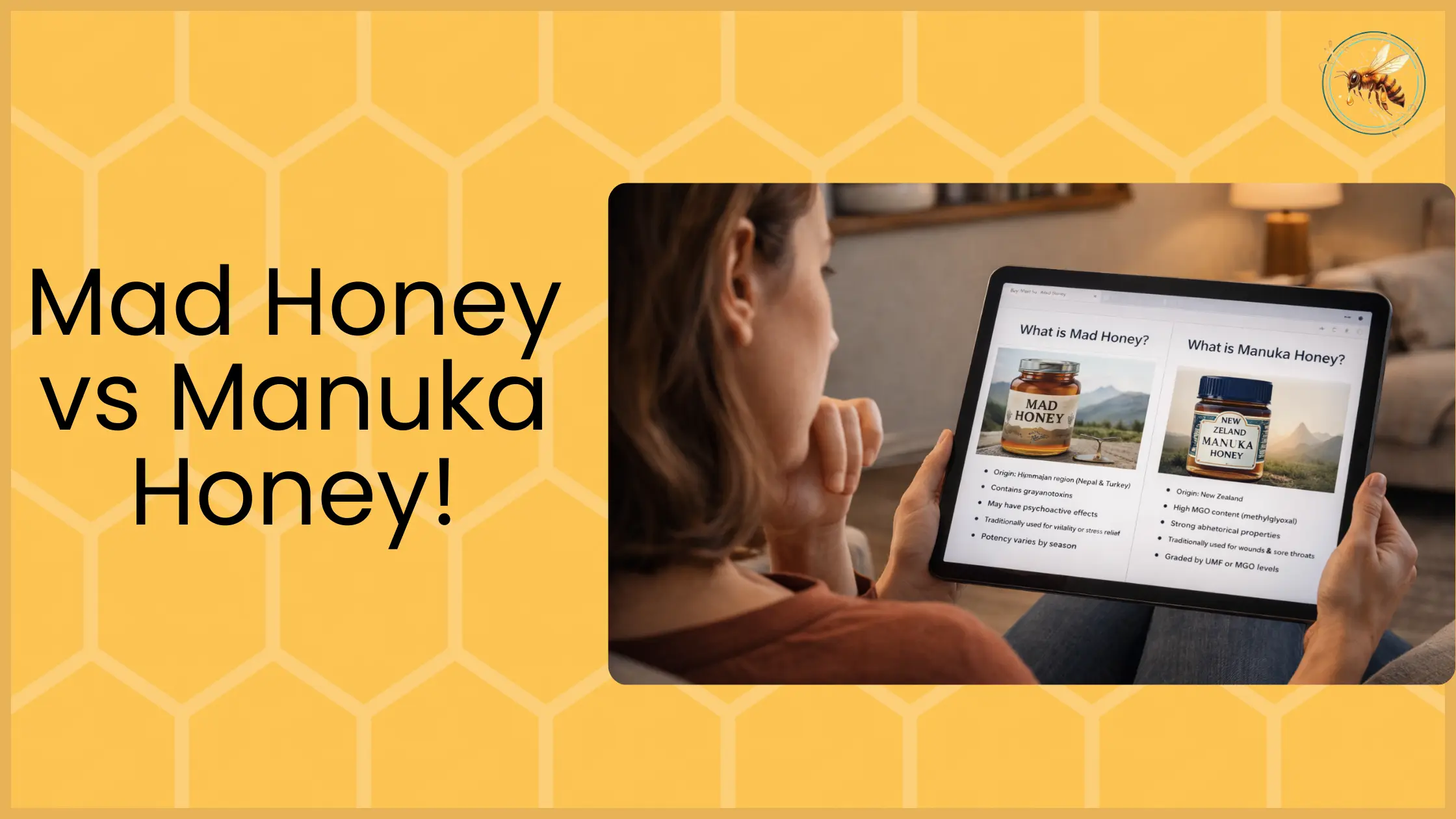
Both Turkey and Nepal can produce honey where rhododendron nectar and grayanotoxins are central to the effects.
Differences: supply chain + narrative + typical listings
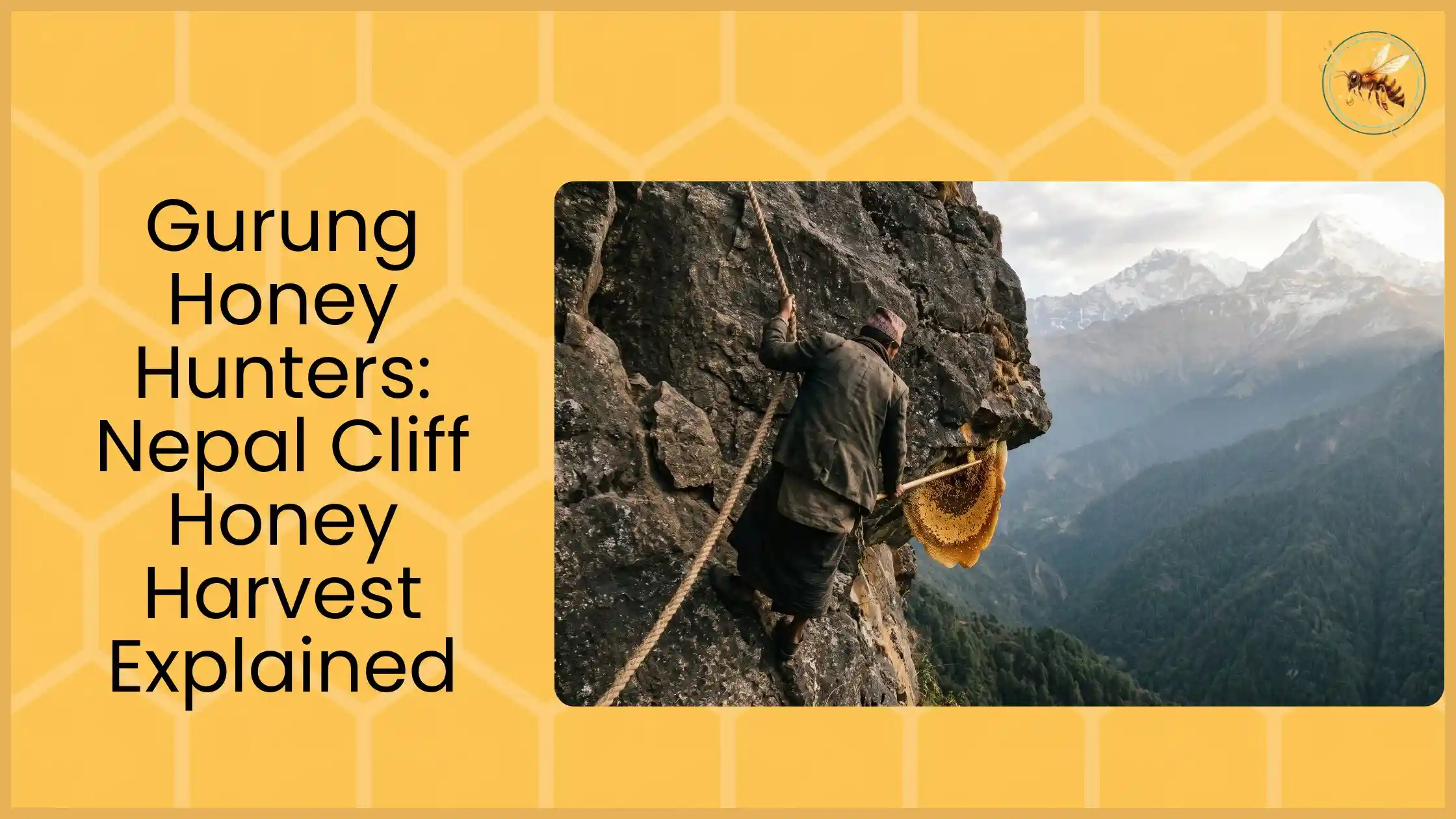
Your beginner guide gives the clean comparison: Nepal is often framed around high-risk cliff harvesting and Apis laboriosa lore, while Turkey is more commonly described as forest/managed-hive contexts in rhododendron areas and sold under the deli bal label.
That “story difference” affects how products are marketed online:
- Nepal listings often lean on “Himalayan cliff” imagery (sometimes honestly, sometimes as borrowed branding).
- Turkey listings often lean on “Black Sea deli bal” tradition (again, sometimes honest, sometimes vague).
Why “which is stronger?” is the wrong question
Strength is a moving target because it depends on batch chemistry, not a country name. Asking “stronger” pushes buyers toward intensity-seeking behavior, which is exactly how people get into trouble with a dose-sensitive product. The better question is: Which seller is more transparent, and which product has a clearer batch/safety context?
Buying Turkish Mad Honey Safely (Avoiding Fakes)
This section is where the informational intent meets the real buyer problem: “How do I avoid scams and unsafe listings?”
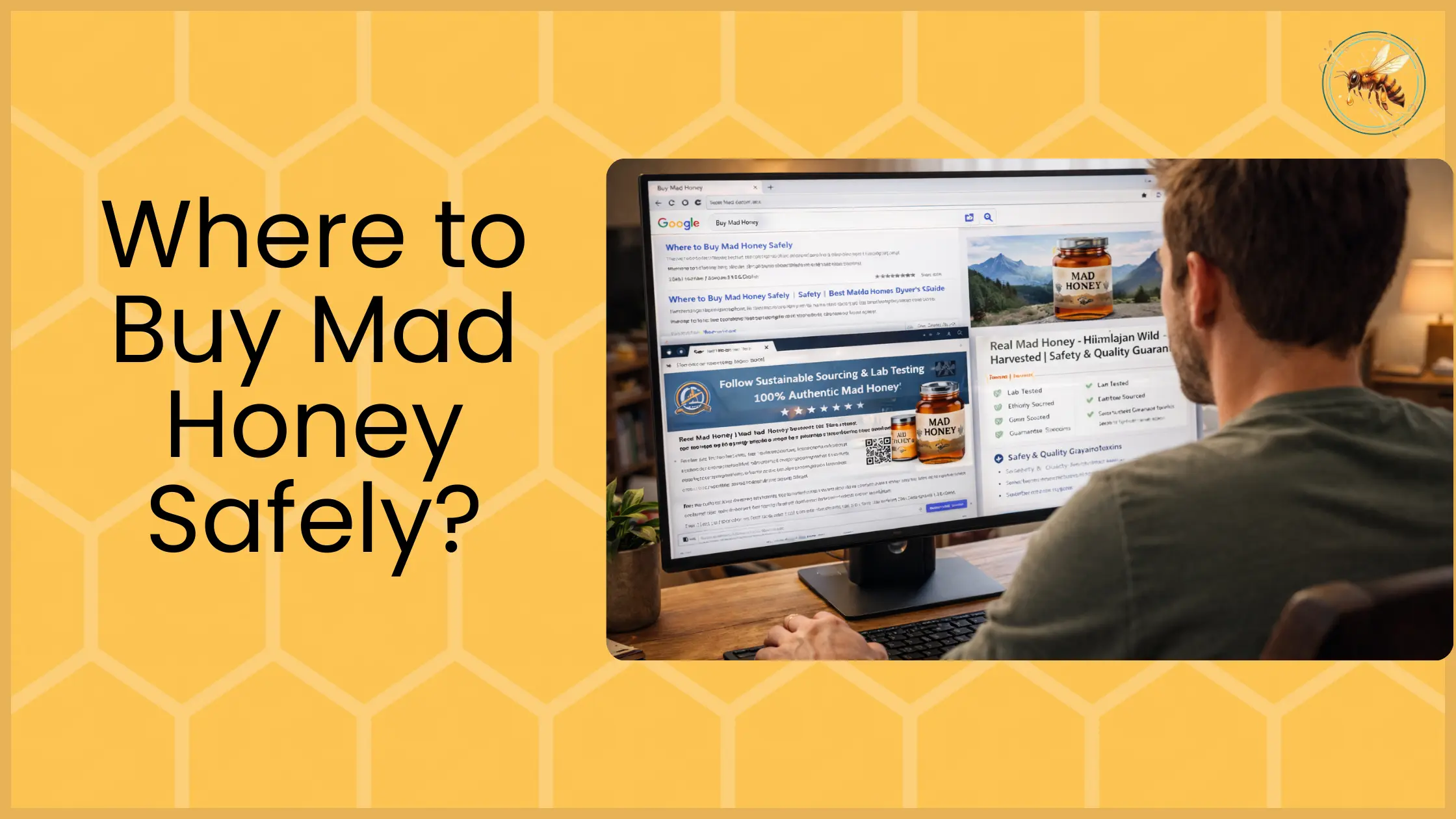
The safest consumer approach is simple: treat authenticity as part of safety. When sourcing is vague, testing is vague, and guidance is missing, your uncertainty rises, and so does your risk.
What responsible sellers disclose
Look for sellers who can answer (clearly, without drama):
- origin clarity (Black Sea region context, not just “Turkey”)
- harvest season/batch info
- conservative safety guidance (start low, wait before re-dosing, who should avoid)
- realistic expectations (no guaranteed effects)
Red flags
Be cautious if a listing leans heavily on:
- “psychedelic trip” language
- “guaranteed high” or “strongest” claims
- vague “Himalayan” labeling with no region/season detail
- no dosing/safety guidance at all
- “lab tested” with zero actual details (what was tested? which batch? what method?)
Testing/traceability signals (what to look for)
Your science explainer gives a consumer-friendly checklist: ideally, a seller can show what grayanotoxins were tested (GTX I/III at minimum), actual lab results, source region + season, blending practices, and third-party certificates, not just a generic “tested.”
Legality & Importing (Quick Practical Notes)
Here’s what you need to know:
Why do legality questions come up
The confusion comes from language (“hallucinogenic honey”) and sensational clips. In practice, mad honey is usually treated as a food product, but issues can come from marketing claims, labeling, and customs/import documentation, not from narcotics scheduling.
Possession vs importing vs selling/claims
- Possession is rarely the core issue for most buyers.
- Importing can trigger scrutiny if labeling is unclear, quantities look commercial, or documentation is missing.
- Selling/claims is where the biggest compliance risk lives: disease-treatment promises and “psychedelic” positioning create problems fast.
See our legality hub: Is Mad Honey Legal? What “Legal” Actually Means
Conclusion
Turkey’s mad honey, deli bal, is best approached as a variable, rhododendron-linked, potentially bioactive honey, not a guaranteed “psychedelic honey” product.
The Black Sea context matters, the grayanotoxin mechanism explains both the sought-after sensations and the risks, and variability is the reason smart buyers choose transparency + conservative dosing over intensity-chasing.
FAQs – Mad Honey Turkey
Is deli bal the same as mad honey?
Deli bal is the Turkish label most associated with “mad honey,” but not every honey sold under that label will be equally bioactive; batch chemistry and transparency matter.
Does Turkish mad honey cause hallucinations?
At higher exposures, people may experience confusion/disorientation and sometimes perceptual changes, but the more consistent clinical concern is cardiovascular intoxication patterns (hypotension/bradycardia), not a classic psychedelic mechanism.
Is it stronger than Nepal mad honey?
“Stronger” isn’t reliable as a country comparison. Potency can vary within each region by season, nectar mix, and processing.
How long does it last?
Onset and duration vary with dose and individual sensitivity. Clinical summaries often describe symptoms resolving within 1–2 days in reported intoxication cases.
Is it legal to buy/import?
Often treated as a food, but marketing claims and import documentation can create problems. See the legality hub for your country-specific guidance.
How do I know it’s authentic?
Prioritize origin clarity (region + season), batch information, conservative safety guidance, and specific testing transparency; avoid hype-first listings.
What’s a safe first dose?
The safest first approach is always conservative: start low and wait before considering more, because batch variability makes “standard dosing” unreliable.