Quick Answer – Is Mad Honey Safe or Dangerous?
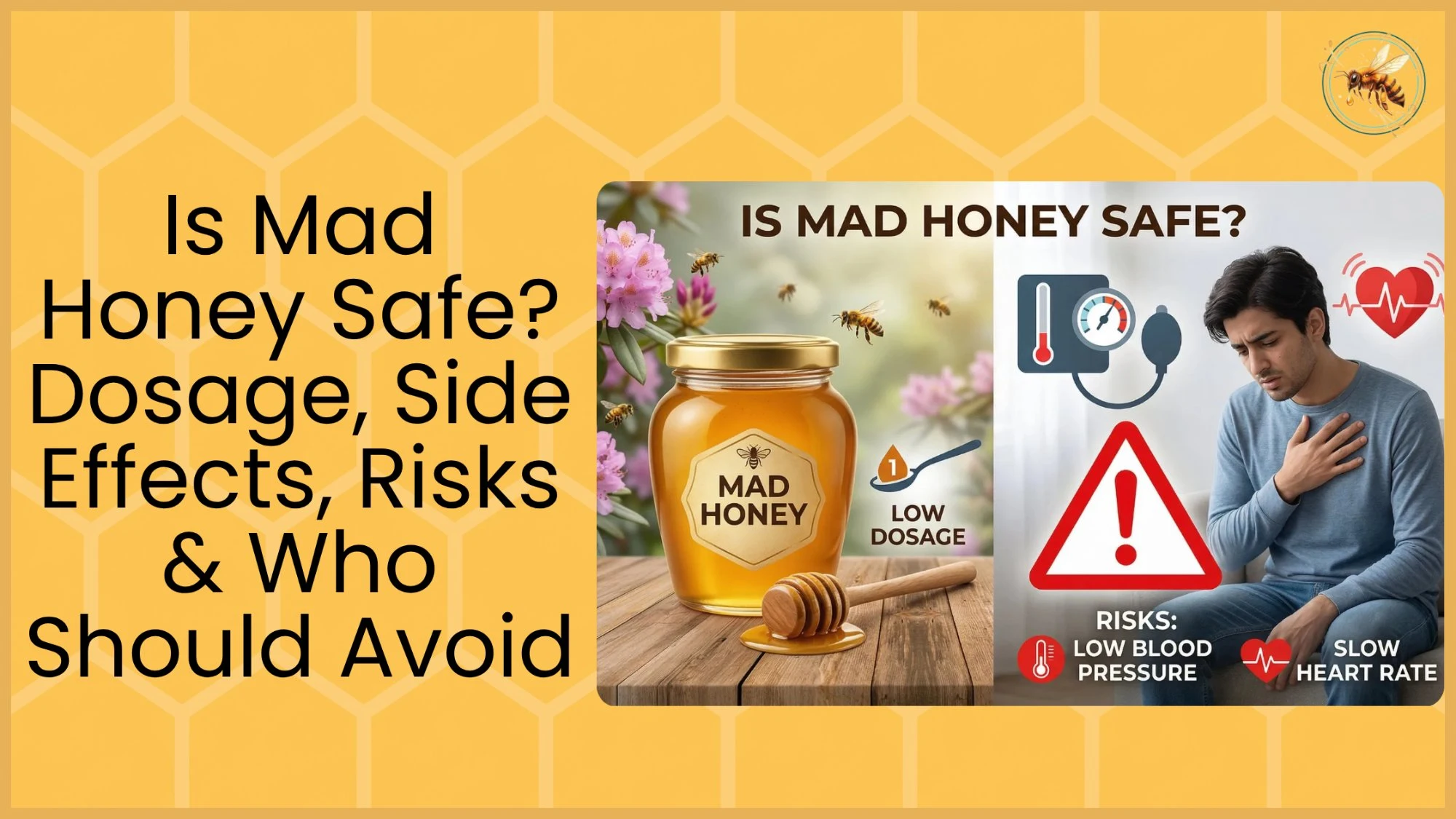
Here’s the balanced truth: mad honey is a food product, but it can behave like a bioactive one. Low exposure may feel mild for many people; higher exposure can produce intense, unpleasant, and sometimes medically significant symptoms.
Why the internet gives extreme answers
Online content tends to collapse everything into two extremes: “miracle honey” or “deadly poison.” The reality is more boring and more useful: dose + variability + personal risk decide the outcome.
“The dose makes the poison” in plain English
Mad honey’s active compounds don’t scale gently. The grayanotoxin mechanism is dose-sensitive; small increases can feel disproportionately bigger.
What Makes Mad Honey Different From Regular Honey
To understand safety, you need one simple distinction: regular honey is primarily a food; mad honey can contain grayanotoxins from rhododendron nectar, which makes it bioactive.
Rhododendron nectar + grayanotoxins (simple mechanism)
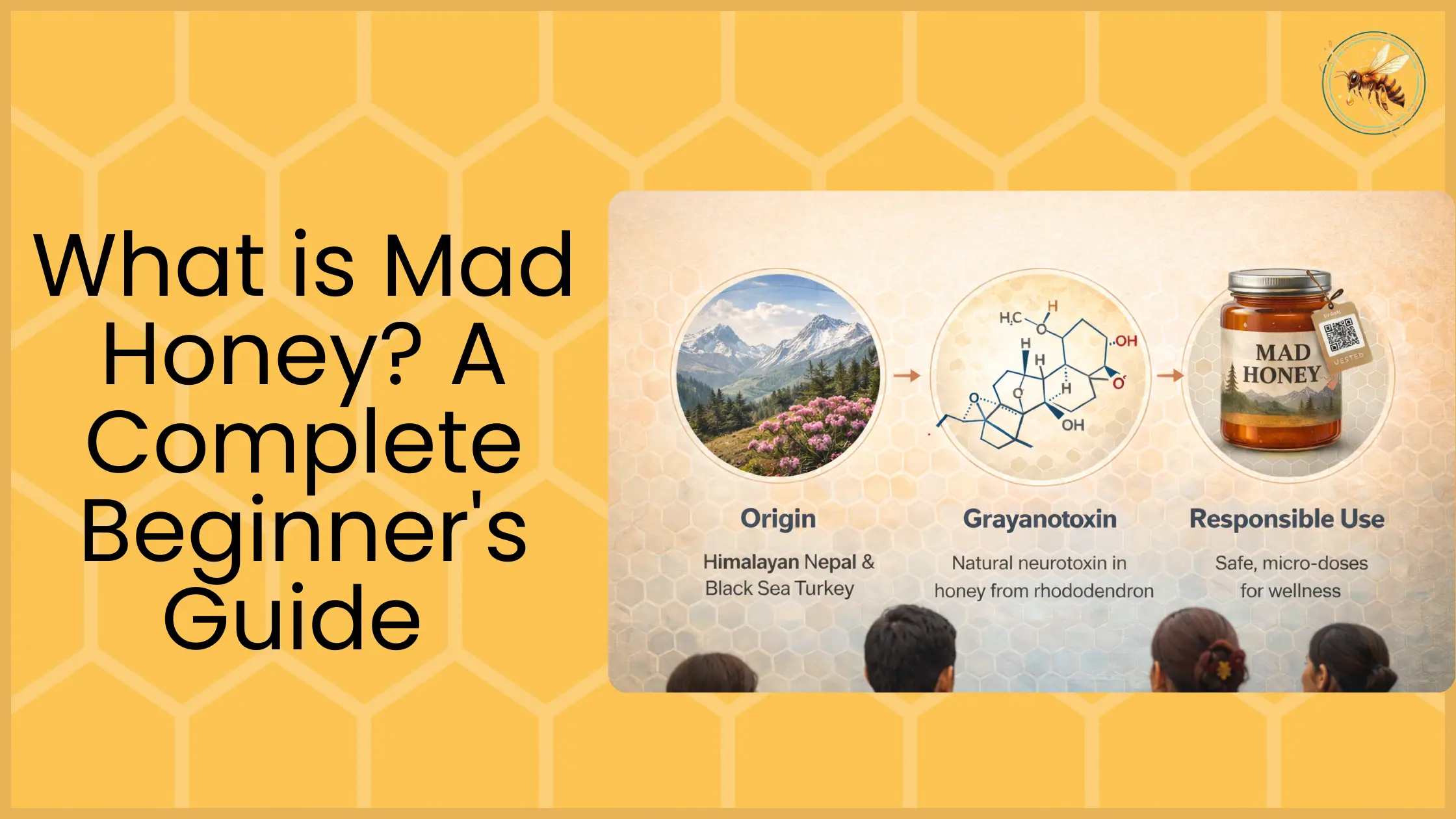
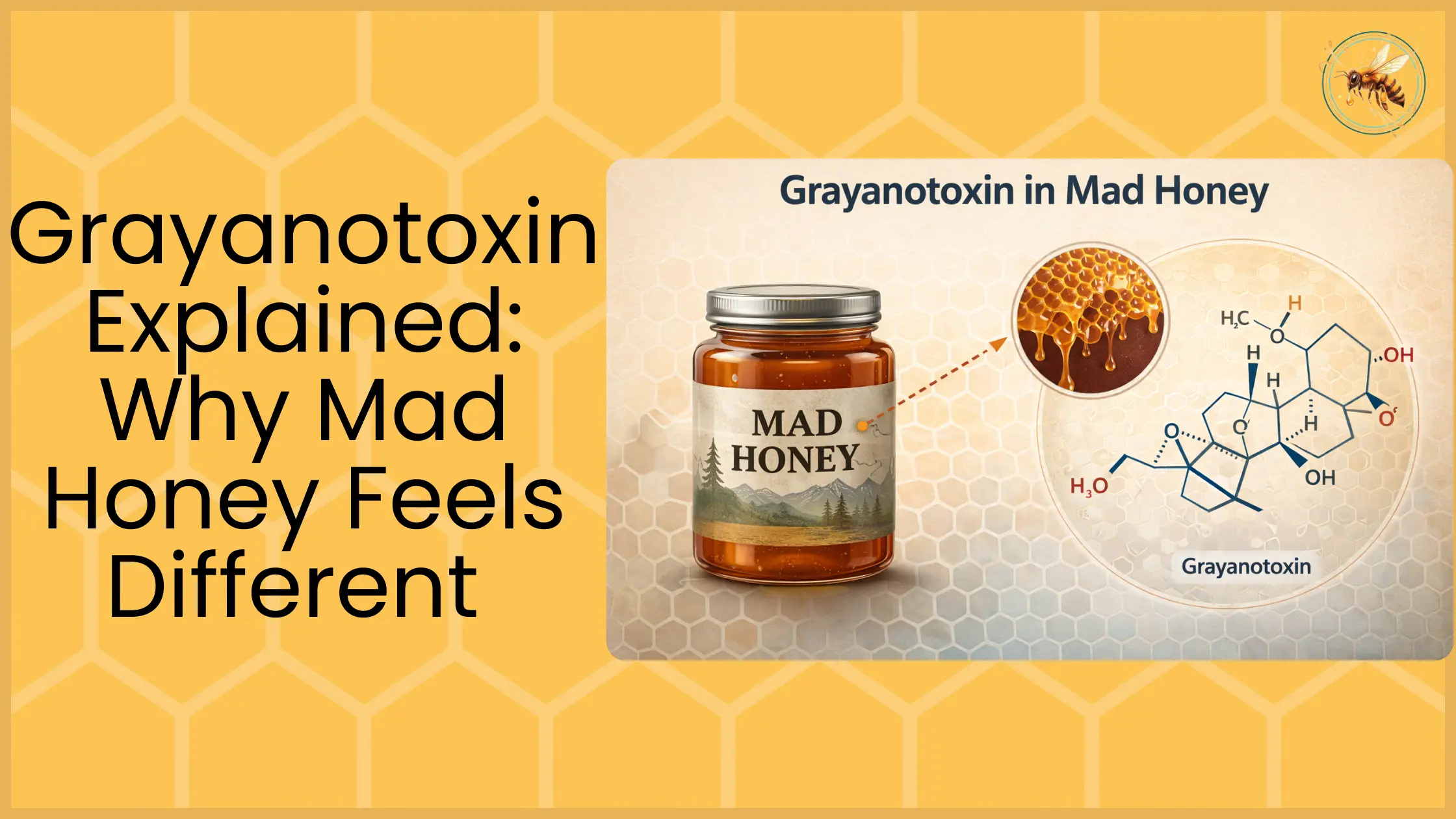
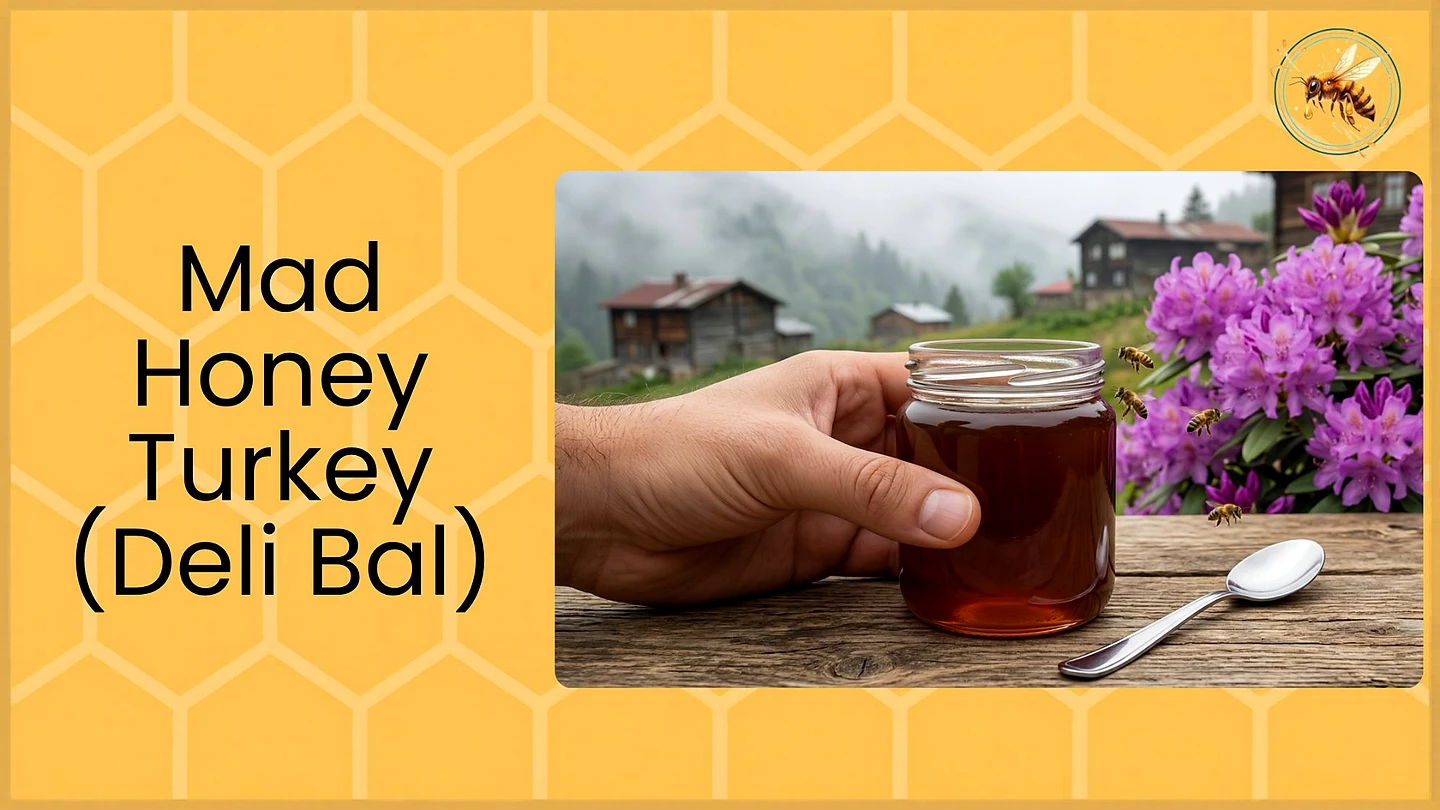
Grayanotoxins are diterpenes from certain Rhododendron plants that can end up in honey when bees forage heavily during bloom.
Why it’s more dose-sensitive than normal honey
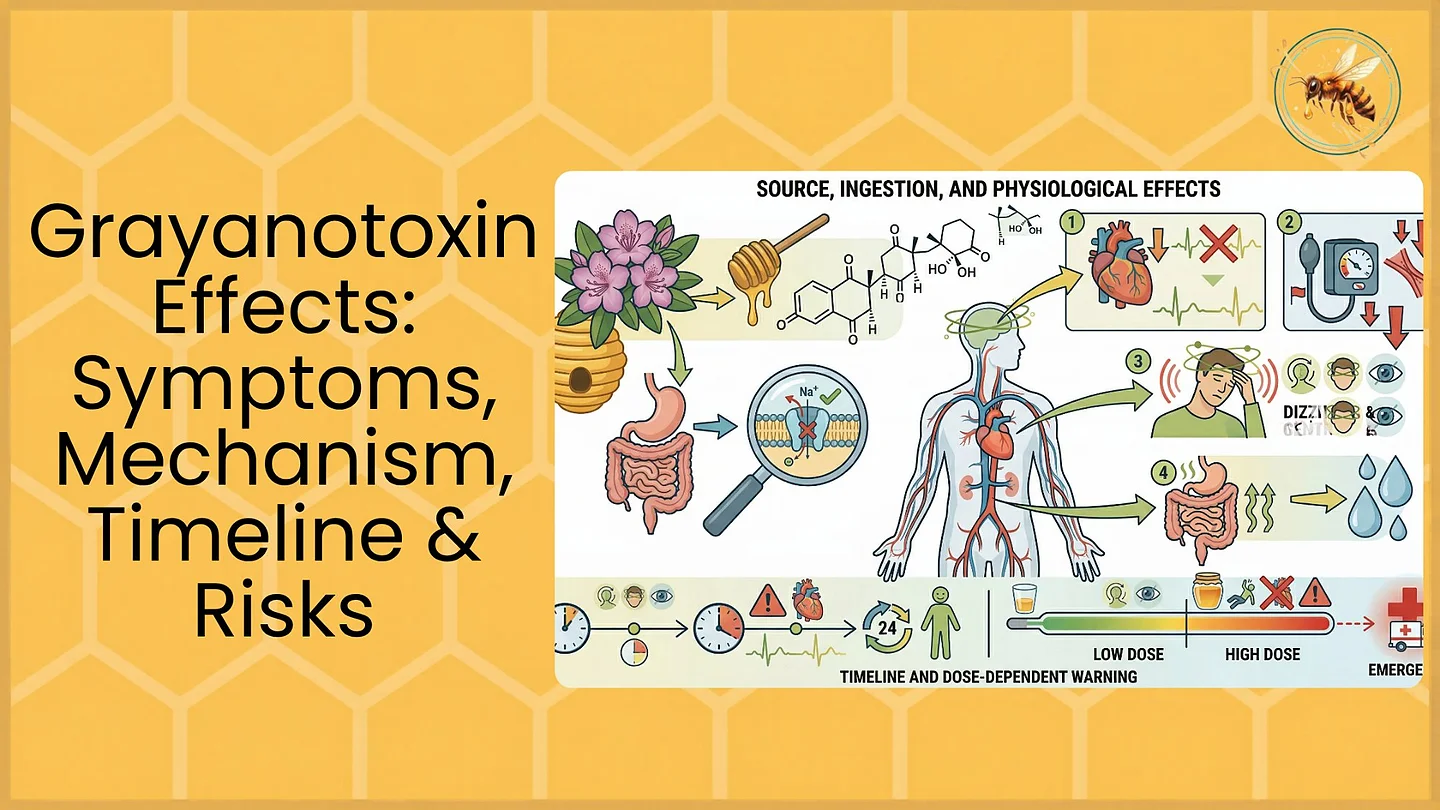
Grayanotoxins affect voltage-gated sodium channels and increase vagal (parasympathetic) tone, which is why the “big” adverse pattern is often bradycardia + hypotension rather than a typical stimulant or “psychedelic” effect.
What “Safe” Looks Like in Practice
If you’re reading this page, you’re probably not asking for perfect certainty; you’re asking for a risk-minimizing framework. This section is that framework.
Start low + wait long enough before re-dosing
Most “I took too much” stories follow the same arc: they didn’t feel much, assumed the batch was weak, then re-dosed too soon.
Don’t mix/stack (especially alcohol or other sedatives)
Even if mad honey and alcohol can both feel “relaxing,” mixing increases the chance of dizziness, nausea, and poor judgment, and makes it harder to interpret symptoms early.
Choose a calm setting (avoid risky activities)
If you’re trying a dose-sensitive product for the first time, the “safest” environment is boring: hydrated, fed, calm, and not driving, swimming, hiking cliffs, or doing anything where dizziness becomes dangerous.
Accept that effects vary, and that matters for safety
Variability isn’t a side note; it’s the reason you can’t treat a spoon as a universal unit. The science explainer repeatedly highlights seasonal, regional, and processing factors that can shift grayanotoxin levels.
The Big Safety Risk: Cardiovascular Effects (High-Level)
Now we get specific about the risk pattern clinicians flag. This matters because many people mislabel it as a “high” when it’s actually intoxication + autonomic effects.
Why some people feel dizzy or faint
Dizziness and fainting can happen when blood pressure drops and heart rate slows. That’s why the classic “too much” picture can look like: weak, sweaty, nauseous, light-headed, and wanting to lie down.
Blood pressure and heart rate, what the risk looks like
Toxicology reviews describe hypotension and bradycardia as core manifestations, sometimes alongside AV block and syncope (fainting).
Why taking more can escalate fast
Because the dose-response curve is steep, “just one more spoon” can be the difference between “mild” and “this is not fun.”
Common Side Effects vs Red Flags
This is where people most need clarity. Mild effects can be unpleasant but self-limited; red flags are about severity and pattern.
Mild–moderate effects (more common)
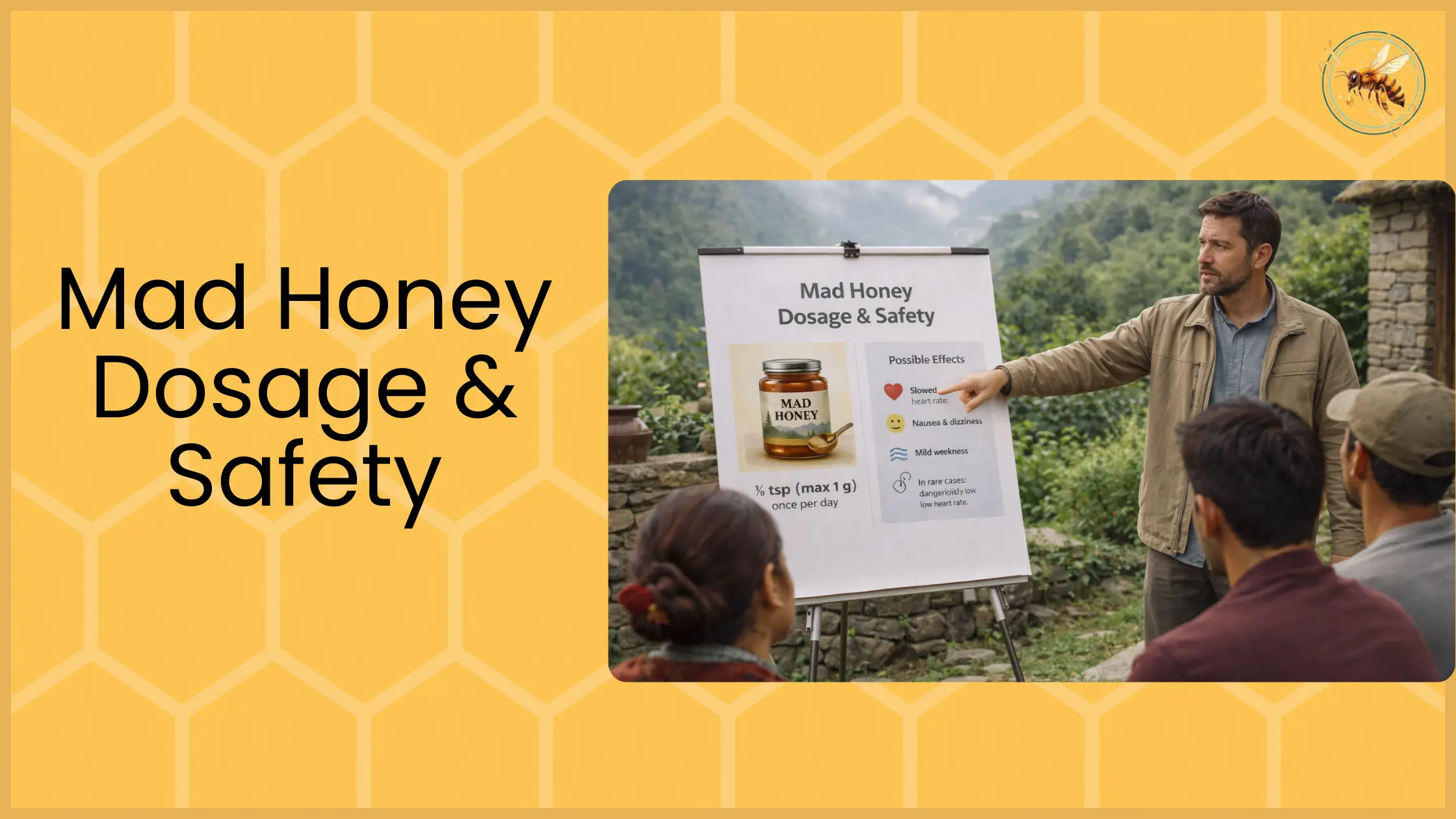
These can include nausea, dizziness, weakness, sweating, stomach upset, and a general “wobbly” feeling, especially if the dose is higher than your body tolerates.
Red flags (stop and seek medical help)
If symptoms are severe or escalating, especially fainting, chest pain, breathing trouble, repeated vomiting you can’t control, confusion, or severe weakness, treat it as urgent. Clinical summaries highlight cardiovascular complications as the key reason severe cases need monitoring/supportive care.
What to do immediately (simple supportive steps)
This is not treatment advice, just practical “don’t make it worse” guidance:
- Stop consuming more.
- Sit or lie down (falls are a real risk when dizzy).
- Hydrate if you can keep fluids down.
- Do not mix additional substances “to counter it.”
- If red-flag symptoms are present, seek urgent medical care.
Who Should Avoid Mad Honey (Highest-Risk Groups)
This is the section most “best brand” pages dodge, yet it’s one of the strongest credibility signals when a seller states it clearly.
Blood pressure/heart rhythm issues
If you already have hypotension, arrhythmias, or a history of fainting, mad honey’s core risk pattern is directly relevant.
People taking BP/HR-affecting medications
Beta-blockers and other cardiovascular meds can interact with a product that can already lower heart rate and blood pressure. Your beginner guide flags beta-blockers specifically.
Pregnancy/breastfeeding (conservative avoidance)
Because there’s no standardized safe dose and human data is mainly case-report-based, a conservative approach is to avoid.
Older adults or anyone with a history of fainting
Even if someone “only” gets dizzy, the downstream risk (falls, injury) can be the bigger danger.
When in doubt: treat it like a bioactive product, not a cute honey trend
If you have to ask “is this safe for me?” because of a health condition or medication list, don’t rely on internet anecdotes. Your own institute framing also notes the lack of universally established dosage standards and toxicity uncertainty.
Also Read: Mad Honey vs Kava: What’s Different and Which One Should You Choose?
Batch Variability: Why One Jar Can Feel Different Than Another
This is the missing piece in most safety discussions,and it’s why you see conflicting “it did nothing” vs “I ended up in the ER” stories.
Region + season + nectar mix
Mad honey tends to form when bees forage heavily on toxic rhododendron during bloom; concentrations can vary by region and season.
Why “the same spoon” isn’t a stable dose
A spoon measures volume, not grayanotoxin content. Two spoons from different jars can be meaningfully different exposures.
Why “strongest honey” marketing is a red flag
Any seller pushing “strongest” is pushing you toward the part of the category where bad outcomes become more likely. Responsible sellers emphasize conservative dosing and transparency, not intensity.
Authenticity & Safety (Why Fakes Increase Risk)
This isn’t just about getting ripped off. It’s about uncertainty.
How mislabeling/adulteration changes safety
If a product is mislabeled, diluted, blended without disclosure, or not what it claims, you lose the only thing that makes “safe use” possible: predictability and transparency. Your institute doc explicitly lists fake/adulterated products and lack of verification as a major market challenge.
What responsible sellers disclose
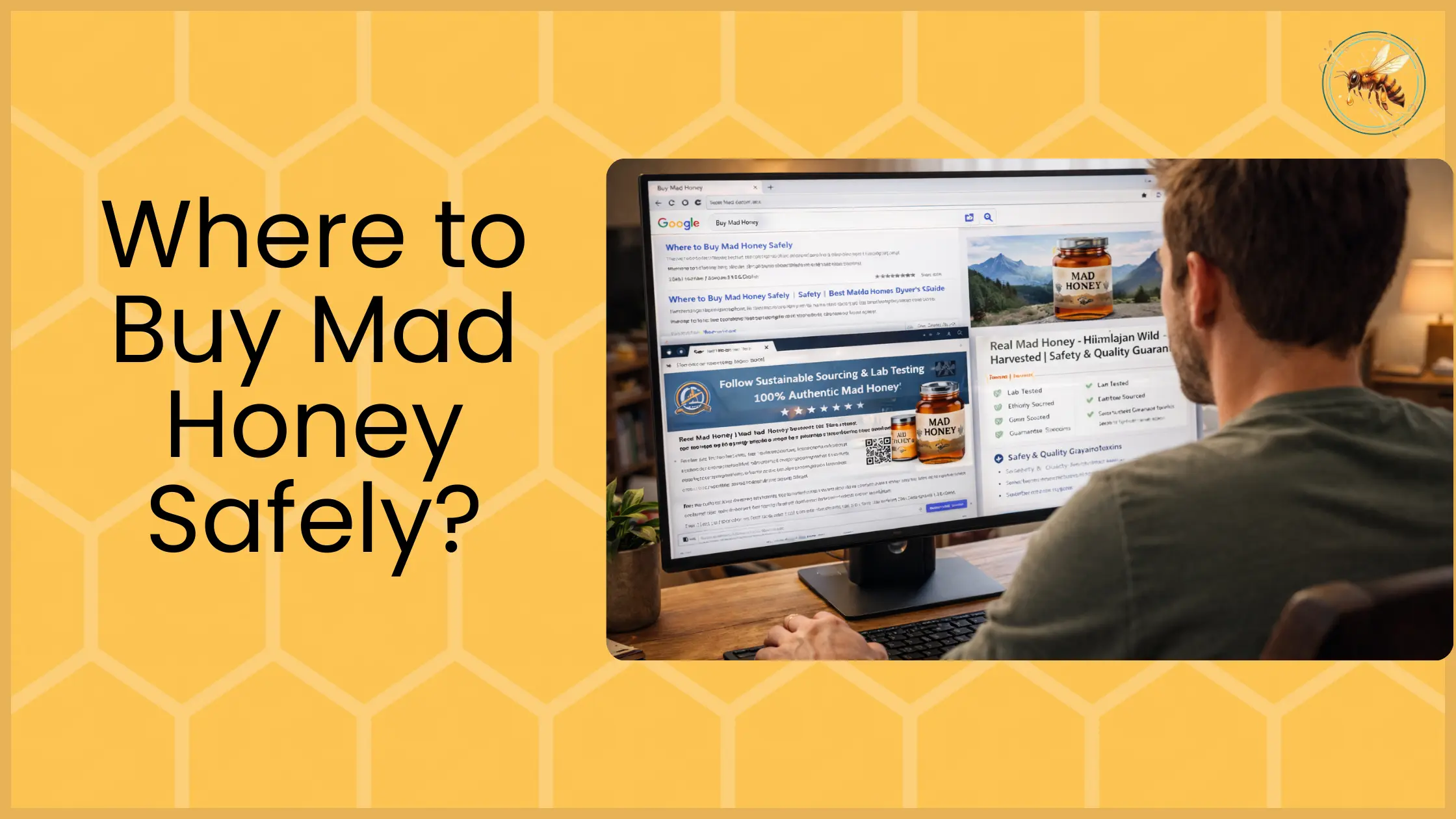
At a minimum, look for:
- origin clarity (not just “Himalayan”)
- batch/harvest information
- conservative dosing guidance
- testing transparency (what was tested, how, and for which batch)
Your science explainer also lists practical transparency questions buyers should ask (GTX I/III testing, results, region/season, blending practices, third-party certificates).
Quick red-flag checklist
If you see these, walk away:
- “guaranteed trip/psychedelic” language
- “strongest / highest grayanotoxin” claims
- no safety guidance whatsoever
- vague “lab tested” with no details
- unclear or generic origin story
Conclusion
So, is mad honey safe?
It can be safer at low exposure for some people, but it is never “risk-free,” because the category is dose-sensitive and batch-variable. The smartest approach is to treat “safe” as a behavior: conservative use, no mixing, clear stop-rules, and transparency-first buying.
FAQs – Is Mad Honey Safe?
Is mad honey safe for beginners?
It can be lower risk for some people if they’re healthy, cautious, and conservative, but “beginner safe” depends on avoiding re-dosing traps and respecting variability.
Can I take mad honey every day?
This is where certainty drops. There’s no internationally established safe dosage standard, and long-term patterns aren’t well standardized for consumers. A conservative stance is: don’t treat it like daily honey.
How long does it last?
Onset and duration vary, but toxicology summaries describe symptom onset within minutes to hours, and many cases resolve within 1–2 days, depending on exposure and management.
Does mad honey get you high?
Not in a consistent, recreational-drug sense. At low amounts, some people report calm/euphoria; at higher exposure, it can look more like intoxication and autonomic symptoms.
Can mad honey affect blood pressure?
Yes, this is the core risk pattern at higher exposure (hypotension/bradycardia).
What should I do if I took too much?
Stop consuming more, reduce fall risk, hydrate if possible, and seek urgent care for severe symptoms. Severe cases described in the literature often involve monitoring and supportive measures.
Is mad honey legal where I live?
Often treated as a food product, but country rules and customs/marketing claims vary.