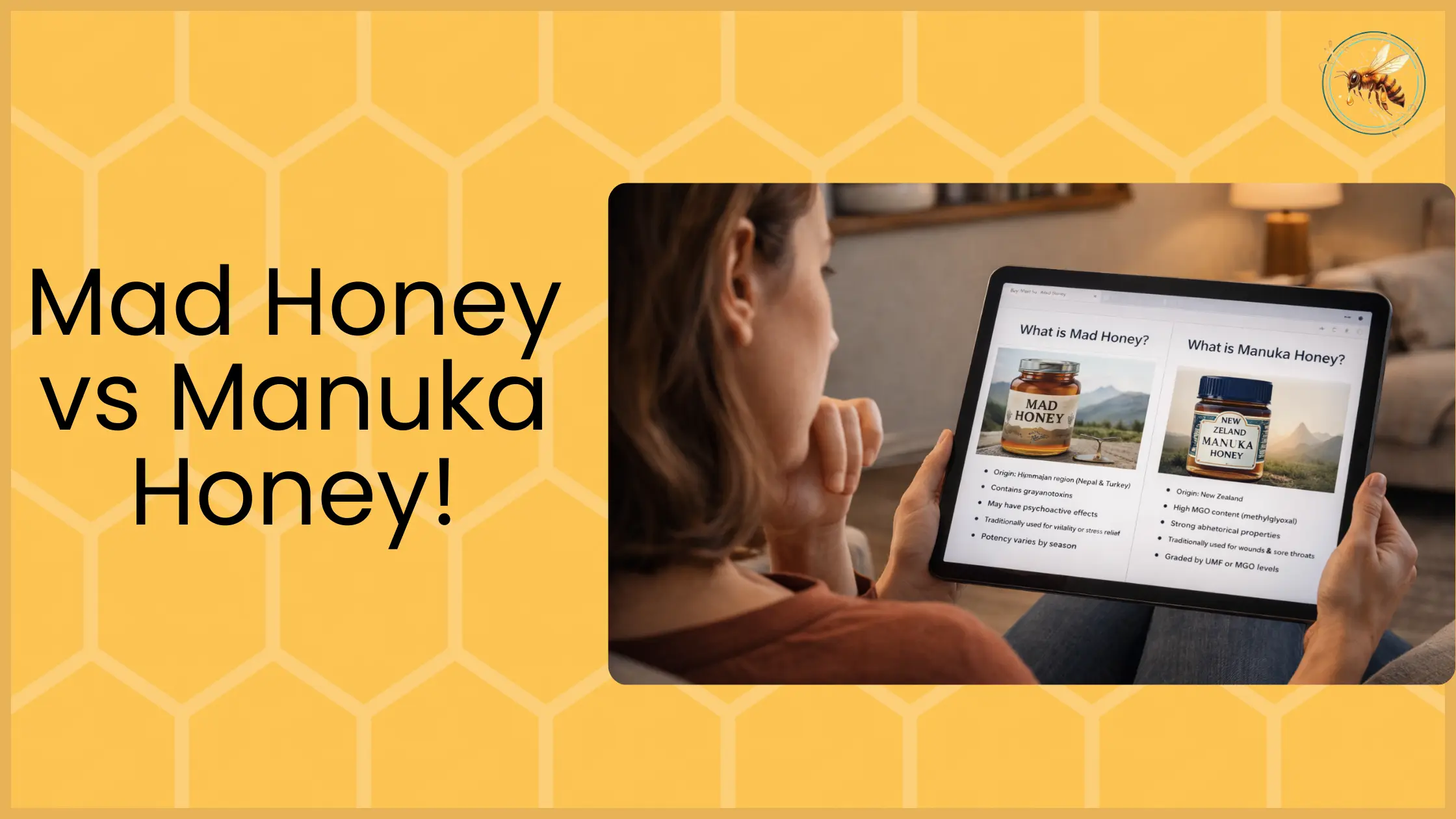
If you’re comparing mad honey vs manuka, you’re already asking the right question, because these two honeys are often treated like they’re in the same category when they’re not.
Manuka honey is typically bought for its grading systems (UMF/MGO) and its reputation for quality markers and antibacterial activity in lab contexts.
Mad honey is typically bought for a distinct ritual experience, because some batches can contain grayanotoxins (from rhododendron nectar) that may cause noticeable effects in the body, which also means extra safety considerations.
So this isn’t a “which one is better?” comparison.
It’s a “what do you want this honey for, and what tradeoffs are you okay with?” comparison.
tl;dr
- Manuka is often chosen for UMF/MGO-based grading and quality markers; mad honey is chosen for experience/ritual and is more variable.
- Manuka has widely used quality systems (UMF/MGO). Mad honey is not standardized the same way and can vary substantially by batch.
- Mad honey can cause hypotension and bradycardia in intoxication cases; manuka generally doesn’t carry that same “dose can flip the experience” risk.
- If you want an everyday honey with clearer grading systems → manuka (or regular honey). If you want a unique ritual experience → mad honey (with safety rules and authenticity checks).
What Manuka Honey Is (Why People Buy It)?
Manuka honey is a monofloral honey produced primarily in New Zealand (and also Australia) from the nectar of the manuka plant (Leptospermum scoparium). It’s famous because it has distinct chemical markers and a strong commercial ecosystem built around grading and authenticity.
UMF/MGO concept (high-level, no medical claims)
UMF™ (Unique Manuka Factor) is a grading system that looks at multiple markers to help confirm manuka authenticity and quality.
According to the UMF organization, the UMF grading system measures four signature compounds: Leptosperin, DHA, MGO, and HMF.
- Leptosperin helps confirm the honey’s manuka source
- DHA (dihydroxyacetone) is related to how manuka honey develops its active compounds over time
- MGO (methylglyoxal) is commonly associated with manuka’s “activity” reputation
- HMF is commonly used as a honey freshness/heat indicator in food contexts
MGO is also used as a standalone label by many brands. But it’s important to understand the difference:
- MGO rating = a single-compound measurement
- UMF rating = a broader multi-marker system (not just one number)
Typical use cases (food/wellness routines)
People often use manuka honey like an “upgraded daily honey”:
- a spoon in the morning
- in tea (not boiling hot)
- on toast, yogurt, or oats
- as a premium pantry item
Some people also seek it out because research literature discusses manuka honey’s antibacterial properties and MGO’s role in that activity (in vitro/lab contexts).
Important expectation setting: Buying manuka because you want a consistent, rated product makes sense. Buying it because you expect guaranteed medical outcomes usually leads to disappointment (and shaky claims). The most credible frame is: a premium honey with established grading systems and documented unique chemistry.
What Mad Honey Is (Why People Buy It)?
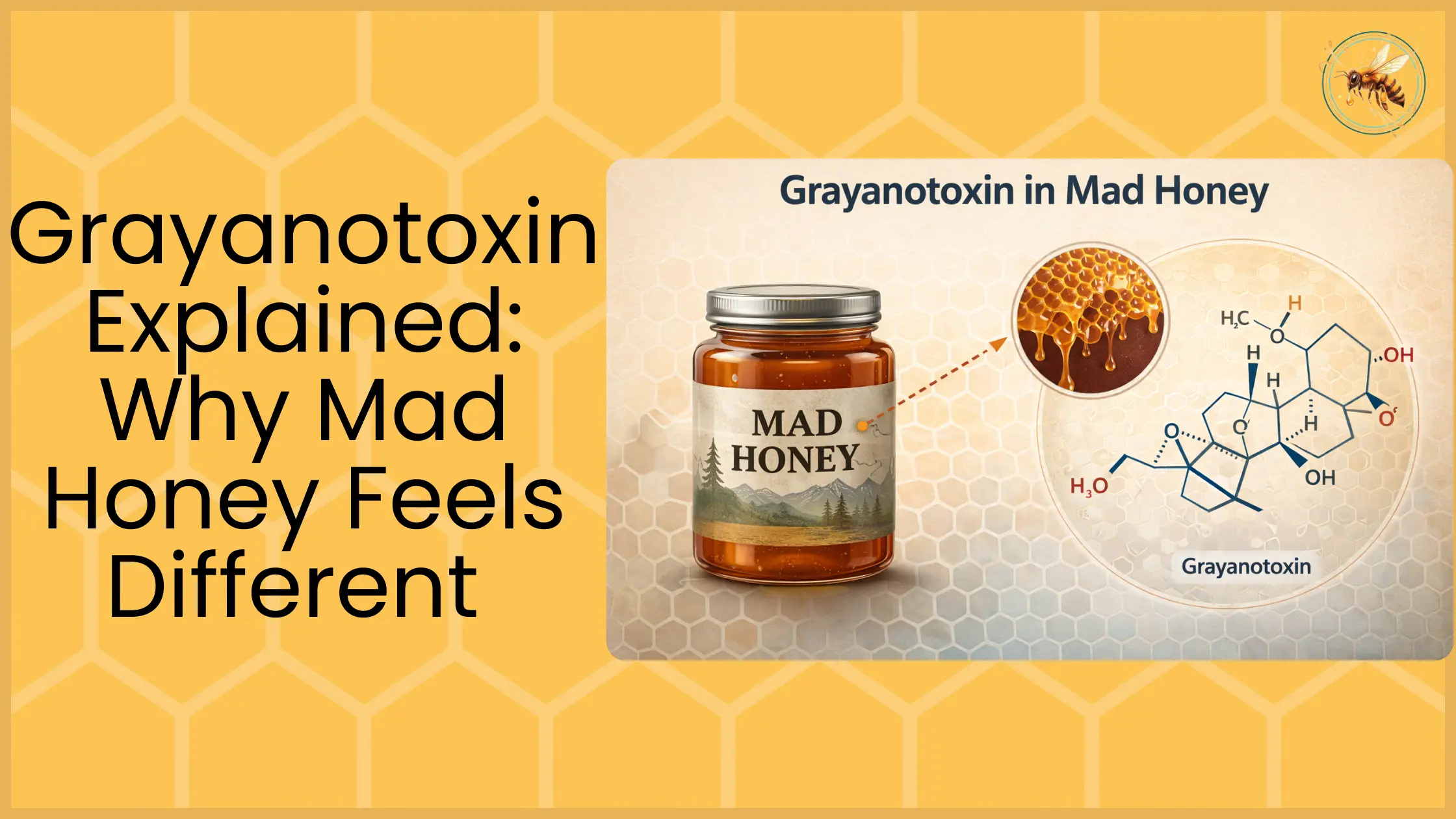
Mad honey is also “just honey”… but it can contain something manuka generally doesn’t: grayanotoxins.
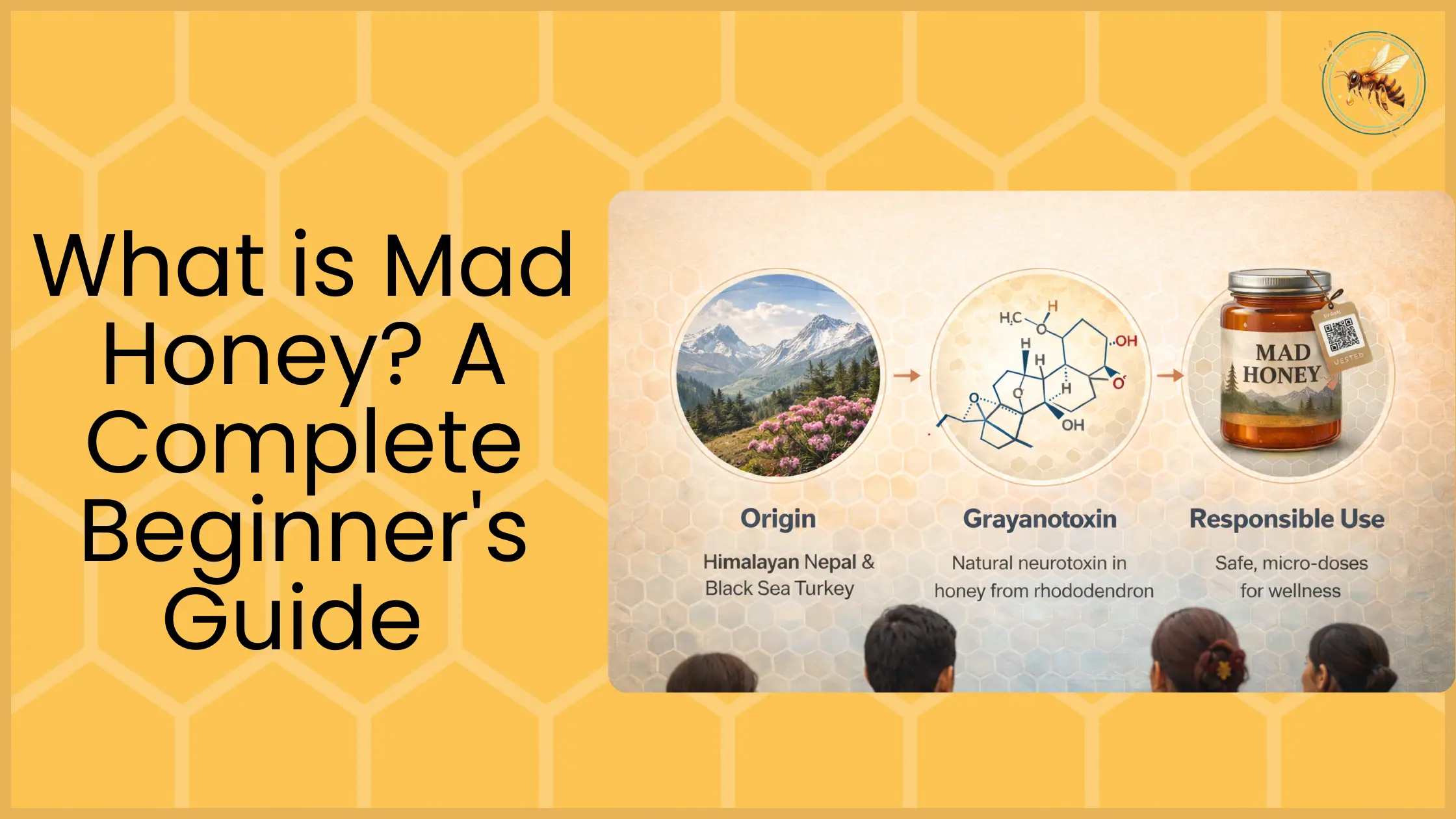
Grayanotoxins are naturally occurring compounds found in certain rhododendron species. When bees forage heavily on these blooms, the toxins can end up in the honey.
Ritual/experience framing (what people actually mean)
Most people don’t buy mad honey to sweeten oatmeal.
They buy it because it’s often framed as a:
- slow “wind-down” ritual
- sensory experience (taste, warmth, heaviness)
- “nature feeling” product that stands apart from everyday honey
At low exposure, some people describe it as calming or heavy-relaxing. But this is also where mad honey differs sharply from manuka:
Mad honey can cross from “interesting” to “unpleasant” if you take too much, because the same mechanism behind the experience is also the mechanism behind toxicity.
Rhododendron + grayanotoxins overview (simple)
Grayanotoxins affect voltage-gated sodium channels, which can lead to prolonged depolarization and downstream effects (including vagal activity).
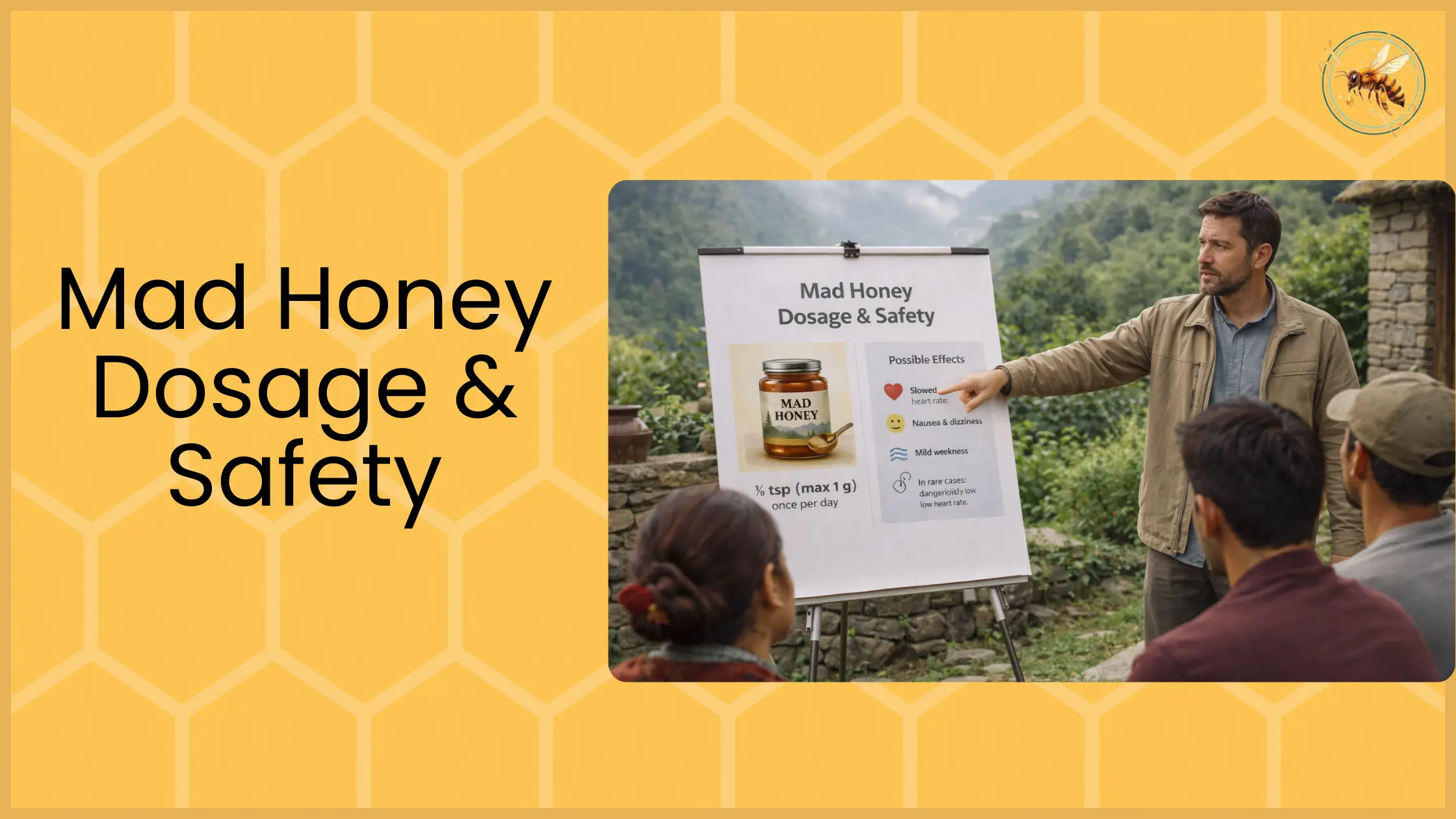
Clinically, mad honey intoxication is known for:
- hypotension (low blood pressure)
- bradycardia (slow heart rate)
- nausea/vomiting
- dizziness, sweating, weakness
- sometimes impaired consciousness
This is why mad honey can’t be compared to manuka on “health benefits.” They’re playing different games.
Key Differences between Mad Honey and Manuka Honey
Here’s the comparison most buyers actually need, written in a way you can skim.
1) Purpose
- Manuka: graded premium honey, chosen for standardized labeling (UMF/MGO) and unique chemical markers
- Mad honey: chosen for a ritual experience and “distinct sensation,” not for daily sweetness
2) Standardization
- Manuka: widely marketed with structured grading systems (UMF; also MGO labeling)
- Mad honey: no single global grading system; potency and experience can vary by batch and source
3) Variability (what changes jar to jar)
- Manuka: still natural, but labels attempt to reduce uncertainty via markers and grading
- Mad honey: variability is the headline feature; different rhododendron species, bloom intensity, harvest season, and blending/handling can all change the experience
4) Safety considerations
- Manuka: generally used like normal honey; main concerns are general honey cautions (allergy; infants under 1 year, etc.)
- Mad honey: additional risk profile; intoxication cases frequently involve hypotension/bradycardia and may require medical care in severe cases
5) Buyer mindset
- Manuka: “I want a premium honey I can take routinely.”
- Mad honey: “I want a special, occasional ritual, and I’m willing to be cautious.”
Which One Should You Choose?
Use this as your “Mad honey buying decision” checklist.
If you want an everyday honey → manuka (or regular honey)
Choose manuka if you want:
- a premium honey you can use often
- labeling that helps you compare jars (UMF/MGO)
- a product that fits into normal food routines
Manuka makes sense when your goal is consistency and clarity. The UMF system specifically emphasizes multi-marker measurement (not a single compound) for authenticity and quality signals.
If you want a unique ritual experience → mad honey
Choose mad honey if you want:
- a distinct “not like regular honey” experience
- a slow ritual product (not a daily drizzle)
- a niche honey with cultural/seasonal story
But: mad honey only makes sense if you accept two realities:
- It varies by batch and person
- You need safety rules because the “effect” comes from compounds associated with toxicity at higher exposure
Beginner safety rules for mad honey (non-negotiable)
If you’re new to mad honey:
- Start small. Don’t take a “big spoon” because you saw a video.
- Wait before taking more. Onset can be delayed; stacking is how most people overshoot.
- Don’t mix it with alcohol or other substances that affect blood pressure/heart rate.
- Avoid it if you have heart rhythm issues, low blood pressure, or you’re on related medications.
- If symptoms are significant (fainting, severe dizziness, chest pain, extreme weakness), treat it as a medical situation.
Poison control and review literature repeatedly describe hypotension and bradycardia as hallmark clinical effects of grayanotoxin poisoning.
Buying Tips: How Not to Get Burned (Manuka vs Mad Honey)
How to buy manuka without overpaying for marketing
Manuka’s market is crowded. The simplest filter:
- Prefer UMF-labeled products from reputable sellers
- Understand that UMF is multi-marker; MGO alone is not the full story
- Don’t assume “higher number = better for everything.” Higher grades often mean higher price; your use case matters.
How to buy mad honey safely (the checklist that matters)
Because mad honey is often faked or misrepresented, focus on trust signals, not aesthetics.
Look for:
- Origin clarity: region, harvest season window, batch/lot info
- Education: clear safety guidance and realistic expectations
- Transparency: any meaningful testing info, or at least a consistent quality process
- No hype: avoid sellers promising guaranteed “trips” or miracle outcomes
Mad honey intoxication is a real, documented phenomenon across multiple countries, and it’s not something a responsible seller should ignore.
Conclusion: Not Comparable in Purpose
If you came here hoping for a “winner,” here’s the honest answer:
- Choose manuka when you want everyday consistency + grading systems you can compare (UMF/MGO).
- Choose mad honey when you want a unique ritual experience, but only if you respect the safety realities and buy from sources that prioritize transparency over hype.
Take a look at: Mad Honey vs Kava: What’s Different and Which One Should You Choose?
FAQs on Mad Honey vs Manuka
Is manuka honey the same as mad honey?
No. Manuka honey is not mad honey, and neither is a version of the other. Manuka comes from bees foraging Leptospermum scoparium in New Zealand and Australia and is sold as a graded table honey. Mad honey comes from bees foraging certain rhododendron species in Nepal and Turkey and can contain grayanotoxins, which is why it carries its own safety profile and is regulated and priced as a separate product.
Can mad honey replace manuka for wellness?
Not really, they’re not comparable in purpose.
Manuka is chosen for its graded, marker-based system and unique chemistry. Mad honey is chosen for an experience, but it carries a very different safety profile due to grayanotoxins.
If you want an everyday, routine-friendly honey, manuka (or regular honey) fits better.
Is mad honey “stronger” than manuka?
If “stronger” means “more intense physical effects,” mad honey can feel stronger, but that’s not automatically a good thing.
Mad honey’s intensity can be tied to grayanotoxin exposure, and intoxication cases commonly involve hypotension and bradycardia.
Manuka’s “strength” is typically discussed in terms of graded markers (UMF/MGO), not intoxication-like effects.
So it’s not a fair “stronger = better” comparison.
Why is mad honey more risky?
Because the compounds that define it (grayanotoxins) can interfere with sodium channels and trigger cardiovascular effects at higher exposure.
Clinical literature and poison control summaries consistently describe bradycardia/hypotension as key features, sometimes requiring medical treatment.
How do I avoid fake mad honey?
Use a hard filter:
- don’t buy hype-only listings
- require origin clarity
- prefer brands that teach safety and variability
- look for batch transparency
What if I want both?
That’s actually a smart way to think about it:
- Manuka = your “premium daily honey”
- Mad honey = your “occasional ritual honey,” used carefully and intentionally