
Mad honey can cause intoxication, but calling it a “high” can be misleading. Its grayanotoxins can cause confusion, low blood pressure, and a slow or irregular heartbeat. These effects should not be mistaken for a predictable recreational experience.
What some people describe is a body-forward shift of calm, heaviness, or relaxation. These personal descriptions are not reliable predictions of how another person will respond.
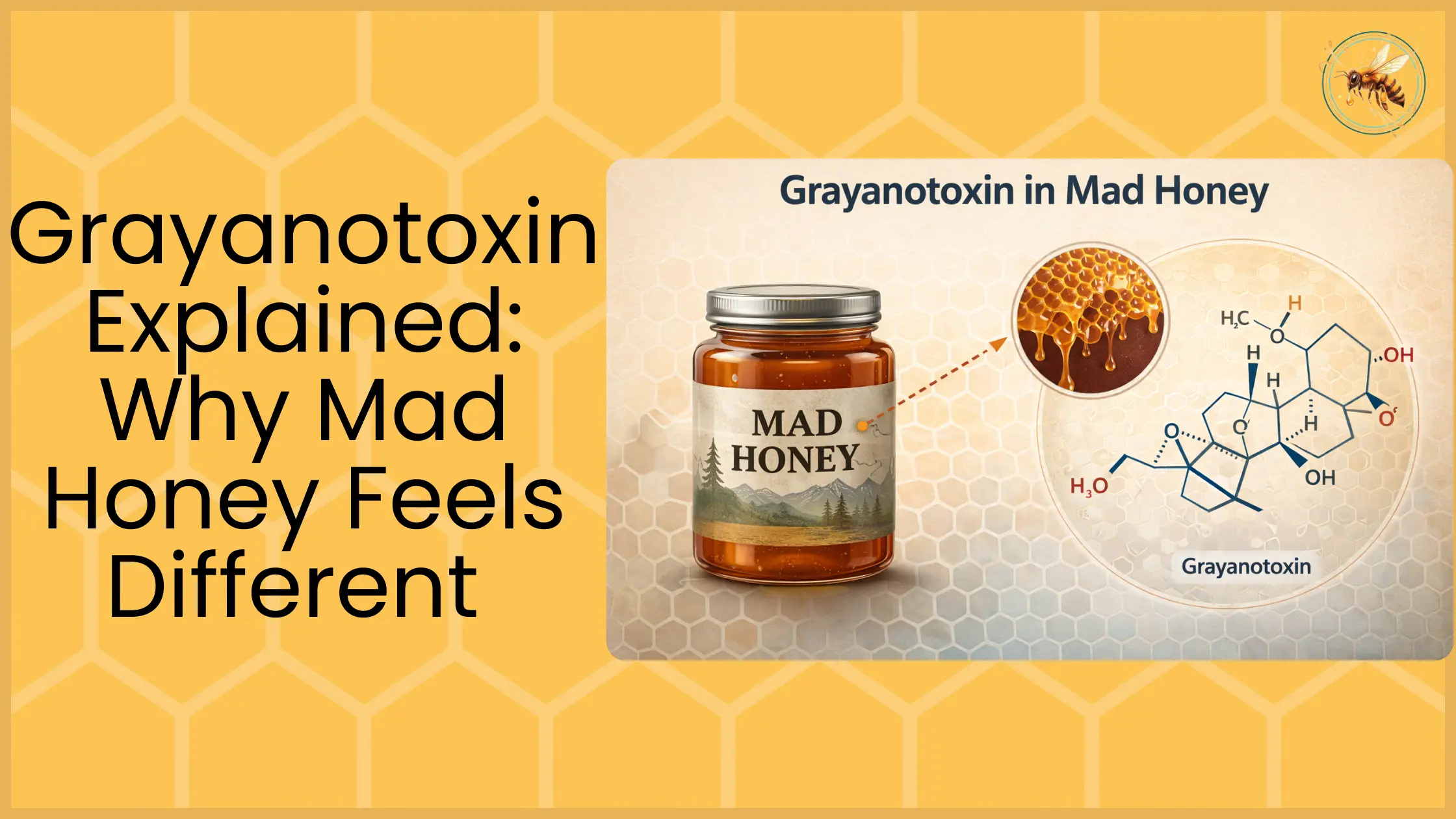
The reason it can feel intense is simple: mad honey can contain grayanotoxins, naturally occurring compounds associated with certain rhododendron flowers. These compounds can cause symptoms such as dizziness, nausea, sweating, weakness, low blood pressure, and a slow heart rate.
This guide explains what people mean by a mad honey “high,” what medical evidence shows, and which symptoms need attention.
tl;dr
- Mad honey does not produce a reliable cannabis-like or psychedelic high. Personal descriptions of calmness or heaviness should not be confused with evidence of a safe, controllable experience.
- Consuming more can increase toxin exposure. Symptoms can include nausea, dizziness, sweating, weakness, low blood pressure, and a slow heart rate.
- Onset can be delayed. In one published series of poisoning cases, symptoms began 20 minutes to two hours after consumption. This is an observed range, not a guaranteed window.
- Two people can take the same amount and report different effects. Batch potency and individual susceptibility matter.
- Small servings are not guaranteed safe. Seek medical advice if symptoms develop. Strong symptoms are not simply a “strong high”; they need to be taken seriously.
Does Mad Honey get you high? The short answer
The word “high” is vague. Before you can answer “does mad honey get you high,” you have to ask: What kind of high are you expecting?
Some people mean a psychedelic trip: visuals, altered reality, or deep cognitive shifts. Others mean a cannabis-like buzz, such as body relaxation or a mood lift. Others mean feeling intoxicated: dizzy, weak, or disoriented.
Mad honey generally does not behave like a reliable psychedelic. What it can do is create an altered physical state that people label “high” because it feels intense and unusual. In many cases, what is happening is better described as intoxication.
What people usually mean by “High”: Euphoria, altered perception and relaxation
People may mean one or more of these:
- Euphoria or mood lift: feeling good, lighter or more open.
- Relaxation: calm, tension release, or a “melted” feeling.
- Altered perception: time feels slower or sensations feel amplified.
- Body buzz: warmth, heaviness, tingles, or a floaty feeling.
Those are descriptions people use across many products, but the mechanism and risk profile matter.
What Mad Honey more realistically does: Physical effects and reported mood changes
Some personal accounts describe a slow wind-down: calm, heaviness, and relaxation. These are anecdotal experiences, not established effects of a particular serving size.
The experience can also become uncomfortable: dizziness, nausea, sweating, weakness, faintness and confusion. These symptoms overlap with documented grayanotoxin-related mad honey intoxication, including cardiovascular effects such as hypotension, low blood pressure, and bradycardia, a slow heart rate.
Why internet clips can exaggerate the experience
Mad honey content can be framed dramatically: “trip honey,” “legal psychedelic,” or “strongest high.” We take apart the most common of these claims in five things most people get wrong about mad honey.
But mad honey is not standardized. It varies by batch and person, and an extreme story does not tell you how typical that experience is. A description of dizziness or confusion as “psychedelic” also does not establish what caused the symptoms or whether the person was medically safe.
What does Mad Honey feel like?
Some personal accounts describe calmness, warmth, or heaviness after consuming mad honey. These are anecdotal descriptions, not reliable predictions of how another person will respond.
Published mad honey poisoning cases document dizziness, nausea, vomiting, low blood pressure, and a slow heart rate. These reports describe patients who became unwell; they do not establish how frequently symptoms occur among all consumers.
Calm, wind-down and “Body relaxation”
Language used in personal accounts includes “calm,” “heavy,” “relaxed,” “slowed down,” and “warm.”
These descriptions tell you how someone interpreted their experience. They do not establish a predictable low-dose effect or a safe serving.
Subtle mood shift vs intoxication
This is where many people get confused. A subtle mood shift can feel meaningful, especially if you are stressed or tired, but it is not the same thing as establishing that mad honey produces a particular kind of “high.”
Pronounced dizziness, nausea, sweating, weakness, or faintness should be treated as possible signs of intoxication rather than a desirable increase in intensity.
The “Ritual effect”: Setting and expectations
A calm setting or a normal meal does not establish that a serving is safe or that its effects will be predictable.
If you approach it like a challenge, impatient and looking for dramatic change, you may be tempted to consume more. Expectations should not guide decisions about additional consumption.
Mad Honey side effects: signs of intoxication
This is the part that should be said plainly: too much mad honey does not look like a better high. It looks like feeling sick.
If someone is chasing “stronger,” they may be increasing their exposure to the compounds responsible for poisoning.
Early warning signs
The early warning signs are usually physical:
- Lightheadedness, especially when standing.
- Sudden weakness or a feeling that something is wrong.
- Sweating or clamminess.
- Nausea.
- Feeling shaky or unstable.
These are reasons to stop consuming it and seek advice, rather than increase the amount.
Common uncomfortable symptoms: Nausea, Dizziness, Sweating and Weakness
Common symptoms of mad honey intoxication include nausea, vomiting, dizziness, sweating, weakness, and confusion. The clinical picture can also include hypotension and bradycardia.
These symptoms should not be dismissed as an expected stage of “getting high.”
Low blood pressure and a slow heart rate
Feeling physically unstable can be mistaken for an unusually strong experience.
Faintness, weakness, visual changes, sweating, and nausea deserve attention. You cannot reliably determine your blood pressure or heart rhythm from the sensation alone.
Poison Control warns that mad honey can cause dangerously low blood pressure, a slow heartbeat and irregular heart rhythms.
Read our guide to mad honey poisoning symptoms and what to do for more information.
Why does Mad Honey cause intoxication?
Mad honey’s intoxicating effects are associated with grayanotoxins. These compounds can affect the nervous system and heart.
Rhododendron nectar and grayanotoxins
Mad honey is associated with grayanotoxins, compounds linked to certain rhododendron species. When honey bees collect nectar from these plants, those compounds can be present in the honey.
Our guide to grayanotoxins in honey explains the science in more detail.
Why serving size does not reliably predict effects
A spoonful measures honey volume, not grayanotoxin content. Toxin concentrations can vary considerably, so equal servings may produce different exposures. The FDA’s grayanotoxin guidance explains this variability.
That makes another person’s serving size an unreliable guide to your own response.
Why two people can take the same amount and report different effects
Two types of variability matter:
- Batch variability: differences in the plants visited by bees, harvest conditions, and blending can affect toxin concentration.
- Individual variability: susceptibility, existing health conditions, and medication use can influence risk.
Read more about why mad honey batches differ.
How long does Mad Honey take to work and last?
This section matters because a lack of immediate effects can tempt people to consume more. Medical reports describe symptom timing, not a dependable recreational schedule.
Onset window: When people notice symptoms
In one published series of 11 poisoning cases, symptoms began 20 minutes to two hours after consumption. This is an observed range, not a guaranteed onset window.
If you do not feel anything at 15–30 minutes, that does not establish that taking more is safe.
Peak window
The medical sources cited here do not establish a predictable recreational peak. Timing should not be used to plan additional consumption.
Recovery and return to baseline
The FDA describes symptoms generally resolving within about a day, except in more severe cases. This is not advice to wait out symptoms without medical guidance.
Mad Honey safety: Risks and when to seek help
Treating mad honey like a “how high can I get?” product encourages decisions based on intensity rather than risk. Neither a small serving nor careful timing guarantees a controlled experience. If you are asking about using it repeatedly, see is mad honey addictive?
Can a small serving be considered safe?
A small serving does not guarantee safety. In one clinical case series, most patients reported symptoms after approximately one to two teaspoons.
These cases do not establish a safe threshold below that amount.
Do not mix with alcohol or other sedatives
Mixing substances increases uncertainty and can complicate the assessment of symptoms. Do not assume that combining mad honey with alcohol or sedatives will produce a predictable experience.
If you take medication, ask a clinician or pharmacist about your specific situation.
Avoid if higher-risk: Blood pressure issues, heart conditions and other concerns
Avoiding mad honey and discussing your circumstances with a clinician is particularly important if you have:
- Low blood pressure or a history of fainting.
- Heart rhythm problems.
- Cardiovascular medications that affect heart rate or blood pressure.
Do not assume safety during pregnancy or breastfeeding, or for anyone under 18.
When to Seek Help
If you feel unwell after eating mad honey, seek medical or poison-center advice.
In the United States, call Poison Control at 1-800-222-1222; elsewhere, contact your local service. See Poison Control’s guidance.
If someone collapses, has a seizure, has trouble breathing, or cannot be awakened, call emergency services immediately. Do not induce vomiting. These steps follow Poison Control’s first-aid guidance.
Conclusion
So, does mad honey get you high? It can cause intoxication, but not a predictable recreational experience.
What some people describe as a body-first shift can overlap with symptoms that need attention. The experience depends on toxin exposure and individual susceptibility.
Personal accounts cannot establish a safe serving or predictable effect. Treat symptoms seriously and seek help if you feel unwell.
FAQs
Is Mad Honey hallucinogenic?
Confusion and visual disturbances can occur with grayanotoxin poisoning. These symptoms do not establish a safe or predictable psychedelic experience.
Why do i feel nothing?
Batch variability, individual differences, and expectations can contribute to different reports. A lack of noticeable effects does not establish that the honey is toxin-free or that consuming more is safe.
Why do some people feel sick instead of “High”?
Because the compounds responsible for intoxication can produce nausea, dizziness, sweating, weakness, and cardiovascular symptoms. Feeling sick should not be treated as a desirable or necessary part of the experience.
Is Mad Honey legal where i live?
Rules depend on the country and can differ for importing, selling, and possessing a product. See our mad honey legality guide and check current official requirements for your location.
What is the safest first dose?
There is no universally reliable teaspoon amount that this article can recommend as safe. Small servings have caused poisoning, and toxin concentrations vary between products. The published clinical cases illustrate why a small serving should not be presented as a guarantee of safety.