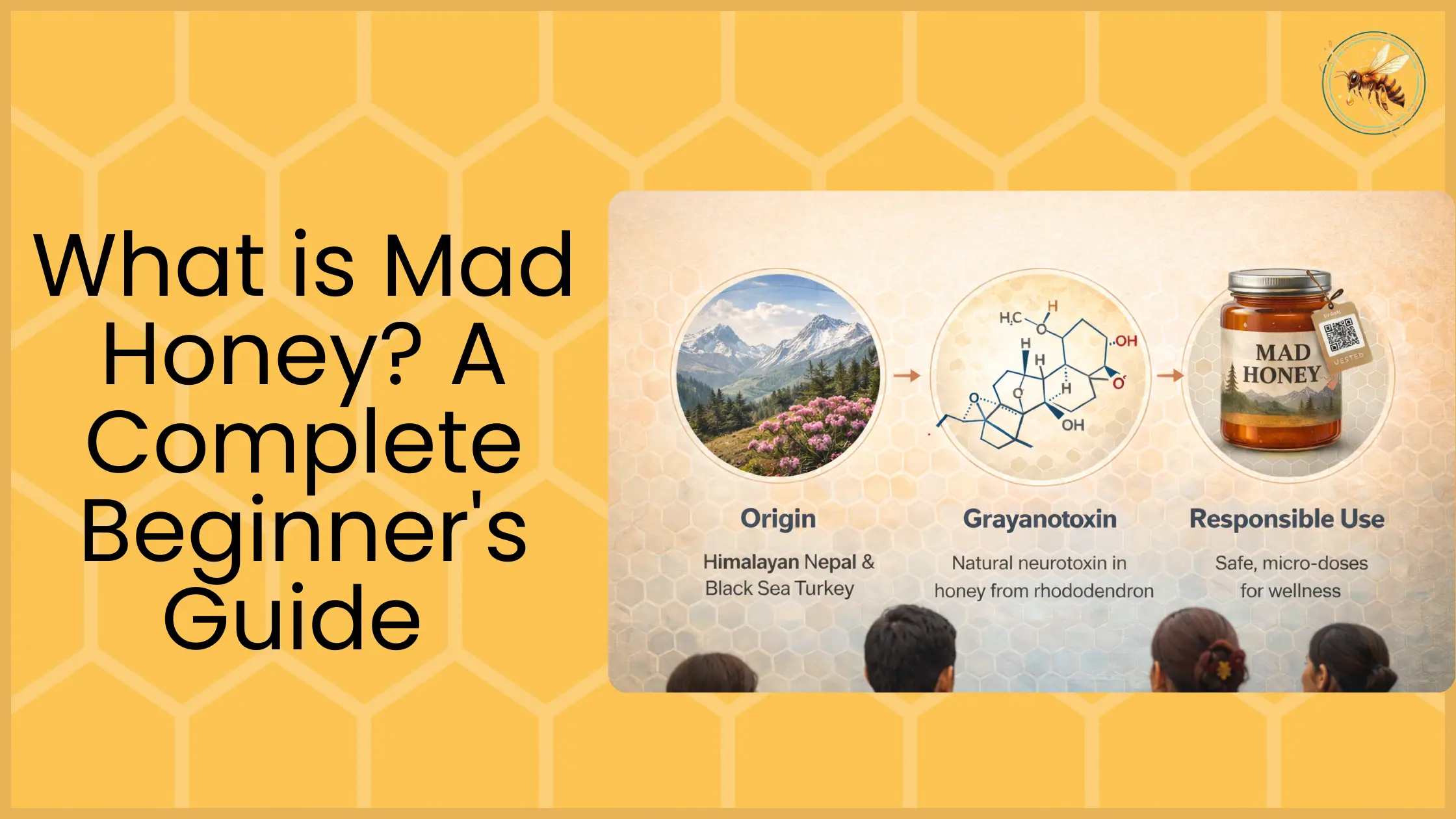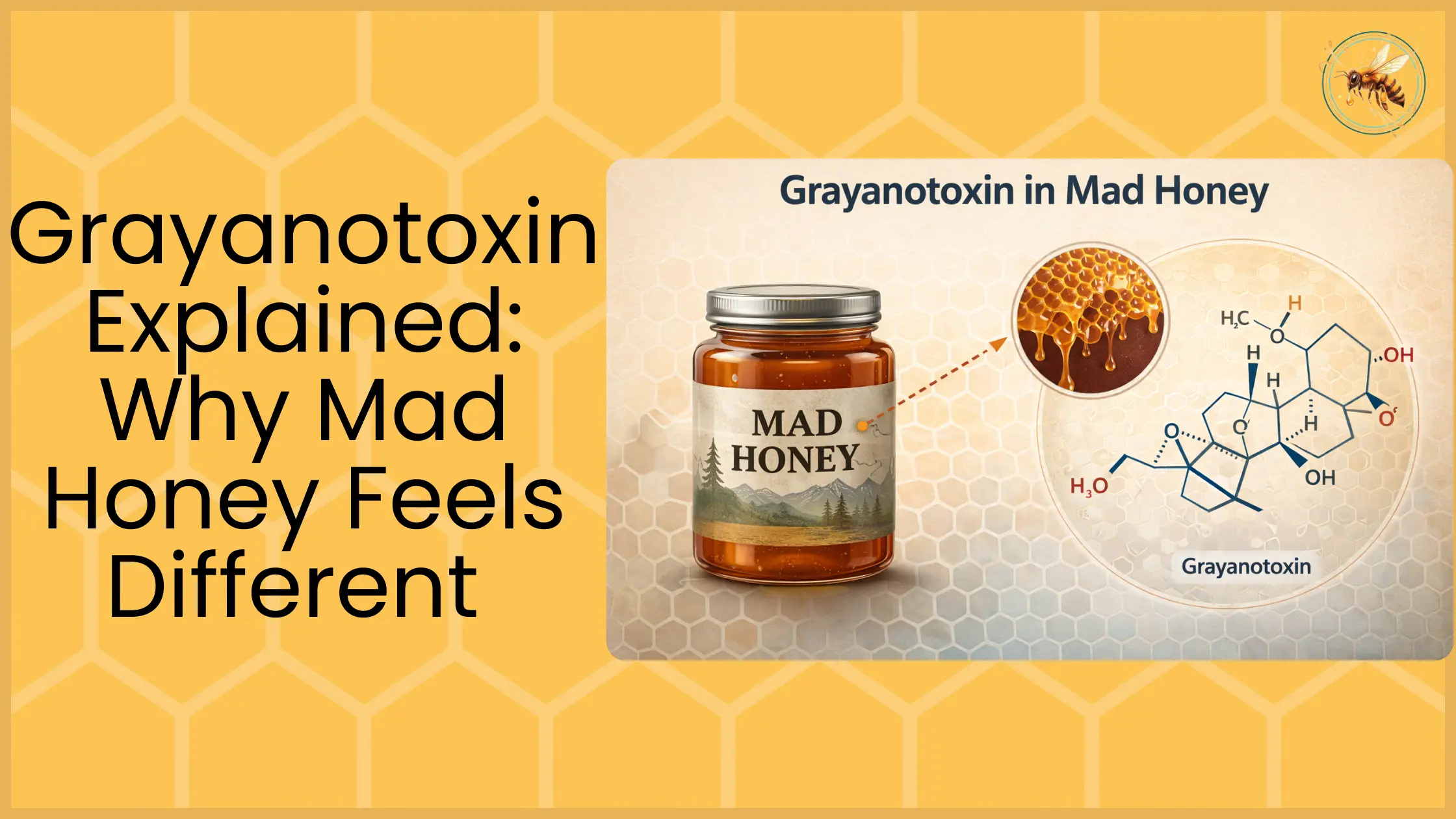

Mad honey’s active compound, grayanotoxin, doesn’t behave like most substances. The difference between a pleasant, relaxing experience and an unpleasant one isn’t large. It’s often one extra teaspoon, a stronger-than-usual batch, or a decision to redose too early.
This guide is for people approaching it for the first time, or for anyone who has tried it but wants a more structured framework for finding a dose that actually works for them. It draws from case study literature, toxicology research, and traditional use patterns in both Nepal and Turkey.
The goal isn’t to maximize the experience. It’s to help you find the minimum effective dose, the amount that delivers the benefits you’re looking for without tipping into territory you didn’t intend.
If you want to understand what mad honey actually is before getting into dosing, start with What is Mad Honey? If you’re still deciding whether it’s right for you, read Is Mad Honey Safe? first.
tl;dr
- Start with ½ teaspoon (2–5g). Not a full teaspoon. Not “a spoonful.” Half.
- Wait 3 hours minimum before deciding nothing happened. Onset can take up to 3 hours, depending on your stomach, metabolism, and batch potency. Redosing early is the #1 cause of bad experiences.
- Every new jar resets your baseline. Batch potency varies enormously; a dose that was mild from one jar can be strong from the next.
- Nepal honey tends to run stronger than Turkish, but neither is consistent across batches. Calibrate fresh each time.
- Effects at the beginner dose: mild warmth, slight heaviness, reduced mental tension. Not intense. Not a “trip.” A shift in register.
- 15 grams (1 tablespoon) is the ceiling. Above that is where hospitalization cases live in the clinical literature.
- If your heart rate drops below 50 bpm, you’re vomiting and weak, or you can’t stand unassisted, get help. Treatment is effective, and recovery is almost always complete.
- Don’t mix with alcohol, beta-blockers, blood pressure meds, or sedatives. The interaction isn’t theoretical.
- If you have any cardiovascular history, read the contraindications section before you do anything else.
The most important thing to understand before you dose mad honey: batch potency varies enormously
Before any numbers make sense, this needs to be clear: there is no standard potency for mad honey.
Unlike a pharmaceutical, where every tablet contains a precise milligram count, mad honey is a wild product. The grayanotoxin content in any given jar is determined by which Rhododendron species the bees foraged from, the altitude and microclimate of that harvest region, the season and timing of collection, and how the honey was handled after extraction.
In practice, this means two jars from different sources, or even two jars from the same source but different harvest batches, can differ dramatically in effective potency. A dose that produced mild relaxation from one jar might produce strong cardiovascular effects from the next.
Nepal vs Turkey: why it matters for dosing
Himalayan mad honey from Nepal is generally considered higher in grayanotoxin content. It comes from Apis laboriosa, the giant Himalayan cliff bee, foraging on Rhododendron luteum and related species at altitudes above 2,500 metres. The concentration can be significantly higher than commercially available honey from lower regions.
Turkish mad honey (deli bal), harvested from the Black Sea and Anatolian highland regions, also varies widely. Some batches from the Trabzon and Rize provinces are considered very potent; others, harvested from lower elevations or mixed floral sources, are notably milder.
The practical takeaway: treat every new batch as if it’s your first time. The dosing framework below assumes this approach by default.
A secondary issue worth addressing before dosing: is your honey actually authentic? A significant portion of what is sold as mad honey online is diluted, mislabelled, or fake. If you dose genuine honey at a beginner level and feel nothing at all across multiple sessions, dilution is the most likely explanation, not personal immunity. Check the “Where to buy guide” before purchasing.
The dose ladder: from microdose to experienced
This framework is practical, not theoretical. It reflects the ranges that appear consistently across toxicology case reports, traditional use patterns, and reported user experiences. It assumes authentic, moderate-to-high potency, honey.
⚠️ Disclaimer: This is not medical advice. Mad honey is not regulated as a pharmaceutical. If you have any cardiovascular condition, take blood pressure or heart-rate medication, or are pregnant, do not use mad honey without speaking to a doctor first. See the contraindications section below.
Tier 0: Microdose (0.5–1 gram / approximately ¼ teaspoon or less)
This range is used by people who want to assess whether their batch has any activity at all, or who are extremely cautious about their own sensitivity. At this level, most people feel nothing or very subtle warmth. It is not a “therapeutic” dose in any traditional sense. Its main purpose is a tolerance and potency check.
Who this is for: Anyone who has never tried mad honey before and wants a two-session approach, one session to check for unusual sensitivity, one to try an actual beginner dose.
What to expect: Usually nothing, or mild warmth in the chest and a faint tingling sensation in the extremities. Onset may not be noticeable at all within 2 hours. No significant cardiovascular effect is expected at this level from moderate-potency honey.
Tier 1: Beginner dose (2–5 grams/approximately ½ teaspoon)
This is the recommended starting point for anyone trying mad honey for the first time at a real dose. It represents the lower end of the range where grayanotoxin effects become reliably perceptible in most people.
What to expect, the experience timeline:
The onset is slow. Most people notice the first effects between 30 and 90 minutes after consumption, though in some cases it can take up to 2–3 hours. This variability is the most common reason for redosing too soon. Do not interpret a lack of effects at 45 minutes as evidence that nothing is happening.
The first signs are typically warmth in the chest, mild lightheadedness, and general heaviness in the limbs. This is grayanotoxin, creating mild parasympathetic dominance, a shift toward rest-and-digest mode. Heart rate may slow slightly. Blood pressure may drop a few points. These are expected effects, not warning signs.
As effects develop, most people describe a relaxed mental state, reduced mental chatter, less ambient tension, and a warmth-forward body sense. Some describe mild tingling in the lips or fingertips. At this dose tier with authentic honey, full effects typically peak between 60–90 minutes and taper over 4–6 hours, with full resolution within 12–24 hours as the liver metabolizes the compounds.
This is the dose that aligns most closely with traditional use in Nepal ,small amounts taken before rest, for digestive complaints, or as part of a ritual context. Gurung honey hunters historically used modest quantities; the idea that more is better has no basis in traditional practice.
Empty vs full stomach: An empty stomach (3+ hours since last meal) accelerates the onset and intensifies effects, so it’s best avoided. A light meal beforehand slows absorption and smooths the experience, which is why beginners should take mad honey with a little food rather than on an empty stomach.
Tier 2: Intermediate dose (5–10 grams / approximately 1–2 teaspoons)
This range is appropriate only after at least 2–3 sessions at Tier 1 with the same batch, where you have confirmed the potency of your specific jar and your personal response to it.
What to expect:
Effects at this tier are noticeably stronger. Heart rate slowing is more perceptible. The relaxation effect deepens. Some people experience mild nausea at the lower end of this range; this is common, usually brief, and not on its own a sign of danger, but it is a signal to stop at that level and not increase further.
The experience timeline stretches: onset may still be 30–60 minutes, but peak effects tend to arrive earlier (45–75 minutes) and can be more pronounced. Lightheadedness is more significant; standing up quickly is not advisable. Plan to remain seated or lying down for the duration.
At the upper end of this range (approaching 10 grams), effects move closer to the threshold that begins appearing in clinical case reports. The gap between “pleasant” and “uncomfortable” narrows. This is not the zone to experiment with new batches, to be alone, or to have competing obligations.
Tier 3: Experienced use (10–15 grams / approximately 2–3 teaspoons)
This range is for people with multiple sessions of documented experience at lower tiers using a known, consistent batch. It should not be reached through a single-session escalation.
At this level, effects are pronounced. Bradycardia (slowed heart rate) and hypotension (lowered blood pressure) are expected and will be noticeable. The cognitive and physical effects are strong enough that this is not compatible with any obligations, operating machinery, or situations where you might need to respond to an emergency.
Most of the clinical case reports involving hospitalization describe doses in the 15–30 gram range consumed in a single sitting, often by people unfamiliar with the compound. At 15 grams, you are approaching the lower end of that range. The risk-to-benefit calculation at this tier depends heavily on set, setting, batch knowledge, and personal physiology.
Never exceed 1 tablespoon (approximately 15 grams) in a single session. There is no traditional or clinical basis for doses above this, and the case literature is clear that adverse events cluster heavily above this threshold.
Above 15 grams: the toxicity zone
Doses above 15–20 grams are where serious adverse events occur reliably in published case reports. Symptoms at this level include pronounced bradycardia (heart rate below 50 bpm), significant hypotension, vomiting, profuse sweating, and, in more severe cases, temporary loss of consciousness. These symptoms are medically treatable; IV atropine and fluid support are effective, but they require emergency care.
For a detailed breakdown of poisoning symptoms and what to do in an emergency, see the mad honey poisoning guide.
Dose ladder summary table
| Tier | Amount | Primary use | Risk level |
|---|---|---|---|
| Microdose | 0.5–1g (¼ tsp) | Sensitivity / potency check | Minimal |
| Beginner | 2–5g (½ tsp) | First experience, traditional wellness use | Low if rules followed |
| Intermediate | 5–10g (1–2 tsp) | Deepened effect, known batch only | Moderate |
| Experienced | 10–15g (2–3 tsp) | Strong effect, multiple sessions baseline | Significant |
| Avoid | 15g+ (1+ tbsp) | No legitimate use case | High / hospitalisation range |
The #1 rule: start low, wait longer than you think necessary
Grayanotoxins bind to voltage-gated sodium channels in a way that keeps nerve cells in an activated state longer than normal. The result is not instantaneous; the compound needs time to be absorbed and distributed. The onset window is genuinely 30 minutes to 3 hours, depending on stomach content, individual metabolism, and batch potency.
Redosing before effects have fully arrived is the single most common cause of adverse experiences. You take ½ teaspoon, feel nothing at 45 minutes, take another teaspoon, and 30 minutes later the original dose arrives alongside the second. The combined effect is well above what you intended.
Practical rule: After your first dose, do not consume any more for a minimum of 3 hours. If you still feel nothing after 3 hours, your batch is likely mild; adjust your next session (not this one) upward by ¼ teaspoon. Never try to “catch up” within a single session.
Factors that affect your personal dose response
The numbers above are population-level starting points. Individual response varies based on:
- Body weight and composition: Grayanotoxin dose-response is not precisely linear with body weight, the way some compounds are, but larger individuals generally require somewhat higher doses to achieve equivalent effects. This is not a reason to jump tiers; it’s a reason to spend more time at Tier 1.
- Age: Older adults, particularly those with any baseline cardiovascular variability, tend to be more sensitive to the bradycardic effects of grayanotoxins. The lower end of each tier is the appropriate starting point.
- Medications: This is the most important individual factor. Several medication classes interact meaningfully with grayanotoxin’s cardiovascular effects:
- Beta-blockers and calcium channel blockers, which already slow the heart rate, combined with grayanotoxin, substantially increase the risk of significant bradycardia
- Blood pressure medications, grayanotoxin lowers blood pressure; an additive effect is possible
- The combined effect of digoxin and other cardiac glycosides on cardiac conduction is unpredictable and potentially dangerous
- Sedatives, benzodiazepines, alcohol, and combining any CNS depressant with mad honey amplify and extend effects in ways that are difficult to predict
If you take any medication for cardiovascular, neurological, or psychiatric conditions, consult a doctor before using mad honey. This is not a precautionary disclaimer for the sake of it; it is a genuine pharmacological consideration.
- Prior experience with similar compounds: People with experience using kava, kratom, or other botanicals with GABA-adjacent or parasympathetic-activating mechanisms sometimes report noticeably different subjective experiences with mad honey. This does not change the dose-safety thresholds but may affect how you interpret the effects at lower tiers. For a comparison of mechanisms, see mad honey vs kava.
- Mental state and environment: The subjective quality of the experience is substantially shaped by setting. A calm, familiar environment, no time pressure, and someone nearby who knows what you’ve taken tends to produce a noticeably better experience than a stressful or unfamiliar one. This is not anecdote; the parasympathetic effects of grayanotoxin interact with your baseline autonomic state. If you’re already anxious, a heart rate slowdown may register as more alarming.
Who should not use mad honey?
Some people should avoid mad honey entirely, not just use lower doses:
- Anyone with bradycardia, heart block, or any cardiac conduction disorder
- Anyone with low blood pressure (resting systolic below 100 mmHg)
- Pregnant or breastfeeding individuals
- Children and adolescents under 18
- Anyone taking beta-blockers, antiarrhythmics, or digoxin
- Anyone with a history of syncope (fainting) triggered by low blood pressure
If you’re uncertain about your cardiovascular health and want to use mad honey, get a basic ECG and blood pressure check first. This is not excessive caution for a product with an active compound and clinical literature on adverse events.
For a full risk profile, including the benefits and potential risks of regular use, and the safety overview by profile, those pages go into significantly more depth.
Signs that something is wrong and what to do
The effects listed below are expected in mild form at higher dose tiers. They become warning signs when they are pronounced, arrive at low doses, or are accompanied by additional overdose symptoms:
Mild/watch-and-wait:
- Nausea without vomiting, rest, hydrate, don’t redose
- Significant lightheadedness while sitting, lying down, sip water with a pinch of salt
- Heart rate noticeably slower than usual, rest and monitor
Seek help/call for assistance:
- Heart rate below 50 bpm and falling
- Vomiting combined with significant weakness
- Chest pain, pressure, or palpitations
- Fainting or near-fainting
- Inability to stand unassisted
Call emergency services:
- Loss of consciousness
- Heart rate below 40 bpm
- Persistent vomiting with chest pain
Hospital treatment for mad honey poisoning is effective. IV atropine typically resolves bradycardia quickly, and IV fluids support blood pressure. Recovery in reported cases is usually complete within 24 hours. The outcomes in case literature are almost universally good in people who sought treatment promptly. The risk in not seeking treatment is the real danger.
See the full poisoning and emergency response guide for more details.
Tracking your sessions: why it matters
Mad honey’s effects vary enough between batches, between sessions, and across individual physiology that session notes are genuinely useful, not as a formality but as a practical tool for finding your dose.
What to record per session:
- Date and batch source
- Amount (grams preferred; teaspoons if that’s what you have)
- Time of consumption and stomach state
- Onset time and character of first effects
- Peak effects description and timing
- Duration until noticeable tapering
- Any adverse effects, however minor
- Overall experience
Over 3–5 sessions with the same batch, patterns emerge. Most people find a stable “working dose” that produces consistent, predictable effects. Once you have that for a given batch, you have a baseline, but recalibrate with every new jar.
How long do mad honey effects last?
The short answer: 4–8 hours for most of the perceptible effects, with residual mild fatigue sometimes lasting into the following day. For a more detailed breakdown by dose tier and individual factors, see how long mad honey lasts.
Is mad honey legal where you are?
In most countries, including the US, the UK (see mad honey UK law) and most of Europe, mad honey is legal to buy and possess. The complications arise at customs; shipments without proper food labelling or documentation are the most common issue. For a country-by-country breakdown, see the full legality guide.
A note on the research behind this guide
The dosing thresholds referenced above draw from published clinical case studies, primarily from Turkish and Nepali medical literature. The grayanotoxin effects page covers the underlying mechanism in detail.
Mad honey has a documented history going back thousands of years; for context on how traditional societies understood and managed this compound, see the history of rhododendron honey.
FAQs on mad honey dosage
How much mad honey should a complete beginner take?
Start with ½ teaspoon (2–5 grams). Take it with a little food (never on an empty stomach, which intensifies absorption), stay in a calm environment, and wait at least 3 hours before deciding whether to adjust. Most first-time sessions produce mild, manageable effects at this level with authentic honey of moderate potency.
Is 1 teaspoon of mad honey safe?
For most healthy adults with no cardiovascular conditions and no relevant medications, 1 teaspoon (approximately 4–5 grams) is within the beginner range and considered low-risk. The important caveats: batch potency matters significantly, empty-stomach consumption at this level is stronger than full-stomach, and “safe” always depends on individual physiology. Never start with 1 teaspoon if you have any cardiovascular history.
Can you overdose on mad honey?
Yes. Grayanotoxin poisoning is well-documented. Doses above 15–20 grams, and in sensitive individuals, lower, can cause pronounced bradycardia, hypotension, vomiting, and in serious cases, temporary loss of consciousness. It is not fatal in the published case literature when treated, but it is genuinely dangerous at high doses and requires emergency medical care.
How long after taking mad honey will I feel the effects?
Between 30 minutes and 3 hours, depending on dose, stomach content, batch potency, and individual metabolism. The most common error is redosing at 45–60 minutes because nothing seems to be happening. Wait at least 3 hours before concluding a dose was insufficient.
How much is too much mad honey?
Serious adverse events in the clinical literature cluster at doses above 15 grams (approximately 1 tablespoon). Hospitalization cases typically involve 20–50 grams consumed in a single sitting. Individual sensitivity exists; some people experience significant cardiovascular effects at lower doses. Treat 15 grams as an absolute ceiling for any single session.
Can I mix mad honey with alcohol or other substances?
No. Alcohol combined with mad honey amplifies and extends the cardiovascular and CNS-depressant effects in unpredictable ways. The same applies to sedatives, benzodiazepines, and kava. The interaction is not well-studied, which is itself a reason to avoid it. See mad honey vs kava for more on botanical interactions.
Does Turkish mad honey do the same as Nepali?
Not necessarily. Both can vary widely in potency depending on the specific harvest region, elevation, and season. As a general orientation, high-altitude Nepali cliff honey tends toward higher grayanotoxin concentration, but this is not a reliable rule for every batch. Treat each source as its own baseline and calibrate from Tier 0 or Tier 1 accordingly.
What’s the difference between mad honey for energy/digestion vs for relaxation?
Traditional medicinal use in Nepal typically involves smaller, sub-threshold doses for digestive complaints and hypertension, amounts that produce minimal psychoactive effect. The “relaxation” effect most people are looking for sits at the lower end of Tier 1. Higher doses do not produce more relaxation; they produce stronger cardiovascular effects and the risk of nausea. The dose-response curve does not scale linearly for subjective benefit.