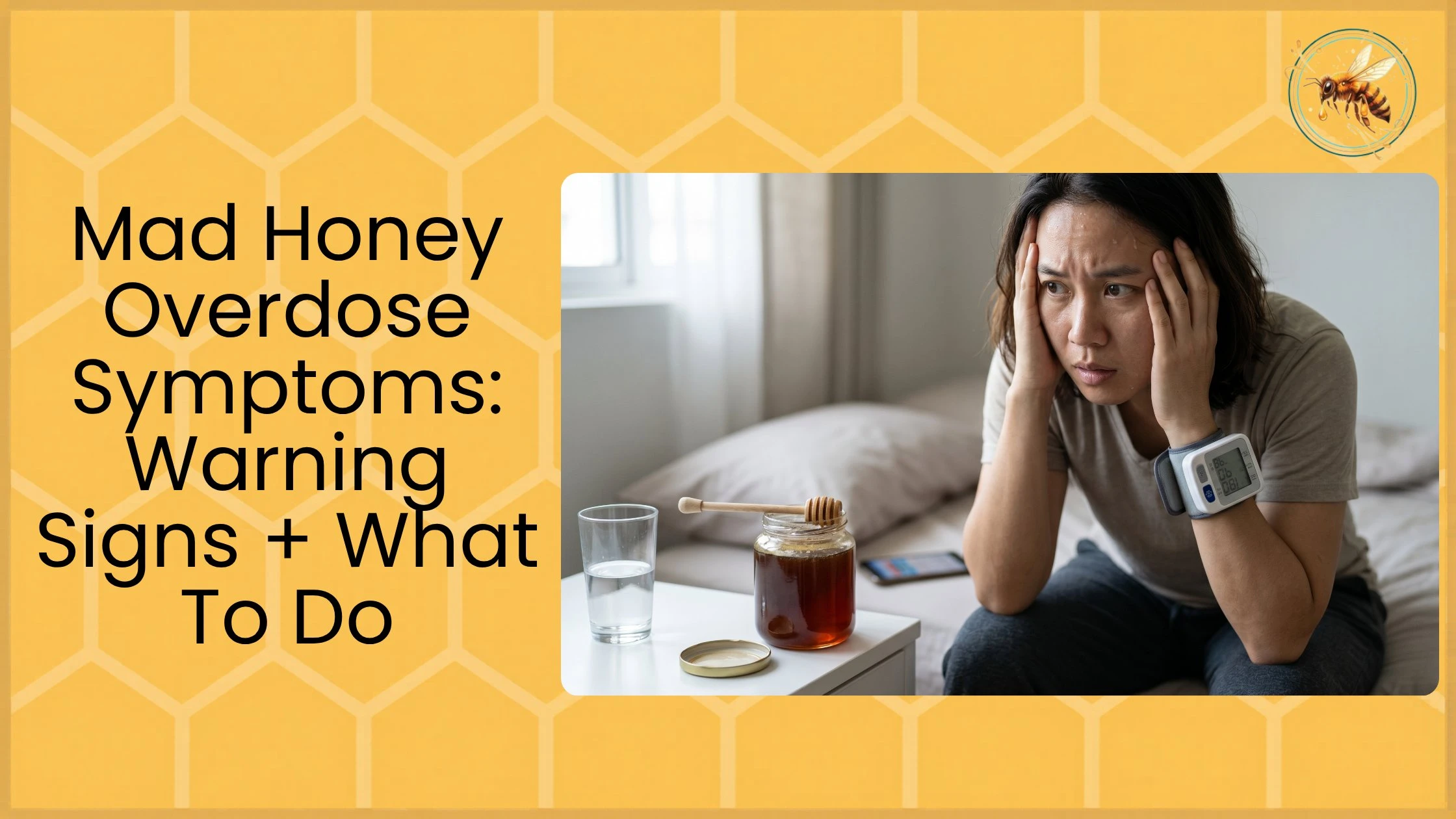
Quick Mad Honey Symptom Checklist (Mild vs Serious)
If you’re scanning because you feel off right now, start here.
Normal vs Warning Signs of Mad Honey
| What you’re noticing | More common/mild-to-moderate (monitor) | More serious (get medical help now) |
| Dizziness/lightheadedness | Mild dizziness that improves when you sit/lie down | Fainting / near-fainting, unable to stand, “blacking out.” |
| Stomach symptoms | Mild nausea, mild stomach upset | Persistent vomiting (can’t keep fluids down) |
| Sweating/chills | Sweaty, clammy, feeling “wavy.” | Sweaty + confusion, severe weakness, or collapse |
| Heart/chest | Awareness of heartbeat, mild “slow” feeling | Chest pain/pressure, trouble breathing, very slow pulse |
| Mental state | Groggy, heavy, “not myself,” mild confusion | Severe confusion, seizure-like activity, and unresponsiveness |
| Overall | Unpleasant but stable, improving over time | Rapid worsening, “cold and wiped out,” or severe symptoms |
Mad honey poisoning often clusters around dizziness/weakness + nausea/vomiting + sweating, and the more dangerous presentations are tied to blood pressure and heart-rate effects (hypotension/bradycardia).
What Counts as a “Mad Honey Overdose”?
“Overdose” doesn’t always mean a huge amount. In practice, it means:
- You took enough (for your body, on that day, from that batch) to push effects from “noticeable” into clinically significant symptoms, especially cardiovascular ones like low BP and slow HR.
Overdose vs normal effects vs side effects
A lot of people get confused here:
- Normal/expected (low-dose) effects are often described as calm, wind-down, and a “body” feeling, still functional and not scary.
- Side effects are the early warning layer: nausea, dizziness, sweating, headache, and weakness.
- Overdose (the problem zone) is when those symptoms become intense and/or you develop red flags: fainting, persistent vomiting, chest pain, breathing issues, or a very slow pulse/very low BP.
Why “a teaspoon” isn’t a stable dose
Two reasons:
- Batch variability: grayanotoxin levels can swing based on region, season, plant mix, and processing, so the same label can hide very different potency.
- Human variability: health status, sensitivity, body size, hydration, and co-use (alcohol/other sedatives) can shift your threshold.
Why These Symptoms Happen (Simple Explanation)
This section matters because it explains why the “scary” symptoms are often heart/BP-related, not mystical.
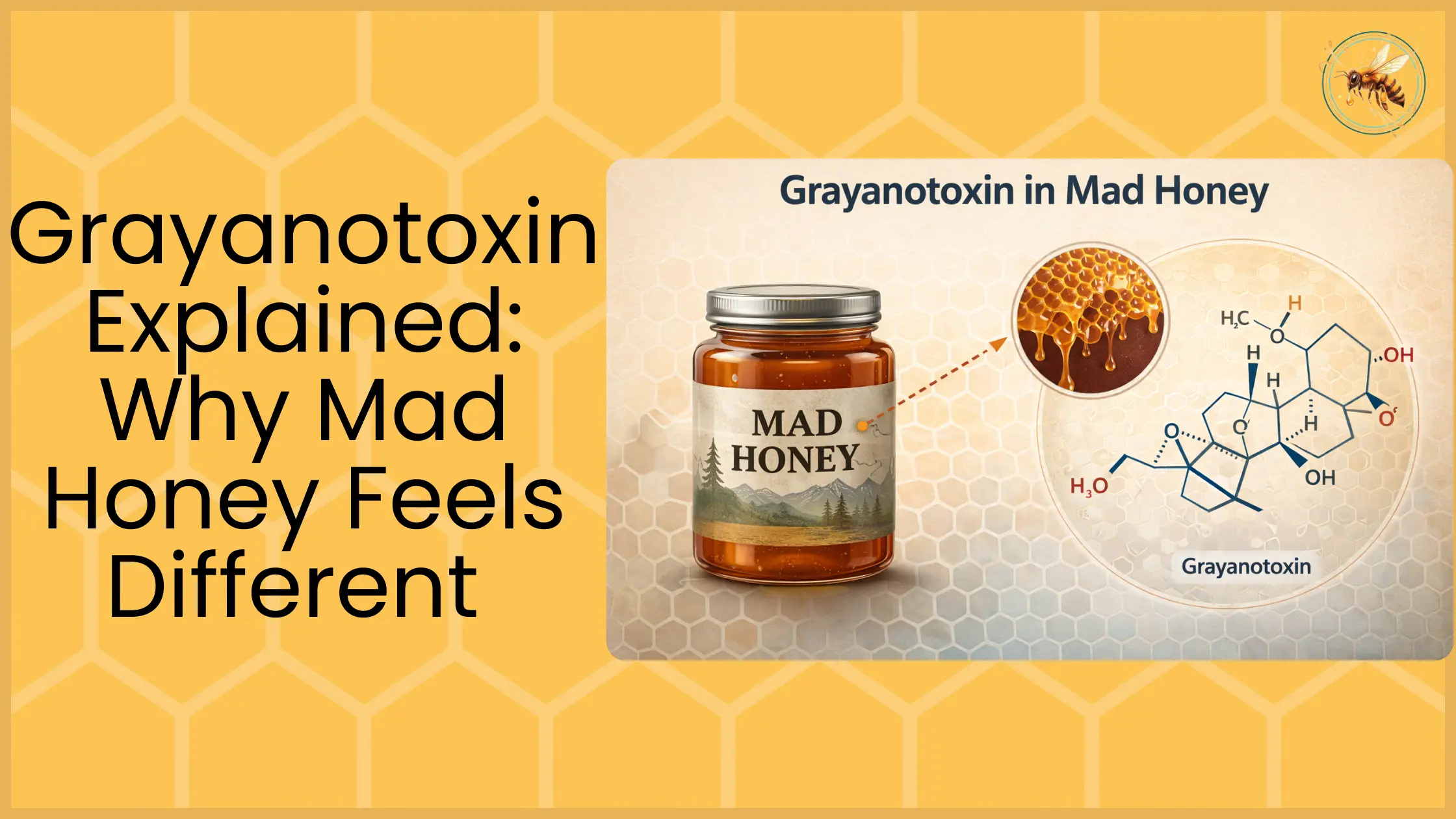
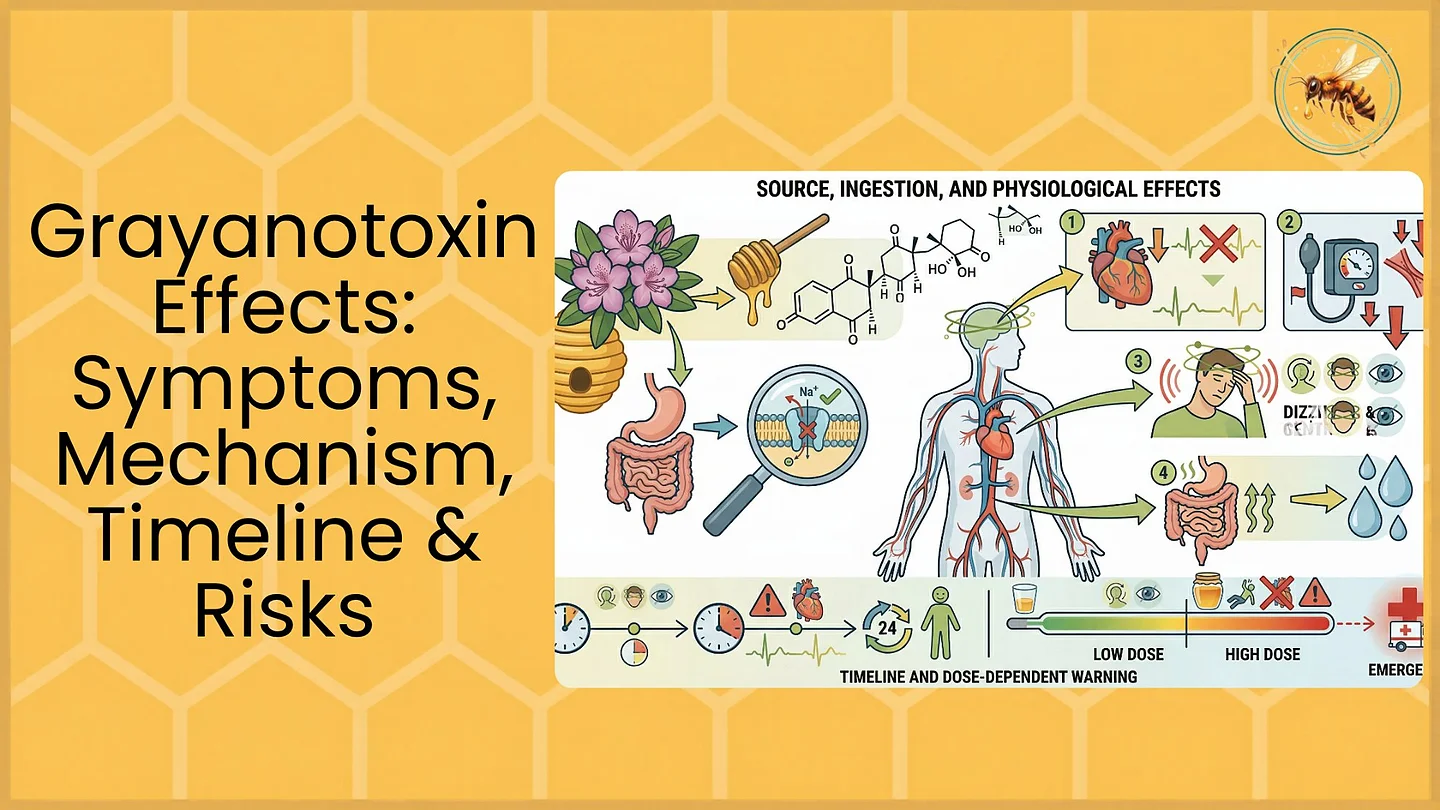
Mad honey’s key compounds (grayanotoxins) interact with voltage-gated sodium channels, which can increase vagal (parasympathetic) tone and disrupt normal signaling. The downstream effect can look like cholinergic/vagal overactivity, which is why you see bradycardia (slow heart rate) and hypotension (low blood pressure) in many documented cases.
Why blood pressure and heart rate can be affected
When vagal tone rises and autonomic signaling shifts, the body may:
- slow the heart rate (bradycardia)
- lower blood pressure (hypotension)
- reduce blood flow to the brain → dizziness, near-fainting, fainting
- trigger nausea/vomiting and sweating as part of that autonomic response pattern
Why stacking doses quickly is the #1 mistake
Because effects can be delayed, people take more when they “feel nothing,” then everything hits together. Your own content already warns to start tiny and wait long enough before redosing.
Timeline: When Mad Honey Symptoms Start and How Long They Last
When people panic, it’s often because they don’t know if they’re at the beginning of the curve or stuck in it.
Onset window (why it varies)
Most sources describe symptoms showing up within ~30 minutes to 4 hours, depending on dose and potency.
Food in the stomach, hydration, and individual sensitivity can shift that window.
Peak window (when it feels strongest)
The “peak” is usually the period where dizziness/weakness and nausea feel most intense, and where the cardiovascular effects (low BP/slow HR) are most likely to be noticeable if they’re going to happen.
Recovery window (back toward baseline)
In many reports, most people recover within 24–48 hours with supportive care, even when the presentation looks dramatic.
Your grayanotoxin explainer also frames the acute episode as typically resolving within about a day as toxins are metabolized.
What can prolong it
A few common “duration multipliers”:
- taking more than you realized (stacking)
- dehydration/vomiting
- mixing with alcohol or other sedatives/stimulants (harder on blood pressure and harder to interpret symptoms)
What To Do If You Think You Overdosed on Mad Honey(Safety Steps)
This is the “do something now” section. It’s intentionally conservative and practical.
“What to do right now” flowchart (symptom-checker style)
Step 1: Stop the inputs
If you took mad honey and feel unwell, stop taking more immediately, and don’t mix anything else in.
Step 2: Change posture (reduce fall risk)
Sit or lie down. If you feel faint, lie on your side. Stand up slowly only if you feel stable.
Step 3: Assess the two big risk signals
- Pulse feels very slow or irregular
- You feel faint/can’t stand/blacking out
If either is true, treat it as a higher-risk situation and move to Step 4.
Step 4: Decide if it’s urgent
Seek urgent care now if you have any of these red flags: fainting/near-fainting, chest pain or pressure, trouble breathing, persistent vomiting, severe confusion, or a very slow pulse.
Step 5: If symptoms are mild and stable
Rest in a safe place, sip fluids slowly, avoid heat/exertion, and continue monitoring. If symptoms worsen instead of improving, escalate.
What to tell a medical professional (context that helps)
If you do seek care, the most useful context is usually:
- what you took (mad honey / “deli bal”)
- approximate amount and time taken
- whether you took any alcohol/medications/other substances
- your key symptoms (dizziness, vomiting, fainting, slow pulse, etc.)
What clinical management commonly involves (high-level)
You don’t need to self-treat this, but it helps to know what “normal medical handling” looks like so you’re not scared by the process.
Across summaries and case series, management is typically supportive: monitoring (often ECG), IV fluids to support blood pressure, and in some cases, atropine for symptomatic bradycardia/hypotension; rarely, more intensive cardiac support is needed if severe rhythm issues persist.
Who Is More Likely to Have Severe Symptoms?
This isn’t about fear; it’s about knowing when your personal baseline makes the same exposure riskier.
People who should be extra cautious (or avoid entirely) include:
Prevention: How to Avoid Overdose Next Time
Even though this page is about overdose symptoms, prevention is what keeps people out of the “panic search spiral.”
1) Start low + wait long enough
Your own beginner guidance is clear: start tiny and wait (don’t redose fast). That “wait” matters because onset can be delayed into the hours range.
2) Don’t redose because you “feel nothing”
This is the classic trap: delayed onset + impatience → stacking → sudden crash.
3) Avoid alcohol and other sedatives
Mixing makes symptoms harder to interpret and can increase risk,especially dizziness/weakness and blood-pressure discomfort.
4) Buy transparency-first (avoid “strongest” marketing)
The “strongest/highest” framing encourages the worst consumer behavior: chasing intensity. Your science content emphasizes variability and the value of testing/transparency rather than hype.
Conclusion
Mad honey overdose symptoms are usually body-first: dizziness/weakness, nausea/vomiting, sweating, and in more serious cases, the hallmark risks are low blood pressure + slow heart rate.
If you suspect you took too much, the safest strategy is simple: stop taking more, don’t mix, rest, monitor, and escalate quickly if red flags appear.
FAQs – Mad Honey Overdose Symptoms
How do I know if it’s an overdose or normal effects?
If you’re having strong dizziness/weakness, repeated vomiting, near-fainting, chest symptoms, trouble breathing, or a very slow pulse, treat it as more than normal and seek help.
What is the most common overdose symptom?
In case series summaries, dizziness/weakness + nausea/vomiting are extremely common, and bradycardia/hypotension are the major clinical patterns behind severe episodes.
Can mad honey overdose cause fainting?
Yes, fainting (syncope) can occur in more severe cases, typically when blood pressure and/or heart rate drop enough to reduce blood flow to the brain.
How long does an overdose last?
Symptoms often appear within ~30 minutes to 4 hours, and many people recover within 24–48 hours with supportive care.
Should I sleep it off?
If symptoms are mild and improving, rest is reasonable, but if you have red flags (fainting, chest pain, breathing issues, persistent vomiting, severe confusion, very slow pulse), don’t “sleep it off.” Seek help.
Can fake mad honey cause worse symptoms?
Potentially, because mislabeling/adulteration can change what you’re actually ingesting, that’s why transparency, batch info, and safety guidance are “credibility signals,” not marketing fluff.