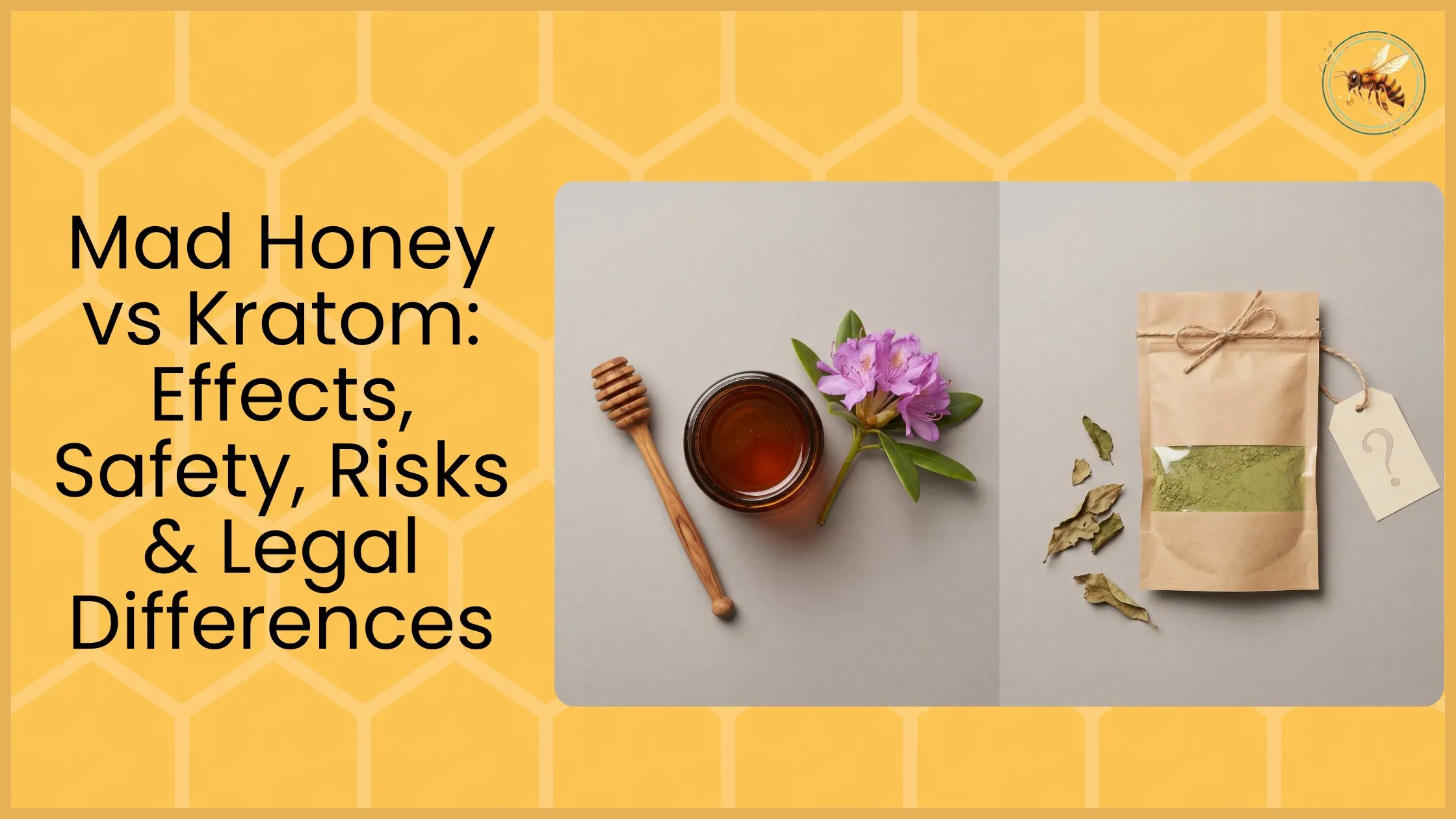
Mad honey and kratom are sometimes compared because both are sold online as “natural” products that may affect how someone feels. That comparison can be misleading. They come from different sources, work through different mechanisms, carry different risks, and should not be treated as interchangeable.
Mad honey is honey that may contain grayanotoxins from certain rhododendron nectar sources. Its main safety concerns are dose sensitivity, batch variability, dizziness, nausea, low blood pressure, and slow heart rate at higher exposure.
Kratom comes from the leaves of Mitragyna speciosa, a tree native to Southeast Asia. U.S. government health sources describe kratom as a substance that can produce opioid-like and stimulant-like effects, and the FDA has not approved kratom for any medical use.
The clearest safety answer is simple: do not mix mad honey and kratom. Combining two body-active products makes effects harder to predict and harder to interpret if something goes wrong.
tl;dr
- Mad honey and kratom are not in the same category: mad honey is a grayanotoxin-containing honey, while kratom is a plant leaf product with alkaloids such as mitragynine and 7-hydroxymitragynine.
- Mad honey’s main risk pattern is cardiovascular and body-first: dizziness, nausea, weakness, low blood pressure, and slow heart rate can become concerns when someone takes too much.
- Kratom’s main concerns include dependence, withdrawal, inconsistent product strength, contamination/adulteration, and opioid-like effects at higher exposures. NIDA notes that kratom can produce opioid- and stimulant-like effects, while the FDA states it has not approved kratom for any medical use.
- Neither should be treated as a casual “natural alternative” to medication. Both can affect the body in ways that matter, especially for people with health conditions, medication use, or low tolerance for unpredictable effects.
- If your goal is relaxation, safety depends more on predictability and transparency than intensity. Avoid “strongest” marketing, vague lab claims, and products that encourage stacking.
Quick Answer – Is Mad Honey Like Kratom?
No. Mad honey is not kratom, and kratom is not mad honey.
Mad honey is not a kratom-like product
Mad honey is still honey, but certain batches may contain grayanotoxins from rhododendron nectar. Its unusual effects are tied to those compounds and to batch-dependent potency. The main safety concern is not opioid-like dependence; it is the possibility of taking too much of a variable honey and experiencing physical symptoms such as dizziness, nausea, low blood pressure, or a slow pulse.
Kratom is not a mad honey-like product
Kratom comes from a plant leaf and contains active alkaloids, especially mitragynine and 7-hydroxymitragynine. DEA materials describe kratom as having stimulant effects at lower doses and sedative effects at higher doses, with potential for dependence.
The simplest difference
- Mad honey is a dose-sensitive honey with cardiovascular risk concerns.
- Kratom is a plant alkaloid product with stimulant/opioid-like effect concerns.
Both require caution, but for different reasons.
What Is Mad Honey?
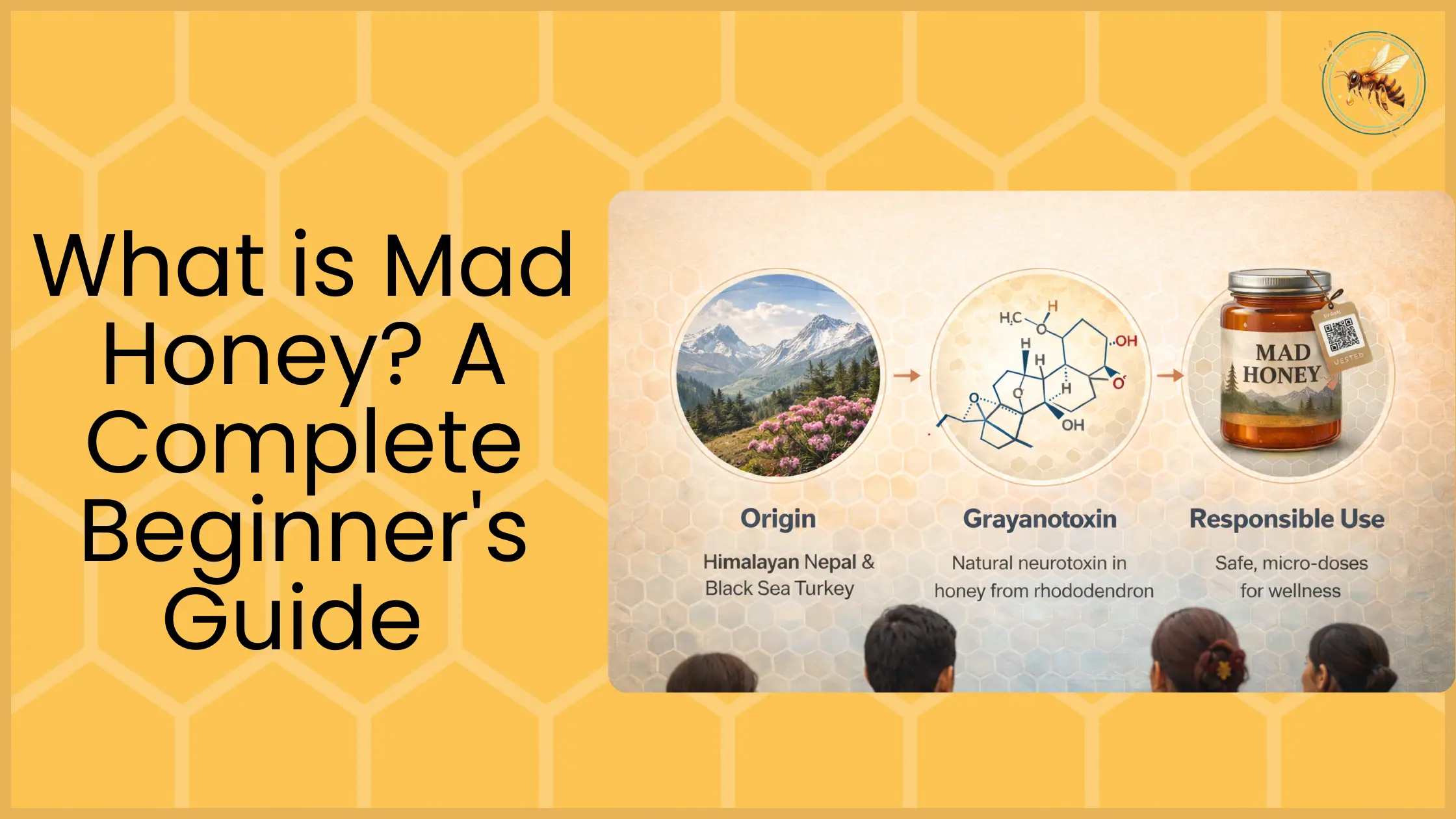
Mad honey is honey produced when bees collect nectar from certain rhododendron species. That nectar can contain grayanotoxins, which may remain in the honey and create effects that are different from regular honey.
A rare rhododendron-linked honey
Mad honey is most often associated with regions such as Nepal/Himalayan areas and Turkey’s Black Sea region, where rhododendron bloom zones can influence the nectar available to bees. It is not made by adding a drug or extract to honey. It forms naturally when the botanical and environmental conditions are right.
Why it feels different from regular honey
Regular honey is mainly a food: sweet, aromatic, and energy-dense. Mad honey can be bioactive because of grayanotoxins. That means the experience may go beyond taste and sweetness and can include body sensations. At low amounts, some people describe calm, warmth, heaviness, or subtle relaxation. At higher amounts, the experience can become uncomfortable or risky.
The main safety point
Mad honey varies by batch. A spoonful from one jar may not behave like the same spoonful from another jar. That is why responsible mad honey guidance focuses on batch transparency, conservative serving size, and avoiding re-dosing too quickly.
What Is Kratom?
Kratom is a plant product made from the leaves of Mitragyna speciosa, a tree native to Southeast Asia. It is commonly sold as powder, capsules, extracts, teas, and other preparations. NIDA describes kratom as an herbal substance that can produce opioid- and stimulant-like effects.
Southeast Asian plant product
Kratom has a traditional-use history in parts of Southeast Asia, but modern commercial kratom products can be very different from traditional leaf use. Products may be powdered leaf, concentrated extracts, gummies, drinks, capsules, or blends.
Not FDA-approved as a treatment
The FDA has not approved kratom for any medical use. That matters because many sellers market it with pain, anxiety, mood, or opioid-withdrawal language, even though those uses are not FDA-approved.
Why kratom is controversial
Kratom is controversial because people report using it for pain, energy, mood, or opioid withdrawal, while regulators and clinicians raise concerns about safety, dependence, product variability, and adverse events. The CDC has also highlighted safety concerns around newer high-potency alkaloid extract products.
Effects Comparison: How They Feel
The two products can both be described as “relaxing” by some users, but the pattern behind that feeling is not the same.
Mad honey: body-focused and dose-sensitive
Mad honey tends to be described as a body-first experience. At lower amounts, people may report:
- calm
- warmth
- heaviness
- relaxed body feeling
- mild mood shift
At higher amounts, the same category can shift into:
- dizziness
- nausea
- sweating
- weakness
- stomach discomfort
- low blood pressure symptoms
- slow heart-rate sensations
- near-fainting
That is why “stronger” is not automatically better. With mad honey, stronger can simply mean less predictable and more likely to become uncomfortable.
Kratom: more alkaloid-driven and dose-dependent
Kratom reports are usually framed differently. NIDA describes kratom as capable of producing stimulant-like effects and opioid-like effects. DEA fact sheet language also describes stimulant effects at lower doses and sedative effects at higher doses.
Commonly reported patterns include:
- energy or alertness at lower exposure
- calm or sedation at higher exposure
- mood changes
- nausea
- constipation
- dependence or withdrawal concerns in some users
Why “natural high” is a bad comparison
“Natural high” is too vague to be useful. Mad honey’s risk profile is more about grayanotoxin exposure and cardiovascular/autonomic effects. Kratom’s risk profile is more about alkaloids, opioid-like effects, dependence potential, and product variability. Calling both “natural highs” hides the important differences.
Mechanism: How They Work in the Body
Mechanism matters because it explains why the risks are different.
Mad honey mechanism
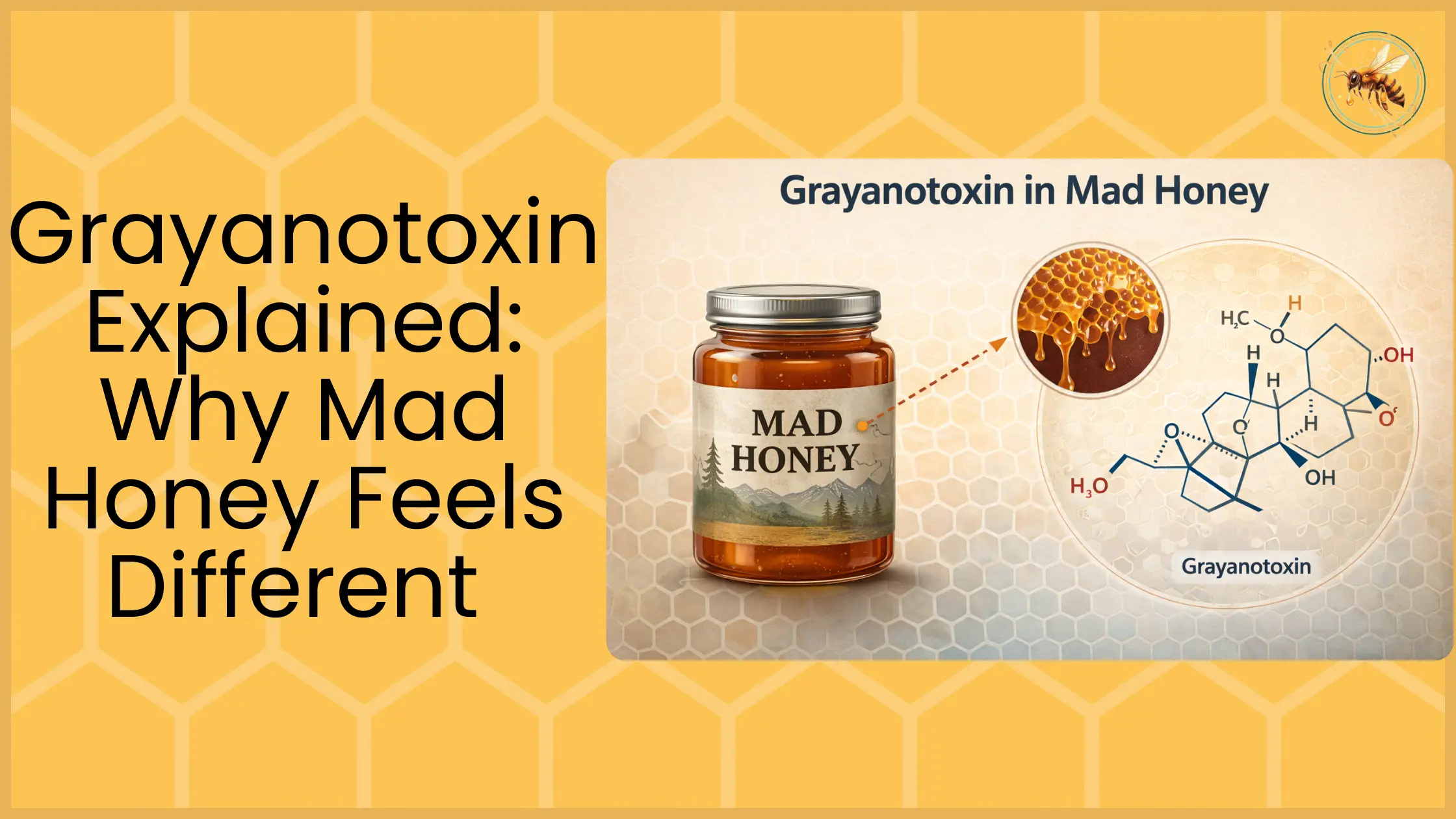
Mad honey’s unusual effects are linked to grayanotoxins. These compounds can affect nerve and muscle signaling and are especially relevant to the autonomic nervous system, the system involved in heart rate, blood pressure, sweating, nausea, and fainting responses.
That is why mad honey’s risk signals often show up as dizziness, weakness, nausea, low blood pressure, or slow heart rate.
Kratom mechanism
Kratom contains alkaloids such as mitragynine and 7-hydroxymitragynine. DEA identifies these as two major psychoactive ingredients in kratom leaves. These compounds are part of why kratom is discussed in relation to stimulant-like and opioid-like effects.
Practical difference
Mad honey’s central concern is: How much grayanotoxin is in this batch, and how sensitive is this person?
Kratom’s central concern is: What alkaloids are in this product, how concentrated is it, and what dependence or interaction risks apply?
Safety Comparison: Main Risks
Both products require caution, but the safety risks are not identical.
Mad honey risks
Mad honey’s main risks include:
- dizziness
- nausea
- vomiting
- sweating
- weakness
- low blood pressure
- slow heart rate
- fainting or near-fainting at higher exposure
Risk increases when someone takes too much, re-doses quickly, uses a strong batch, has low blood pressure or heart concerns, or mixes with alcohol or other substances.
Kratom risks
Kratom risks include:
- nausea and vomiting
- constipation
- sedation
- dependence and withdrawal
- interaction with other substances
- inconsistent product strength
- contamination/adulteration concerns
- adverse events linked to extracts or high-potency products
The FDA warns about serious safety concerns with kratom and has not approved it for medical use. NIDA also notes ongoing concerns and continued review of kratom evidence and policy.
The honest comparison
Mad honey is not automatically safer because it is honey. Kratom is not automatically safer because it is a plant. “Natural” does not answer the safety question. What matters is dose, product quality, personal risk factors, and whether the person is mixing with other substances.
Batch Variability vs Product Variability
Both products can be unpredictable, but for different reasons.
Mad honey batch variability
Mad honey varies because the grayanotoxin level depends on rhododendron species, season, region, nectar mix, bee foraging behavior, and harvest conditions. Two jars can look similar but contain different active-compound levels.
That is why batch information and lab testing matter. A responsible seller should not promise identical effects every time.
Kratom product variability
Kratom variability often comes from product form and manufacturing: powder vs extract, leaf vs concentrate, capsule vs drink, declared vs actual alkaloid content. CDC has specifically noted that the shift from traditional leaf preparations to high-potency alkaloid extracts has raised safety concerns.
Why both categories teach buyers the same lesson
In both categories, the label alone is not enough. Buyers should look for transparency, batch or lot information, conservative guidance, testing where relevant, and sellers who avoid exaggerated claims.
Legality Comparison
Legal status depends heavily on location, product form, and claims.
Mad honey legality
Mad honey is often treated as honey/food, but import rules, food labeling laws, and marketing claims matter. A product advertised as “psychedelic,” “guaranteed high,” or as a disease treatment can create avoidable legal and compliance problems.
Kratom legality
Kratom legality varies widely. NIDA notes that kratom products are legal and accessible in many areas, while U.S. and international agencies continue to review evidence that may inform policy. DEA materials have also noted that kratom is not controlled under the U.S. Controlled Substances Act federally, though state-level rules may vary.
Why “legal” does not mean “safe”
A product can be legal and still risky. A product can be sold online and still be poorly labeled, contaminated, overconcentrated, or misleadingly marketed. Legality is only one part of safety.
Can You Mix Mad Honey and Kratom?
The safest answer is no.
Why mixing is risky
Mixing mad honey and kratom creates uncertainty. You may not know which product is causing dizziness, nausea, sedation, weakness, confusion, or heart-rate changes. If symptoms appear, the overlap makes it harder to respond appropriately.
Potential combined concerns include:
- nausea
- vomiting
- dizziness
- sedation
- weakness
- dehydration
- impaired judgment
- faintness
- harder symptom interpretation
If someone already mixed them
Stop taking more of either product. Sit or lie down if dizzy. Hydrate slowly if you can keep fluids down. Do not add alcohol, sleep aids, sedatives, cannabis, kava, or other substances.
Seek medical help if symptoms include fainting or near-fainting, chest pain, trouble breathing, severe confusion, persistent vomiting, extreme weakness, or a very slow pulse sensation.
Why “natural” does not make mixing safer
Combining two natural products can still be risky when both can affect the body. The issue is not whether they come from plants or honey. The issue is whether their effects overlap in a way that increases danger.
Which One Makes More Sense for Your Goal?
The better question is not “Which is stronger?” It is “Which risk profile am I actually willing to accept?”
If you want a simple ritual product
Mad honey may make more sense for someone looking for a rare, food-based ritual experience, provided they are healthy, not on relevant medication, not mixing, and willing to use a conservative approach. The priority should be origin transparency, batch information, and safety guidance.
If you are looking for pain relief, withdrawal support, or opioid-like effects
Do not use either product as a self-treatment plan. Kratom is often marketed for pain or opioid withdrawal, but the FDA has not approved kratom for any medical use. Anyone dealing with pain, dependence, withdrawal, anxiety, or depression should seek evidence-based medical support.
If you want predictability
Neither category is ideal if predictability is your top priority. Mad honey varies by batch. Kratom varies by product form, alkaloid content, and manufacturing quality. A predictable product requires standardization, testing, and clear labeling.
If you are risk-averse
Avoid both, especially if you have health conditions, take medication, are prone to dizziness or fainting, or dislike unpredictable body effects.
Buyer Checklist: What to Look For
The safest buying approach is to avoid hype and look for transparency.
For mad honey
Look for:
- country and region of origin
- batch or harvest information
- responsible dosing guidance
- who-should-avoid warnings
- grayanotoxin testing if available
- no “guaranteed trip” claims
- clear customer support and realistic expectations
Avoid listings that focus only on “strongest,” “highest potency,” or “instant high.”
For kratom
Look for:
- full ingredient transparency
- alkaloid testing where available
- contaminant testing
- clear product form and serving information
- no disease-treatment claims
- no “opioid replacement” promises
- warnings about dependence and interactions
Be especially cautious with high-potency extracts, unclear blends, and products marketed with extreme claims.
Shared rule
If a seller avoids basic documentation while promising dramatic results, walk away.
Red Flags in Marketing
Marketing language often reveals whether a seller is responsible.
Mad honey red flags
Avoid sellers that use:
- “psychedelic trip”
- “guaranteed high”
- “strongest batch”
- “instant effect”
- “safe for everyone”
- no warnings or dosing guidance
Kratom red flags
Avoid sellers that use:
- “legal opioid”
- “cures pain”
- “cures anxiety”
- “guaranteed withdrawal solution”
- “no risk of dependence”
- unclear extract strength
- vague proprietary blends
Why claims matter
Claims shape user behavior. If a seller markets intensity, people chase intensity. If a seller markets responsible use, people are more likely to use restraint.
Conclusion
Mad honey and kratom are not interchangeable. Mad honey is a rare honey category shaped by rhododendron nectar, grayanotoxins, and batch variability. Kratom is a plant leaf product containing alkaloids with stimulant-like and opioid-like effects.
The safest comparison is not “which one is stronger?” but which risks are you actually dealing with?
Mad honey risk is mainly about dose sensitivity, batch variability, blood pressure, heart rate, and overdoing it. Kratom risk is mainly about alkaloid strength, dependence potential, product variability, and unapproved medical claims. The safest choice is to avoid mixing, avoid hype, and choose transparency over intensity.
FAQs – Mad Honey vs Kratom
Is mad honey like kratom?
No. Mad honey is a grayanotoxin-containing honey. Kratom is a plant leaf product containing alkaloids such as mitragynine and 7-hydroxymitragynine.
Which one is stronger?
“Stronger” is not a useful comparison. Mad honey and kratom work differently and create different risks.
Is mad honey safer than kratom?
Not automatically. Mad honey has cardiovascular and batch-variability concerns. Kratom has dependence, product-strength, and alkaloid-related concerns. Safety depends on the person, product, amount, and context.
Can mad honey feel like a pain reliever?
Some people may describe relaxation or body comfort, but mad honey should not be marketed or used as a pain treatment.
Can kratom help with pain or withdrawal?
People report using kratom for these reasons, but the FDA has not approved kratom for any medical use. Medical support is safer for pain, opioid withdrawal, or dependence.
Can you mix mad honey and kratom?
No. The safest answer is to avoid mixing because it increases unpredictability and makes symptoms harder to interpret.
Which lasts longer?
Mad honey timing depends on the amount, batch, food, and sensitivity. Kratom timing depends on product form, dose, and individual factors. Do not rely on timing guesses to re-dose either product.
Is kratom legal?
It depends on where you live. It may be legal in some places and restricted in others. Check local law before buying. NIDA notes kratom is legal and accessible in many areas while agencies continue reviewing evidence and policy.
Is mad honey legal?
Mad honey is often treated as honey/food, but legality depends on import rules, labeling, and marketing claims in your country.
What should I do if I feel sick after taking either?
Stop taking more. Sit or lie down. Hydrate slowly if possible. Seek medical help for fainting, chest pain, trouble breathing, severe confusion, persistent vomiting, extreme weakness, or worsening symptoms.