If you are thinking about trying mad honey, or have already started using it, addiction is a reasonable concern. You might be wondering whether occasional use can become a habit, whether your body gets used to it, or what happens when you stop.
Research has not established mad honey as an addictive substance. But it has not been studied well enough to confidently call it non-addictive either. The evidence is much clearer about poisoning than it is about dependence or withdrawal.
That is an important distinction. A product doesn’t need to be addictive to cause harm, and a “natural” label doesn’t answer either question.
Here, we will focus on what researchers know about repeated use and where the evidence stops.
tl;dr
- Mad honey is not established as addictive, but claims that it is entirely non-addictive lack sufficient evidence.
- A small study noted continued consumption following poisoning, though it did not diagnose addiction.
- Current research does not show a predictable tolerance pattern or defined withdrawal syndrome.
- A weaker effect from a different jar does not necessarily indicate tolerance.
- Anyone finding their use difficult to control can seek professional help without needing an official addiction diagnosis.
What does “Addictive” actually mean?
People often use “addiction,” “dependence,” and “tolerance” as though they mean the same thing. They describe different situations.
You might enjoy something and want to use it again. You might make it part of a routine. Neither observation, on its own, tells us whether addiction has developed.
The National Institute on Drug Abuse distinguishes addiction from tolerance and physical dependence. The central concern with addiction is compulsive use that continues despite harmful consequences.
| Term | Plain-language explanation |
| Intoxication | A substance changes how your body or mind functions after you consume it. |
| Tolerance | Repeated exposure reduces your response to a substance. |
| Physical dependence | Your body adapts to repeated exposure, and reducing or stopping it can cause withdrawal. |
| Addiction | Use becomes difficult to control and continues despite harm. |
These definitions help frame the question. They do not prove that mad honey causes either condition.
What the Mad Honey research actually found
One of the most relevant studies asked a practical question: after someone receives treatment for mad honey poisoning, do they keep consuming it?
Some households continued using it after poisoning
A 2013 study in the Balkan Medical Journal included 38 patients treated for mad honey poisoning. Researchers contacted 34 of them about a month after discharge.
Fourteen respondents said that either they or a close relative had continued consuming the honey. Continued household consumption was more common among patients discharged after emergency observation than among those who had received intensive-care observation.
The wording matters. This was not a finding that 14 patients were addicted or unable to stop. The figure combines patients and their close relatives, so it does not show how many patients themselves kept using it.
Continued use is worth investigating, but it is not a diagnosis
The study did not formally assess dependence, diagnose addiction, or establish withdrawal symptoms. It was also a small study of hospital patients, so its findings cannot represent everyone who consumes mad honey.
It gives us a reason to examine why consumption continues after harm. It does not provide a definitive answer about addiction.
Can you build a tolerance to Mad Honey?
The research reviewed for this article does not establish a predictable tolerance pattern in humans.
Suppose one jar produces noticeable effects and the next does very little. It may feel logical to conclude that your body has become used to it. But that comparison leaves an important variable unmeasured: how much grayanotoxin was in each serving.
A spoonful measures honey, not toxin concentration. Our guide to mad honey batch variability explains why different jars may not produce comparable exposures.
Do not treat a weaker perceived effect as proof that you need more. It does not demonstrate tolerance or establish that a larger amount would be safe.
Does Mad Honey cause withdrawal?
A clearly defined mad honey withdrawal syndrome was not established in the sources reviewed here.
That does not mean you should ignore someone who feels unwell after stopping. It means there is not enough evidence to confidently attribute those symptoms to mad honey withdrawal.
To answer the question properly, researchers would need to follow regular users, document their consumption, and assess what happens after they stop.
If you feel unwell after reducing or stopping regular use, tell a healthcare professional:
- How often you consumed mad honey.
- When you last consumed it.
- What symptoms you have noticed.
- Whether you take medicines or other substances.
These details are more useful than trying to decide on your own whether you are experiencing withdrawal.
When should you be concerned about your use?
You don’t need to settle the scientific debate before taking your concerns seriously.
Perhaps you keep taking more than you intended. Perhaps you have decided to stop several times but find yourself returning to it. Or perhaps you continue using it despite feeling unwell afterward.
Those are reasons to speak with a healthcare professional. They are not enough to diagnose an addiction through an article.
It is also worth considering what you want mad honey to do for you. If you have come to rely on it for sleep, stress or another health concern, explain that during the conversation. Addressing the underlying problem may be more helpful than focusing only on the honey.
The better-established risk is poisoning
Mad honey can cause harm regardless of whether someone develops dependence.
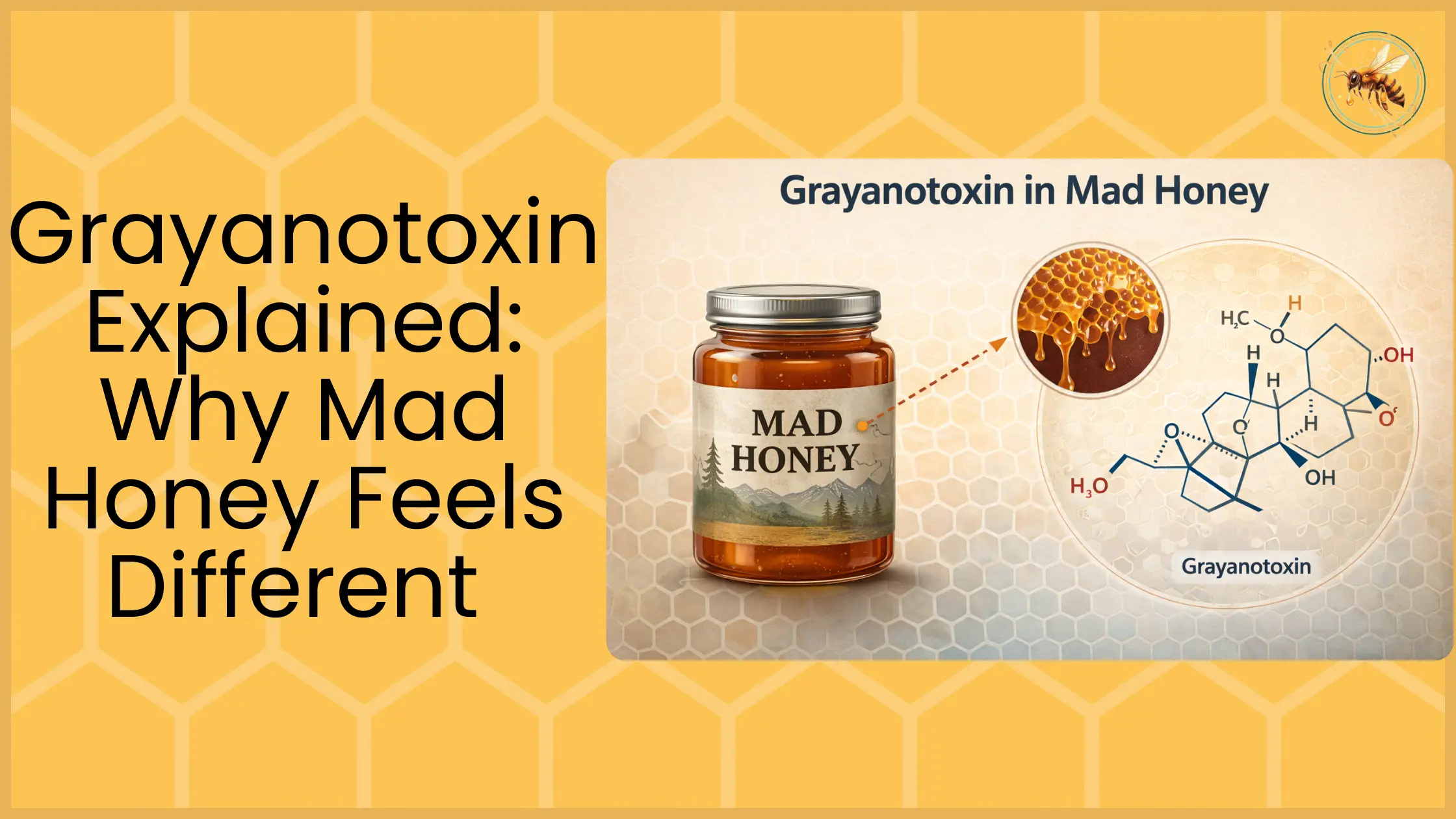
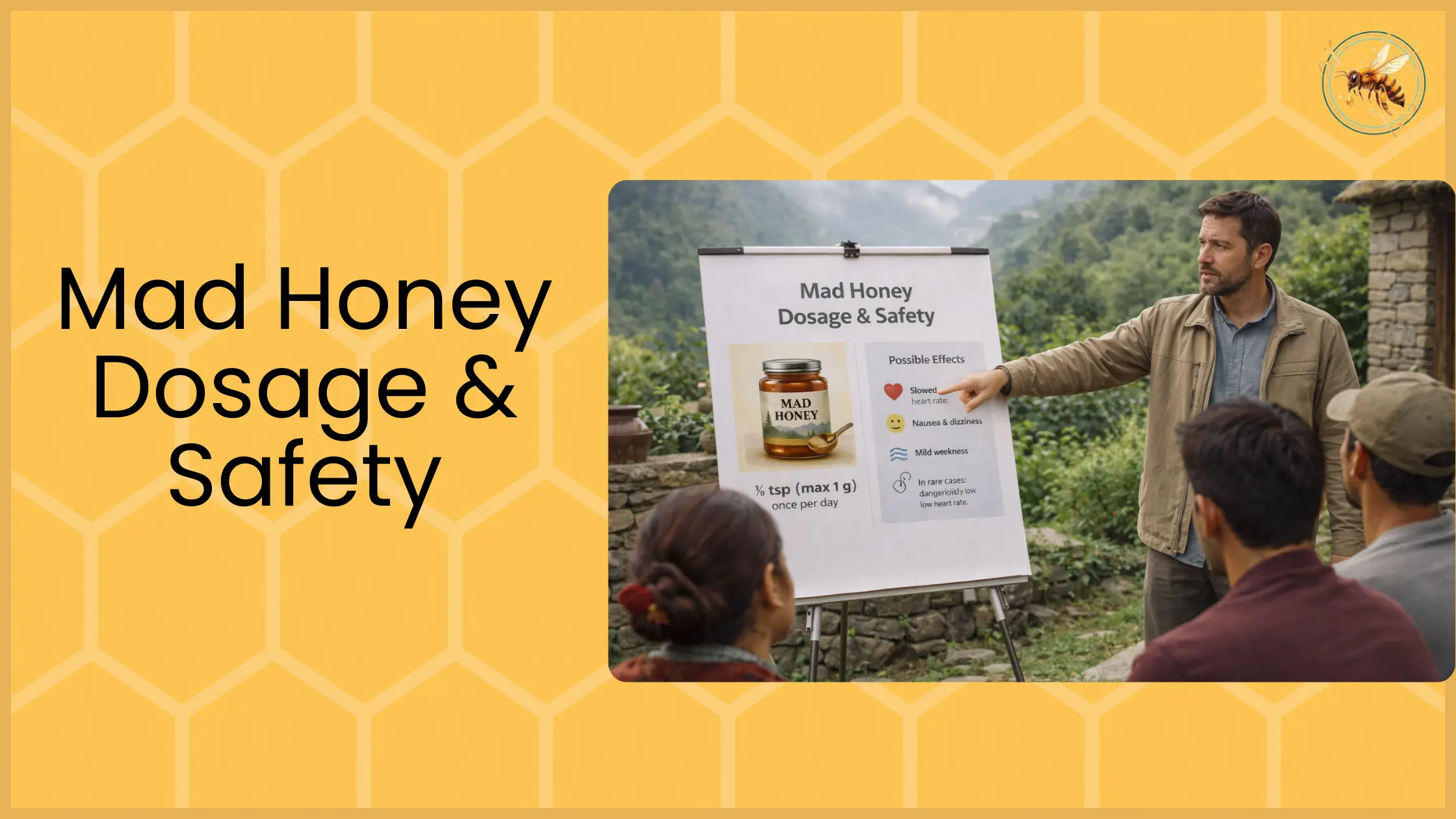
Its grayanotoxins interfere with sodium channels involved in electrical signaling. Documented poisoning effects include low blood pressure, a slow heart rate, nausea, vomiting, and changes in consciousness.
The European Food Safety Authority’s assessment of grayanotoxins in honey describes these effects and the limitations of the available safety evidence.
This matters when people describe feeling dizzy or faint as being “high.” That wording can make an adverse reaction sound like an expected recreational effect. Our article on whether mad honey gets you high explores that distinction.
A previous uneventful experience does not guarantee the next one will be harmless.
When to get medical help
If symptoms develop after consuming mad honey, contact a poison centre or healthcare professional promptly.
Call local emergency services immediately if someone collapses, has a seizure, has difficulty breathing or cannot be awakened. In the United States, Poison Control is available at 1-800-222-1222.
For more information about recognising a reaction, see our mad honey poisoning guide.
Does that mean daily use is safe?
No conclusion about daily safety follows from the limited addiction evidence.
EFSA could not adequately assess the risks of chronic or repeated exposure because it lacked important long-term toxicity data. It also could not identify a no-observed-adverse-effect level from the available human case studies.
That uncertainty does not mean every regular consumer will develop lasting harm. It does mean that describing daily consumption as an established safe routine goes beyond the evidence.
Before accepting a daily-use recommendation, look at what supports it. A customer testimonial, traditional practice or seller’s reassurance cannot answer the same questions as research on repeated exposure.
Frequently Asked Questions
Does wanting mad honey again mean you are addicted?
No. Wanting to repeat an experience is not enough to establish addiction. Difficulty controlling use, continued use despite harm, and interference with daily life are more meaningful reasons to seek an assessment.
Can a tolerance break make mad honey safe?
No evidence-based tolerance-break schedule exists for mad honey. Taking a break does not make the contents of a future serving predictable.
Does being natural make mad honey less addictive?
“Natural” describes origin, not addiction potential. Whether a substance causes dependence needs to be assessed through evidence about that substance.
Is mad honey definitely non-addictive?
The research does not support that level of certainty. Mad honey’s addiction potential remains insufficiently studied, while its ability to cause poisoning is documented. If you’re concerned about your intake, talk to a healthcare professional.