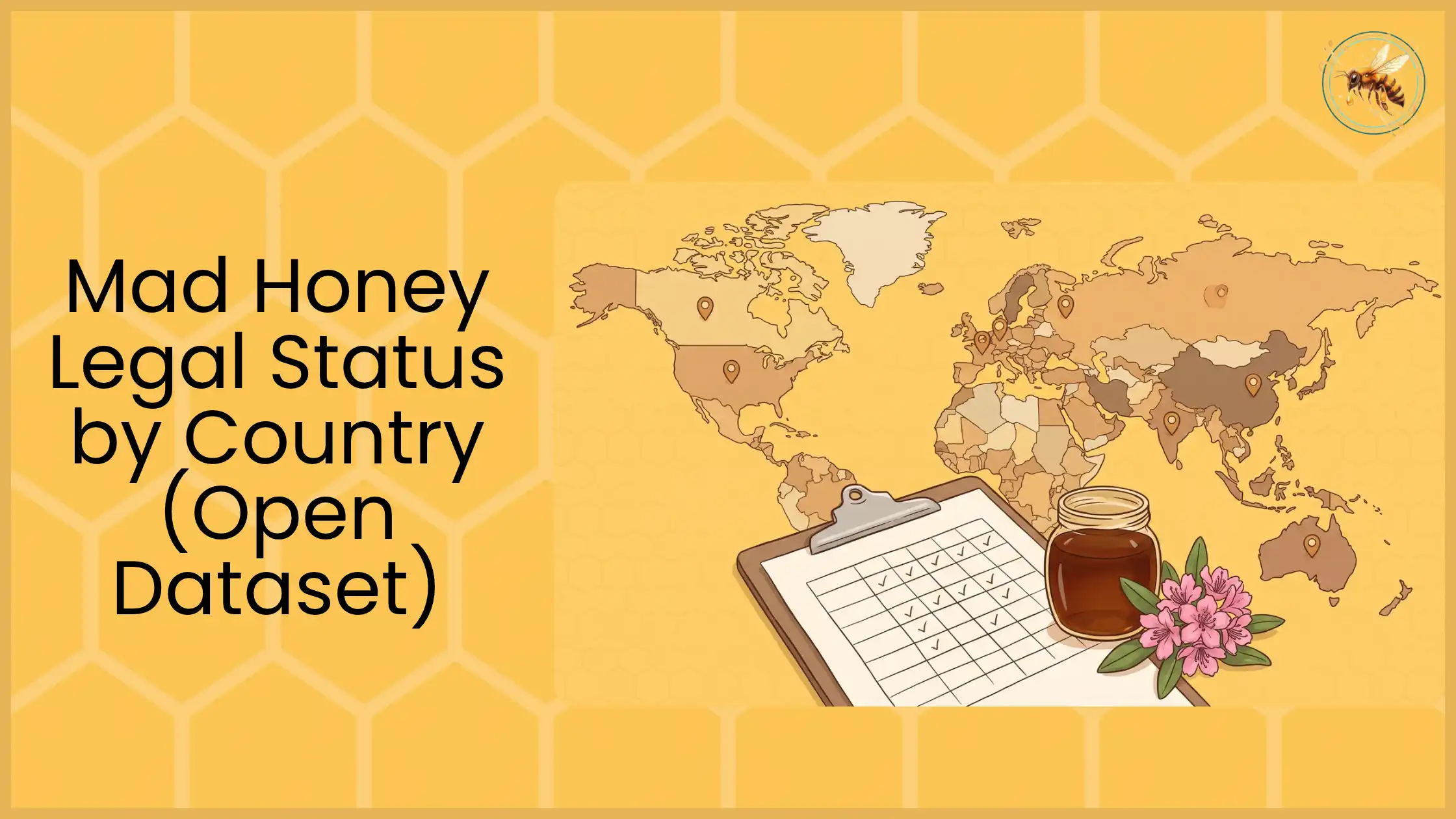
Can you bring mad honey home in your luggage, import it to sell, or sell it? This page answers those three questions for 22 countries and territories, and says whether any rule there names grayanotoxins, the compounds that make the honey toxic. Every answer links to the government page it came from.
The same information is published as an open dataset, free to download, reuse and cite.
Mad Honey Legal Status Dataset, version 1.1. Checked 8 to 29 October 2026. Free to reuse under CC BY 4.0. DOI: 10.5281/zenodo.23763160
Get the data on ZenodoCountries (CSV)Claims (CSV)Method and schema
At a glance
countries and territories, each checked against its own government pages
has a national rule that names grayanotoxins: South Korea. France has a regional one, on La Réunion
places where honey from Nepal cannot be imported to sell: the EU, Great Britain, Norway and New Zealand. These are general honey rules, not grayanotoxin rules
countries with a rule about simply having mad honey
Country by country
The answers are for honey from Nepal or Turkey, the honey sold as mad honey. Select a country for what the rule says and where we found it.
- Allowedan official page says honey is fine
- With conditionsa limit, permit, certificate or inspection
- Not allowedno legal way in for honey from Nepal or Turkey
- No specific rulenothing about honey; normal food law applies
- Unclearthe official pages were unclear or would not load
| Country or territory | In your luggage | Importing to sell | Selling it | Names grayanotoxins |
|---|---|---|---|---|
| Australia | With conditions | With conditions | No specific rule | No |
| Canada | With conditions | Allowed | No specific rule | No |
| China (mainland) | No specific rule | Unclear | No specific rule | No |
| European Union | With conditions | With conditions | No specific rule | No |
| Hong Kong | No specific rule | No specific rule | No specific rule | No |
| India | No specific rule | Unclear | No specific rule | No |
| Israel | No specific rule | Unclear | No specific rule | No |
| Japan | Allowed | No specific rule | No specific rule | No |
| Malaysia | With conditions | With conditions | No specific rule | No |
| New Zealand | Not allowed | Not allowed | No specific rule | No |
| Norway | With conditions | With conditions | No specific rule | No |
| Qatar | Unclear | Unclear | No specific rule | No |
| Saudi Arabia | No specific rule | With conditions | No specific rule | No |
| Singapore | Unclear | No specific rule | No specific rule | No |
| South Africa | With conditions | With conditions | No specific rule | No |
| South Korea | Not allowed | Not allowed | Not allowed | Yes |
| Switzerland | With conditions | With conditions | No specific rule | No |
| United Arab Emirates | No specific rule | With conditions | With conditions | No |
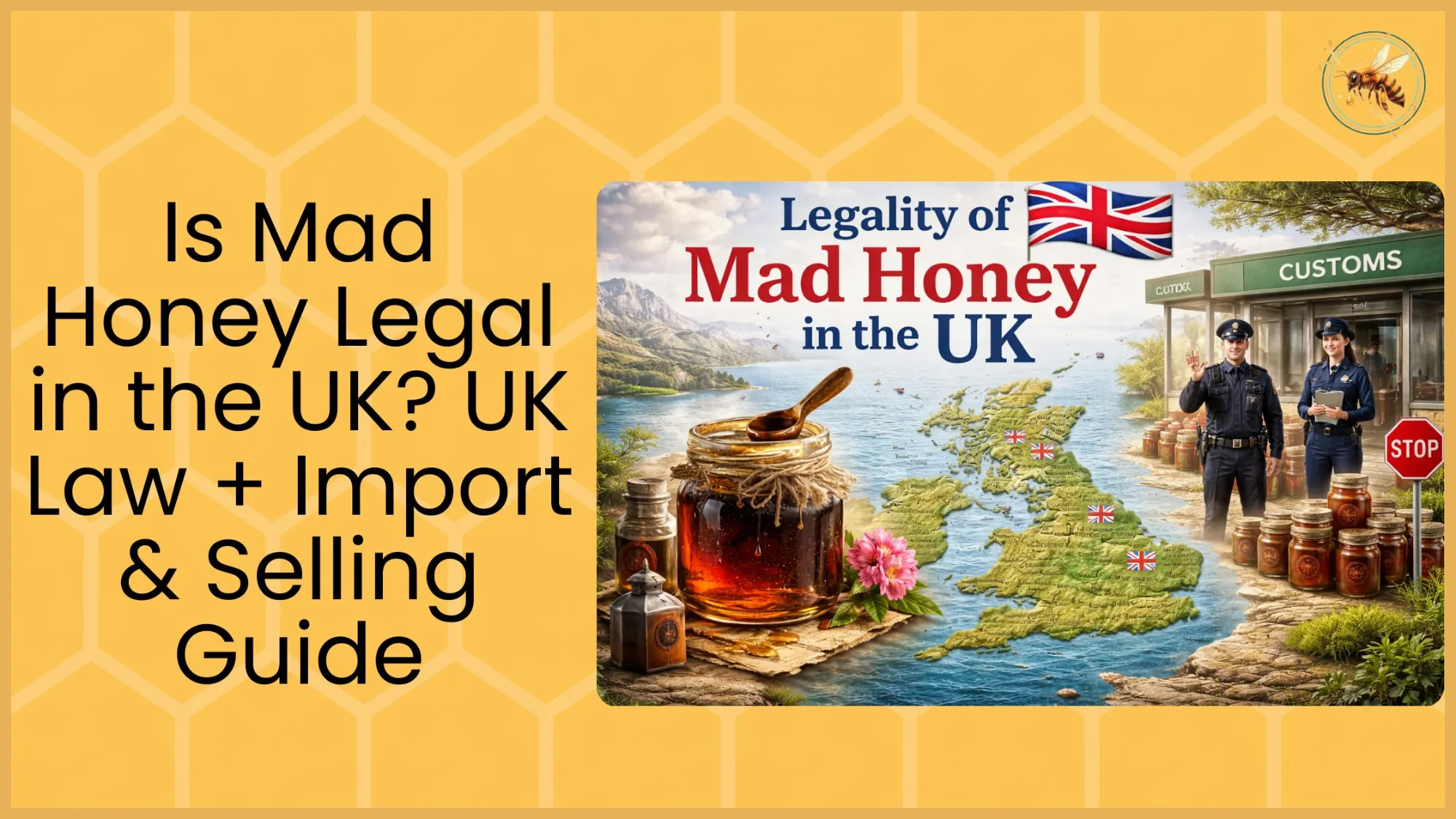
| United Kingdom (Great Britain) | With conditions | With conditions | No specific rule | No |
| United States | Allowed | No specific rule | No specific rule | No |
| Nepal | Does not apply | Does not apply | No specific rule | No |
| Turkey | Does not apply | Does not apply | No specific rule | No |
Rules change, so check the official source before you travel or ship honey. This is not legal advice.
Country details
Australia
In your luggage With conditionsAllowed, but it is inspected when you arrive. Honey that fails is destroyed or sent back at your cost. Western Australia has extra rules.
Importing it to sell With conditionsNo import permit is needed if the honey is pure, with nothing else in it. Western Australia adds its own conditions.
Selling it No specific ruleNo honey-specific rule. General food safety law applies.
A rule naming grayanotoxins NoNo rule names grayanotoxins or mad honey.
Sources: luggage rule, import rule. Checked 28 Oct 2026, confidence medium. More: customs table; Is mad honey legal in Australia?
Canada
In your luggage With conditionsUp to 20 kg per person, for your own use.
Importing it to sell AllowedAllowed. Imported honey must meet Canada’s quality and labelling standards, but there is no country list or permit.
Selling it No specific ruleNo honey-specific rule. General food safety law applies.
A rule naming grayanotoxins NoNo rule names grayanotoxins or mad honey.
Sources: luggage rule, import rule. Checked 28 Oct 2026, confidence high. More: customs table; Is mad honey legal in Canada?
China (mainland)
In your luggage No specific ruleHoney is not on China’s list of food banned from luggage. Declare animal and plant products when you arrive.
Importing it to sell UnclearOnly countries on China’s approved list may export honey there. We could not open the list to see whether Nepal or Turkey is on it.
Selling it No specific ruleNo honey-specific rule. General food safety law applies.
A rule naming grayanotoxins NoNo rule names grayanotoxins or mad honey.
Sources: luggage rule. Checked 29 Oct 2026, confidence low. More: customs table
European Union
In your luggage With conditionsUp to 2 kg per person when you arrive from outside the EU. The limit is shared with baby food and medical foods.
Importing it to sell With conditionsOnly from countries on the EU’s approved list. Turkey is on it. Nepal is not, so honey from Nepal cannot be imported to sell.
Selling it No specific ruleNo honey-specific rule. General food safety law applies.
A rule naming grayanotoxins NoNo rule names grayanotoxins or mad honey.
EU law sets no limit for grayanotoxins. The EU food alert system has four notifications about them in honey since 2024. One member state has a regional rule: France regulates the sale of comb honey on La Réunion from November to March, because honey from a native plant there can contain grayanotoxins.
Sources: luggage rule, import rule, other source. Checked 29 Oct 2026, confidence high. More: customs table; Is mad honey legal in the Netherlands?
Hong Kong
In your luggage No specific ruleFood for your own use in a reasonable amount is generally not controlled, and honey is not on the controlled list.
Importing it to sell No specific ruleHoney is not one of the high-risk foods that need a certificate or permit.
Selling it No specific ruleNo honey-specific rule. General food safety law applies.
A rule naming grayanotoxins NoNo rule names grayanotoxins or mad honey.
Health officials have warned about honey from Nepal and Turkey’s Black Sea coast after poisoning cases.
Sources: luggage rule, import rule, other source. Checked 28 Oct 2026, confidence medium. More: customs table
India
In your luggage No specific ruleIndia’s traveller rules do not mention honey.
Importing it to sell UnclearHoney needs no animal quarantine certificate, but we could not check the food regulator’s import rules.
Selling it No specific ruleNo honey-specific rule. General food safety law applies.
A rule naming grayanotoxins NoNo rule names grayanotoxins or mad honey.
Sources: luggage rule. Checked 9 Oct 2026, confidence medium. More: customs table; Is mad honey legal in India?
Israel
In your luggage No specific ruleHoney is not on the banned list, or on the list of items that need another authority’s approval.
Importing it to sell UnclearWe could not read the Ministry of Health’s import rules.
Selling it No specific ruleNo honey-specific rule. General food safety law applies.
A rule naming grayanotoxins NoNo rule names grayanotoxins or mad honey.
Sources: luggage rule. Checked 29 Oct 2026, confidence low. More: customs table
Japan
In your luggage AllowedAllowed. Honey is exempt from animal quarantine.
Importing it to sell No specific ruleNo honey-specific rule. The standard notice for imported food applies.
Selling it No specific ruleNo honey-specific rule. General food safety law applies.
A rule naming grayanotoxins NoNo rule names grayanotoxins or mad honey.
Sources: luggage rule, import rule, other source. Checked 8 Oct 2026, confidence medium. More: customs table
Malaysia
In your luggage With conditionsAllowed only after inspection and approval by the quarantine service. Honeycomb is banned, and food must be declared in writing.
Importing it to sell With conditionsThe same rule applies to every import: inspection and approval, and no honeycomb.
Selling it No specific ruleNo honey-specific rule. General food safety law applies.
A rule naming grayanotoxins NoNo rule names grayanotoxins or mad honey.
Sources: luggage rule, import rule. Checked 9 Oct 2026, confidence high. More: customs table
New Zealand
In your luggage Not allowedNot allowed from Nepal or Turkey. Only New Zealand honey, or honey from six Pacific countries with a certificate, may come in.
Importing it to sell Not allowedNot allowed. Only honey from Niue, Pitcairn, Samoa, Tonga, Tuvalu and the Solomon Islands may be imported, with a certificate.
Selling it No specific ruleNo honey-specific rule. General food safety law applies.
A rule naming grayanotoxins NoNo rule names grayanotoxins or mad honey.
Sources: luggage rule, import rule. Checked 29 Oct 2026, confidence high. More: customs table; Is mad honey legal in New Zealand?
Norway
In your luggage With conditionsUp to 1 kg when you arrive from outside the EU and EEA.
Importing it to sell With conditionsOnly from countries on the EU’s approved list: Turkey yes, Nepal no.
Selling it No specific ruleNo honey-specific rule. General food safety law applies.
A rule naming grayanotoxins NoNo rule names grayanotoxins or mad honey.
Sources: luggage rule, import rule. Checked 28 Oct 2026, confidence medium. More: customs table
Qatar
In your luggage UnclearA customs guide exempts food for personal use, but how that applies to honey is not stated.
Importing it to sell UnclearHoney appeared on a customs list of restricted goods, but we could not find that page again to link it.
Selling it No specific ruleNo honey-specific rule. General food safety law applies.
A rule naming grayanotoxins NoNo rule names grayanotoxins or mad honey.
Sources: luggage rule. Checked 29 Oct 2026, confidence low. More: customs table
Saudi Arabia
In your luggage No specific ruleNo traveller rule mentions honey.
Importing it to sell With conditionsOnly from countries and producers approved by the Saudi Food and Drug Authority, with a health certificate.
Selling it No specific ruleNo honey-specific rule. General food safety law applies.
A rule naming grayanotoxins NoNo rule names grayanotoxins or mad honey.
Sources: luggage rule, import rule. Checked 28 Oct 2026, confidence medium. More: customs table
Singapore
In your luggage UnclearHoney is not named. If it counts as processed food, the limit is 5 kg (or 5 litres) worth up to S$100.
Importing it to sell No specific ruleNo honey-specific rule. The permit needed for all processed food applies.
Selling it No specific ruleNo honey-specific rule. General food safety law applies.
A rule naming grayanotoxins NoNo rule names grayanotoxins or mad honey.
The Singapore Food Agency has warned travellers about honey from Turkey and Nepal.
Sources: luggage rule, import rule, other source. Checked 28 Oct 2026, confidence medium. More: customs table; Is mad honey legal in Singapore?
South Africa
In your luggage With conditionsOnly with a permit from the Department of Agriculture. There is no personal allowance, and you must declare it.
Importing it to sell With conditionsOnly with a permit under the Agricultural Pests Act.
Selling it No specific ruleNo honey-specific rule. General food safety law applies.
A rule naming grayanotoxins NoNo rule names grayanotoxins or mad honey.
Sources: luggage rule, import rule. Checked 9 Oct 2026, confidence medium. More: customs table
South Korea
In your luggage Not allowedNot allowed. Nepalese wild honey containing grayanotoxin has been banned since 2005.
Importing it to sell Not allowedNot allowed for honey that contains grayanotoxin.
Selling it Not allowedNot allowed. Honey sold in South Korea must have no detectable grayanotoxin III.
A rule naming grayanotoxins YesGrayanotoxin III must not be detected in honey.
Sources: luggage rule, import rule, legal text. Checked 29 Oct 2026, confidence high. More: customs table
Switzerland
In your luggage With conditionsUp to 2 kg when you arrive from outside the EU, Norway, Iceland and Northern Ireland.
Importing it to sell With conditionsAnimal products from outside the EU need set conditions and a veterinary border check.
Selling it No specific ruleNo honey-specific rule. General food safety law applies.
A rule naming grayanotoxins NoNo rule names grayanotoxins or mad honey.
Sources: luggage rule, import rule. Checked 28 Oct 2026, confidence medium. More: customs table
United Arab Emirates
In your luggage No specific ruleThe traveller guide does not name honey. Food may not be brought in commercial amounts.
Importing it to sell With conditionsEvery honey product must be registered and certified, and it is checked at the border.
Selling it With conditionsHoney without a certificate may not be displayed or sold.
A rule naming grayanotoxins NoNo rule names grayanotoxins or mad honey.
Sources: luggage rule, import rule. Checked 29 Oct 2026, confidence medium. More: customs table
United Kingdom (Great Britain)
In your luggage With conditionsUp to 2 kg per person when you arrive from outside the EU and nearby countries. Honeycomb from Turkey has been banned since 4 September 2026.
Importing it to sell With conditionsOnly from countries on Britain’s approved list: Turkey yes, Nepal no.
Selling it No specific ruleNo honey-specific rule. General food safety law applies.
A rule naming grayanotoxins NoNo rule names grayanotoxins or mad honey.
Sources: luggage rule, import rule, legal text. Checked 28 Oct 2026, confidence high. More: customs table; Is mad honey legal in the UK?
United States
In your luggage AllowedAllowed. US Customs lists honey as admissible; declare all food you bring.
Importing it to sell No specific ruleNo honey-specific rule. None of the FDA’s import alerts is about grayanotoxins.
Selling it No specific ruleNo honey-specific rule. General food safety law applies.
A rule naming grayanotoxins NoNo rule names grayanotoxins or mad honey.
Sources: luggage rule, import rule. Checked 28 Oct 2026, confidence high. More: customs table; Is mad honey illegal in the US?
Nepal
Bringing it in or importing it Does not applyMad honey is produced here, so importing it is not covered.
Taking it out No specific ruleNo official page says whether travellers may take honey out of Nepal.
Selling it No specific ruleNo rule naming mad honey was found.
A rule naming grayanotoxins NoNo rule names grayanotoxins or mad honey.
Sources: other source. Checked 9 Oct 2026, confidence low. More: customs table
Turkey
Bringing it in or importing it Does not applyMad honey is produced here, so importing it is not covered.
Taking it out No specific ruleNo rule on taking honey out of Turkey was found.
Selling it No specific ruleNo rule names mad honey (deli bal). A June 2026 ministry warning covers rhododendron jam, syrup and tea, not honey.
A rule naming grayanotoxins NoNo rule names grayanotoxins or mad honey.
Sources: other source. Checked 9 Oct 2026, confidence medium. More: customs table
Claims we checked
Some claims about mad honey and the law circulate widely online. We checked each one against the document it cites. False means we read that document and it does not say what is claimed. Unsupported means no document backing the claim could be found.
False
“FDA Import Alert 99-23 covers honey products adulterated with grayanotoxins”
Import Alert 99-23 is titled “Detention Without Physical Examination of Produce Due to Contamination With Human Pathogens” (published 10/27/2026). Its full text contains no occurrence of grayanotoxin, rhododendron or mad honey. The honey-related alerts that do exist are 36-04 (unsafe drug residues) and 99-47 (economically motivated adulteration), neither concerning grayanotoxins. Read the source.
Unsupported
“FDA Import Alert 99-16 covers grayanotoxins in honey”
No active import alert numbered 99-16 appears on FDA’s list of import alerts. The only active alert with honey in its title is 36-04 (unsafe drug residues), and no alert on the list mentions grayanotoxin. Read the source.
Unsupported
“FDA Import Alert 99-17 covers grayanotoxins in honey”
No active import alert numbered 99-17 appears on FDA’s list of import alerts. The only active alert with honey in its title is 36-04 (unsafe drug residues), and no alert on the list mentions grayanotoxin. Read the source.
Supported
“South Korea bans mad honey”
Import of Nepalese wild honey containing grayanotoxin has been barred since 2005. A KFDA (now MFDS) notice of 3 April 2008 states that its import and distribution are prohibited, and the Food Code requires grayanotoxin III to be not detected in honey. Read the source.
How the data was collected
The rules we followed, as published with the dataset:
Inclusion rule. A jurisdiction is included only if at least one government or IGO source was retrieved and read. Jurisdictions where no such source was found are included with source_type = none_found and confidence = low, never omitted.
Source hierarchy. Primary legal text first; then the competent authority’s own guidance; then an official notice or alert. Commercial sites, news articles, and seller blogs are never used as evidence for a status field. They may appear only in Table 2 as the subject of a claim being audited.
Verification rule. A claim is marked false only when the cited primary document was retrieved and demonstrably does not support it. A claim that merely lacks a source is unsupported, not false. This distinction matters and will be checked by anyone evaluating the dataset.
Exclusions. The dataset covers regulatory status only. It does not cover toxicology, dosing, or safety; those are EFSA’s domain and the dataset should cite EFSA rather than restate it.
Limitations. Law changes and enforcement varies independently of published rules. Absence of a grayanotoxin-specific rule is not a statement that a shipment will clear customs. Translation of non-English instruments introduces interpretation risk; record the original-language title alongside the English gloss.
Confidence is high when every answer comes from an official page we read in full, medium when one answer is inferred or the page was read in part, and low when a key page could not be read. For the health effects of grayanotoxins, see the European Food Safety Authority’s 2023 assessment.
Download, cite or report a change
All files are on Zenodo, which keeps every version: the country table, the claims table and a README with the method and the column definitions.
Cite it as: All About Mad Honey (2026). Mad Honey Legal Status Dataset, version 1.1. Zenodo. https://doi.org/10.5281/zenodo.23763160
If a rule has changed or an answer is wrong, write to editorial@allaboutmadhoney.com with the official source. Every correction goes in the changelog.
Changelog: version 1.1, 29 October 2026: South Korea has banned imports of Nepalese wild honey since 2005, not 2008 as version 1.0 said (2008 is the date of a notice that restated the ban). Added France’s regional rule for comb honey on La Réunion, and made clear that the EU, British, Norwegian and New Zealand import barriers are general honey rules. Version 1.0, 29 October 2026, first release.
For what travellers can carry in more detail, see Can You Bring Honey Home?, and for the wider legal picture, our legality guide.