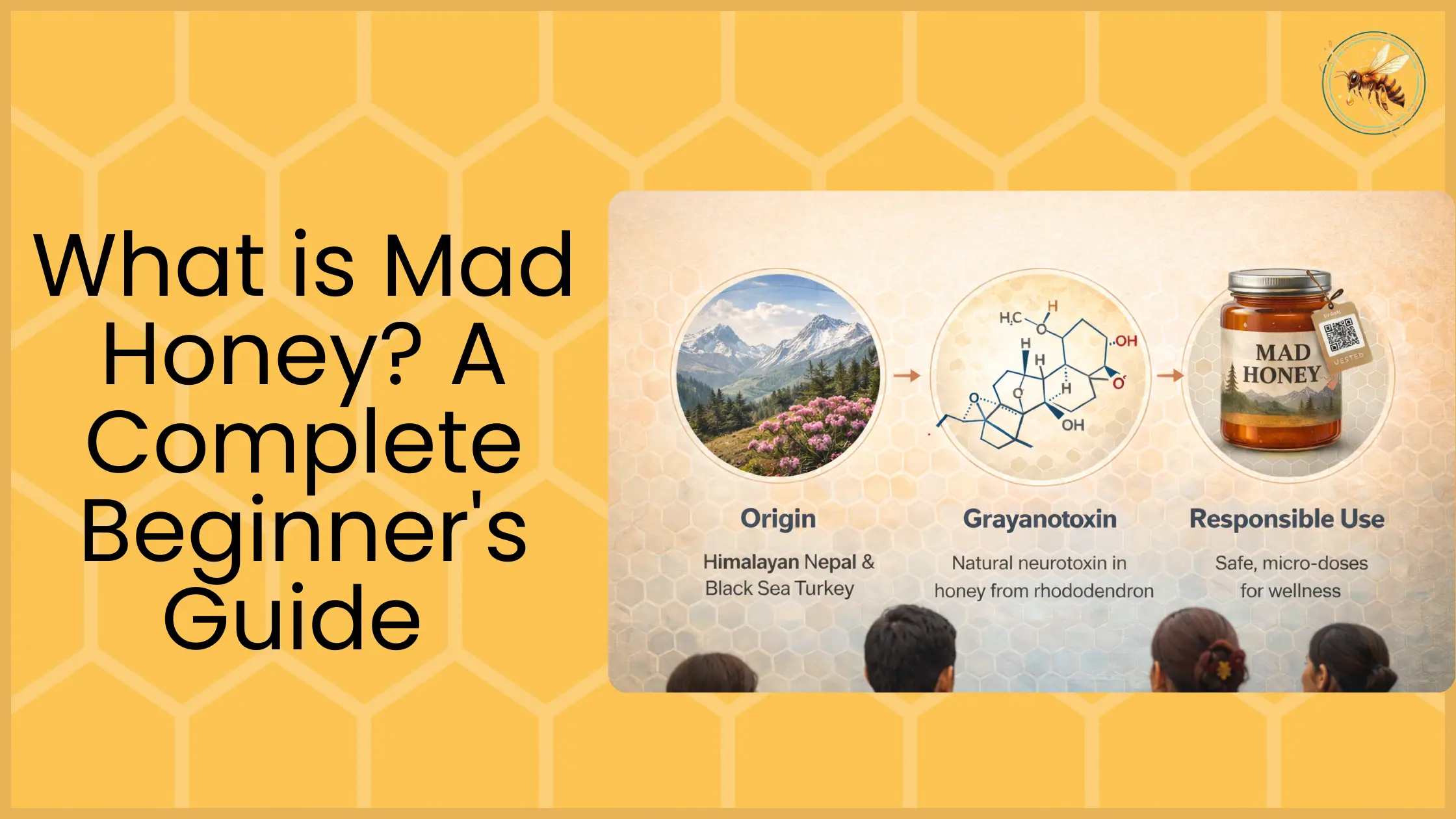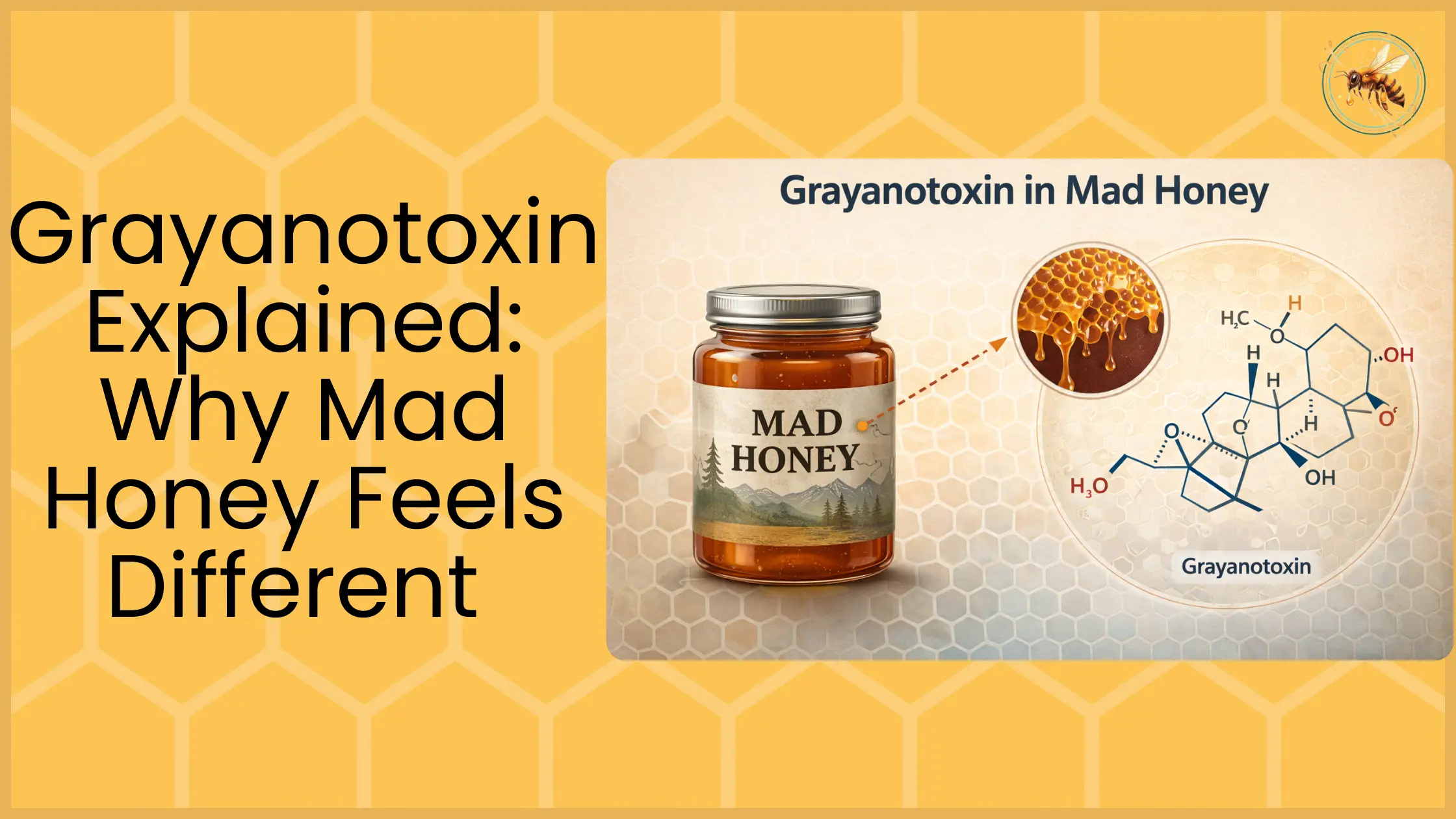
A “mad honey microdose” usually means taking a very small amount of mad honey with the goal of keeping the experience subtle, controlled, and low-intensity. But the word microdose can be misleading here, because mad honey is not like mushroom microdosing or psychedelic microdosing. It is still honey that may contain grayanotoxins, and those compounds can affect the body in a dose-sensitive way.
A better phrase is low-dose mad honey. That keeps expectations more realistic. The goal is not to “trip,” push intensity, or keep adding more until something dramatic happens. The safer goal is to understand that mad honey varies by batch, person, timing, and sensitivity, and that “small” does not mean “risk-free.”
tl;dr
- A mad honey “microdose” should mean a subtle, low-dose experience, not an intense effect, trip, or body crash.
- The word “microdose” is not scientifically standardized for mad honey, so “low dose” is the more accurate and safer framing.
- Batch variability matters more than spoon size; the same amount can feel different depending on grayanotoxin levels, region, season, and personal sensitivity.
- The safest beginner mindset is to start smaller than you think, wait long enough, and do not re-dose quickly.
- If the effect feels strong, dizzy, nauseating, confusing, or physically uncomfortable, it was not a “microdose” for you.
Quick Answer – What Is a Mad Honey Microdose?
A mad honey microdose is best understood as a low amount of mad honey intended to produce subtle effects, if any, without pushing into discomfort. In practical terms, it means approaching mad honey cautiously and treating the first experience as a sensitivity check rather than a full “experience.”
A microdose should be subtle, not intense
If someone takes a small amount and feels relaxed, slightly warm, calm, or mildly heavy-bodied, that fits what many people mean by a low-dose experience. If they feel dizzy, nauseous, sweaty, weak, or unable to function normally, that has crossed out of “microdose” territory.
Why “microdose” is a tricky word for mad honey
The word “microdose” is often borrowed from psychedelic culture, but mad honey is different. Its effects are linked to grayanotoxins, which can affect the body through blood pressure, heart rate, and autonomic symptoms. That makes “microdose” a potentially confusing term because it can make people assume the experience is predictable or comparable to other microdosing trends.
Better framing: “low-dose mad honey”
“Low-dose mad honey” is clearer. It avoids the suggestion that there is a universal microdose standard and keeps the focus on safety, batch variability, and personal response.
Why People Search for “Mad Honey Microdose”
People usually search this because they are curious but cautious. They may have heard about mad honey’s effects, but they do not want to overdo it.
Curiosity without wanting a full-intensity experience
Mad honey has a reputation for being unusual, rare, and stronger than regular honey. That reputation makes people curious. But many searchers do not want anything dramatic; they want to know whether there is a mild, controlled way to try it.
Wellness and ritual interest
Some people are attracted to mad honey because of its cultural story, traditional use, taste, and ritual quality. They may want a small amount in the evening, in tea, or as part of a slow wind-down routine. That is very different from chasing intensity.
Fear of taking too much
The search also reflects caution. People have heard stories about dizziness, nausea, or “mad honey poisoning,” and they want to avoid becoming one of those stories. That caution is healthy. Mad honey is not something to approach with the mindset of “more is better.”
Microdose vs Regular Dose vs Too Much
The safest way to understand dosage is not by chasing exact universal numbers, but by understanding the effect zones.
Microdose/low dose
A low dose should feel subtle. Some people may notice very little. Others may notice a mild body relaxation, a slower pace, or a gentle mood shift. The key point is that you should remain clear, steady, and functional.
A low-dose experience should not make you feel like you need to lie down, vomit, panic, or monitor your pulse.
Regular serving
A regular serving is more noticeable and may create stronger body sensations. This is where people may start to feel heavier, warmer, more relaxed, or more aware of physical changes. It is also where individual sensitivity becomes more important.
A regular serving should still be approached carefully because the same amount does not behave the same across all batches.
Too much
Too much mad honey often feels less like a “stronger benefit” and more like a body-level warning sign. Common signs include dizziness, nausea, sweating, weakness, confusion, stomach upset, or feeling faint. In more serious cases, mad honey can be associated with low blood pressure and a slow heart rate.
Why “more” is the wrong goal
With mad honey, more does not simply mean “more relaxed.” More can mean less predictable, more uncomfortable, and more likely to trigger unwanted effects. A good low-dose approach is successful when it stays boring, controlled, and mild.
Suggested Beginner Framing: Start Smaller Than You Think
The safest beginner approach is not to ask, “How much do I need to feel something?” It is to ask, “What is the smallest amount I can use to understand my response?”
Conservative first-time approach
For a first-time user, the first goal is not intensity. It is information. You are learning how your body responds to that specific jar, in that specific setting, on that specific day.
Because onset may not be immediate, patience matters. It is advised to start small, wait 45–60 minutes, and not stack doses because wild honey varies.
Why some brand-facing material mentions 1 teaspoon
Some brand materials use “1 teaspoon” because it is a simple serving reference that consumers understand. But a serving reference is not the same thing as a universal microdose. For a cautious first-time user, especially someone nervous about sensitivity, smaller-than-standard framing is often smarter.
Don’t re-dose quickly
The most common mistake is impatience. Someone takes a small amount, feels nothing after a short time, then takes more. Later, both amounts overlap, and the experience becomes stronger than expected.
A low-dose approach only works if you give the first amount enough time to reveal itself.
What a Mad Honey Microdose Might Feel Like
A low-dose experience should be easy to tolerate and easy to stop.
Realistic low-dose effects
People may describe:
- gentle calm
- mild body warmth
- slight heaviness
- subtle mood shift
- relaxed evening feeling
- a slower, quieter pace
Some people feel very little. That does not automatically mean the honey is fake or weak. It may mean the amount was low, the batch is mild, the person is less sensitive, or food/timing slowed the onset.
What it should not feel like
A low-dose experience should not feel like:
- strong dizziness
- nausea or vomiting
- sweating or chills
- chest discomfort
- trouble breathing
- confusion
- faintness
- very slow pulse sensation
- needing to lie down urgently
If these happen, the amount is not “micro” for your body, even if it looks small on the spoon.
If it feels intense, it was not a microdose for you
The definition should be based on response, not just quantity. If a small serving creates strong symptoms, it is too much for that person, that batch, or that situation.
Why Batch Variability Matters More Than Spoon Size
Mad honey is not standardized like a capsule or tablet. A spoon measures volume, not grayanotoxin exposure.
Same spoon, different batch, different effect
Two jars can look similar but behave differently. Grayanotoxin levels vary with the region, season, floral source, and processing. IMHSI material specifically notes that there is no internationally established safe dosage standard because grayanotoxin levels vary widely by region, season, and floral source.
This is why spoon-size advice can only go so far.
GTX levels are the key variable
The main question is not “How red is it?” or “How thick is it?” The more important question is whether the batch has been tested and whether the seller can explain potency and safety guidance responsibly.
Why lab reports matter
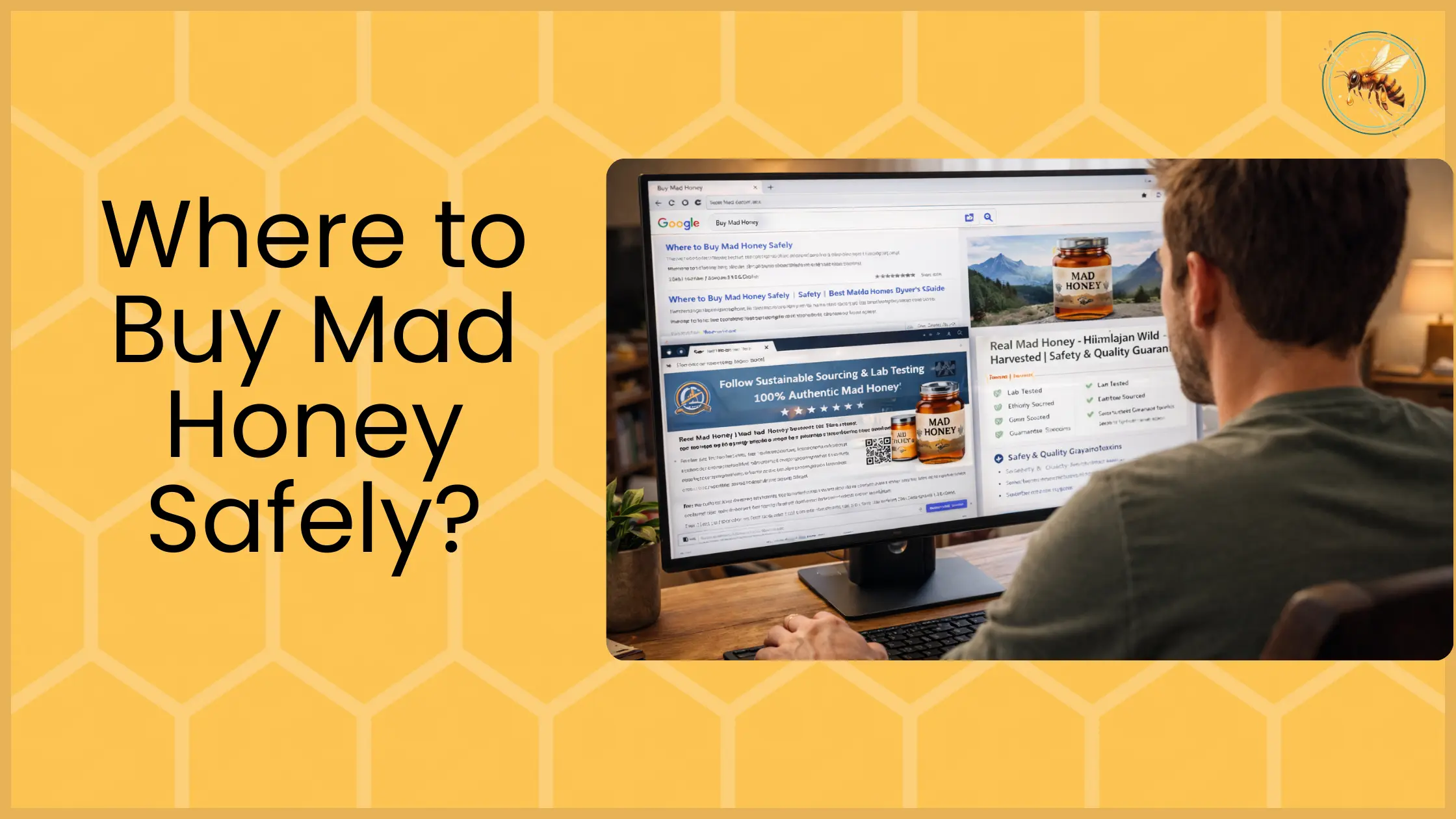
A batch-linked lab report or COA can reduce uncertainty. It does not make mad honey risk-free, but it helps move the product away from guesswork. IMHSI’s standardization work includes batch traceability systems and lab-verified COAs to verify toxin content and honey authenticity.
Microdosing without batch information is guesswork
If you do not know the batch, origin, or testing context, you cannot confidently compare one jar to another. That is why transparency is part of safety, not just a marketing feature.
Safety Rules for Mad Honey Microdosing
A low-dose approach only makes sense if the safety rules are followed.
Rule 1: Don’t mix
Do not combine mad honey with alcohol, sedatives, sleep aids, kava, mushroom gummies, cannabis, or other substances that can affect balance, nausea, alertness, blood pressure, or heart rate.
Mixing makes effects harder to predict and harder to interpret if something goes wrong.
Rule 2: Choose a calm setting
Mad honey is not for busy afternoons, driving, exercise, work, or social situations where you need to stay sharp. This guidance frames it as best enjoyed in a calm setting and as an evening wind-down, not a busy afternoon.
Rule 3: Avoid risky activities
Do not take mad honey before:
- driving
- cycling
- swimming
- intense exercise
- working with tools or machinery
- going out drinking
- hiking or being somewhere remote
- taking care of children alone
Even mild dizziness becomes dangerous in the wrong setting.
Rule 4: Know when to stop
Stop immediately if you feel dizzy, nauseous, sweaty, unusually weak, confused, faint, or uncomfortable. Do not take more to “balance it out.”
If symptoms persist or become severe, seek medical help and explain that you consumed honey that may contain grayanotoxins. If symptoms persist, contact a doctor and mention honey containing grayanotoxins.
Who Should Avoid Mad Honey Microdosing
Some people should not try to microdose mad honey at all.
People with low blood pressure or heart conditions
Mad honey can affect blood pressure and heart rate. People with low blood pressure, heart rhythm issues, a history of fainting, or diagnosed heart conditions should avoid it unless medically cleared.
Pregnant or breastfeeding women
Pregnancy and breastfeeding call for conservative avoidance. There is no reliable safe-use standard, and the risk-to-benefit balance does not make sense.
Children
Children should not take mad honey. Smaller body size, unclear safe thresholds, and difficulty describing symptoms make the risk unacceptable.
People taking medications affecting heart rate, blood pressure, or sedation
If you take medication for blood pressure, heart rhythm, anxiety, sleep, sedation, or dizziness-related conditions, do not take mad honey without medical guidance. It is advised not to combine mad honey with medication or supplements without consulting a medical professional.
Microdosing Myths to Avoid
Mad honey attracts myths because it sits between food, tradition, and unusual effects.
Myth 1: “Microdose means safe for everyone”
A smaller amount may reduce risk, but it does not erase personal risk factors. Someone with low blood pressure or heart rhythm concerns may still be at risk from a small amount.
Myth 2: “If I feel nothing, I should take more”
Feeling nothing quickly does not mean nothing is happening. Onset can be delayed, especially with food, timing, and batch differences. Waiting is part of the safety process.
Myth 3: “Stronger honey is better”
“Stronger” often means less margin for error. A strong batch may be more likely to create dizziness, nausea, weakness, or cardiovascular symptoms if someone misjudges the amount.
Myth 4: “It works like mushroom or psychedelic microdosing”
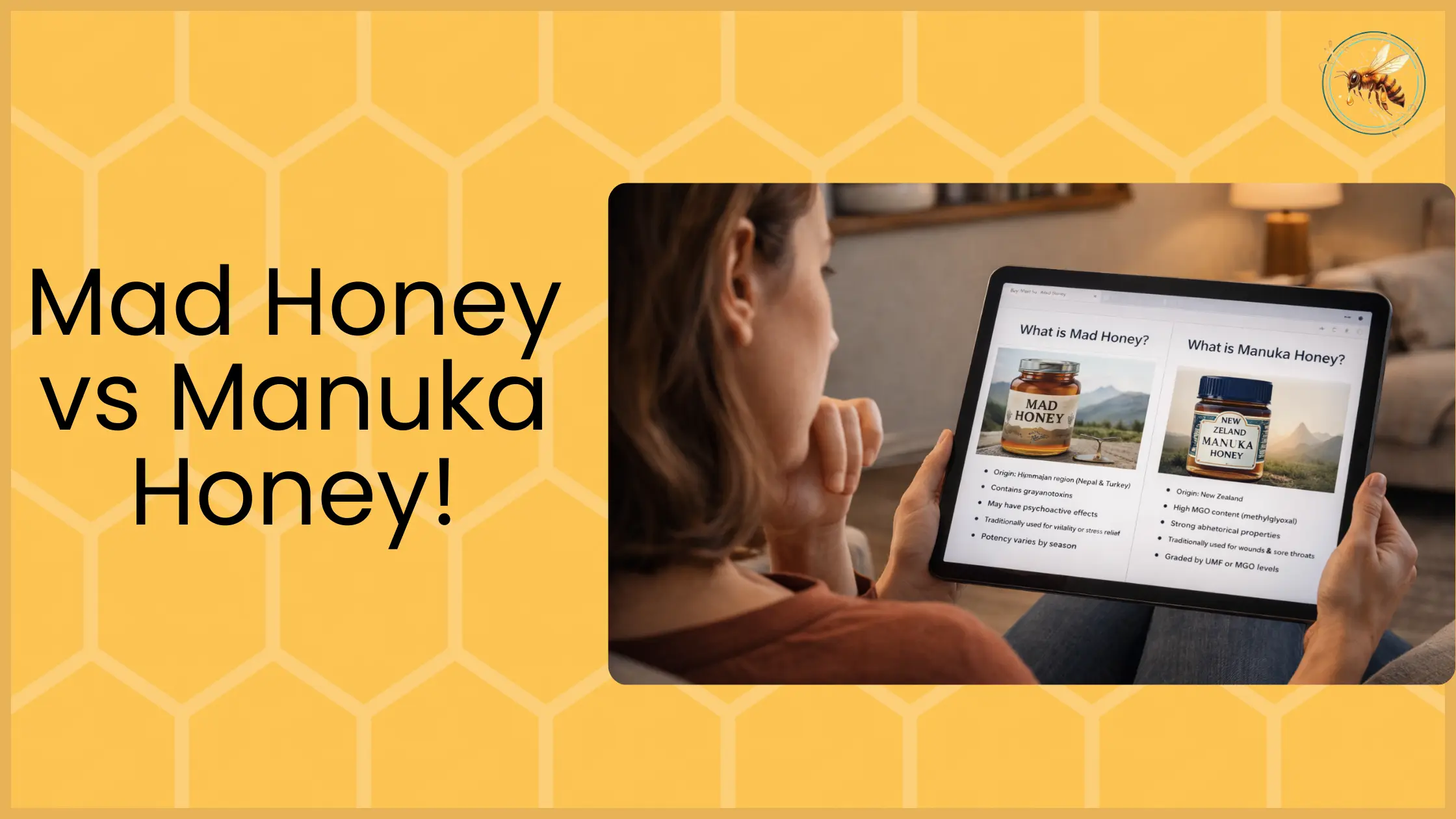
Mad honey is not mushroom microdosing. Its key risks are body-first and cardiovascular, not a predictable psychedelic-style cognitive effect. The safer frame is low-dose ritual honey, not “psychedelic microdose.”
What Makes a Responsible Low-Dose Product Page
For brands and buyers, responsible language matters.
Better words than “microdose”
Safer terms include:
- low-dose serving
- first-taste amount
- conservative serving
- beginner amount
- sensitivity check
These terms reduce the chance that readers confuse mad honey with psychedelic microdosing.
What responsible sellers should explain
A responsible seller should clearly explain:
- effects vary
- batches vary
- start low and wait
- do not mix
- who should avoid
- what red flags look like
- whether batch testing or traceability exists
What to avoid saying
Avoid language like:
- guaranteed high
- strongest batch
- psychedelic microdose
- trip dose
- works every time
- harmless because it’s natural
That language encourages risky behavior and sets the wrong expectations.
Conclusion
A mad honey “microdose” is best understood as a low-dose, safety-first approach,not a shortcut to intensity. The most accurate framing is: start with a very conservative amount, wait long enough, do not mix, and treat every batch as different.
The safest mindset is not “how much until I feel it?” but “how little can I take while staying fully comfortable and in control?”
FAQs – Mad Honey Microdose
What is a mad honey microdose?
It usually means a very small amount of mad honey intended to keep the experience subtle and controlled. “Low-dose mad honey” is a better term because there is no standardized microdose definition for mad honey.
How much is considered a microdose?
There is no universal microdose amount because batches and people vary. A true low dose should be defined by the response: subtle, manageable, and not physically uncomfortable.
Is ½ teaspoon a microdose?
It may be low for some people and too much for others, depending on the batch and personal sensitivity. Spoon size alone is not a reliable safety standard.
Is 1 teaspoon a microdose?
A teaspoon is often used as a simple serving reference, but it should not be treated as a universal microdose. Some people may prefer to start smaller, especially if they are cautious or new.
How long should I wait before taking more?
Do not re-dose quickly. And as for first-use guidance, it is advised to wait 45–60 minutes before considering more, because wild honey varies.
Can I microdose mad honey daily?
Daily use is not the safest default because mad honey is batch-variable, and there is no universally established safe dosage standard. Occasional, conservative use is a safer framing than daily routine use.
What does a low dose feel like?
It may feel subtle: calm, warmth, mild heaviness, or nothing noticeable. If it feels intense, dizzying, nauseating, or scary, it was too much for you.
What if I feel dizzy or nauseous?
Stop taking more, sit or lie down, hydrate slowly if possible, and monitor symptoms. Seek medical help if symptoms persist, worsen, or include fainting, chest pain, trouble breathing, severe weakness, or persistent vomiting.
Can I mix mad honey with alcohol or supplements?
No. Mixing increases unpredictability and makes symptoms harder to interpret. Do not combine mad honey with medication or supplements without consulting a medical professional.
Is mad honey microdosing safe for people with heart issues?
No. People with heart conditions, low blood pressure, fainting history, or medications affecting heart rate or blood pressure should avoid mad honey unless medically cleared.
Why does one batch feel stronger than another?
Grayanotoxin levels vary by region, season, floral source, and batch. This is why traceability and testing matter.