Mad honey harvesting is one of the most misunderstood parts of the mad honey story. Many people imagine only one scene: a honey hunter hanging from a rope on a Himalayan cliff, smoke rising, bees swarming, and giant combs being cut from the rock. That image is real in parts of Nepal, but it is not the whole story. Mad honey harvesting is also about flowers, seasons, bee species, community knowledge, post-harvest handling, sustainability, and traceability.
Mad honey becomes “mad” because of its nectar source. Certain rhododendron flowers can contain grayanotoxins, and when bees collect enough of that nectar, the honey may contain these naturally occurring compounds. The harvest method can explain the honey’s rarity, culture, and price, but it does not automatically prove potency. A cliff harvest can produce ordinary wild honey if the nectar source is not grayanotoxin-rich. A regional honey harvest can produce mad honey if bees forage from the right rhododendron bloom.
The most responsible way to understand mad honey harvesting is to look at the full chain: where the bees forage, when the honey is collected, who harvests it, how the comb is handled, whether the bees and forests are protected, and whether the final product is traceable and tested.
tl;dr
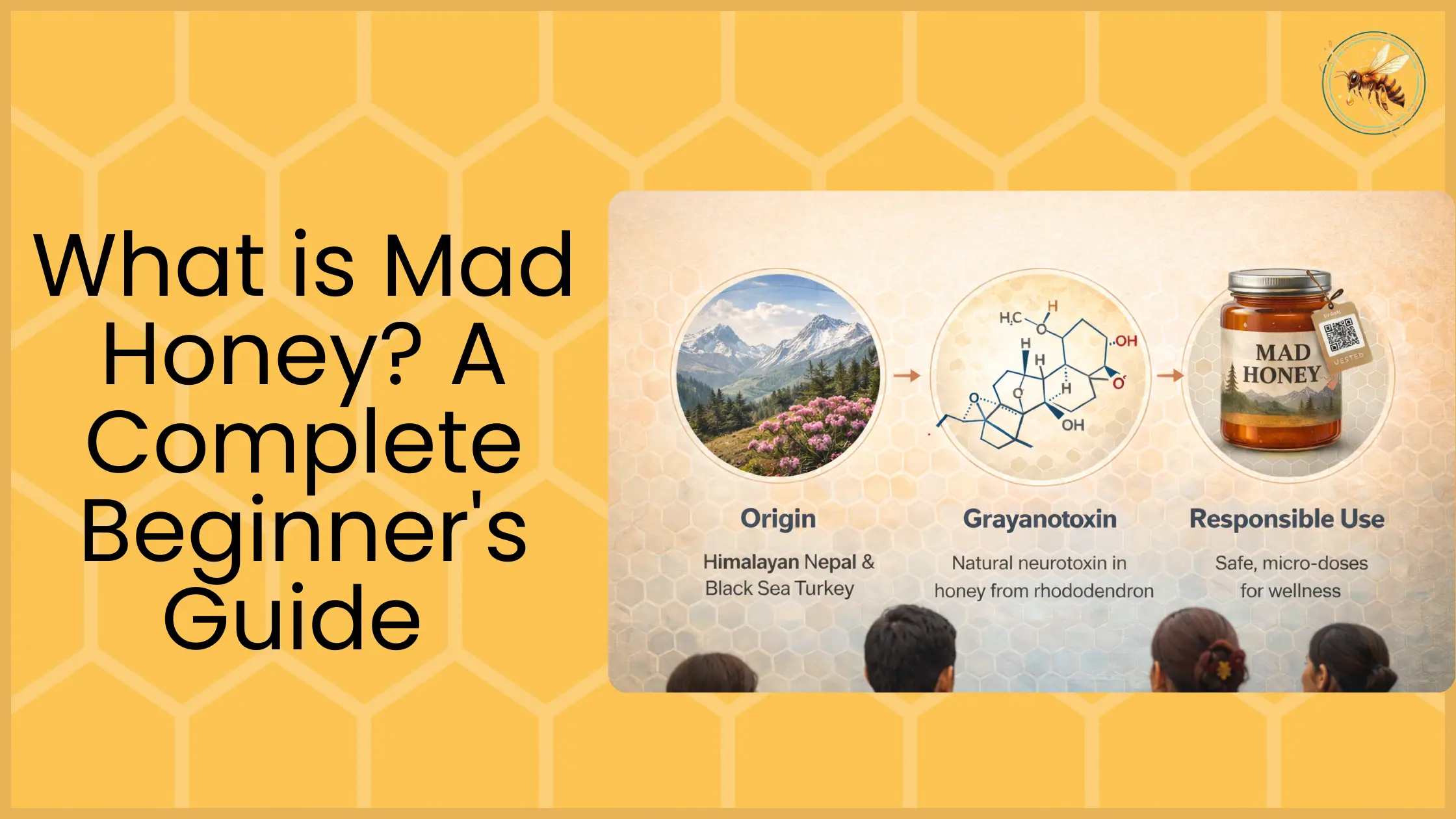
- Mad honey harvesting depends on both the harvest method and the nectar source. The honey becomes “mad” when grayanotoxin-containing flowers, especially certain rhododendron species, influence the batch.
- Nepal mad honey is often associated with wild cliff honey hunting, Apis laboriosa, Gurung and other mountain communities, and dangerous comb collection from steep rock faces.
- Turkish mad honey, or deli bal, is more closely connected to Black Sea rhododendron honey production than to the dramatic Himalayan cliff-hunting image.
- Not all cliff honey is mad honey. “Cliff honey,” “Himalayan honey,” and “mad honey” should not be treated as identical terms.
- Sustainable mad honey harvesting requires healthy bee populations, careful comb cutting, clean handling, fair community partnerships, and traceability from harvest to jar.
Quick Answer: How Is Mad Honey Harvested?
Mad honey is harvested like wild or regional honey, but it becomes mad honey only when the nectar source contributes grayanotoxins. The most famous harvest style is Nepal’s cliff honey hunting, where teams collect honey from wild Apis laboriosa combs on steep rock faces. In Turkey, the harvest context is different and is more tied to rhododendron-rich Black Sea honey production.
In Nepal, it is often harvested from wild cliff combs
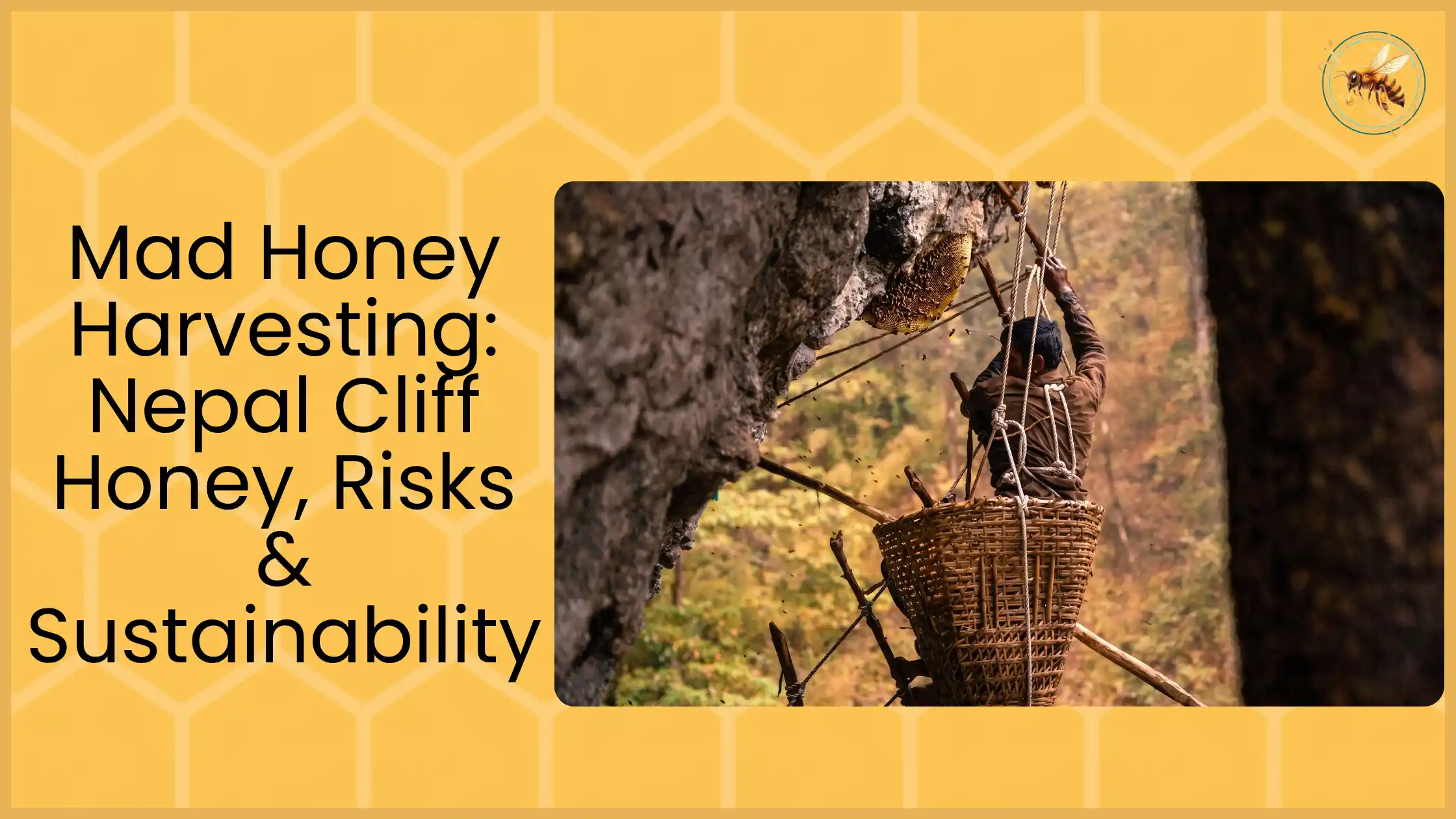
Nepal mad honey is usually associated with wild cliff honey harvesting. In this tradition, honey hunters work as a team to collect comb from large open nests built by Apis laboriosa, the Himalayan giant honey bee. These nests often hang from cliffs, ledges, or overhanging rock faces.
The work can involve scouting cliff sites, preparing ropes or rope ladders, using smoke to move bees away from the comb, cutting honeycomb sections, and collecting the comb below. It is physically dangerous and requires experience, teamwork, and local knowledge.
In Turkey, the harvest context is different
Turkish mad honey, known as deli bal, is more closely associated with the Black Sea region and rhododendron-rich forests. The Turkish story is not usually centered on cliff hunting. It is more connected to regional beekeeping, forest landscapes, rhododendron nectar, and a long tradition of honey with unusual effects.
This difference matters because many people assume all mad honey comes from dangerous cliff harvests. It does not. The Nepal story is the most visually famous, but Turkey has its own distinct mad honey tradition.
The real source is the flower, not only the harvest method
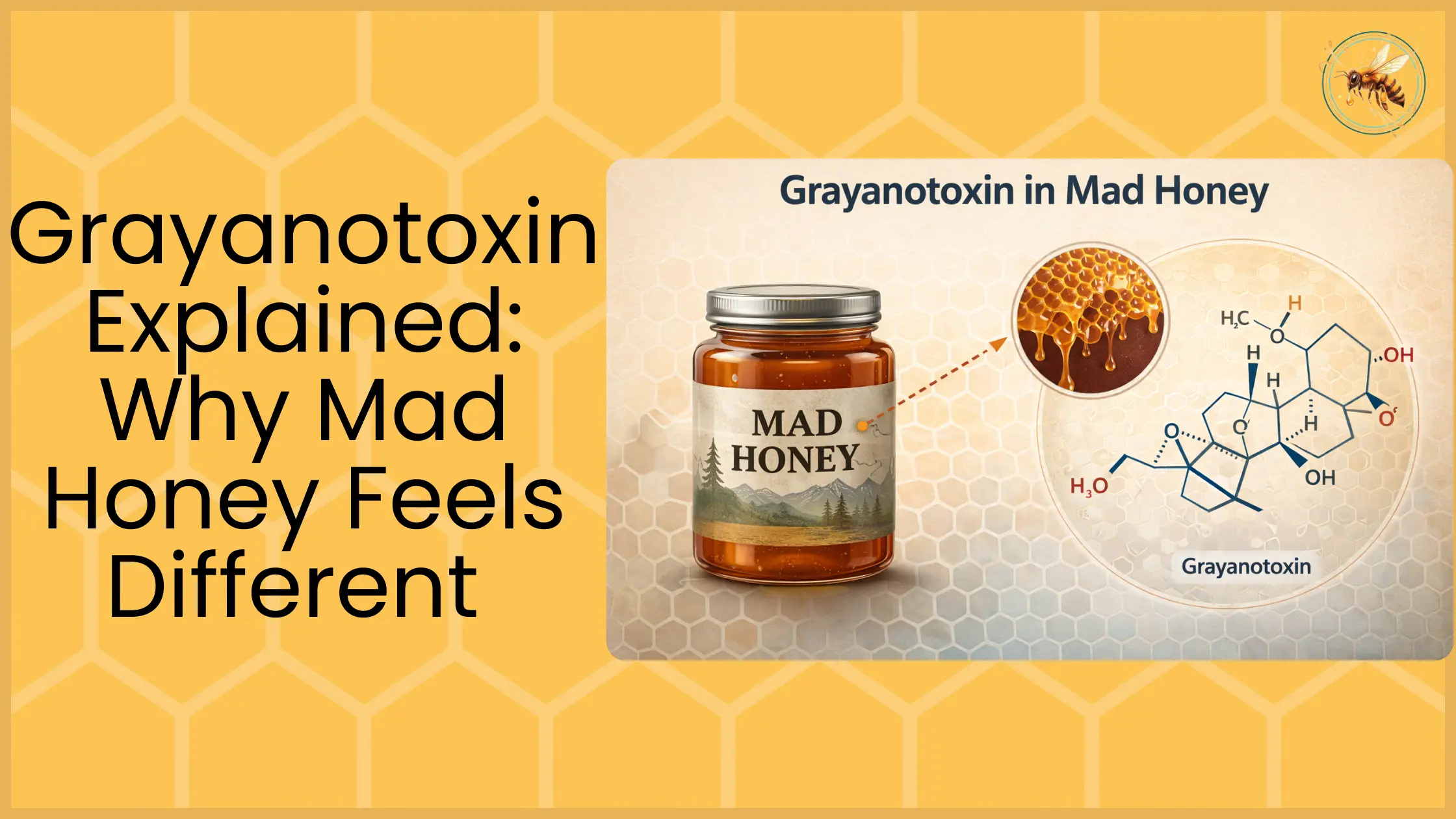
The harvest method can explain culture, rarity, danger, and cost. It does not by itself explain the “mad” effect. The effect comes from grayanotoxins in the nectar source. Certain rhododendron species can contribute these compounds, and bees may carry them into the honey when those flowers dominate the forage environment.
The best simple answer is this: mad honey is harvested like wild or regional honey, but it becomes mad honey only when the nectar source contributes grayanotoxins.
What Makes Mad Honey Different at Harvest?
Mad honey differs from regular honey at the source level. The key variables are plant species, season, location, and the specific batch.
Rhododendron nectar
Certain rhododendron flowers can contain grayanotoxins. When bees collect nectar from these flowers, the compounds can enter the honey. This is why rhododendron bloom zones are so important in both Nepal and Turkey.
The plant source matters more than the marketing label. A jar can be called “Himalayan,” “wild,” or “cliff honey,” but the mad honey character depends on whether the bees actually collected enough grayanotoxin-containing nectar.
Seasonality
Season affects what flowers are available. Spring harvests are often discussed because they can overlap with rhododendron bloom, especially in Nepal. This is why spring honey is often connected with the stronger “red honey” narrative.
But season alone is not proof. A spring batch from one valley may differ from a spring batch from another valley. Weather, altitude, bloom density, and alternative nectar sources can all change the final honey.
Batch variability
Batch variability is one of the most important parts of mad honey. Two harvests from different valleys, seasons, cliffs, or combs may not have the same grayanotoxin level. Even honey from the same broad region can vary from year to year.
This is why responsible sellers should avoid promising identical effects. The honest message is that every batch needs its own context.
Nepal Mad Honey Harvesting
Nepal mad honey harvesting is the best-known visual representation of mad honey. It connects the product to cliffs, mountain communities, wild bees, and rhododendron bloom.
The role of Apis laboriosa
Apis laboriosa is the Himalayan giant honey bee. It is often described as the world’s largest honey bee and is strongly associated with Nepal’s cliff honey tradition. These bees can build large, exposed combs on cliffs rather than inside managed hive boxes.
Apis laboriosa is central to the Nepal harvest story because its nesting behavior creates the need for dangerous cliff work. However, Apis laboriosa alone does not make honey mad. The bee species explains the harvest setting. The flowers explain the grayanotoxin profile.
Cliff nesting
Apis laboriosa colonies often nest on steep cliffs, rock overhangs, and difficult-to-reach vertical faces. The combs are exposed to open air and can be large enough to require a coordinated team to harvest.
This is why Nepal mad honey harvesting looks so dramatic. The hunter may be suspended near a comb while bees swarm and smoke moves across the cliff. The support team manages ropes, baskets, smoke, and collection from safer positions.
Main regions
Nepal honey hunting is often discussed in relation to districts such as Lamjung and Kaski, along with other Himalayan and mid-hill honey-hunting areas. These regions are known for mountain terrain, wild bee colonies, and communities with inherited harvesting knowledge.
Different villages and harvest sites can follow different timing, practices, and access routes. That local variation is part of why Nepal mad honey should not be treated as one uniform product.
Cultural context
The harvest should be understood as mountain livelihood and heritage, not only as an extreme spectacle. Honey hunting can provide income, preserve traditional skills, support local identity, and connect communities to forests, cliffs, bees, and seasonal rhythms.
When the story is reduced only to danger or exotic visuals, the people behind the harvest disappear. Responsible content should show the skill, community structure, risk, and ecological knowledge involved.
The Traditional Cliff Honey Harvest Process
The cliff honey harvest is a coordinated process. It is not simply one person climbing a cliff and cutting comb.
Site checking and preparation
Before the harvest, hunters identify active cliff sites and assess whether the colony is suitable for harvesting. They may check bee activity, comb size, access routes, weather, and team readiness.
Equipment is gathered and roles are assigned. The team may prepare ropes, ladders, baskets, cutting tools, smoke materials, and containers for carrying comb back to the village or processing area.
Smoke and bee management
Honey hunting has traditionally involved collecting honey from wild cliffs after warding off bees using natural sources such as smoke. Smoke helps move bees away from the comb and reduce direct contact, but it does not remove the danger.
The bees may still swarm, sting, and return quickly. Smoke can also make visibility and breathing more difficult for the hunter working near the comb.
Rope ladders and cliff work
The most visible part of the harvest is the cliff work. Hunters may descend or position themselves near the comb using traditional rope systems or rope ladders. Support teams help manage the ropes, control baskets, and stabilize the process.
This work requires confidence, balance, and discipline. The hunter may be dealing with height, smoke, bees, wind, loose rock, and the weight of tools at the same time.
Cutting and lowering the comb
Once the hunter reaches the comb, sections are cut and lowered or dropped into collection baskets. The team below gathers the comb and separates usable honeycomb from other material later.
Good harvesting practice should avoid unnecessary destruction. Taking too much comb, damaging brood areas, or repeatedly disturbing colonies can harm the bees and reduce future harvests.
Tools and Roles in the Harvest
A honey harvest depends on many people, not only the lead climber.
Lead climber or main hunter
The lead hunter takes the greatest physical risk. This person works closest to the comb and must manage height, bees, tools, smoke, and body control while making decisions quickly.
The main hunter’s skill is not only physical. It is also psychological and technical. Calm judgment matters as much as strength.
Rope handlers
Rope handlers support the hunter by managing ladders, ropes, and basket movement. Their role is critical because a mistake with the rope system can endanger the person near the cliff.
This role requires trust and coordination. The lead hunter’s safety depends on the entire team.
Smoke handlers
Smoke handlers help manage bee movement. They prepare and direct smoke to reduce bee pressure near the comb. Good smoke handling requires judgment because too little may be ineffective and too much can make working conditions harder.
Collectors and carriers
Collectors gather comb material and help transport it from the harvest site. This can involve carrying heavy, sticky, fragile comb through difficult terrain. They also help ensure the harvest is not wasted or contaminated.
Why Mad Honey Harvesting Is Dangerous
Mad honey harvesting is dangerous because several risks happen at the same time.
Cliff height and exposure
Cliff height is the most obvious danger. Hunters may work on vertical or overhanging rock faces with limited room for movement. A slip, rope problem, falling rock, or sudden loss of focus can be serious or fatal.
The danger increases when cliffs are remote, weather changes quickly, or the team has limited access to modern safety equipment.
Wild bee colonies
Apis laboriosa colonies can be large and defensive. Bees may swarm aggressively when the comb is disturbed. Stings can distract the hunter, cause pain, or trigger more serious reactions in sensitive people.
Working near a wild colony while suspended on a cliff requires unusual mental control.
Weather and terrain
Rain, wind, loose rock, slippery surfaces, heat, and remote access all increase risk. A cliff that is possible to harvest in calm conditions may become unsafe when weather changes.
The terrain below the cliff can also be difficult. Collectors may need to move through steep forest paths while carrying comb and equipment.
Psychological skill
Research on honey hunters in Lamjung and Kaski found that psychological skill ranked as the most important factor required for honey hunting, followed by technical, social, and physical skill. This makes sense because the lead hunter must stay calm under pressure, trust the team, and avoid panic while working in a high-risk environment.
When Is Mad Honey Harvested?
Harvest timing depends on region, flower bloom, bee activity, village tradition, and weather.
Spring harvest
Spring is often associated with rhododendron bloom and the stronger “red honey” narrative in Nepal. When bees forage heavily from rhododendron flowers during spring, the honey may be more likely to contain meaningful grayanotoxin levels.
This is why spring harvests often attract attention from buyers looking for mad honey. However, spring alone does not guarantee strength.
Autumn harvest
Autumn honey may differ in taste, floral source, color, and grayanotoxin profile. In some areas, autumn harvests may be milder or influenced by different flowers.
This does not make autumn honey worse. It simply means the honey may represent a different floral season.
Twice-yearly harvest patterns
Some honey hunters harvest in both spring and autumn, while others harvest only once depending on site, village, colony condition, weather, and local practice. Harvest timing is not universal across all communities.
Why season affects the final honey
The same region can produce different honey depending on what flowers are blooming. Bees follow available nectar, not marketing categories. That is why seasonal information should be part of any serious mad honey sourcing story.
Is All Harvested Cliff Honey Mad Honey?
No! All mad honey is honey, but not all cliff honey is mad honey. A cliff harvest tells you where and how the honey was collected. It does not prove grayanotoxin content.
A jar labeled “cliff honey” may be wild, rare, and culturally important without producing mad honey effects.
Apis laboriosa forages on many plants
Apis laboriosa forages from diverse mountain flora. These bees do not collect only rhododendron nectar. Depending on season and location, they may visit many different flowers.
This is why a honey’s floral profile matters. A batch dominated by non-toxic nectar sources may not behave like mad honey, even if it came from a cliff.
Mad honey depends on toxic bloom exposure
Honey becomes mad honey when nectar sources such as certain wild rhododendron flowers contribute grayanotoxins. The key factors are plant source, bloom timing, bee foraging behavior, and batch concentration.
Buyer takeaway
“Cliff honey,” “Himalayan honey,” and “mad honey” should not be treated as identical terms. The more specific the claim, the more important documentation becomes.
Harvesting in Nepal vs Turkey
Nepal and Turkey are both important mad honey regions, but the harvesting culture and supply chain are different.
Nepal
Nepal is associated with Himalayan cliff honey, Apis laboriosa, Gurung and other mountain communities, wild comb harvesting, and rhododendron bloom seasons. The Nepal story is visually powerful because the harvest often happens on cliffs and requires dangerous team-based work.
Nepal mad honey is often sold through the story of rarity, altitude, traditional harvesting, and mountain heritage.
Turkey
Turkey is associated with the Black Sea region, deli bal tradition, rhododendron-rich forests, and regional honey production. Turkish mad honey is usually not described through cliff-hunting imagery in the same way as Nepalese honey.
The Turkish story is more connected to local rhododendron honey, historical use, and clinical awareness of grayanotoxin poisoning.
Shared feature
Both Nepal and Turkey can be linked to rhododendron nectar and grayanotoxins, but the harvest culture and supply chain are different. Country identity helps explain the story, but it does not replace batch testing.
What Happens After the Honey Is Harvested?
The post-harvest stage matters because a dramatic harvest does not automatically create a clean, stable, high-quality final product.
Comb collection
After cutting, the comb may contain honey, wax, pollen, brood, propolis, and other comb material. These need to be handled carefully to avoid contamination and quality loss.
Wild comb is not as standardized as honey from managed hive frames. It may require more careful sorting and handling.
Straining and settling
Honey may be strained to remove wax pieces, debris, and comb fragments. It may also be allowed to settle so lighter wax particles and air bubbles separate.
This stage should be clean and controlled. Poor handling can introduce dirt, moisture, insects, or foreign material.
Storage and transport
Clean containers, sealed storage, and careful transport matter. Honey should be protected from contamination, excess heat, water exposure, and leaking containers.
For remote harvests, transport can be difficult. The honey may need to move from cliff site to village, then to collection points, then to packaging or export channels.
Moisture and quality control
Wild cliff honey can have relatively high moisture because of open-comb nesting and environmental conditions. Higher moisture can increase fermentation risk if handling is poor. Quality testing can help assess moisture, acidity, fermentation markers, and overall stability.
Why handling matters
A dramatic harvest does not guarantee a safe, clean, or high-quality final product. Good sourcing requires good post-harvest handling.
Sustainability Problems in Mad Honey Harvesting
The future of mad honey depends on more than demand. Bees, forests, cliffs, and communities must remain healthy.
Declining bee flora and bee colonies
Honey hunters have reported concerns about declining bee flora and bee colonies. If flowering plants decline, bees lose forage. If bee colonies decline, harvests become smaller and less reliable.
Mad honey depends on an ecosystem, not only a product supply chain.
Youth disinterest
Research has found limited willingness among some honey hunters to pass the tradition to their children. This matters because honey hunting knowledge is practical, local, and experience-based. If younger generations leave the practice, the tradition may weaken.
Youth disinterest can come from danger, low income, migration, education, tourism changes, and the availability of other work.
Overharvesting
Taking too much comb can harm colonies, especially if brood or food reserves are removed. Overharvesting may produce more honey in the short term but damage future harvests.
Sustainable harvesting should leave enough colony structure and resources for bees to recover.
Climate and habitat pressure
Climate stress, habitat loss, pesticides, and shifting flowering windows can affect Apis laboriosa and the floral sources they depend on. If rhododendron bloom timing changes or forest health declines, honey production and mad honey characteristics may also change.
What Sustainable Mad Honey Harvesting Should Look Like
Sustainable mad honey harvesting requires practical improvements without erasing local knowledge.
Non-destructive comb cutting
The principle is to take excess honey while leaving brood, colony structure, and reserves where possible. Harvesters should avoid unnecessary destruction and avoid taking everything simply because access is difficult.
Non-destructive cutting protects bee recovery and future harvests.
Community training
Workshops for local hunters can support sustainable harvesting, clean handling, safer rope use, better storage, and better quality control. Training should respect existing knowledge rather than replacing it with outside assumptions.
The best approach combines traditional skill with improved safety and hygiene.
Better equipment and fairer sourcing
Better ropes, protective gear, clean containers, and safer collection systems can reduce risk. Fairer sourcing also matters. If international sellers profit from the story, local hunters should receive fair compensation and long-term partnership, not only one-time extraction.
Monitoring bee populations
Apis laboriosa nesting sites should be monitored and protected. Communities, researchers, and responsible buyers all have a role in tracking whether colonies are stable, declining, or being overharvested.
Harvesting, Authenticity, and Traceability
A harvest story is powerful, but it can also be misused.
Why harvest story is not enough
A seller can use cliff-harvest images without proving origin, season, species, or batch. Stock photos and dramatic videos do not prove that the honey in a jar came from that harvest.
A real harvest story should be supported by traceability.
What traceability should show
Good traceability should show country, region, harvest season, bee species context, floral source where known, batch number, lab report or COA, and pollen analysis where available.
Traceability does not need to reveal sensitive community details, but it should give enough information to support the product claim.
Pollen analysis
Pollen analysis can help authenticate botanical origin and distinguish one honey source from another. It can show which plants contributed to the honey and whether the floral story is plausible.
For mad honey, pollen analysis is not the same as grayanotoxin testing, but it can support the sourcing claim. Ideally, serious documentation includes both botanical origin evidence and chemical testing.
Does Harvesting Method Affect Potency?
Harvest method affects story, rarity, and supply. It does not reliably measure strength.
Harvest method alone does not determine potency
Cliff harvesting can explain why Nepal honey is rare and culturally valuable. It does not automatically determine grayanotoxin concentration.
A dangerous harvest can produce mild honey. A less dramatic regional harvest can produce stronger mad honey if the nectar source is richer in grayanotoxins.
Season and floral source matter more
Spring rhododendron bloom can affect grayanotoxin levels, but not every spring batch is the same. Valley, altitude, weather, plant density, and alternative forage all matter.
Lab testing is the only reliable way to assess strength
Taste, color, origin story, cliff photos, and harvest danger cannot accurately measure grayanotoxin content. Lab testing is the reliable way to assess strength.
Common Myths About Mad Honey Harvesting
Mad honey harvesting is surrounded by myths because the story is dramatic and the product is unusual.
Myth 1: All Nepal cliff honey is mad honey
This is false. Nepal cliff honey may be wild and rare, but it becomes mad honey only when grayanotoxin-containing nectar sources influence the batch.
Myth 2: Red color proves strength
Color may relate to nectar source, season, storage, age, or processing. It is not a reliable potency test.
Myth 3: More dangerous harvest means stronger honey
Harvest difficulty and grayanotoxin concentration are different issues. A dangerous harvest proves labor and risk, not chemical strength.
Myth 4: Traditional means automatically sustainable
Some traditional methods may be respectful, but sustainability depends on how much comb is taken, how often sites are harvested, and how colonies are protected.
Myth 5: A good story proves authenticity
A good story can explain origin, but it does not prove authenticity. Authenticity needs traceability, batch records, and testing where possible.
How Brands Should Talk About Mad Honey Harvesting
Harvesting content should build trust, not hype.
Respect the hunters
Local communities should not be treated as props for exotic storytelling. Their work involves skill, risk, knowledge, and livelihood. Content should name the human and cultural context respectfully.
Avoid drug-style framing
Do not reduce the harvest to “psychoactive honey from crazy cliffs.” That framing encourages unsafe curiosity and disrespects the people who harvest it.
Show the full story
Good harvesting content includes culture, ecology, risk, fair pay, sustainability, safety, batch variability, and lab testing. It should explain why the honey matters without turning risk into entertainment.
Conclusion
Mad honey harvesting is more than a dramatic cliff scene. It is a complex relationship between bees, rhododendron bloom, local communities, risk, ecology, and trade. Nepal’s cliff honey tradition shows the physical danger and cultural depth of wild honey collection. Turkey’s deli bal tradition shows a different regional connection to rhododendron honey and grayanotoxin history.
The future of mad honey depends on protecting Apis laboriosa, improving harvesting methods, supporting local hunters, avoiding overharvesting, and building transparent supply chains. A product that depends on wild bees and seasonal flowers cannot survive long term if the ecosystem is damaged or the people doing the work are underpaid.
The best mad honey is not simply the one with the wildest harvest story. It is the one with clear origin, ethical sourcing, batch transparency, responsible safety guidance, and respect for the bees, forests, cliffs, and communities behind every jar.
FAQs: Mad Honey Harvesting
How is mad honey harvested?
Mad honey is harvested from wild or regional honey sources, depending on the country. In Nepal, it is often associated with cliff honey hunting from wild Apis laboriosa combs. In Turkey, it is more connected to Black Sea rhododendron honey production.
Is mad honey always harvested from cliffs?
No. Nepal mad honey is often associated with cliffs, but Turkish mad honey is usually not described through the same cliff-hunting tradition.
Where is mad honey harvested?
Mad honey is most famously associated with Nepal and Turkey. Nepal is known for Himalayan cliff honey, while Turkey is known for Black Sea deli bal.
Why is Nepal mad honey harvested from cliffs?
Nepal mad honey is associated with Apis laboriosa, which often builds large open combs on cliff faces. Harvesters must go where the bees nest.
What bee makes Nepal mad honey?
Nepal cliff honey is strongly associated with Apis laboriosa, the Himalayan giant honey bee.
Is all Apis laboriosa honey mad honey?
No. Apis laboriosa can forage from many mountain flowers. The honey becomes mad honey only when grayanotoxin-containing nectar sources contribute to the batch.
When is mad honey harvested?
Harvest timing varies by region and village. Spring and autumn harvests are commonly discussed in Nepal, with spring often linked to rhododendron bloom.
Why is spring mad honey stronger?
Spring may overlap with rhododendron bloom, which can increase the chance of grayanotoxin-containing nectar entering the honey. But not every spring batch is strong.
Is mad honey harvesting dangerous?
Yes. Nepal cliff honey harvesting can involve height, wild bees, smoke, weather, loose rock, remote terrain, and intense psychological pressure.
Is mad honey harvesting sustainable?
It can be sustainable if harvesters avoid overharvesting, protect brood and reserves, monitor bee populations, use cleaner handling, and receive fair compensation. It becomes unsustainable if colonies, forests, or communities are exploited.
How can buyers know if harvested mad honey is real?
Buyers should look for country, region, harvest season, batch information, sourcing details, pollen analysis where available, lab reports or COAs, and responsible safety guidance.
Is Turkish mad honey harvested the same way as Nepal mad honey?
No. Turkish mad honey is more associated with Black Sea rhododendron honey production and deli bal tradition, while Nepal mad honey is more associated with cliff honey hunting and Apis laboriosa.