Mad honey can cause life-threatening poisoning. The risk comes from grayanotoxins, naturally occurring plant compounds that affect the heart and nervous system. In a serious reaction, blood pressure can drop to dangerous levels, the heartbeat can slow markedly, and the person can lose consciousness.
A severe reaction is a medical emergency. Never treat it as something to simply wait out.
If someone has collapsed, is having a seizure, has trouble breathing, or cannot be awakened after consuming mad honey, call local emergency services immediately.
tl;dr
- Mad honey poisoning can be life-threatening. The main concern is its effect on heart rate, blood pressure, and the nervous system.
- A spoonful does not tell you how much toxin you have consumed. Different batches can contain different concentrations.
- Feeling fine immediately afterward does not rule out a later reaction.
- Fainting, chest pain, breathing problems, or severe confusion need urgent medical attention.
- Prompt treatment often leads to recovery. Do not delay getting help because someone says the effects will pass.
Why can mad honey be dangerous?
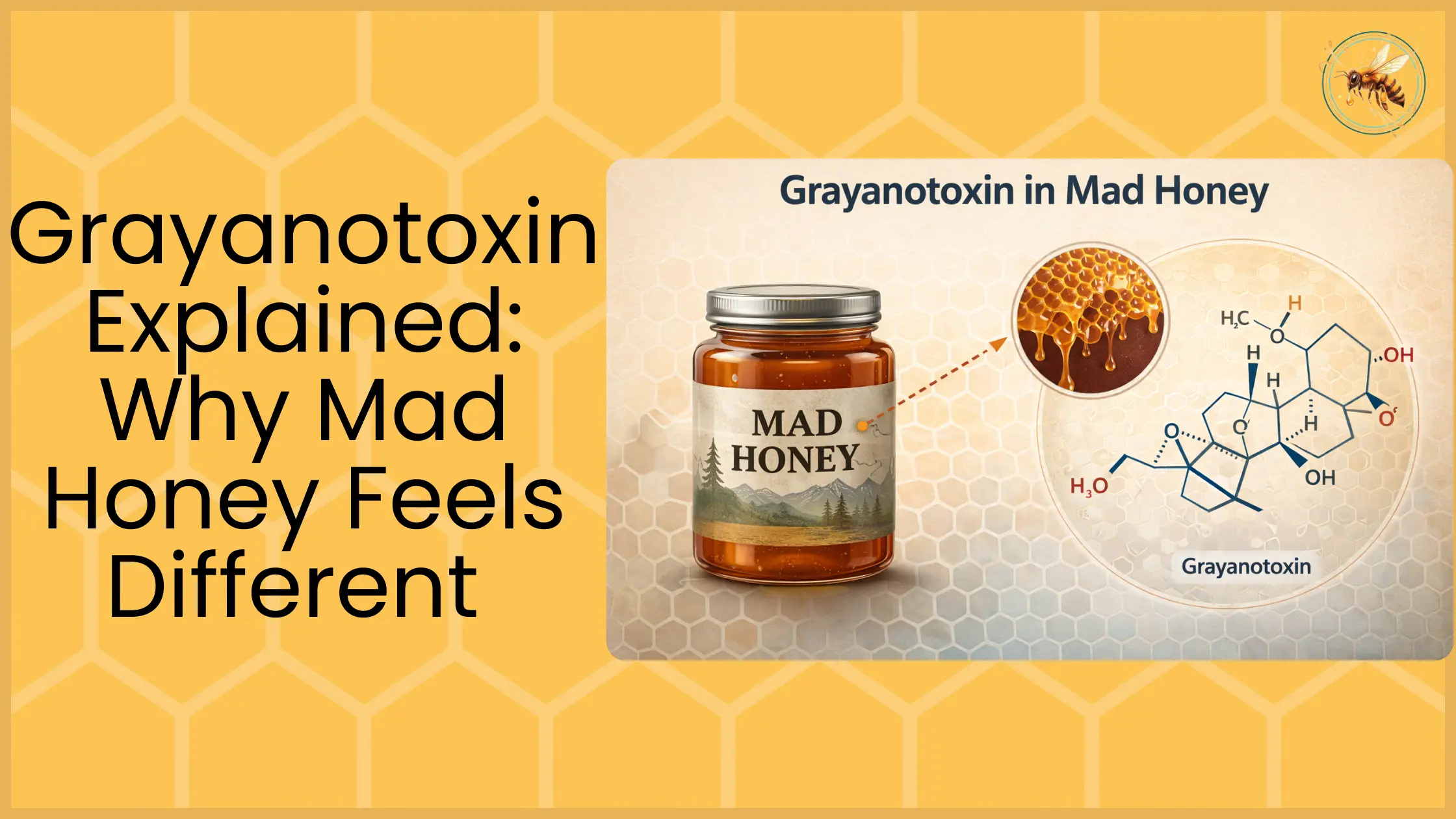
Mad honey can contain grayanotoxins from certain plants bees visit. These compounds interfere with sodium channels, the structures that allow nerve and muscle cells to transmit electrical signals. When that signaling is disrupted, functions you do not consciously control are affected, including heart activity and circulation.
The European Food Safety Authority’s scientific opinion on grayanotoxins in honey identifies effects on the muscles, the nervous system, and the cardiovascular system. Severe poisoning can involve heart block, fainting, convulsions, and respiratory depression. For a closer look at how the compounds work, see our grayanotoxin guide.
For consumers, the practical point is simpler. Mad honey is not interchangeable with ordinary table honey, and its natural origin does not prevent a serious toxic reaction.
How common are deaths from mad honey?
Severe poisoning is well documented. Fatal outcomes appear uncommon in published reports, especially when patients receive prompt medical treatment.
The FDA’s Bad Bug Book, in its chapter on grayanotoxins, describes this poisoning as rarely fatal when appropriate treatment is given promptly. That finding is reassuring about treatment, but it does not mean consuming mad honey is safe, and it should not be shortened to “mad honey cannot kill you.”
What the published reports show
The largest review to date is a 2015 systematic review by Silici and Atayoglu. It evaluated 1199 cases reported across 84 published articles, covering roughly 34 years of case reports from 1981 to 2014, and found no reported deaths.
The absence of reported deaths does not mean these cases were mild. A case report from Nepal notes that although toxic effects are usually mild and close monitoring is often sufficient, life-threatening complications such as cardiac asystole, convulsions, and myocardial infarction have also been reported. A 2025 case series of eleven patients concluded that although the prognosis is fairly good, mad honey intoxication carries significant morbidity.
These figures have clear limits. They count people who reached hospital and were written up in the medical literature, most of them in Turkey. They do not track every exposure, and they cannot capture deaths that were never linked to honey or never reported. “No deaths in the published cases” accurately summarizes the evidence. “No one has ever died” is not.
What the numbers can and cannot tell you
No reliable figure can tell an individual their chance of dying after consuming a particular jar. Published case reports describe people who reached medical attention. They do not establish the risk for any given product.
Claims at either extreme deserve caution. “It is always deadly” overstates the evidence. “Nobody dies, so it is harmless” ignores how serious poisoning can be. A person who recovers after hospital treatment has still been through a medical emergency, and recovery does not make the original exposure safe.
Can a small amount cause poisoning?
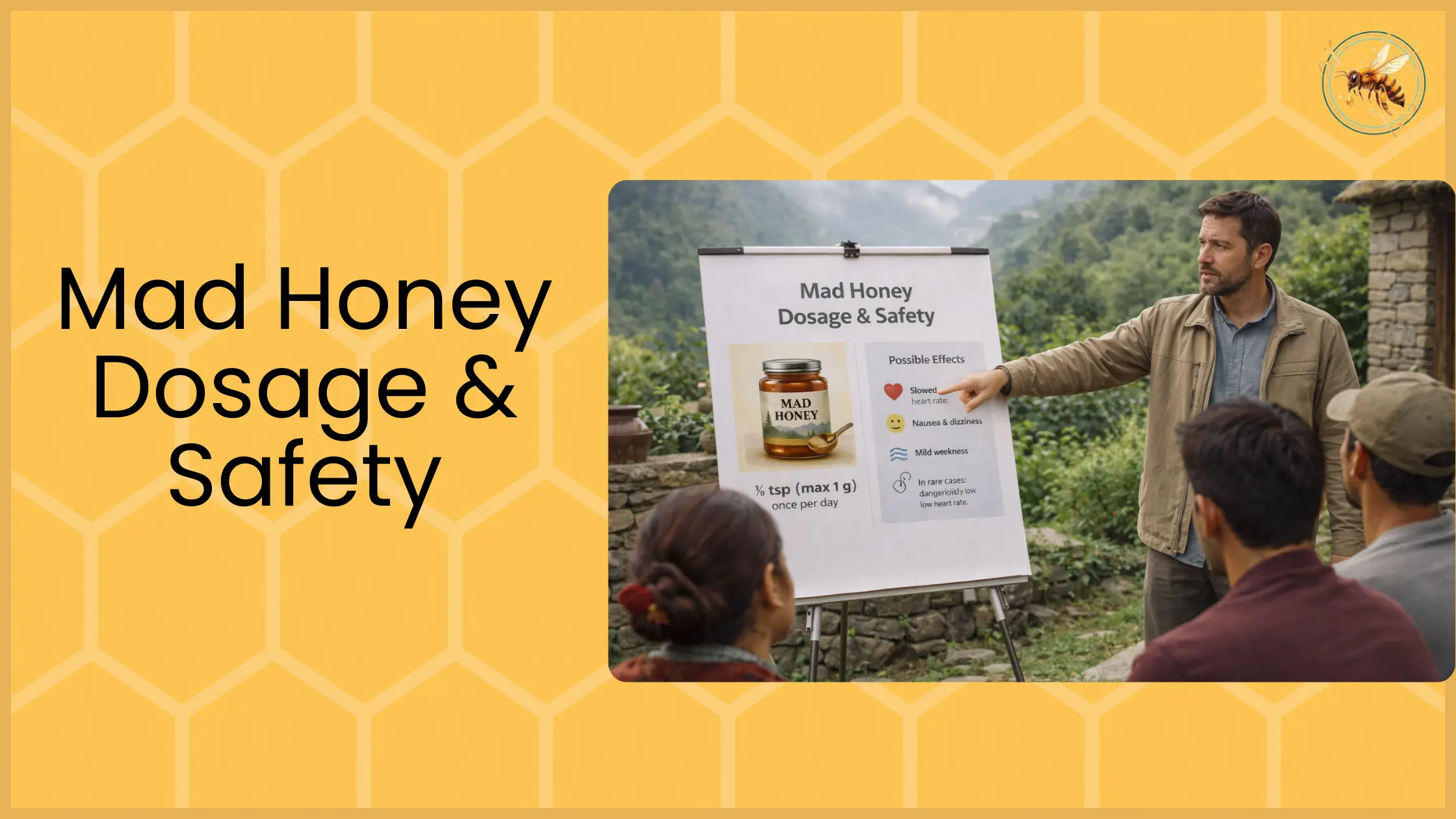
A small serving does not guarantee safety. The amount of honey matters, but so does its toxin concentration, and two servings that look identical may contain very different amounts of grayanotoxins.
EFSA could not identify a no-observed-adverse-effect level from the available human case studies. There is therefore no sound basis for promising that any particular spoon size will be harmless for everyone. Our batch variability guide explains why one batch cannot reliably predict another, even when both are genuine.
A previous uneventful experience is not a personal safety test either. “I took this much before” does not establish what a different batch will do.
Which symptoms should you take seriously?
Mad honey poisoning can cause:
- Dizziness or unusual weakness
- Nausea and vomiting
- Heavy sweating
- Blurred vision or confusion
- A slow or irregular heartbeat
- Low blood pressure and fainting
You do not need to identify every symptom before asking for help. If you feel unwell after consuming mad honey, tell a poison centre or healthcare professional about the exposure. For a fuller checklist, including what separates normal effects from warning signs, see our guide to mad honey overdose symptoms.
Warning signs that need urgent attention
Seek urgent medical help for fainting, chest pain, breathing difficulties, severe confusion, or worsening weakness. Call emergency services immediately if someone collapses, has a seizure, or cannot be awakened.
These symptoms do not mean the honey is especially strong, or that a recreational experience has reached its peak. They are signs of poisoning. Our article on why “hallucinogenic honey” is a misleading label explains why dramatic effects are often mistaken for a “trip.”
How quickly can a reaction start?
Symptoms can begin within minutes, but a reaction may also be delayed for several hours. EFSA describes reported onset ranging from within minutes to up to five hours after consumption.
That delay creates room for a dangerous misunderstanding: someone feels nothing, assumes the honey is weak, and takes more. A symptom-free first half-hour does not establish safety, and a published onset range should not become a countdown for deciding when another serving is acceptable.
If you have already consumed mad honey and are concerned about your exposure, seek individual advice rather than trying to predict the outcome from an online timeline.
Who may be more vulnerable?
People with existing cardiovascular disease or blood pressure problems may be more vulnerable to adverse effects. Medicines that affect heart rate or blood pressure can also complicate the picture. Tell the healthcare professional about any medicines you take, and do not stop prescribed treatment on your own to make room for mad honey.
Being young, physically fit, or free of a known heart condition does not protect you from poisoning. Our guide to who should not take mad honey covers these groups in more detail.
What should you do after a suspected reaction?
Stop consuming the honey and get advice promptly. If you feel dizzy or faint, sit or lie down to reduce the chance of falling, and do not drive yourself for treatment. Our guide to mad honey poisoning symptoms and what to do walks through each step.
Keep the jar, the packaging, or a photograph of the label. Clinicians will find these details useful:
- When the honey was consumed
- Approximately how much was consumed
- When symptoms started
- Any medicines, alcohol, or other substances taken
In the United States, call Poison Control at 1-800-222-1222. Its emergency guidance directs people to call 911 immediately for collapse, seizures, breathing difficulty, or inability to awaken. Outside the US, contact your local poison centre or emergency service.
Do not make someone vomit or try to counteract the honey with another substance. Follow instructions from the clinician, poison specialist, or emergency dispatcher.
What happens at the hospital?
Clinicians assess the person’s symptoms, blood pressure, heart rhythm, and exposure history, and treatment depends on how the poisoning is affecting them. Monitoring and supportive care can help manage the cardiovascular effects. The medical team decides which interventions are needed and when discharge is appropriate.
Another person’s recovery story is not a forecast. Someone who improved quickly may have had a different exposure, medical history, or treatment. What reported recoveries do show is that treatment helps, which is a reason to seek care, not to postpone it.
Frequently asked questions
Can one spoonful of mad honey kill you?
There is no dependable way to predict a fatal outcome from spoon size alone. A serving does not reveal its toxin concentration, and individual circumstances matter. A small amount should not be treated as a guarantee against serious poisoning.
Can mad honey stop your heart?
Severe poisoning can disrupt the heart’s electrical conduction, including causing heart block. A very slow heartbeat, fainting, or collapse needs urgent assessment. Do not wait to confirm the exact rhythm problem at home.
Can you sleep off mad honey poisoning?
Do not assume sleep makes suspected poisoning safe. If someone becomes unusually drowsy or is difficult to awaken, they need assessment, not reassurance that they are resting.
Does authentic mad honey mean safe mad honey?
No. Authenticity and safety answer different questions. Genuine mad honey can contain the compounds responsible for poisoning, and a traceable origin or laboratory report does not guarantee it is safe to consume.
Is mad honey poisoning always fatal?
No. Many reported patients recover, often with treatment. The possibility of recovery does not make severe symptoms any less urgent. Mad honey can cause life-threatening poisoning, and prompt medical help matters.