Mad honey is not regular table honey. Certain batches can contain grayanotoxins, naturally occurring compounds from rhododendron nectar that can affect the nervous system, blood pressure, and heart rate. At low amounts, some people describe a calm or heavy-body feeling. At higher exposure, the same compounds can contribute to dizziness, nausea, weakness, low blood pressure, slow heart rate, fainting, and other symptoms that may require medical attention.
That is why some people should avoid mad honey entirely rather than trying to “start small.” The safest approach depends on your health history, medications, age, risk tolerance, and whether you can respond calmly if symptoms appear.
tl;dr
- People with low blood pressure, heart rhythm issues, or a history of heart conditions should avoid mad honey because its main risk pattern overlaps directly with blood pressure and heart-rate changes.
- Anyone taking medication that affects blood pressure, heart rate, sedation, anxiety, sleep, or fluid balance should not use mad honey without medical guidance.
- Pregnant or breastfeeding women, children, and older adults should avoid mad honey because the risk-to-benefit balance is poor and safety margins are unclear.
- First-time users who want a “strong effect” are at higher risk because re-dosing too quickly and chasing intensity are two of the most common ways people overdo it.
- Even healthy adults are not “risk-free” because mad honey varies by batch, and a small spoonful from one jar may not behave like the same spoonful from another.
Quick Answer – Who Should Avoid Mad Honey?
The safest answer is that mad honey is not suitable for everyone. You should avoid it if you have heart or blood pressure concerns, take relevant medication, are pregnant or breastfeeding, are under 18, have a history of fainting, or are planning to drive, work, exercise, drink alcohol, or combine it with other substances. People drawn to mad honey for its reputation as an aphrodisiac are not exempt from these cautions.
Mad honey is best avoided by people with:
- low blood pressure or frequent lightheadedness
- heart rhythm problems, heart disease, or a history of fainting
- blood pressure or heart-rate medication use
- pregnancy or breastfeeding
- childhood or adolescence
- multiple prescription medications
- plans to mix with alcohol, sedatives, sleep aids, kava, mushroom gummies, cannabis, or other “relaxing” products
The reason is simple: mad honey can create body-level effects, especially cardiovascular effects, that may overlap with existing health risks. As for first-spoon guidance, it is not suitable for children, pregnant or breastfeeding women, people with low blood pressure, or anyone with heart conditions, and advises not combining it with medication or supplements without consulting a medical professional.
People who should be extra cautious
Even if you are generally healthy, extra caution is needed if you are new to mad honey, sensitive to dizziness, easily nauseous, prone to anxiety when body sensations feel unfamiliar, or unsure about the batch strength.
The safest rule
If you are asking whether your health condition or medication makes mad honey risky, the safest answer is: do not take it unless a qualified medical professional says it is appropriate for you.
Why Some People Should Avoid Mad Honey
Mad honey is biologically active. It is not just a sweetener with a stronger taste.
Mad honey is biologically active, not just sweet honey
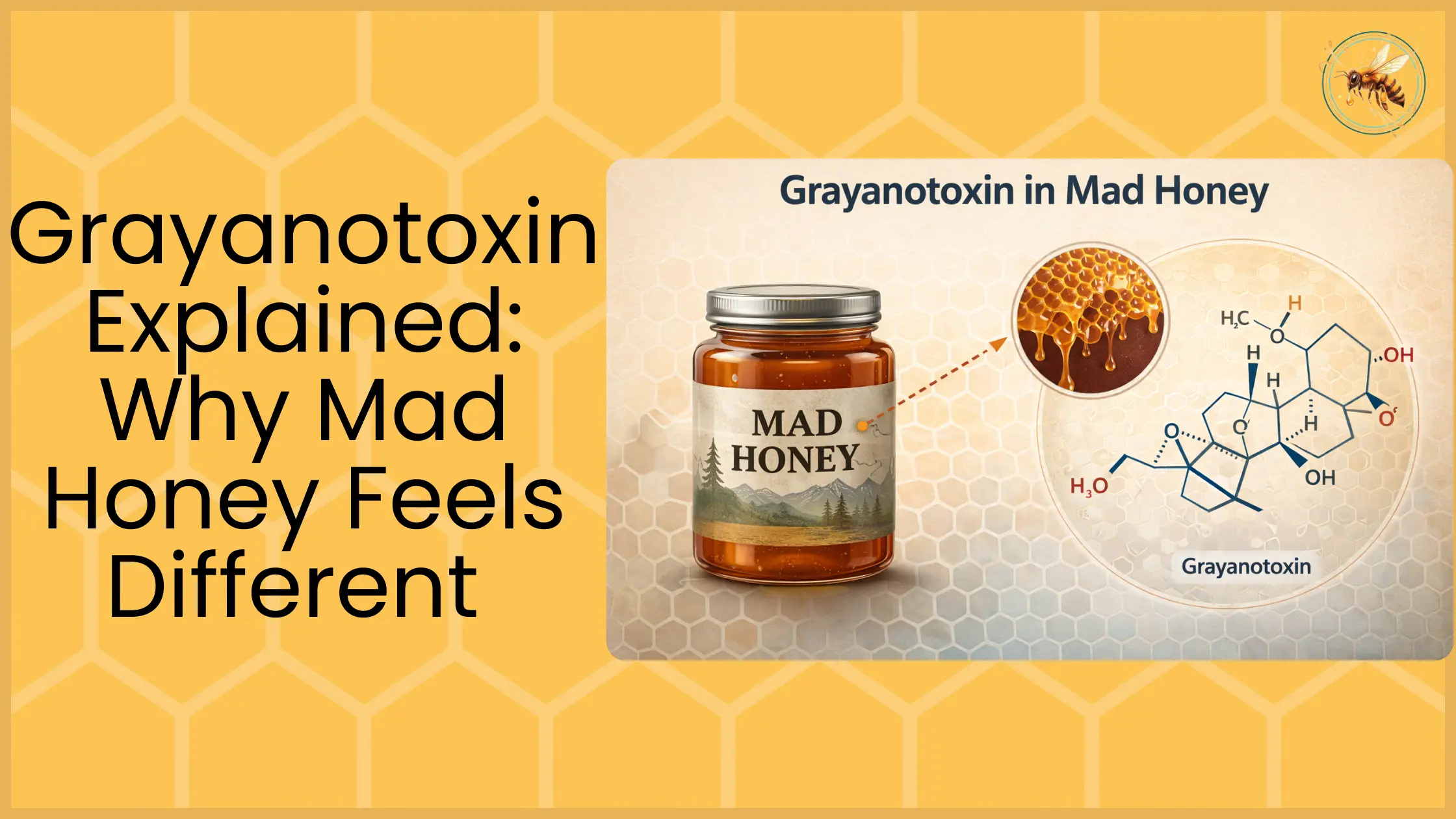
Mad honey can contain grayanotoxins, mainly discussed in relation to GTX I and GTX III. These compounds interact with voltage-gated sodium channels in nerves, muscles, and heart tissue. The result can be increased vagal tone, which may slow the heart and lower blood pressure.
That is why the same honey can be described in two completely different ways. One person may describe a mild, calm experience. Another may describe dizziness, weakness, nausea, sweating, or feeling like they might faint.
The problem is dose + sensitivity + batch variability
Mad honey risk is not only about “how much” someone takes. It also depends on the batch and the person. Grayanotoxin levels can vary by rhododendron species, season, region, and processing, and internal safety materials note that there is no internationally established safe dosage standard because GTX levels vary widely by region, season, and floral source.
This makes general advice difficult. A small amount from one batch may feel subtle, while the same amount from another batch could feel much stronger.
Why “I only took a little” is not always enough
Taking “a little” reduces risk, but it does not remove risk for everyone. If you already have low blood pressure, a heart rhythm condition, or medication that slows your pulse, even a small extra push in the same direction can matter.
People With Low Blood Pressure
Low blood pressure is one of the clearest reasons to avoid mad honey.
Why low blood pressure is a major concern
Mad honey’s unwanted effects often involve hypotension, meaning blood pressure drops too low. When blood pressure falls, less blood reaches the brain, especially when standing up. That can lead to dizziness, tunnel vision, weakness, fainting, and falls.
If your blood pressure already runs low, your margin is smaller. You may not need a dramatic dose for symptoms to feel serious.
Symptoms to watch for
Low blood pressure symptoms can include:
- dizziness when standing
- cold sweat or clamminess
- weakness or heavy limbs
- blurred or “gray” vision
- nausea
- feeling like you may pass out
If those symptoms appear after mad honey, stop taking more, sit or lie down, and seek medical help if symptoms are strong, worsening, or paired with chest pain, breathing difficulty, persistent vomiting, or confusion.
People With Heart Conditions
Heart conditions are another high-risk category because mad honey can affect heart rate and rhythm.
Why heart conditions are high risk
Grayanotoxins can influence heart signaling and are linked with bradycardia, meaning a slow heart rate. Internal science material describes grayanotoxins as affecting the heart through vagal overstimulation, with higher exposure linked to bradycardia, hypotension, AV blocks, syncope, nausea, vomiting, sweating, and respiratory issues. Animal rat studies support the cardiovascular risk for these groups.
For someone with an existing heart condition, that overlap matters. Your heart may already have less room to compensate if blood pressure drops or the pulse slows.
Heart-rate concerns
Avoid mad honey if you have:
- arrhythmia or irregular heartbeat history
- slow resting heart rate with symptoms
- heart block or conduction issues
- fainting linked to heart rhythm
- unexplained chest pain or palpitations
- any heart condition where your doctor has warned you about stimulants, sedatives, or blood-pressure changes
Strong safety line
If you have a diagnosed heart condition, do not treat mad honey as a harmless natural product. The risk pattern is too closely tied to heart rate and blood pressure.
People Taking Medications or Supplements
Medication interactions do not have to be complicated to be risky. Sometimes the problem is simply that two things push the body in the same direction.
Why medication interactions matter
Mad honey may lower blood pressure, slow heart rate, cause dizziness, increase nausea, or make someone feel weak. If a medication can do similar things, the combined effect may be stronger than expected.
It is specifically advised not combining mad honey with medication or supplements without consulting a medical professional.
Medication categories to flag
Be especially cautious with:
- blood pressure medication
- beta blockers
- calcium channel blockers
- heart rhythm medication
- diuretics or medications that affect hydration/electrolytes
- anxiety medication
- sleep aids
- sedatives
- muscle relaxants
- strong antihistamines
- medications that already cause dizziness, nausea, or drowsiness
Supplements can matter too. Calming blends, kava, valerian, strong magnesium products, cannabis products, mushroom gummies, and “relaxation” supplements can all make symptoms harder to interpret.
What to say in the article
The safest wording is direct: If you take regular medication, especially for blood pressure, heart rhythm, anxiety, sleep, or sedation, do not take mad honey without medical guidance.
Pregnant or Breastfeeding Women
Pregnancy and breastfeeding require conservative advice because the downside is not worth the uncertainty.
Why is the recommendation avoidance
There is no clear, universally accepted safe mad honey dose for pregnancy or breastfeeding. Mad honey can vary by batch, and its active compounds can affect blood pressure, heart rate, nausea, and dizziness. During pregnancy, those effects are especially undesirable.
Why conservative guidance is best
Pregnancy already changes blood volume, blood pressure, nausea sensitivity, and fainting risk. Adding a dose-sensitive product with unclear batch strength is an unnecessary risk.
The cleanest guidance is: Pregnant or breastfeeding women should not take mad honey.
Children
Children should not take mad honey.
Why children should not take mad honey
Children have smaller bodies, different sensitivities, and less ability to describe early symptoms clearly. A dose that looks small to an adult may not be small for a child.
Mad honey is also not a normal honey product from a safety perspective. Its effects depend on grayanotoxin content, and batch strength can vary. That unpredictability makes it unsuitable for children.
Why small body size matters
A smaller body means less margin for error. If symptoms appear—dizziness, vomiting, weakness, confusion—it can also be harder for a parent or caregiver to judge severity early.
Parent/caregiver warning
Keep mad honey out of reach and do not present it as a novelty food for children. If a child consumes mad honey and develops symptoms such as vomiting, unusual sleepiness, weakness, fainting, or breathing difficulty, seek medical help.
Older Adults and People Prone to Fainting
Older adults and people with a history of fainting may be more vulnerable even if they do not have a diagnosed heart condition.
Why older adults may be more vulnerable
Older adults are more likely to have blood pressure changes, medication use, dehydration risk, and lower tolerance for falls. A dizzy spell that might be manageable for a younger person can become dangerous if it causes a fall.
Fainting history
Anyone with a history of fainting, near-fainting, orthostatic hypotension, or unexplained dizziness should avoid mad honey unless medically cleared.
Fall-risk framing
The danger is not only the honey itself. The danger is what happens if dizziness arrives suddenly while standing, walking, showering, using stairs, or being alone.
People Planning to Drive, Work, Exercise, or Go Out
Mad honey should not be taken before responsibilities or activities where dizziness, nausea, confusion, or weakness would create danger.
Not for busy afternoons or risky activities
As for first-spoon guidance, it is described as an evening wind-down, not a busy afternoon, and recommends setting the scene in a calm environment.
Avoid taking mad honey before:
- driving
- cycling or riding a scooter/motorbike
- working with tools or machinery
- exercising intensely
- swimming
- hiking
- going out drinking
- taking care of children alone
- any situation where sudden dizziness would be unsafe
Why this matters
Mad honey effects can come on after a delay. You may feel fine at first, then become lightheaded, nauseous, or weak later.
Simple rule
Use mad honey only in a calm, controlled environment where you can sit or lie down if needed—and only if you are otherwise an appropriate candidate.
First-Time Users Who Want a Strong Effect
People chasing intensity are one of the highest-risk groups, even if they are healthy.
Why this mindset is risky
The “strong effect” mindset leads to three common mistakes:
- taking too much the first time
- re-dosing too quickly because nothing has happened yet
- choosing “strongest” batches instead of transparent, controlled products
Mad honey is not predictable enough for that approach. Effects can be delayed, and batch variability can make the same spoon size behave differently.
The conservative first-time approach
A safer first-time mindset is: learn your sensitivity, don’t chase intensity, and don’t re-dose quickly. It is recommended to start small and wait before considering more because wild honey varies.
If the goal is intensity, don’t take it
If someone wants mad honey mainly because they want to feel “the strongest possible effect,” they are not approaching it safely.
Warning Signs That Mean Stop and Seek Help
Some symptoms mean the experience is no longer just “too strong.” They may indicate a serious reaction or intoxication.
Stop immediately if you feel
- strong dizziness
- nausea or vomiting
- sweating, chills, or clamminess
- unusual weakness
- confusion
- blurred vision
- feeling worse when standing
- slow or irregular heartbeat sensation
Do not take more to “balance it out.” Do not mix with alcohol or another substance.
Seek medical help urgently if symptoms persist or worsen
Seek help if you experience:
- fainting or near-fainting
- chest pain or pressure
- trouble breathing
- persistent vomiting
- severe weakness or confusion
- very slow pulse with symptoms
- loss of consciousness
What to tell a doctor
Tell them:
- you consumed mad honey
- approximately how much
- when you took it
- whether alcohol, medication, or supplements were involved
- that mad honey may contain grayanotoxins
What If You’re Healthy — Is Mad Honey Still Risk-Free?
No. Being healthy lowers some risk, but it does not make mad honey risk-free.
No, because batches vary
Even healthy adults can react differently depending on the batch, amount, body weight, hydration, food intake, sleep, and sensitivity. Internal IMHSI material notes that GTX levels vary widely by region, season, and floral source, making controlled consumption difficult, and that the minimum toxic dose in humans is not clearly defined.
Why lab testing and traceability matter
Testing and traceability do not remove all risk, but they reduce uncertainty. IMHSI’s standardization work emphasizes batch traceability, COA-linked verification, and grayanotoxin measurement to support safer consumption and quality control.
Responsible seller checklist
Look for sellers that provide:
- origin clarity
- batch or harvest information
- conservative safety guidance
- clear warnings about who should avoid
- lab testing or COA language that is specific
- no “guaranteed high” or “strongest” marketing
Conclusion
Mad honey is not suitable for everyone. People with low blood pressure, heart conditions, a history of fainting, pregnancy/breastfeeding, childhood/adolescence, older age, medication use, or plans to mix substances should avoid it or get medical guidance first.
The simplest safety rule is: if your body already has less room for blood pressure or heart-rate changes, mad honey is not worth the risk. For everyone else, safety still depends on conservative use, batch transparency, and avoiding the “strongest effect” mindset.
FAQs – Who Should Not Take Mad Honey?
Can people with high blood pressure take mad honey?
They should be cautious and ask a medical professional first. Some traditional users seek mad honey because of blood pressure-related beliefs, but that does not make it a safe self-treatment. Mad honey can lower blood pressure unpredictably, and a variable-strength honey is not a controlled medication.
Is mad honey safe if I have low blood pressure?
No. Low blood pressure is one of the clearest reasons to avoid mad honey because its unwanted effects can include hypotension, dizziness, weakness, and fainting.
Can I take mad honey if I’m on heart medication?
Avoid unless your doctor specifically clears it. Heart medication and mad honey may both affect heart rate, rhythm, or blood pressure.
Can pregnant women take mad honey?
No. Pregnant women should avoid mad honey because there is no reliable safe-use standard, and the risk-to-benefit balance is poor.
Can breastfeeding women take mad honey?
Breastfeeding women should avoid it for the same reason: unclear safety margins, batch variability, and no good reason to take the risk.
Can children take mad honey?
No. Mad honey is not appropriate for children.
Can older adults take mad honey?
Older adults should generally avoid it or speak with a doctor first, especially if they take medication, have blood pressure issues, or are prone to dizziness/falls.
Can diabetics take mad honey?
People with diabetes should be cautious. Mad honey is still honey and contains sugars, and its additional bioactive effects make it more complicated than regular honey. Medical guidance is best.
Can I take mad honey with alcohol?
No. Mixing increases dizziness, nausea, poor judgment, and the risk of taking more than intended.
What if I took mad honey and feel dizzy?
Stop taking more, sit or lie down, hydrate slowly if you can, and monitor symptoms. Seek medical help if dizziness is severe, you feel faint, you have chest pain, trouble breathing, persistent vomiting, or your symptoms worsen.
Should I ask a doctor before trying mad honey?
Yes, if you have any medical condition, take medication or supplements, are older, are pregnant/breastfeeding, or have any history of fainting, blood pressure issues, or heart concerns.