Mad honey is not recommended during pregnancy or breastfeeding. The concern is not that all honey is unsafe for adults during pregnancy. The concern is that mad honey is different from regular honey because it may contain grayanotoxins, naturally occurring plant toxins from certain Rhododendron nectar sources. These compounds can affect blood pressure, heart rate, the nervous system, and digestion.
Pregnancy and breastfeeding are times when the safety bar should be higher than usual. A product with variable strength, limited pregnancy-specific data, and possible cardiovascular effects does not fit that standard. Even if someone has used mad honey before without a problem, pregnancy, postpartum recovery, and infant care change the risk calculation.
The safest public-facing answer is clear: pregnancy and breastfeeding are not the right time to experiment with a variable, bioactive honey.
tl;dr
- Mad honey is not recommended during pregnancy because grayanotoxins may affect blood pressure, heart rate, and maternal safety.
- Mad honey is not recommended while breastfeeding because lactation-specific safety data is limited, and maternal symptoms such as dizziness, faintness, nausea, hypotension, or bradycardia can still affect safe infant care.
- Mad honey is different from regular honey because the main concern is grayanotoxin exposure, not just sugar content or ordinary honey quality.
- Babies and young children should not consume mad honey. Infants under 12 months should not be given any honey because of infant botulism risk.
- If you took mad honey before knowing you were pregnant, do not panic, but do not take more. Speak with a healthcare professional, especially if you have symptoms.
Quick Answer: Can You Take Mad Honey While Pregnant or Breastfeeding?
The safest answer is no. Mad honey should be avoided during pregnancy and breastfeeding unless a qualified healthcare professional specifically clears it for your situation.
Pregnancy
Mad honey is not recommended during pregnancy. Pregnancy already changes blood volume, circulation, heart workload, blood-pressure regulation, and nausea sensitivity. Adding a product that may lower blood pressure, slow heart rate, or cause dizziness and vomiting creates unnecessary risk.
A pregnant person does not need to experience severe poisoning for the situation to become concerning. Even dizziness, faintness, vomiting, or weakness can matter more during pregnancy because hydration, circulation, falls, and fetal well-being are all more important.
Breastfeeding
Mad honey is not recommended while breastfeeding. There is not enough reliable data on whether grayanotoxins transfer into breast milk, what concentration would matter, or what level would be safe for a breastfed infant.
Even if infant exposure through milk is uncertain, maternal symptoms still matter. A breastfeeding parent who becomes dizzy, faint, nauseated, weak, or confused may have difficulty safely feeding, holding, or caring for a baby.
Trying to conceive
If you are trying to conceive, avoid using mad honey as a wellness, aphrodisiac, hormonal, or vitality product unless medically cleared. Mad honey is sometimes marketed for sexual vitality, but aphrodisiac claims do not establish safety for conception, pregnancy, or early pregnancy before someone knows they are pregnant.
The safest approach is to avoid unnecessary bioactive products during the trying-to-conceive period, especially products with variable potency and limited reproductive safety data.
The safest public-facing answer
Pregnancy and breastfeeding are not the right time to experiment with mad honey. If there is any chance you are pregnant, newly postpartum, breastfeeding, or caring for an infant, choose the conservative path.
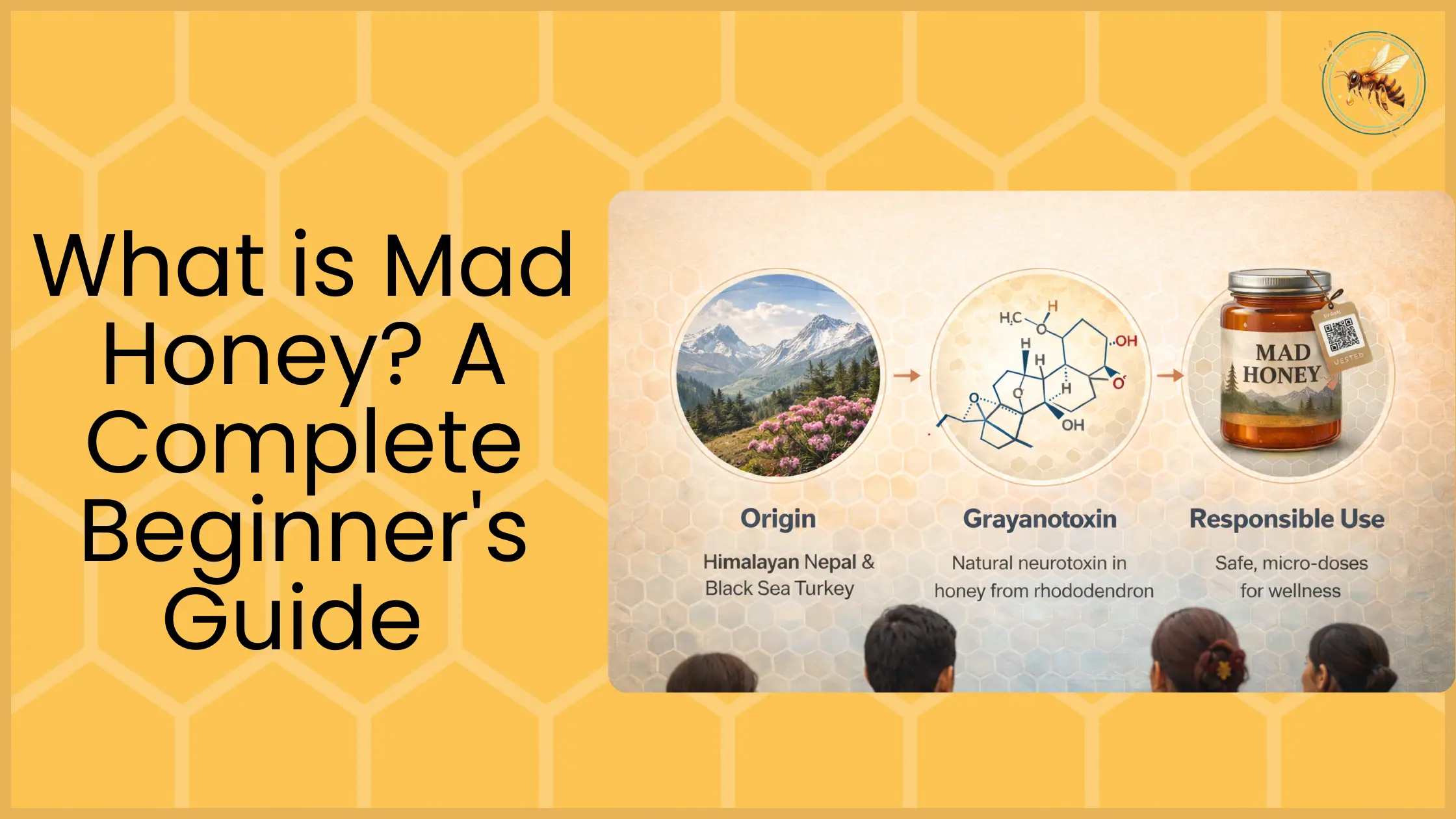
Why Mad Honey Is Different From Regular Honey
Mad honey should not be discussed like normal pantry honey. The distinction matters because readers may otherwise think the warning applies to every honey product in the same way.
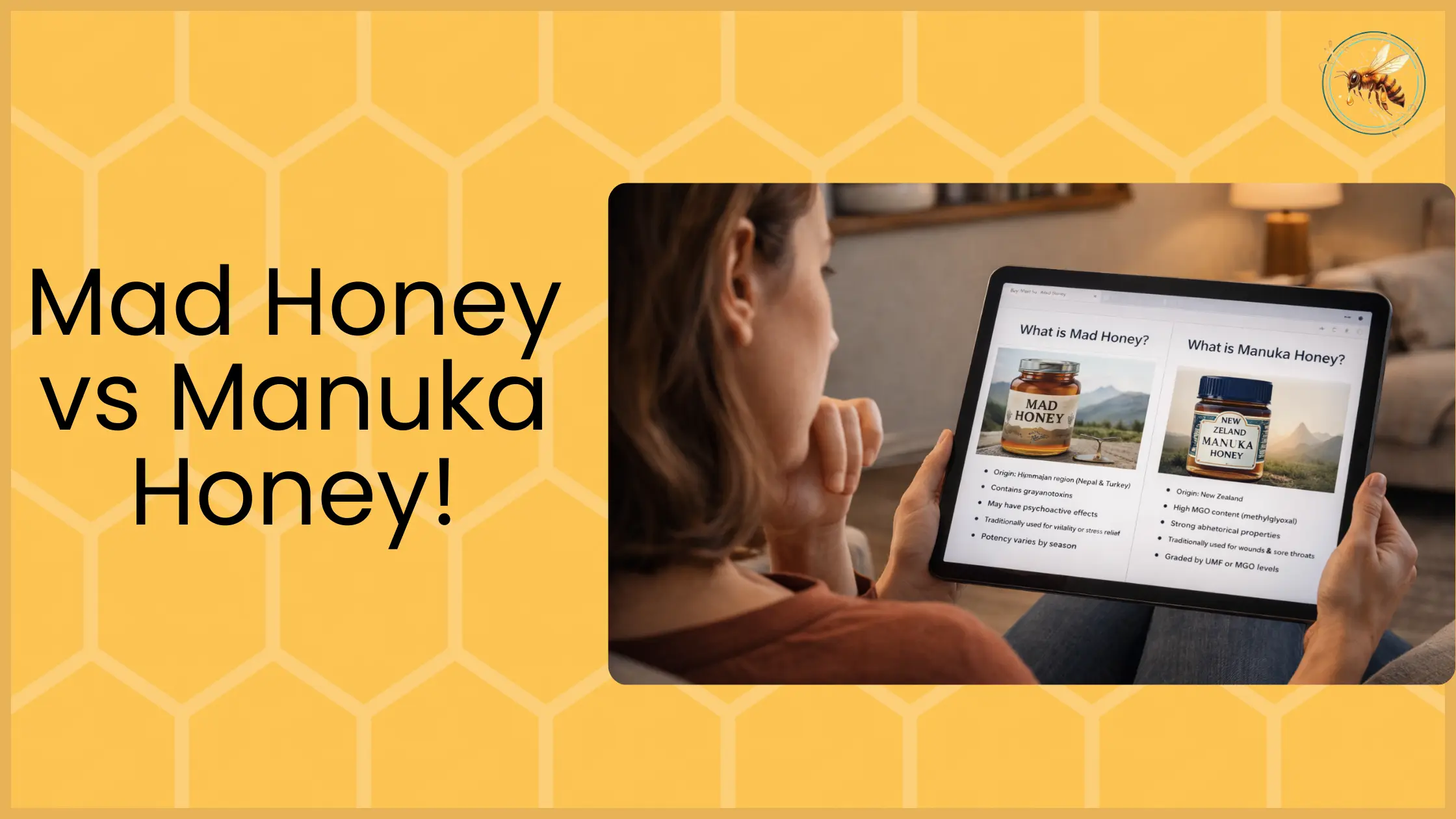
Regular honey vs mad honey
Regular honey is mostly used as a food sweetener. It contains sugars, aroma compounds, minerals in small amounts, and plant-derived flavor notes depending on the flowers bees visited.
Mad honey may also be honey in the food sense, but certain batches can contain grayanotoxins from Rhododendron nectar. That makes it a bioactive honey rather than a simple sweetener. The amount of grayanotoxin can vary by region, season, plant species, harvest, and batch.
Why this distinction matters
The concern with mad honey is not only whether the honey is raw, pasteurized, organic, or high quality. A well-sourced mad honey can still contain grayanotoxins. That is the defining feature of the category.
For pregnancy and breastfeeding, the key issue is not ordinary honey consumption by an adult. The issue is exposure to a variable honey that can affect body systems that already matter more during pregnancy and postpartum.
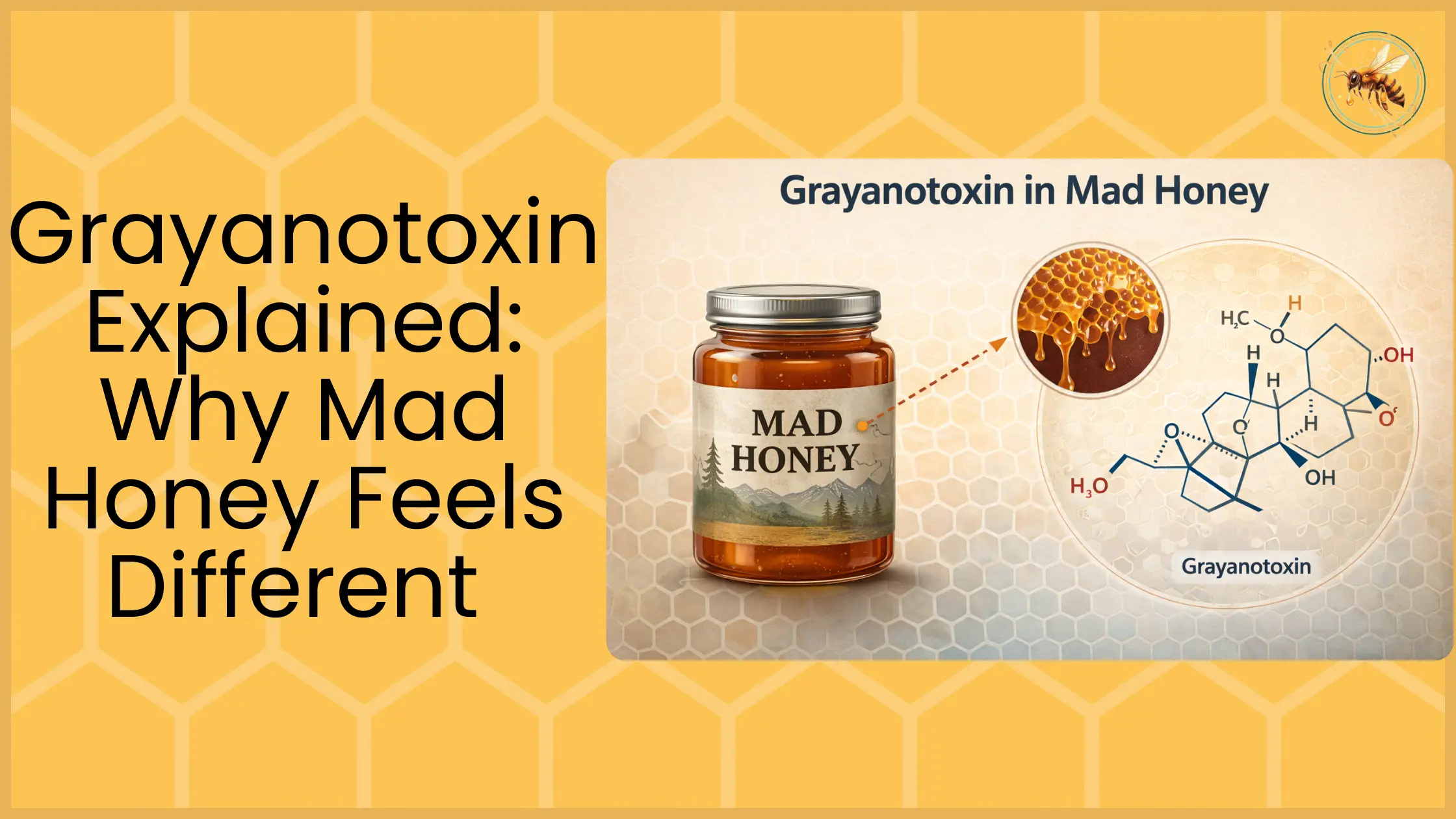
What Are Grayanotoxins?
Grayanotoxins are the compounds that make mad honey different from regular honey. They are also the reason the safety guidance should be stricter.
Basic definition
Grayanotoxins are naturally occurring plant toxins found in certain Rhododendron species and related plants. Bees may collect nectar from these flowers, and the compounds can end up in the honey.
Mad honey is usually discussed in connection with regions where Rhododendron plants grow and where bees forage heavily from those blooms, such as parts of Turkey and Nepal.
Main body systems affected
Grayanotoxins can affect several body systems:
The cardiovascular system is the main safety concern because mad honey intoxication can involve low blood pressure and slow heart rate.
The nervous system can also be affected, which may contribute to dizziness, weakness, confusion, faintness, or unusual body sensations.
The digestive system is often involved too, with nausea, vomiting, stomach discomfort, and sweating reported in intoxication cases.
These effects are exactly why mad honey should not be treated as a harmless natural product during pregnancy or breastfeeding.
Why Pregnancy Raises the Safety Concern
Pregnancy changes how the body handles circulation, blood pressure, nausea, hydration, and physical stress. Those changes make mad honey’s risk profile a poor fit.
Blood pressure changes during pregnancy
During pregnancy, blood volume increases, the heart works harder, and blood-pressure regulation can change. Some pregnant people already experience dizziness, lightheadedness, nausea, fatigue, or blood-pressure shifts as part of normal pregnancy.
Because of that, a product that can affect blood pressure or heart rate creates avoidable uncertainty. If dizziness or faintness happens after mad honey, it may be harder to know whether it is pregnancy-related, honey-related, medication-related, dehydration-related, or something more serious.
Mad honey can complicate that picture
Mad honey poisoning is linked to hypotension and bradycardia. In plain language, that means blood pressure can drop and the heart rate can slow. Those are exactly the types of symptoms that should not be risked casually during pregnancy.
A dizzy spell during pregnancy is not just uncomfortable. It can lead to falls. Vomiting can worsen dehydration. Low blood pressure can become concerning. A slow pulse or chest symptoms should be taken seriously.
A published pregnancy case exists
Mad honey intoxication during pregnancy has been reported in medical literature, including a case report titled “Successful management of mad honey intoxication in a pregnant woman.” A single case report does not establish predictable safety. It shows that pregnancy exposure is possible and serious enough to be documented clinically.
Strong safety line
The presence of a managed case does not mean mad honey is safe in pregnancy. It supports the opposite public-health framing: avoid exposure so the situation never needs medical management.
Why Breastfeeding Raises the Safety Concern
Breastfeeding safety requires two separate questions: possible infant exposure and the breastfeeding parent’s ability to remain safe and well.
Lack of direct lactation safety data
There is not enough reliable lactation-specific data to say whether grayanotoxins transfer into breast milk, how much might transfer, or what level would be safe for a breastfed infant. Without that information, the responsible recommendation is avoidance.
Breastfeeding guidance should be especially conservative when the product has a known intoxication profile and no clear benefit that justifies risk.
Maternal symptoms still matter
Even if the baby is not directly exposed, maternal symptoms can still create safety issues. Dizziness, faintness, nausea, vomiting, weakness, low blood pressure, slow heart rate, or confusion can affect the parent’s ability to hold, feed, bathe, or carry a baby safely.
A breastfeeding parent may also be sleep-deprived, recovering from birth, taking pain medication, using supplements, or managing postpartum blood-pressure issues. Those factors can make mad honey even less appropriate.
Breastfeeding and ordinary honey are a different topic
The well-known public health warning about honey and babies is about direct infant consumption before 12 months. That warning does not usually mean that a breastfeeding parent cannot eat ordinary food-grade honey. Mad honey is a different topic because it may contain grayanotoxins.
Can Babies or Young Children Have Mad Honey?
Mad honey should not be given to babies, toddlers, or children. It should not be used as a novelty food, remedy, sleep aid, calming product, cough remedy, or “natural” wellness product for children.
Two separate reasons
There are two reasons to be strict.
- The first is the ordinary honey risk. Infants under 12 months should not be given honey because of infant botulism risk.
- The second is the mad honey-specific risk. Mad honey may contain grayanotoxins, which can affect blood pressure, heart rate, digestion, and the nervous system. Children have smaller bodies and less ability to explain early symptoms clearly.
CDC guidance on honey under 12 months
CDC guidance states that honey given to children younger than 12 months may cause infant botulism and should not be added to a baby’s food, water, infant formula, or pacifier.
Symptoms That Are Especially Concerning During Pregnancy or Breastfeeding
If someone is pregnant or breastfeeding and has taken mad honey, symptoms should be taken seriously. The goal is not panic. The goal is early recognition and proper medical guidance.
Early warning signs
Early symptoms can include dizziness, nausea, vomiting, sweating, weakness, blurred vision, lightheadedness, stomach discomfort, unusual fatigue, or feeling worse when standing.
These symptoms may overlap with normal pregnancy or postpartum experiences, which is one reason mad honey exposure can be confusing. If the symptoms appeared after mad honey, mention that clearly to a healthcare professional.
Cardiovascular red flags
More concerning symptoms include fainting, near-fainting, very slow pulse, chest pain, severe weakness, confusion, persistent vomiting, trouble breathing, or symptoms that keep worsening.
These symptoms deserve urgent medical attention, especially during pregnancy or while caring for an infant.
What to do
Seek medical help and tell the clinician it may involve grayanotoxin-containing honey. Share what was taken, how much, when it was taken, whether alcohol or medications were involved, and what symptoms appeared.
Medication and Supplement Interactions During Pregnancy and Postpartum
Pregnancy and postpartum often involve medications, supplements, and changing health needs. That can make mad honey even more complicated.
Why this matters
Someone may be taking iron supplements, prenatal vitamins, nausea medication, blood-pressure medication, pain medication, sleep aids, anxiety medication, herbal products, or postpartum prescriptions. Some of these may affect dizziness, sedation, hydration, heart rate, blood pressure, nausea, or alertness.
Mad honey can overlap with several of those same symptom areas. That is why “natural” does not automatically mean compatible.
Categories to be careful with
Be especially cautious with blood-pressure medication, heart-rate medication, sedatives or sleep aids, anti-nausea medications that cause drowsiness, herbal calming supplements, anxiety medication, pain medication, and alcohol.
This does not mean every interaction has been studied in pregnancy. It means the overlap is serious enough to avoid casual use.
“Natural” Does Not Mean Pregnancy-Safe
Many people reach for natural products during pregnancy because they seem gentler. That instinct is understandable, but it can be misleading.
Common misconception
Honey, herbs, roots, teas, and traditional remedies often feel safer than pharmaceuticals because they are natural. But natural products can still contain active compounds. They can still affect blood pressure, heart rate, sedation, digestion, hormones, or medication metabolism.
Why mad honey needs a stricter standard
Mad honey’s active compounds can produce measurable physiological effects. It is not just a sweetener with a unique flavor. When a product can cause dizziness, vomiting, hypotension, bradycardia, or faintness in some situations, pregnancy and breastfeeding are not the right time to test it.
Responsible phrasing
Traditional use is not the same as pregnancy safety data. A product can have cultural history and still be inappropriate during pregnancy.
What If You Took Mad Honey Before Knowing You Were Pregnant?
This situation should be handled calmly. The goal is to avoid fear while still giving responsible advice.
Do not panic, but do not take more
If you took mad honey before knowing you were pregnant, do not panic. A single exposure does not automatically mean harm occurred. But do not take more, and do not rely on online reassurance.
Contact a healthcare professional if symptoms occurred
Speak with a healthcare professional, especially if you had dizziness, fainting, vomiting, chest discomfort, unusual pulse, severe weakness, confusion, or symptoms that felt stronger than expected.
If you had no symptoms, it is still reasonable to mention the exposure at your next prenatal appointment, especially if you know the amount or batch.
Information to share
Share the approximate amount, timing, product name, batch if known, symptoms, medications or supplements taken, and whether alcohol was involved.
If possible, keep the jar, label, or product page available. It may help the clinician understand what you consumed.
Avoid overreassurance
Do not assume “you’ll be fine” and do not let a seller reassure you casually. Speak with your healthcare provider, especially if you had symptoms.
Can Mad Honey Affect Fertility, Hormones, or Libido?
This question often comes up because mad honey is sometimes marketed as an aphrodisiac or vitality product.
Why this question comes up
Mad honey has traditional associations with sexual vitality and male performance. Some modern sellers also market it using libido, testosterone, hormone, or bedroom-performance language.
That marketing can make people who are trying to conceive wonder whether mad honey might help fertility or sexual function.
Why this is not a pregnancy-safe argument
Aphrodisiac or hormone-related claims do not establish safety for pregnancy, conception, or breastfeeding. Even if a product is traditionally associated with vitality, that does not make it appropriate while trying to conceive or during early pregnancy.
If fertility, libido, hormones, or erectile dysfunction are concerns, those are medical topics. They should be discussed with a qualified clinician rather than self-treated with mad honey.
Safer Alternatives During Pregnancy and Breastfeeding
Safer choices depend on the goal. The key principle is to avoid using mad honey for sleep, nausea, anxiety, blood pressure, or vitality during pregnancy or breastfeeding.
For taste
If the adult is not allergic and has no medical reason to avoid it, ordinary food-grade honey may be used as a sweetener during pregnancy or breastfeeding. This is different from giving honey to an infant.
Never give honey directly to an infant under 12 months.
For relaxation or sleep
If sleep or relaxation is the goal, speak with a healthcare professional about pregnancy-safe or breastfeeding-safe options. Do not use mad honey as a calming product.
For nausea, anxiety, or blood pressure
Do not self-treat nausea, anxiety, blood pressure concerns, or faintness with mad honey during pregnancy or postpartum. These symptoms can be medically important and should be discussed with a clinician.
How Brands and Sellers Should Label This
Clear labeling protects consumers and builds trust. Pregnancy and breastfeeding warnings should not be hidden in small print.
Clear warning language
Use a direct warning such as: “Not for use during pregnancy or breastfeeding.”
This wording is simple, easy to understand, and avoids vague language like “consult if concerned.”
Child warning
Use a child warning such as: “Keep out of reach of children. Do not give honey to infants under 12 months.”
Because mad honey creates an additional risk beyond ordinary honey, brands should also make clear that children should not consume mad honey.
Medical warning
Use medical warning language such as: “Do not use with heart conditions, low blood pressure, or medications without medical guidance.”
This warning matters because the most important mad honey risks involve blood pressure, heart rate, dizziness, and medication overlap.
Why this matters
Pregnancy and breastfeeding warnings protect consumers and reduce misuse. They also help distinguish responsible mad honey sellers from sellers who market the product as a risk-free natural high, aphrodisiac, or sleep aid.
Conclusion
Mad honey should be avoided during pregnancy and breastfeeding. The concern is grayanotoxin exposure, unpredictable batch strength, possible blood-pressure and heart-rate effects, and lack of reliable safety data for pregnancy and lactation.
Regular honey and mad honey should not be treated as the same category. Ordinary honey is mostly a food sweetener for adults, while mad honey may contain bioactive grayanotoxins that can affect the cardiovascular, nervous, and digestive systems.
Pregnancy and breastfeeding require a higher safety bar than general adult use. Mad honey does not meet that bar. If you are pregnant, breastfeeding, trying to conceive, postpartum, or caring for an infant, the safest choice is to avoid mad honey and speak with a healthcare professional if exposure already happened or symptoms occurred.
FAQs: Mad Honey in Pregnancy & Breastfeeding
Can pregnant women take mad honey?
No. Mad honey is not recommended during pregnancy because it may contain grayanotoxins that can affect blood pressure, heart rate, digestion, and nervous-system symptoms.
Can breastfeeding mothers take mad honey?
No. Mad honey is not recommended while breastfeeding because lactation-specific safety data is limited, and maternal symptoms could affect safe infant care.
Is mad honey different from regular honey during pregnancy?
Yes. Regular honey is mostly a food sweetener for adults. Mad honey may contain grayanotoxins, which create a separate safety concern.
Can mad honey affect blood pressure during pregnancy?
Yes, mad honey intoxication is associated with low blood pressure and slow heart rate. Pregnancy already changes blood-pressure regulation, so this risk matters more.
Can mad honey pass into breast milk?
There is not enough reliable data to say whether grayanotoxins transfer into breast milk or what level would be safe. Because the safety data is limited, breastfeeding parents should avoid mad honey unless medically cleared.
What if I took mad honey before knowing I was pregnant?
Do not panic, but do not take more. Speak with a healthcare professional, especially if you had dizziness, fainting, vomiting, chest discomfort, unusual pulse, severe weakness, or other symptoms.
Can babies have mad honey?
No. Babies and young children should not consume mad honey.
Can infants have regular honey?
No. Infants under 12 months should not be given any honey because of infant botulism risk.
Is mad honey safe postpartum?
Mad honey is not recommended postpartum, especially if breastfeeding, sleep-deprived, recovering from birth, taking medication, or caring for an infant.
Can I use mad honey for sleep while breastfeeding?
No. Do not use mad honey as a sleep or relaxation product while breastfeeding. Speak with a healthcare professional about safer options.
Should I ask my doctor about mad honey?
Yes. If you are pregnant, breastfeeding, trying to conceive, postpartum, taking medications, or had symptoms after exposure, ask a healthcare professional and share the product details.