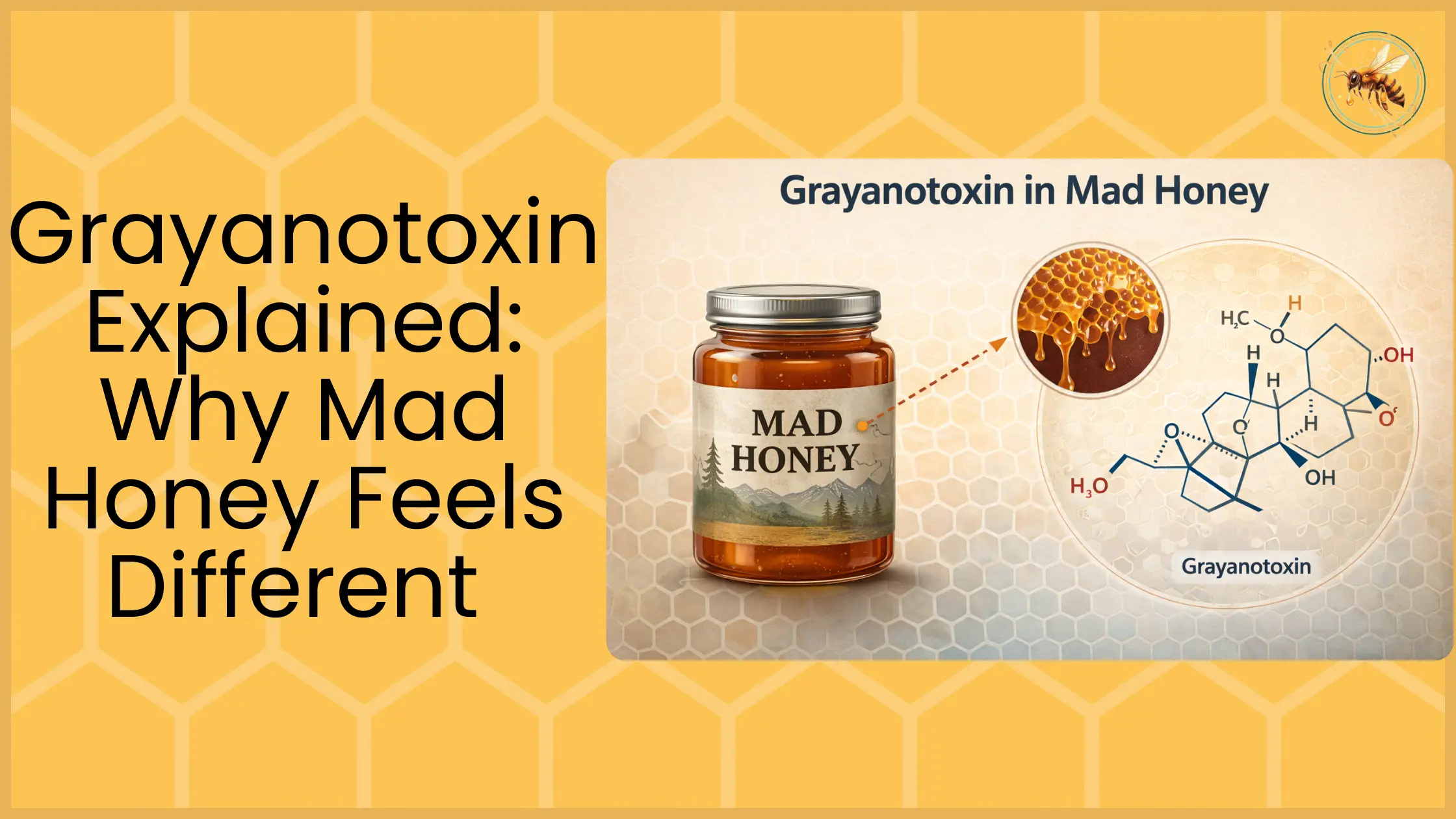
Mad honey isn’t the same as regular honey. Some batches contain grayanotoxins (from rhododendron nectar), which can affect the body in a dose-sensitive way, especially blood pressure and heart rate. That’s the reason medication interactions matter here: not because mad honey is a “drug,” but because it can create real physiological changes that overlap with what many medications already influence.
If you take prescription medication (or multiple supplements), the safest approach is to assume interactions are possible unless your clinician says otherwise, especially if your meds affect blood pressure, heart rhythm, sedation, or nausea/vomiting risk.
tl;dr
- Mad honey can lower blood pressure and slow heart rate at higher exposure, which can compound medications that affect BP/HR.
- Interaction risk is harder to predict because mad honey can be batch-variable and dose-sensitive (a “teaspoon” isn’t a stable dose).
- The highest-risk combinations are typically blood pressure meds, heart-rate/rhythm meds, and sedatives/sleep/anxiety meds.
- Alcohol is the clearest “don’t mix” because it increases dizziness, dehydration, and poor decision-making around re-dosing.
- If you feel faint, chest pain, trouble breathing, severe weakness/confusion, or persistent vomiting, treat it as urgent and seek medical help.
Quick Answer – Can Mad Honey Interact With Medication?
Yes, interactions are possible.
“Interaction” doesn’t have to mean a classic drug-drug interaction in the liver (enzyme pathways). It can also mean additive physiological effects. For example, if a medication lowers blood pressure and mad honey also lowers blood pressure, the combination can push you into uncomfortable or risky territory.
The safest rule
If your medication or supplement affects:
- blood pressure
- heart rate or rhythm
- sedation/anxiety/sleep
- nausea/vomiting threshold
- hydration and electrolyte balance
…then mad honey is something to be cautious with, and often something to avoid unless your clinician is comfortable with it.
Why is this different from regular honey
Regular honey is primarily a food sweetener. Mad honey (in certain batches) can behave more like a bioactive product with dose-dependent body effects. That’s why “I handle honey fine” doesn’t automatically translate to “I’m fine with mad honey.”
Why Medication Interactions Are a Concern
Medication interactions become a real concern for three practical reasons: cardiovascular overlap, steep dose response, and personal sensitivity.
Grayanotoxins can affect heart rate and blood pressure
The biggest safety theme in mad honey adverse experiences is cardiovascular: slow heart rate (bradycardia) and low blood pressure (hypotension), often paired with dizziness, sweating, nausea, and weakness. If you’re on any medication that already influences BP or heart rate, you’re already “close” to the same systems mad honey can push.
The dose-response problem
Mad honey doesn’t always scale smoothly. A little can feel subtle, and “a bit more” can feel like a major jump. That creates a predictable interaction risk: people re-dose too quickly because they feel nothing, then the combined effects show up later and hit harder than expected.
The personal sensitivity problem
Two people can take the same amount and respond differently because of:
- body size and baseline BP/HR
- hydration and empty stomach vs after food
- medication timing and dose
- individual sensitivity to vagal/autonomic shifts
With medication involved, this variability becomes more important, not less.
The honest framing
If you take medications regularly, it’s rarely worth treating mad honey like an experiment. The upside is usually “a unique experience.” The downside can include fainting risk and unpredictable BP/HR changes. That’s why conservative guidance matters here.
Medication Types to Be Most Careful With
This section focuses on categories, not brand names. If you’re unsure where your medication fits, check your prescription leaflet or ask your pharmacist.
Blood Pressure Medications
Blood pressure medications are a top concern because mad honey can lower BP. Because mad honey is also marketed as an aphrodisiac, mixing it with ED medications such as Viagra or Cialis is a particular concern, since both can lower blood pressure.
Common categories include:
- ACE inhibitors and ARBs
- calcium channel blockers (some affect BP strongly; some also affect heart rate)
- diuretics (“water pills”)
- alpha blockers
- vasodilators
Why this matters
If your medication already lowers blood pressure, mad honey can add to that effect. The most common “bad experience” pattern, dizziness, weakness, cold sweat, and feeling faint, often matches low BP physiology. The biggest practical risk is standing up and fainting (falls and injury), especially if you’re alone.
Heart Rate and Rhythm Medications
Heart medications are a major caution category because mad honey can slow the heart rate and influence conduction.
Beta blockers and other pulse-lowering medication
Beta blockers are designed to lower heart rate and reduce the workload. If mad honey also slows your heart rate, the combination can be uncomfortable at best and risky at worst, especially if you already run on the lower side.
Calcium channel blockers and rhythm-control medications
Some calcium channel blockers and rhythm medications affect heart conduction and rhythm stability. Mad honey’s “slow pulse + low BP” pattern can complicate how you feel and how your body compensates.
Why slow pulse is a red flag
A slow heart rate by itself isn’t always dangerous (athletes can have low resting HR). The warning sign is symptoms:
- fainting/near-fainting
- chest pain/pressure
- trouble breathing
- severe weakness, confusion, or feeling “wiped out” suddenly
If those happen, treat it as urgent.
Sedatives, Sleep Aids, Anxiety Medication, and Calming Supplements
This is a broad category because it includes prescription meds, OTC sleep aids, and “calming” supplements.
Why sedation stacking is risky
Even if mad honey doesn’t “sedate” you in a classic way, it can create:
- heavy-body weakness
- dizziness and low-energy fog
- nausea
- impaired coordination if you feel faint
Sedatives and sleep meds can amplify the unsafe part: falls, confusion, and poor judgment around taking more or mixing.
Examples to treat carefully
- prescription sleep aids
- benzodiazepines and similar anxiety medications
- strong antihistamine-based sleep aids
- muscle relaxants
- “calming” supplements that make you drowsy
Safer wording for real life
If you take anything that can make you drowsy, dizzy, or lower blood pressure, even occasionally, mad honey is not a smart combo.
Alcohol and Recreational Substances
Here is the most straightforward answer.
Alcohol is the clearest “do not mix”
Alcohol increases:
- dizziness and balance issues
- dehydration
- nausea/vomiting risk
- poor decision-making (“I’ll take more”)
Even if the first hour feels fine, alcohol makes it harder to read early warning signs. It also increases the odds that a mild problem turns into a strong one.
Other “relaxing” products
People commonly stack mad honey with other products meant to relax or alter mood. This includes:
- kava
- mushroom gummies
- cannabis products
- other sedating or psychoactive products
Mixing tends to create two problems at once:
- stronger dizziness/nausea and weaker coordination
- harder symptom interpretation (you can’t tell what caused what)
If someone cares about safety, mixing is the fastest way to lose predictability.
Supplements That May Still Matter
People often assume “supplements don’t count.” Some do.
“Natural” doesn’t mean interaction-free
Supplements can still affect blood pressure, heart rate, sedation, anxiety, sleep depth, and nausea threshold. When you combine several “mild” influences, the total effect can become significant.
Supplements to treat cautiously (general categories)
- blood pressure support blends
- “circulation” products
- strong calming blends (especially if they make you sleepy)
- stimulant products (can increase anxiety and complicate symptom interpretation)
- electrolyte or diuretic-like products (hydration shifts can change how you feel)
Why this matters
Mad honey effects can already be variable. Adding multiple supplements increases uncertainty and makes adverse effects harder to troubleshoot.
Who Should Avoid Mad Honey Entirely Because of Interaction Risk?
Some groups have a higher risk profile even at modest exposures and should completely avoid mad honey.
People with low blood pressure
If your baseline BP is low, the margin for additional BP drop is smaller.
People with heart conditions or rhythm concerns
If you have arrhythmias, conduction issues, or a history of fainting, “slow HR + low BP” territory is especially risky.
Pregnant or breastfeeding women and children
Conservative avoidance is the safest stance. The risk/benefit trade-off doesn’t make sense. Mad honey is not recommended during pregnancy or breastfeeding, and postpartum medications can add further interaction risk.
Anyone taking multiple medications
The more medications you’re on, especially across BP/HR/sedation categories, the harder it is to predict combined effects. This is where “experimenting” becomes a poor idea.
What Symptoms Could Suggest an Interaction or Too Much?
This section helps you decide what to do based on how you feel.
Stop and monitor if you feel
- dizziness/lightheadedness
- nausea
- sweating or chills
- unusual weakness or heavy-body feeling
- blurred or “gray” vision
- feeling worse when standing up
If symptoms are mild, the conservative move is to stop taking more, sit or lie down, hydrate slowly if you can, and avoid sudden standing.
Seek medical help if you experience
- fainting or near-fainting
- chest pain/pressure
- trouble breathing
- severe confusion or extreme weakness
- persistent vomiting (can’t keep fluids down)
- a very slow pulse with worsening symptoms
These are not “wait it out” signs, especially if you take medications that already affect BP/HR.
What to tell a doctor or paramedic
If you seek help, the most useful context is:
- what you took (mad honey)
- approximate amount
- time taken and time symptoms started
- what medications/supplements do you take
- whether alcohol or other substances were involved
- any baseline heart/BP issues
That information helps clinicians interpret symptoms faster.
Also read: Mad honey in tea
How Long Should You Separate Mad Honey From Medication?
Exact spacing rules are not safe to give as a universal instruction because medications differ, and people differ.
Why timing is tricky
Interaction risk depends on:
- medication half-life and peak timing
- your dosing schedule
- whether the medication lowers BP/HR or causes sedation
- whether mad honey onset is delayed (it can be)
The safest answer
If you take BP/HR meds, rhythm meds, or sedatives, the safest approach is not “timing it better,” but avoiding mad honey unless your clinician approves.
If you still want a practical approach for decision-making, the best step is to ask a pharmacist or doctor using your exact medication list and dosing schedule.
Batch Variability Makes Interaction Risk Harder to Predict
Even when someone tries to be careful, mad honey’s variability can undermine predictability.
Same spoon, different exposure
A teaspoon isn’t a stable dose because batches can differ in grayanotoxin level. That means the same amount that felt subtle once can feel much stronger later, especially if you’re also taking medications that lower BP/HR.
Why lab reporting and traceability matter
From a safety standpoint, transparency reduces uncertainty:
- batch/lot labeling
- conservative guidance
- verifiable COA/testing language where available
“Strongest” marketing does the opposite: it encourages chasing intensity, which is the wrong direction when medication interactions are on the table.
Why imports matter
Even authentic products can vary. The risk isn’t only “fake vs real.” It’s “variable strength + inconsistent consumer behavior + medication overlap.”
How to Ask Your Doctor About Mad Honey (So You Get a Useful Answer)
Many people ask vague questions and get vague responses. A clear question gives you a clearer answer.
Bring the right information
- the product type (mad honey / rhododendron-linked honey)
- what you’re considering doing (one-time taste vs repeated use)
- your full medication list (including supplements)
- your baseline BP/HR, if you know it
- any fainting history or heart conditions
- any lab report/COA details, if available
The exact phrase that works
“I’m considering trying mad honey, which can lower blood pressure and slow heart rate in some cases. I take [med list]. Is this safe for me, and are there any interactions or risks I should avoid?”
That framing makes the clinician focus on the real issue: BP/HR overlap and syncope risk.
Conclusion
Mad honey can interact with medication because it can produce dose-dependent effects that overlap with common medication targets, especially blood pressure, heart rate, and sedation. The highest caution categories are BP meds, heart rate/rhythm meds, and sedatives/sleep/anxiety meds. Alcohol is the clearest “don’t mix,” and stacking with other relaxing products adds unpredictability. Routines often change while traveling with mad honey.
The safest approach for anyone on regular medication is to treat mad honey as a bioactive product, not a novelty sweetener: buy transparently, avoid hype, don’t stack, and involve a clinician when your meds touch BP/HR or sedation.
Also read: How long does mad honey last?
FAQs – Mad Honey Medication Interactions
Can I take mad honey with blood pressure medication?
This is one of the highest-risk combinations because mad honey can lower blood pressure. The safest answer is to avoid unless your clinician specifically clears it.
Can I take mad honey with heart medication?
If the medication affects heart rate or rhythm, the risk is higher. Conservative avoidance is the safest approach.
Can I take mad honey with beta blockers?
Beta blockers lower heart rate. Mad honey can also slow heart rate. Combining them can increase the risk of symptomatic bradycardia and low BP symptoms.
Can I take mad honey with anxiety medication or sleep aids?
Combining can increase dizziness, weakness, confusion, and fall risk, especially if nausea or low BP symptoms appear.
Can I mix mad honey with alcohol?
Avoid. Alcohol increases dizziness, dehydration, nausea risk, and poor decision-making.
Can I mix mad honey with kava or mushroom gummies?
Avoid stacking mad honey with other substances. The combined effects are harder to predict and harder to interpret if something goes wrong.
What should I do if I feel sick after mixing mad honey and medication?
Stop taking more, rest, hydrate slowly if tolerated, and monitor. Seek medical help for red flags (fainting/near-fainting, chest pain, trouble breathing, severe weakness/confusion, persistent vomiting).
Is it safer if I take a tiny amount?
A smaller amount reduces risk, but doesn’t remove it, especially because batches vary and medication overlap changes your safety margin.
Evidence & Sources
Because grayanotoxin itself lowers heart rate and blood pressure, its effects can compound with medications that do the same thing — including beta-blockers, calcium channel blockers, and other blood-pressure or heart-rhythm medications.
No systematic drug-interaction study has been conducted for mad honey. This guidance is based on the known mechanism and on case reports describing more pronounced symptoms in patients already taking cardiac medications, not on a dedicated interaction trial.
Anyone taking medication for blood pressure, heart rhythm, or heart failure should treat mad honey with more caution than a healthy person with no relevant medical history, and ideally check with a doctor first.
Sources: Jansen, S.A. et al., “Grayanotoxin poisoning: ‘mad honey disease’ and beyond,” Cardiovascular Toxicology 12 (2012), PMC3404272. No dedicated mad-honey drug-interaction trial exists; that gap is stated here rather than filled with an invented citation.